| Highlights
of Wings Over Gillespie 2005 |
| The
2005 Wings Over Gillespie airshow in the San Diego suburb of El Cajon was
dedicated to the pivotal Battle of Midway, fought between June 4-6 of 1942.
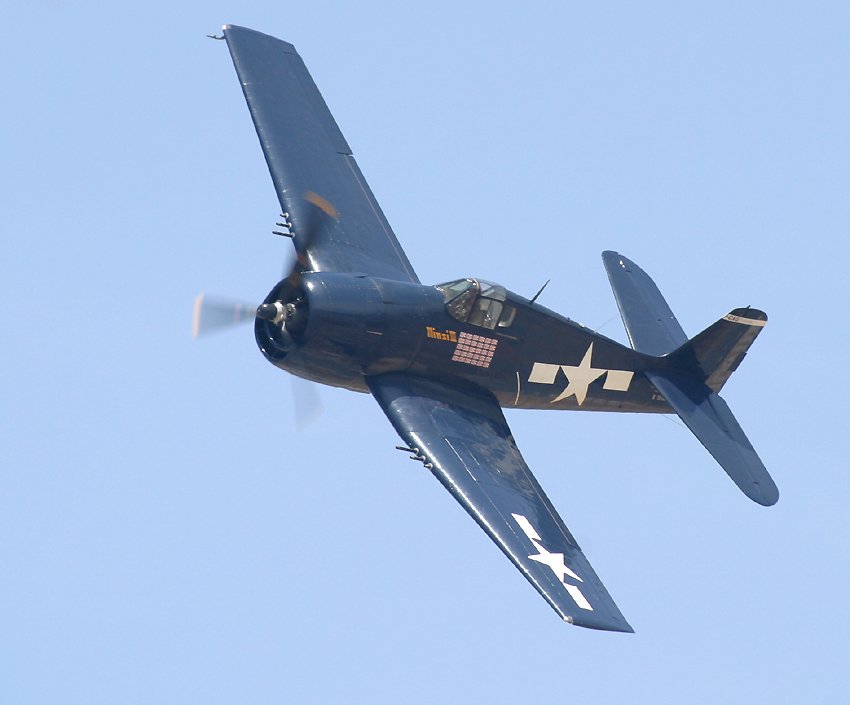
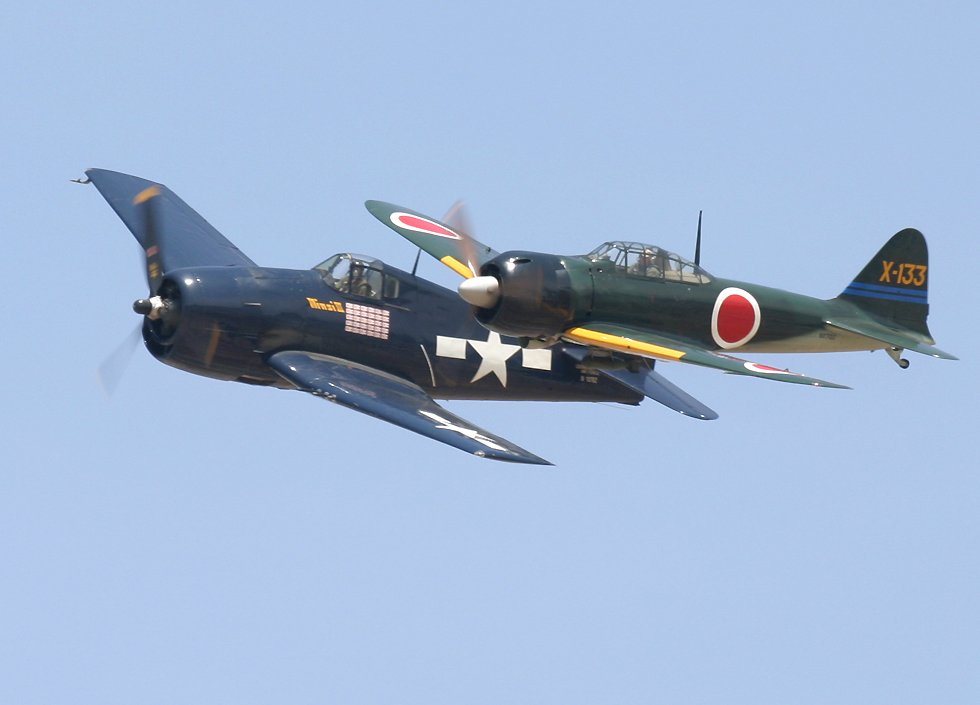
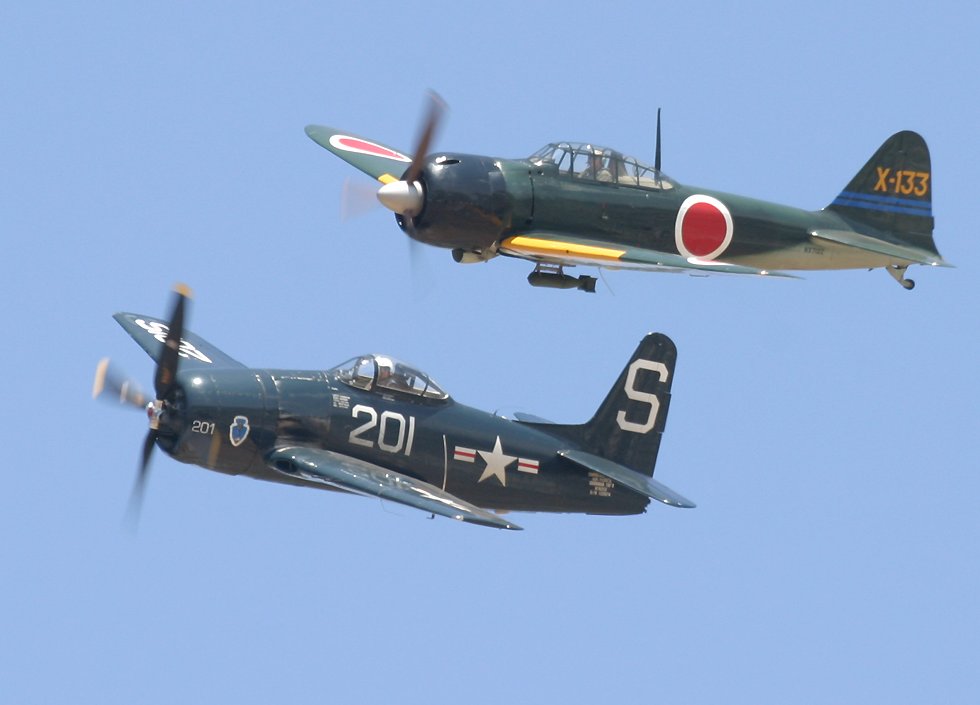
This F6F Hellcat was the main American naval fighter of world war two,
but actually it entered service more than a year after the battle was fought,
so its display here is something of an artistic license. |
 |
| Nevertheless
it's great to see the Hellcat flying, particularly in formation with a
fighter which did participate at Midway - though on the wrong side!
This is one of the few genuine Mitsubishi Zero "Zeke" fighters still flying,
allbeit with an American Pratt and Whitney radial engine. The
only one with its original Japanese engine also resides in southern California,
and is a regular participant at the
Chino airshow. |
 |
| OK,
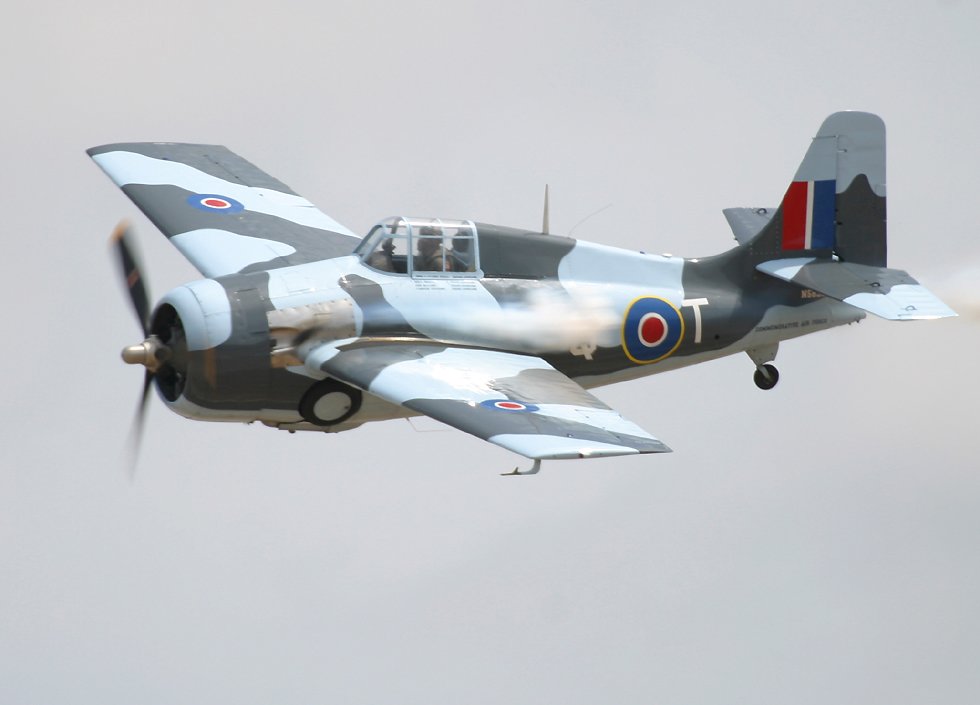
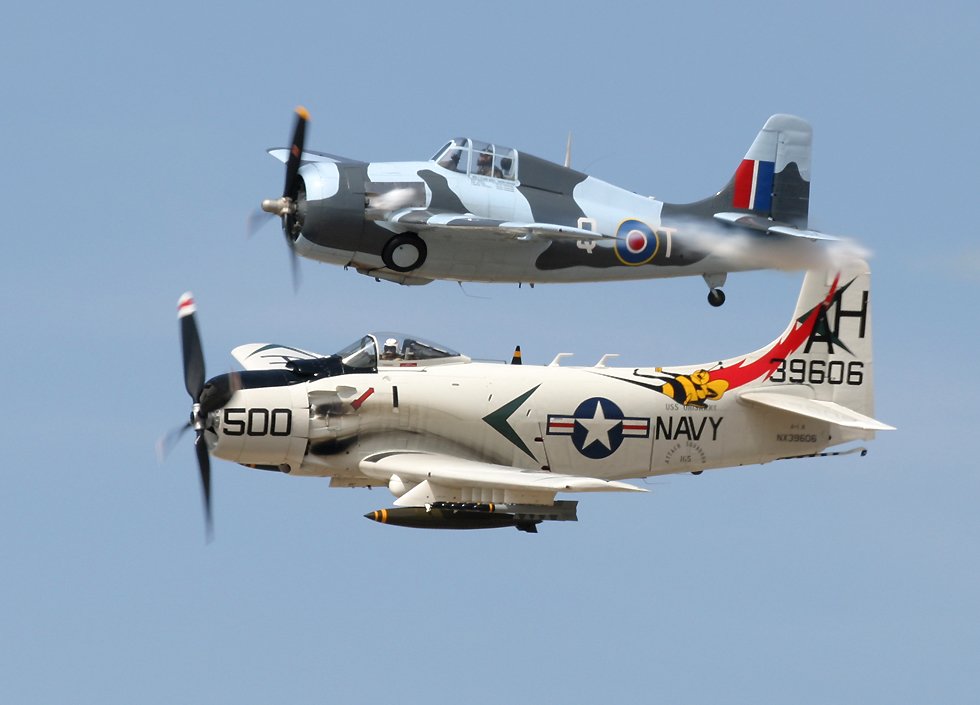
hands up if you know what this aircraft is? An American F4F Wildcat
naval fighter? No. The British navy Martlet version of the
same aircraft? Close, but still no cigar. Actually, it's
a trick question, since it's a General Motors manufactured FM-2 Wildcat
painted up as a British Martlet. Grumman, the original manufacturer
of the Wildcat, was very busy with production of the Avenger and so General
Motors ended up building over 70% of the Wildcats which were delivered.
Although the Hellcat quickly became the definitive American naval fighter,
the Wildcat continued in service and was manufactured right until the end
of the war. |
 |
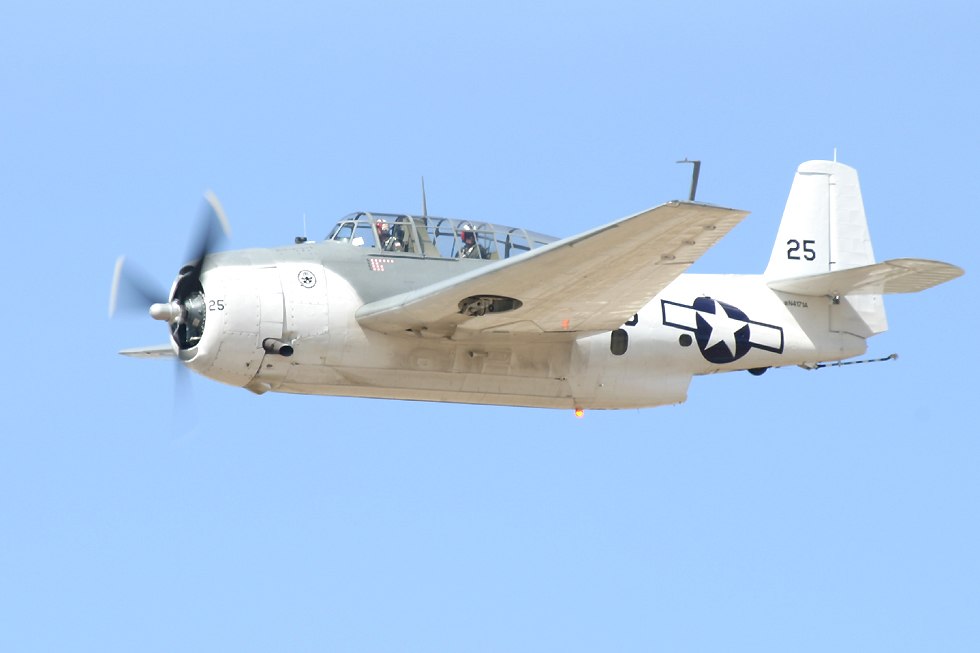
| Here's
another aircraft in Atlantic colors which flew at Midway, half a world
away. This battle was the very first combat outing for the
TBM Avenger torpedo bomber, but it was an extremely inauspicious start.
Of the six Avengers which attacked, only one returned, and none of them
achieved successful hits against the Japanese aircraft carriers.
You can see a photograph of the only surviving Avenger taken shortly after
its return, as well as an original wartime photograph of the first President
George Bush sitting in the Avenger he piloted, on the
Warbirds over Wanaka airshow page. |
 |
| The
Wildcat and Avenger both fought against the Zero at Midway and the Hellcat
fought it later, but here's an aircraft which never fought it at all.
The Grumman F8F Bearcat, another naval fighter built by the same company
who designed the Wildcat, the Hellcat and the Avenger, entered service
just after the war ended, so never got an opportunity to see action against
the Japanese. |
 |
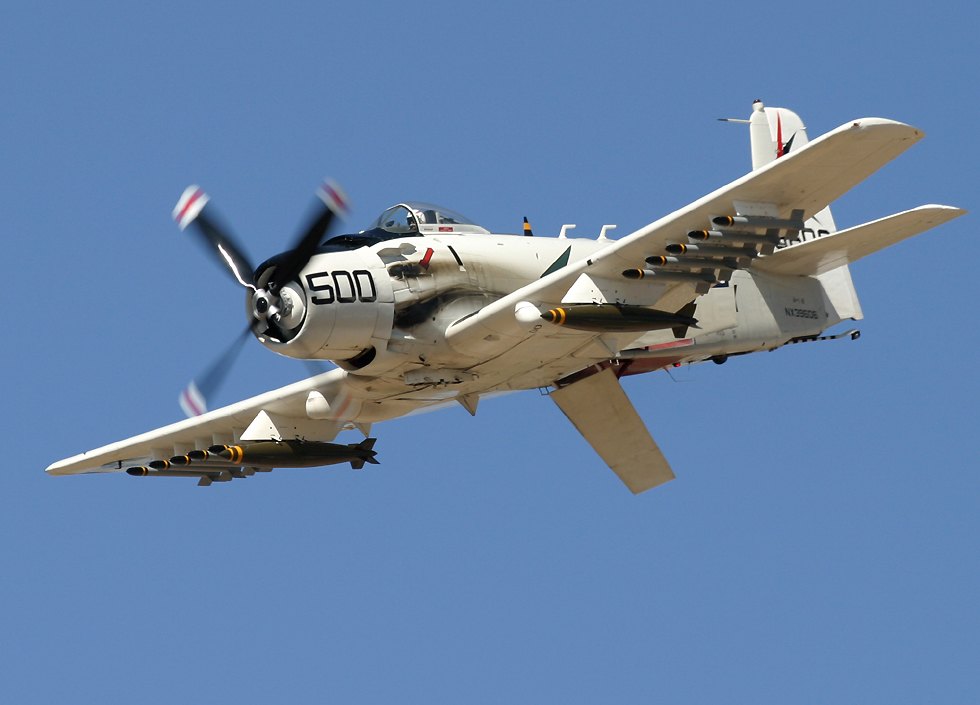
| This
Douglas AD-6 Skyraider is another American naval aircraft which entered
service just after the war ended. Like the Bearcat, both remained
in service for a long time and saw considerable action in Vietnam - I even
have a
photo of a Skyraider captured at the end of that war and incorporated into
the communist air force! The Skyraider was certainly a
remarkable aircraft, capable of carrying twice the weight of bombs of the
early model B-17 Flying Fortresses based at Midway at the time of the Japanese
attack. It's even more extraordinary to consider that it could
do this with a single engine and single crewman, in contrast to the B-17's
four engines and ten crewmen! This particular aircraft is one
of the best on the airshow circuit, complete with a simulated bomb and
rocket load and a pilot who is ready, willing and able to throw this large
aircraft around in one of the most high energy performances you'll see
anywhere. The large panel sticking out of the bottom of
the Skyraider is a dive brake, which was deployed several times, together
with the tail hook. |
 |
| This
was a great show as far as formation flights were concerned, with several
very unusual combinations in addition to the two Zero formations you've
already seen. Here is that same Skyraider together with the
Wildcat/Martlet, which is putting smoke out from its engine as part of
its act. |
 |
| The
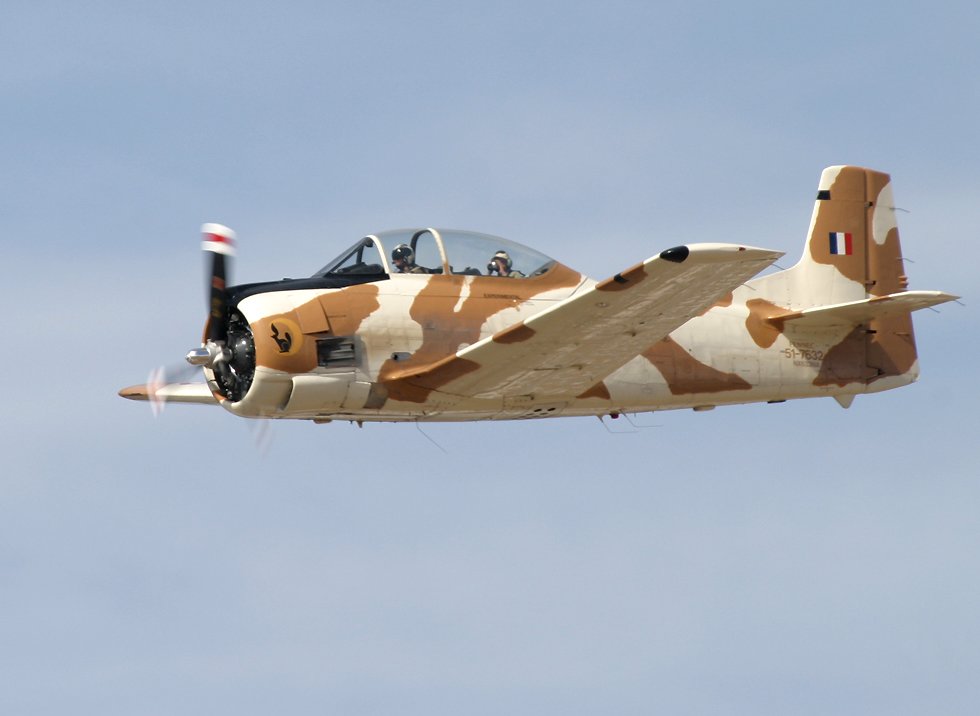
same guy who owns the Skyraider also owns this aircraft, and I believe
that this is his daughter flying it. Although it looks like
an ordinary T-28 Trojan training aircraft, it's actually another mystery
aircraft like the Martlet. The color scheme and the tricolor
insignia on the tail give away the fact that it's a Fennec, the French
version of the Trojan. Although this type of aircraft started
life as a naval trainer, they were also pressed into combat with bombs
and rockets and were used this way in Vietnam. |
 |
| Here's
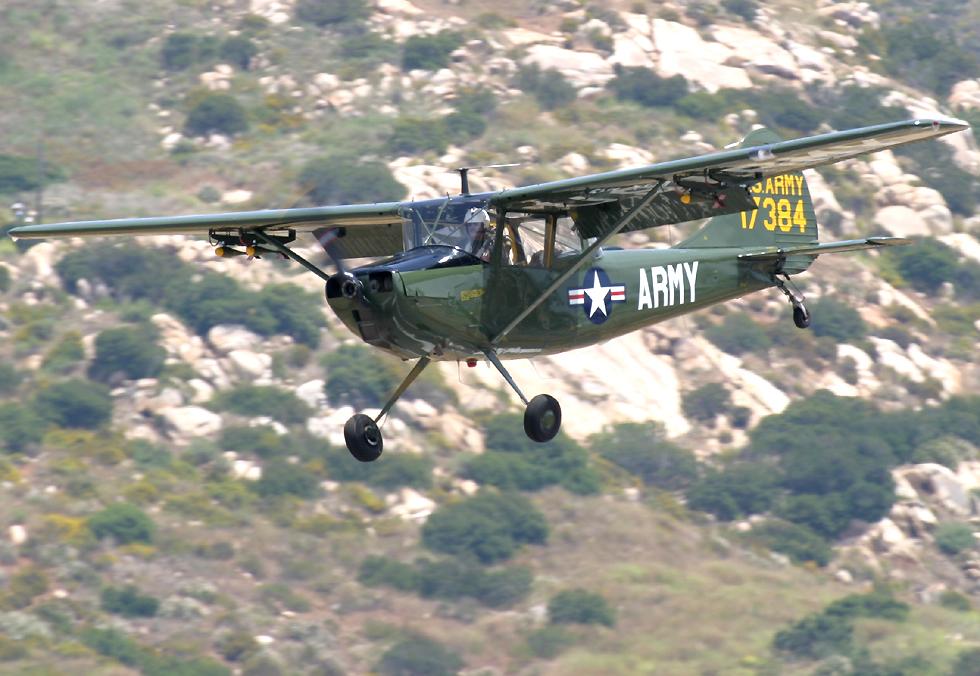
another aircraft which saw action in Vietnam - an L-19 (later O-1) Birddog.
A large number of these aircraft were used in the forward air controller
role, directing fast jets and other aircraft onto ground targets, and even
flying low in order to attract ground fire towards themselves and thus
find the location of enemy troops. It was an extraordinarily
brave man who went to war under such hazardous conditions, in such a small
and easily damaged machine. This one is fitted out with underwing
bombs, but in fact most pilots flew into combat with nothing more than
smoke rockets and a handgun. |
 |
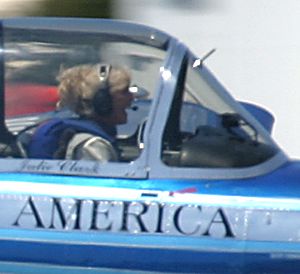
| Although
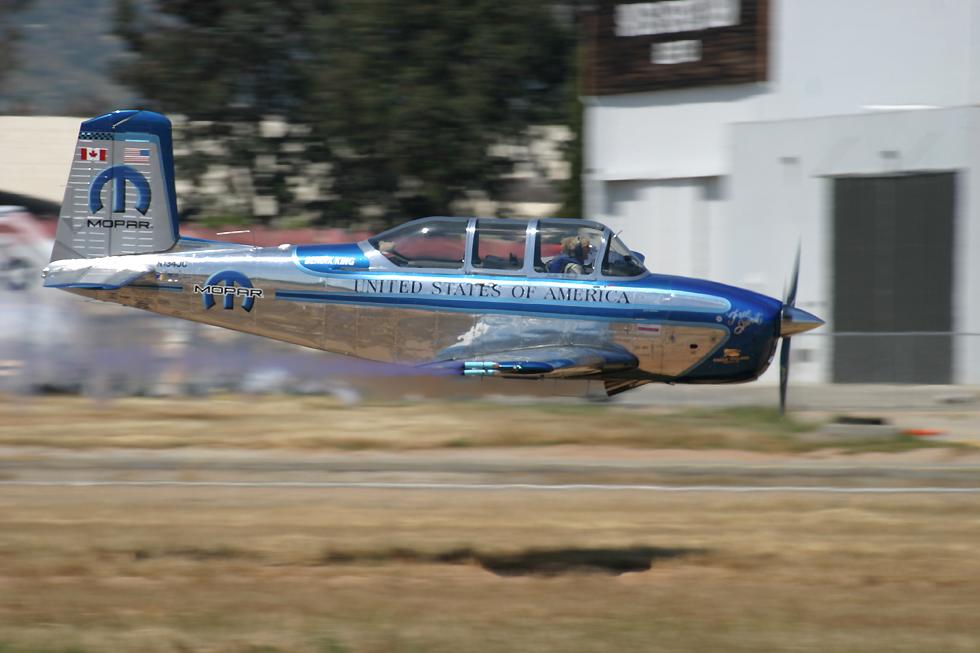
this is primarily a warbirds show, Julie Clark was also on hand to put
on a typically excellent display in her T-34 Mentor. Although
I normally don't shoot aerobatic displays, it's hard not to feel excited
about high adrenaline stunts like this. |
 |
 |
By the looks of
it, Julie was either screaming with terror or enjoying the performance
every bit as much as the audience! |
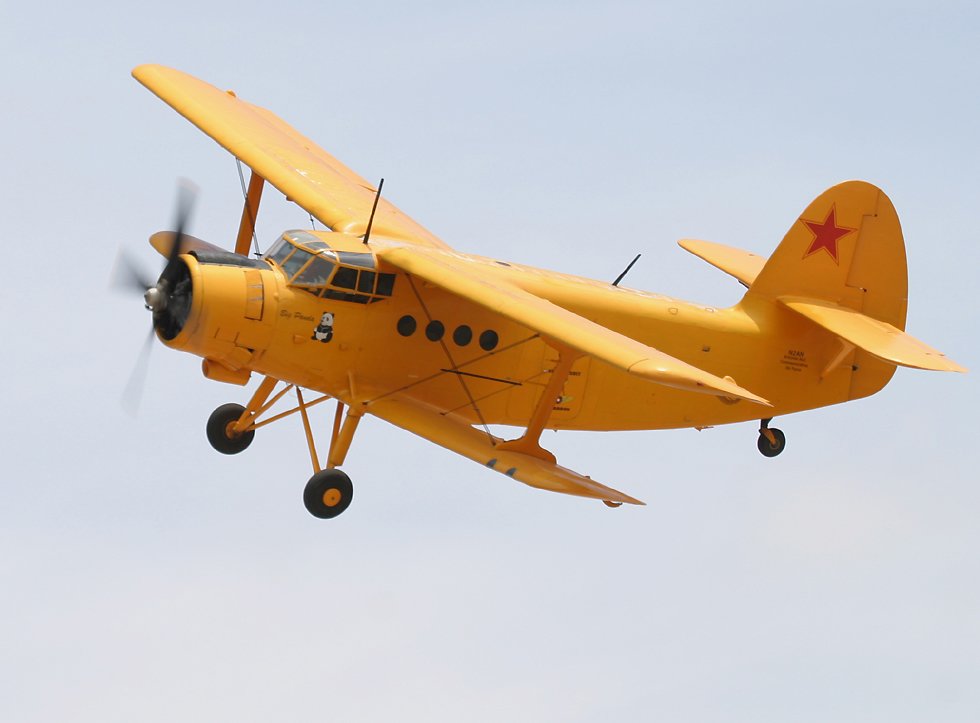
| Another
great feature of this show was the display of different types of communist
aircraft, including this Russian designed Antonov An 2 "Colt" which is
rarely seen flying in America, despite being a relatively cheap aircraft
to own and operate. The Antonov ("Colt" is actually a NATO
reporting name) is the world's largest single engined biplane, used for
hauling freight in many communist countries. Entering service
in 1948, it has been phenomenally successful - this particular example
was built in Poland in 1984 and they're still being manufactured today
in China! Their top speed is only 160mph (255 km/h) and cruising
speed is a paltry 100mph (160 km/h), but the biplane layout provides a
huge amount of lift and excellent short takeoff and landing capabilities,
making this aircraft a real workhorse. A somewhat puzzling
feature is that the fuel tanks are in the top wings, which seems rather
inconvenient for access, and one would think that the raised center of
gravity from all that weight so high up would affect the flight characteristics. |
 |
| In
addition to the Colt, flying displays were also done by several Czechoslovakian
built L29 Delfins, as well by an L39 Albatros, the Delfin's successor.
The Delfins and the Albatros were the main Soviet military jet fighters
during the Cold War, and have become popular aircraft with American enthusiasts.
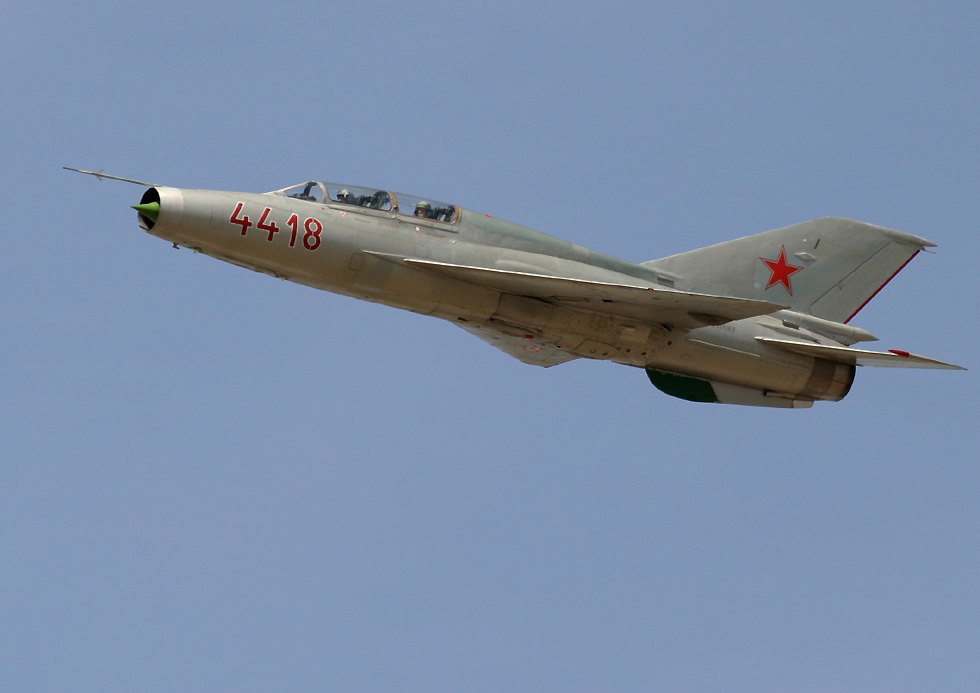
However it was this Russian MiG 21 "Fishbed" jet fighter which was the
star attraction of the show as far as I was concerned. This
is a two-seat trainer version based in southern California, the first MiG
21 I've seen perform at any airshow - though I did have the great good
fortune to see Vietnamese
Air Force MiG 21s in action last year. |
 |
| Here's
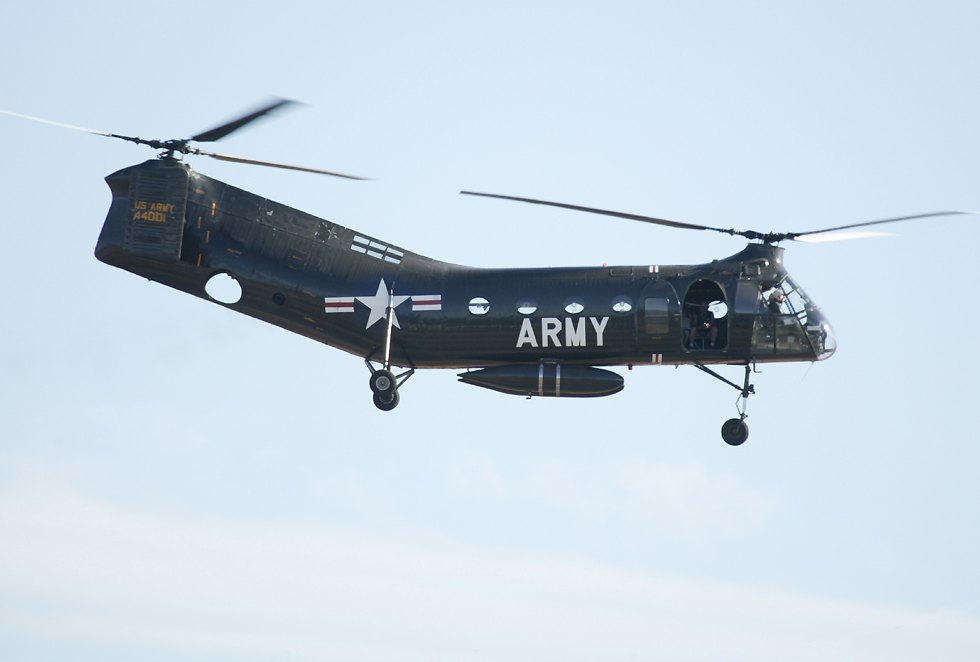
a "21" of a different type - the world's only flying H-21 Shawnee helicopter,
which like many of the other aircraft on this page was used extensively
in Vietnam. The Shawnee doesn't fly during the airshows because
of registration and licensing restrictions, however what would a southern
California airshow be without me waiting until it departs at the end of
the show, and adding another inadequate photo of the H-21 to my ever-expanding
collection? Eventually I hope to get side-view and front-view
photos of this helicopter nicely illuminated by the sun, but unfortunately
this was not to be the day. |
 |
 |