
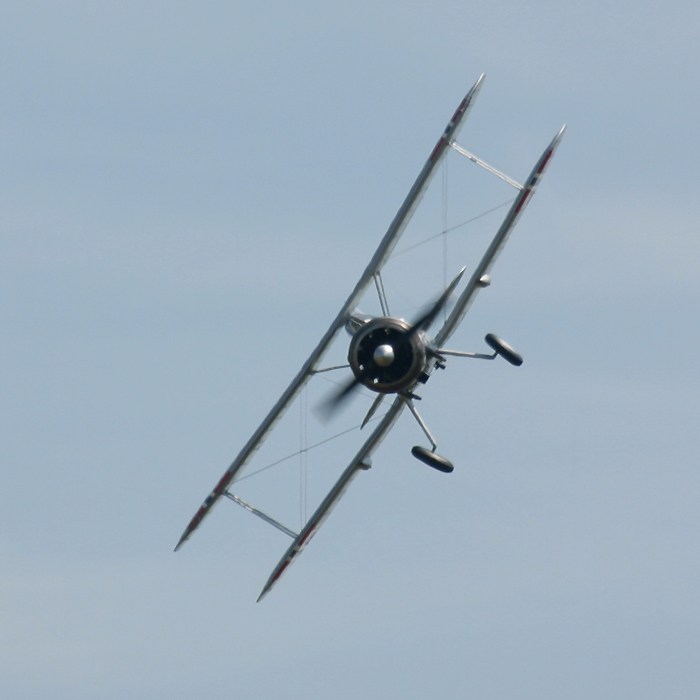
Duxford Flying Legends 2002 Gloster Gladiator Display
|
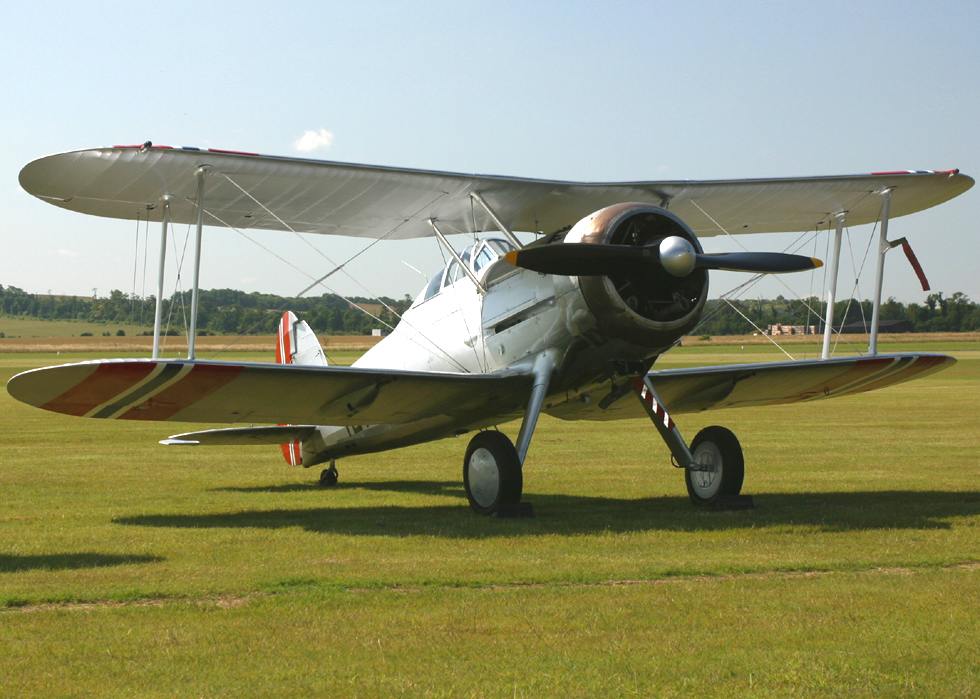
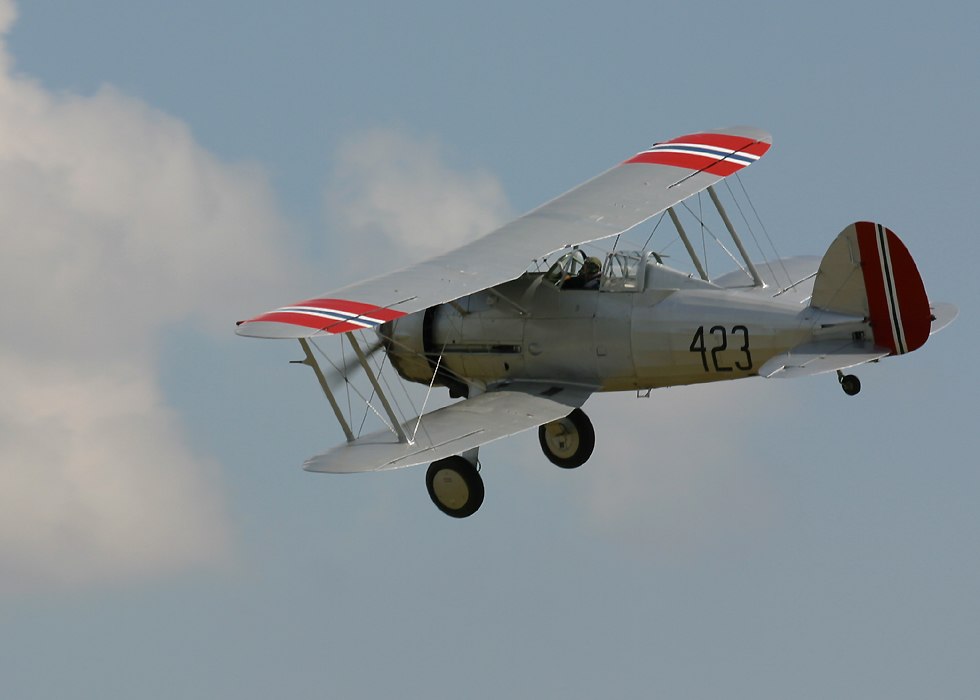
My interest in aircraft ranges from world war two up to the present day, so what's this biplane doing here? Well, believe it or not, this Gloster Gladiator is one of the front-line fighter planes serving in the Royal Air Force when Britain entered world war two! The prototype first flew near the end of 1934, they entered service in 1937, and production only ended in 1940. |
 |
|
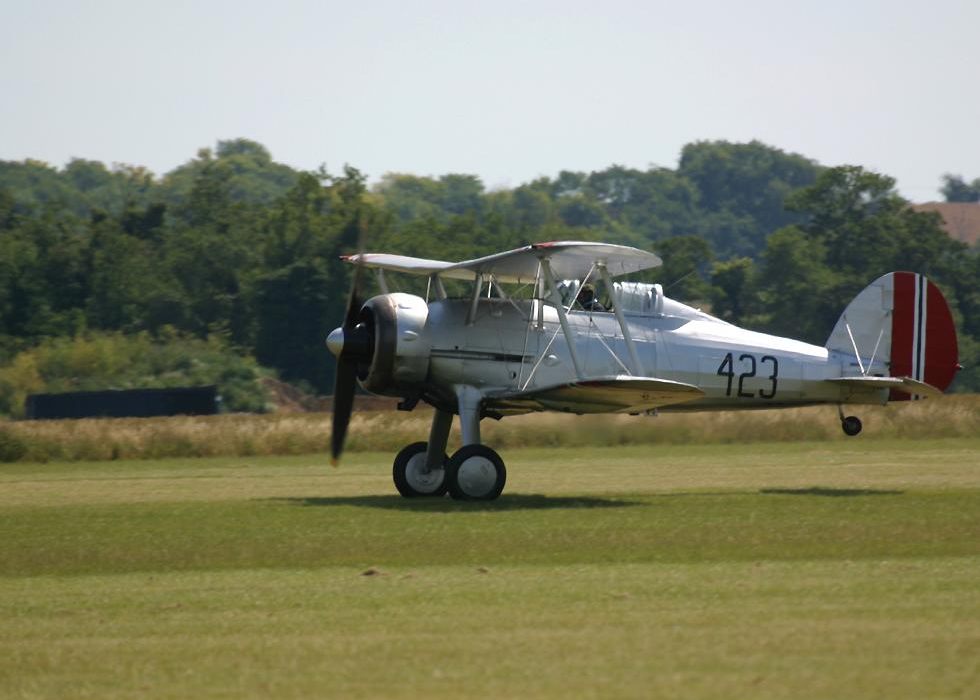
The Gladiator was a real export success, with 747 planes eventually being flown by Australia, Belgium, China, Finland, Greece, Iraq, Ireland, Latvia, Lithuania, Norway, Portugal, South Africa, Sweden and... the German Luftwaffe, who captured several of the Baltic planes intact and used them as glider and target tugs until the end of 1944. |
 |
|
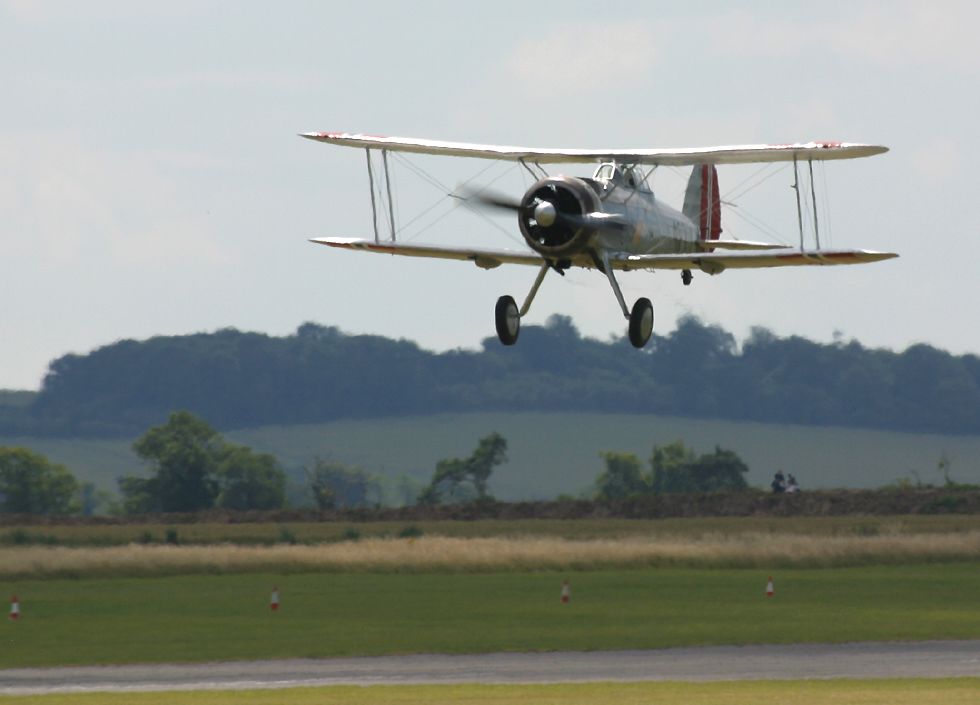
The Gladiator was Britain's last biplane fighter plane and its first with an enclosed cockpit. It was a transitional aircraft, with relatively heavy armament of four machine guns. |
 |
|
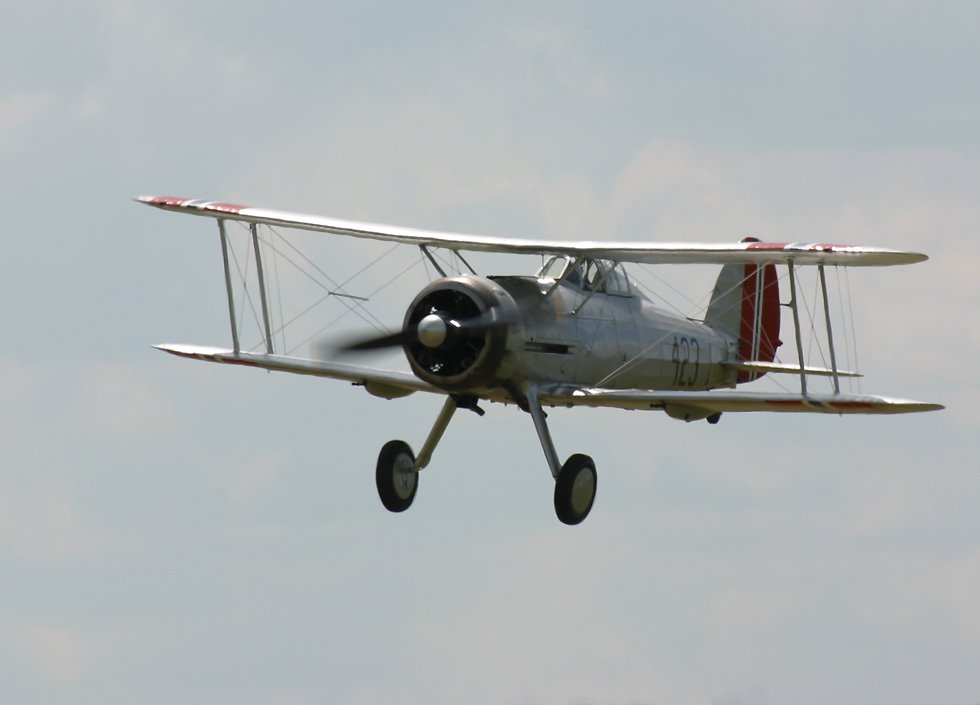
However, within a year the monoplane Hawker Hurricane fighter first flew, 80 miles per hour faster and with eight machine guns. |
 |
|
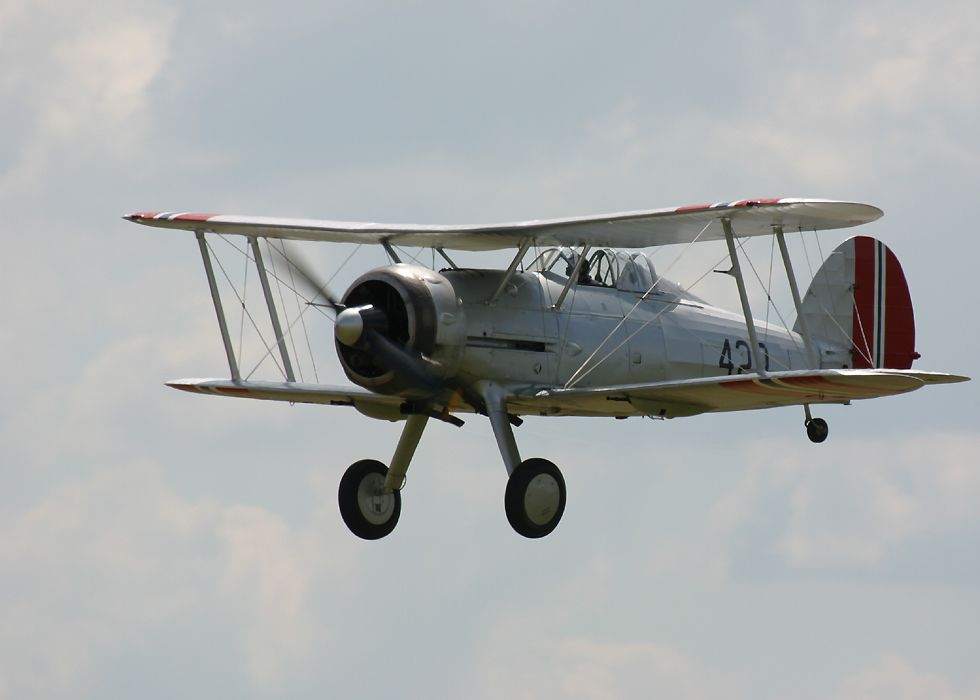
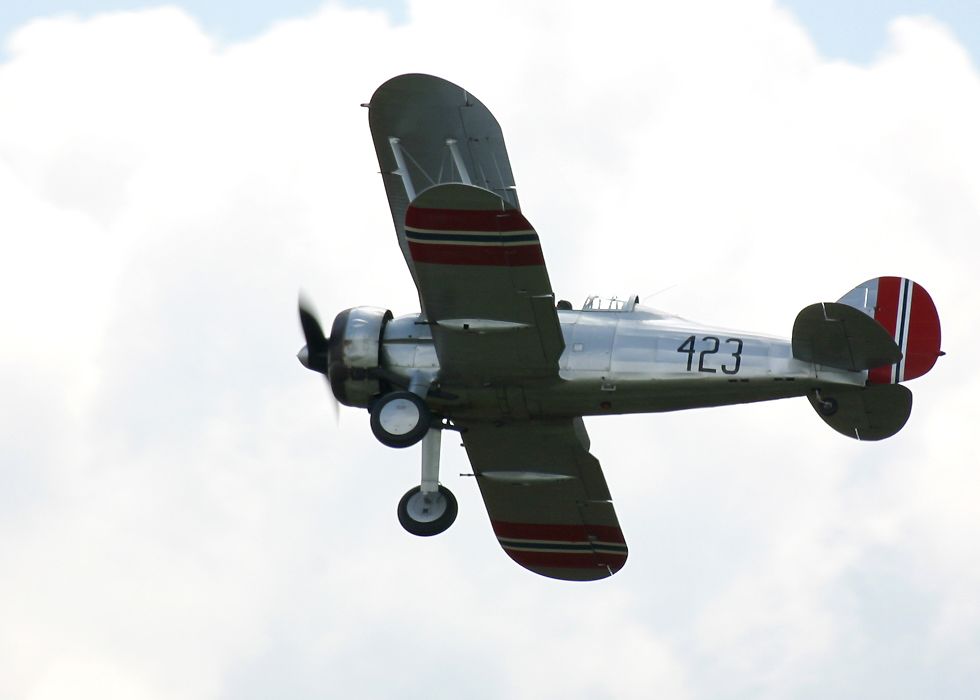
Two British squadrons used the Gladiator in France, but they were hopelessly outclassed. The four machine guns of the Gladiator, including two visible in this photo mounted under the wing, were no match for the two machine guns and cannon of their main opponent, the Messerschmitt Bf109. |
 |
|
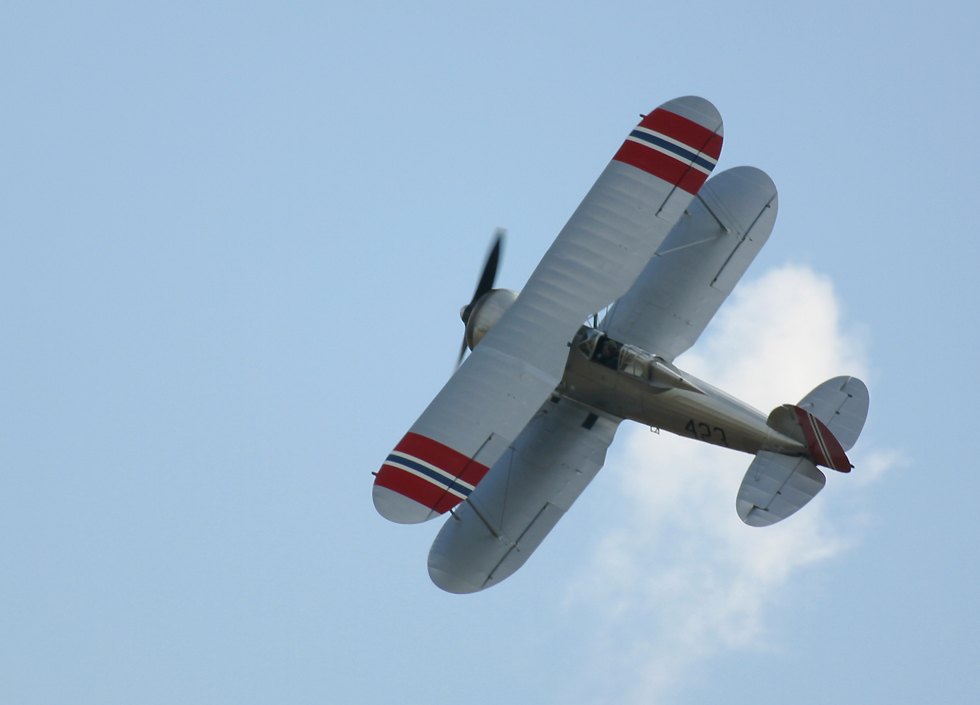
Worse yet, they were too slow even to engage many of the enemy's bombers, let alone their fighters. |
 |
|
Overseas, the shortages of aircraft were so severe that Gladiators continued in service for some time, especially in North Africa and the Mediterranean. By far the most famous use of the Gladiator was on the island of Malta, one of Britain's last toeholds in the Mediterranean. Lying very close to Sicily, the island was repeatedly bombed, and in the early stages of the siege only three Gladiators, named Faith, Hope and Charity, kept the Italian Air Force at bay, until hurricanes arrived in July of 1940. The remains of one of these three aircraft is apparently still displayed in Malta. |
 |