
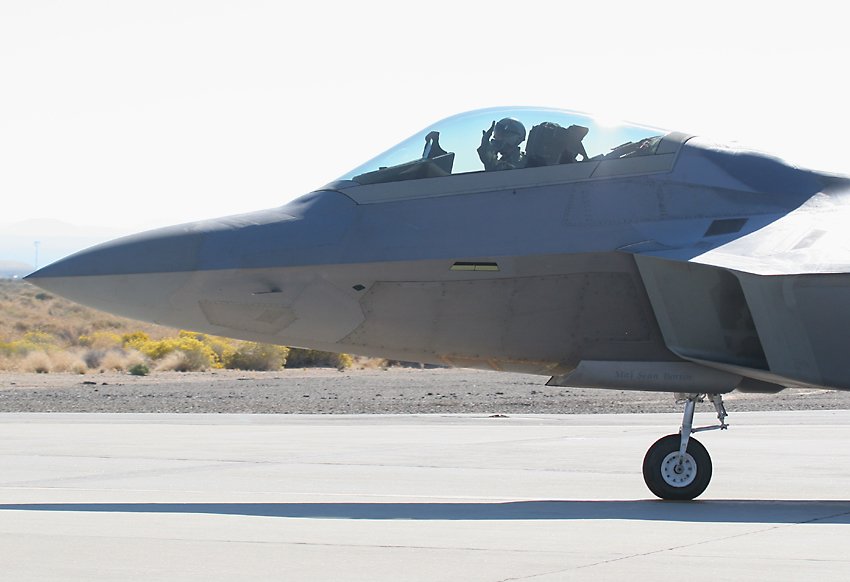
F-22 Raptor Display at Edwards AFB Airshow 2005
|
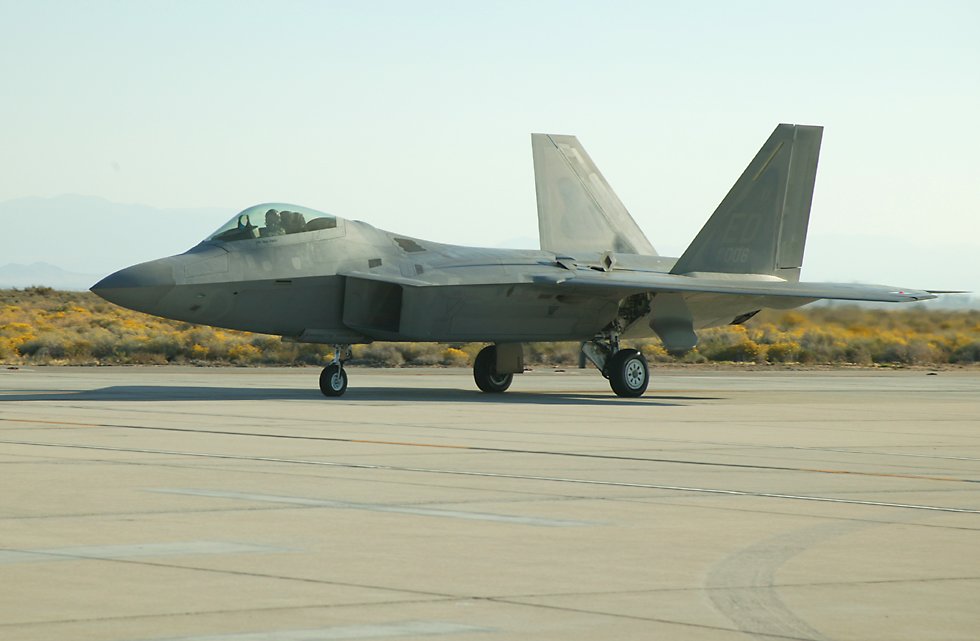
The F-22 Raptor display was one of the highlights of the 2005 Edwards AFB airshow. It was a far more impressive display than the Raptor has put on at previous shows, and is a good portend of things to come as this new aircraft becomes established in operational service and on the airshow circuit. |
 |
|
The Raptor is certainly an impressive piece of hardware, and an expensive one. The air force puts the cost of each aircraft at $160 million, but this doesn't take into account the very considerable research and development costs, which combine to push the cost per aircraft up to somewhere between $228 million and $350 million, depending on who you believe. Certainly the air force itself has said that it wants to trim its budget by $1.1 billion to allow them to buy 4 extra Raptors. |
 |
|
The Raptor is intended as a replacement for America's current top of the line air superiority fighter, the F-15 Eagle. The Eagle first flew in 1972 and entered service in 1976, so it is getting a bit long in the tooth. Still, it's no slug and many people still regard it as the best air-to-air fighter in the world, a claim which is certainly backed up by its operational record - in combat the nations operating the F-15 have shot down 104 aircraft, but no enemy aircraft has ever shot down an F-15. Ironically, in a training accident a Japanese F-15 did manage to shoot down another one of their own F-15s! |
 |
|
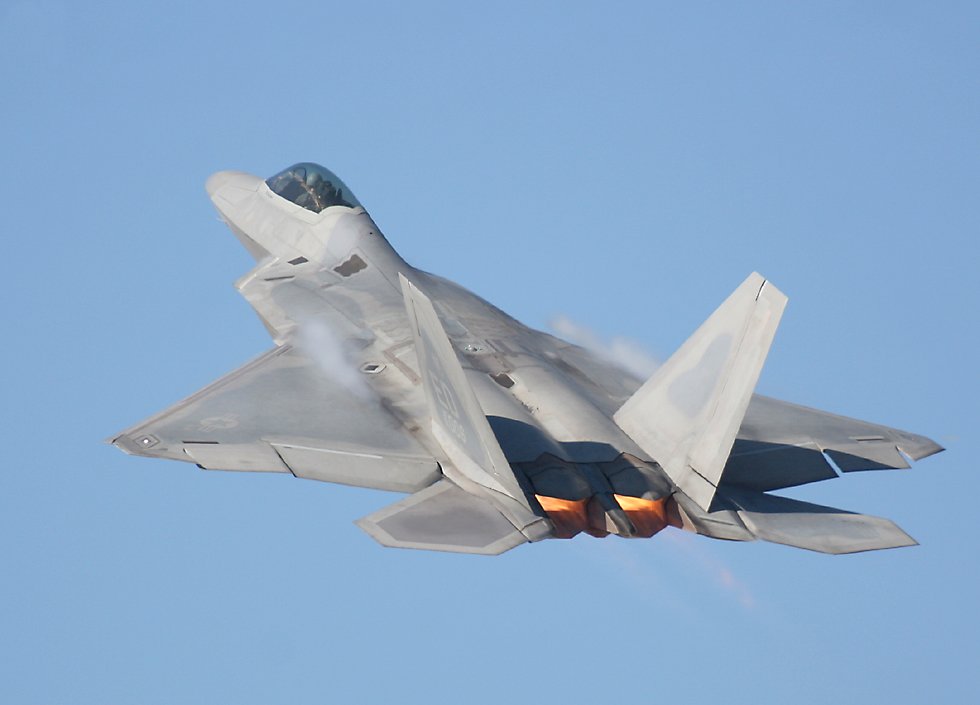
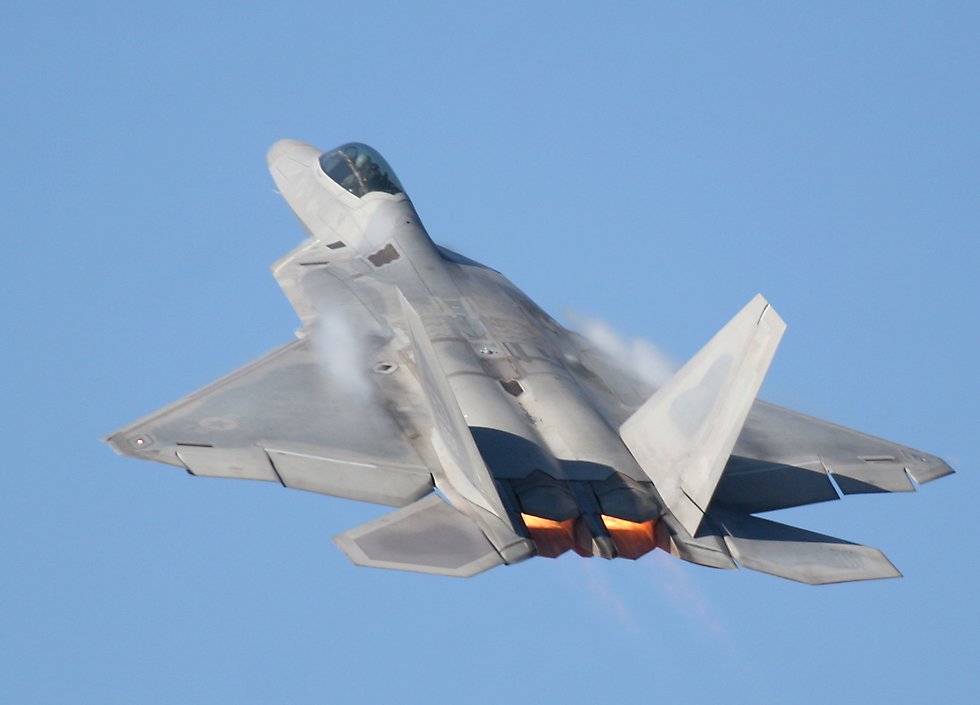
The Raptor contains several technological features which make it far superior both to the Eagle and to foreign aircraft. It's the first American military aircraft to utilize the sort of thrust vectoring engine outlets that were pioneered by the NASA "ACTIVE" F-15, providing a significant improvement in maneuverability. The outlets can move up and down by 20 degrees. They're arguably inferior to the thrust vectoring introduced on Russian fighters like the Su-27 Flanker and MiG-29 Fulcrum, some models of which can direct the thrust left and right, as well as up and down, but as a complete package the Raptor is much more lethal than either the Flanker or Fulcrum. |
 |
|
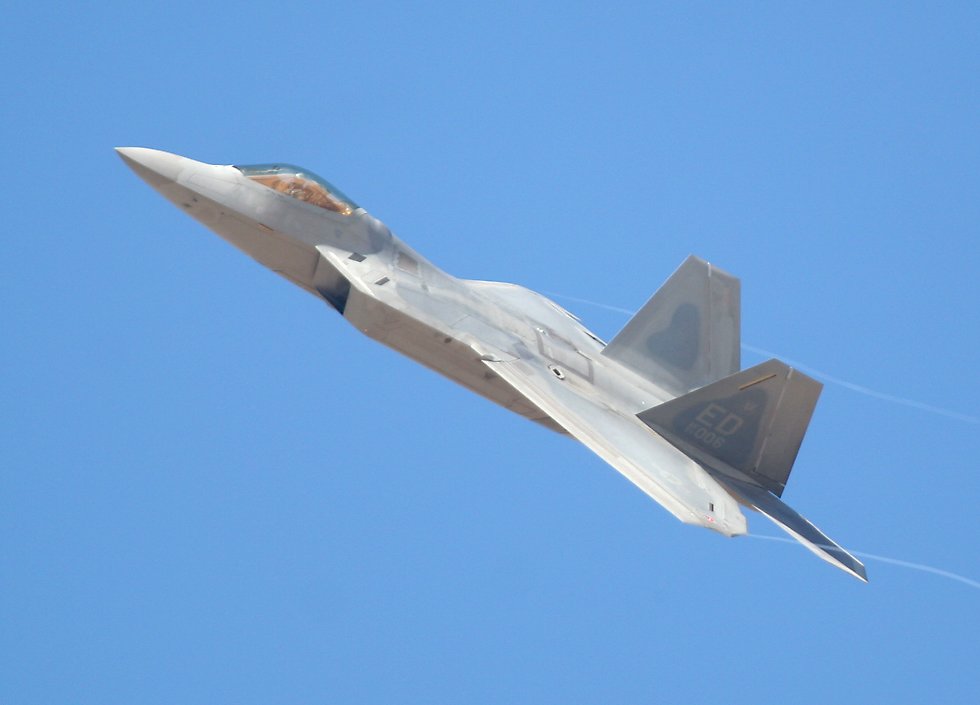
The engines are the key to another advantage that the Raptor has over current competitors - the ability to "supercruise", or fly at supersonic speeds without using gas-guzzling afterburners. Many people have said that the Raptor is the first fighter with this ability, but in fact the English Electric Lightning demonstrated 30 or more years ago that it could fly at supersonic speeds in level flight. However the Raptor's supercruise ability is in a different league to the Lightning - General John Jumper supercruised at Mach 1.7 in the Raptor in January of 2006, a speed the Lightning was incapable of reaching without afterburners. |
 |
|
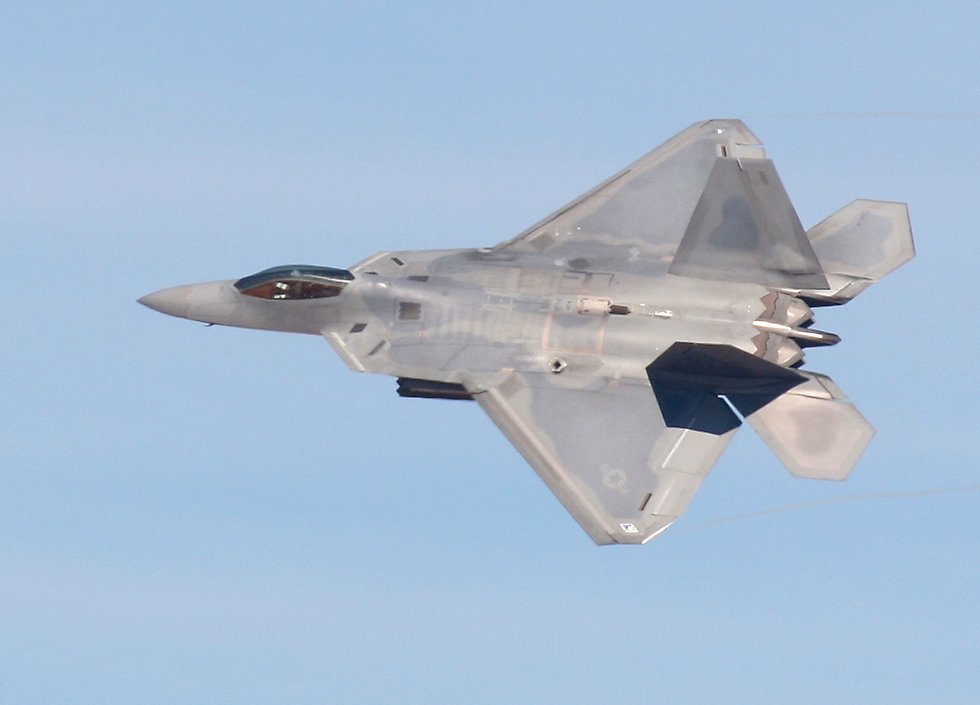
The Raptor is also the only fighter in the world which is truly stealthy, with features making it harder to detect on radar, by infra-red heat seeking missiles, or by other means. Other USAF aircraft are also stealthy, like the B-2 Spirit "stealth bomber" and the F-117 Nighthawk "stealth fighter", but the Nighthawk is a strike aircraft even though it has a fighter designation, so the Raptor remains first and alone in this category. This technological advantage is likely to remain in place for at least another 10 or 20 years. |
 |

|
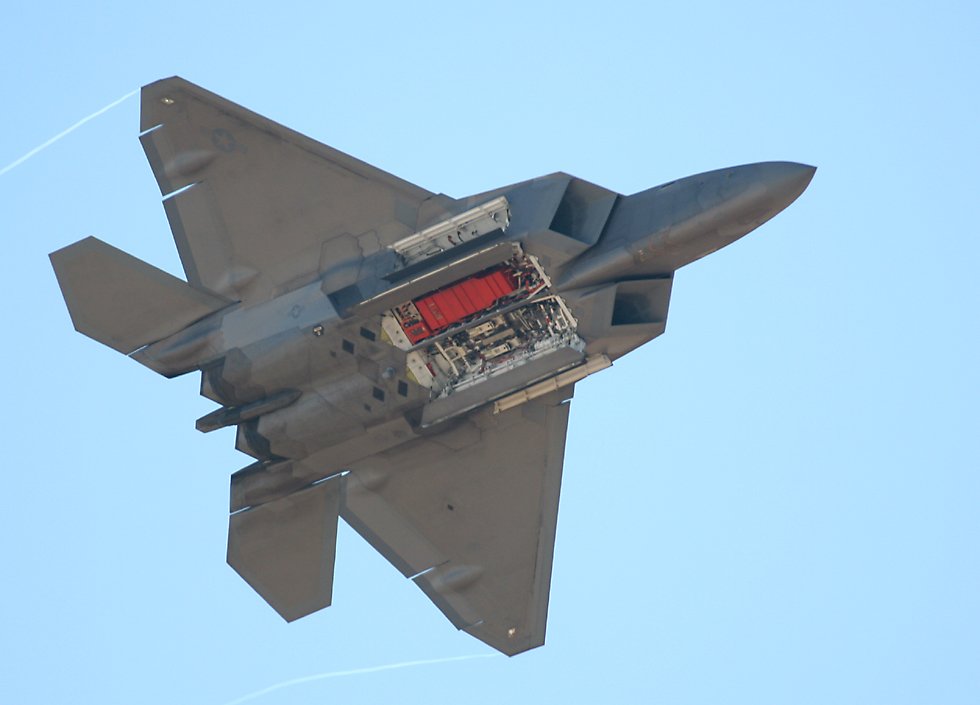
Carrying the weapons internally has advantages but there's a cost too, since it's not possible to carry as many missiles as it otherwise could, though it's still a formidable payload of 2 short range heatseeking AIM-9 sidewinders in the side bays and up to 6 long range radar guided AIM-120C AMRAAMs in the lower bays. In practice this limitation isn't a real issue in any likely scenario where the Raptor will be called to fight, since America's enemies usually don't field many aircraft at one time, anyway. |
 |
|
In the unlikely event that the Raptor does run out of missiles, it can still use its 20mm Gatling gun cannon with 480 rounds to take on enemy aircraft. After that, the pilot is pretty much down to strong language as his weapon of last resort! |
 |
|
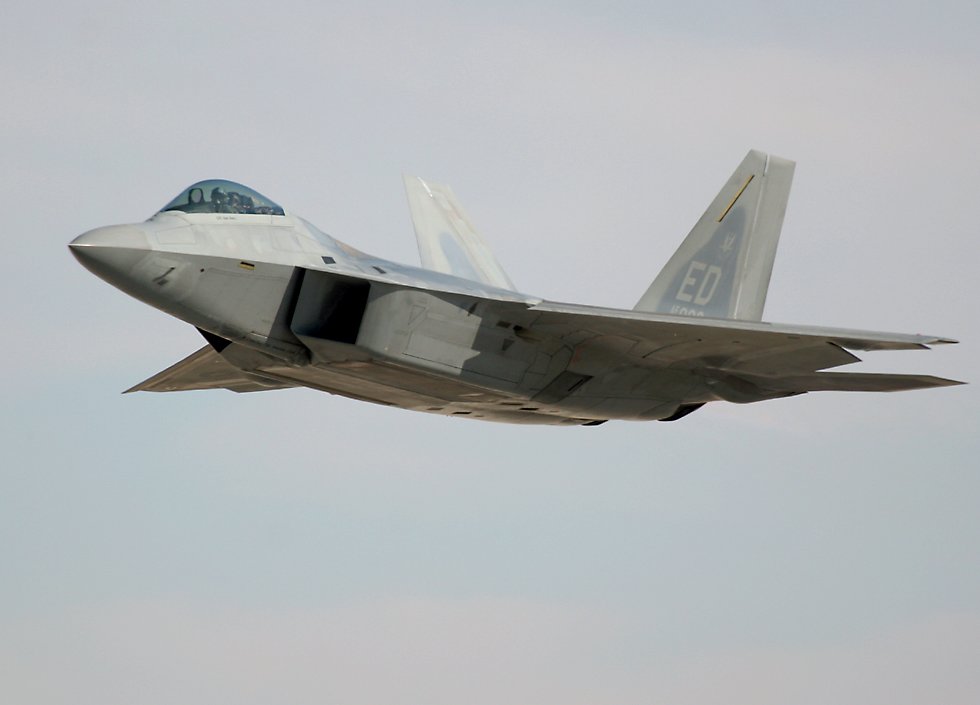
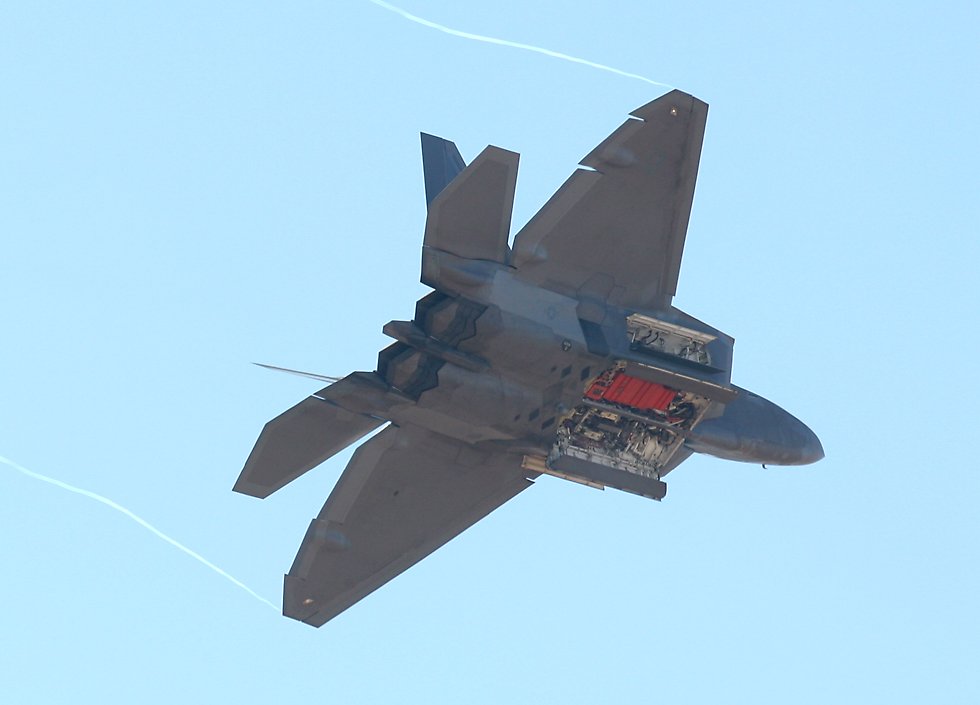
The view from the back certainly looks pretty weird, the engine nozzles look like nothing else on earth and the horizontal stabilizers look as if they're canted at strange angles, but in fact they're level, and it's just their strange angular shape which makes them look as if they're bent. As you can see from several of the photos, the Raptor has a tendency to pull vapor from the air, even in the middle of the desert! |
 |
|
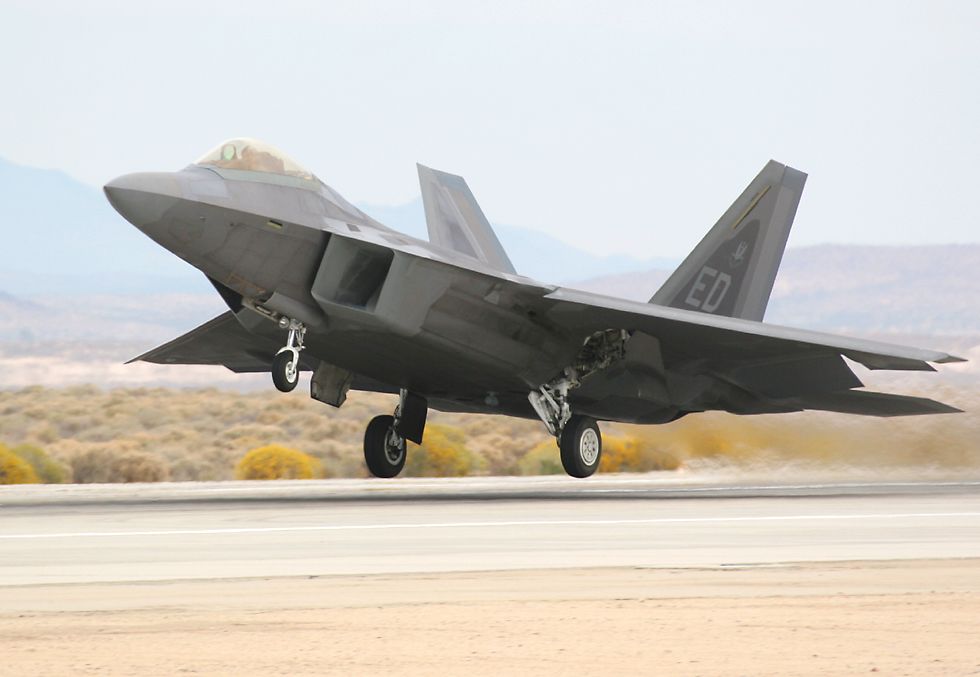
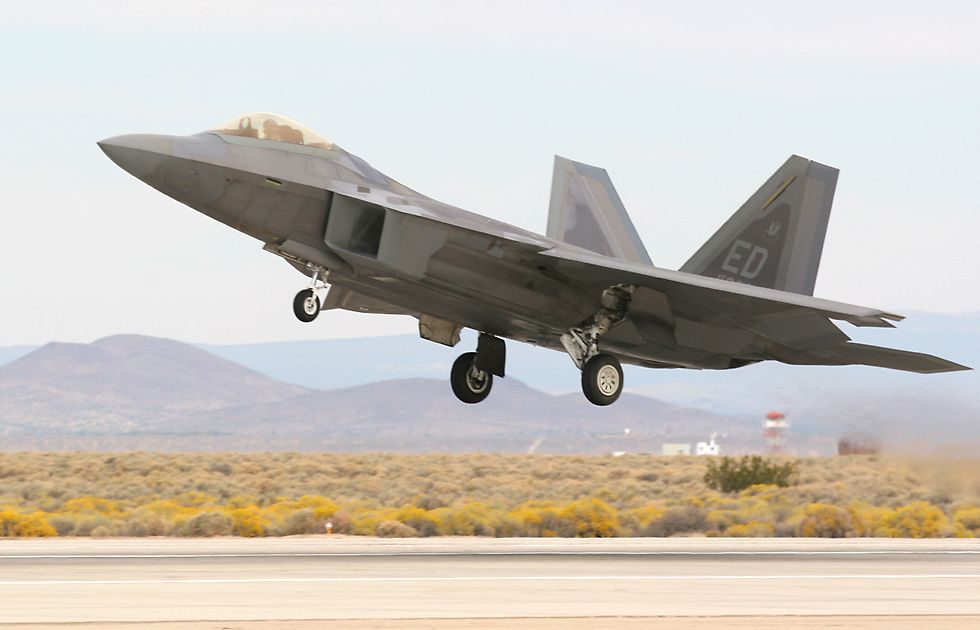
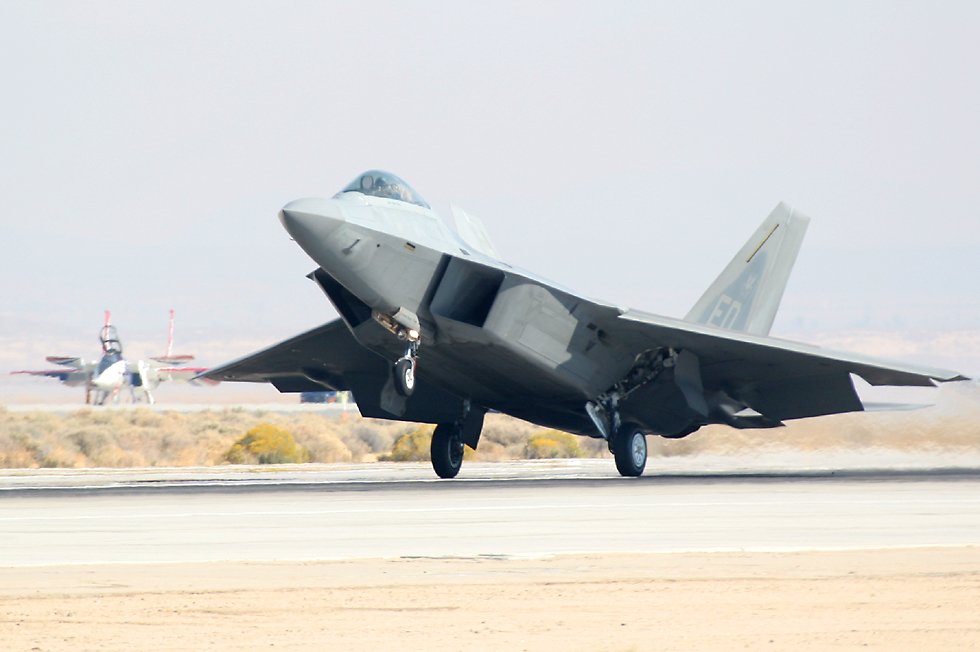
Coming back in to land, with the previously mentioned NASA "ACTIVE" F-15 in the background. As with other fighters like the F-16 Fighting Falcon, the Raptor doesn't use a parachute to slow down, instead it keeps its nose high and uses aerodynamic braking to shorten its landing run. |
 |
|
The air force is so impressed with the F-22 that they're cutting back on other aircraft so they can channel the money to the Raptor program. The Raptor was originally intended to counter the Soviet threat, but during the course of its development the Cold War ended, so many politicians are unenthusiastic about supporting a very expensive aircraft to counter a threat which no longer exists. Originally the air force requested 750 Raptors, but in 1990 the number was cut down to 648, then in 1994 it was cut again to 442, in 1997 to 339, in 2003 it seemed that only 277 would be built and in 2005 the Pentagon said it would buy 180. In January of 2006 the air force asked to retire half of its B-52 Stratofortress bombers, and all of its U-2 spy planes and F-117 Nighthawks in order to increase Raptor production to 183 aircraft. |
 |
|
The air force also change the designation of the Raptor from F-22 to F/A-22 in order to emphasize its bomb dropping capabilities, though at the end of 2005 it dropped this tactic and shifted the 'A' around to come up with the designation F-22A. |
 |
|
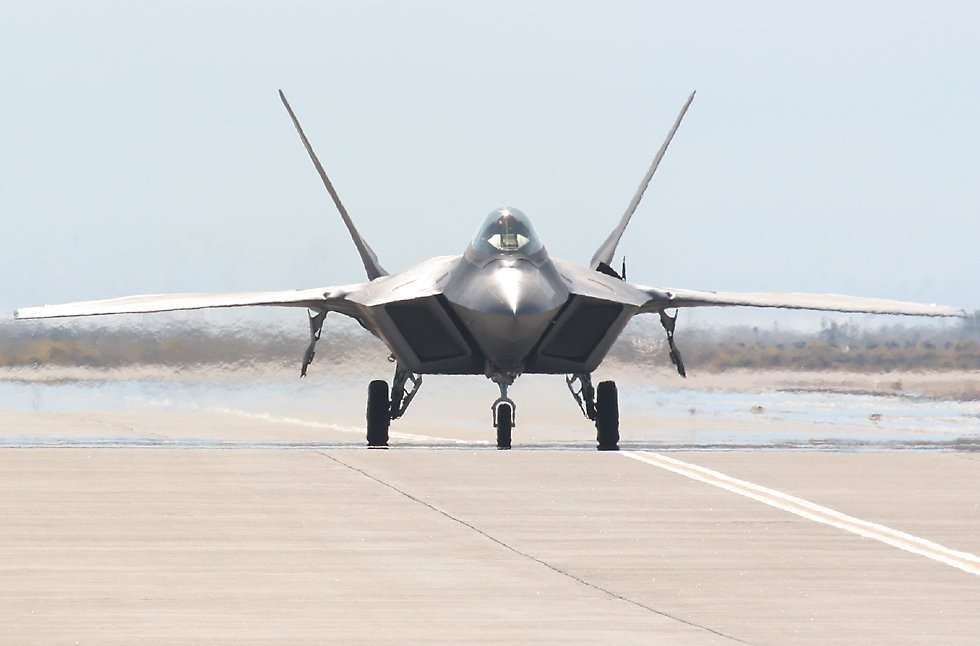
It certainly was an excellent display, and it seems as if the air force will make the Raptor an exciting part of the airshow circuit, with maneuvers worthy of such an interesting aircraft. |
 |