| As soon as the Tornado
flying displays started, the other photographers I was with put their cameras
away! Presumably this is because it's such a frequent performer
at British airshows. However, this was the first time I'd seen
one in the flesh, so I happily snapped dozens and dozens of shots. |
 |
| The Tornado started
life as a joint venture between Canada and several European countries,
eventually thinning out to Britain, Germany and Italy. A new
company called Panavia was set up to reflect this international partnership. |
 |
| The intention was
to produce a two-man, multi-role aircraft for use in a European war between
the Western European NATO alliance and the communist Warsaw Pact countries. |
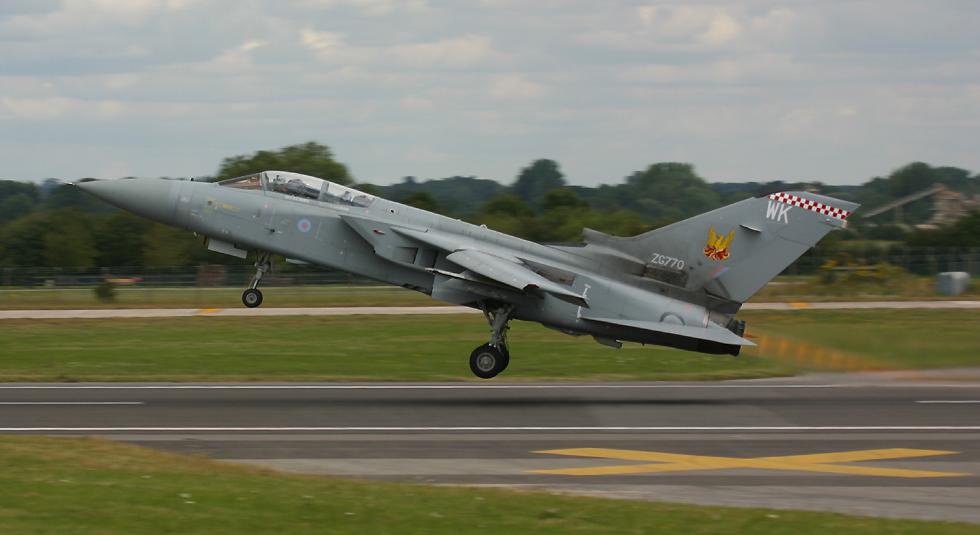
 |
| Planning started
in 1968, the first prototype flew in 1974 and it entered service with the
Royal Air Force in 1980. |
 |
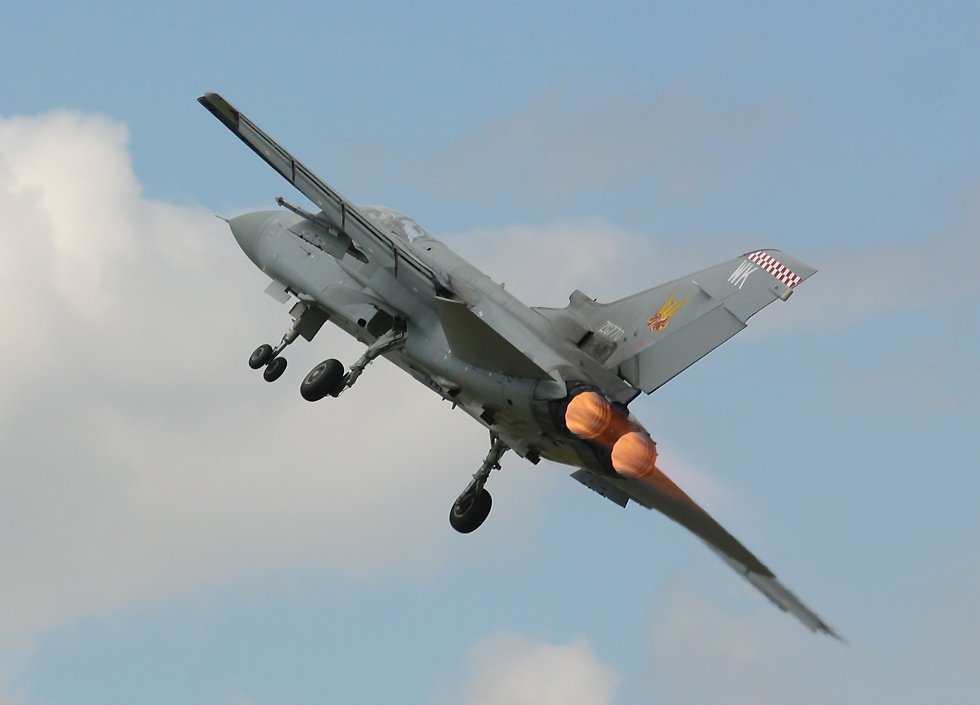
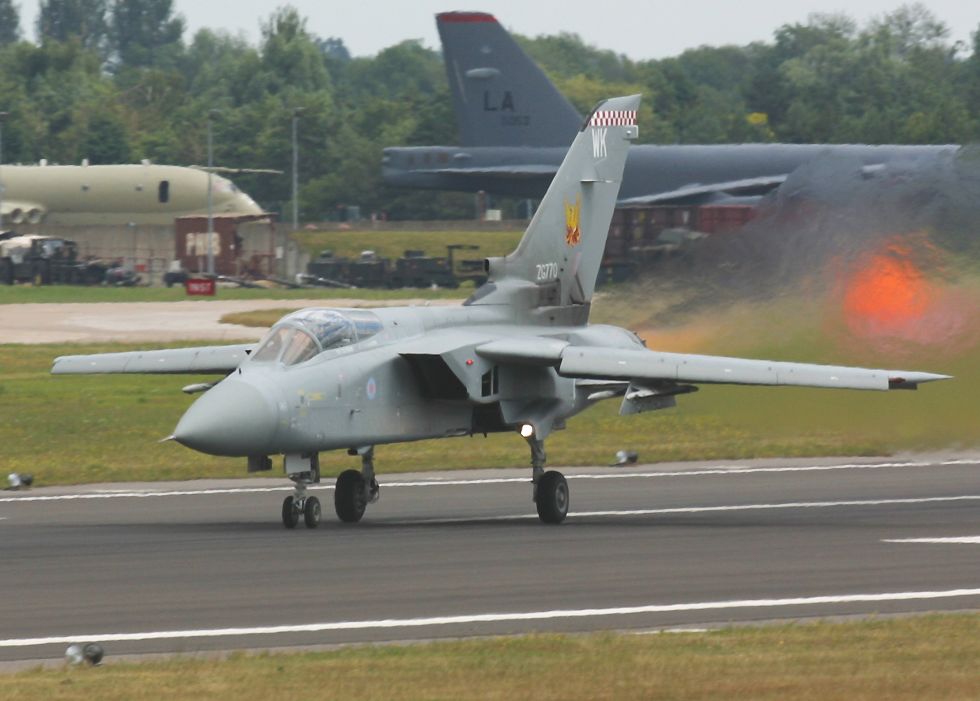
| The Tornado's two
after-burning jet engines, seen in action here, allow it to reach a maximum
speed of mach 2.2 (2335 km/h or 1450 mph). It was the first
fighter built with fly-by-wire technology and was designed with terrain
following radar for fast, low-altitude flight so it could avoid radar detection
and then drop a bomb load of up to 18,000 pounds. |
 |
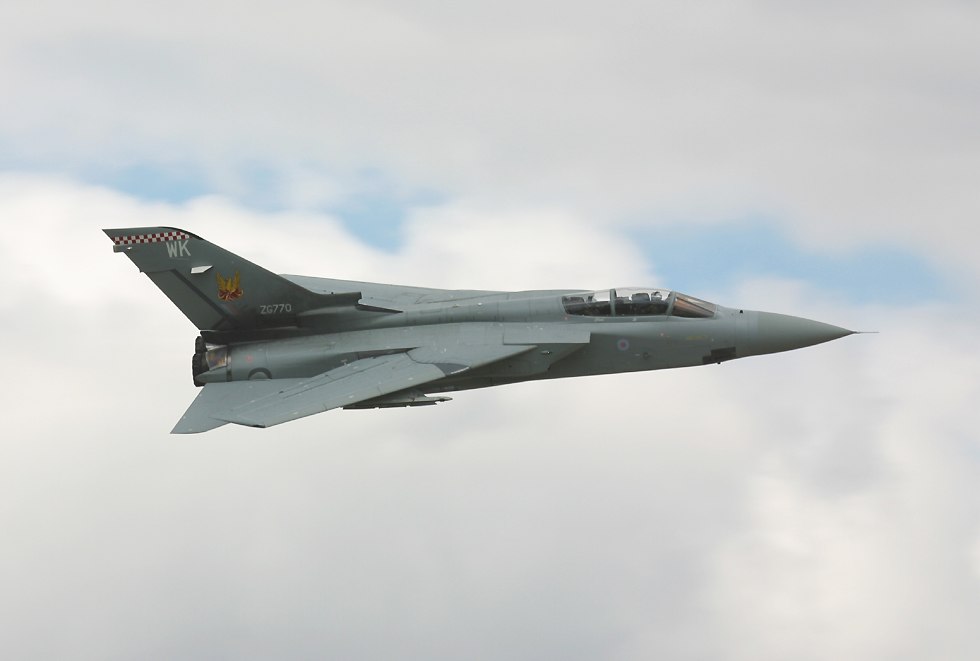
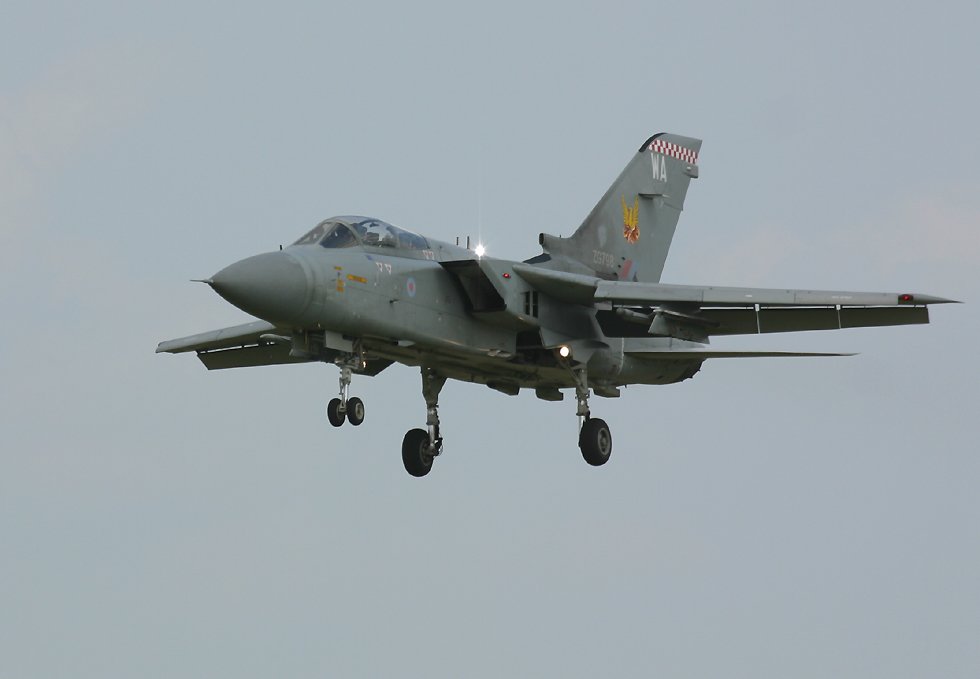
| The aircraft you
see here is the specialized long-range fighter version of the Tornado called
the ADV or "air defence variant", as opposed to the "IDS" or "interdictorn
strike" variant which is specialized as a strike aircraft.
The Tornado ADV is armed with up to four short-range sidewinder missiles
on wing pylons, four medium-range skyflash missiles under the fuselage,
and one or two 27mm cannons mounted on either side of the fuselage.
You can see one of these cannons just above the nosewheel of this plane,
and you can also see the aerial fueling probe in its extended position,
to the right of the nose. |
 |
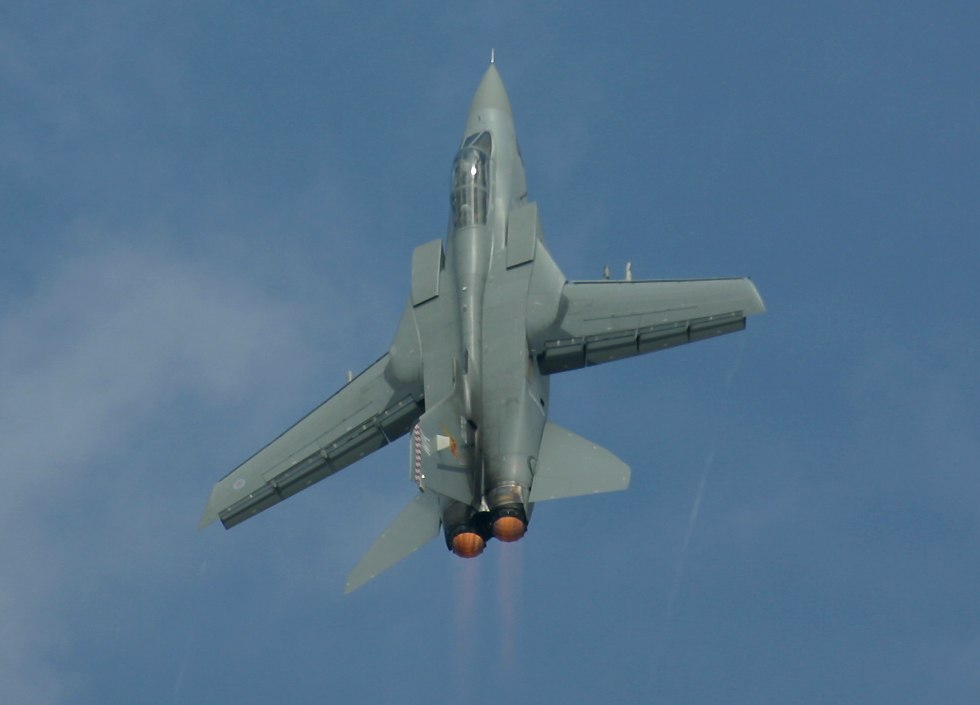
| A "variable geometry"
swing-wing arrangement was adopted, here you can see the wings in their
fully-backward position during a high speed pass. |
 |
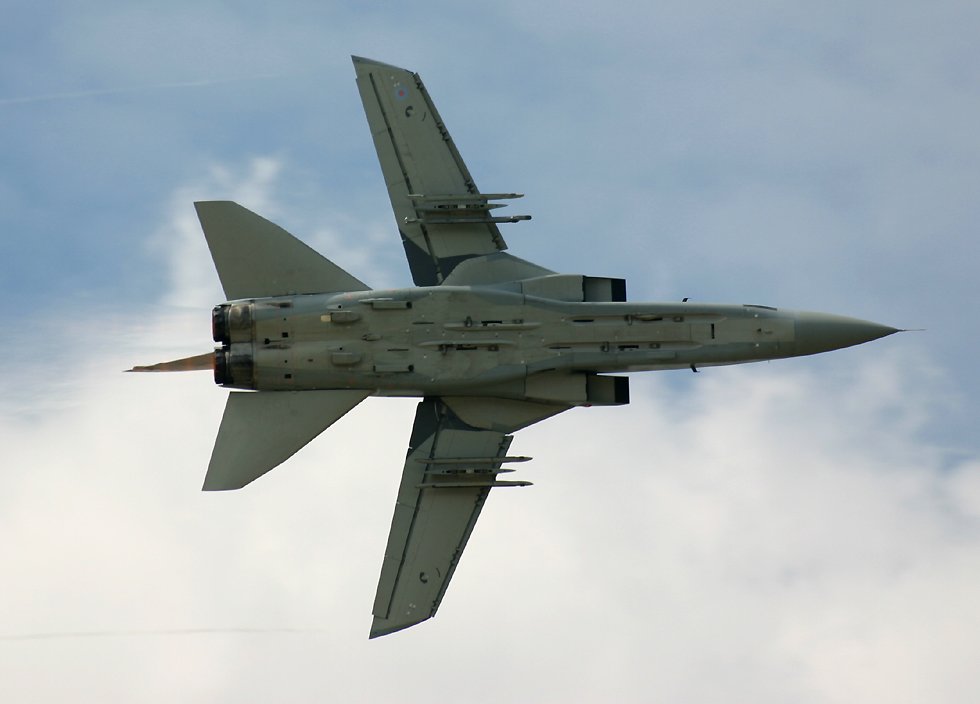
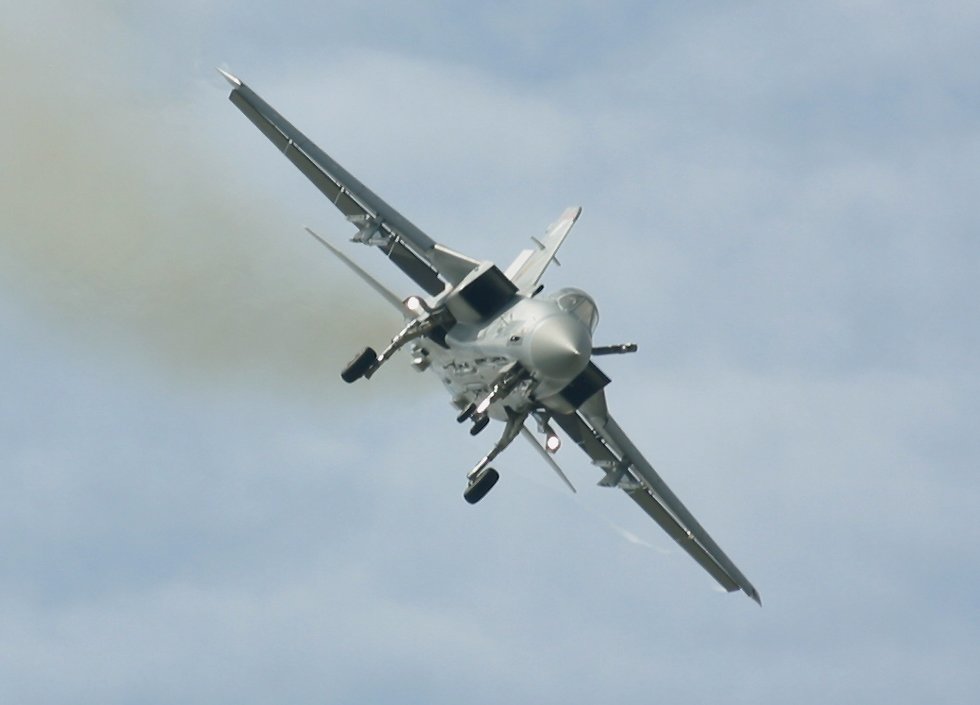
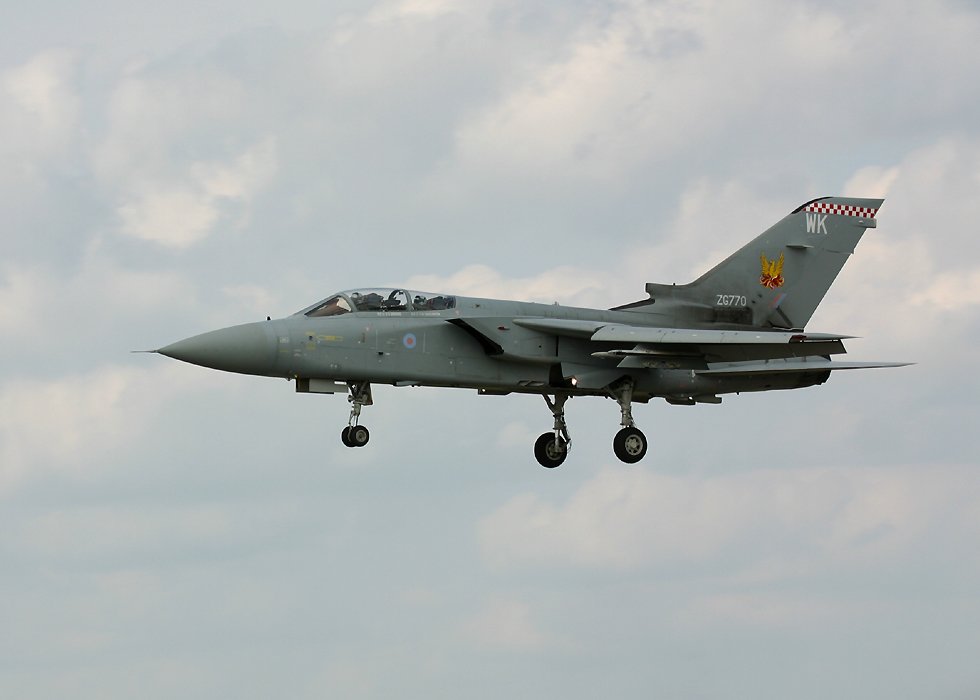
| Here are the wings
in their fully forward position. You can see the four skyflash
missile locations recessed into the bottom of the fuselage, together with
the four rails on the wings for sidewinder missiles, together with two
pylons for extra fuel tanks. This clearly identifies this aircraft
as an interceptor or fighter, rather than the fighter/bomber or reconnaisance
versions. |
 |
| Swing wings are
a very complex technology to get right, and add a considerable amount of
weight to the plane for the motors to move the wings. The designers
decided to go with this troublesome technology because it allows the plane
to take off and land at lower speeds than a swept wing plane, while still
permitting the high speed performance of such an aircraft.
These factors were considered important for a plane which might have to
take off from runways damaged by enemy missiles or bombs. |
 |
| Saudi Arabia is
the only country to buy the Tornado, apart from the original three European
partners. The Saudis received the first of their 96 aircraft
in 1986. |
 |
| During the 1990
Gulf War against Iraq, six Tornadoes were lost as a result of enemy action
or mechanical failure. Although this caused a political uproar
in Britain, most experts consider this a normal consequence of operating
such high performance aircraft at very low altitudes in hostile territory. |
 |
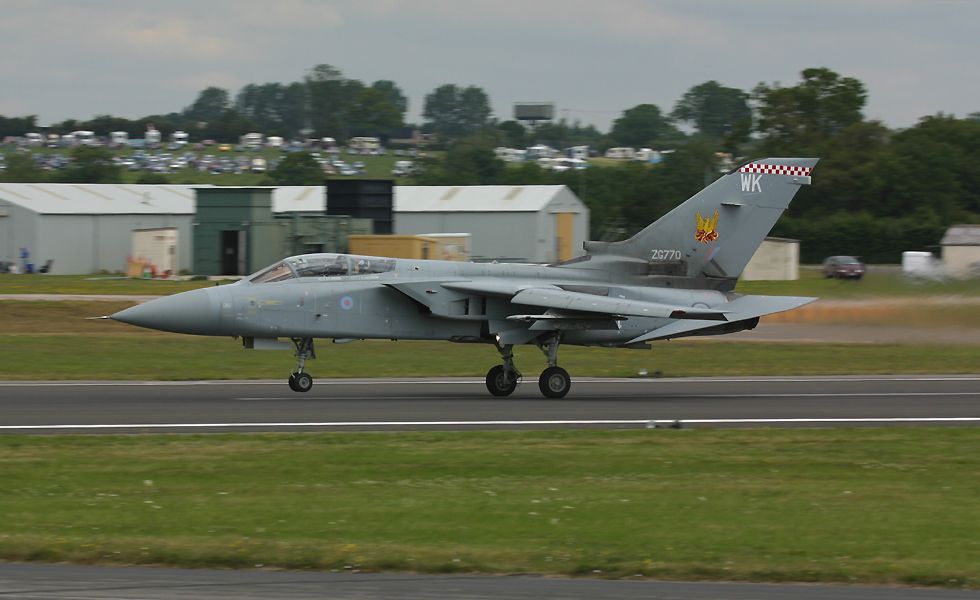
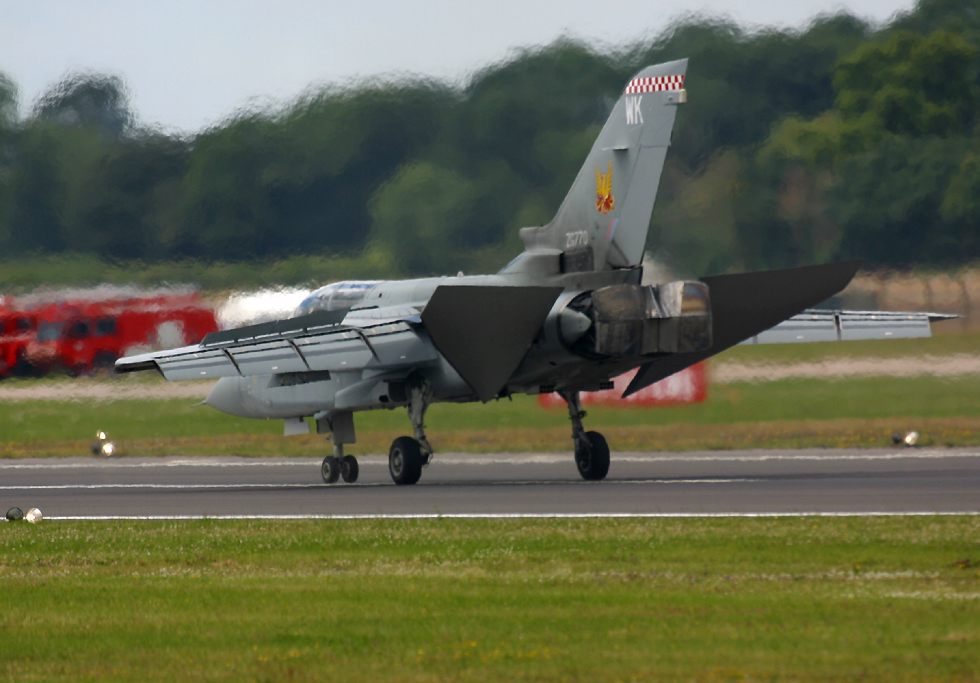
| The thrust reversers
visible at the rear allow the plane to land on the same damage-shortened
runways it took off from, but they produce a characteristic sooty patch
on the tail from the hot gases which are directed forwards. |
 |
| Tornado displays
might be dull for British enthusiasts, but in America they're an extraordinarily
rare sight. However the German Air Force contingent at Holloman
air force base in New Mexico put on a display which might make even a British
fan take notice, including a
simulated buddy-refuelling display. |
 |