
Collings Foundation F-4D Phantom II Air-To-Air
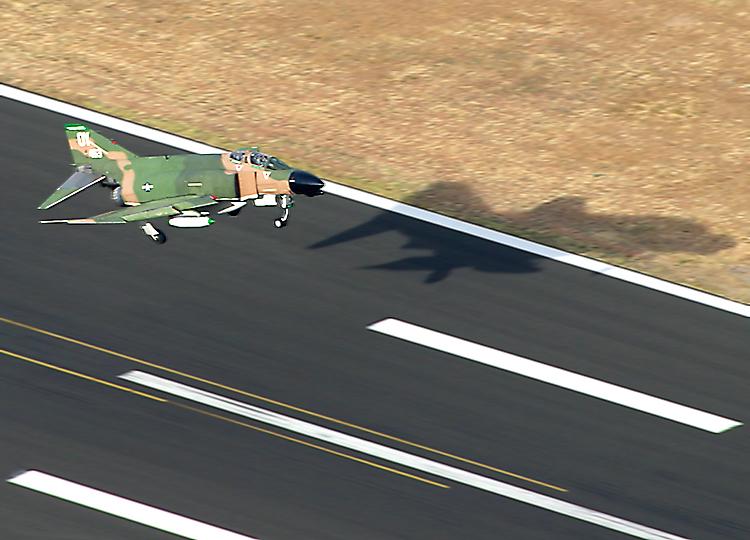
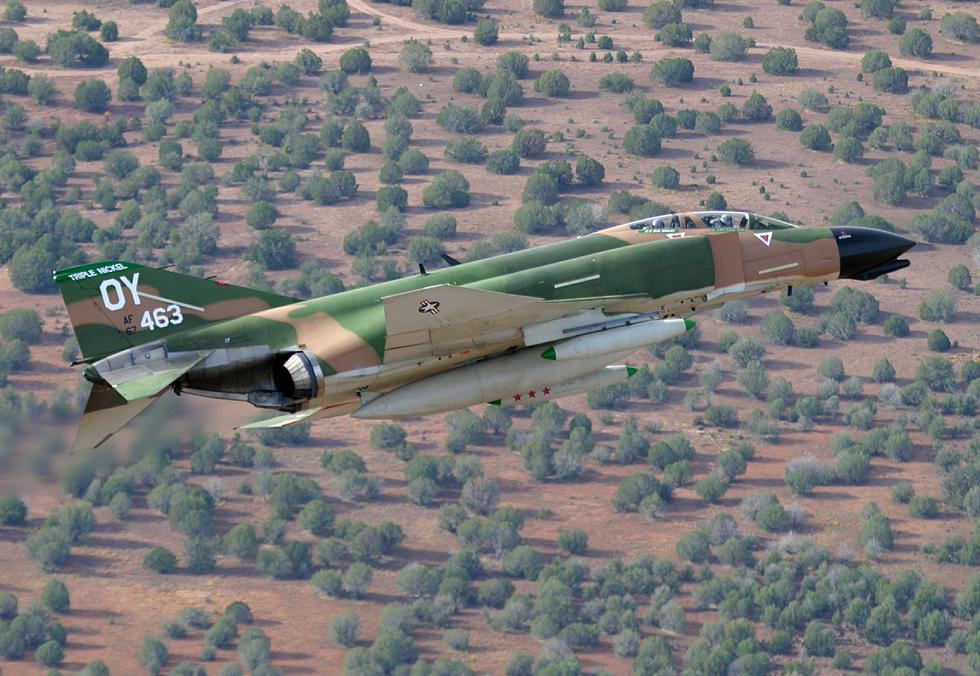
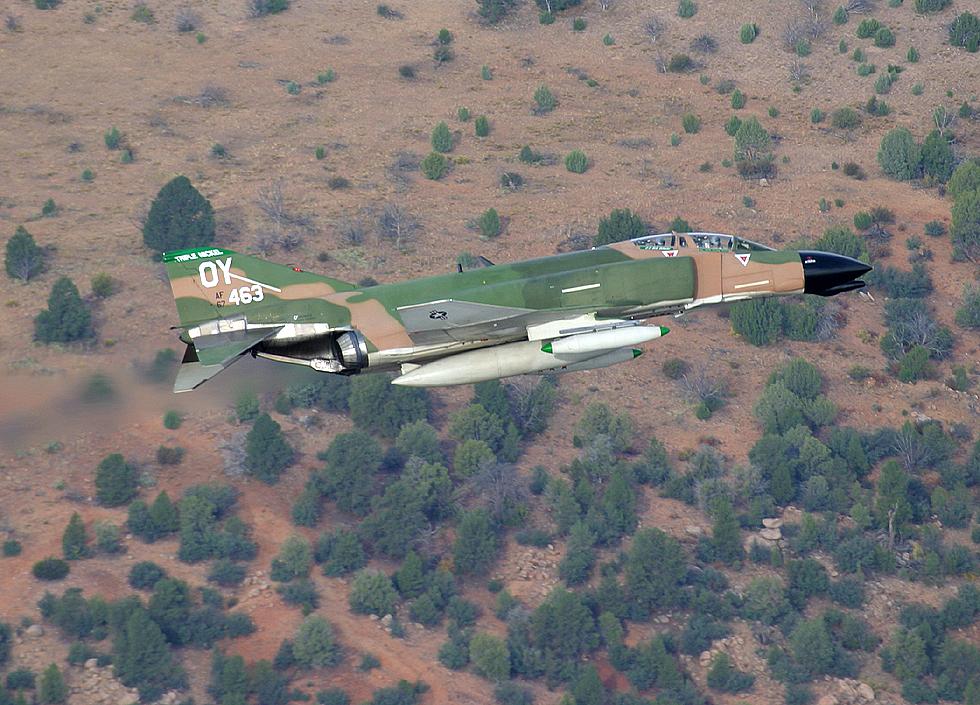
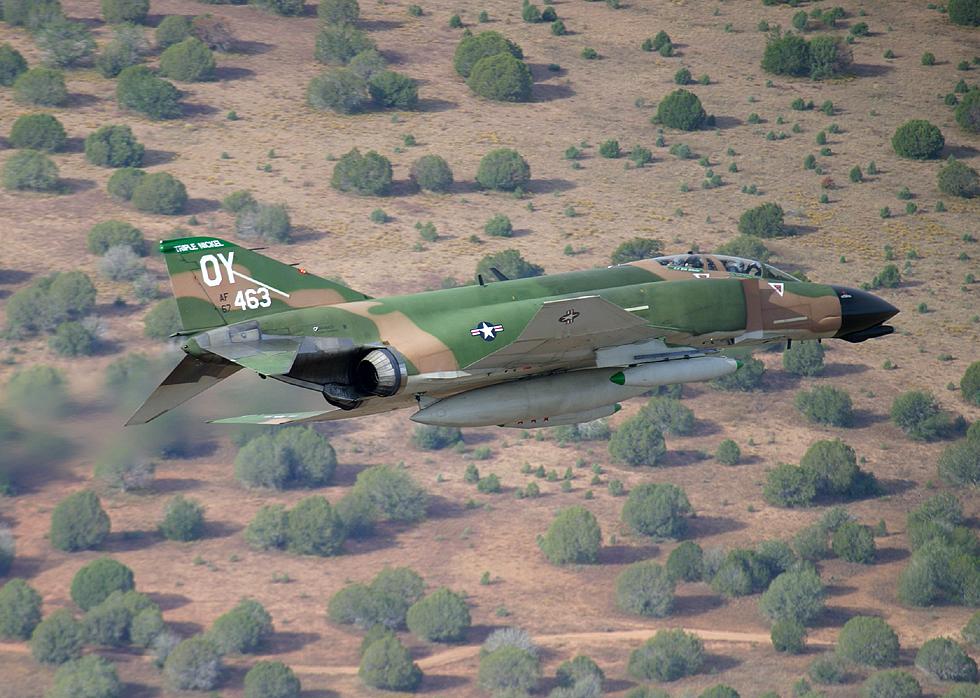
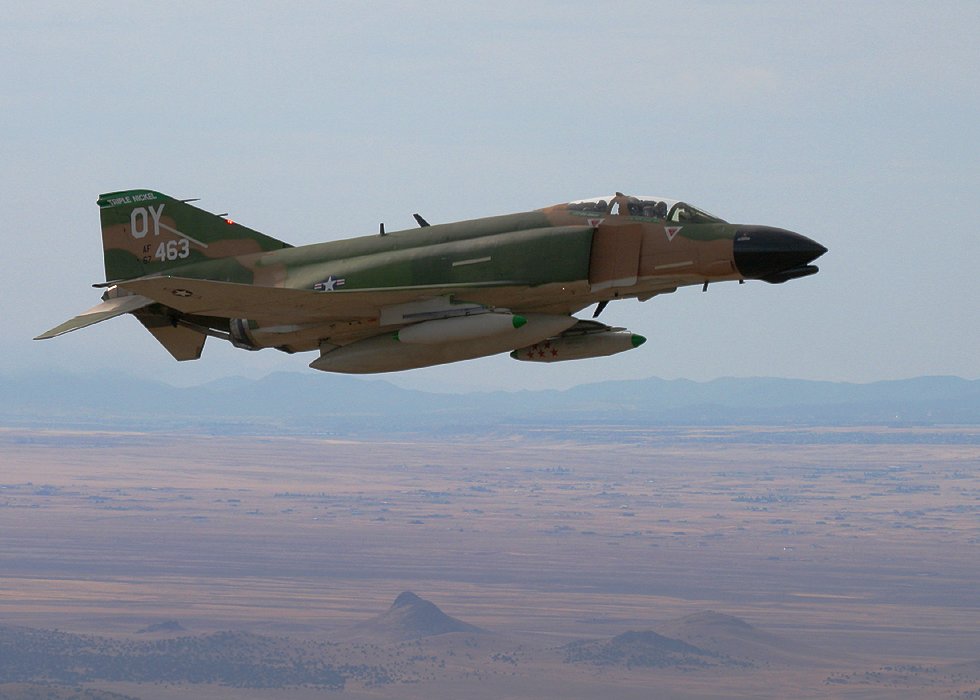
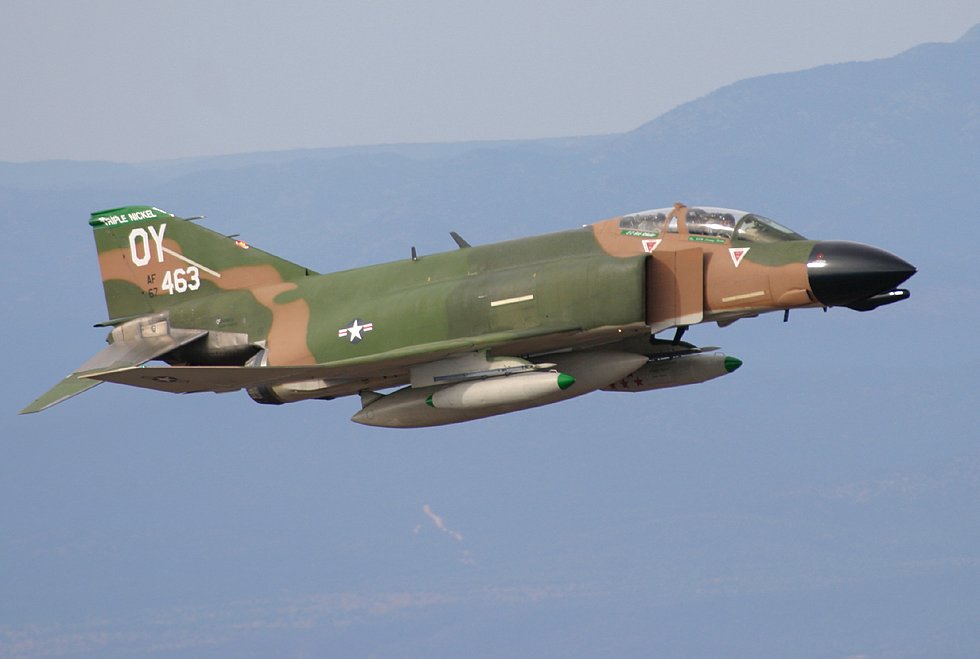
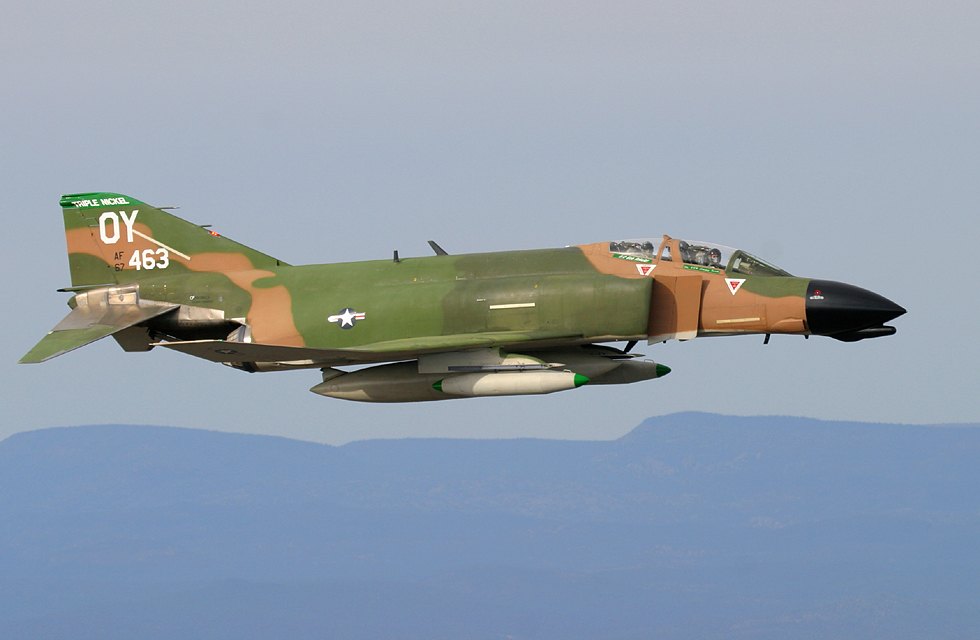
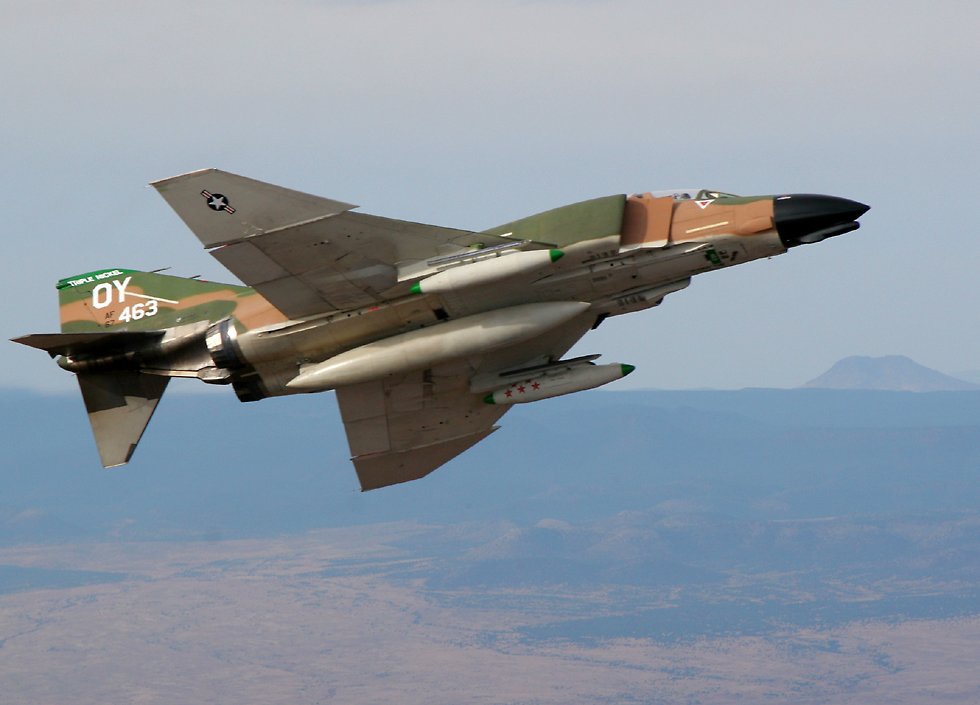
The F-4 Phantom II was America's top of the line fighter during the Vietnam war - indeed it was to the Vietnam war what the P-51D Mustang was to world war two, and what the F-86 Sabre was to the Korean war. Because of its operational abilities and the historic role it played in this conflict, it is also one of the most well-loved of American military aircraft, with devotees of the "Rhino" coming together from America and Europe for the annual Phancon convention. In 2004 this was held at Holloman AFB in New Mexico, which was a training base for German Air Force Phantoms, as well as home of USAF QF-4 Phantom II drones. In October of 2005 I had the incredible opportunity to do an air-to-air photo shoot of the F-4D Phantom II owned and operated by the Collings Foundation in the USA. This is the only civilian owned Phantom in the world, and in fact it took an amendment to a 1999 Act of Congress to make it possible. So it was that the day after the 2005 Prescott Air Show I climbed into a small Metroliner turboprop airliner with a couple of other photographers, we took off, removed the emergency exit door over the wing and started shooting this magnificent warbird. It was a difficult task - the Phantom is a fast aircraft, so the Metroliner had to maneuver steeply and keep cutting on the inside of its path just to keep up. I expected to be able to shoot with a short lens, but ended up having to use a 100-400mm zoom at full extension, the equivalent of a 640mm focal length on a 35mm camera. I took just over 100 photos, about a third of which came out acceptably sharp. Given the often turbulent air this was a pretty good result, and it's something I would definitely do again if given the opportunity, even though I ended up retching my guts out after the shoot had finished and we'd started flying straight and level again! |
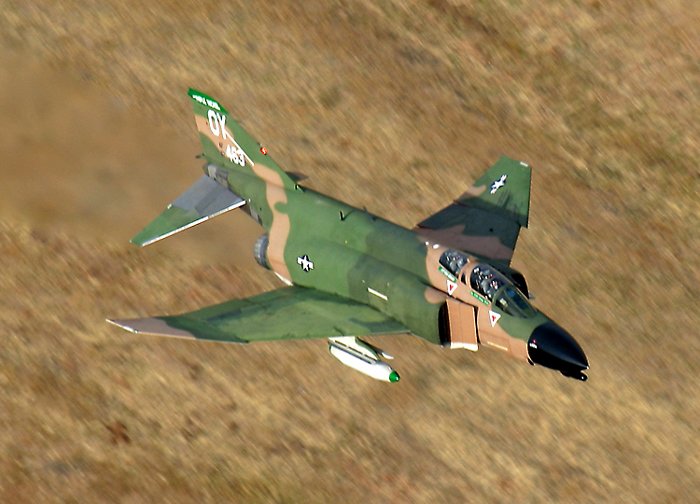
It takes a lot of money to operate a gas guzzling jet like this, but despite the high costs it's been able to successfully compete in the crowded airshow market, even being invited to perform at military shows like the 2005 Edwards air force base airshow, which could just as easily have invited the air force's own QF-4 drones to the show, some of which have been painted up in color schemes much like the Collings aircraft. However, to true enthusiasts a drone isn't quite the same thing as the unmodified Phantom, and it seems that some at least of the air force brass feel exactly the same way. |
|
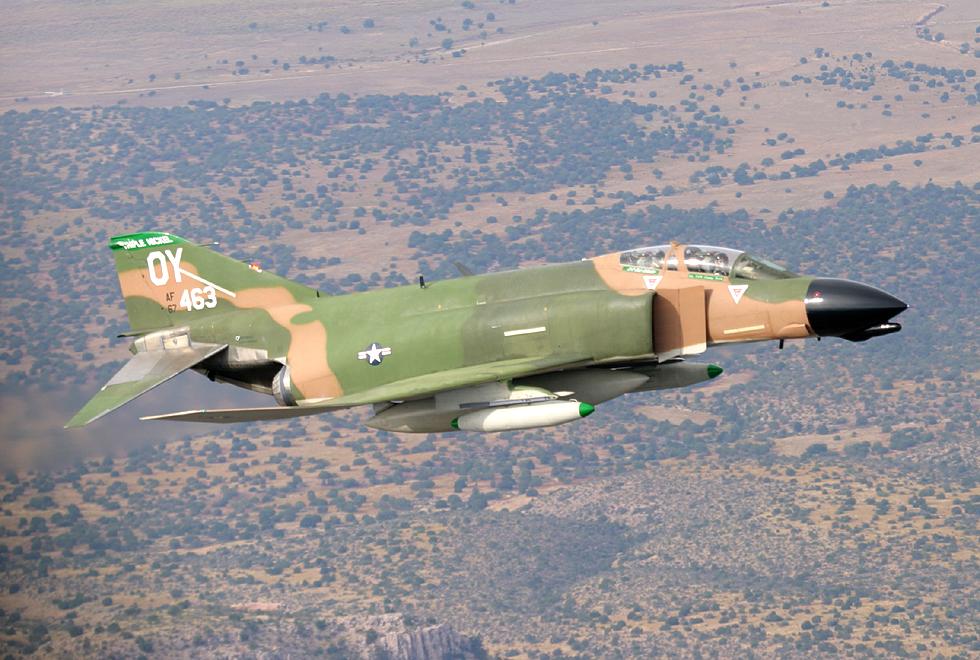
The engines weren't the only trouble spot for the Phantom - the distinctively downturned tail and upturned wingtips were introduced to correct serious deficiencies in the handling of the aircraft. The upgraded powerplants rescued the plane, and pilots used to joke about the Phantom that you could even make a brick go supersonic if you just fitted it with powerful enough engines! |
 |
|
The performance of the Phantom II allowed various impressive feats to be achieved, such as an altitude record of 98,556 feet (30,040 meters), a speed record of 1606mph (2585 km/h) and a low-altitude speed record of 902mph (1452 km/h) which stood for 16 years. These capabilities were so good that the marines and air force also placed orders, with eventual production of 2874 for the air force and 1264 for the navy and marines. The Phantom became the first American aircraft to serve simultaneously with the air force, navy and marines and is arguably the only aircraft which has operated successfully with all these branches of the military, despite repeated failed attempts by politicians to concoct aircraft like the F-111 and F-35 to pull off the nearly impossible task of doing all things well. |
 |
|
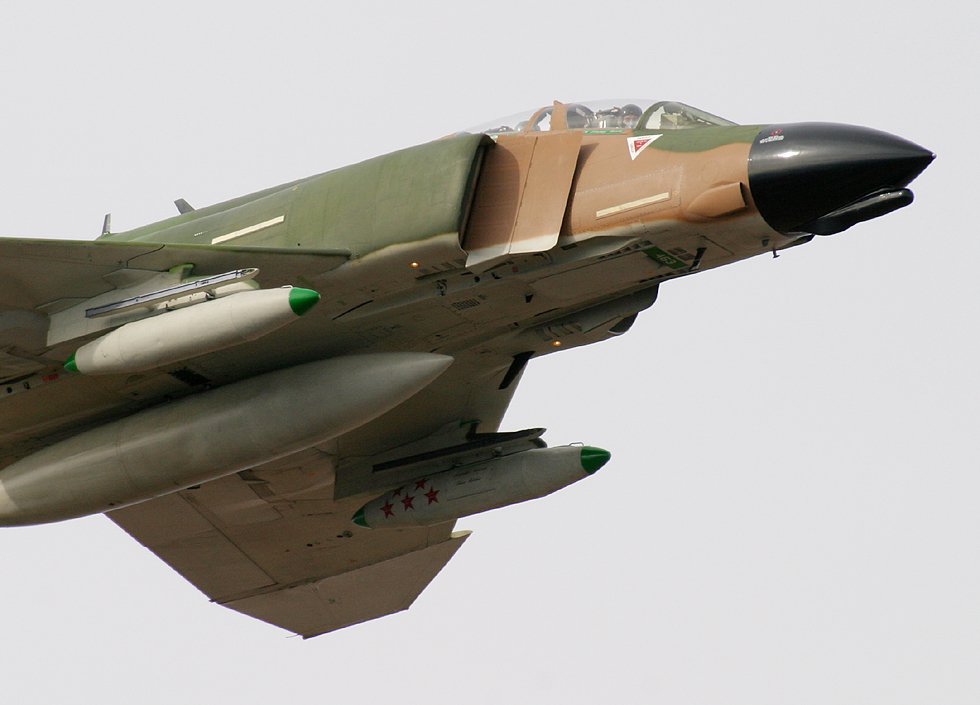
The success and longevity of the Phantom were due not only to its high speed, but also to its ability to carry a large and varied payload, allowing it to operate equally well as a pure fighter or as a ground attack aircraft. Up to 16,000 pounds of bombs and rockets could be carried on external racks - twice the load of the American world war two B-17G Flying Fortress bomber, which had a crew of 10 men. |
 |
|
During the course of the Vietnam war Phantoms shot down 107 MiGs out of a total of 137 brought down during the conflict - 33 MiG-17 "Frescos" like the one that flew at the 2005 Holloman AFB airshow, 8 MiG-19 "Farmers" and 66 MiG-21 "Fishbeds", like these Vietnamese air force MiG-21s I photographed in 2004 in operation at the former US air force base at Danang. The Frescos and Farmers were inferior aircraft, but the MiG-21 was a worthy opponent, armed with air-to-air missiles and some models had either 23mm or 30mm cannons. |
 |
|
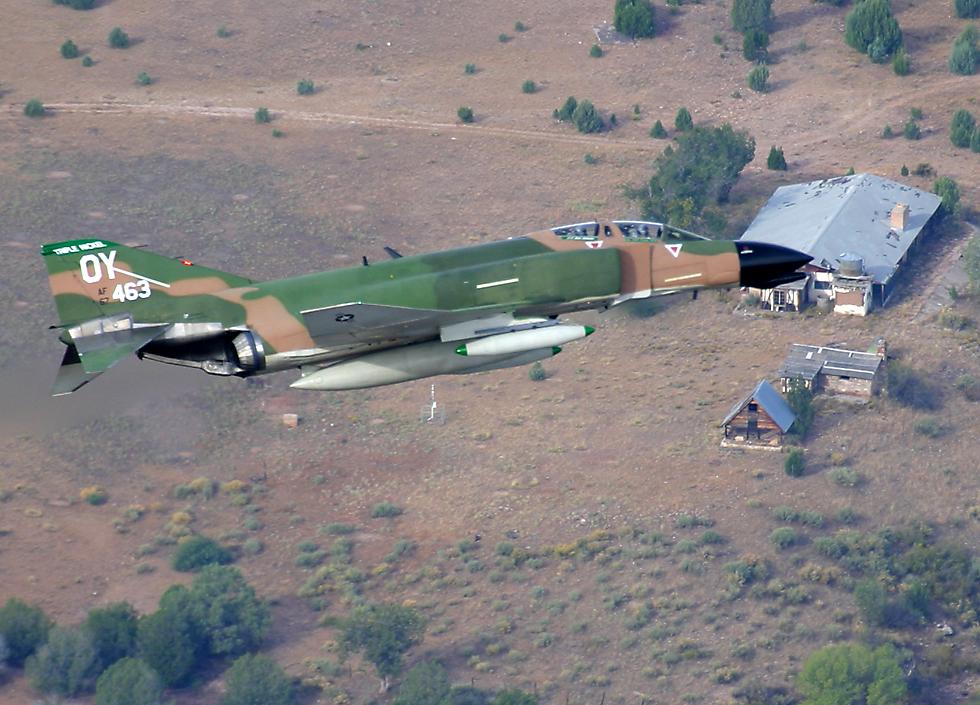
Several Phantom crew members distinguished themselves during the war by shooting down 5 enemy aircraft and so achieving the coveted status of "ace". In the navy, Randy Cunningham and Willie Driscoll became aces while flying Phantoms, and in the air force Steve Ritchie and his back-seater Charles DeBellevue also became aces in this aircraft type (one back seater, Jeff Feinstein, did participate in 5 shootdowns with different pilots). Ritchie and DeBellevue were the only air force aces of the entire conflict, destroying 5 MiG-21s during a four month period in 1972, and the Collings Foundation Phantom is painted to represent the F-4D they flew as part of the 555th ("triple nickel") tactical fighter squadron. In the same way, Cunningham and Driscoll were the only navy aces of the war, so if you wanted to become an ace then this was definitely the only aircraft to do it in! |
 |
|
By shooting down the fifth MiG, Steve Ritchie broke the four-year old combat record of Colonel Robin Olds, who is considered by many to be the greatest US air force fighter tactician of the war. He became an ace during world war two flying a P-38 Lightning, and not only did he shoot down 4 MiGs himself in Vietnam, he also led the 8th tactical fighter wing to a record 24 victories, a total unsurpassed by any other wing during the war. Olds was something of a renegade, even wearing a very un-military handlebar moustache, which was perhaps tolerated because he was an "old man" of 44 when he entered combat in Vietnam. He chaffed at the unimaginative tactics being used, like taking a long string of aircraft over a target one by one, allowing them to be picked off by ground fire and SAMs. His most famous mission was called Operation Bolo and involved flying a large group of Phantoms as if they were the more vulnerable F-105 Thunderchiefs, and then picking off the MiGs when they came up to attack. This single one day mission destroyed 7 MiGs, a record which lasted for the duration of the war. Despite his successes, some people feel that Olds would also have become an ace if he had listened to his backseaters more, instead of playing the solo fighter jock. |
 |
|
Operation Bolo achieved its results without a single American aircraft downed, but that was an exceptional outcome during the Vietnam war. In Korea the kill ratio of F-86 Sabres against MiG-15s like the one at the 2005 Edwards AFB airshow ran something like 10 to 1 in favor of the Americans, but in Vietnam the ratio became as low as 1 to 1, and this eventually forced the American military to respond. As well as introducing new tactics, new equipment in the form of a cannon was added, first in an underbelly pod and then in a fuselage mounting with a large muzzle fairing under the nose. The Phantom had been conceived as an all-missile interceptor, but it was finally realized that combat almost never occurred at supersonic speeds, and to succeed in a close-in dogfight a gun was necessary. The poor kill ratio also led the navy to establish its Fighter Weapons School, afterwards to become famous as Top Gun, which improved the ratio to 13 to 1 and later to 22 to 1. |
 |
|
Numerous other nations, including Australia, Germany, the UK, Greece, Turkey, Israel, Egypt and South Korea also bought the Phantom, and Mitsubishi in Japan license built 138 aircraft, for a total production run of 5195, the last one rolling off the production line in 1979. The British ones were equipped with Rolls-Royce Spey engines, which resulted in lower top speed, range and flight ceiling than the American aircraft. |
 |
|
The British version of the Phantom was retired in 1992, but several other countries plan to keep their aircraft in service for some years to come. The US military also operated Phantoms as RF-4C reconnaisance aircraft, and in the Wild Weasel role to destroy enemy radar-guided missile sites. The last American Phantoms flew as Wild Weasels over Iraq in 1996, and most American Phantoms ended their operational careers in storage in the desert. Periodically several of them are brought back into service and fitted with equipment to allow them to operate as QF-4 drones. Some of these are based at Holloman air force base in New Mexico, and are used for testing at the nearby White Sands Missile Range. During this testing they're remotely controlled, but they can also still be piloted in the regular way. |
 |