Weird and Wonderful Aircraft at the USAF museum at Dayton
 
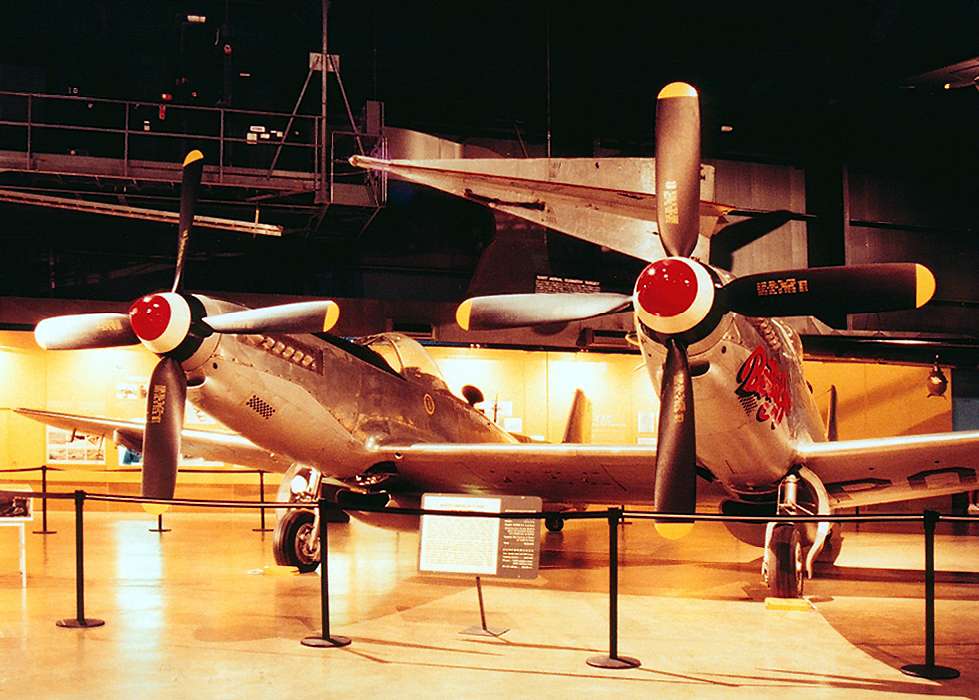
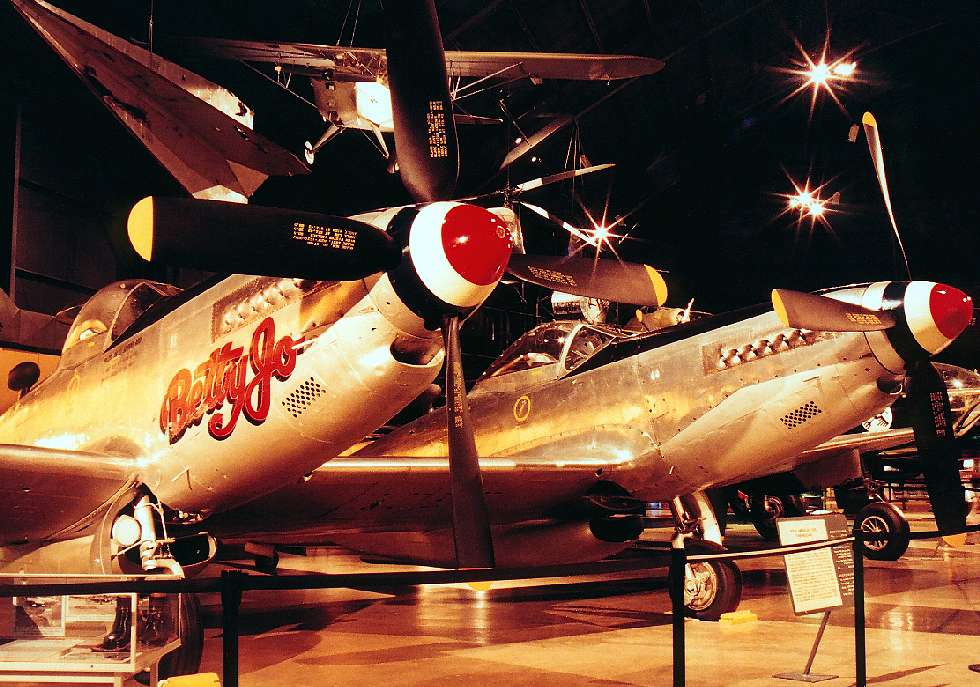
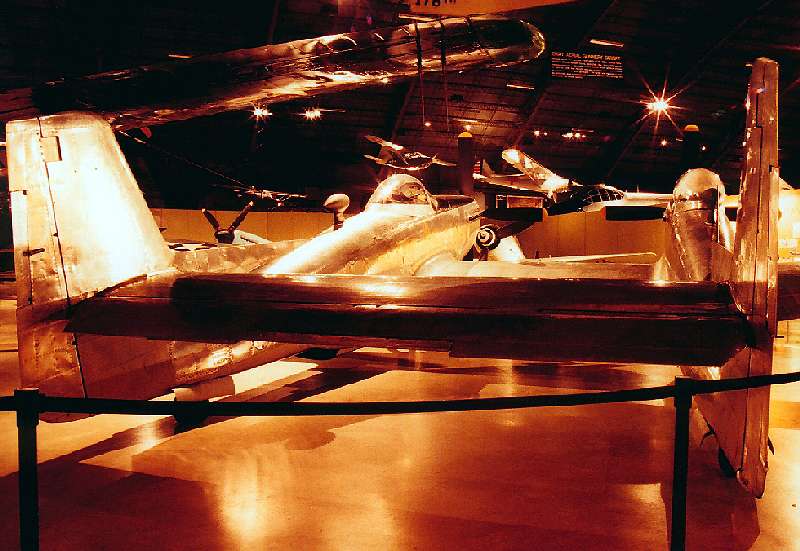
You're looking at the only aircraft on this page to go into production, the F-82 Twin Mustang.   It's not a plane many people are familiar with, perhaps because it arrived a little too late for World War Two.   Despite an explicit statement on the plaque that it was a completely new design of aircraft, its lineage with the P-51 Mustang is obvious.
F82 Twin Mustang
It was intended for very long duration flight, with one flying non-stop from Hawaii to New York.   It had two pilots to reduce fatigue, but I'm not sure if they split duties in a dogfight.
F82 Twin Mustang
The Twin Mustang was the last propeller driven fighter the USAF bought in any quantity, with 273 manufactured.   At 482 mph it was certainly fast, allowing it to shot down the first three North Korean aircraft of the Korean war.   It could also carry 4000 pounds of bombs, the same as early B-17 Flying Fortresses.
F82 Twin Mustang
 
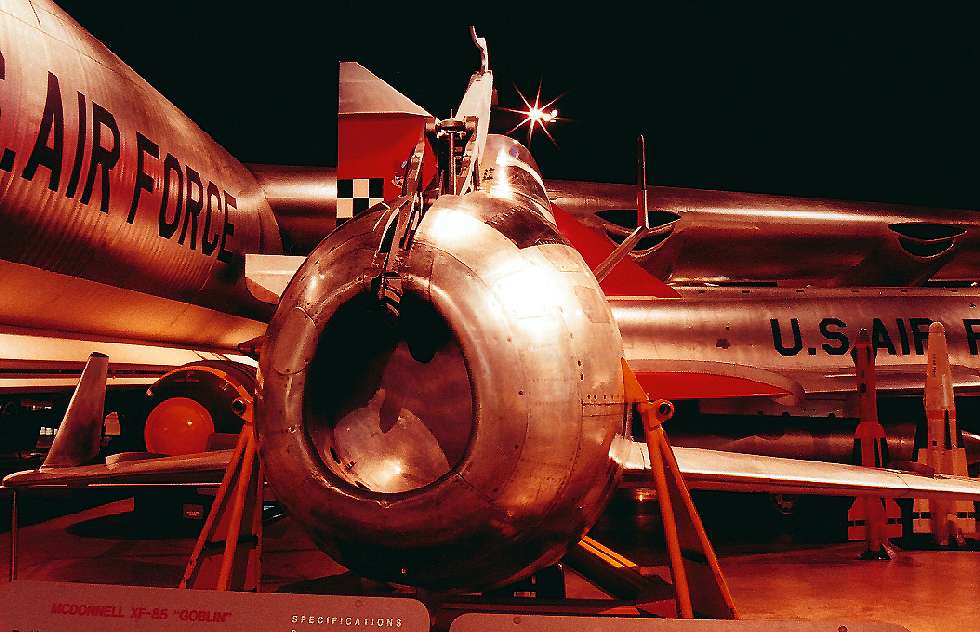
The P-51 was the solution to America's problem of bomber escort in World War Two, but even the F-82 couldn't handle the distances required to protect America's strategic bombers during the Cold War.   One possibility the Air Force toyed with was the "parasitic fighter", an approach the US navy had taken during the 1930s when they equipped their airships with miniature hangars underneath housing biplanes attached on hooks.   The jet powered XF-85 Goblin was an updated version of this concept, intended to be hung from the bomb bay of a giant B-36 Peacemaker bomber (visible in the immediate background), and released using the trapeze hook you can see at the top of the aircraft.   After shooting down enemy aircraft, the Goblin would return to the bomber, hook up, folds its wings and return to the bomb bay.
XF85 Goblin parasitic fighter
The Goblin is one of America's earliest jets, first flying in 1948.   Only 14 feet (4.3 meters) long, it was intended to have a top speed of 650 mph and flying time of 80 minutes.   The concept didn't get too far, though, with only two aircraft built and very few flights made.   After only a year and with just a few drops and recoveries from B-29 Superfortresses, the program was cancelled.
XF85 Goblin parasitic fighter
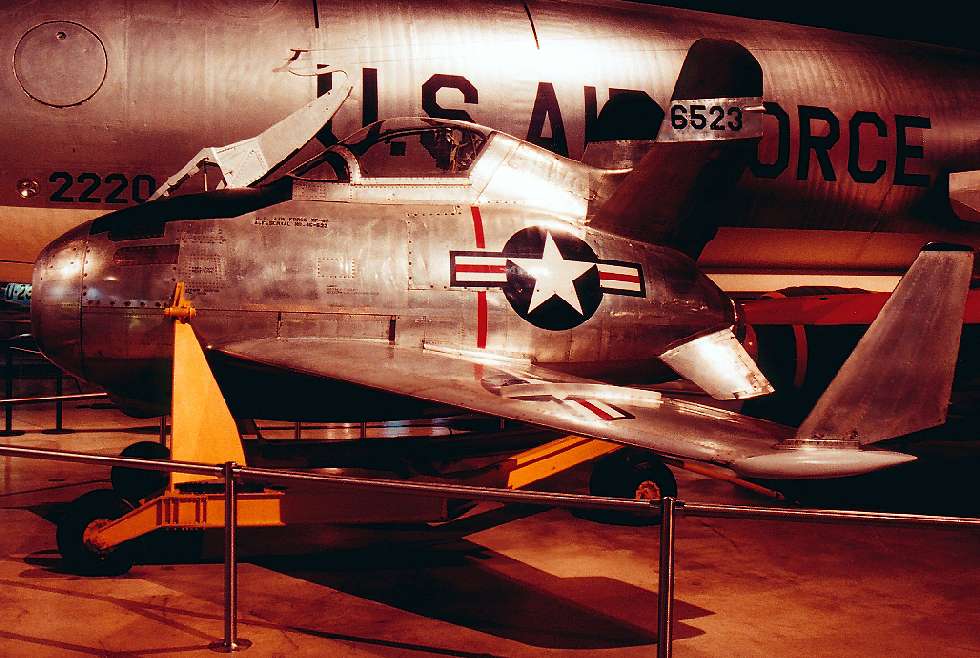
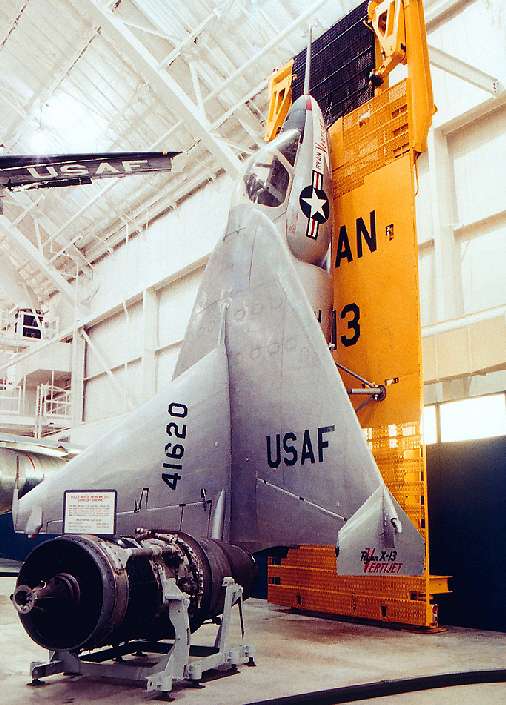
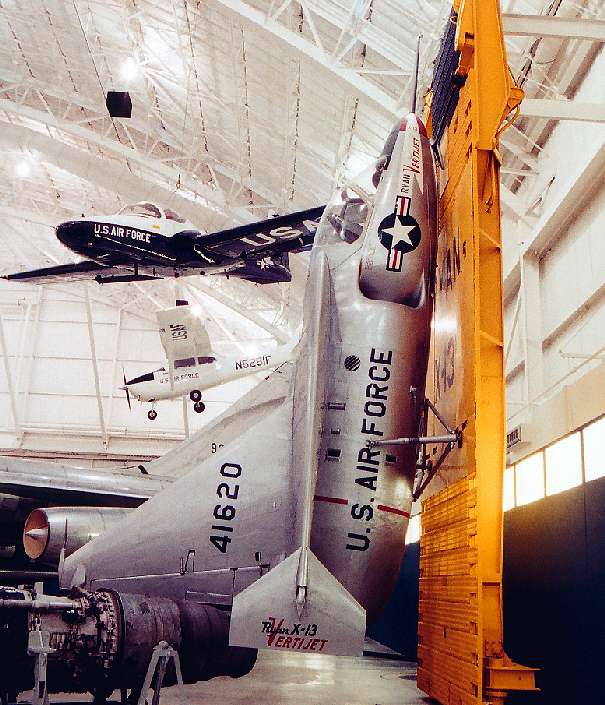
The Ryan X-13 Vertijet was another innovative effort to gain a competitive edge during the Cold War, made possible by the improved power of jet engines.   The Vertijet relied on a British Rolls-Royce Avon jet engine with a thrust of 10000 pounds to lift its 7200 pound maximum weight vertically from the ground. Ryan X13 Vertijet
Ryan X13 Vertijet First flying in 1956, the plane made the transition from vertical flight to horizontal flight and back to a vertical landing in April of 1957.

The intention was for the plane to take off and land with the use of the frame shown in this photograph, but the difficulty of returning to the vertical orientation and then slowly backing down several hundred feet was simply too difficult, and was one reason the aircraft was rejected for production.

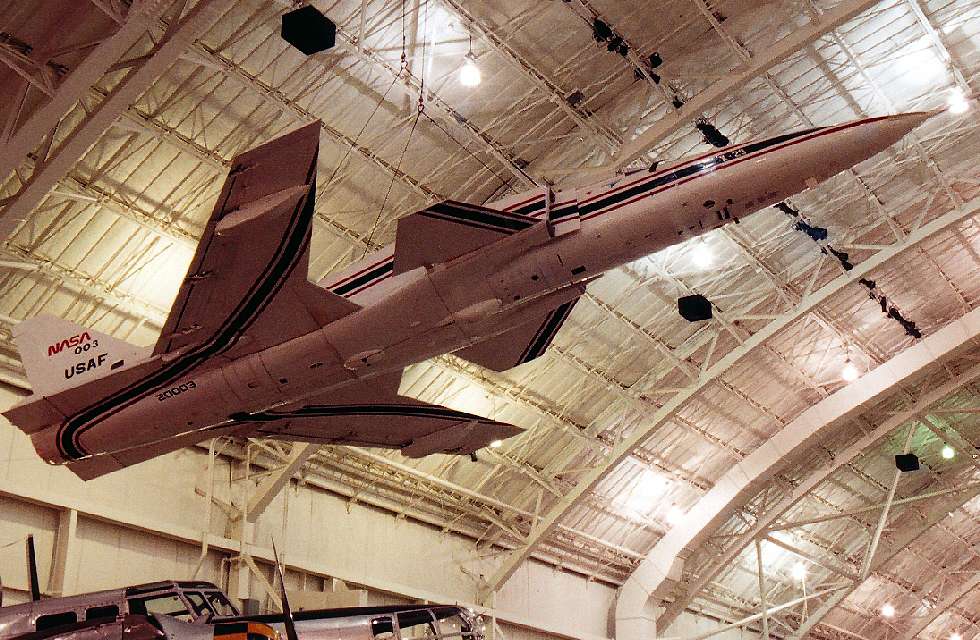
The notion of forward-sweep wings had been thought about since the 1940s, however until the 1970s the materials didn't exist to make the wings stiff enough to handle the stresses involved.   However, in 1982 Grumman built the X-29 which not only had forward swept wings, but also other innovations like the canards which you can see fitted immediately behind the engine intakes.   In 1985 the aircraft you see here became the first plane with forward swept wings to break the sound barrier in level flight.
Grumman X29 jet with forward-swept wings and canards
(at the bottom left of this photo you can see the top of a B-36 Bolo bomber, one of the America's main heavy bombers at the start of World War Two)
 
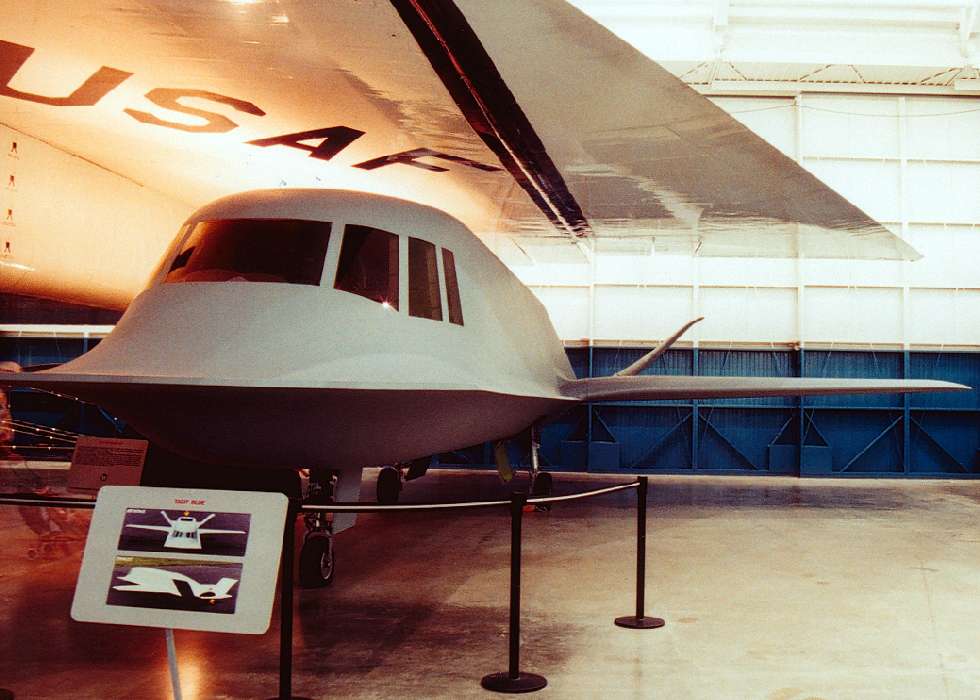
This ungainly creature, looking for all the world like an upside-down bathtub, is the Northrop Tacit Blue aircraft, which was used to develop the stealth technologies used on the B-2 Spirit bomber.
Tacit Blue stealth technology testbed

click here to go to my home page
click here to go to the main Aircraft Museum page
click here to see the Aircraft Museum section of the site map
click here to search this website
click here to see the index to the USAF museum misc aircraft thumbnail galleries
click here for a list of links to Aircraft Museum websites
click here to go to the main USAF museum page
click here to go to the Aircraft and Military Museum wallpaper page