
Aircraft and Military Museums

Classic Rotors

|
The Classic Rotors helicopter museum is located at Ramona airport near San Diego. It has the second largest collection of helicopters of any museum in the world. The museum's pride and joy is this H-21 Shawnee, which is regularly flown to airshows in Southern California. It's the only H-21 in the world in flyable condition. |
|
This is definitely a museum for enthusiasts, it's run by a hard-working team of volunteers who mostly used to work on helicopters while in the military. Space is a bit tight, but there are plans for expansion, and the future should also see work done on some of the exhibits which are in need of some tender loving care, such as this Russian designed Kamov utility helicopter, which was lent to another collection and received back in rather poor condition. |

|

|
There's a large selection of experimental and unusual types, including a Doman transport from 1954, a prototype Hiller Camel collapsible air-droppable army helicopter, a Hiller HJ-1 Hornet propelled by a jet engine mounted at the end of the rotor, and this single rotor Bolkoew Bo-102 manufactured in Germany. |
Edwards Air Force Base
|
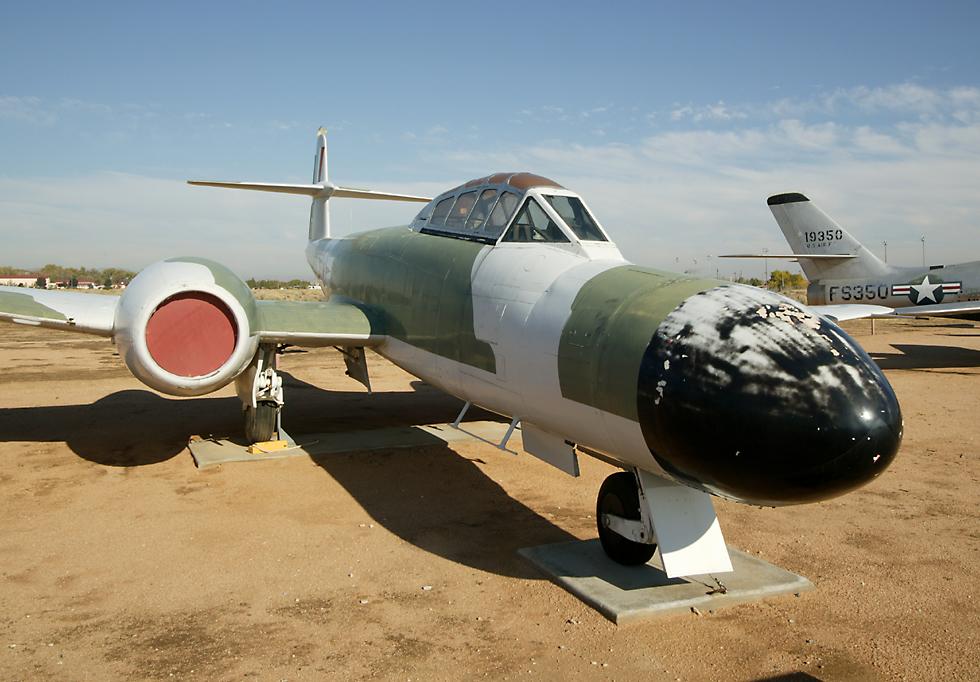
The aircraft museum at Edwards Air Force Base in the high desert an hour and a half north east of Los Angeles is one of those places which is almost impossible to visit unless you're a serving member of the United States Air Force. As you'd expect for the place where most of America's latest aircraft have been tested for the last sixty years, there are some very interesting experimental aircraft, as well as exotics like this British designed Gloster Meteor, the first operational Allied jet fighter, which had a long career after the war in various guises, including as a test bed for new radar equipment and other technology. |
|
|
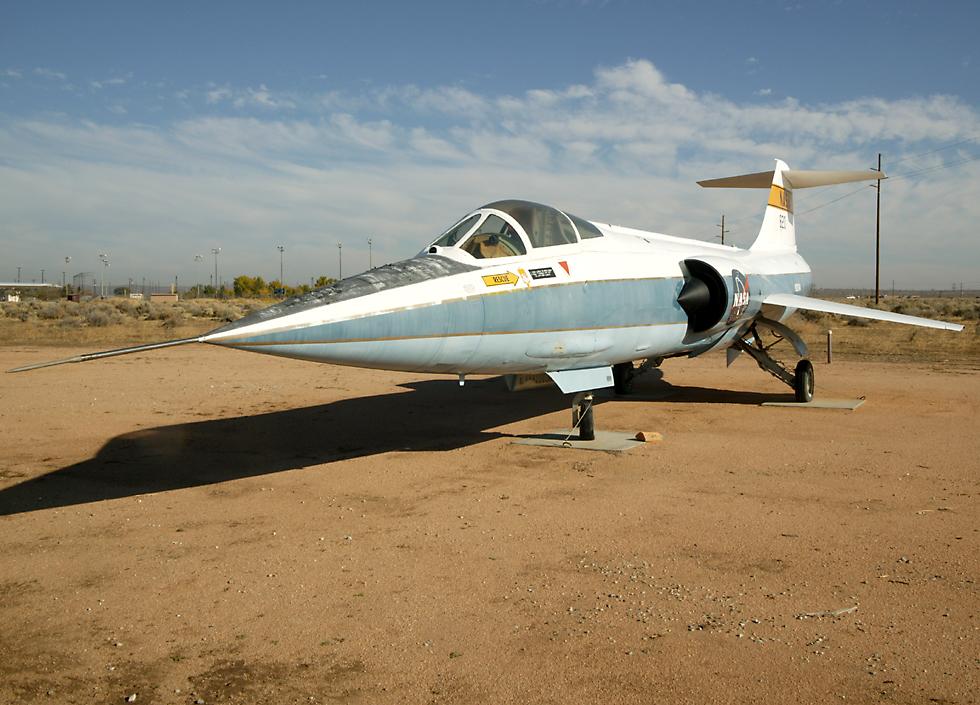
Edwards, which was formerly called Muroc, is home not only to Air Force research, but also to test programmes run by NASA, which is a civilian agency. You can see several NASA aircraft in the open air section of the museum, together with prototype versions of military aircraft which later entered service in larger numbers. |
|
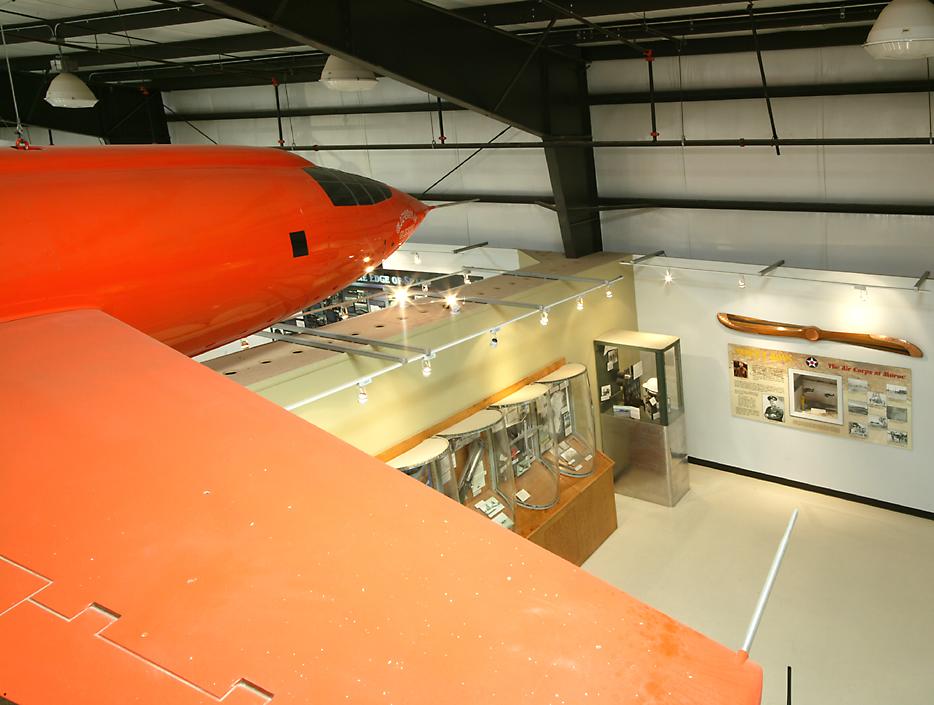
Since the museum is inaccessible to the general public, and since Edwards is more interested in testing innovative new aircraft than in dwelling on past triumphs, the museum is not a top priority financially, and so it's not as large or as well maintained as other more well known establishments. The Bell X-1 broke the sound barrier here, but it's too important a plane to be housed here, so along with many other epoch-making aircraft it's in larger, higher profile museums like the Smithsonian Air and Space Museum. Still, there's an interesting collection here of lesser memorabilia associated with Edwards. |
|
Egyptian National Military Museum
|
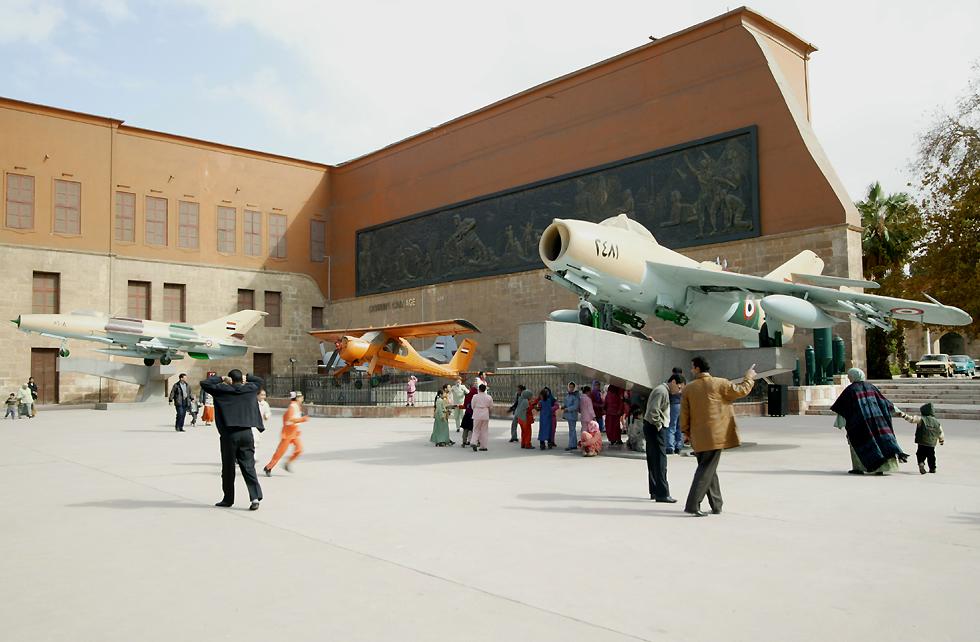
Appropriately enough, the Egyptian National Military Museum is located within the grounds of the Citadel in Cairo, which has hosted the military garrisons of the Arab rulers of Egypt, followed by the Ottoman Turks, the French and the British. The Citadel is a tourist destination in its own right, with great views over the city and attractions like the mosque of Mohammed Ali. |
|
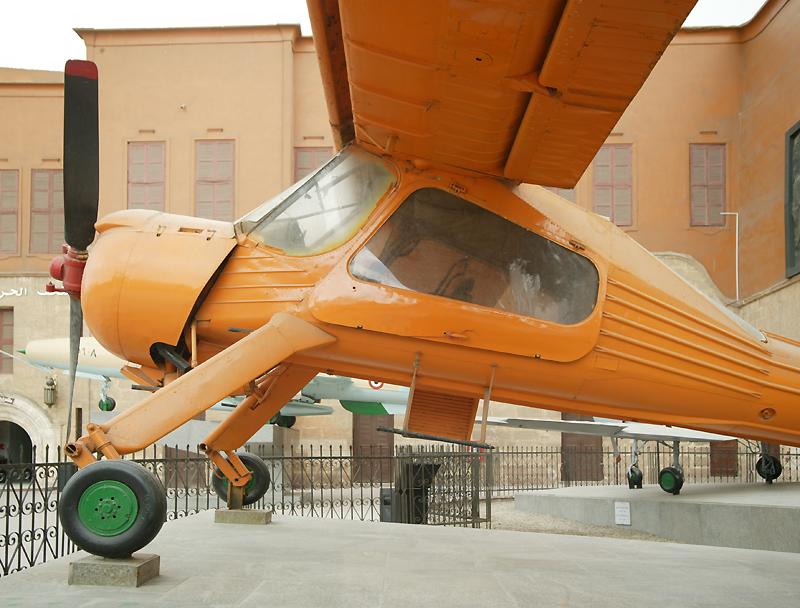
Here you can see captured Israeli tanks from Egypt's various wars, as well as obsolete Egyptian military equipment such as tanks, amphibious landing craft and aircraft, including various Russian aircraft like a MiG-17 and a MiG-21, as well as this Polish Wilga training aircraft. |
|

|
Here's a rarity, a Sukhoi Su-7 jet fighter/bomber which served with the Egyptian Air Force. An interesting aircraft, though I'm not sure how its pitot tube got so bent! |
Grissom Air Museum
|
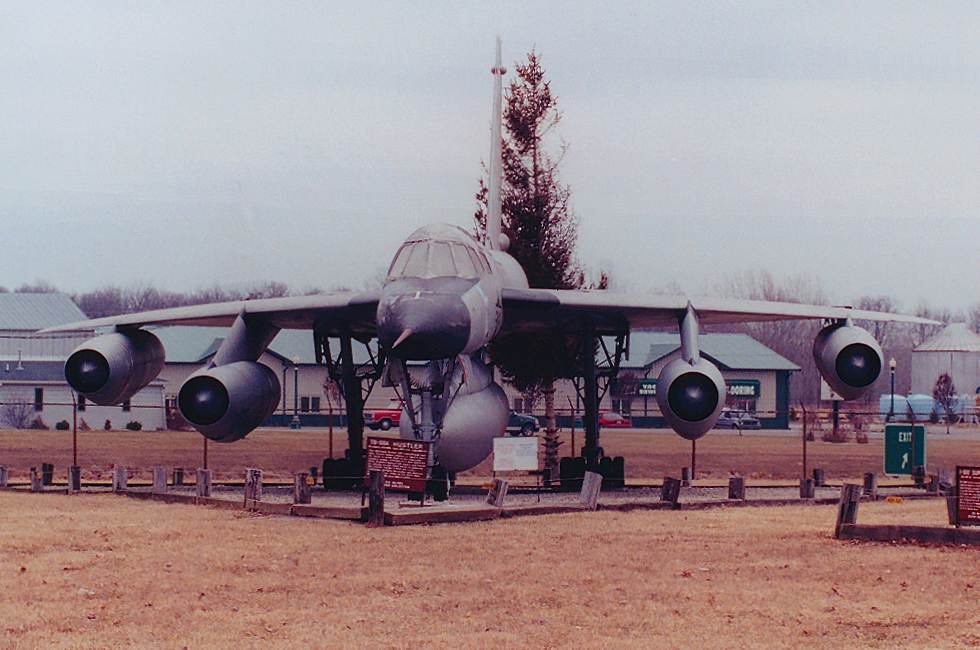
When I moved from Illinois to New Jersey, I made sure to stop off at the main United States Air Force museum in Dayton, Ohio. I unexpectedly moved back to Illinois, and this time I stopped en route at the Grissom Air Museum a little north of Indianapolis, in Indiana. I was mostly drawn by this aircraft, a rarely seen B-47 Stratojet, one of the first jet-powered nuclear bombers in the US inventory. |

|
|
The aircraft displayed at Grissom are all outside, but this is a very good museum, with classic World War Two aircraft like a B-17 and a B-24, as well as Cold War planes like this B-58 Hustler, the fastest nuclear bomber ever to enter service. |
|
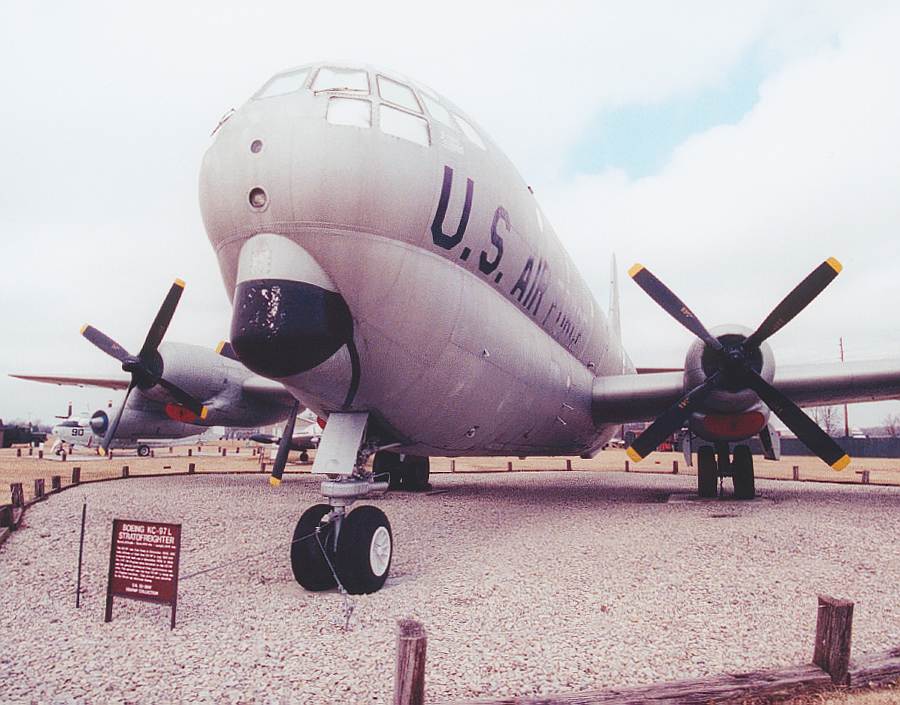
Here's an unusual derivative of the B-29 Superfortress bomber, a KC-97 aerial refuelling tanker. Along with a number of other aircraft derived from World War Two models, it is fitted with two jet engines in addition to its four propellers. |
|
Hiller Aviation Museum
|
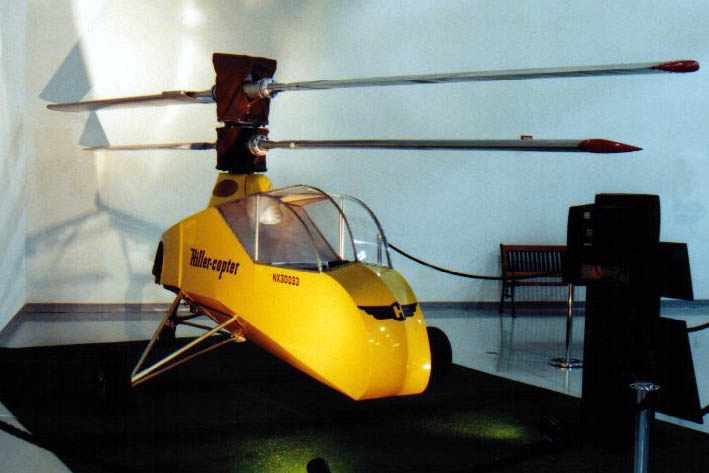
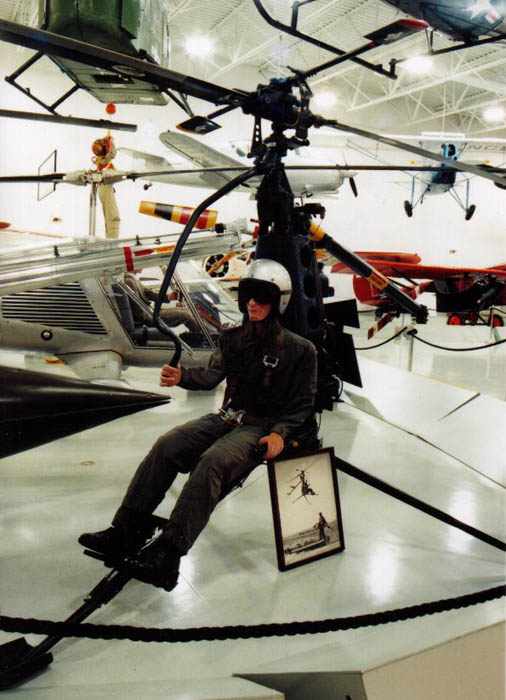
The Hiller Museum near San Francisco celebrates the work of the Hiller company, one of the first helicopter manufacturers, which introduced such innovations as counter-rotating propellers, jet-direction and helicopters powered by jet engines mounted on the rotor tips. |
|
The ingenious designs continued with such ideas as the "Rotor Cycle", a folding helicopter which could be packed into a cannister and dropped to a downed military pilot, who could reassemble it without tools within five minutes and fly himself off to safety. |
|
|
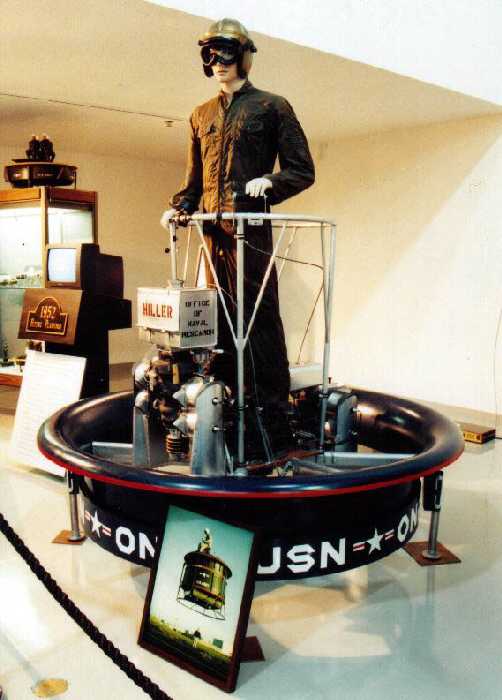
But somewhere along the way the company took a turn straight to LaLaland, with plans for giant helicopters with 300 foot rotor blades spinning at one rpm to be used for snagging used space rocket boosters in mid-air, giant flying wings moving at strange angles, and various "Flying Platforms", such as the 1952 model on the left (yes, it did work, no, it wasn't commercially successful). |
Imperial War Museum at Duxford
|
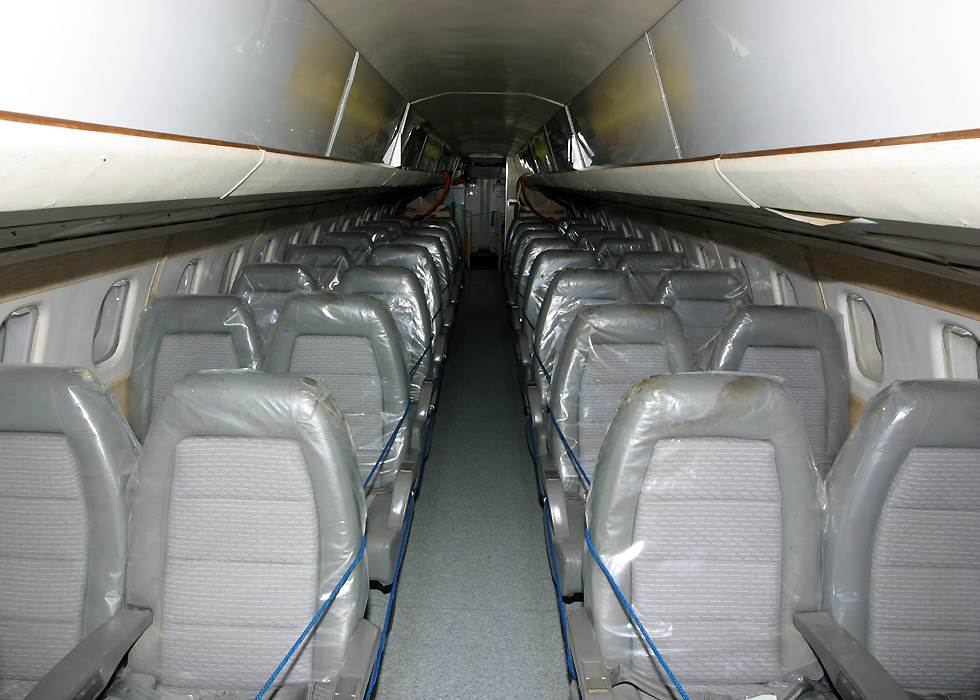
The Imperial War Museum facility at Duxford airfield near Cambridge doesn't just house military aircraft. As well as having the world's first jet airliner, the Comet, this might also be the only place where you'll get to walk through the world's most sophisticated jet airliner, the Concorde. |
|
|
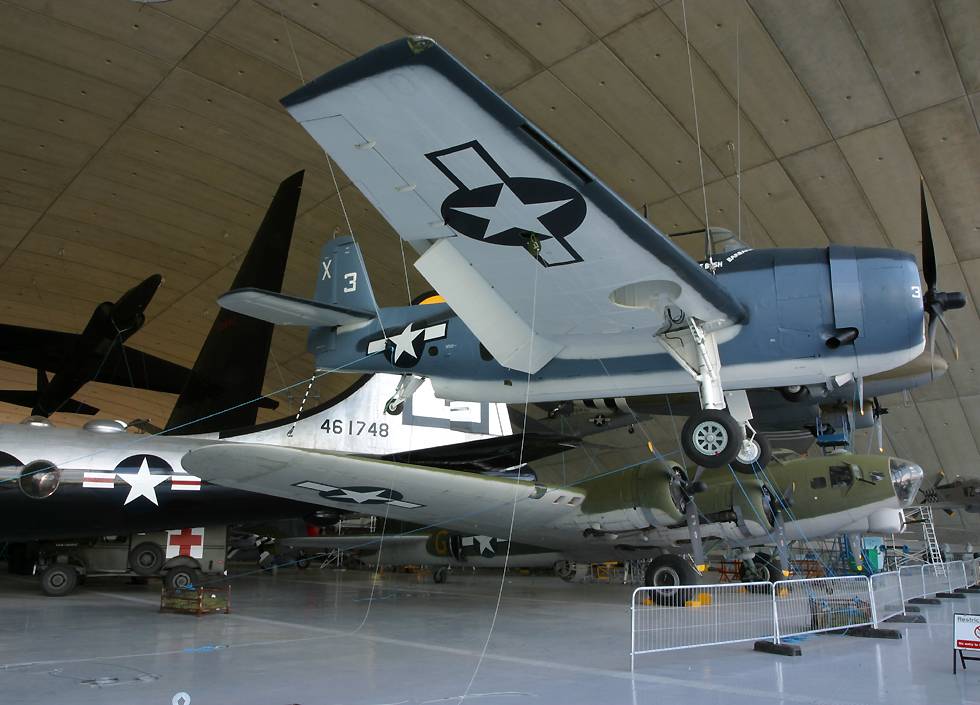
This is really several museums in one, because there are four separate collections, two housed in large old hangars, one collection of post world war two British aircraft standing outside, and the purpose-built American Air Museum, which has one of the most impressive collections of American military aircraft outside the United States, including a B-17 Flying Fortress, B-52 Stratofortress, and a U-2 spy plane. |
|
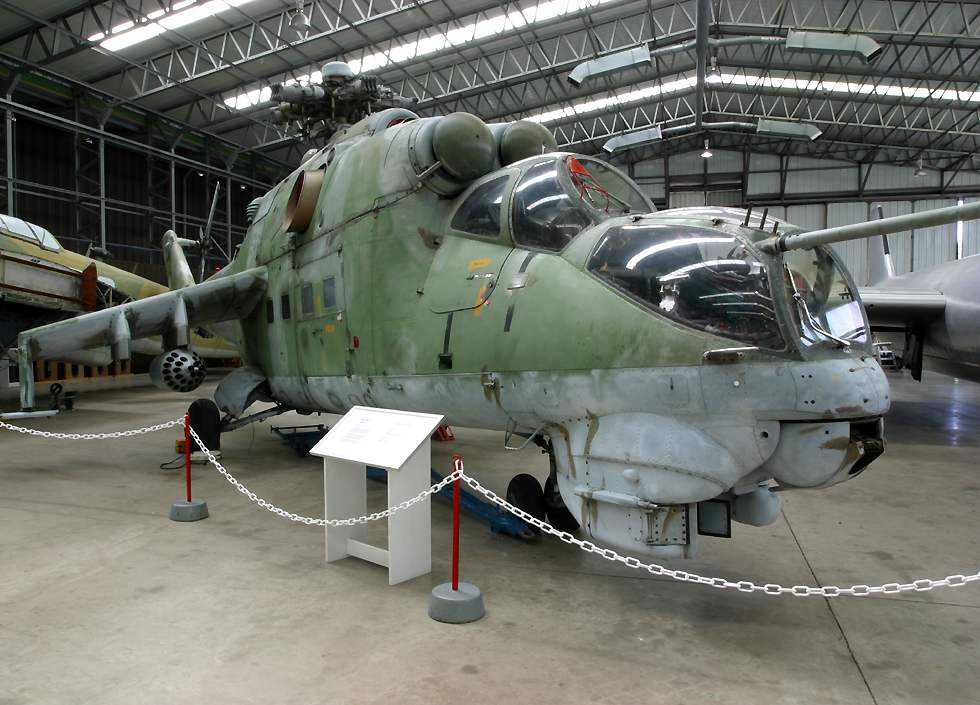
There are around 180 aircraft in total, including many of the classic aircraft of world war two. There are also many rarely seen aircraft, like this Russian Mi-24 Hind helicopter gunship, British aircraft like the Fairey Gannet, TSR.2 experimental supersonic nuclear bomber, and the Gloster Javelin. Then there are other oddities like one of the test models for Barnes-Wallis' bouncing bomb, and a German world war two Fritz-X radio-controlled bomb. |
|
Keith Park Museum
|
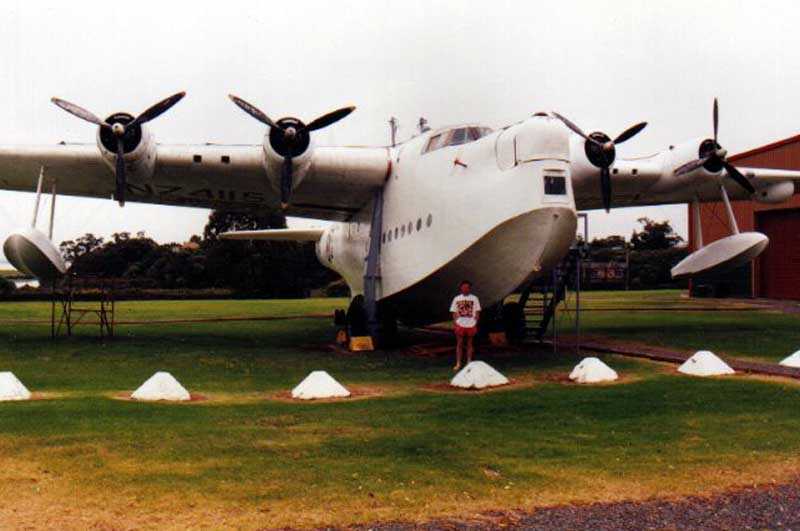
The Sunderland flying boat earned the nickname "Flying Porcupine" during World War 2, because of the number of guns this British aircraft was armed with. The Royal New Zealand Air Force flew Sunderlands for many years, so it's very appropriate to find one at the Keith Park Museum in New Zealand's largest city, Auckland. |
|
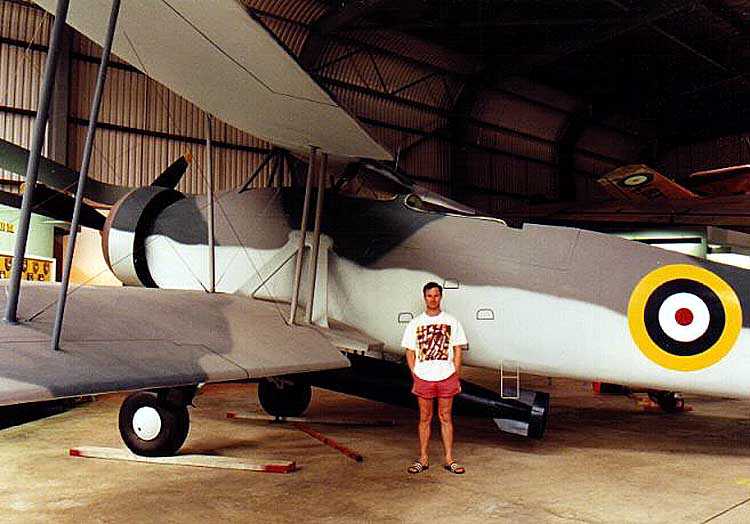
This archaic British open-cockpit biplane is a Fairey Swordfish torpedo bomber, which earned the nickname "The Stringbag" because of its rickety wire and canvas construction. It not only flew during World War Two, but was responsible for sinking the Bismarck and most of the Italian Fleet, first at the port of Taranto, then at sea during the Battle of Cape Matapan off the coast of Greece. All of these operations were carried out with remarkably few casualties to the Swordfish flight crews. |
|
|
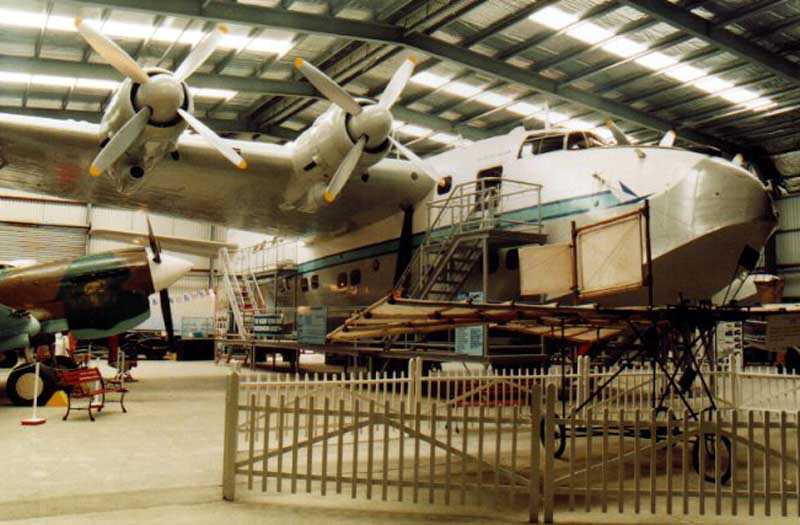
This civilian Solent flying boat was a post war development of the Sunderland, carrying 40 passengers between New Zealand and Australia, or on the luxury "Coral Route" from New Zealand to Fiji and then on to Samoa, the Cook Islands and Tahiti. |
Kenosha Military Museum
|
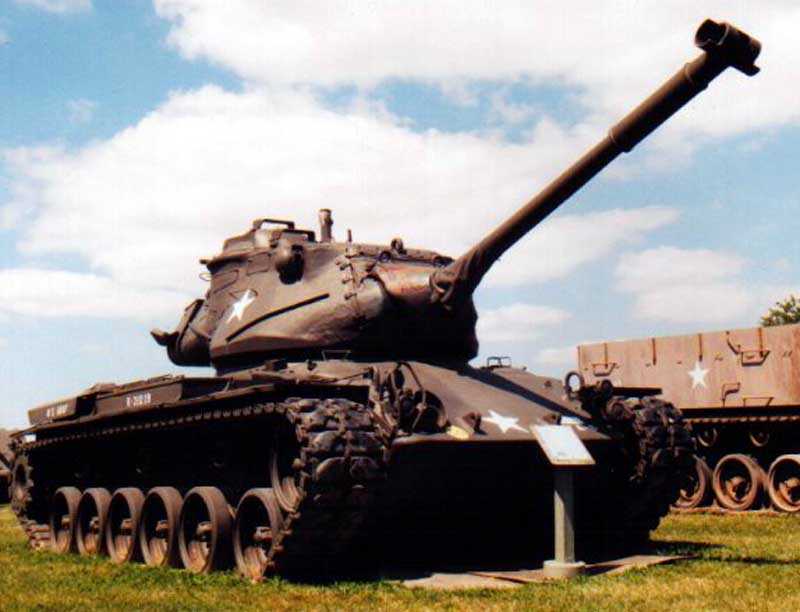
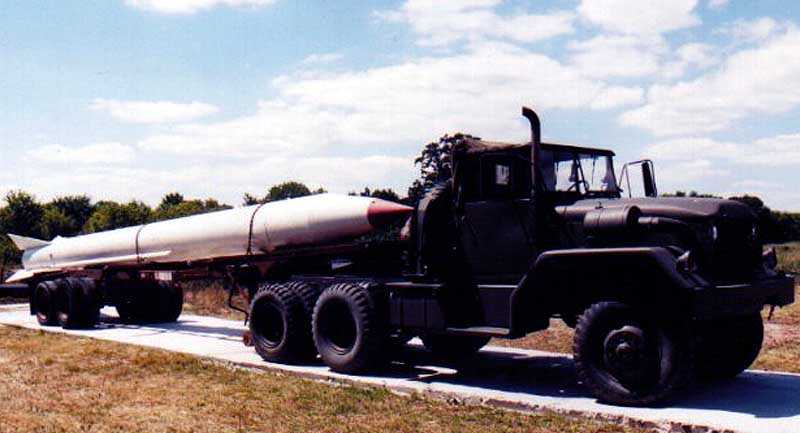
Bored? Sick of watching reruns on TV? Why not set up your own military museum on that spare bit of grass next to your house! That's what one fellow in Kenosha, Wisconsin, did, and here are the results! |
|
|
Once you've convinced the wife that it's a good idea, all you need to do is find some military surplus tanks and spare inter-continental ballistic missiles! On second thought, maybe you shouldn't tell her until you've bought the stuff - after all, it's easier to ask for forgiveness than permission, right? |
|
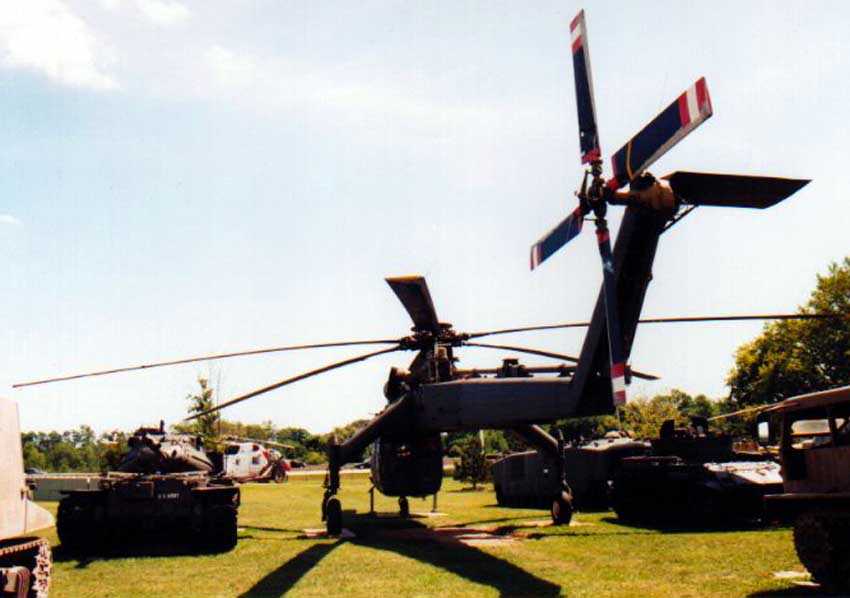
The real trick to setting up your own museum is getting good stuff cheap. The secret this guy learned is to be the only person attending the auctions where the surplus material is disposed of! That way, you only have to pay 5 - 10% of the normal price of equipment like this CH-54 Skycrane helicopter. |
|
London Science Museum
|
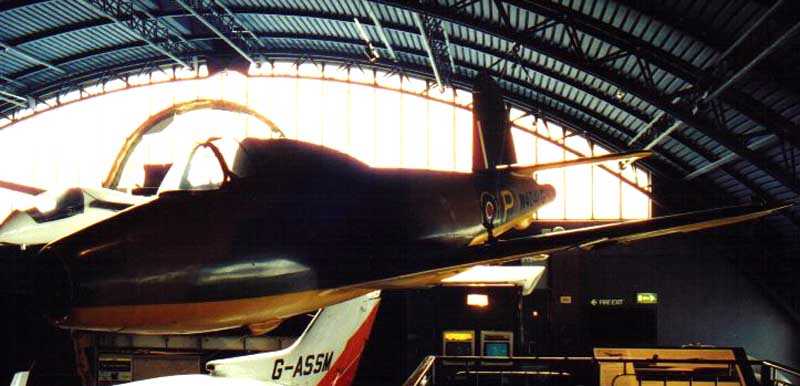
The London Science Museum has a small but extremely significant collection of World War 2 aircraft, including the Allies' first jet aircraft, the Gloster E28/39, popularly known as the Gloster Whittle, named after the inventor of the jet engine. |
|
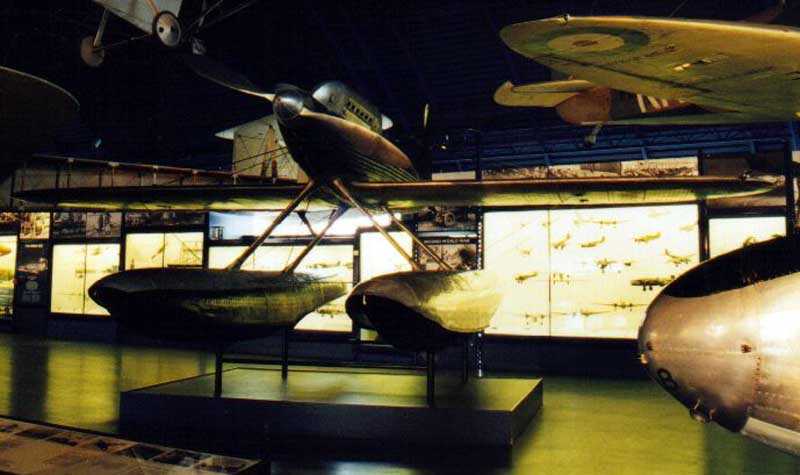
There are British fighter aircraft like the Spitfire and Hurricane, as well as the Supermarine Spitfire floatplane, a civilian race plane which was developed to become the Spitfire fighter. |
|
|
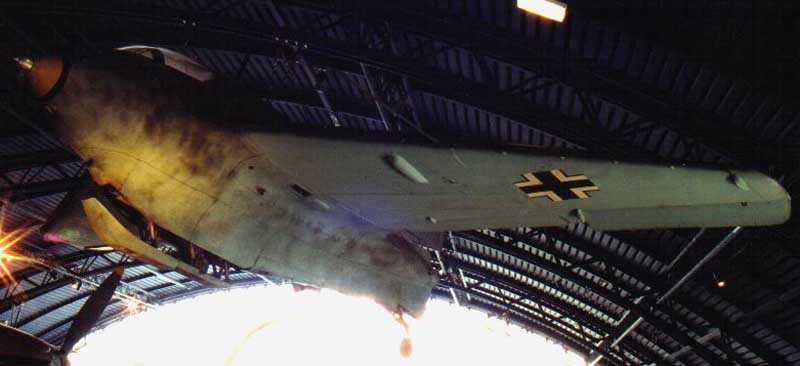
There are also examples of German military innovation, like a V1 flying bomb and the Me 163 Komett, the world's first and last rocket powered fighter plane, which saw action in the last desperate days of Hitler's Third Reich. |
National Warplane Museum
|
The National Warplane Museum in upstate New York might be stretching things a little with its grandiose name, but it does have a nice collection of sometimes unusual aircraft, like this Canberra bomber, which is one of the few British designed aircraft used by the United States Air Force. |

|
|
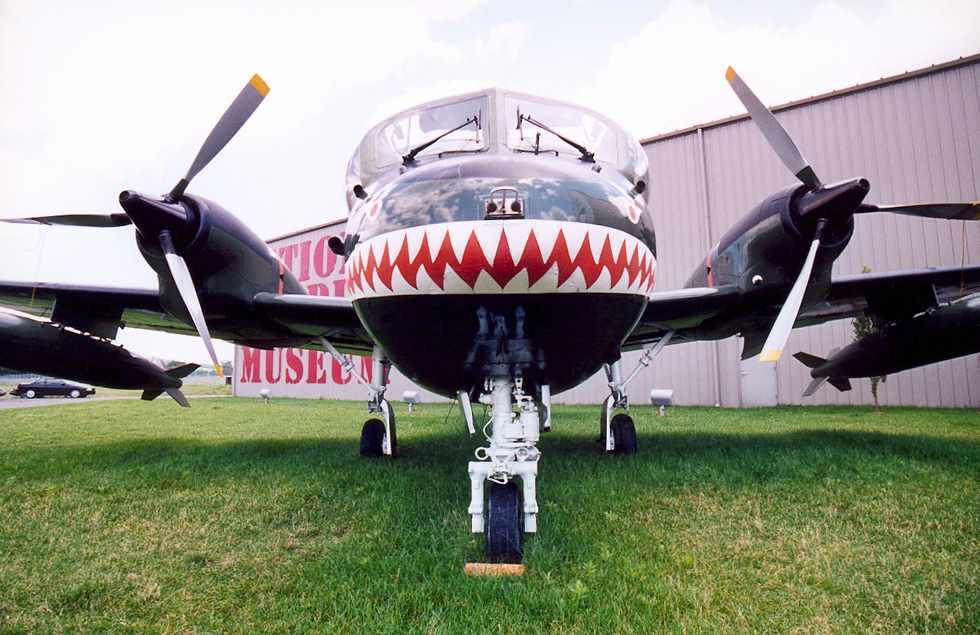
Some of the exhibits are sure to bring a smile to your face. |
|
If you want to lay out a bit of cash, say $US350, then you can even take a ride in the museum's restored World War Two B-17 bomber. |

|
Nellis Air Force Base Threat Training Facility
|
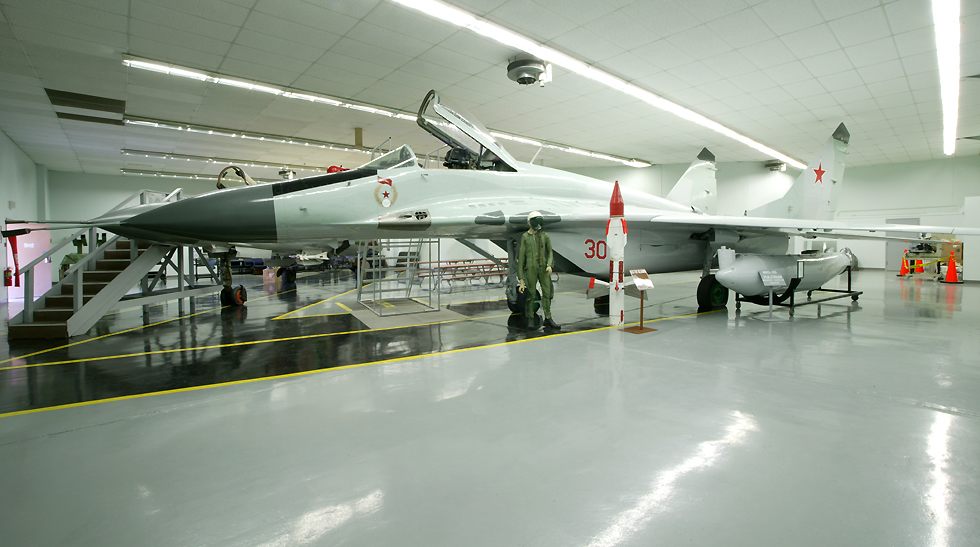
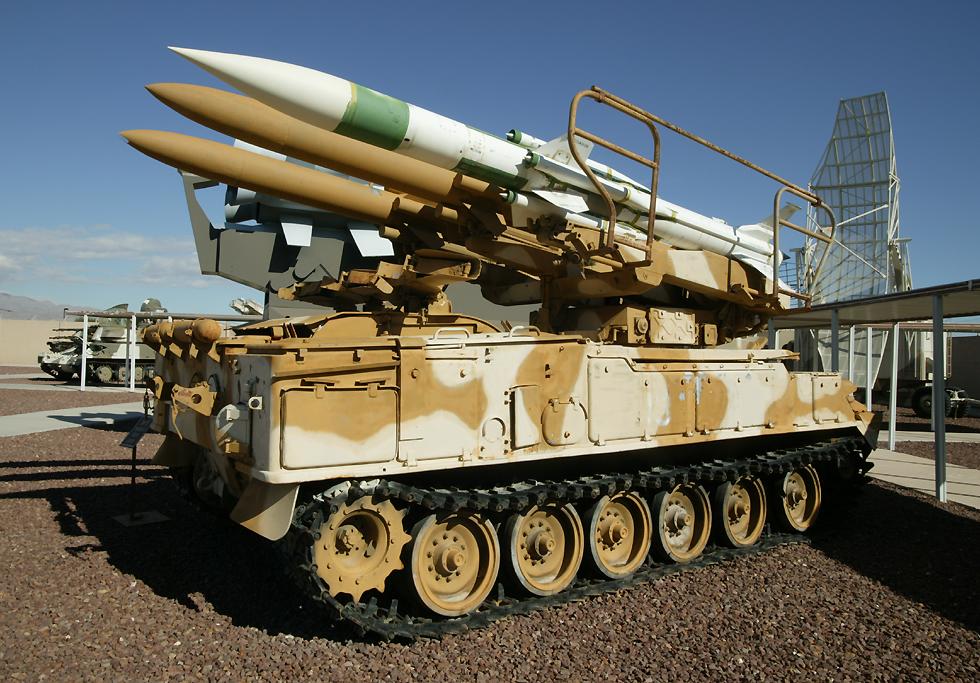
The very existence of the Threat Training Facility at Nellis AFB near Las Vegas was classified until 1993, and it's still not the easiest place to visit, unless you're on active duty with the Air Force. And little wonder, since this place contains $70 million of enemy military hardware, including aircraft like the MiG-17, MiG-21, MiG-23 and MiG-29. |
|
This is no ordinary museum, instead it's administered by the American military intelligence community, tasked with analyzing foreign equipment such as aircraft, anti-aircraft systems and tanks in order to determine their capabilities and shortcomings. |
|

|
Most of the equipment here has been put through its paces by American pilots and technicians, and today it's still used to give "hands-on" experience to American military personnel, who have given the facility the nickname "The Petting Zoo". Unlike most museums, here you can touch and even sit inside armored vehicles, tanks and even aircraft. |
Norfolk Air Power Park
|
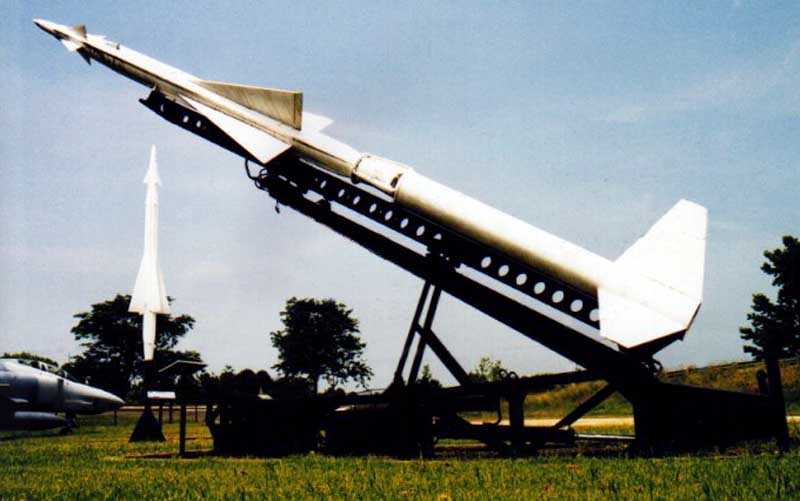
This has to be the saddest of Virginia's three big aviation museums, with an excellent collection of space rockets, missiles and 1950s and 1960s American military jets. |
|
Here they all are, outside and rusting in Virginia's steamy air, millions of dollars of irreplaceable history like this F-100 Super Sabre rotting for lack of funds to properly house and restore them. |

|
|
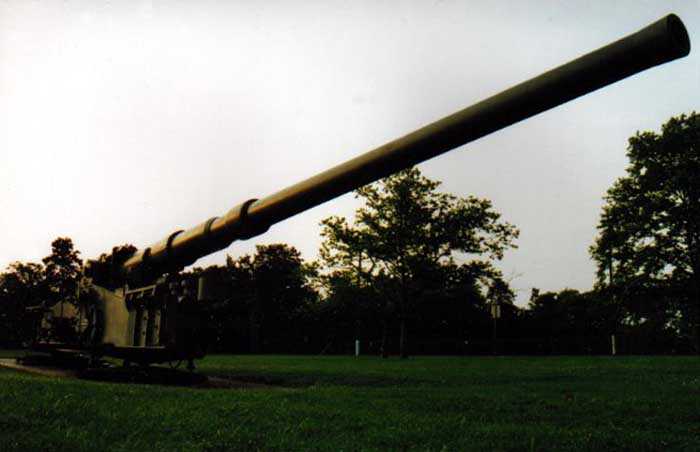
One particularly intriguing exhibit, which is in no great danger of rusting away, is Atomic Annie, an Atomic Cannon capable of firing a nuclear armed artillery shell to a distance of 18 miles. The idea was to fire it at an opposing army in the field - after the atomic bomb detonates your own soldiers rush in and sweep up the dust! |
Oshkosh Experimental Aircraft Association Museum
|
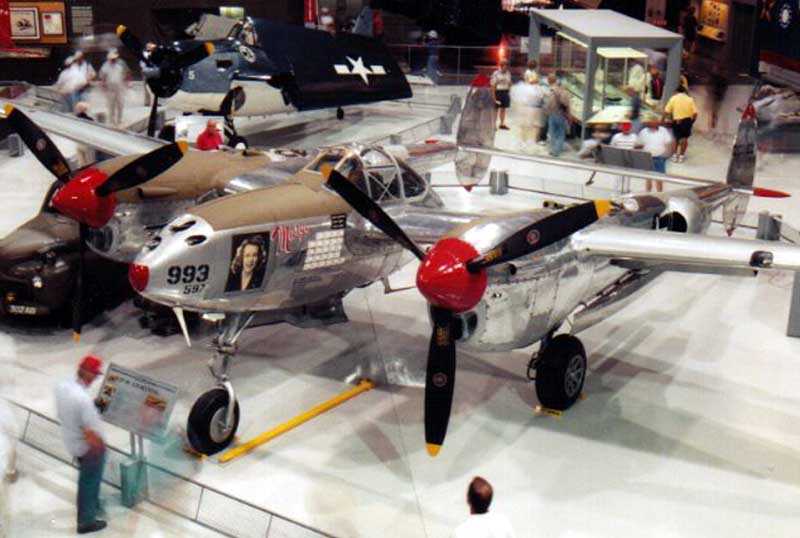
Of course the Experimental Aircraft Association Museum in Wisconsin has a good collection of experimental civil aircraft of various strange designs, but it's the World War 2 aircraft which really captured my fancy. |
|
|
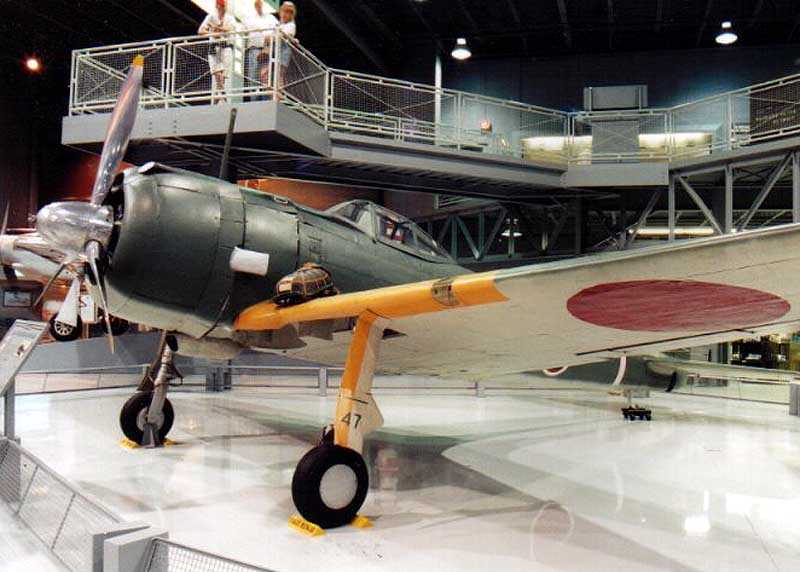
Here's a rare Japanese "Oscar" fighter, one which you won't see often (but if you want to see something even more rare, visit the "Wanaka Warbirds" section of this website and see the world's only Oscar in flying condition!). |
|
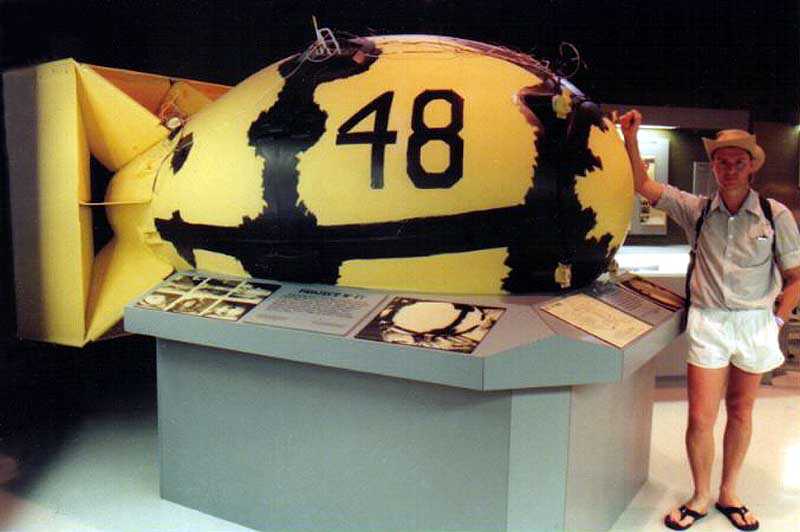
There are some good non-aircraft displays, too, like this original spare shell casing from the World War 2 "Fat Man" atomic bomb. |
|
Palm Springs Air Museum
|
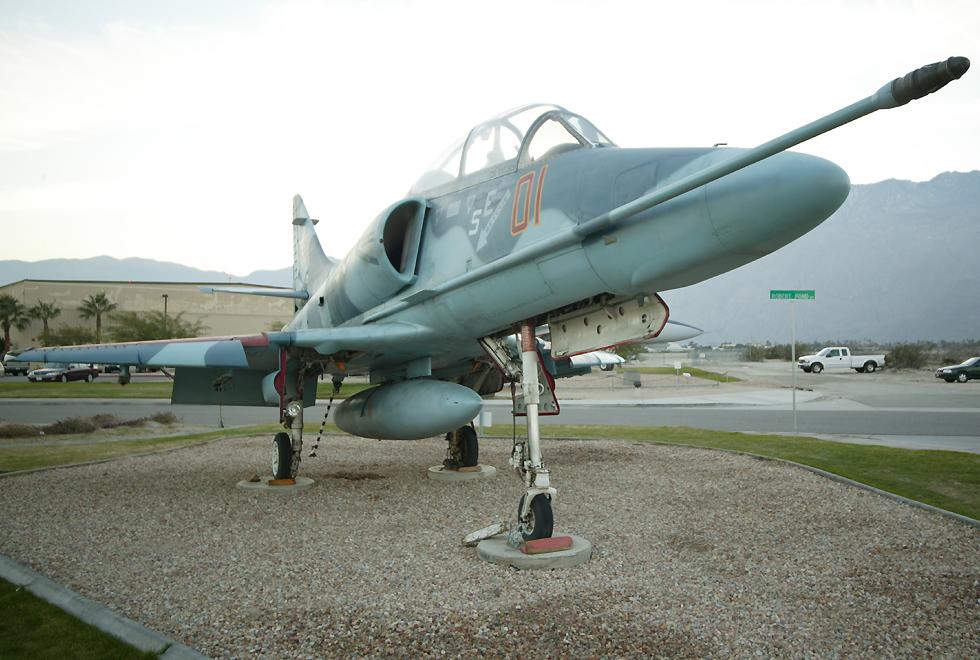
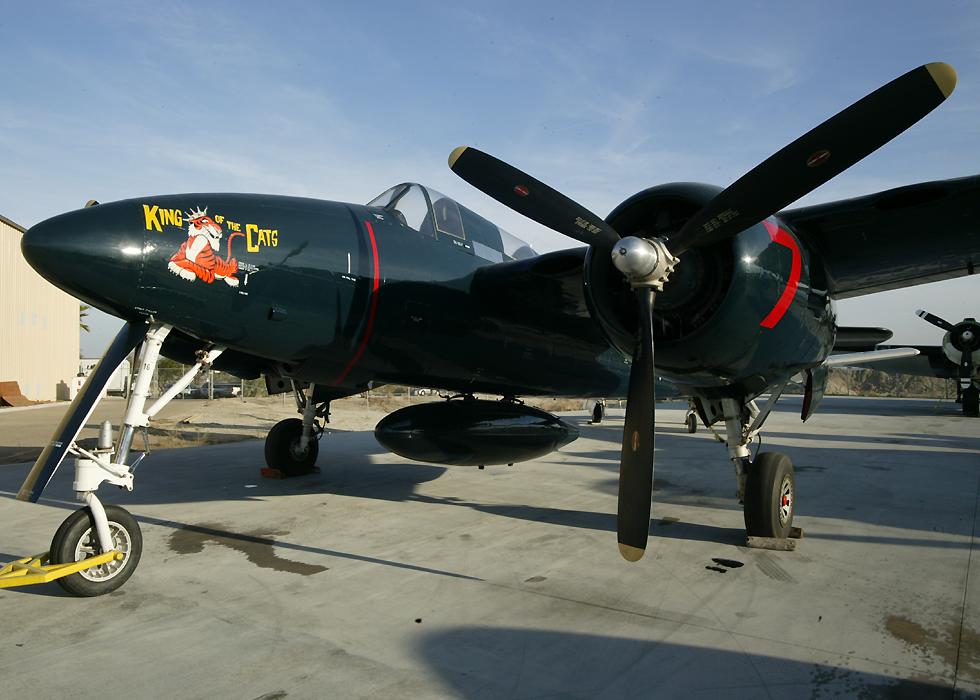
Looking at the aircraft on the outside, you could be forgiven for thinking that the Palm Springs Air Museum is dedicated to modern military aircraft. As well as an A-4 Skyhawk in "Top Gun" aggressor colors, there's also an F-14 Tomcat, an E-6 and an F-16 Falcon, all in navy colors (yes, Rebecca, the navy did operate a few F-16s!). However this display is misleading and, as the sign on the museum wall says, this is really a world war two aviation museum. |
|
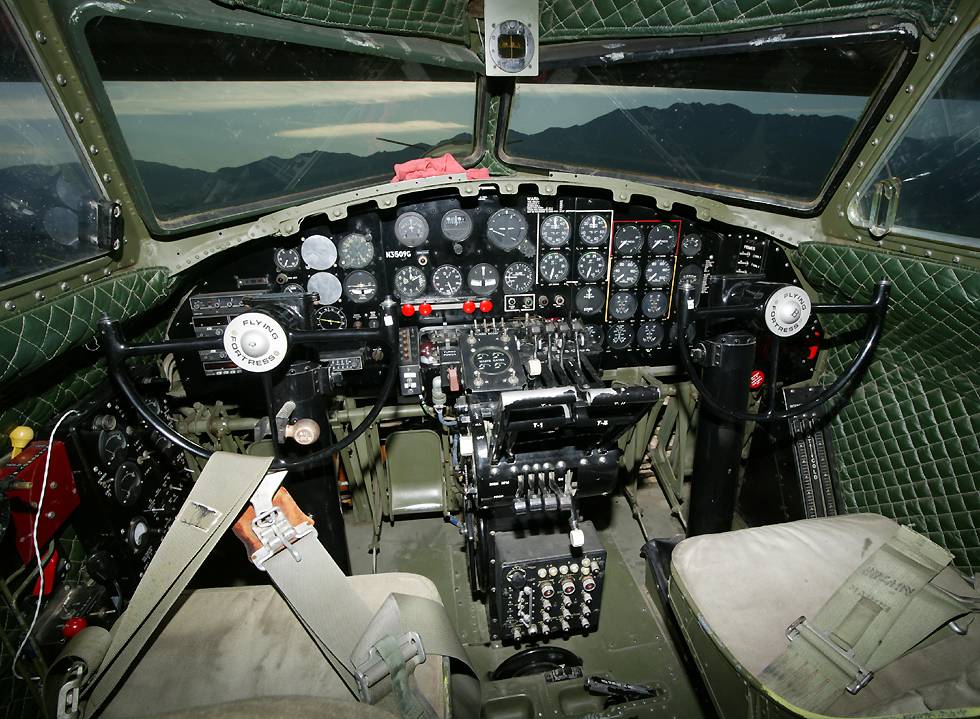
Inside you'll find an excellent display of world war two aircraft, with air force planes like a spitfire, a P-40 Warhawk and a P-51 Mustang, and naval aircraft such as a Dauntless dive bomber, an F4U Corsair and several of the Grumman "cats", such as an F4F Wildcat, an F6F Hellcat, an F8F Bearcat and even a rarely seen F7F Tigercat.You can get up close and personal with these aircraft, and even tour through the museum's B-17 Flying Fortress bomber. |
|
|
The modern aircraft at the front of the museum might be on permanent static display, but nothing is further from the truth for the classic warbirds parked inside and out on the back apron. Almost all of these aircraft are still flying, and every Saturday afternoon one or more of them are put through their paces. |
Pearl Harbor
|
Most people know about the USS Arizona memorial in Pearl Harbor, hovering above the ship of the same name which was sunk by the Japanese, and caused America to immediately enter World War Two... |

|
|
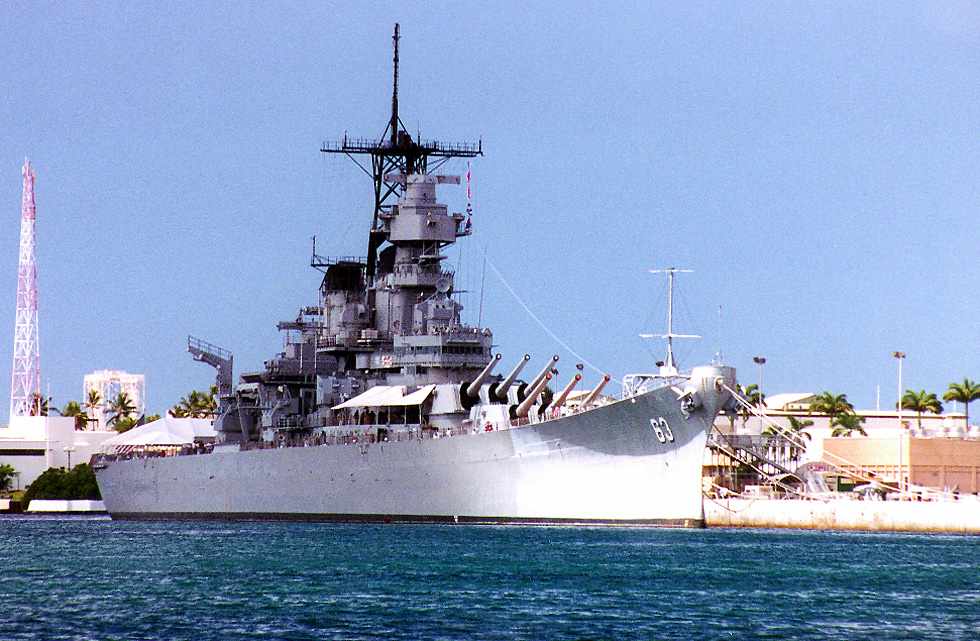
...however, Pearl Harbor has some less well known military attractions, like the USS Missouri, the American battleship on which the Japanese surrendered at the end of the war... |
|
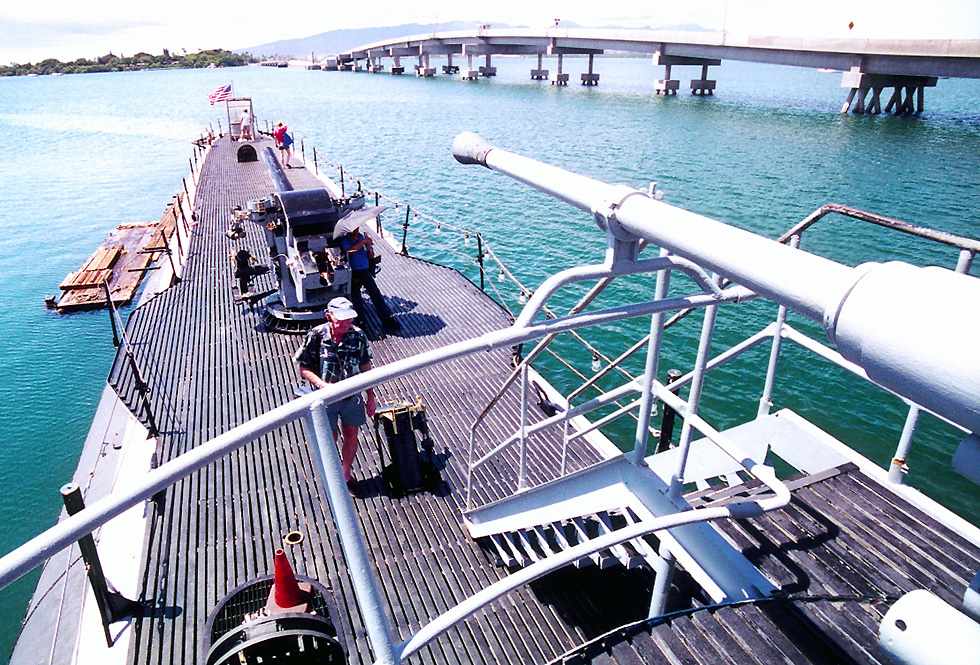
...and the USS Bowfin submarine museum, which displays the World War 2 submarine of the same name, as well as exhibits like submarine-launched ballistic missiles, a Japanese "kaiten" kamikaze submarine and the American Mark 45 nuclear torpedo. |
|
Planes of Fame at Valle
|
The Planes of Fame museum at Valle, Arizona, is sister to the Planes of Fame museum at Chino, in California. It's conveniently located at the intersection of the two highways which lead up to the Grand Canyon, meaning that you can visit both in a single day - making both mom and dad happy. |
|
|
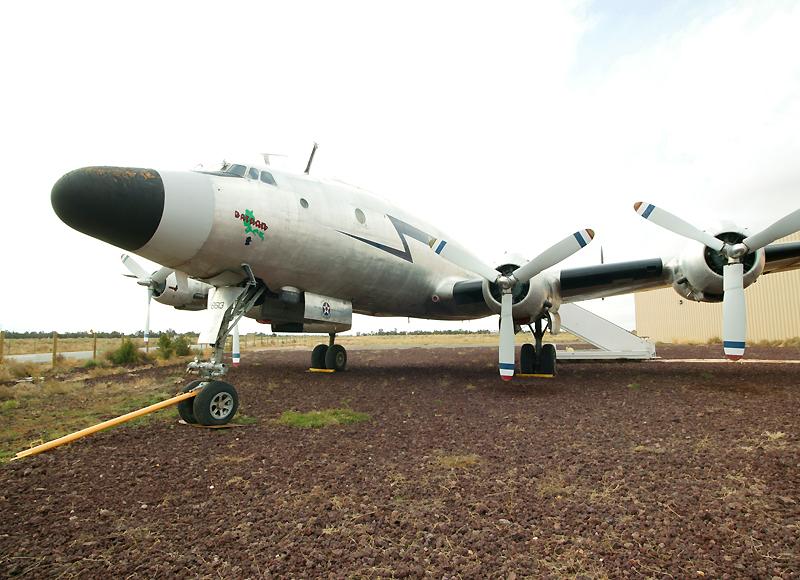
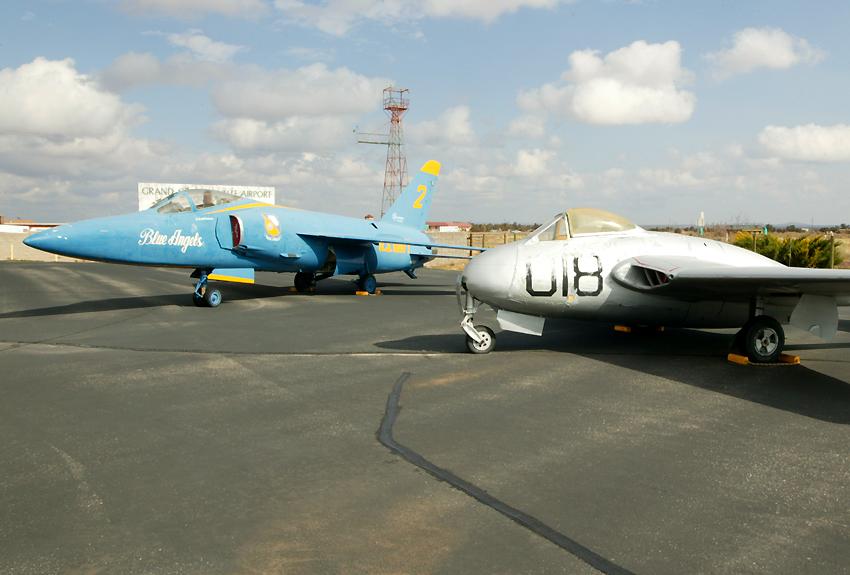
As well as General MacArthur's Constellation transport plane, which you can tour through, there are uncommon aircraft to look at like a British De Havilland vampire jet fighter, an F11F Tiger in Blue Angels colors, a Japanese Ohka rocket-powered kamikaze flying bomb, and remnants of a Japanese Hayabusa "Oscar" fighter. |
|
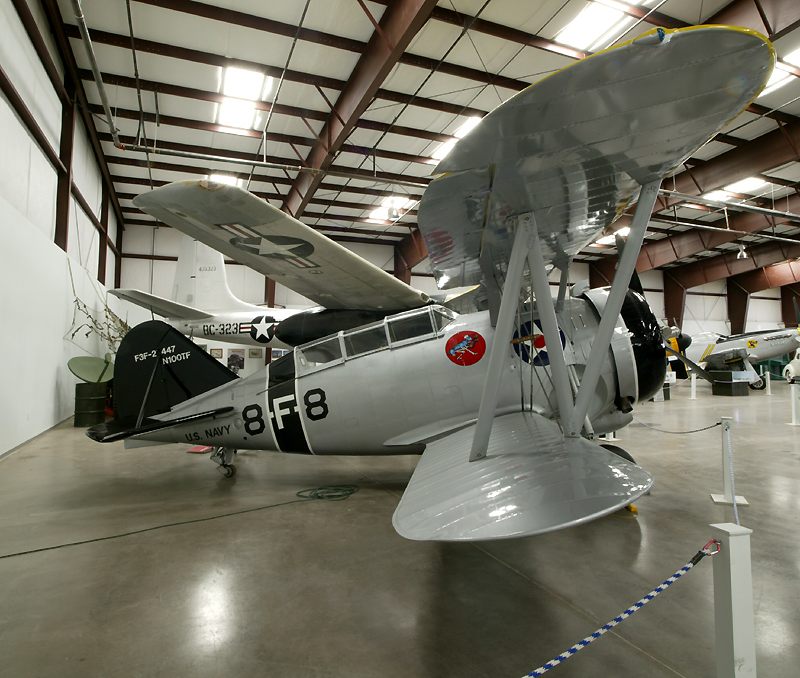
There's also a US Navy F3F biplane fighter, immediate predecessor of the F4F Wildcat fighter which America used in the early days of the war in the Pacific. |
|
Quantico Marine Corp Air-Ground Museum
|
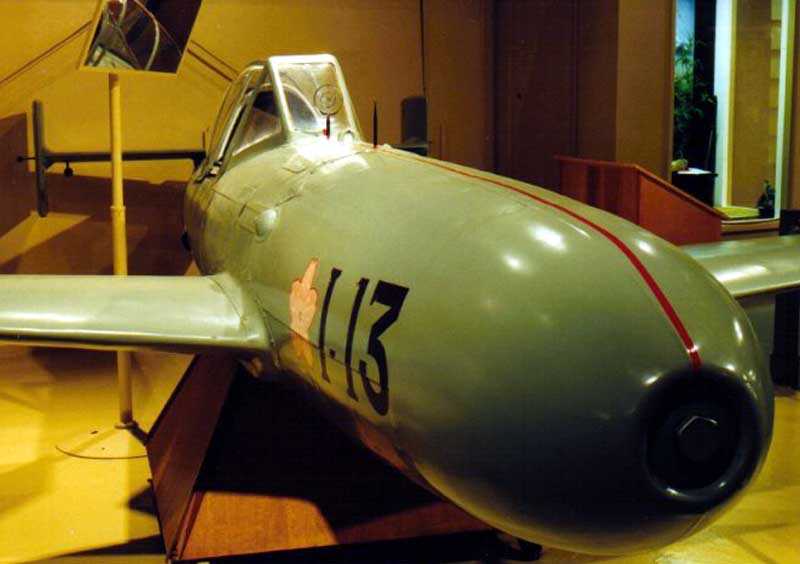
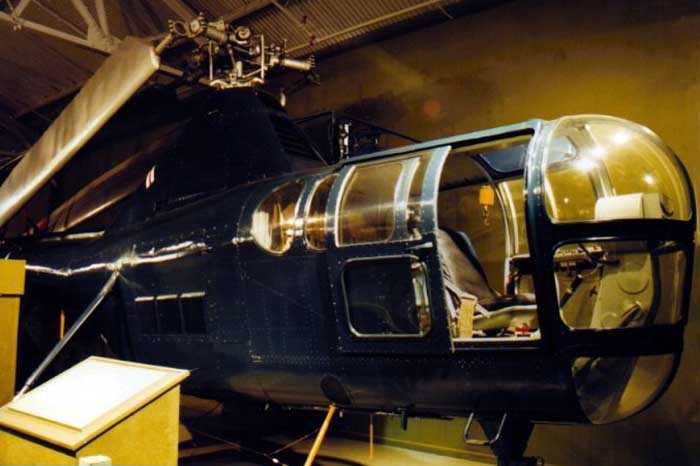
The Quantico Marine Corp museum in Virginia has aircraft and weapons not only of the US Marine Corps, but also of some of its enemies, including a Russian MiG-15 and this Japanese World War 2 "Ohka" rocket-propelled kamikaze flying bomb. |
|
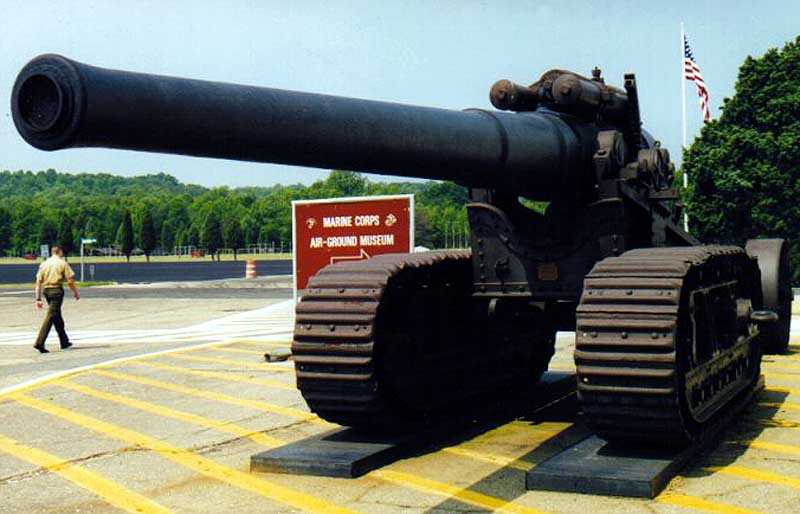
It's an air-ground museum, so of course they also have some ground-borne weaponry such as self-propelled guns and tanks. |
|
|
There are also such rare items as the F9F Panther, the first navy jet fighter to enter combat, and American military helicopters from the Korean War. |
Royal Air Force Museum at Hendon
|
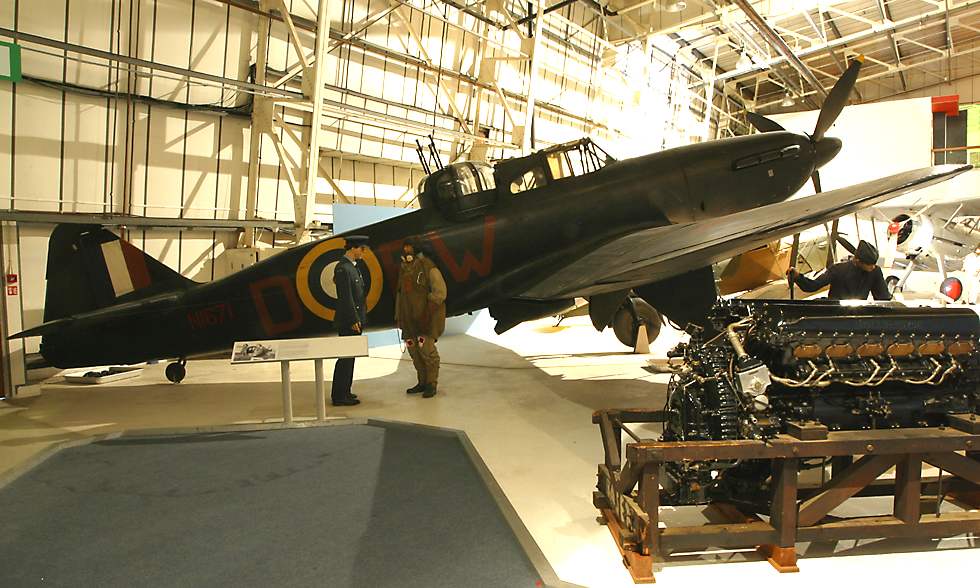
The official Royal Air Force museum at Hendon, in North London, is filled with rare British world war two aircraft which you won't see anywhere else, like this Boulton-Paul Defiant, a fatally flawed fighter design which had a gun turret at the rear but no forward-firing armament. |
|
|
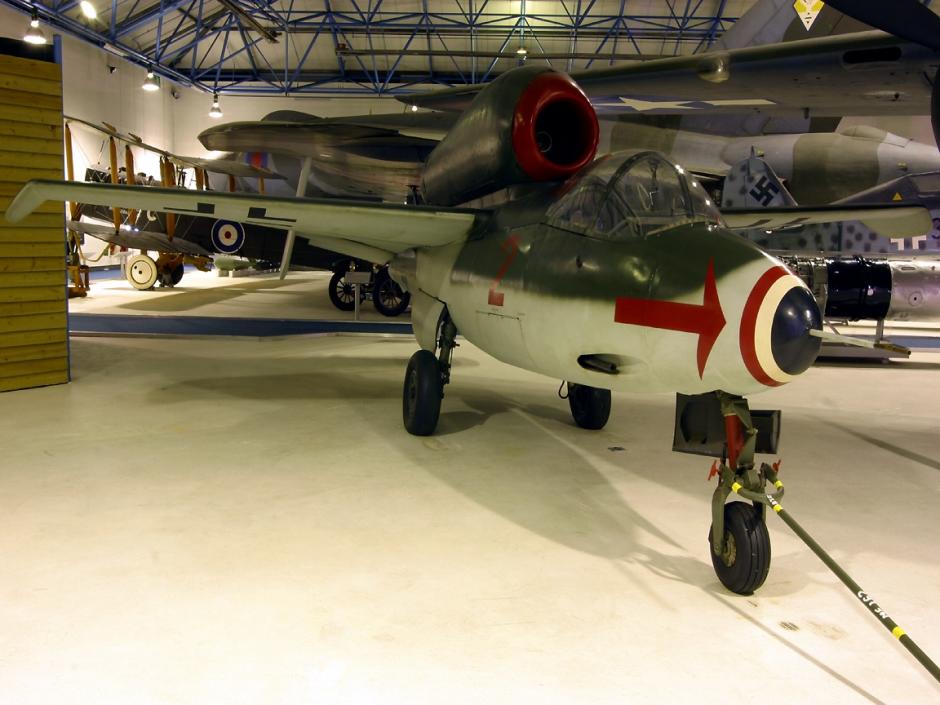
This German world war two jet fighter, the Heinkel He162 Salamander (or Volksjaeger, "people's fighter") is also very unusual, having entered service very near the end of the war. In addition to the Salamander, Hendon has quite a few different aircraft in its collection of German world war two aircraft. |
|
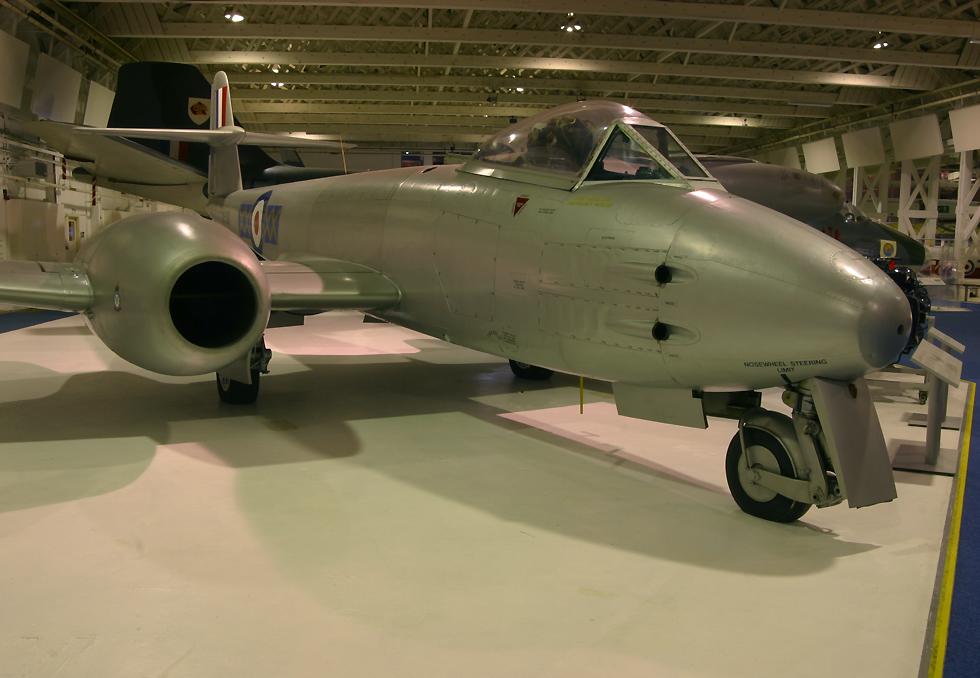
The Gloster Meteor was the first Allied jet to enter service, in 1944. Although outclassed soon after the war, updated versions continued to serve with the RAF and the Royal Australian Air Force for quite some time. |
|
Royal New Zealand Air Force Museum at Wigram
|
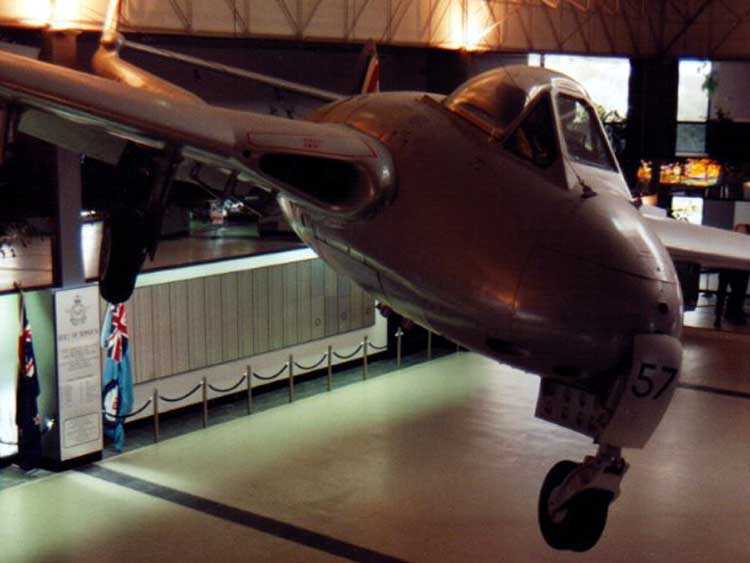
The now decommissioned Wigram Air Force base in the South Island city of Christchurch contains the official Royal New Zealand Air Force museum. |
|
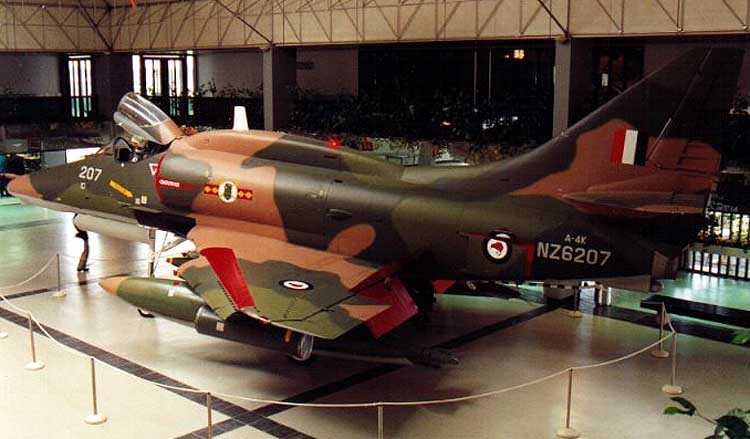
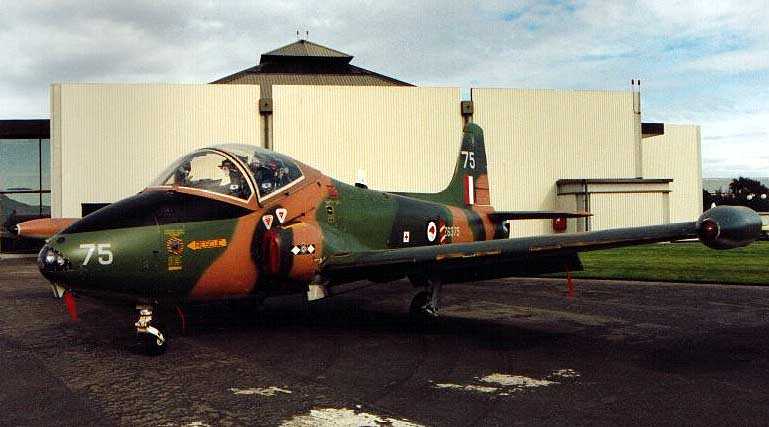
You can check out planes which have served in the New Zealand Air Force from World War II up until the present day. |
|
|
Past Air Force hands might get bleary eyed looking at some of the old and old-but-still-in-use aircraft used in training and during New Zealand's overseas wars. |
Russian Air Force Museum at Monino
|
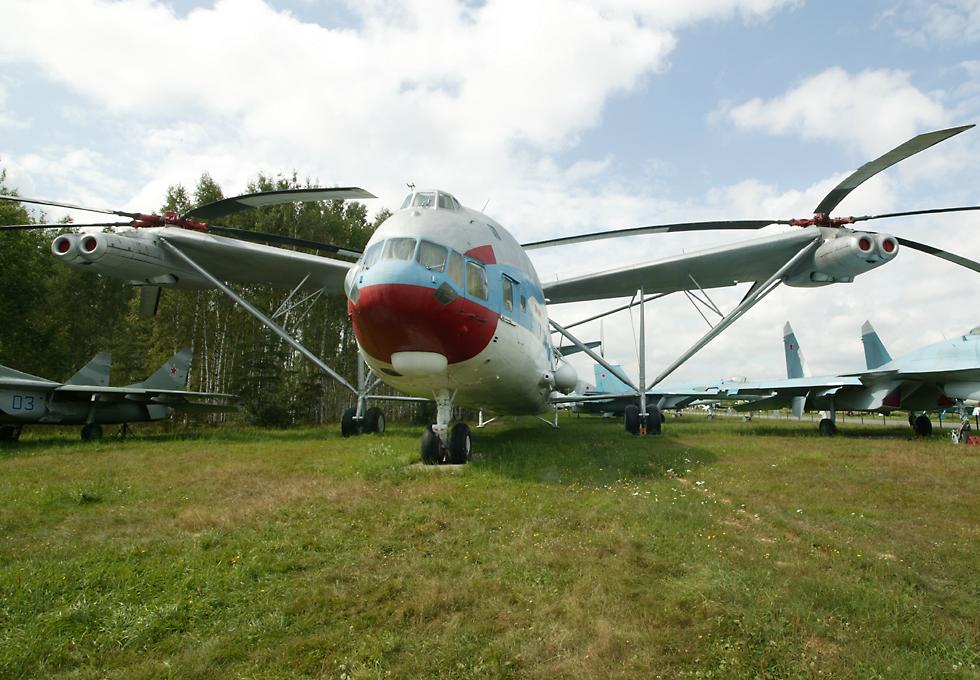
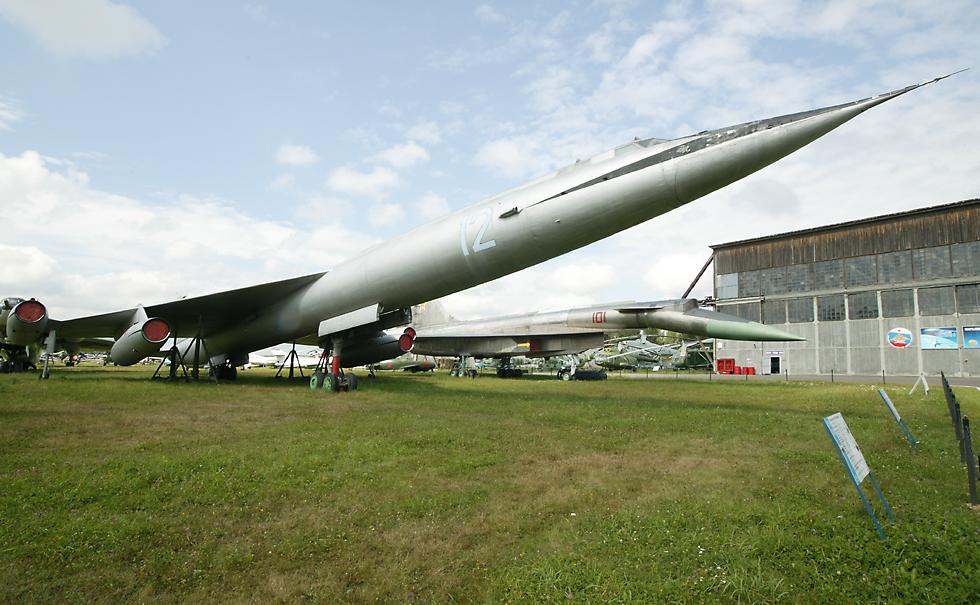
The Russian Air Force Museum at Monino, an hour's train ride north of Moscow, was once off limits to western aviation enthusiasts, and even after the end of the cold war it was still necessary to get a letter of introduction from an official source before it was possible to visit. Thankfully that's a thing of the past and today visitors can freely come to marvel at a very complete collection of aircraft flown by the air force and civil operators, such as the giant V-12 "Homer", by far the largest helicopter ever flown anywhere, and one of many helicopters in the collection. |
|
|
Highlights of the museum's comprehensive collection of Russian air force aircraft, including transport aircraft, fighters and bombers. There are planes from world war two right through the years of the Cold War, and include many of the prototypes used to pioneer well-known aircraft in the Soviet inventory, as well as developmental aircraft which never went into production, amongst which are ski equipped supersonic jet fighters, naval VTOL fighters as well as record breaking aircraft like the largest propeller planes to enter service, and the largest and fastest supersonic airliner ever built. |
|
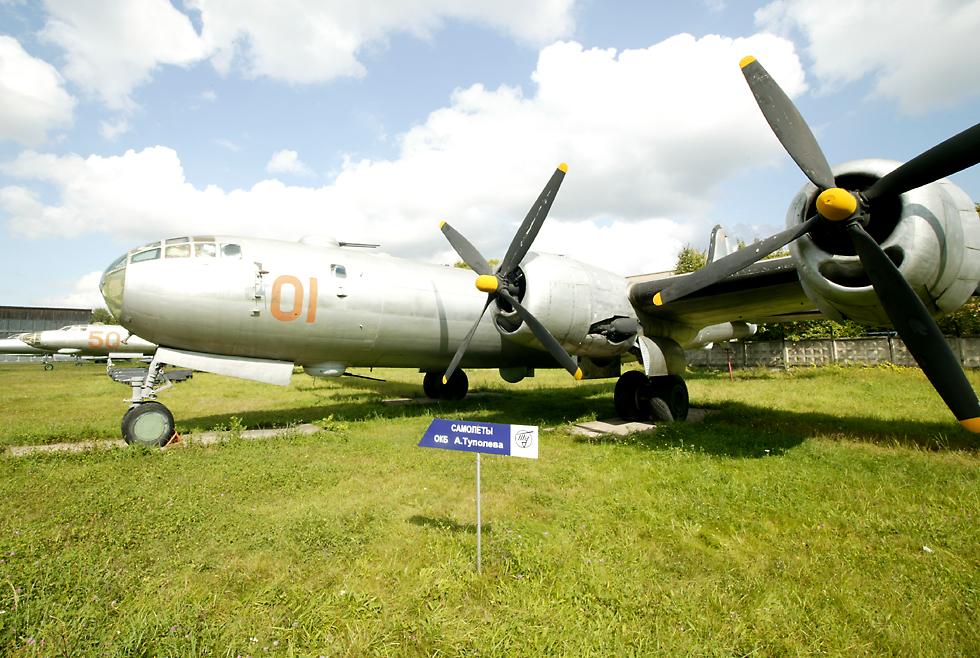
There's even a small but interesting collection of American aircraft used by the Russian air force during and after world war two, some like the P-63 Kingcobra and A-20 Havoc delivered under the lend/lease arrangement, some like a C-47 Dakota built under license in Russia as the Li-2, which was used as a night bomber as well as in its intended role of passenger and cargo carrier, and finally even a Tupolev Tu-4 "Bull", a painstakingly exact copy of the American B-29 Superfortress, built without American consent after several B-29s were forced to land in Russia during the war. |
|
San Diego International Aerospace Hall of Fame
|
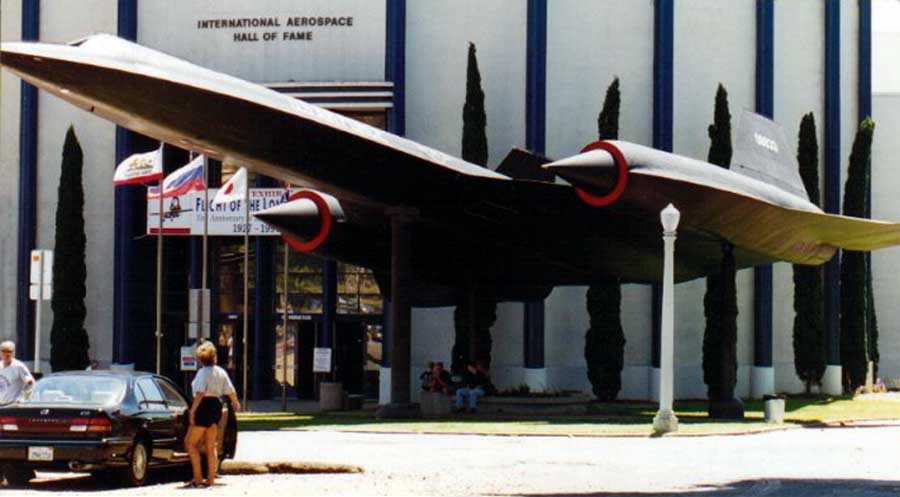
No aircraft museum in America is complete without at least one SR-71 Blackbird spy plane on display! Although it dates back to 1968, it's still the fastest jet ever to fly, so fast that the surface heats to over 500 degrees fahrenheit, and the plane becomes six inches longer! Able to travel at a height of 85,000 feet and 2,350 mph, or more than Mach 3, one of these planes flew from Los Angeles to Washington DC in 68 minutes, a trip which takes about six hours by commercial jet airliner. |
|
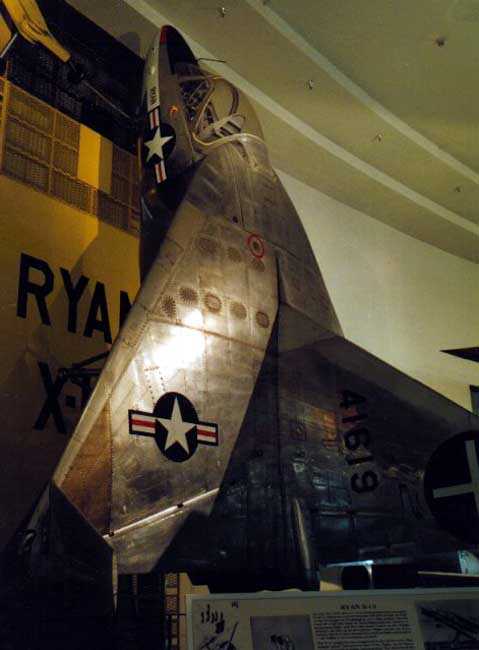
The Ryan X-13 Vertijet was an attempt to create a vertical takeoff and landing jet fighter. Hung on a hook from a small frame, the plane took off easily enough and then transitioned to horizontal flight. But landing was trickier, with the plane needing to transition from horizontal to vertical flight at a height of several hundred feet, and then slowly descend back onto its hook. This maneuver turned out to be too much for most pilots to handle, and the idea was abandoned. |
|
|
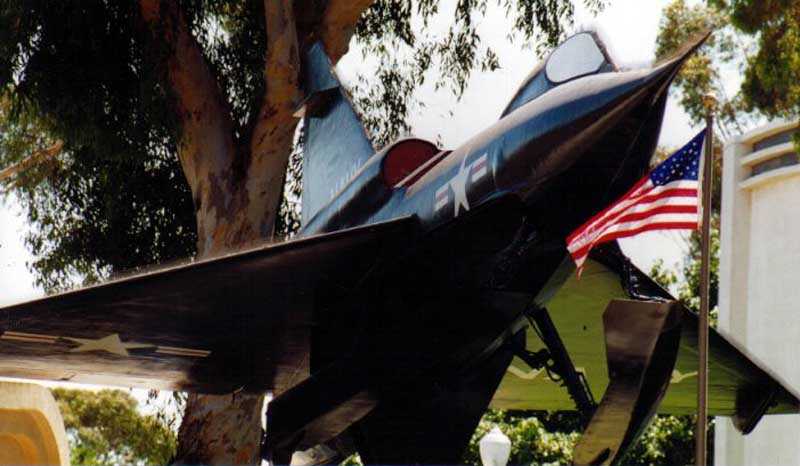
Convair, another San Diego company, also came out with some innovative fighter designs, perhaps the most interesting of which was the Sea Dart. First flown in 1953, it was a water-based supersonic jet fighter, intended to survive the destruction of conventional air bases by enemy forces. |
Smithsonian Air and Space Museum
|
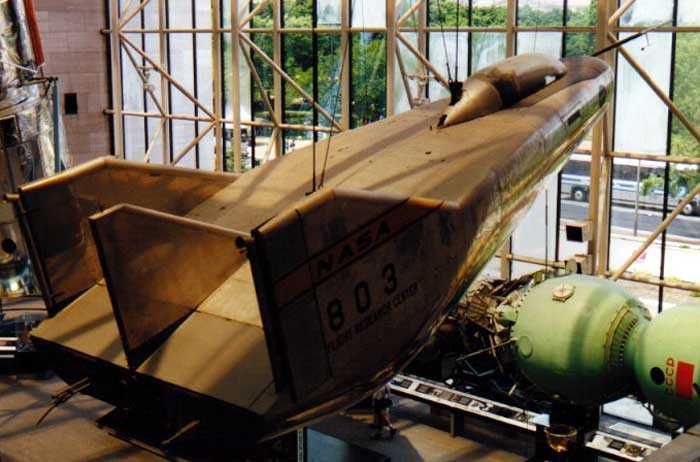
The Smithsonian Air and Space museum in Washington DC is probably the most famous aircraft museum in the world, with many of the actual aircraft which made history, such as the Bell X-1 in which Chuck Yeager first broke the sound barrier, the Enola Gay, which dropped the first atomic bomb on Japan, and the Voyager aircraft which took 9 days to do the first non-stop and unrefuelled flight around the earth. |
|
|
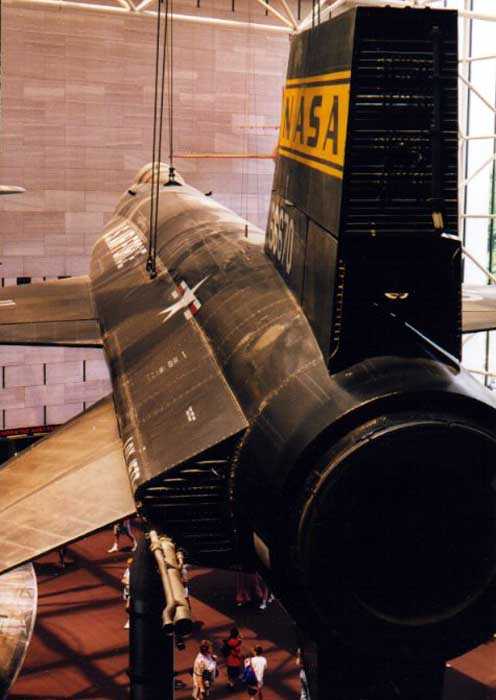
There are also some of the fastest and most powerful aircraft to ever fly, including the rocket powered X-15, which was able to fly at mach 6, or 4500 mph. Because it could reach altitudes of 67 miles, above the limit of earth's atmosphere, pilots of this plane were officially considered to be astronauts. |
|
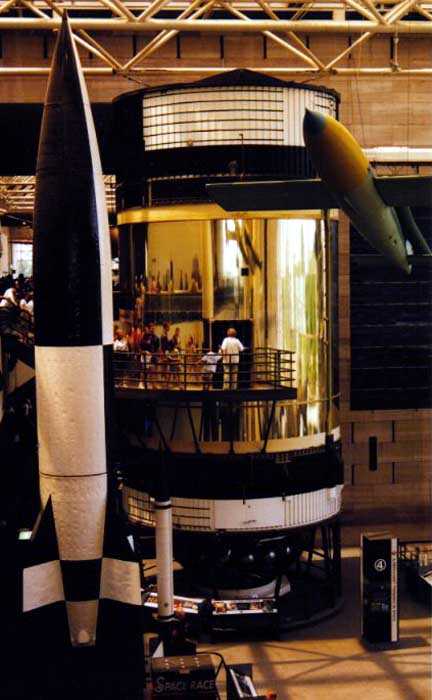
The museum has an excellent collection of missiles and space craft, starting from the Nazi V1 and V2 missiles, through to a duplicate copy of America's SkyLab, the original of which fell to earth all over Australia's outback in 1979. |
|
United States Air Force Museum at Dayton

|
The official USAF museum in Dayton, Ohio, is the world's premier military aircraft museum, with oodles of historically significant aircraft from the beginnings of air power in the United States up to the present day. There's also a rarely seen selection of enemy aircraft - German, Italian and Russian. |
|
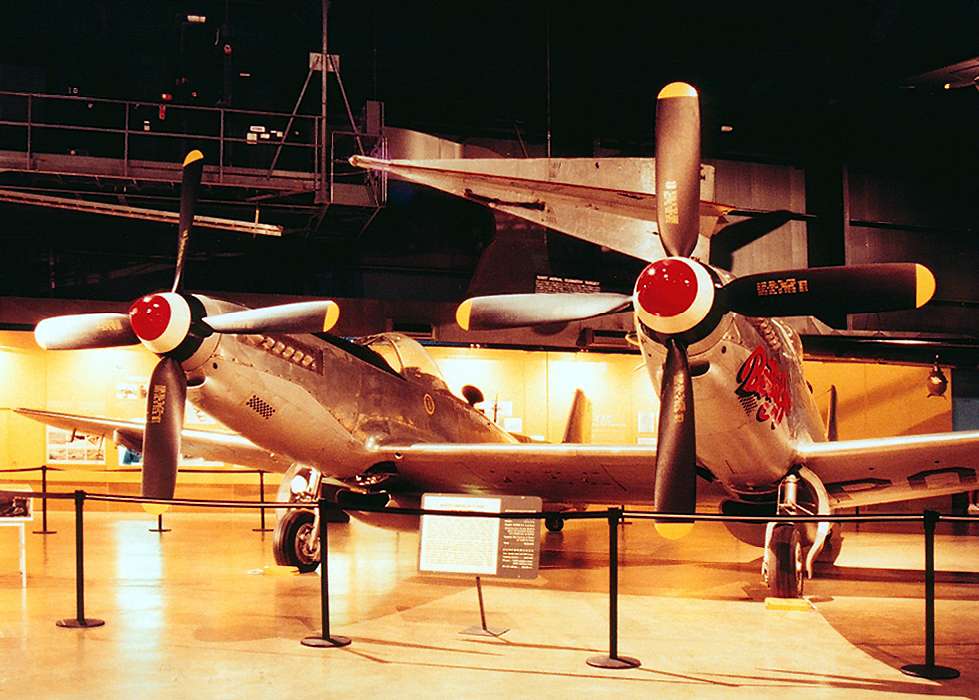
There are many weird and wonderful aircraft here, from the "Twin Mustang" to the "Goblin" Parasitic Fighter to the "Tacit Blue" prototype of today's stealth fighter and bomber. |
|
|
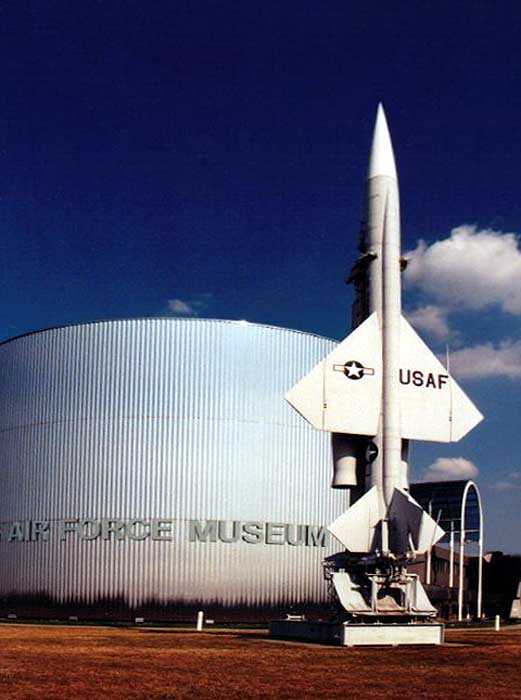
The Air Force had primary responsibility for the missile protection of the United States during the Cold War, so it's appropriate that there's a good display of missiles alongside the different models of atomic bombs carried by conventional bombers. |
USS Hornet
|
The USS Hornet is a World War 2 aircraft carrier now permanently docked at Alameda on the east side of San Francisco Bay. She's one tough lady, credited with more aircraft kills than any other carrier, and is remembered as the ship used for recovering the first men to walk on the moon after the Apollo 11 mission. |

|
|
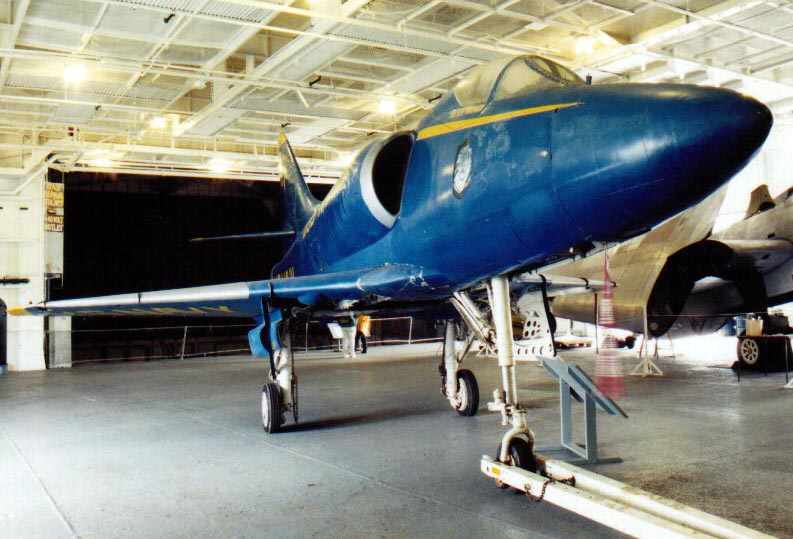
There's a display of aircraft on the hangar deck, including one of the first carrier-borne jets, the FJ-1 Fury, and this very early model A-4 Skyhawk, which lacks the aerial refuelling probe of later versions. |
|
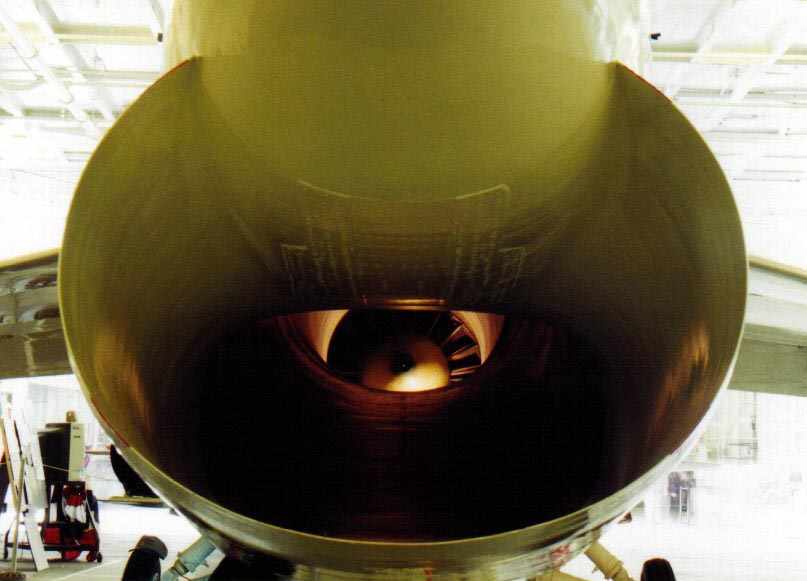
There's also an F-8U Crusader, a type of aircraft nicknamed "The Gator" because of the tendency of its powerful engine to suck in anything within a 20 foot radius. |
|
USS Intrepid
|
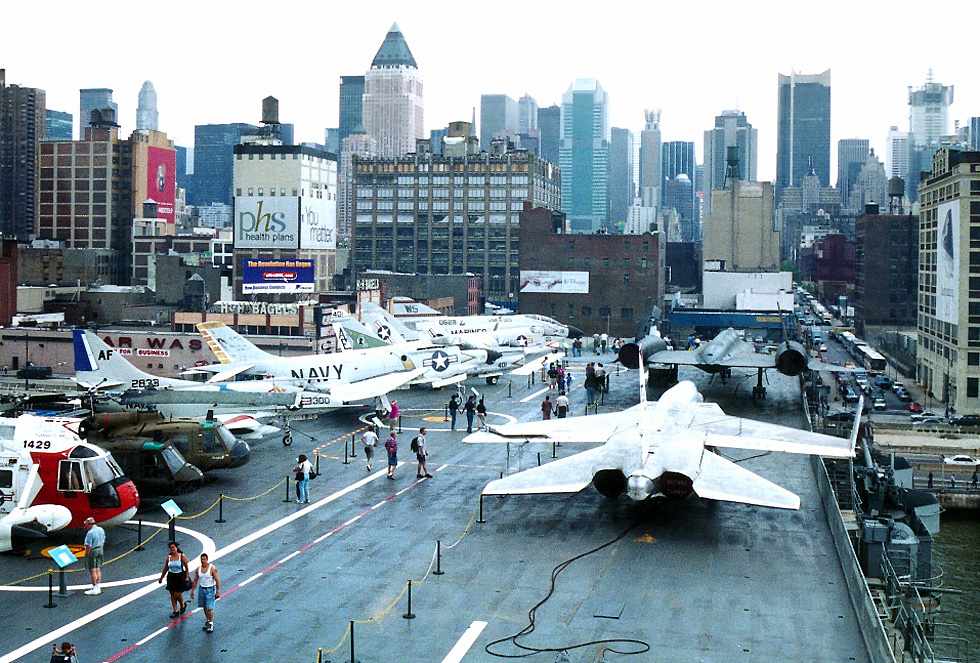
Not to be outdone, New York harbor has its own World War 2 aircraft carrier, the USS Intrepid. Like the Hornet, the Intrepid was also used as a recovery ship for space flights, allowing the Intrepid to be billed as a "sea-air-space museum". |
|
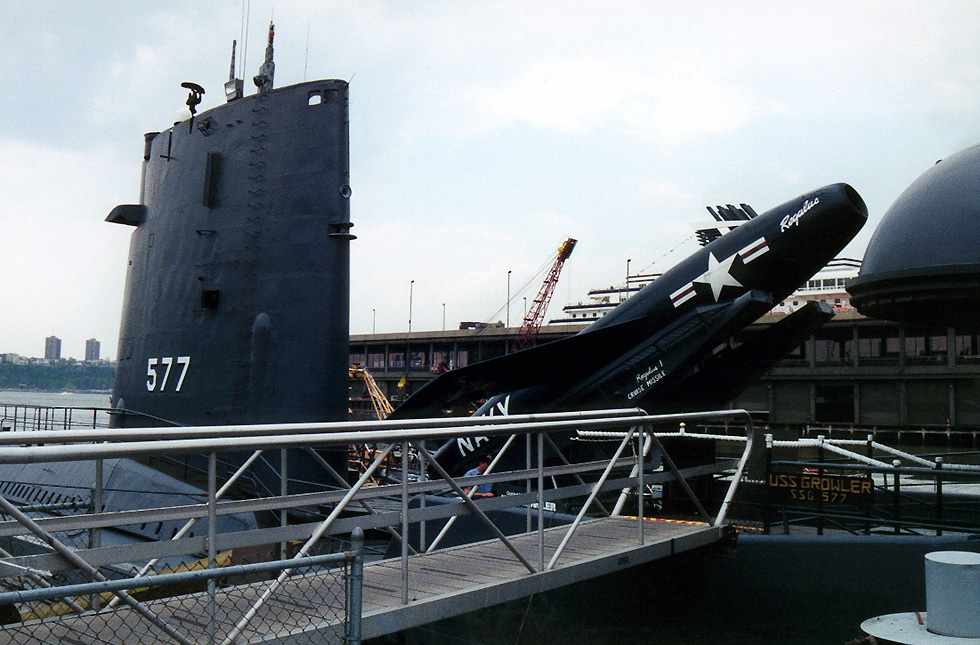
San Francisco has a submarine across the Bay from the Hornet, but here all you have to do is go across the pier, to where the USS Growler, an early guided missile submarine, is berthed. |
|
|
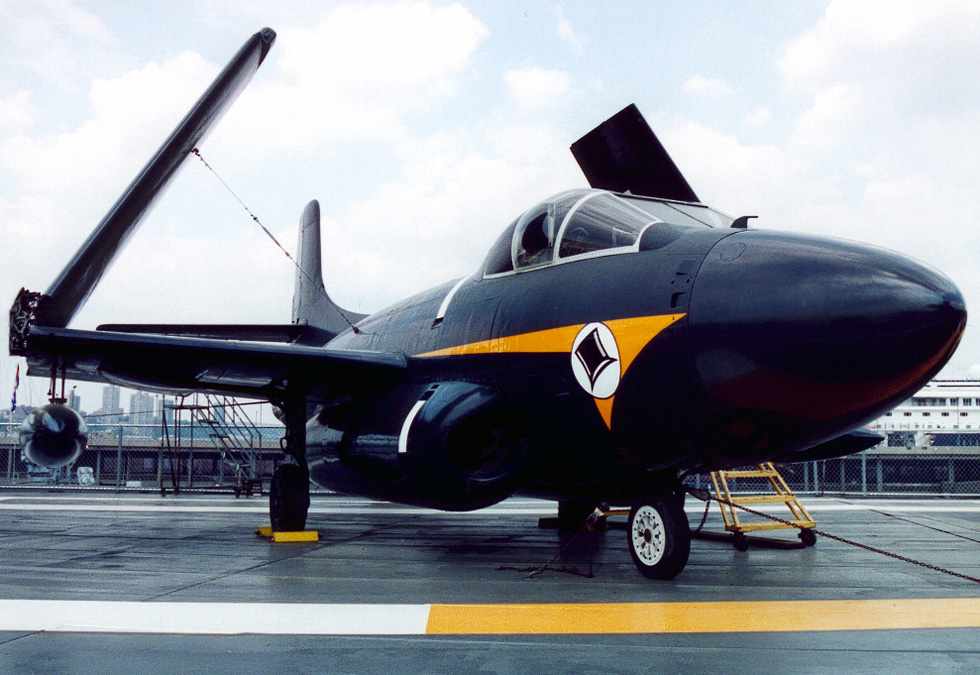
The Intrepid beats out the Hornet in the aircraft stakes as well, with a flight deck full of unusual aircraft, like this F-3D Sky Knight, the F-3B Demon, the little known F11F Tiger, the RA-5C supersonic nuclear bomber/reconnaisance plane, a British Supermarine Scimitar, French Dassault Etendard, Russian MiG 21 and the world's ultimate jet speedster, the A-12 Blackbird. |
Vietnamese Air Force Museum in Hanoi
|
The Vietnamese Air Force Museum in Hanoi isn't on the list of attractions for most tourists, but it's well worth visiting if you're a military aviation enthusiast or someone with a personal connection to the Vietnam war. There's a group of about 20 aircraft at the museum, all parked outside, with three MiG jets in pride of place near the main gate. |

|
|
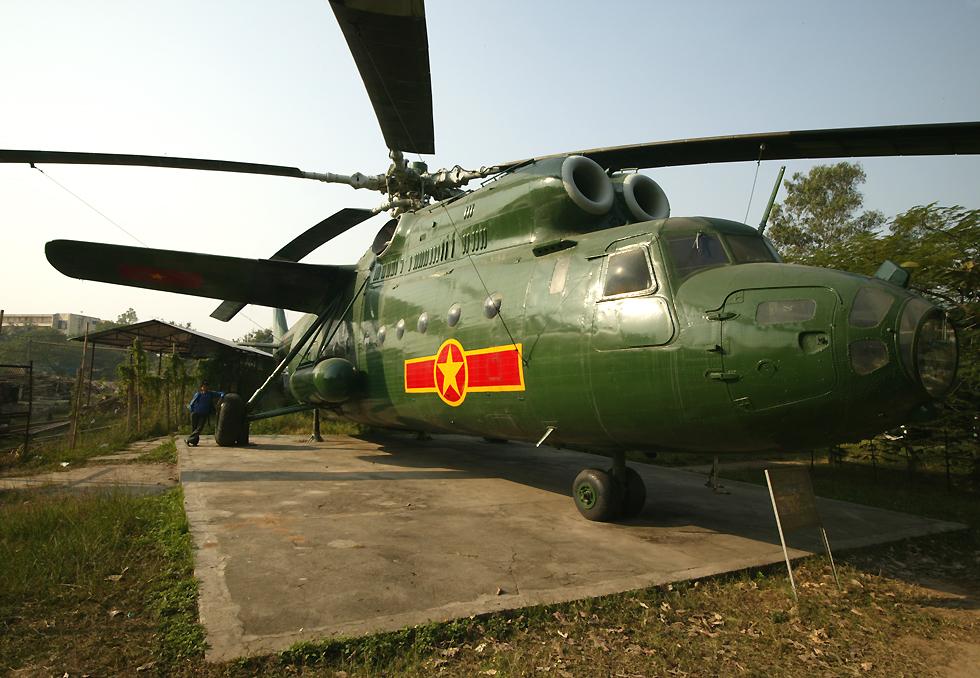
The museum has the best collection of Russian military helicopters that I've seen in one place. As well as a strange looking K-25 maritime helicopter with contra-rotating rotors and no tail rotors, there's also a gunship and an Mi 4 transport which carried Ho Chi Minh to various places. However the most amazing machine is this 33 meter (109 foot) long Mi 6 "Hook", for many years the largest helicopter in the world, capable of lifting the largest American helicopter, the CH-54 Skycrane, or up to 120 people in high density seating. |
|
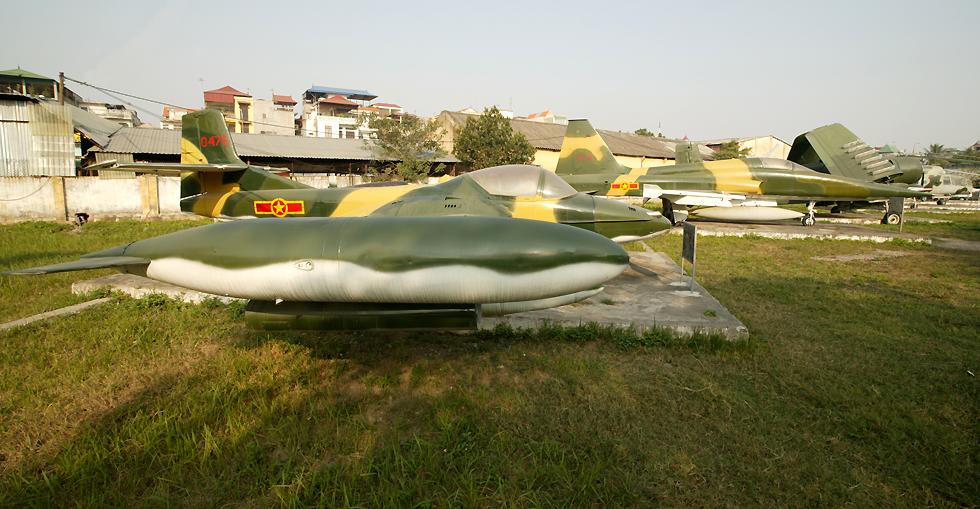
Like most Vietnamese military museums, there's the usual collection of shot-down American military hardware on display inside, but another surprising part of the collection outside is various American aircraft which were captured at the end of the war then repainted in Vietnamese Air Force colors and used operationally, probably until parts ran out for them. |
|
Virginia Air and Space Center
|
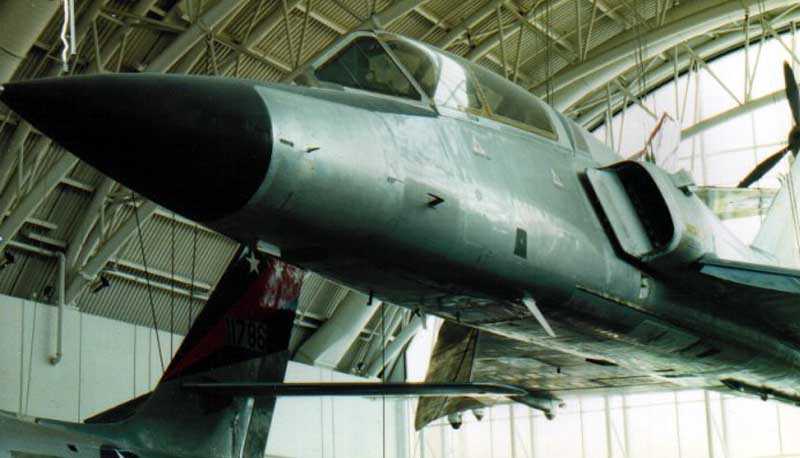
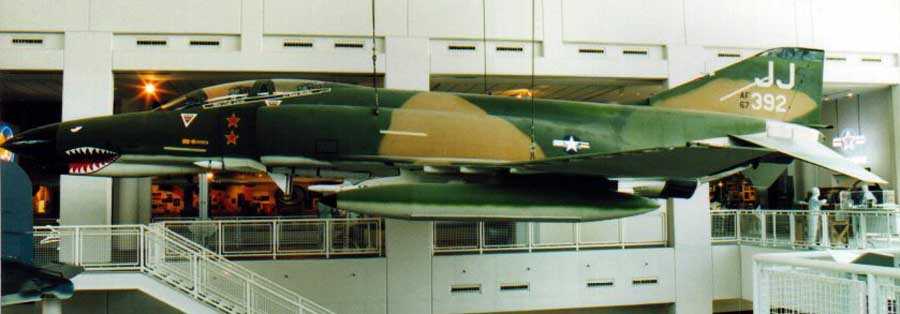
The Virginia Air and Space Center has a good selection of America's leading military aircraft from the 1960s and 1970s. |
|
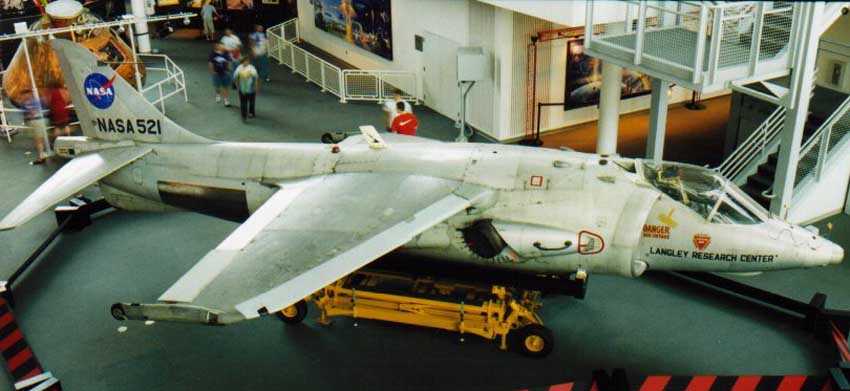
It also serves as the visitor center for the NASA Langley Research Center, with various space relics and experimental aircraft, such as this British "Kestrel", the forerunner of the Harrier jump jet. |
|
|
As well as these items the museum contains the Apollo 12 command module which went to the moon, actual moon rocks from Apollo 17, various world war two aircraft, and an IMAX theater which shows appropriate flight and space movies. |
Yankee Air Museum
|
The Yankee Air Museum is located near Detroit at the historic Willow Run airport, where the Ford Motor Company set up one of the most efficient aircraft manufacturing plants of the second world war, turning out over 8,000 B-24 Liberators by the time it was closed down in 1945. The Museum doesn't have a Liberator, though it does have the single-tail naval derivative of the Liberator, called the PB4Y Privateer. |
|
|
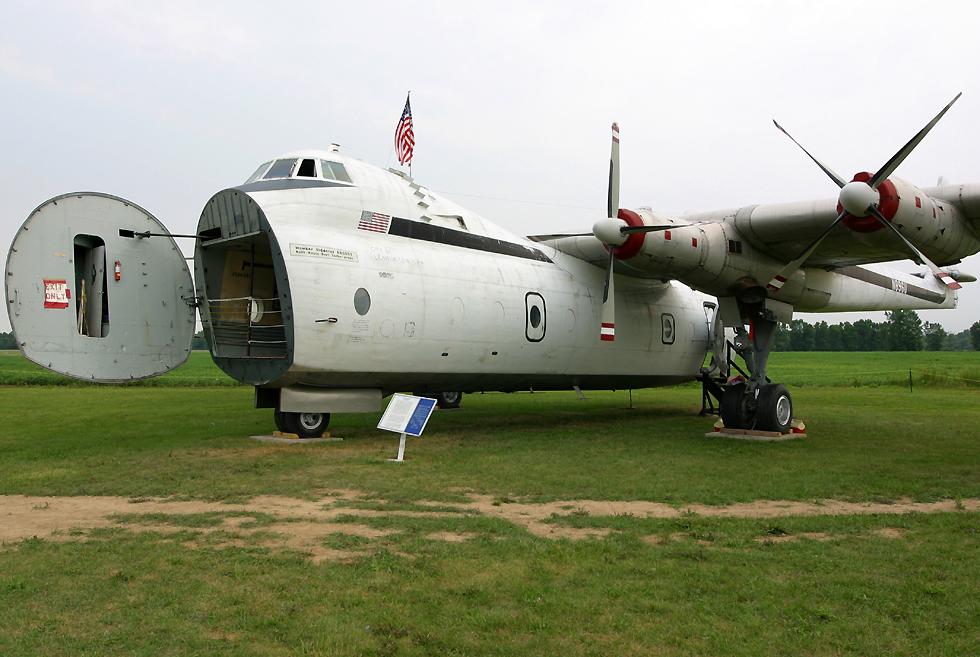
There are other unusual aircraft here, including this British-designed Armstrong Whitworth Argosy, a four-engined civilian transport which because of its noisy turbo-prop engines and twin-tail was nicknamed the "whistling wheelbarrow". The Argosy was never a common plane, but they did operate in New Zealand as well as the USA, and during one flight off New Zealand's Kaikoura coast there was a famous encounter with UFOs which was captured by a TV film crew. I guess the aliens wanted to see the plane, too! |
|
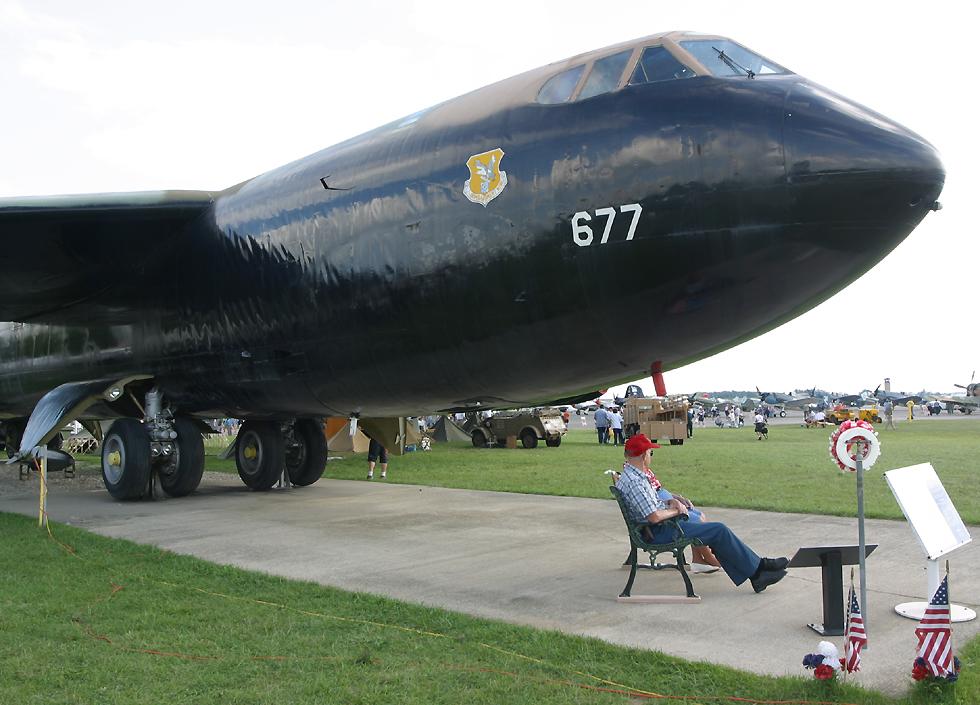
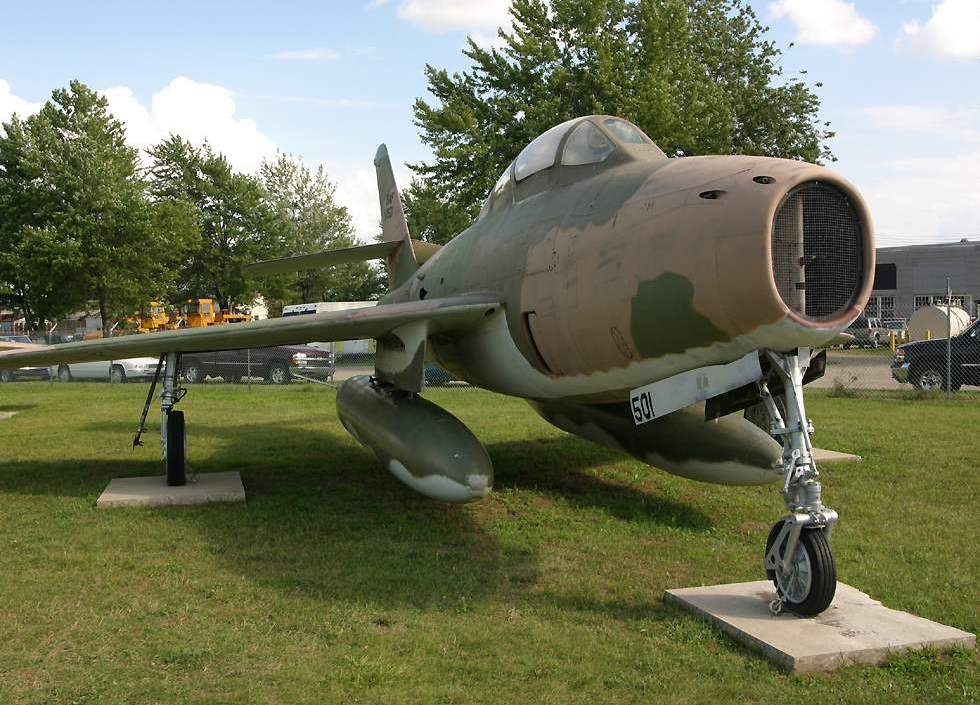
The Yankee Air Museum has some good large aircraft like the Stratofortress, Argosy and Privateer, but it really excels with its collection of American Cold War jet fighters. Here you'll find early jets like a T-33 Shooting Star, an F-84F Thunderstreak, an F-86 Sabre, an F-101 Voodoo, an F-102 Delta Dagger and an F-105 Thunderchief. |
|
Yasukuni-jinja Yushukan War Museum
|
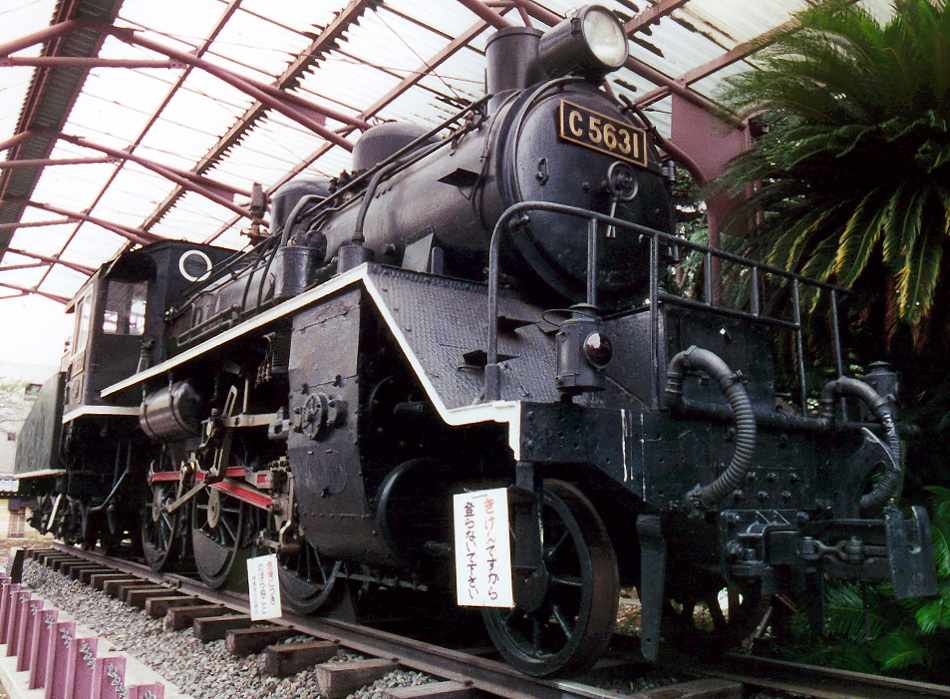
The Yasukuni-jinja Shinto shrine near the Imperial Palace in Tokyo is dedicated to "the restoration of peace in the Empire", and in particular, to the laying to rest of the spirits of the two and a half million Japanese who have died during all of Japan's wars. The attached Yushukan war museum has exhibits such as this locomotive, the first to traverse the Thai-Burma railway, which was built by prisoners of war and made famous in the movie "Bridge Over the River Kwai". |
|
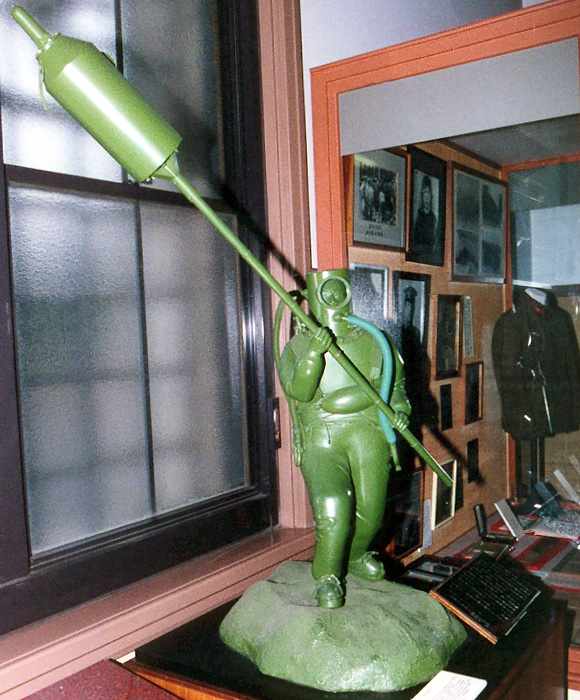
Several rooms are dedicated to displays about "special units" dedicated to kamikaze suicide missions, such as this diver whose job it was to blow up landing ships approaching Japanese beaches. Other exhibits on this topic are an authentic Ohka rocket powered suicide plane, and a one-man submarine, really a converted torpedo, which was to be rammed into enemy ships. |
|
|
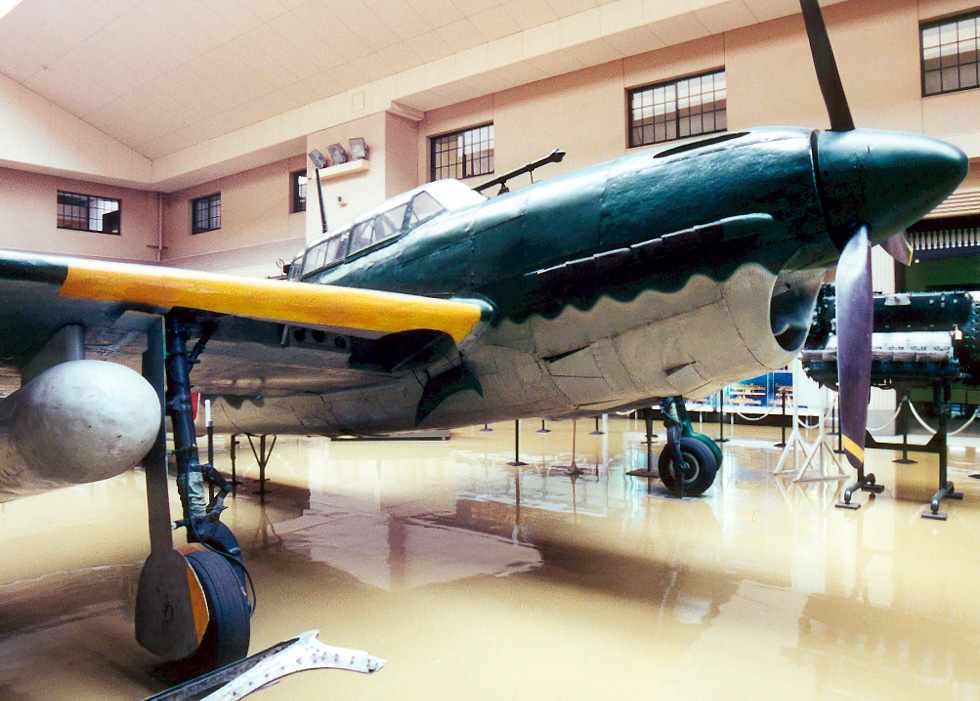
There are also examples of Japanese equipment recovered after the war from the Pacific Theater, like a tank from Iwo-Jima and this extremely rare Suisei "Comet" dive bomber. |