
Egyptian National Military Museum
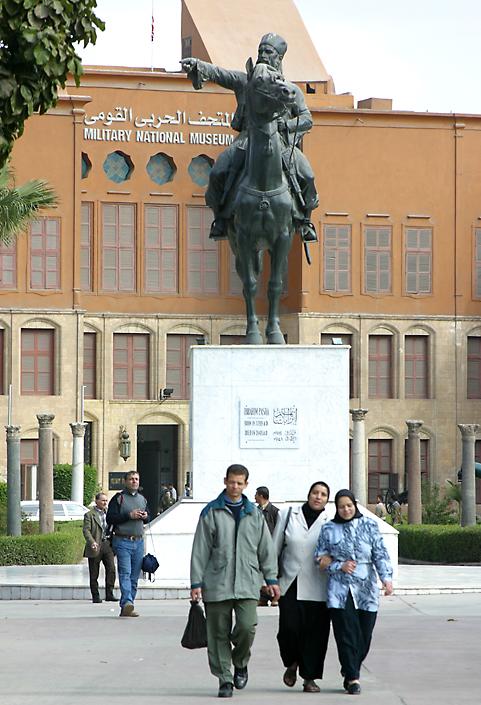
The Egyptian National Military Museum is located within the Cairo Citadel, a walled complex of fortifications and various types of buildings which is on a promontory overlooking Cairo. When you enter the museum area you'll see this statue of one of Egypt's historic military heroes called Ibrahim Pasha, who was the son (possibly adopted) of Muhammad Ali, who is generally considered the founder of modern Egypt. Muhammad Ali and Ibrahim Pasha weren't Egyptian by birth, they both came from a part of the Turkish Ottoman empire which is now within the borders of Greece. About 20 years after Muhammad Ali became ruler of Egypt he sent Ibrahim Pasha in an ill-conceived attempt to put down a native Greek rebellion which was being supported by Great Britain, France and Russia. Against Ibrahim's advice, he was ordered to join battle against the combined navies of the European powers, and the entire Ottoman fleet was destroyed. Ibrahim had considerably more success fighting against the Wahhabis in the Arabian peninsula (though the unpleasantly rigid Wahhabi brand of Islam is now dominant in Saudi Arabia), and he also did very well fighting against the Ottomans in Syria. However, continual interventions by European countries prevented him from making lasting conquests, and he eventually retreated to Egypt, which he ruled briefly before his death in 1848. Although he wasn't really Egyptian, and although he certainly had his failures, Ibrahim's successes make him an appropriate candidate for national hero in Egypt. He certainly looks noble up on his horse, but contemporary accounts describe him as short, very obese and deeply scarred by smallpox. |
|
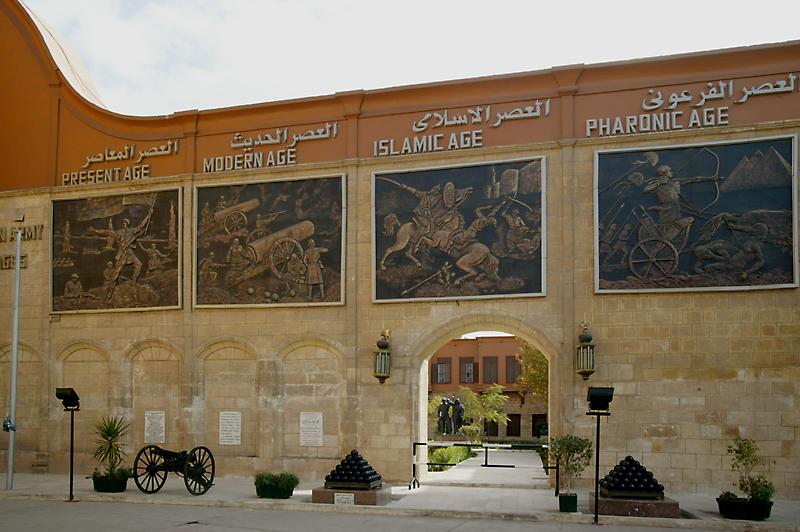
The museum is very much a celebration and glorification of Egyptian military history. Although it pays a little attention to the Pharaonic age (which was really the golden age of Egyptian militarism), most emphasis is on the period from the "modern age" to the "present age". You can see here a cannon and cannonballs from the 1800s, there was more stuff beyond this wall but unfortunately it was closed off during my visit. |
 |
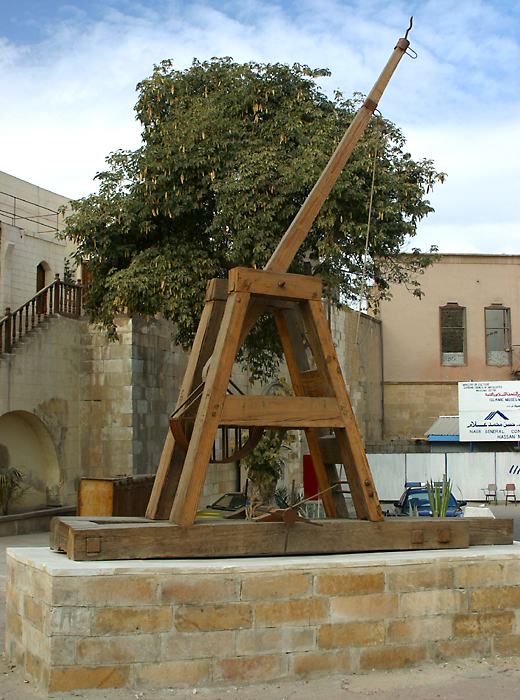
Here's one of the few exhibits relating to the Islamic age, a replica catapult which the accompanying plaque says is of the same type used by the Prophet Mohammed to besiege the city of Elta'ef. The plaque further describes the purpose of the catapult as being to throw arrows, throw rocks to destroy citadels, throw the fire balls, and throw scorpions or dusty baskets. It isn't really explained how dusty baskets will cause your enemy to capitulate, and personally I think the use of scorpions as weapons of war is grossly over-rated; if they're not squashed on landing then they're pretty easily squashed under your shoes. In fact it's probably far more dangerous for your own people to collect the scorpions than for the people you're throwing them at. |
|
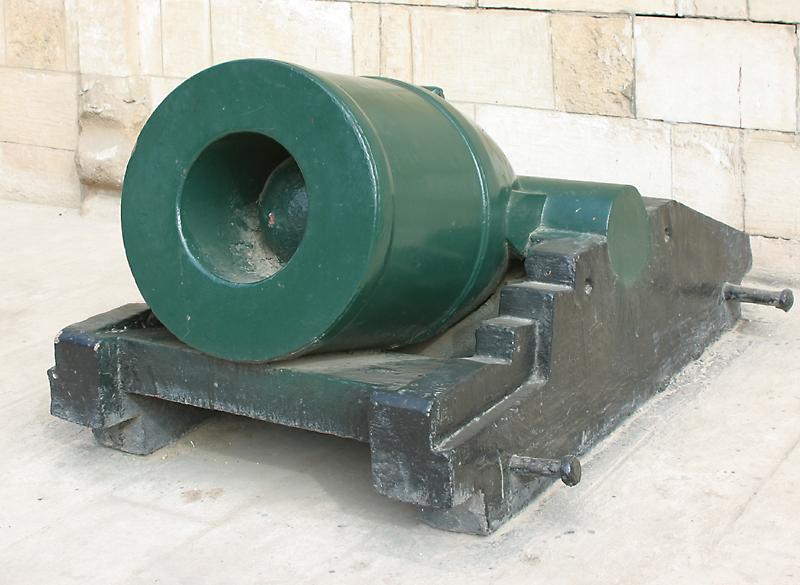
Here's a 33 centimeter mortar from the reign of Mohammad Ali, who did a tremendous amount to modernize and industrialize Egypt. There was no information anywhere describing how this mortar was used. |
 |
|
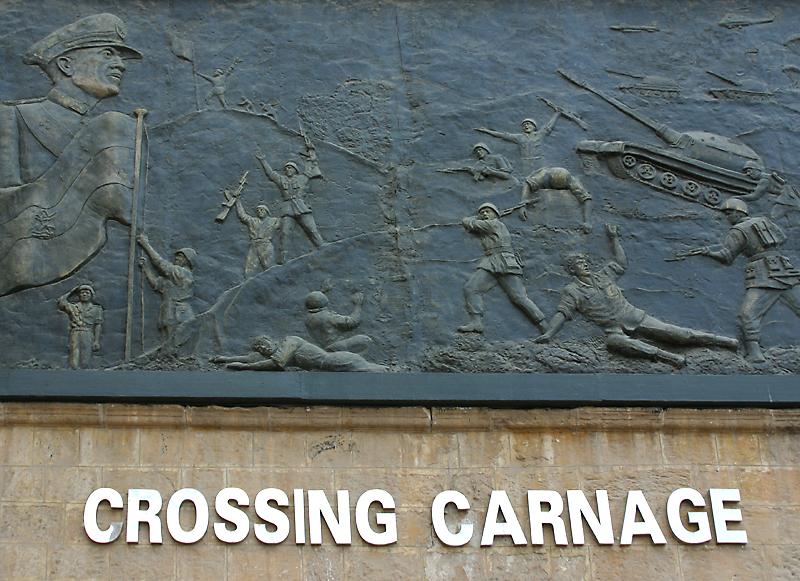
Nothing like a bit of nice carnage to keep the masses entertained. This delightful scene is located at one end of the wall which you saw earlier and commemorates the Egyptian crossing of the Suez canal during the Yom Kippur War in 1973. The Israelis had held the eastern bank of the canal since seizing it during the Six Day War in 1967, and erected huge sand banks on their side of the canal to slow down any Egyptian attack. The Egyptians surprised everyone by making a very ingenious and rapid breakthrough of these defenses and overwhelming the Israeli defenders, however soon afterwards the Egyptian attack completely lost momentum and they had to fall back to their own side of the canal. However Egypt was able to claim this as a great moral victory, and it's become the main military accomplishment celebrated at this museum. |
 |
|
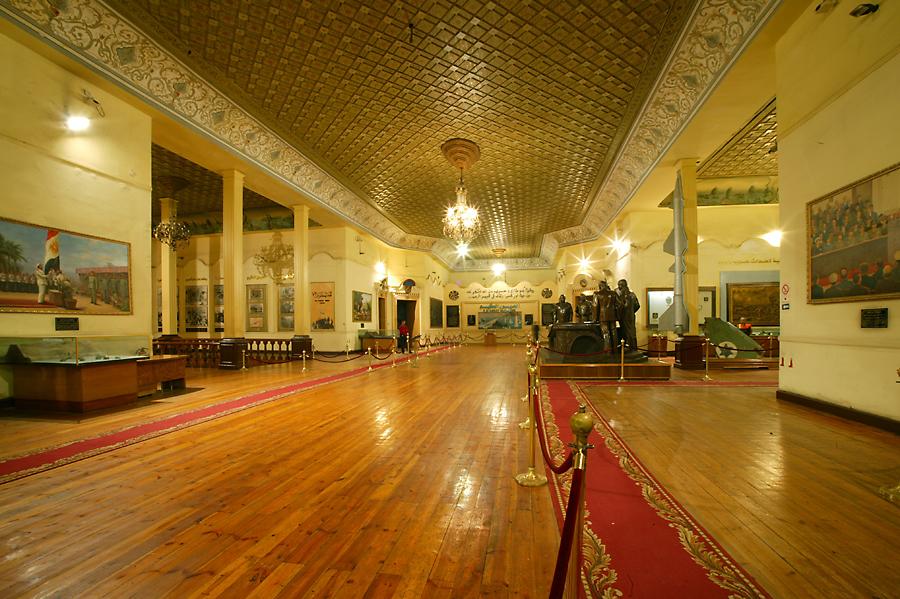
There's more of the same congratulatory stuff inside, though much of it will have limited appeal to most visitors. |
 |
|
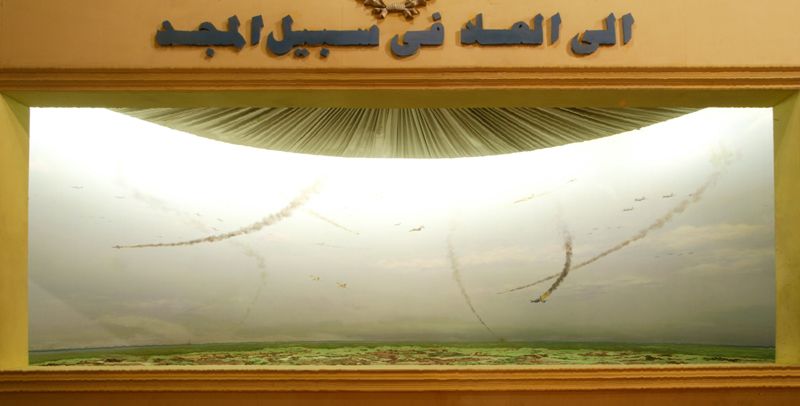
Here's a diorama showing some rather one-sided and over-stated victories by the Egyptian air force over the Israeli air force. The current military dictator of Egypt, Hosni Mubarak, is given very fulsome praise. Part of the large brass plaque in Arabic and English says, "The history has recorded the name of the commander of air force during October war Major General Mohamed Hosny Mobarak with very shiny letters because of his good planning, organization, selection of his staff and air units commanders, and his excellancy of managing the combat missions of his forces which led to the victory and accomplish the air superiority during the days of operations". |
 |
|
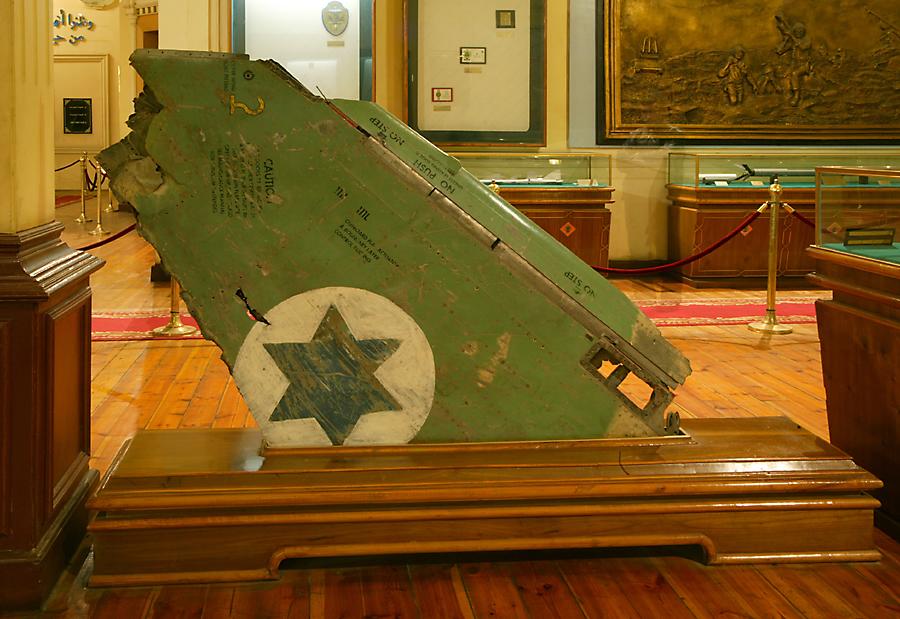
And here's part of the wing of an Israeli fighter which was shot down by the Egyptians. It's certainly genuine, though the Star of David insignia looks rather odd, very poorly painted and quite crooked. |
 |
|
The museum is a fun place for the whole family, a chance to let your hair down and enjoy the sights, such as these amphibious vehicles which were used to transport troops and equipment like tanks across the canal. In the late 1950s Egypt decided to court the Russians, who were eager to establish a foothold in the Middle East, which had previously been entirely the province of the British, French and Americans. Egypt was very successful in playing these rivals off against each other, and received a lot of financial and military assistance this way. The Russian equipment certainly was cheaper than Western equivalents, but it wasn't as good and after the fighting with Israel had died down Egypt happily started buying American equipment with the aid money that America poured in, making Egypt the second biggest recipient of American aid money in the world, after Israel itself. Egypt became shamelessly promiscuous in courting foreign finances - there's a sign on the wall behind here describing how the murals were put up as "a symbol of the mutual co-operation" between Hosni Mubarak and "his excellency Kim Il Sung, the president of the Democratic People's Republic of Korea", that is, North Korea! |
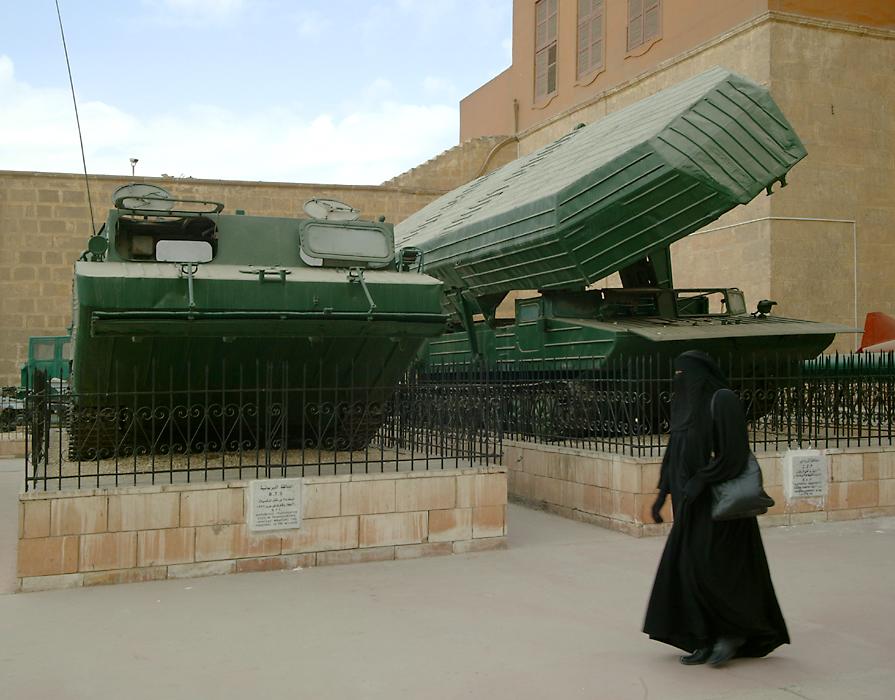 |
|
A whole row of Soviet tanks which were used in the various wars against Israel. A couple of nice young fellows who spoke good English asked me to take a photo of them standing in front of these tanks, for some reason I thought they were Israelis, but actually they were Egyptians revelling in their country's victories. |
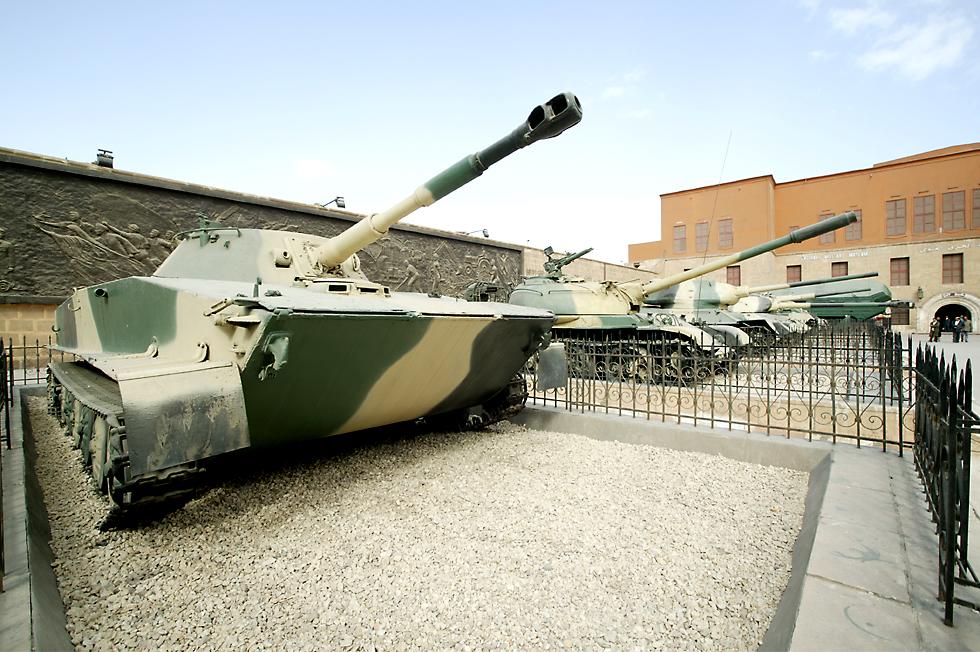 |
|
According to the sign, this is "Ayogoslav jet Torped" produced in 1956. I'll take that to mean that this is Yugoslav torpedo. The head is a very interesting shape, I don't think I've seen anything like that. |
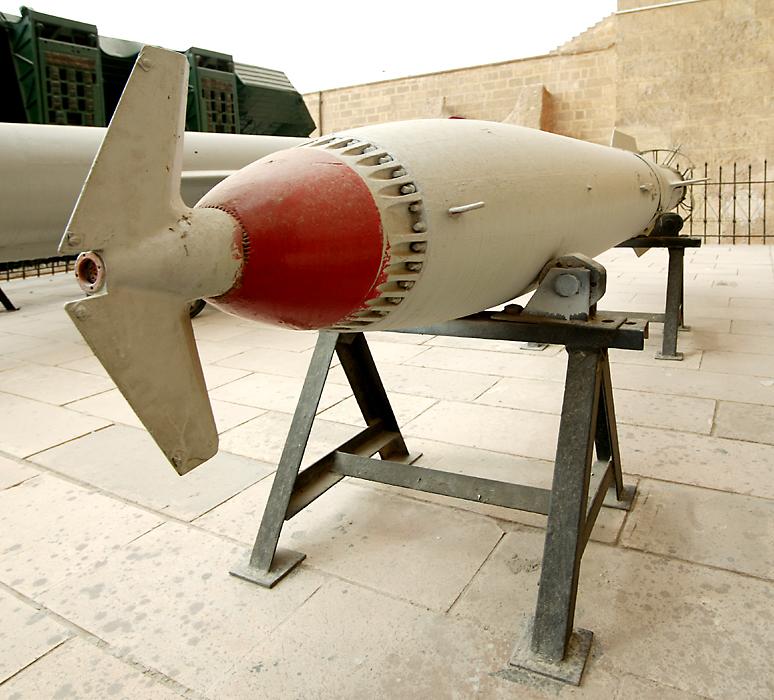 |
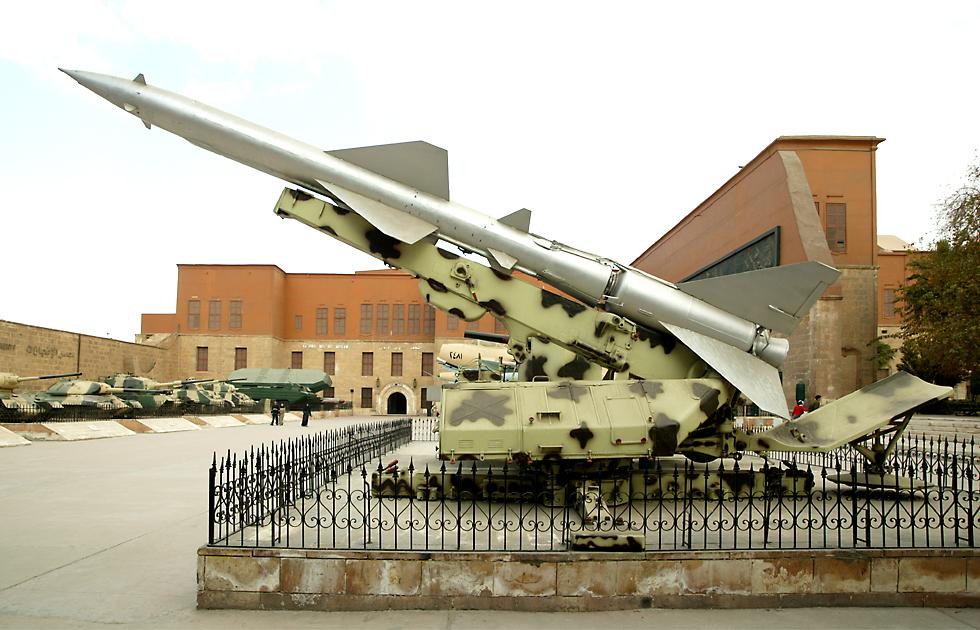
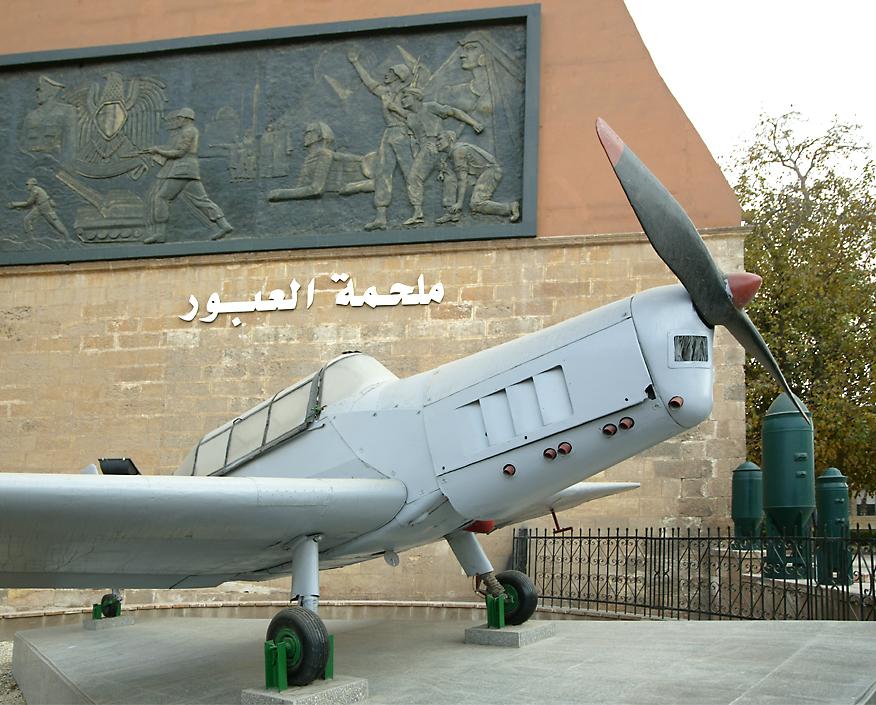
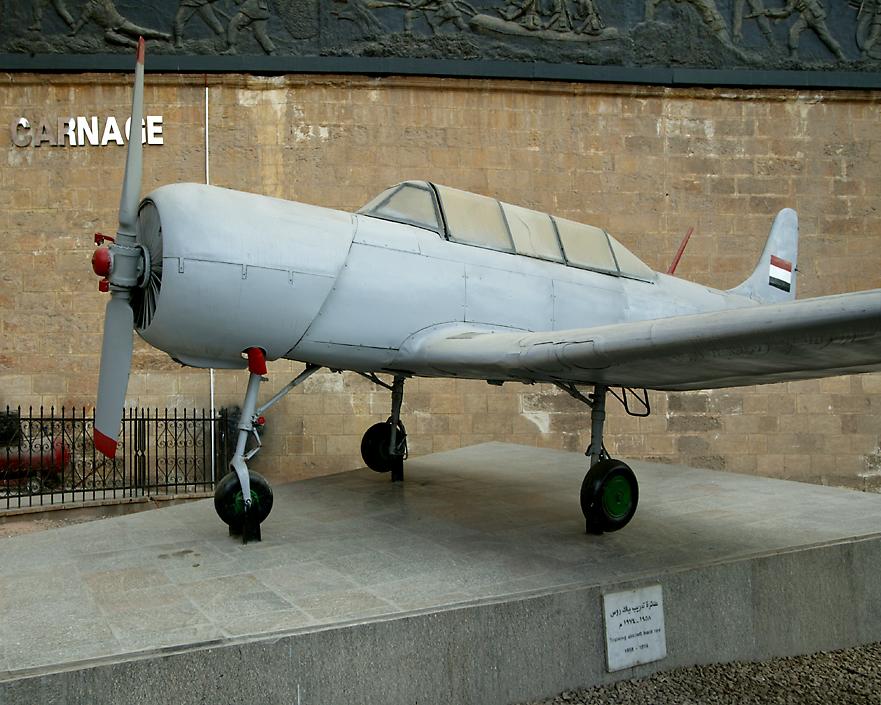
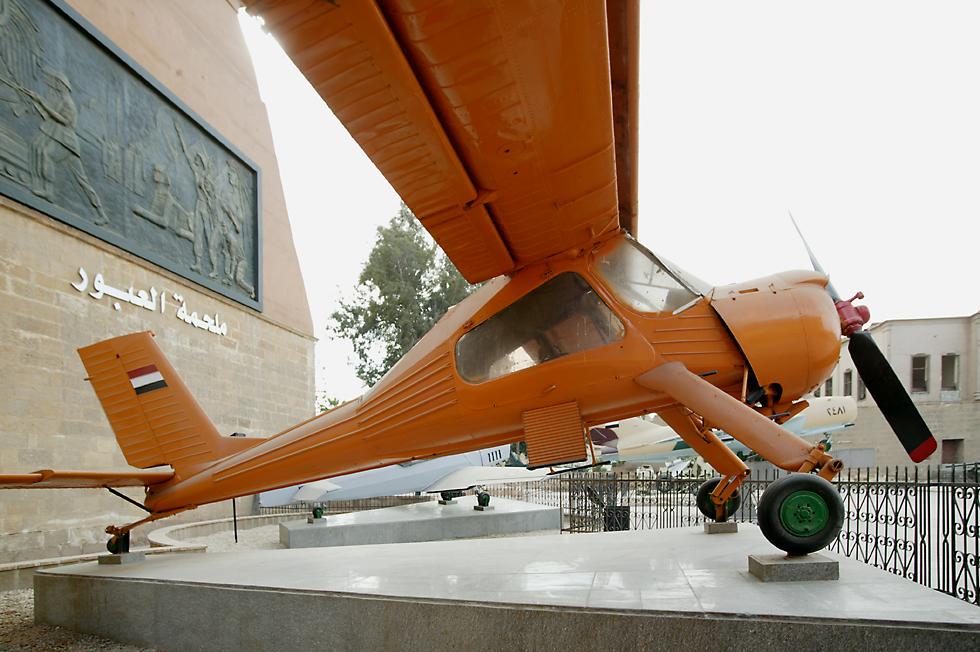
|
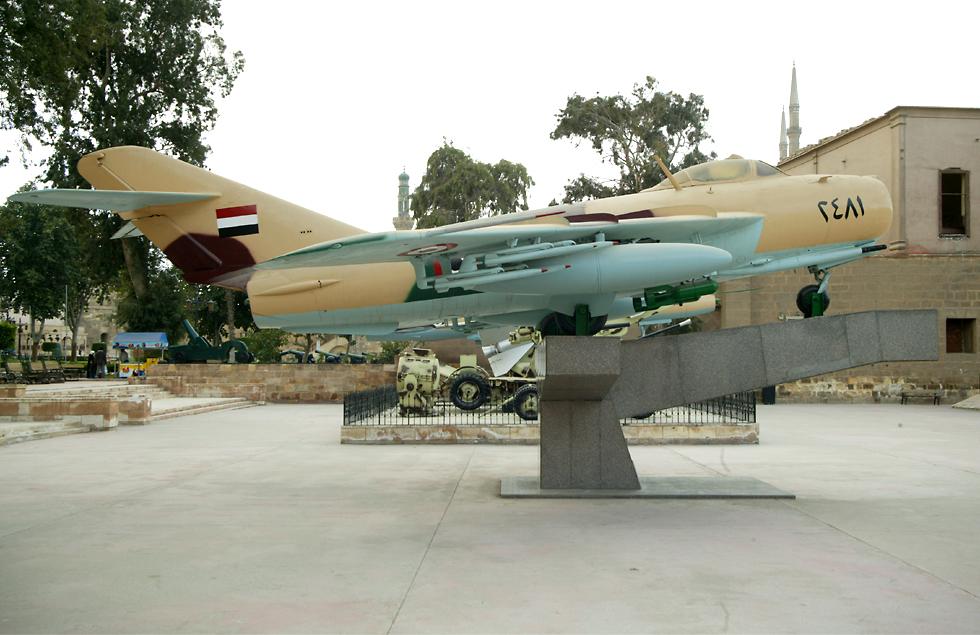
Here's a much more potent aircraft, Russia's first supersonic fighter the afterburner equipped MiG-17, which has the NATO reporting name "Fresco". They're usually seen in pure fighter form, but this MiG-17F "Fresco C" is more interesting because it's fitted with underwing rockets and even has a couple of small bombs under its belly. This type of aircraft entered service in Egypt in 1957, very soon after they entered production. The MiG-17F was also used by the communist Vietnamese air force and because of its maneuverability it was quite successful against much more technologically advanced American designed fighters. MiG-17s served on well into the 1970s with various air forces around the world, and today there are even several examples on the American airshow circuit. |
 |
|
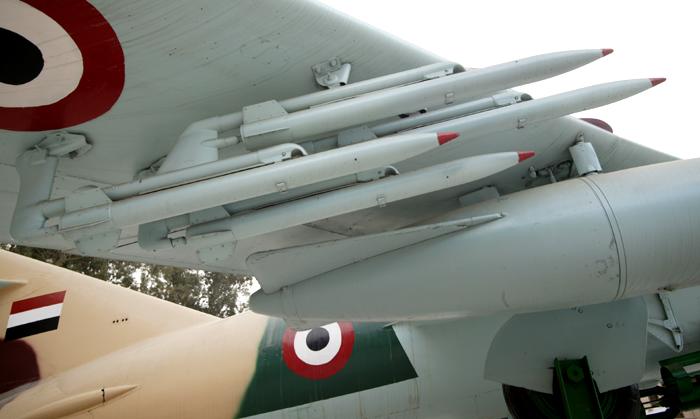
Here's a closeup of those missiles, which I assume are Egyptian designed 76mm "Sakr" unguided missiles used for ground attack. This arrangement was later phased out in favor of more typical rocket launcher pods. |
 |
|
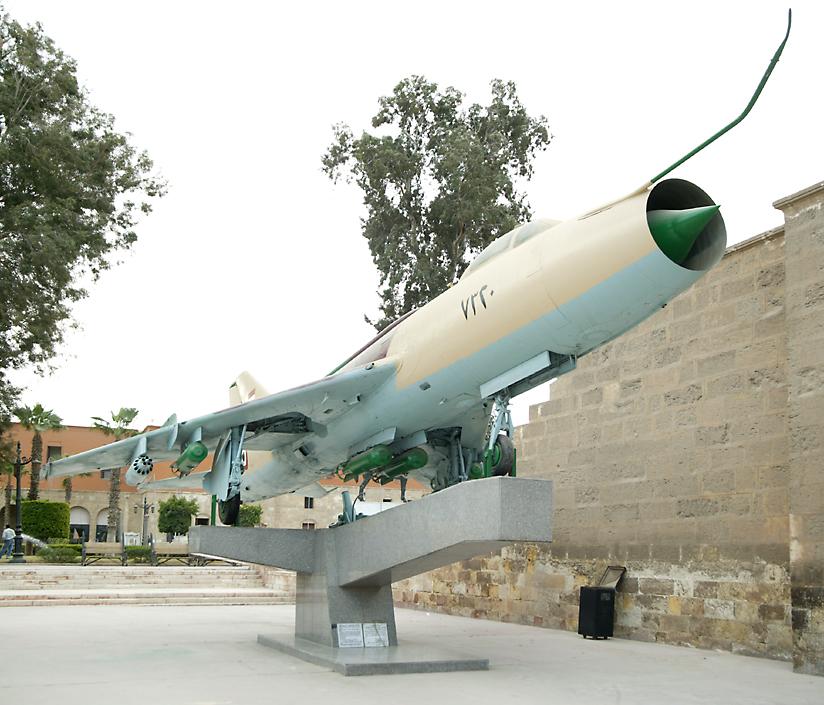
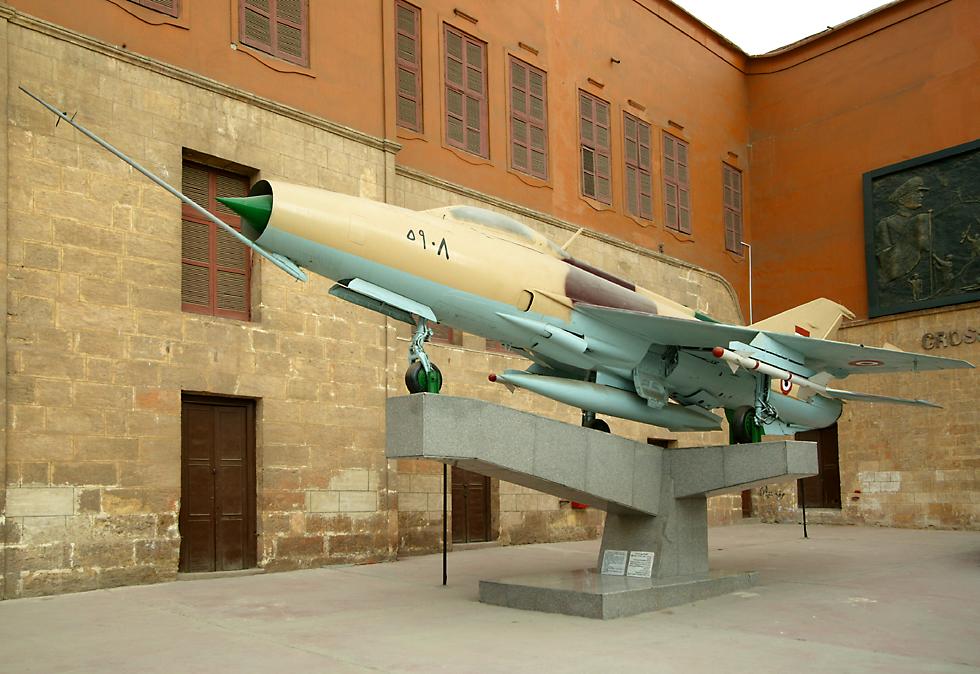
The MiG-21 "Fishbed" was introduced shortly after the Fitter, and since it was a much more capable aircraft, it spelled the end for the Su-7 in the fighter role. The MiG-21 has been extremely successful, with more built than any other post world war two military aircraft except the C-130 Hercules. They were a favorite of the Arab nations surrounding Israel, however they were outclassed in combat, particularly by Israel's F-15 Eagle, which is at least a generation more advanced. Nevertheless, many MiG-21s are still in service today, like these Vietnamese air force MiG-21s which I was lucky enough to see in action in late 2004. |
 |