| German
aircraft at Hendon |
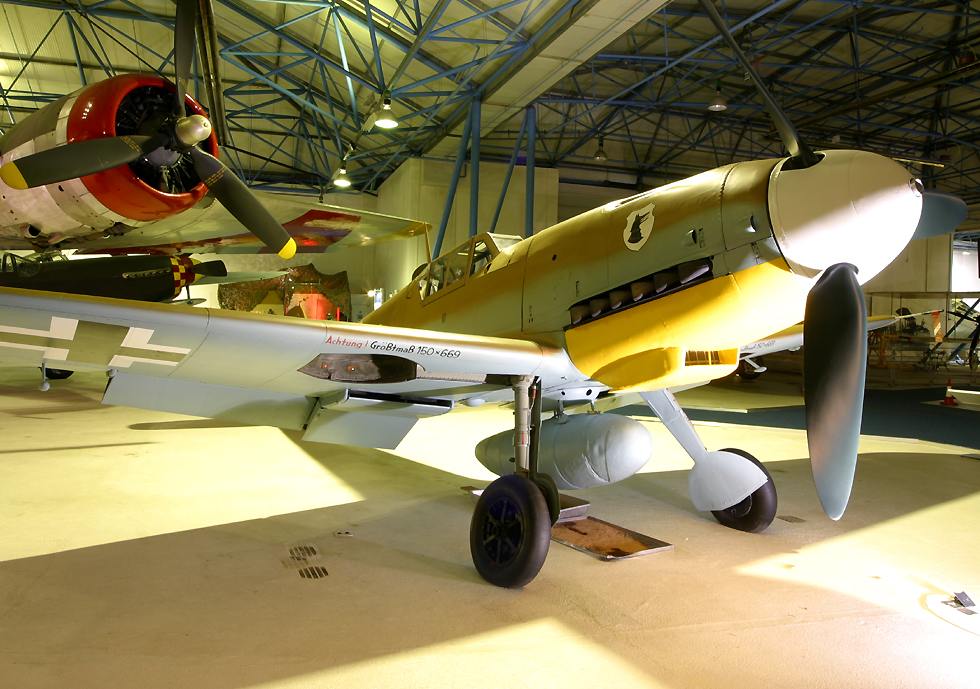
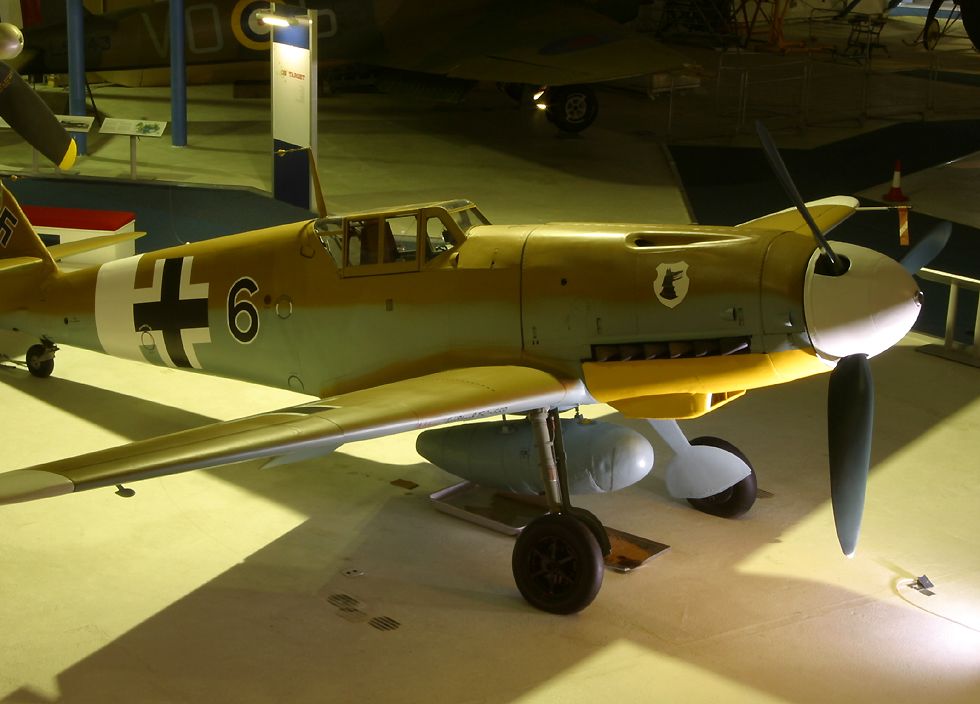
| The
Messerschmitt Bf 109 was the German equivalent of the British Spitfire
fighter; the two aircraft were in a technological race until the end of
the war. Ironically, the Bf 109 started life using a Rolls-Royce
Kestrel V engine, before entering full production with a Daimler-Benz. |
 |
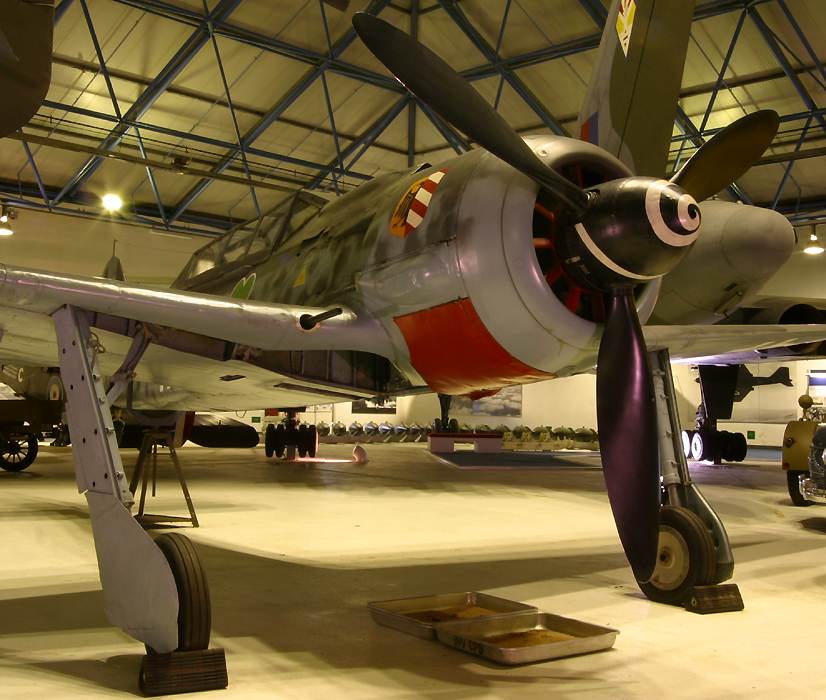
| Although
the Bf 109 is the aircraft which springs to mind when people think of German
fighters of world war two, it wasn't the best German propeller driven fighter
of the war. That position belongs to the Focke-Wulf FW 190,
which was introduced in 1941, and was one of the few German aircraft to
use a radial engine. The one on display is a two-seat training
plane, created by modifying a standard FW 190. |
 |
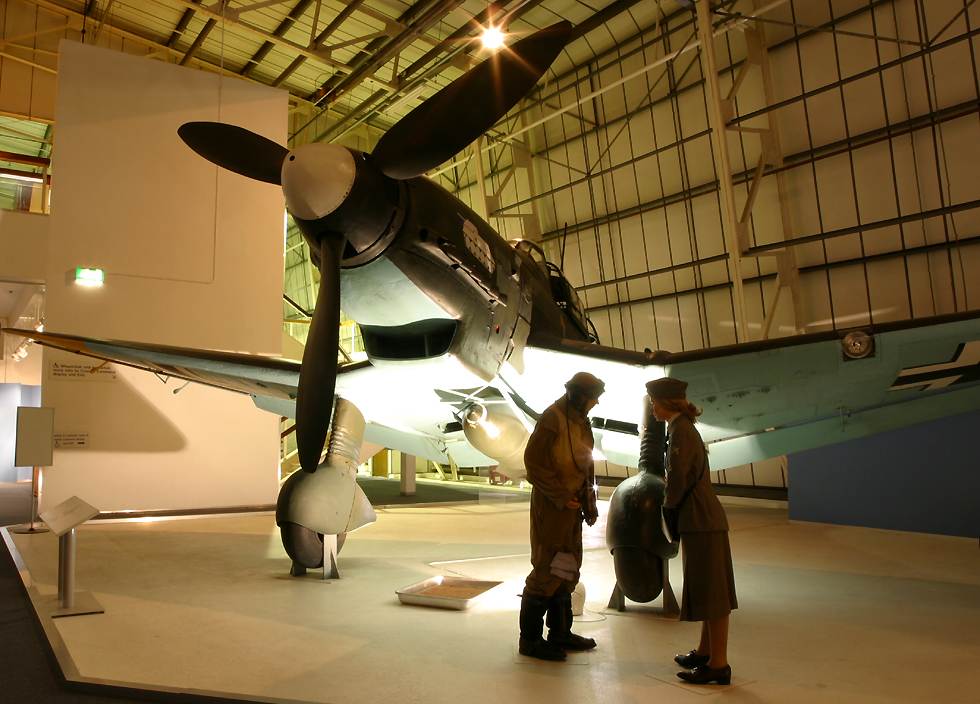
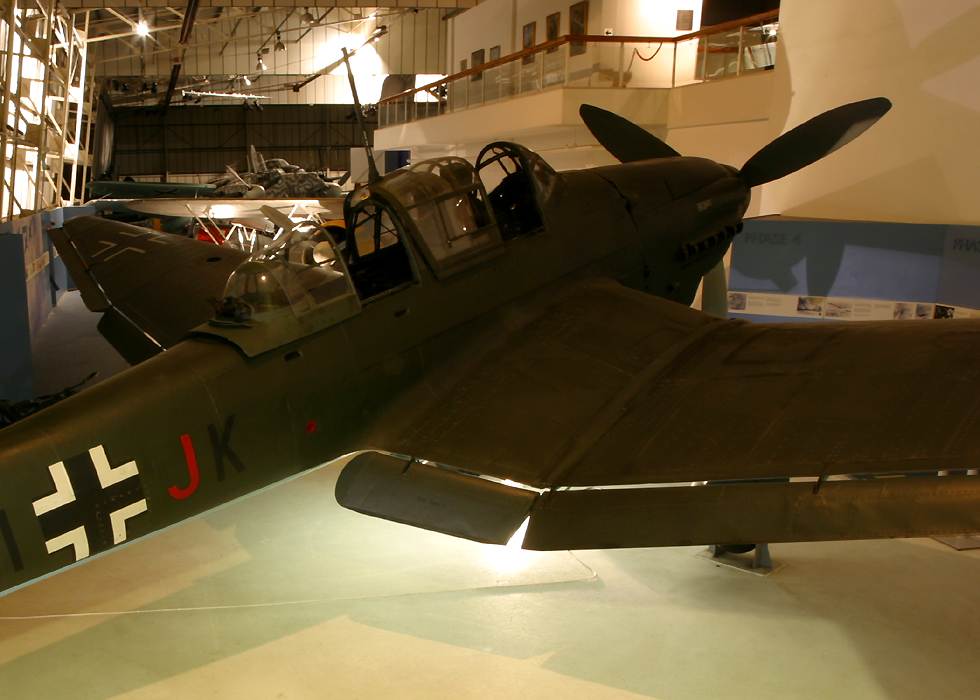
| The
Junkers Ju 87 Stuka had a similar history to the Bf 109, entering service
before the war and taking part in combat during the Spanish civil war.
Like its fighter counterpart, the Ju 87 also had to soldier on until the
very end of the war, by which time it was totally outclassed. |
 |
| The Ju 87 was the
Nazi's original terror weapon, and was even fitted with a siren to cause
panic as it dived down to release its bombs. In Spain and during
the early years of the world war it was highly respected by both sides,
largely because of the accuracy it achieved as a result of its diving technique.
The Germans wasted a lot of effort trying to emulate the early success
of the Stuka, but it gradually became apparent that the plane was very
vulnerable to modern fighter aircraft like the Spitfire and Mustang, and
was even susceptible to ground fire as it pulled back up from its dive.
However it continued to be used in anti-shipping and anti-tank roles right
until the end. |
 |
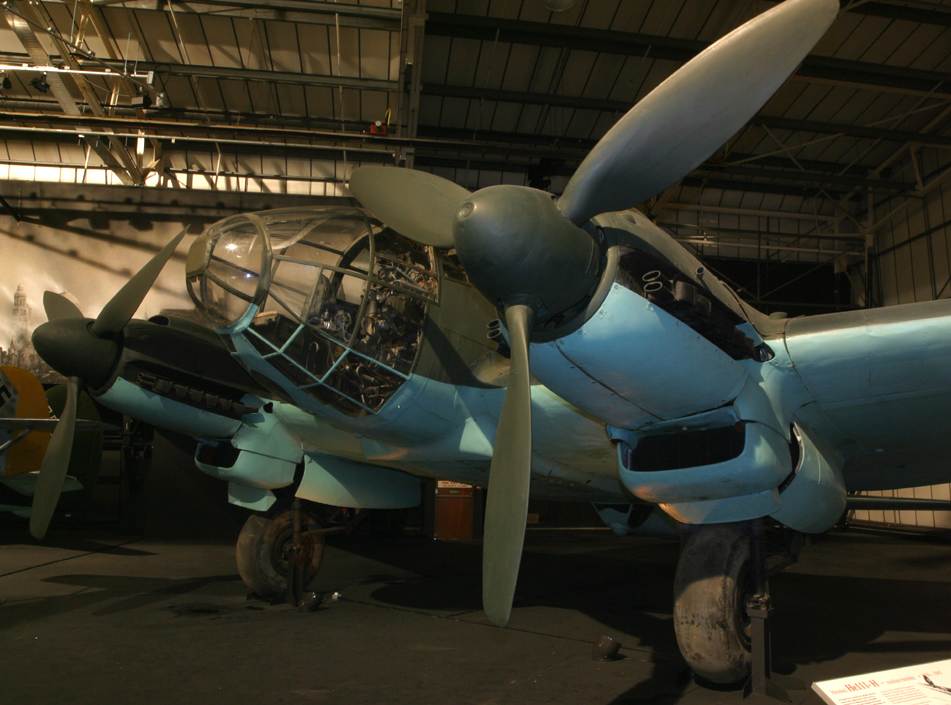
| The
Heinkel He 111, like the Bf 109 and Ju 87, started its combat service in
Spain and struggled through to the end. Although effective
in short range combat and in tactical campaigns in support of German infantry
and armour, it was not suited to long-range strategic bombing.
Although they caused a lot of damage during the Blitz bombing of British
cities like London and Coventry, this was nothing compared to what was
done by heavy bombers like the British Lancaster and the American B-17
Flying Fortress. Surprisingly, though, they remained in service
in Spain through the 1960s, and one
of these was still flying at airshows into the 1990s until it was tragically
lost with its crew during a landing accident. |
 |
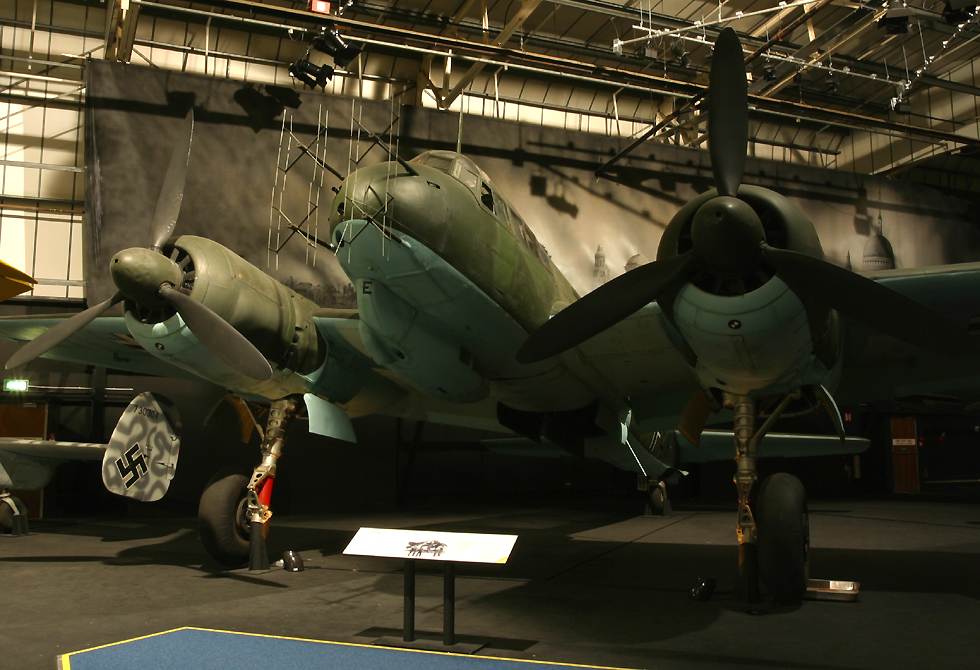
| The
Junkers Ju 88 is considered to be the Luftwaffe's most versatile aircraft,
being used in many varieties, each specialized in a role such as fast bomber,
dive bomber, torpedo bomber, night fighter, ground attack aircraft or reconnaissance
plane. This one is a Ju 88R-1 night fighter, easily recognizable
from the radar antennas fitted on its nose. Two of the three
man crew defected to Britain during the war, much to the consternation
of the third man, the radio operator. The pilot had arranged
this defection with the British secret service, who wanted to acquire German
radar technology. |
 |
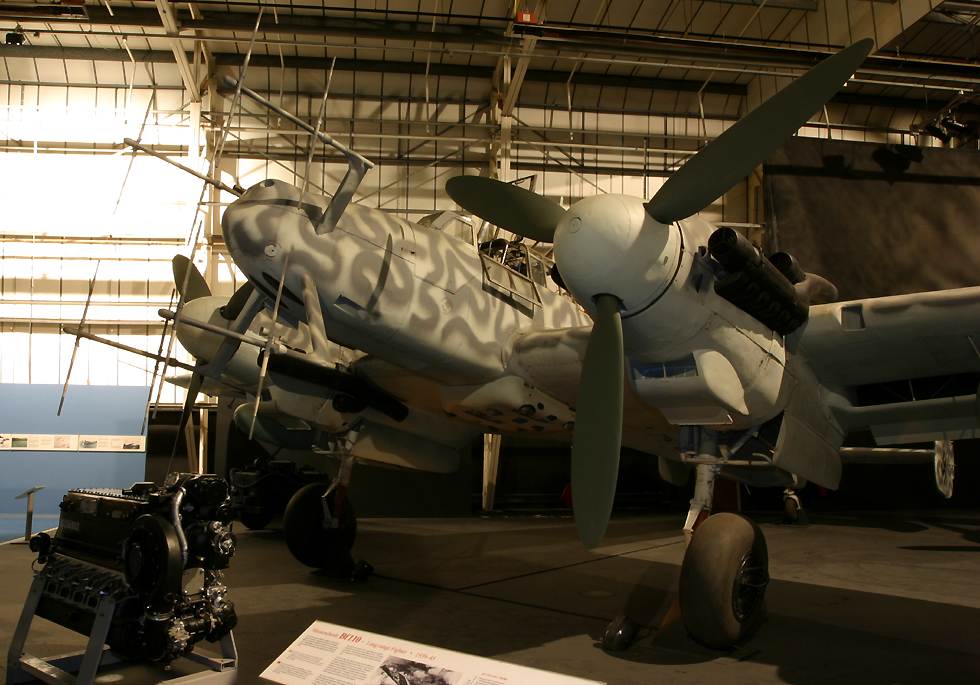
| Here's
another night fighter, the Messerschmitt Me 110 Zerstörer or "destroyer".
Originally intended as a long-range fighter, it was no match for the spitfires
and hurricanes it fought against during the Battle of Britain.
It was therefore reassigned to the roles of fighter-bomber and night fighter,
where it achieved its greatest successes; at the start of 1944 these aircraft
comprised 60 percent of the German night fighter force. This
is the only intact aircraft of this type remaining anywhere. |
 |
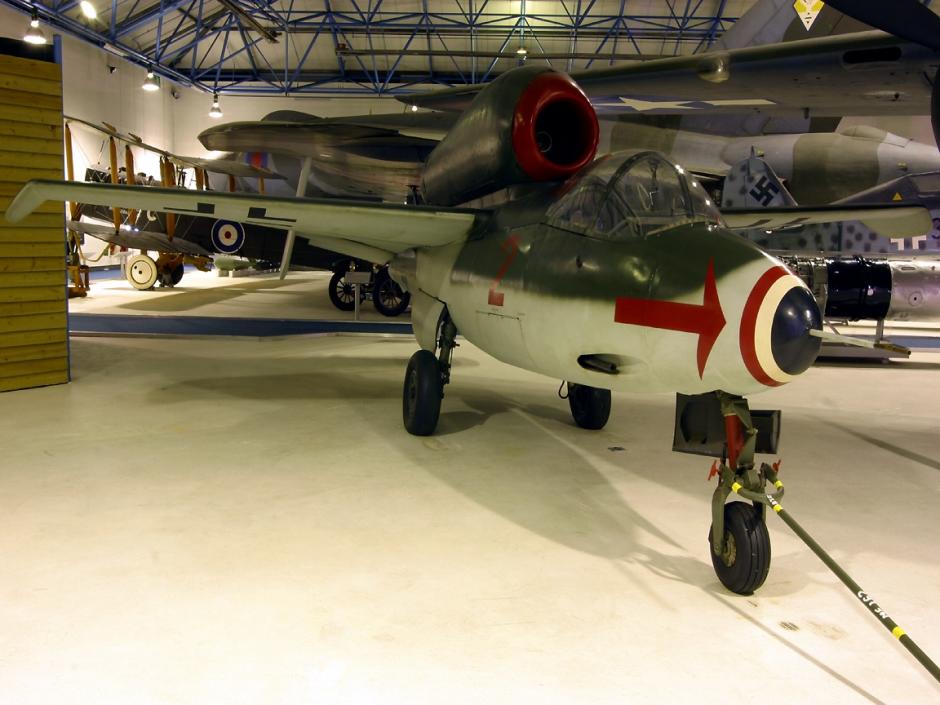
| Here's
my favourite aircraft in this section, the Heinkel He 162 Salamander, also
called the Volksjäger, or "people's fighter". Desperate
to find a technological edge which would enable them to win the war, but
running out of basic materials like aluminium, the Germans built the Volksjäger.
Developed in only three months, it was built largely from wood and required
only one jet engine, instead of the two used by the other German jet fighter
of the war, the Me 262. Several of the prototypes crashed,
one during a display in front of Luftwaffe officials, but development continued.
However, the end of the war arrived with only 200 ever being delivered,
and only 2 combat kills are recorded for it. |
 |
 |