
Russian Helicopters at the Vietnamese Air Force Museum in Hanoi
|
As well as the captured UH-1 Iroquois in communist Vietnamese Air Force colours, there were a number of Russian helicopters on display at the museum. This Mil design bureau Mi-4, which has the NATO reporting name "Hound" was first flown in 1952. It could carry up to 14 combat ready troops, and was also produced in anti-submarine, close support and electronic countermeasures (ECM) versions. Interestingly, though, this is the civil version with square windows instead of round, and it was used to transport Ho Chi Minh (or "Uncle Ho" as the associated sign prefers to call him) around the country. |
 |
|
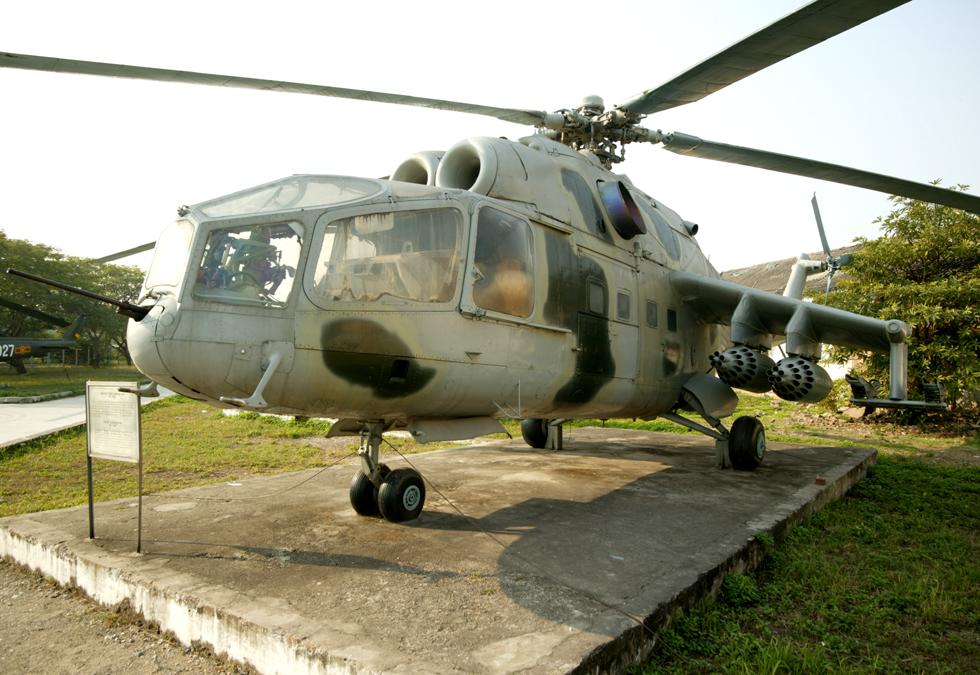
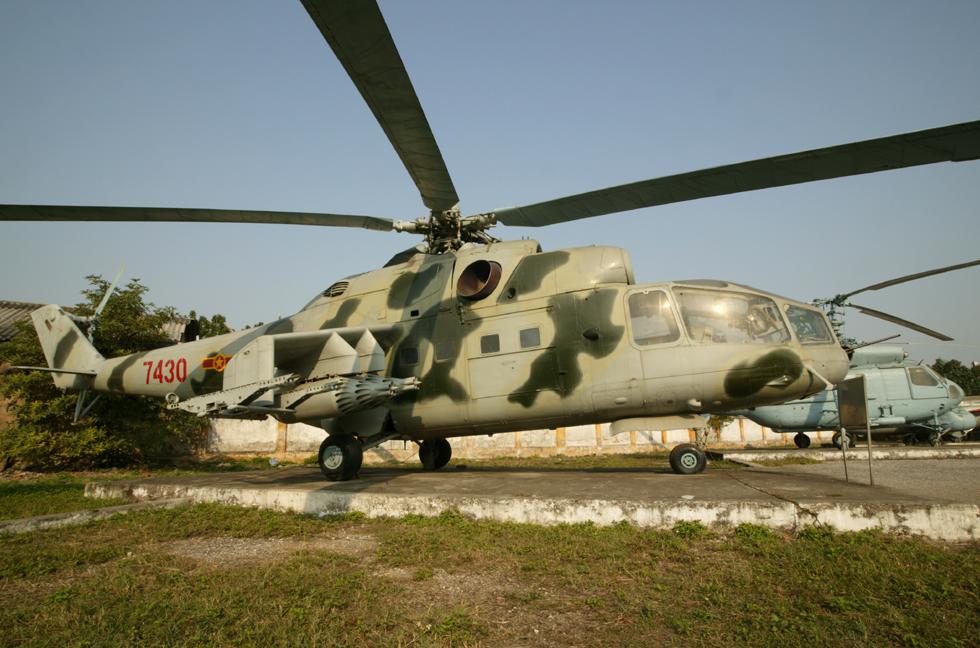
The Hind-A entered service in 1973 and was designed to carry troops into combat while using its rockets and machine gun to supress enemy forces. According to the sign this particular aircraft was used in the south-west against Pol Pot's forces when Vietnam invaded Cambodia (or Kampuchea as it was known at that time). |
 |
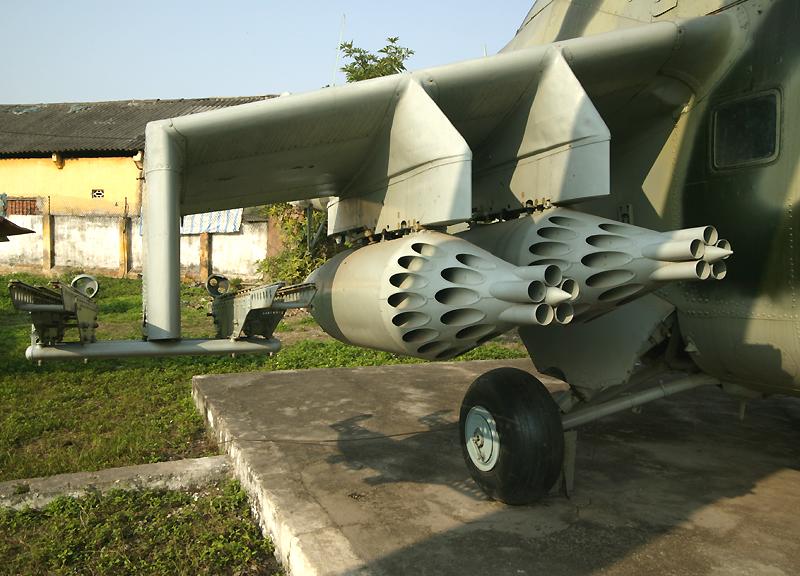
Like its bigger brother the Hind-D, the Hind-A has stub wings with pylons for ground attack rockets, and missile rails which allow it to attack tanks. As well as the Hind-A and Hind-D there were other models like the Hind-B, whose stub wings lacked the anhedral bend you can see here, and the Hind-C without the machine gun or the missile rails at the ends of the wings. |
|
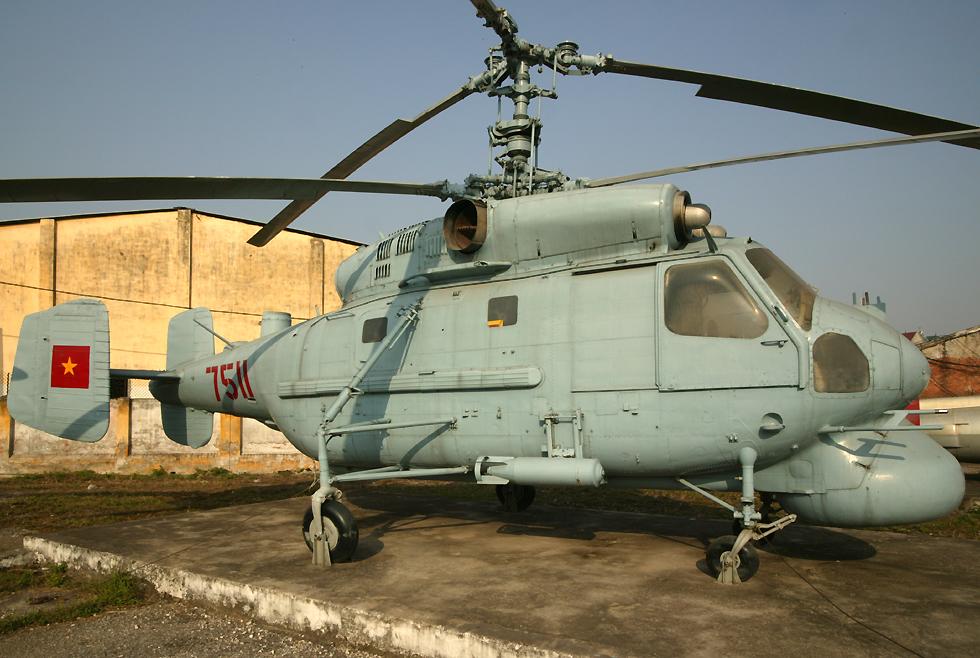
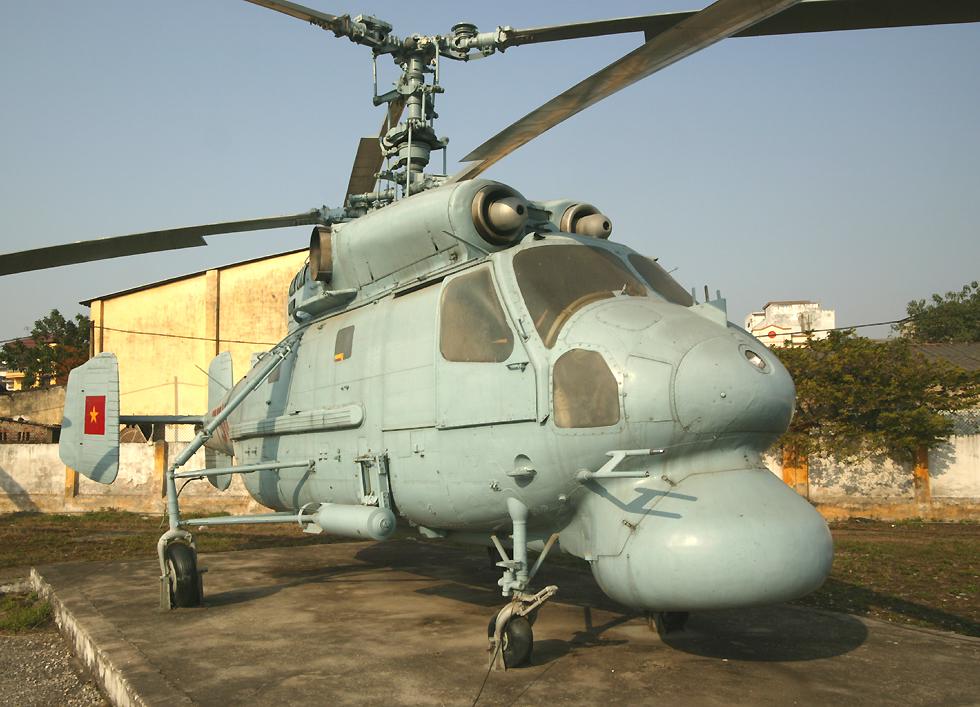
Here's a seriously cool bird, and one which would only be recognized by a serious helicopter afficianado! The Kamov design bureau Ka-25, which has the NATO reporting name "Hormone", is a jet-powered naval warfare specialist which replaced the piston-powered Mi-4 "Hound" as the Soviet's main anti-submarine helicopter. As you can see, the museum folks have kindly left a depth charge or something similar attached. The "Hormone" has mostly been superseded by the very similar-looking Ka-28 "Helix", and I was lucky enough to photograph a Ka-28 "Helix" on the ground at Danang airport. |
 |
|
As you might have noticed, the Ka-25 has no tail rotor. It's not necessary, since the contra-rotating rotors cancel out each other's torque and so there's no twisting action for the tail rotor to counter. The Kamov design bureau specialized in helicopters with contra-rotating rotors, producing only one model with the "normal" main rotor and tail rotor configuration. You can see some Kamov helicopters in action during the 2005 MAKS airshow in Moscow. |
|
|
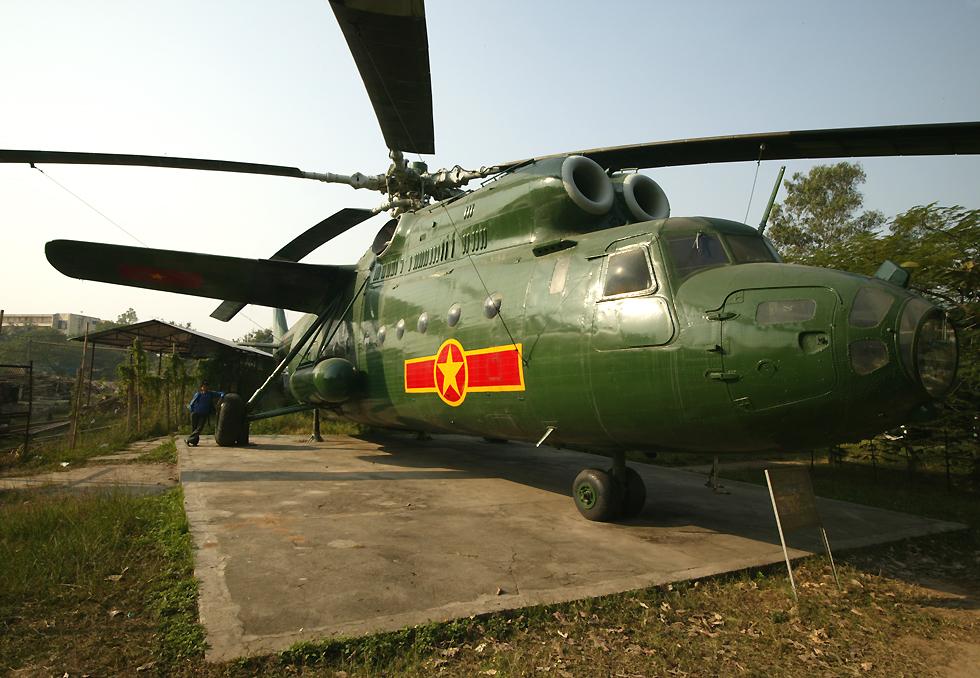
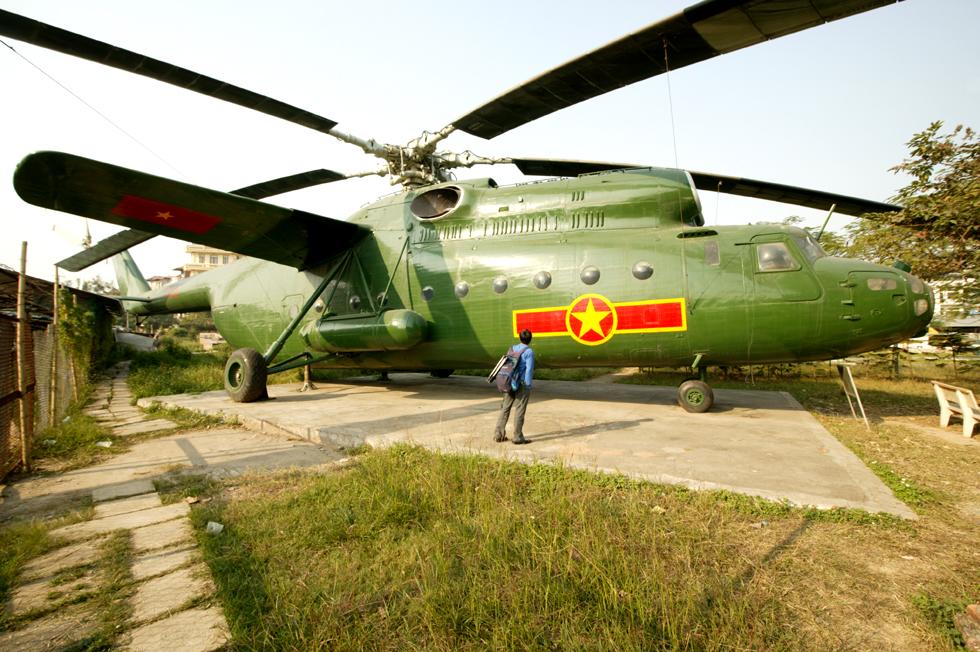
If you look in the previous photo you'll see my Vietnamese driver leaning against one of the Hook's main wheels, which is at about shoulder height. He looks rather taller than the wheel in this photo, but that's because I had to take it with an extremely wide angle lens. With a construction site fence right behind me it was the only way to fit the whole helicopter into the photo. If you still doubt the size of this machine, consider this - the Mi-6 can carry twice as much as the largest American helicopter, the CH-64 Tarhe "Sky Crane" - in fact, it's capable of lifting a Tarhe. The accompanying sign said that it had often lifted MiG-17s and MiG-21s; the Vietnamese would conceal their aircraft in servicing areas in the jungle and airlift them to a roughly prepared field for takeoff, then return them to the jungle afterwards. Most remarkable perhaps is the Hook's ability to transport up to 120 people when it's in its high-density seating configuration! When it's in forward flight, the 15 meter span wings provide about 20 per cent of the total lift; these wings are detachable and are normally not used when the helicopter is being used for fire-fighting. |
 |