
Leafcutter Ants in Costa Rica
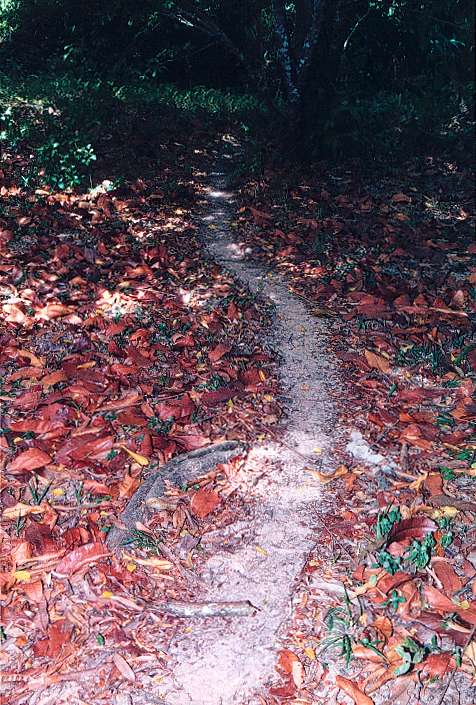 |
Wherever you go in tropical America, you're likely to see leafcutter ants. They build huge nests, sometimes 30 feet across and 20 feet deep, which have several entrances, perhaps hundreds of yards apart. There can be two or three million ants in a single colony. Inexplicably, I don't have a good photograph of one of these nests, although I've seen a few of them. However, here's a photo of a construction effort by these ants which is even more frequently seen - one of the small highways which they use to do their work. They're meticulous in keeping it free of debris, plants and other obstructions. |
|
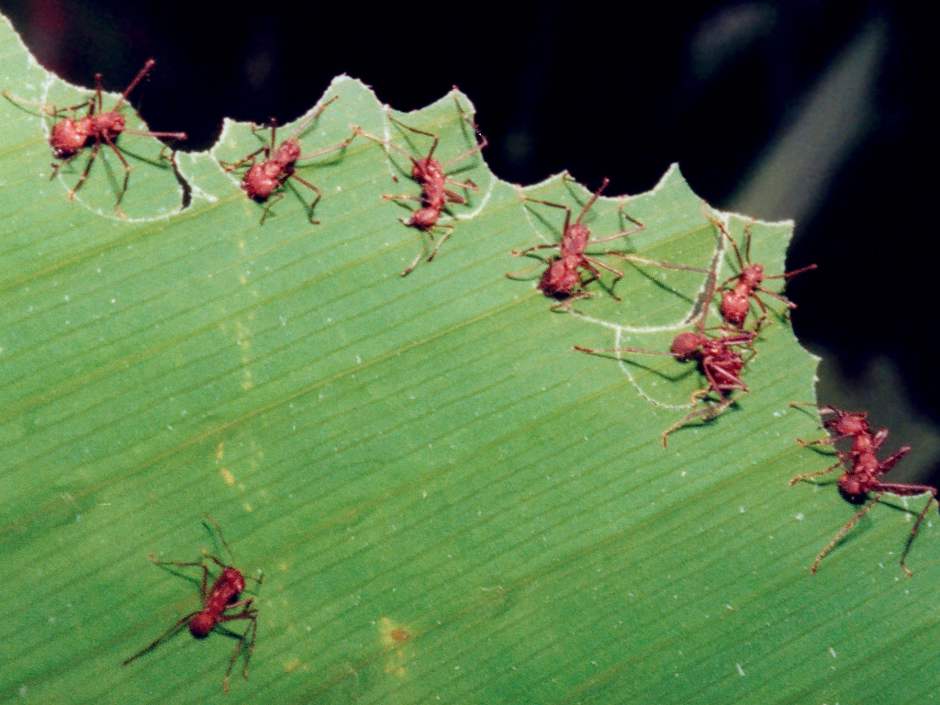
The ants get their name from the way they cut leaves from trees, which they then haul back to their nest. They don't eat the leaves, instead they use it as compost to grow a particular type of fungus, which doesn't grow anywhere other than in leafcutter ant nests. The ants then eat the fungus, and feed it to their young. The fungus is grown in football sized chambers inside the nest. There can be 300 or more of these chambers inside the nest, and all of the earthworks to build them might involve the removal of 18000kg of earth during the lifetime of the nest. |
 |
|
The ants consume up to a fifth of all forest vegetation in the areas they're found, but the ants rotate the trees they harvest so that they aren't killed. Leaves from any one tree are only taken to part of the nest, rather than distributed throughout the nest. This prevents a widespread disaster if the leaves turn out to be infected, or toxic to the fungus. |

|
|
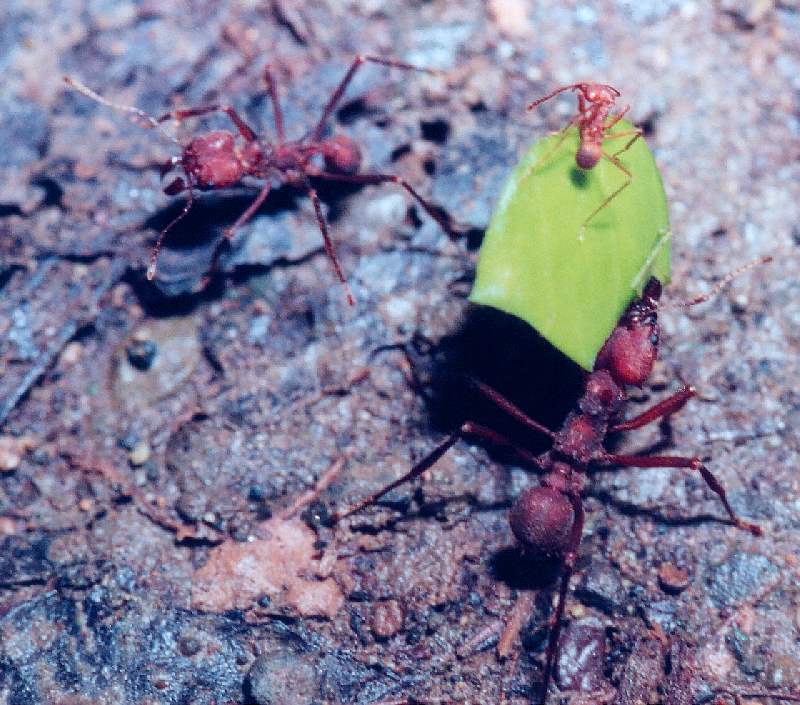
The ant standing on top of this leaf is much smaller than the leafcutter ant worker below it - but it's actually just a different caste of leafcutter. The small ants ride around on the leaves looking for harmful foreign matter and intruders like eggs which certain species of fly lay on the leaves in the hope that they'll be carried into the nest. |
 |
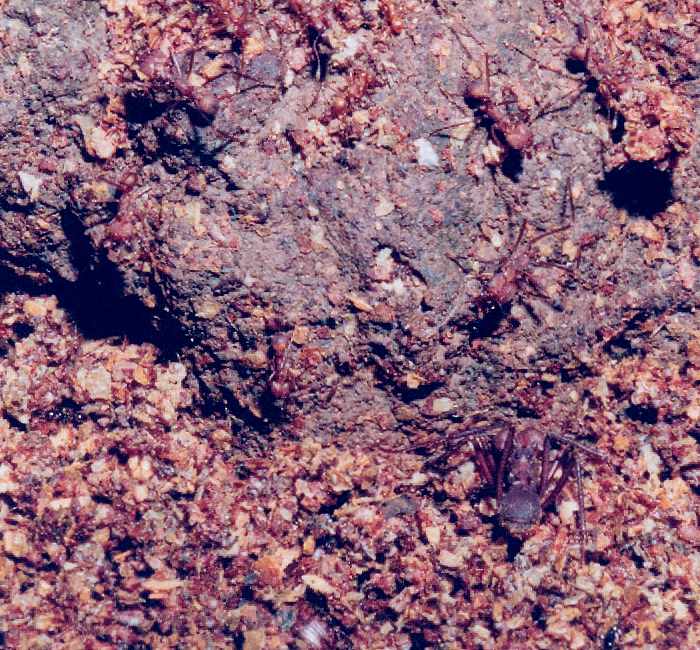 |
All of this material pouring in has to end up somewhere, otherwise the nest would soon be full. Most species of leafcutter ant store their refuse in special chambers within the nest itself, however here you can see a species of leafcutter ant which carries its used compost from the nest and tosses it onto a two-foot high garbage pile. In the photo you can again see two different sizes of worker ant. |
|
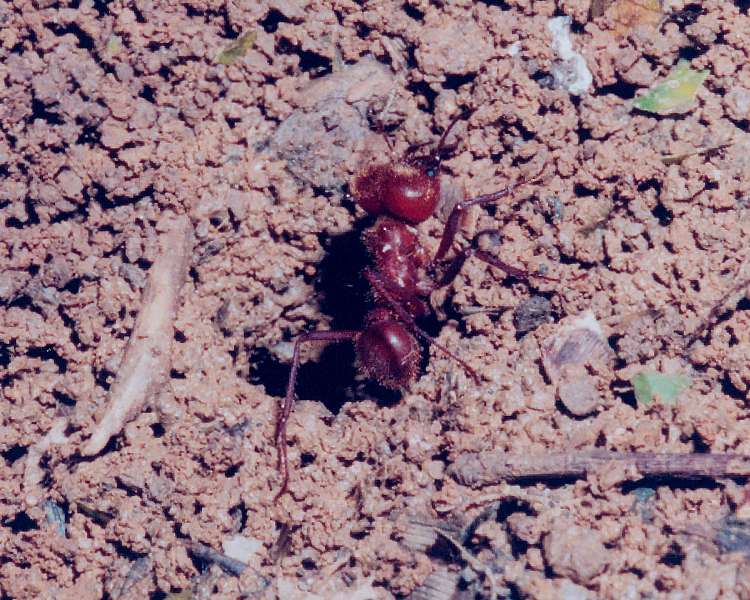
The ants which cut and carry the leaves are much larger than the sentinels, but there's another caste of leafcutter ant which is even bigger - the soldiers. To see a soldier, all you have to do is stomp on the ground outside a nest, and soon they'll start pouring out the entrances, like this one here. |
 |
|
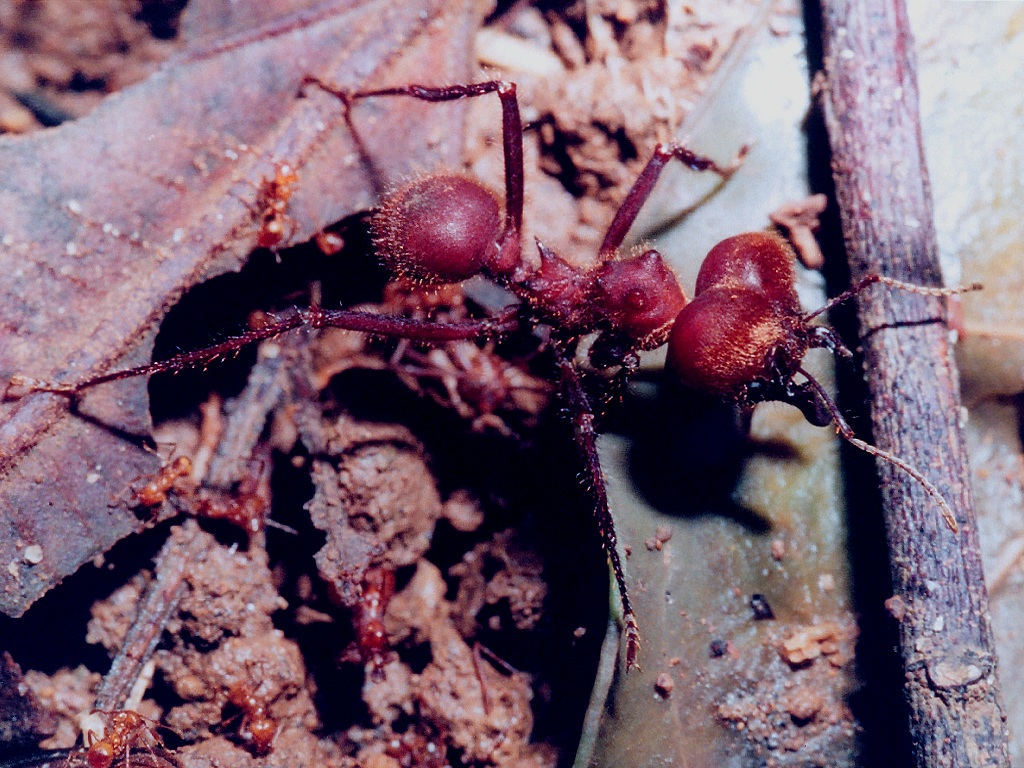
They're formidable critters, with large spikes on their bodies and aggressive personalities. If you look at the tiny ants all around it, you'll see how much larger the soldier is. |
|
|
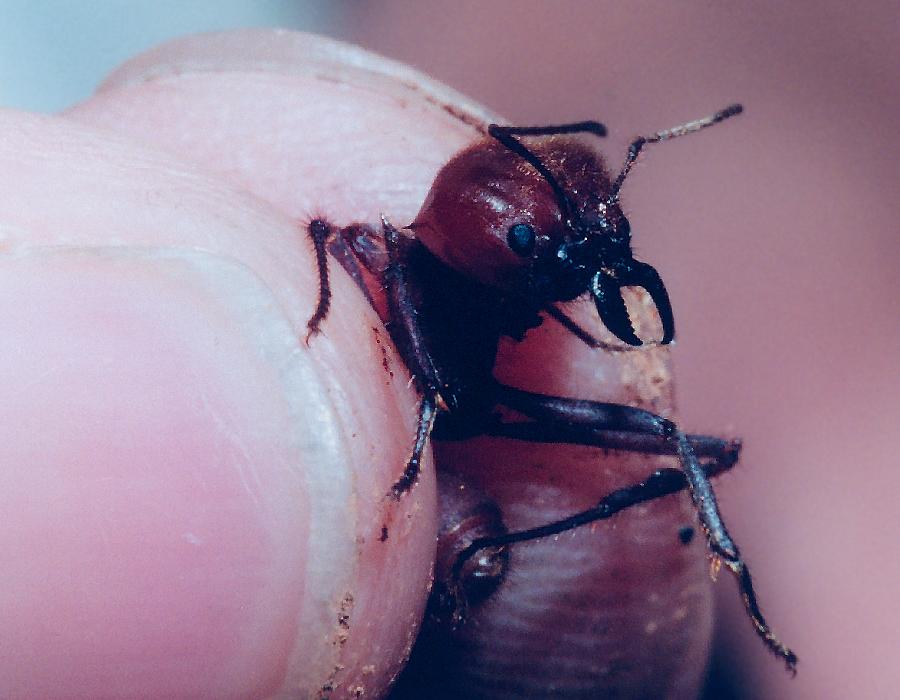
Their jaws are easily large enough and strong enough to cut up human skin - so with the soldiers starting to crawl over us, our guide suggested that we beat a retreat! |
 |