Cold-Blooded Animals of Indonesia
 
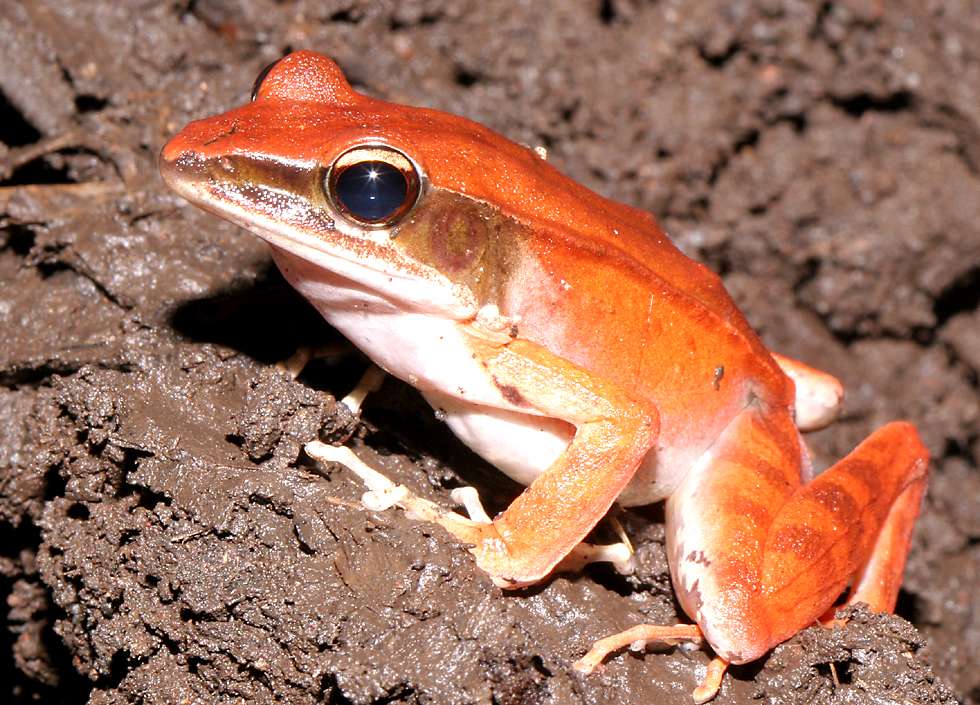
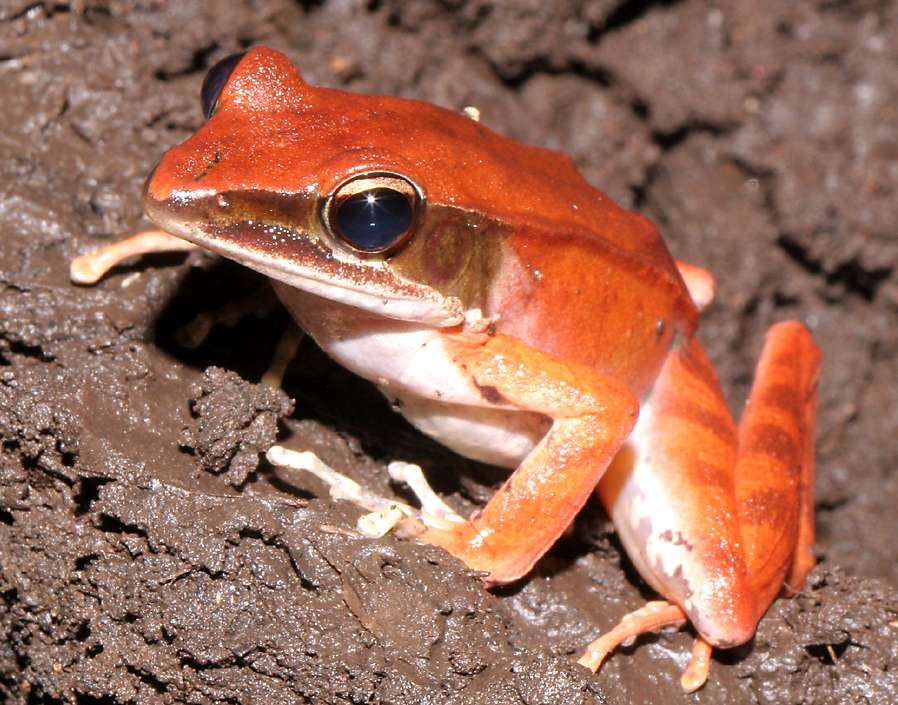
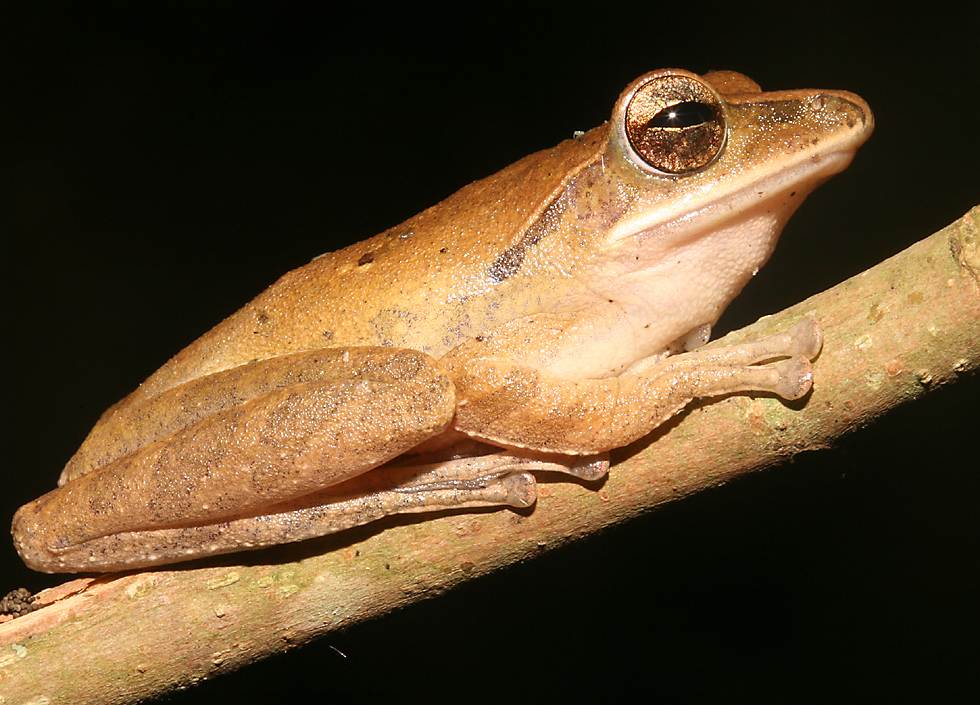
I visited Indonesia in May of 2007, just after the end of the rainy season.   Amphibians love damp conditions, so I was probably there after the peak of activity, but I still encountered a variety of frogs, including this beauty which I found one night along a narrow dirt road in Tangkoko nature reserve, at the very northern end of the island of Sulawesi.
click here to open a new window with this photo in computer wallpaper format
Most frogs are a cryptic brown or green color, all the better to stay out of sight and out of some predator's mouth, so it's not so common to see one colored like this.   Indeed, this was the only individual I saw of this species during my three weeks in the country, and it didn't hang around as long as I would have liked, jumping off into the forest after I'd taken just a few shots!
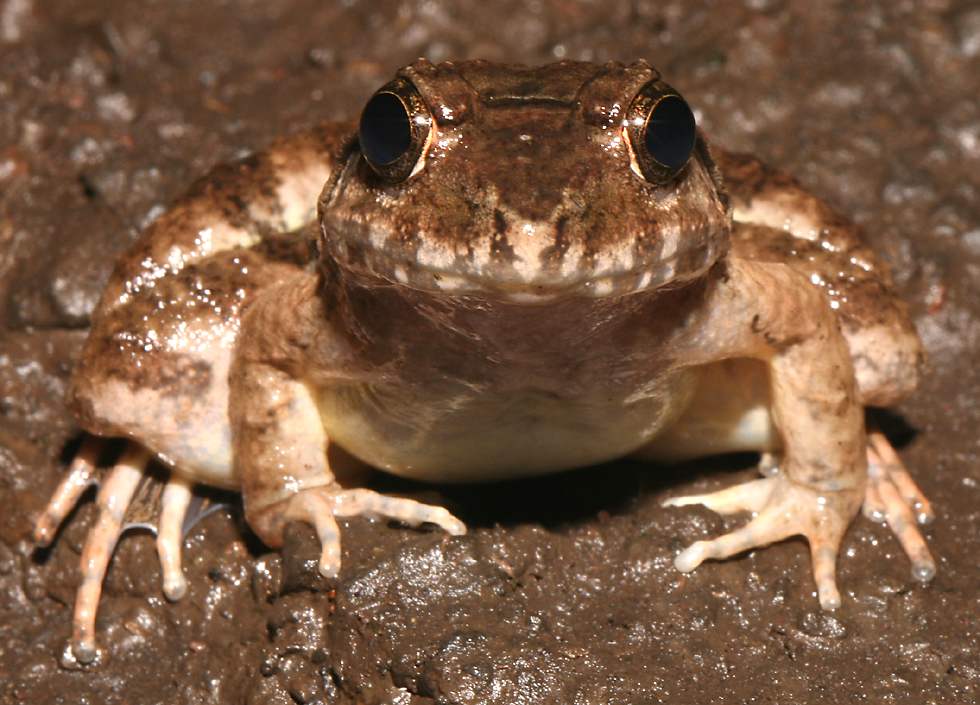
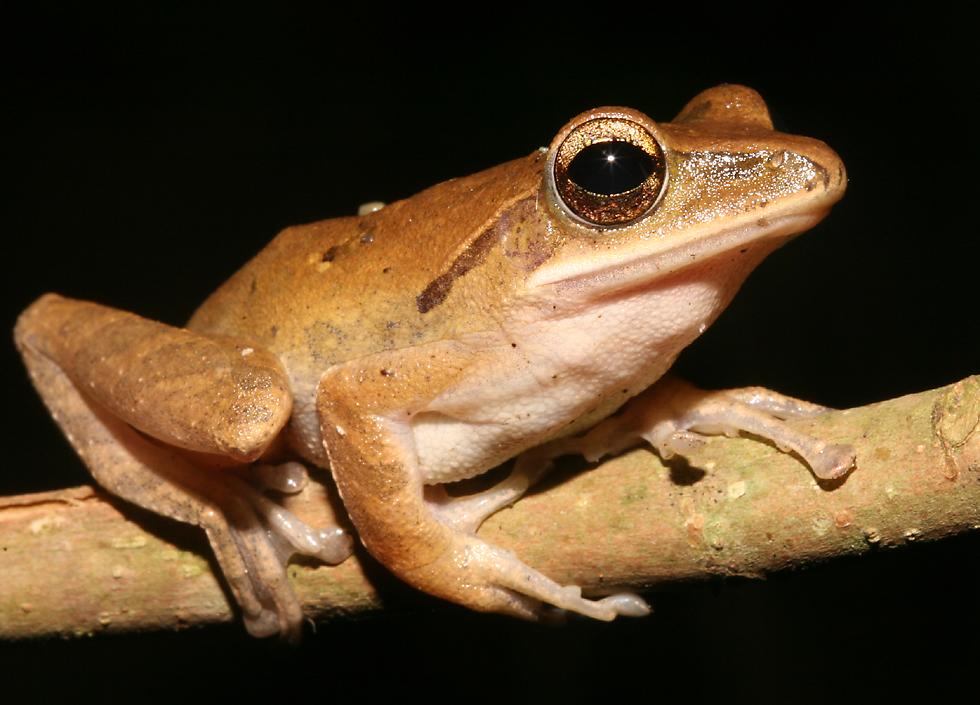
There were plenty of other frogs along the same road, but all of a fairly boring brown color.   This one did at least let me take a head-on photo as it sat beside one of the many muddy puddles in the road.
click here to open a new window with this photo in computer wallpaper format
 
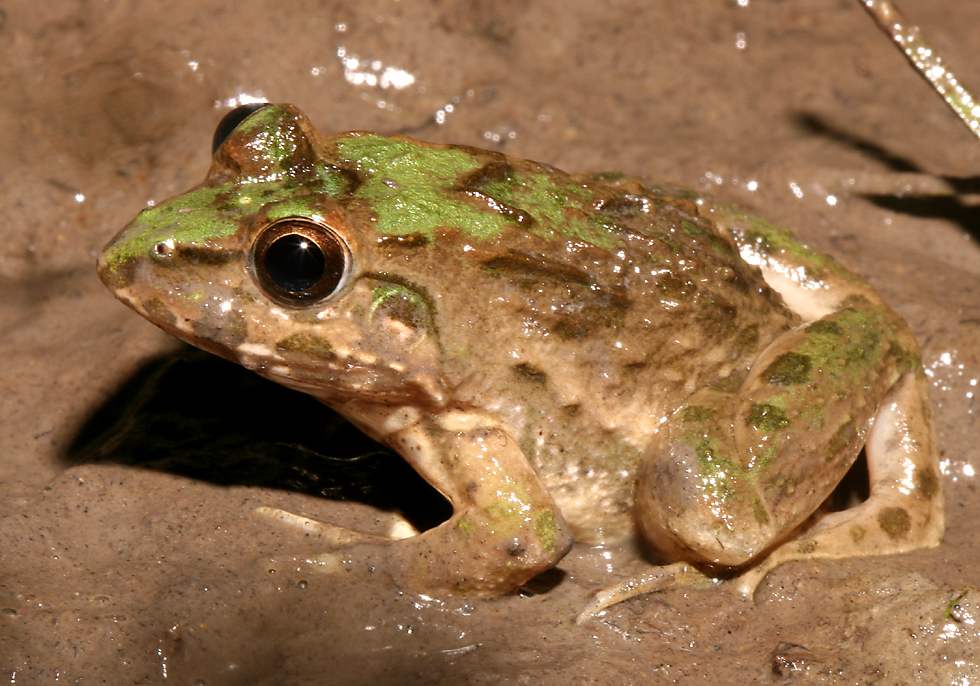
From muddy puddles to mud, pure and simple.   This tiny fellow was one of what sounded like several hundred in Alas Purwo national park at the far south-eastern end of the island of Java, serenading at night near the meadow viewing area, in a swampy area where wild cattle had stirred up the ground into a muddy mess.   I went out here two nights in a row, first in running shoes and the next night in rubber boots which I'd brought along for just this purpose.   However, in spite of my best efforts I could hardly find any of the frogs calling all around me, and this is the only one I got any worthwhile photos of.   It was so difficult to move around wearing a backpack of camera gear that I eventually gave up and headed back to terra firma, where I photographed some of the other animals on this page.
click here to open a new window with this photo in computer wallpaper format
Such as this sweet looking tree frog, sitting quietly about two meters off the ground in a tree near the edge of the swampy area.
 
Most tree frogs aren't particularly colorful, but there's something about the way they sit on a branch that makes them very appealing.   Different types of tree frog occur all around the world, but they all have rounded toe pads to help them climb and move around in the branches.   They're not immune from the dangers of predation up there, either, as you'll see later on.
click here to open a new window with this photo in computer wallpaper format
    From pretty amphibians to ugly amphibians.

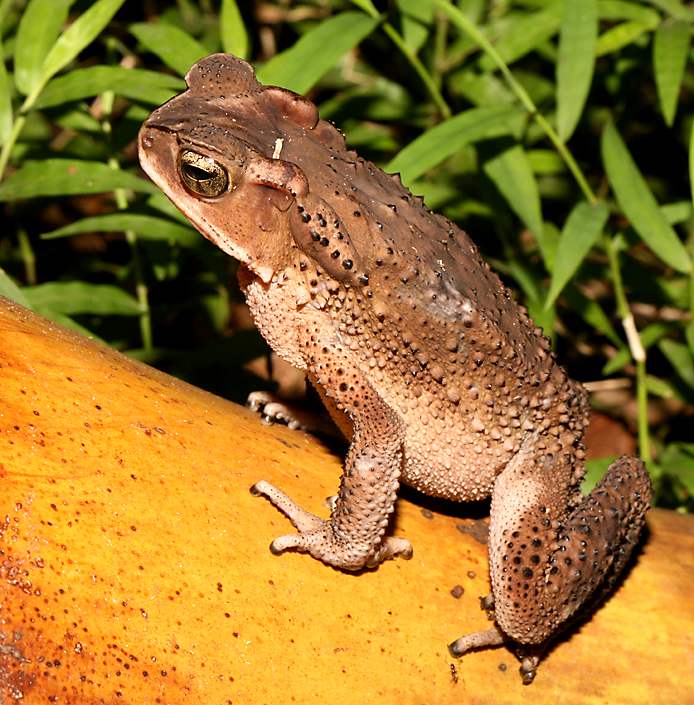
   Here's a warty-looking toad from Tangkoko, surveying its domain.

    With some noticeable exceptions, most of the world's frogs are not poisonous, but toads are almost invariably toxic.   The large lumps behind this one's eyes are the poison glands.

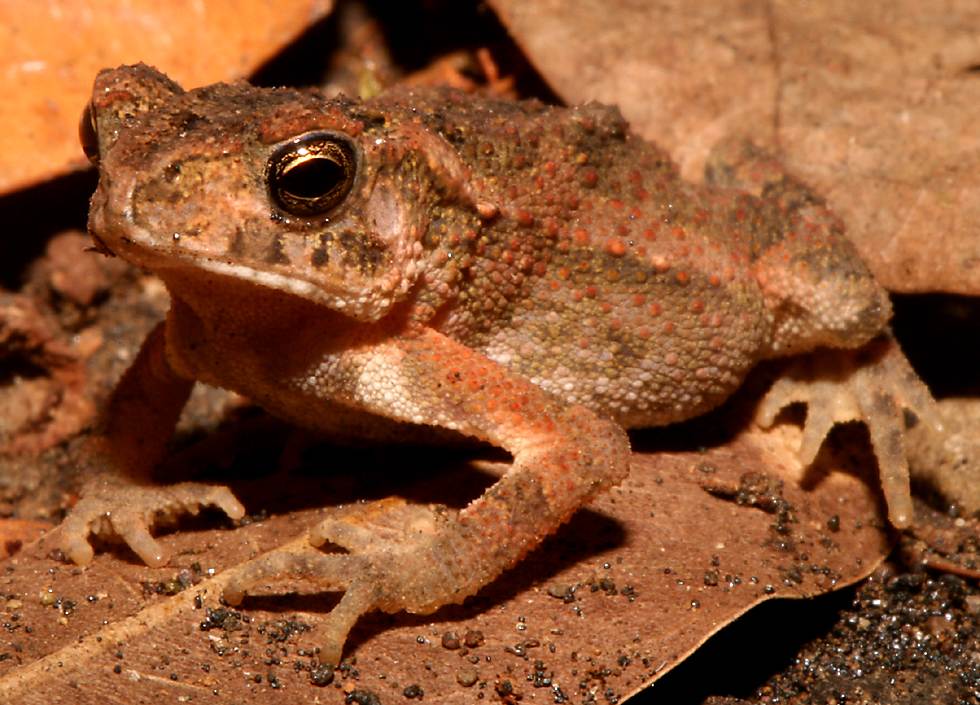
A juvenile toad in Alas Purwo national park, sitting on one of the walking trails.   Camouflage adds to the risk of being stepped on by some oversized lummox, and I only noticed this little critter after it jumped to avoid being flattened.
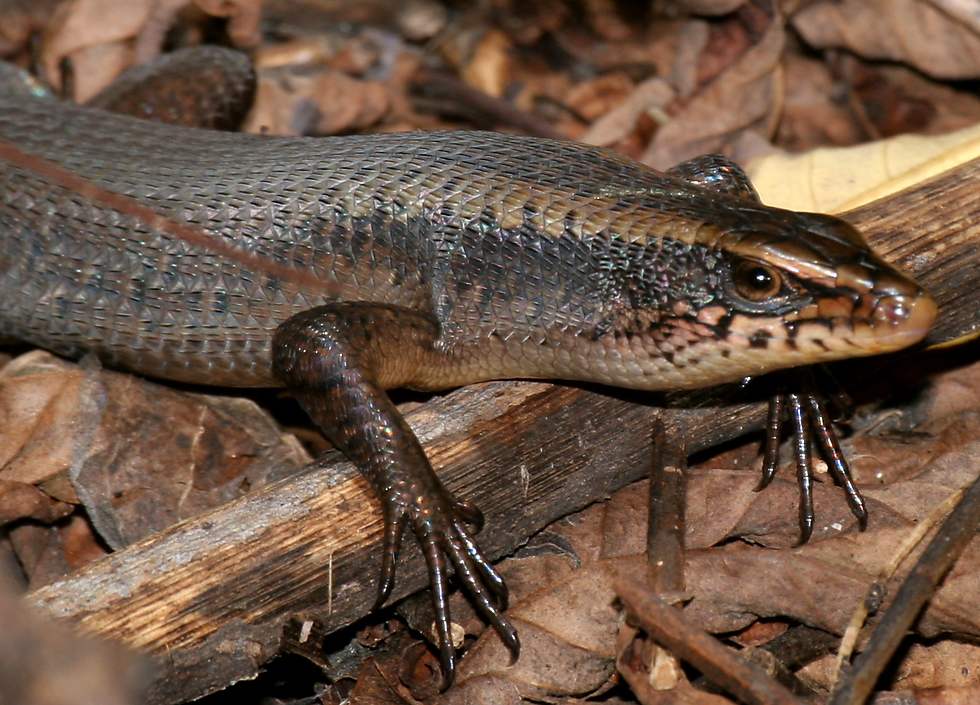
The term "cold-blooded animal" is generally taken to refer to land animals like amphibians and reptiles, but of course almost all fish and some other animals are also cold-blooded.   Nevertheless, herpetologists, who study cold-blooded animals, stick to the sort of animals which are on this page, including this common sun skink at Tangkoko.
 
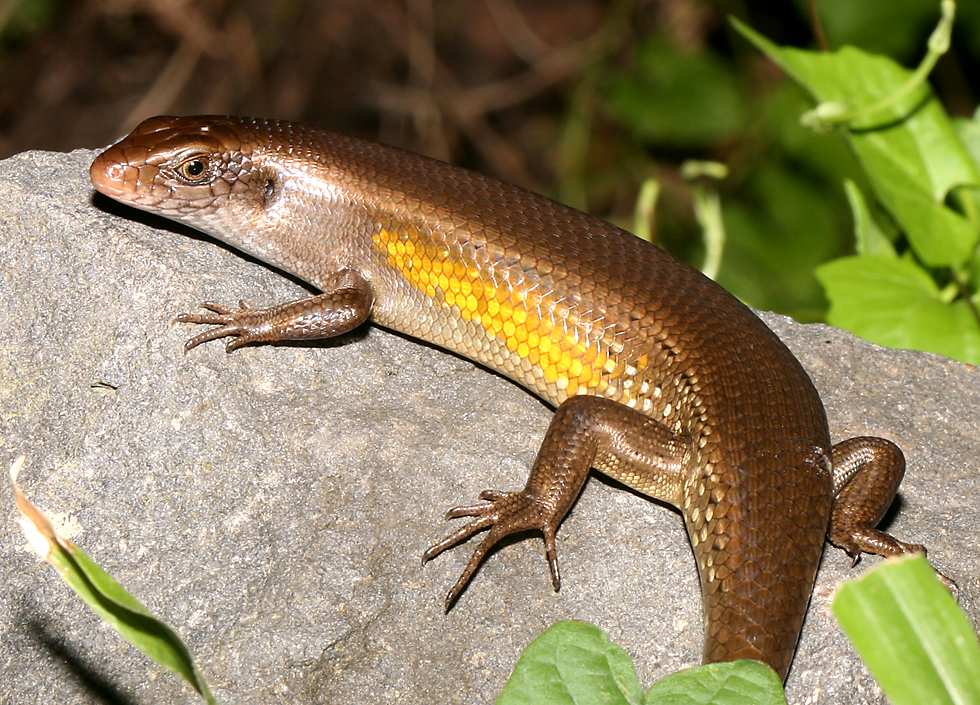
That last lizard has personality, but I still like this skink better, mostly because this one has that eye-catching splash of color along its side.   It was right beside the road at the entrance to Alas Purwo, and provided a great deal of amusement not just to me, but also to the large group of Indonesians watching me stalk it with my camera, slowly moving forward until I was on my belly just a meter or so away.
click here to open a new window with this photo in computer wallpaper format
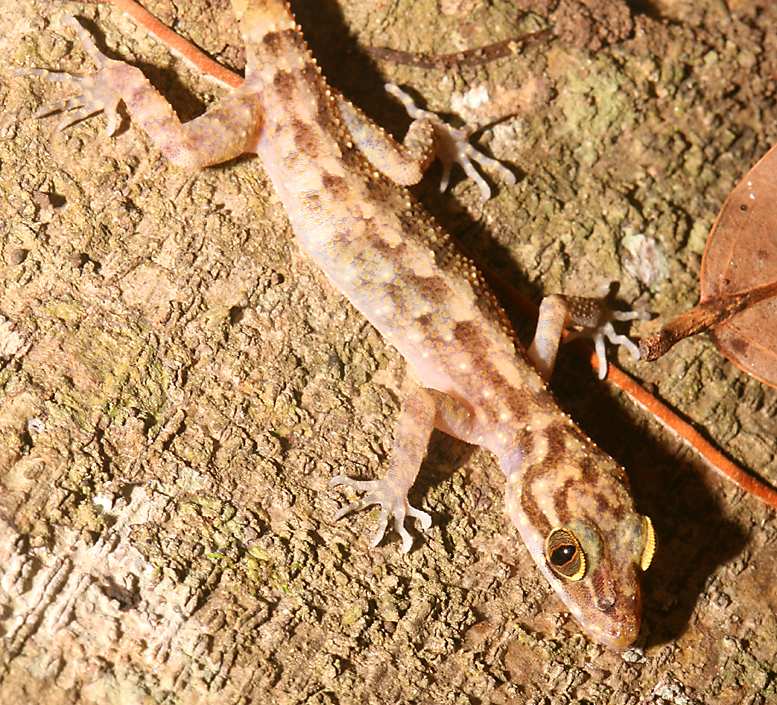
Both of those lizards were hunting during the daytime, but with this little gecko we now go back to the night.   In contrast to the previous two round-eyed lizards, geckos have slit-shaped "cat eyes" like many other nocturnal animals.
 
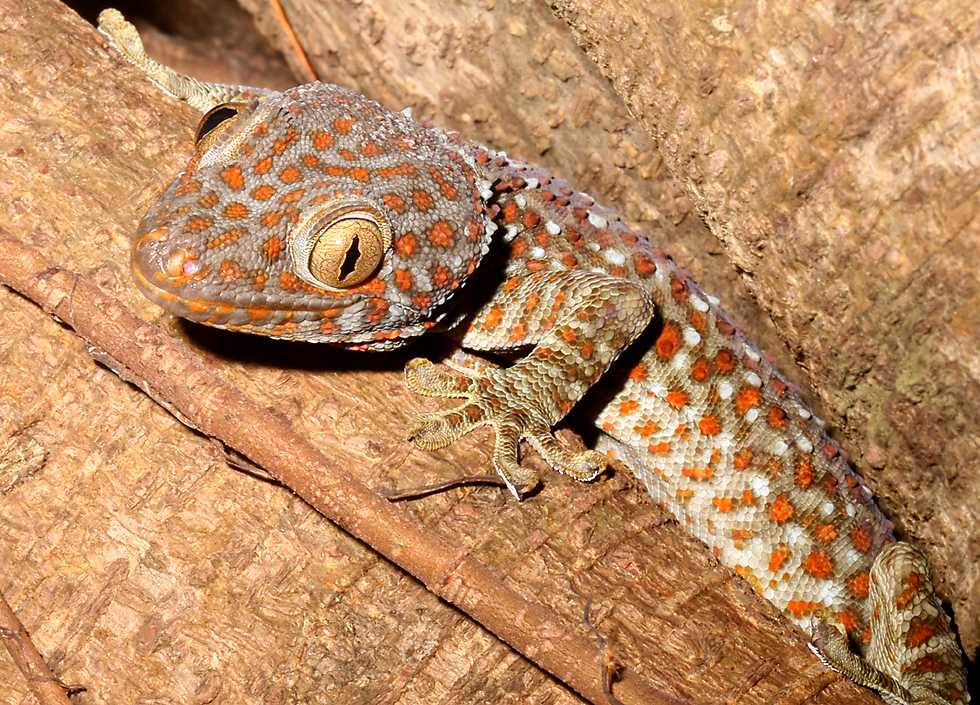
This is a tokay gecko which has the scientific or Latin name Gecko gekko.   It's the species which gave its name to this whole worldwide family of lizards.   Not only is it very attractively colored and patterned, it's also unusual for a lizard in being vocal, making its loud "gekko, gekko" call through the night.   It's the second largest gecko and is said to be pugnacious to the point of being aggressive, but this individual was the only one I photographed, and it wasn't too keen on the experience, retreating inside its tree home after each photo.
click here to open a new window with this photo in computer wallpaper format
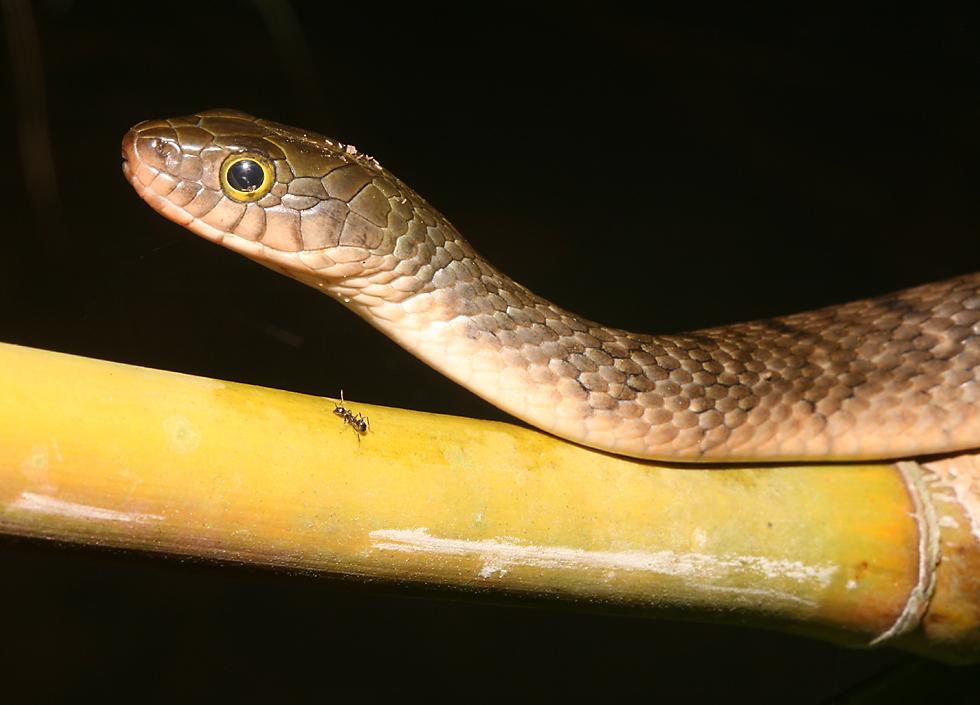
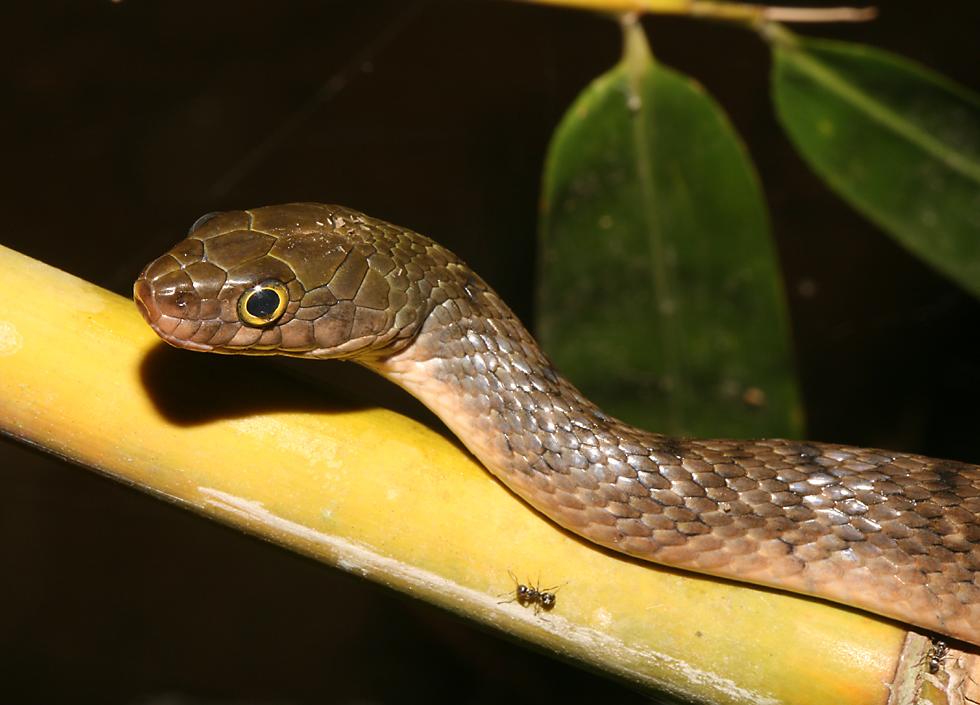
I like to photograph snakes, as long as I'm not at risk of being bitten!   This little guy looked harmless enough, though for all I know it could be highly venomous.   Luckily, it paid no attention to me and let me take as many photos as I wanted, without reacting at all.
 
I found it in a promising looking bent-over stand of bamboo along a small stream near the losmen where I was staying at the Javan super-attraction of Borobodur.   As you can see from the ants beside it, this snake isn't the largest or most threatening one in the world!
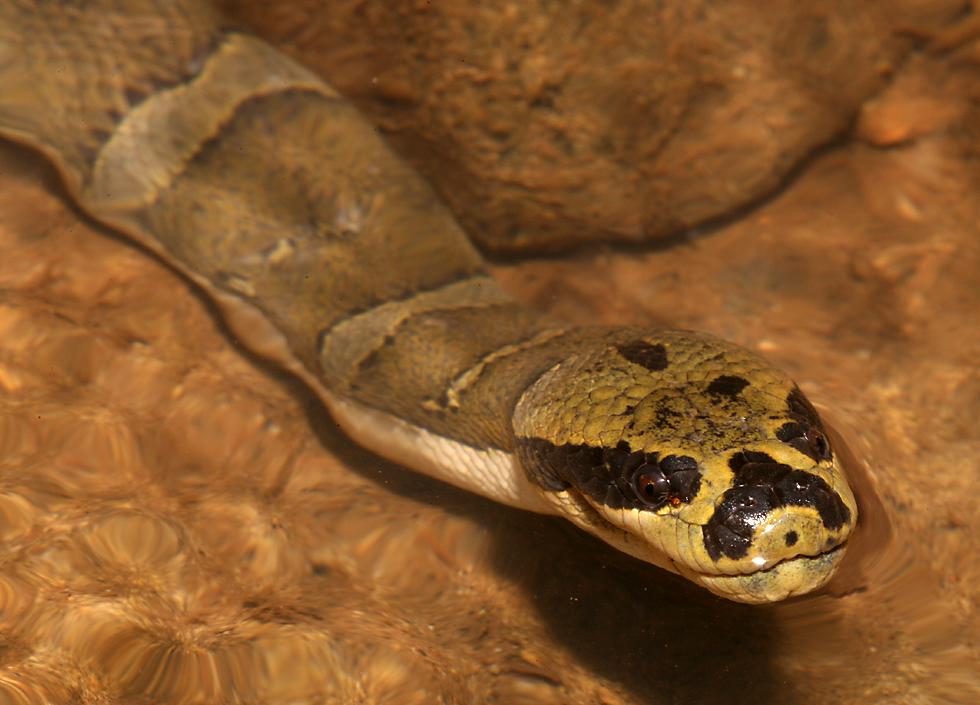
This one is somewhere further up the threat scale, though it was clearly a juvenile and only about a meter and a half long.   It was just fifty or a hundred meters downstream in the same shallow little river that I was walking down that night.   It does make one think a few disquieting thoughts when you realize that these things are in the river - a small one might be OK, but I'm not sure I would want to meet its momma!
I haven't been able to figure out what species this is, but it seems like some kind of python, which means that I'm at no great risk of dying horribly from snake envenomation, though if they're pushed then even pythons will sink their teeth into you, which probably isn't one of life's more pleasant eventualities.
click here to open a new window with this photo in computer wallpaper format
 
Still, knowledge of its basic harmlessness did give me enough courage to chance a few closeup photos.    Interestingly, it seems like this individual has some sort of parasite latched on just in front of its right eye.  Even spending quite a bit of time underwater hasn't allowed it to shake the hitch-hiker off.
 
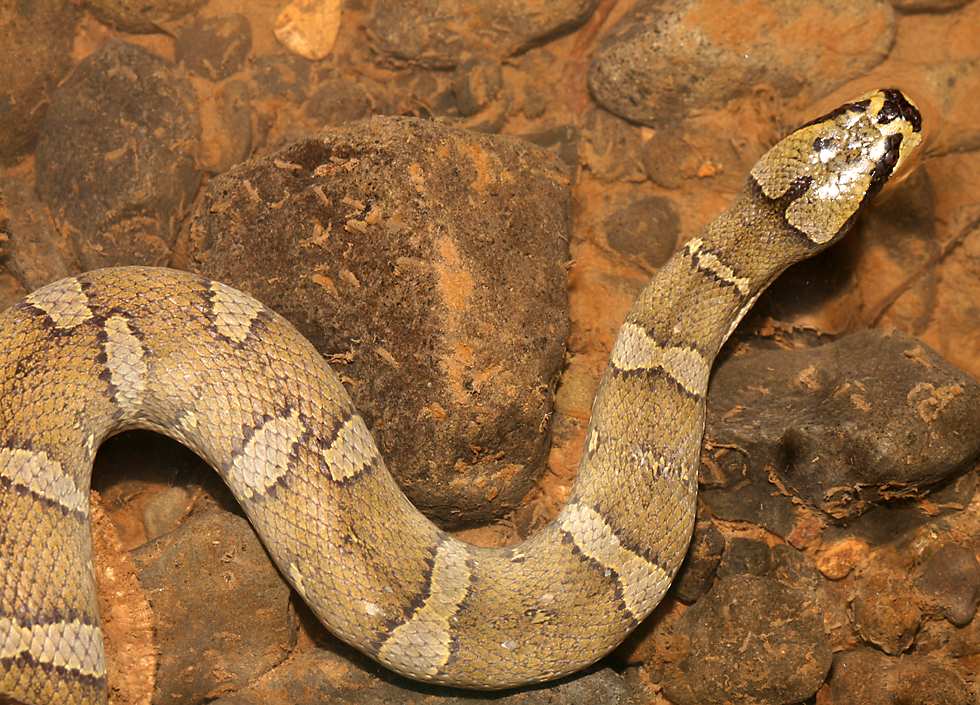
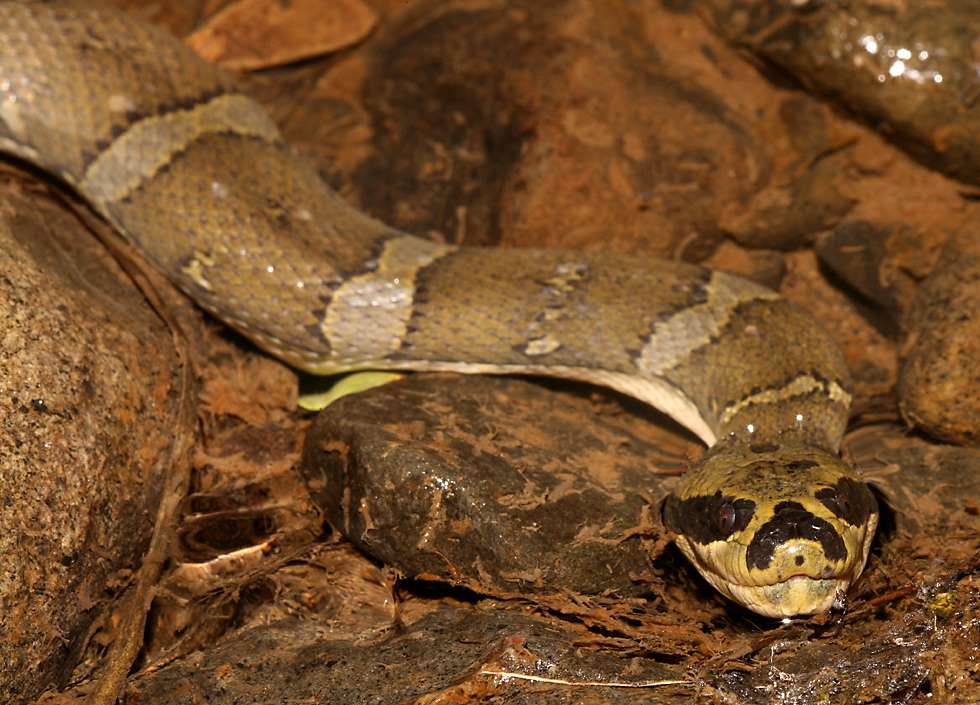
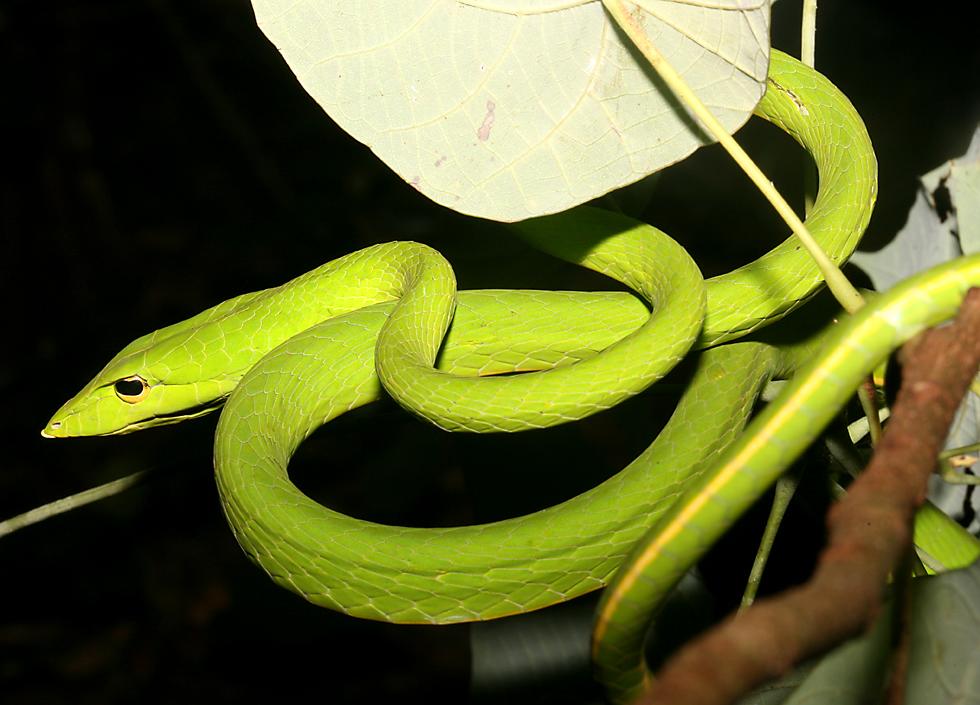
Here's the most interesting snake I encountered, up a tree at night ten meters or less from the tree frog I found at Alas Purwo national park.   It's very likely that this snake was just waiting for a juicy frog to happen along.   I found this snake the first night I was at this location and the frog on the second night, so chances are that there was no encounter between the two of them.
I don't know what sort of snake this is, so I don't know whether it's poisonous, though it does look menacing in this shot.   It was surprisingly calm, considering that it was about four meters up a very straggly tree, which I had to bend over in order to get photos.   I try to be cautious, but it's difficult to keep your eye on the snake continuously, while holding the tree down at the same time as shining a light on it and trying to take a photo.
click here to open a new window with this photo in computer wallpaper format

See the bugs of Indonesia and the highlights of Indonesia.
click here to go to my home page click here to go to the main Reptile page click here to see the Reptile section of the site map
click here to search this website
click here to see the Indonesian Herps photo galleries
click here for a list of links to Reptile websites
click here to go to the Wildlife wallpaper page