| Nellis
2006 Airshow Extras |
| The
2006 Nellis air force base "Aviation Nation" airshow lived up to the
standard of its predecessors, but for me some of the airshow "extras" lifted
it even higher. The first of these was the participation of
various aircraft in a Green Flag exercise which extended into the media
day on the Friday immediately before the show itself. This
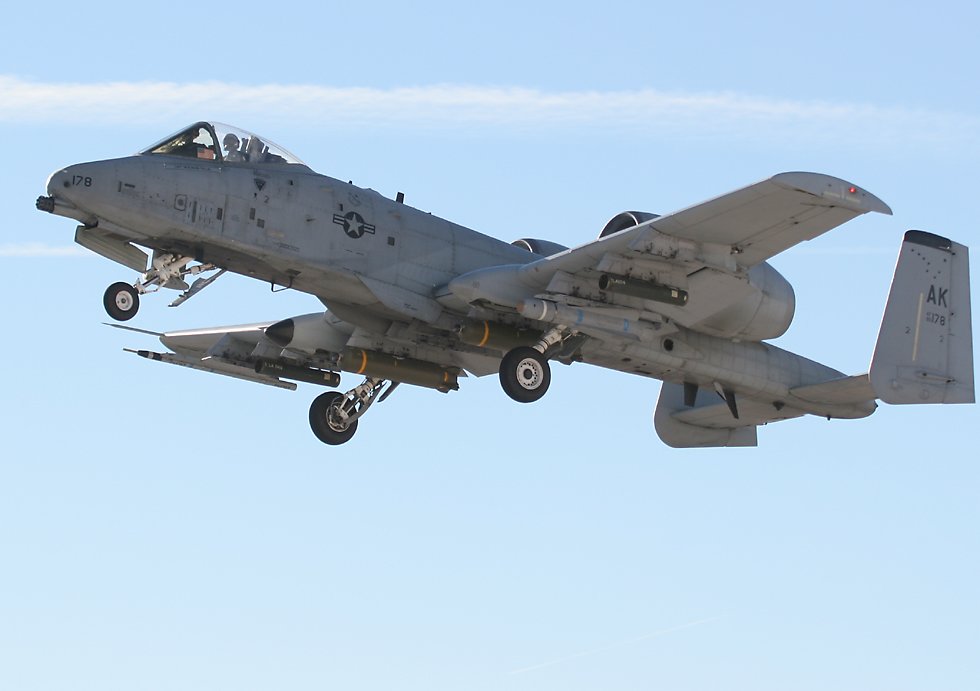
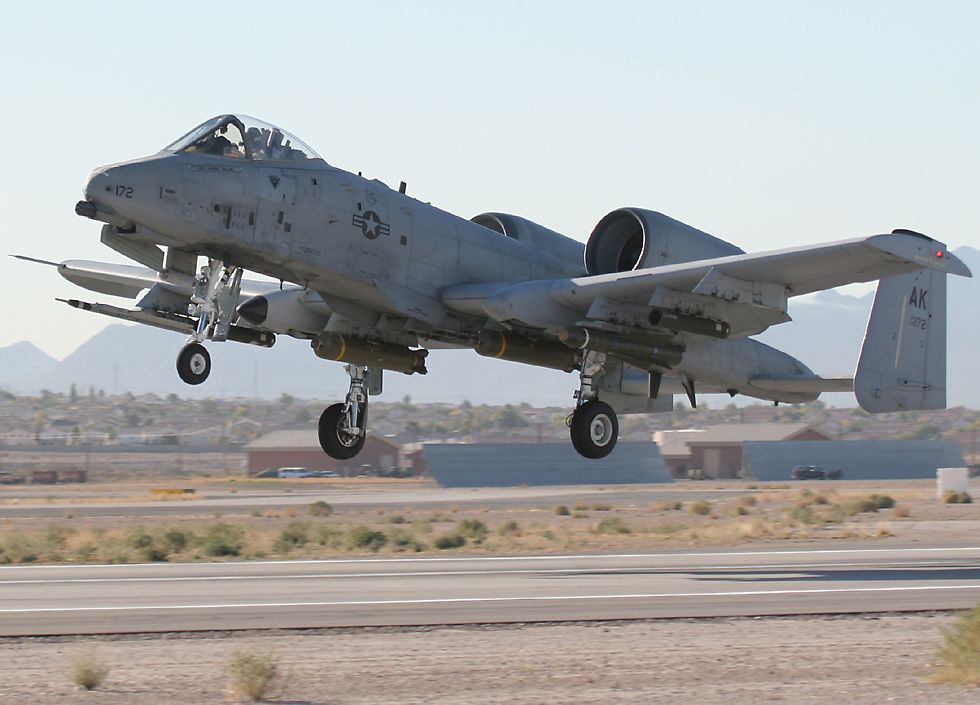
A-10 Thunderbolt II, better known as the "warthog", was one of a squadron
which took off to the bombing ranges out in the Nevada desert. |
 |
| Green
Flag is a less well-known counterpart of the Red Flag exercises, designed
to teach electronic warfare skills rather than the air-to-air combat and
bombing training of Red Flag. Green Flag includes training
on the locating and destroying of radar sites and mobile missile launchers
like the Scuds used by the Iraqis. |
 |
| The
great thing about watching one of these exercises rather than a regular
airshow is that the aircraft will be carrying ordnance, some dummy and
some live, as well as electronic detection and countermeasure equipment
like the unit you can see at the far end of this A-10's starboard wing. |
 |
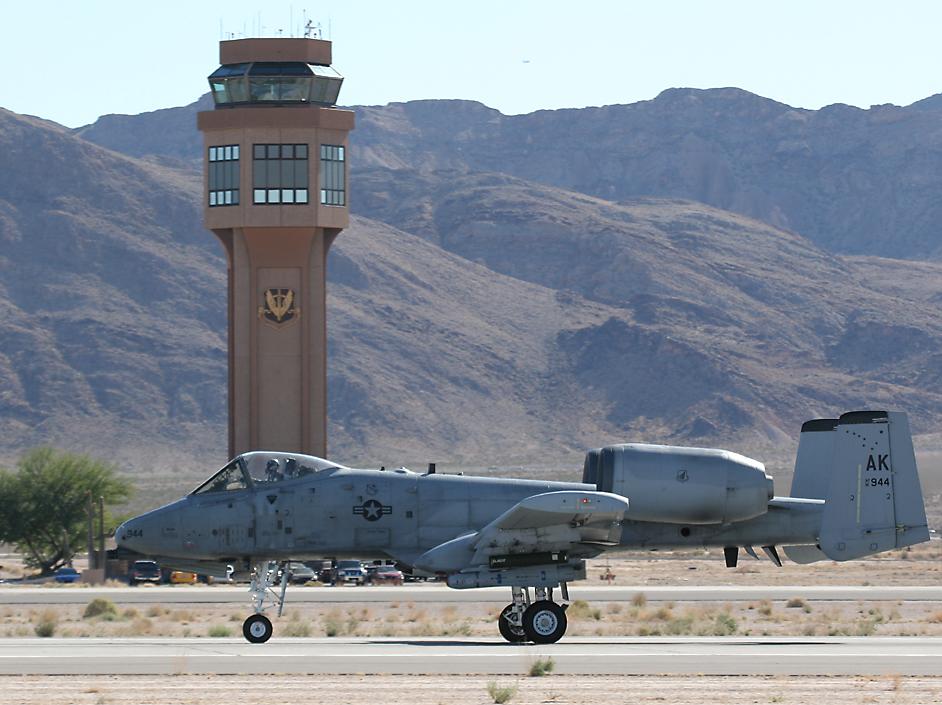
| The
"AK" tail code indicates that these A-10s are based up in Alaska, so it's
quite a change in climate for them to come south and do their thing in
the heat of the Nevada desert. |
 |
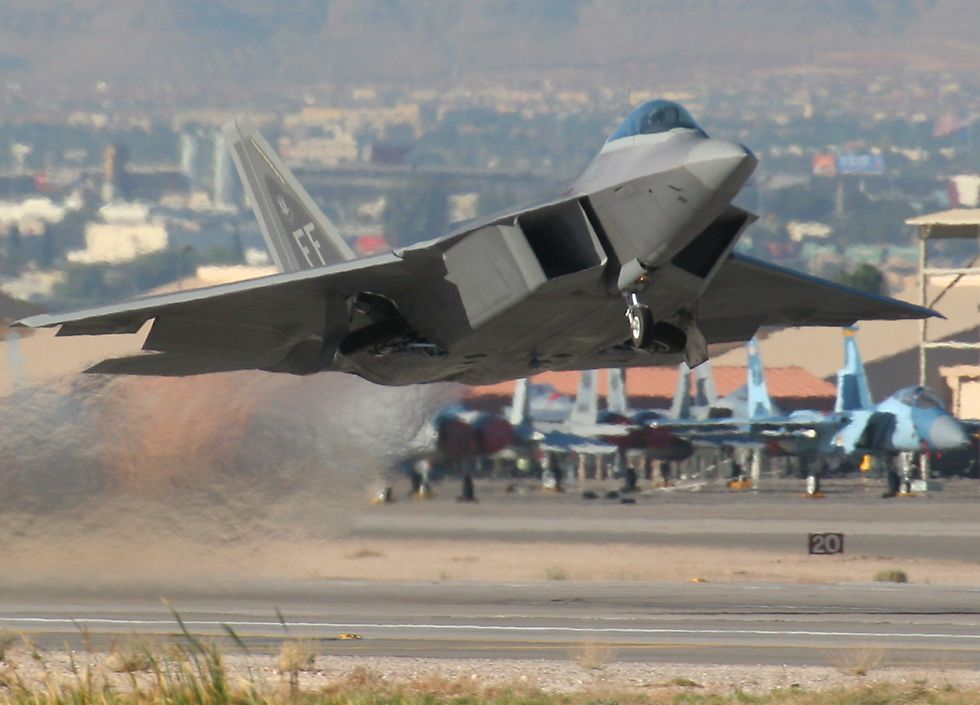
| It
was an impressive sight to see a flight of four F-22 Raptors head out to
the ranges, including this fellow who didn't waste any time pulling up
his undercarriage after takeoff. In the background you can
see just a few of the Nellis-based F-15 Eagles which are painted up in
"aggressor" colors. These serve as attackers or defenders during
the Red Flag exercises. |
 |
It's very special to see a whole group of the air force's most recently
acquired fighters going out on exercise together. Raptors haven't
been included in Red Flag up to now because it's hard to know how to integrate
them. If they're as effective as claimed then they'll be able
to clear all hostile aircraft out of the sky in very short order, which
doesn't help those aircrew much with their training.
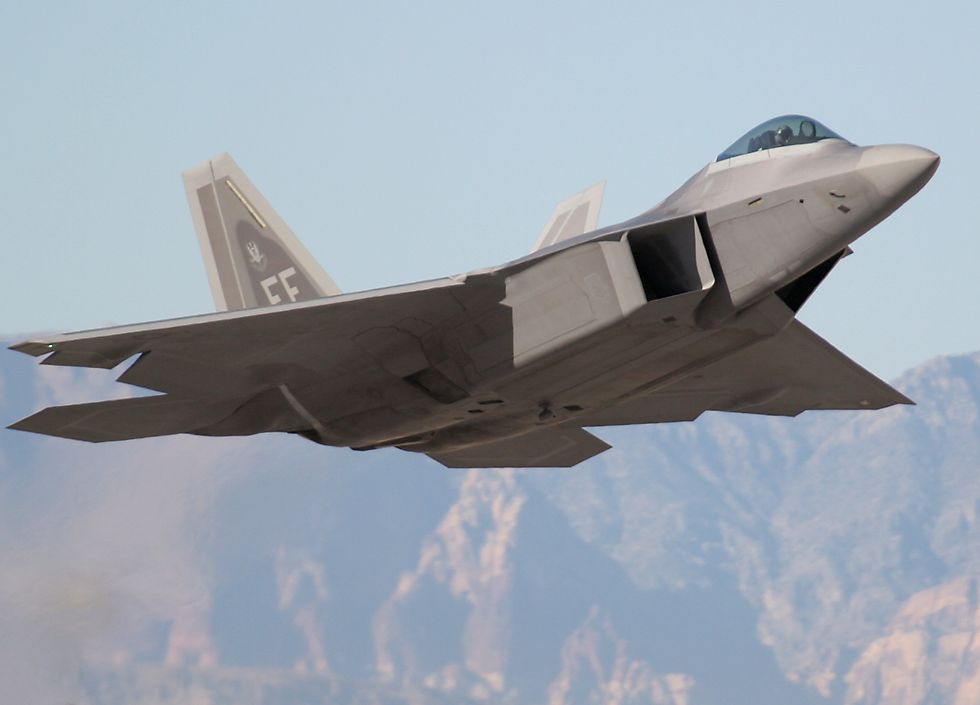
There's little question that the Raptor has taken over the mantle of the
Eagle as the world's premier air-to-air fighter, but it's an open question
whether it will ever capture the public's imagination in the way that the
Spitfire, the Mustang, the Starfighter or the Phantom did.
The Raptor's shape certainly owes more to function than to aesthetics,
and its lethality is mostly hidden, too, since its missiles and other ordnance
will usually be kept in internal bays in order to preserve the plane's
stealthy characteristics (the 2005 Edwards AFB airshow was one of the few
times the public has seen a
Raptor with open weapons bays). |
 |
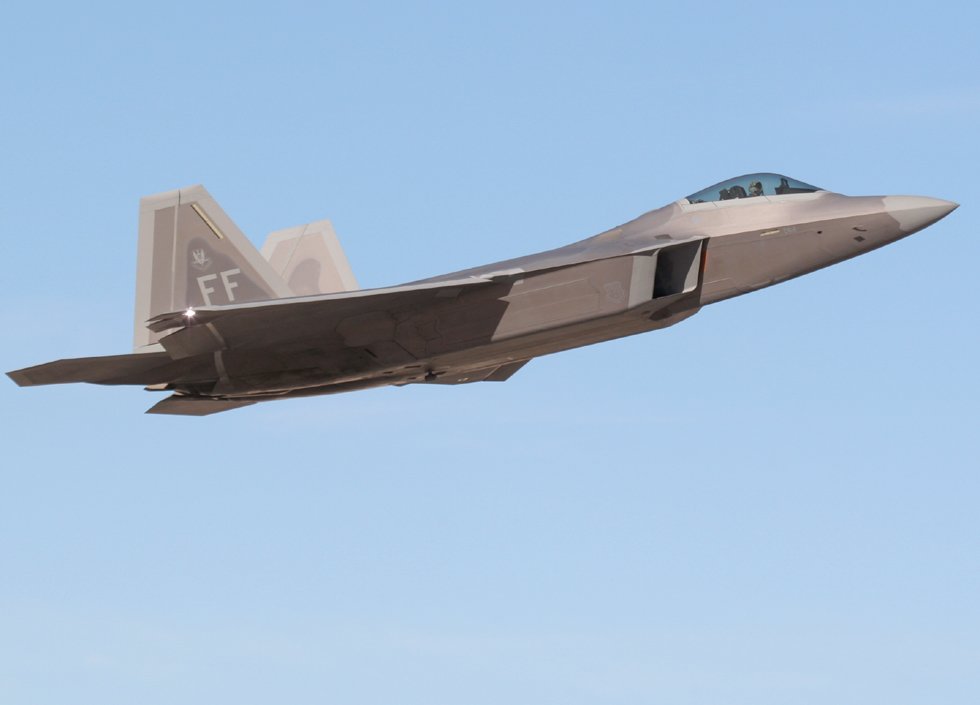
| As
you can see, these Raptors are operating with their navigation lights functioning,
which they certainly wouldn't be doing in a war-time situation or even
when they're on the Red Flag and Green Flag test ranges; however it's a
necessity when they're flying in the airspace around Nellis, since it's
so close to the flightpaths of all of the civilian aircraft entering and
leaving the Las Vegas area. The small unit visible under the
belly of this Raptor is also present only to make the aircraft visible
to air traffic control systems. |
 |

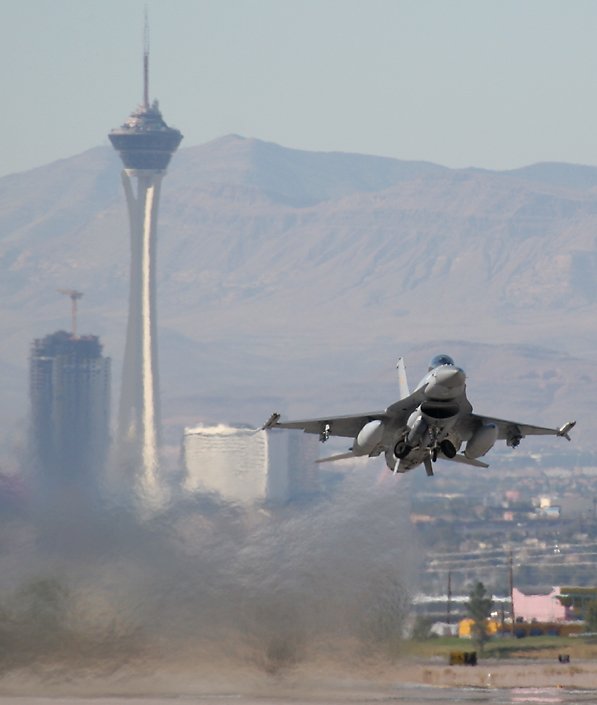
Friday's Green Flag session also had foreign participants in the form of
a squadron of Belgian air force F-16 Fighting Falcons.
Here's one of them taking off with a Las Vegas icon, the Stratosphere Tower,
in the background.
Las Vegas is of course a considerable temptation for both the American
and foreign aircrews, so apparently special emphasis is given to safety
considerations on Mondays! Both Red Flag and Green Flag are
designed to be about as realistic as training gets, which means that accidents
are inevitable. |
| The
hope is that this level of realism will make pilots more likely to survive
when they do end up in aerial combat, or in a high-threat missile situation. |
 |
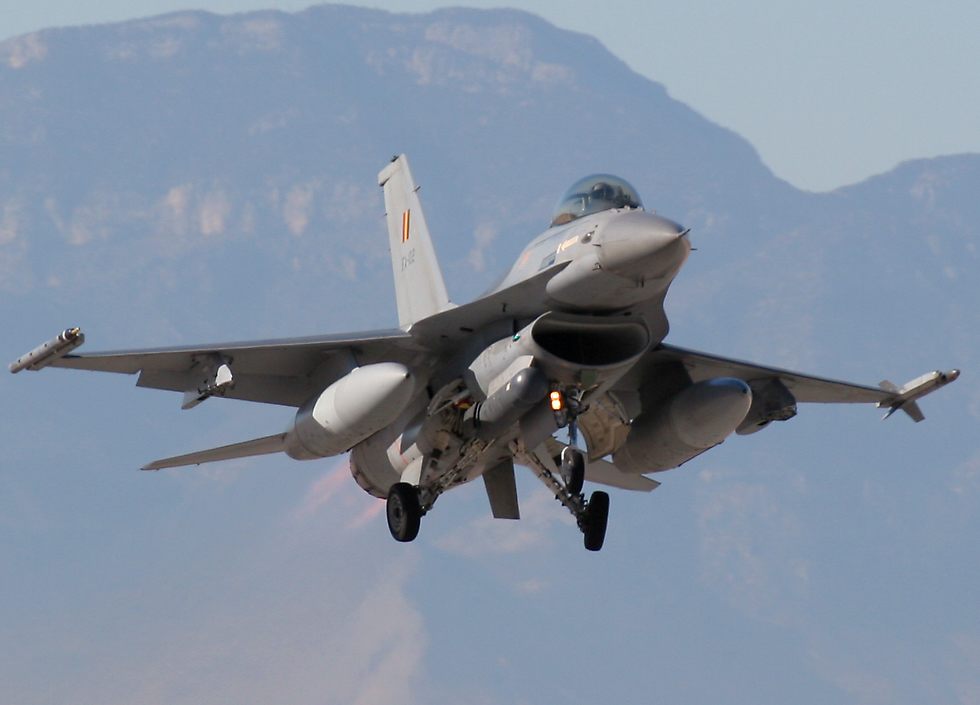
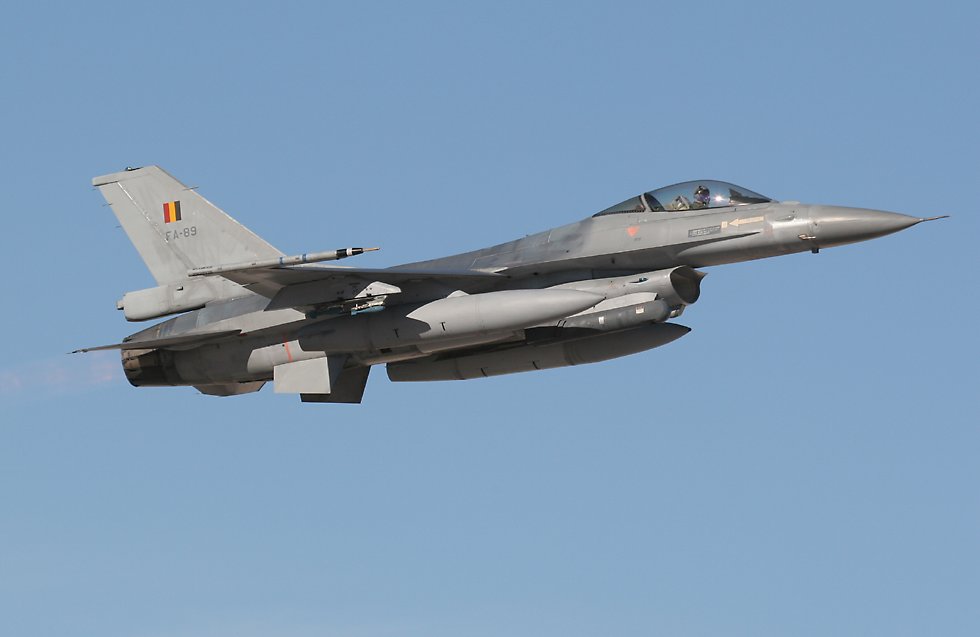
| Looks
like this Falcon has a missile on the port wingtip, an electronic sensor
on the right wingtip, an ECM unit under the intake and 25 pound BDU-33
practice bombs on the wing racks, which fall with the same trajectory as
the much larger 500 pound MK82 bomb. |
 |
| Don't
laugh, though - if one of those little bombs hit you directly on the head
it would probably ruin your entire afternoon! |
 |
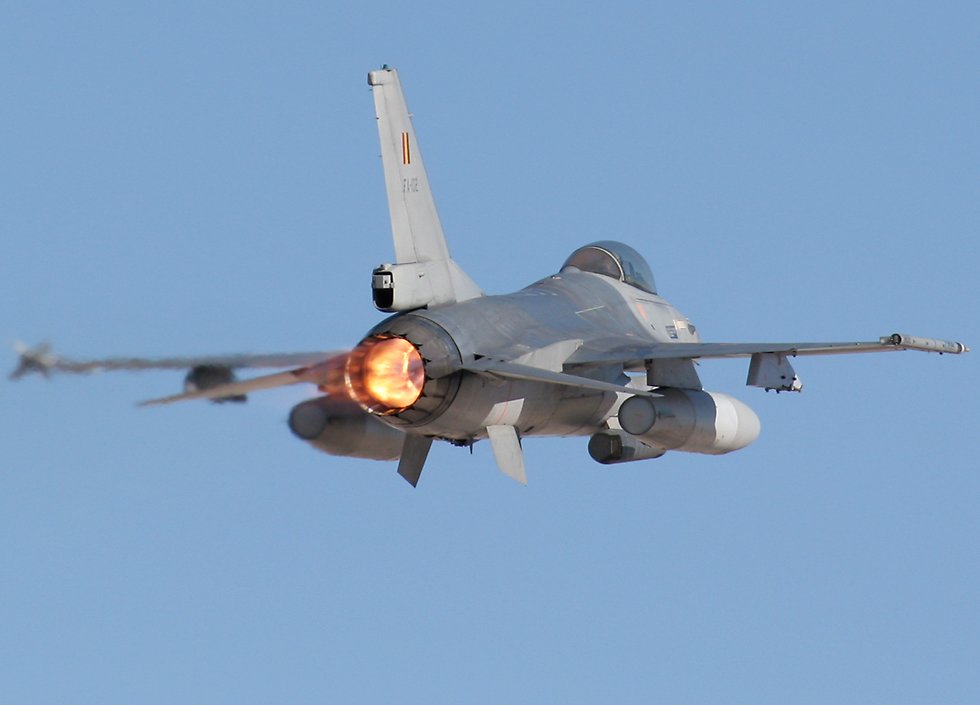
| Here's
a gratuitous afterburner shot for your viewing pleasure. |
 |
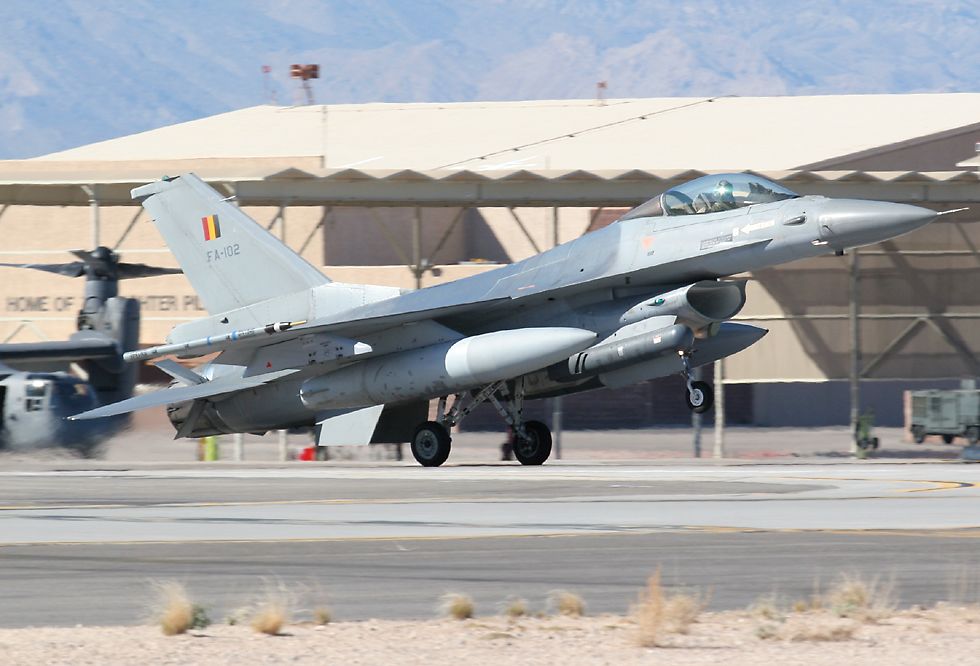
| Returning
from a training run, with another recent US air force acquisition in the
background, a CV-22 Osprey, which did a
very good display during the airshow. If you look behind
the Osprey you can see the Nellis motto "Home of the Fighter Pilot" on
a hangar wall. Unlike the Tornado and some other military aircraft,
the F-16 doesn't have a thrust reverser, and nor does it have a parachute
like the
F-117 Nighthawk, so pilots rely on "aerodynamic braking" to slow down,
keeping the nose of the aircraft high for as long as possible in order
to induce drag from the wings and body. |
 |
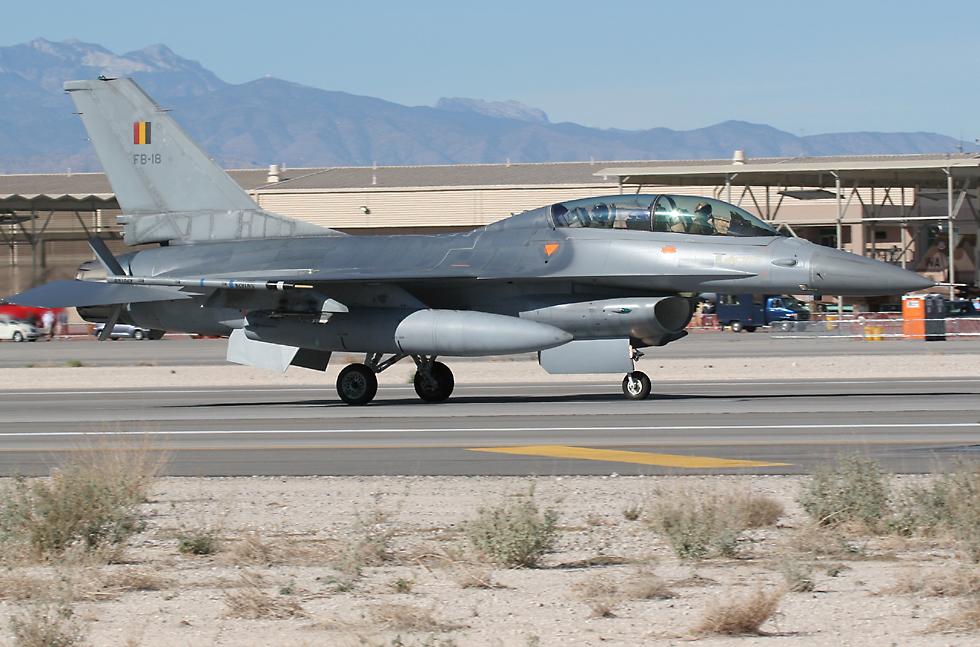
| The GIB ("guy in
back") of this Belgian two-seater takes the time to wave to me, quite a
common occurrence when a long lens is being pointed at an aircraft. |
 |
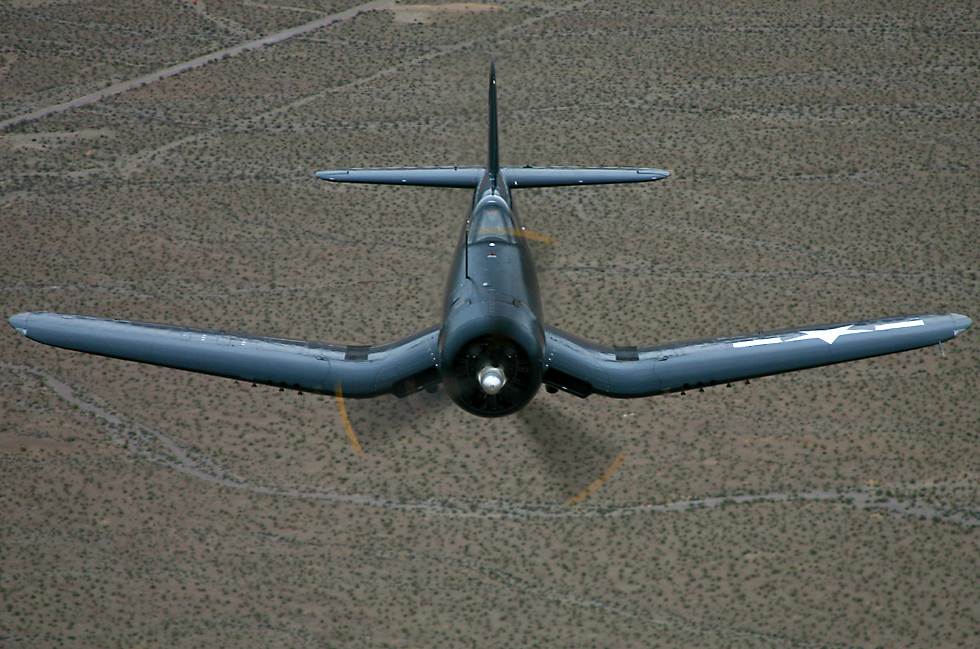
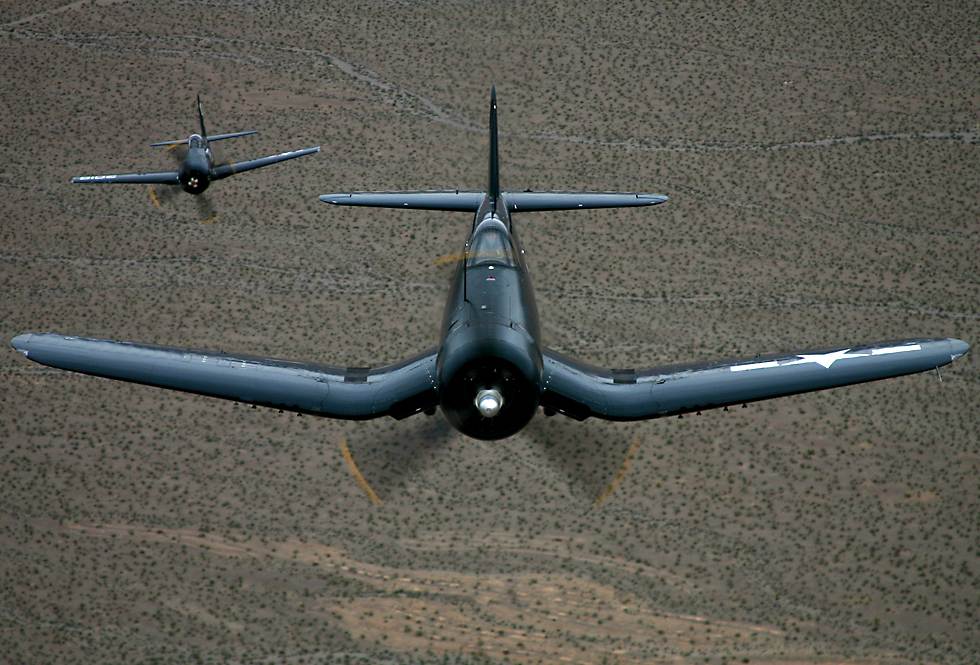
| Moving
from the new to the old, here are some photos of the warbird formation
which displayed during the Saturday show, taken from the tail gunner's
position at the back of the B-25 Mitchell bomber "Executive Sweet".
And what could be nicer than this F4U Corsair approaching the formation? |
 |
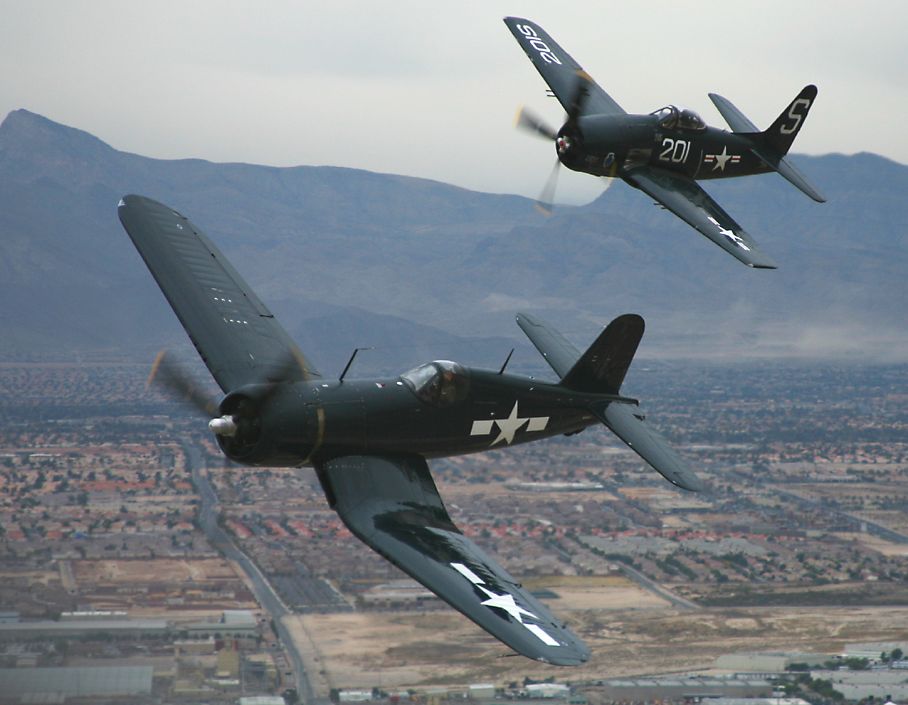
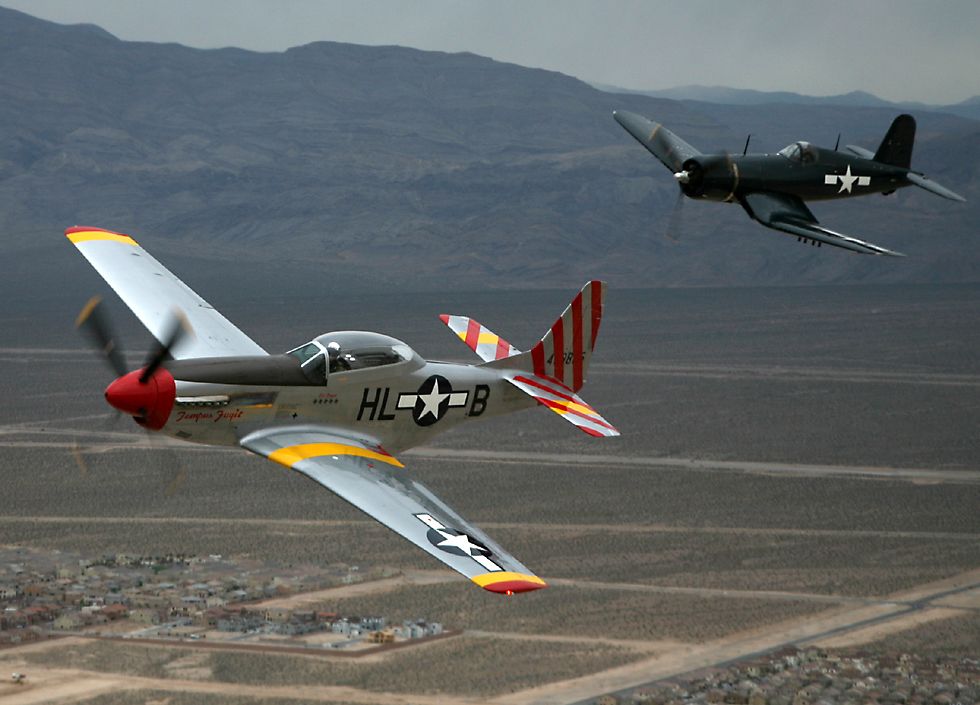
| Well,
how about an F4U and an F8F Bearcat? They're both naval fighters,
but the Corsair was manufactured by Chance-Vought and the Bearcat by Grumman,
the most successful builder ever of naval aircraft. The Corsair
itself was phenomenally successful, it had a rocky start but after the
British found a way to tame its tricky carrier landing characteristics
it soon found its place both as a fighter and doing ground attack work. |
 |
| The
Bearcat just missed out on service during world war two, but both aircraft
were used during the Indo-Chinese conflict which started after the world
war. Surprisingly, the Corsair remained in production for quite
some time after manufacture of the Bearcat ended, largely because of its
effectiveness as a stable platform for combat air support. |
 |
| The
Mustang was even more successful than the Corsair, it served with the air
forces of far more countries and stayed in service much longer. |
 |
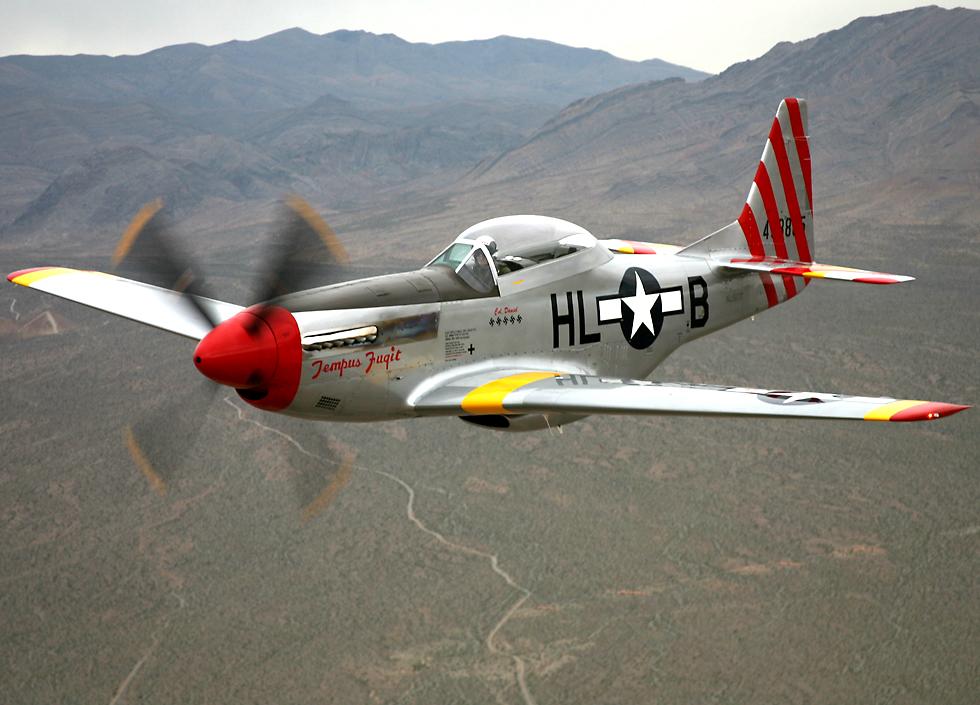
| This
Mustang, "Tempus Fugit" is owned by Tony Raftis, it served as a P-51D with
the Royal Swedish Air Force before being sold to the Nicaraguan air force.
Its restoration as a TF-51 two-seat trainer was only completed in 2006,
being painted in this scheme only three months before Aviation Nation. |
 |
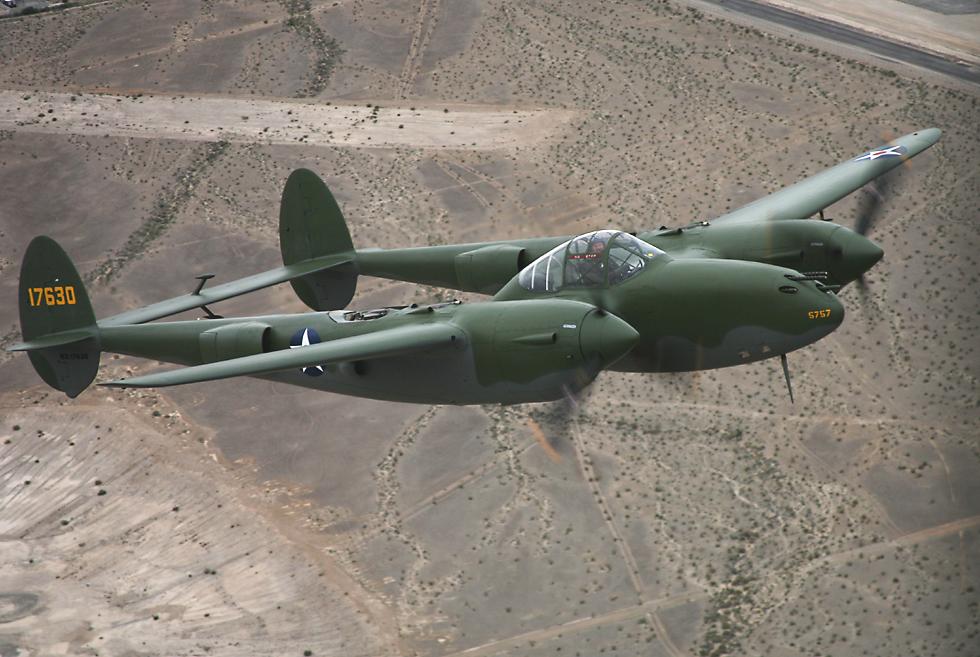
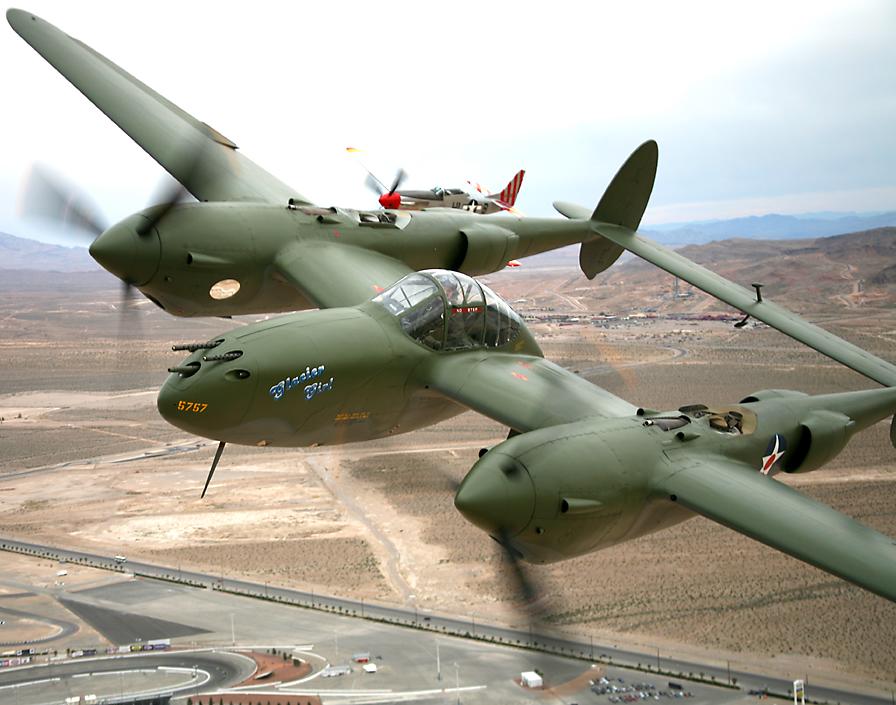
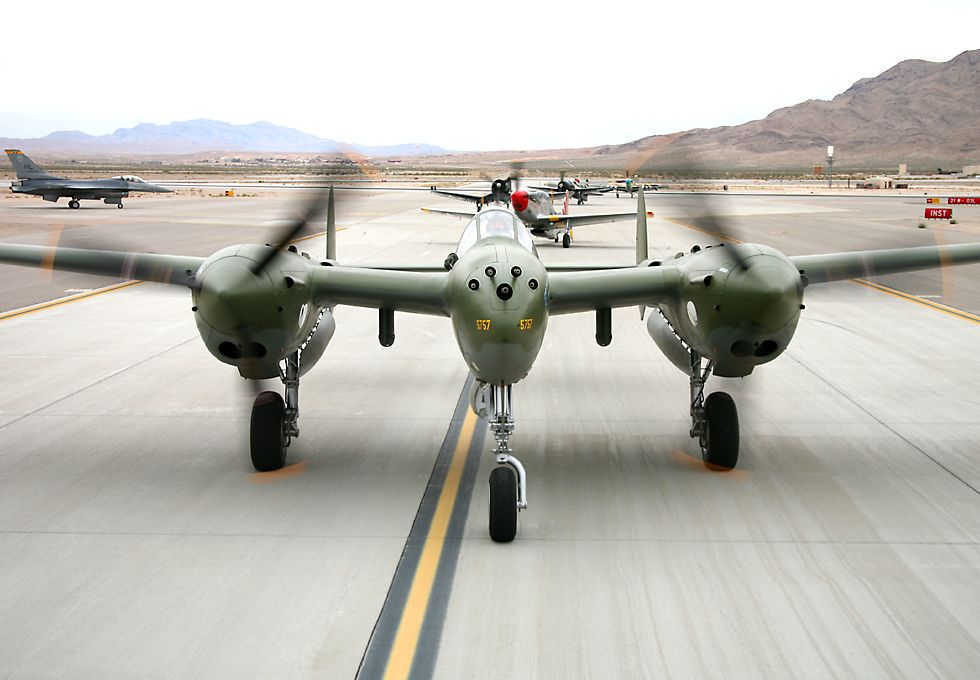
| There
are many Mustangs on the airshow circuit, but very few P-38 Lightnings,
so it was a real pleasure to have Steve Hinton flying this one, called
"Glacier Girl" in memory of its retrieval and restoration from underneath
many feet of Greenland ice. |
 |
| Steve
gets to fly many different types of classic aircraft as the head man at
the Fighter Rebuilders facility at Chino in California, and he's not afraid
of bringing his ship in close with a formation, whether it's a group of
warbirds like this one, or one of the air force's Heritage Displays, which
sees him flying a classic alongside a modern craft like the Eagle or the
Raptor. |
 |
| Viper
West display pilot "Mojo" waits to take his F-16 out for its demonstration
while the warbirds taxi back in. The B-25 bounces around a
surprising amount while taxying, so it required a real mixture of skill
and luck to come away with a sharp photo of the planes coming back down
the taxiway. |
 |
| For
real diehard aviation enthusiasts, the airshow isn't even over when it's
over. The end of the show often means the start of the departures,
and sometimes it's the only opportunity to see aircraft in the air which
are only ever on static display, like the Grumman Albatross seaplane.
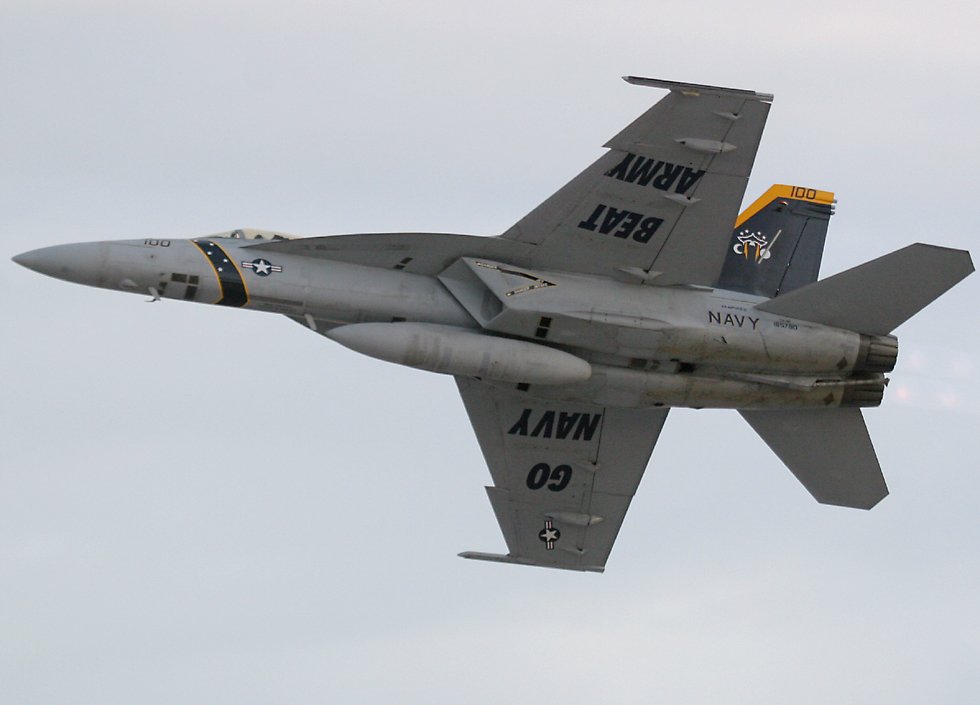
On a slightly different note, this F-18E Super Hornet took off and then
did another pass for the benefit of the large group of photographers still
assembled in the spectator area. The pilot made sure to make
clear his allegiances in the ongoing inter-service football rivalry! |
 |
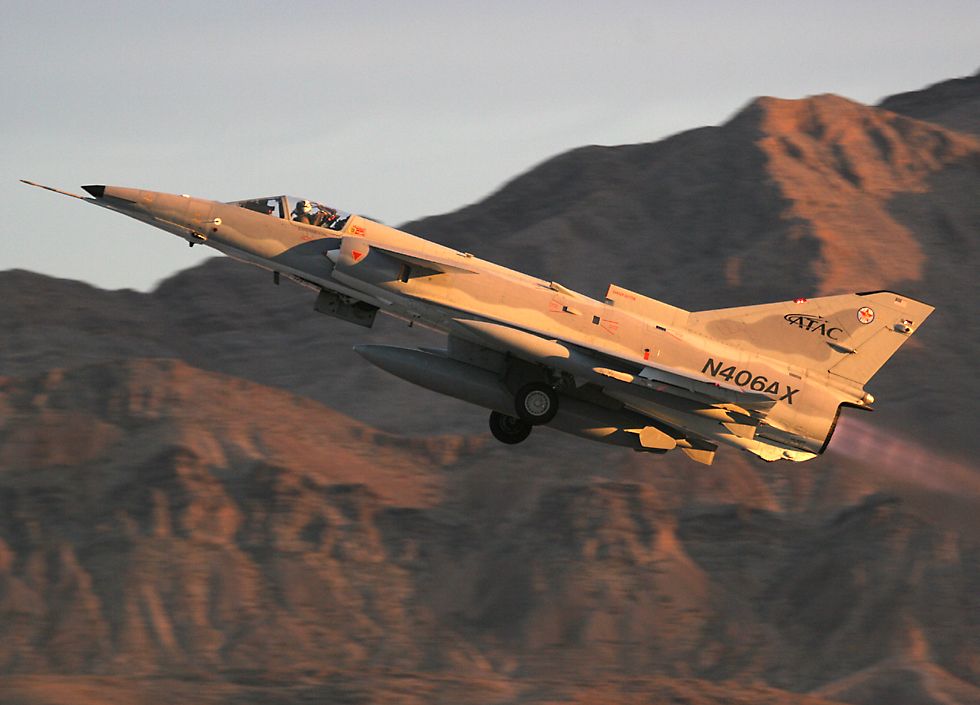
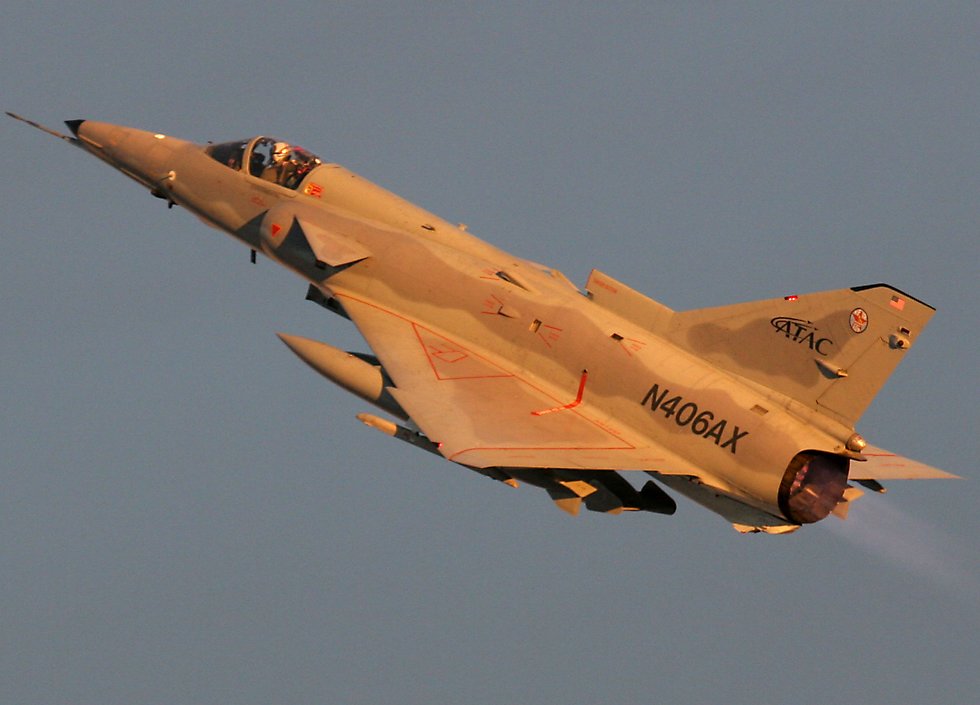
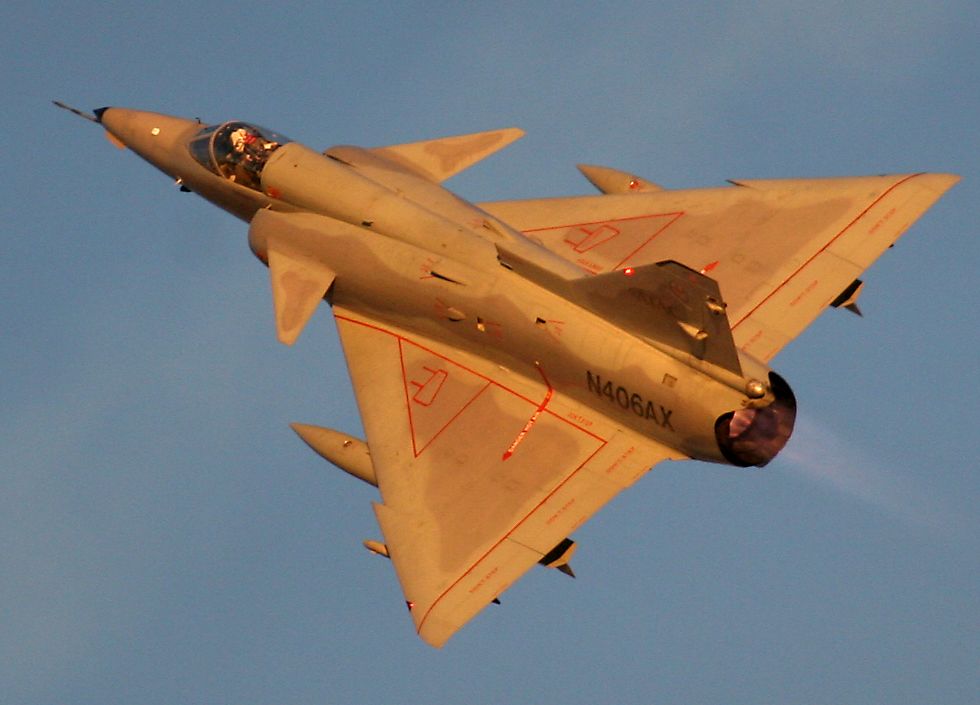
| Even
better was the departure of this Kfir fighter, now owned and operated by
a civilian outfit called ATAC, which provides dissimilar-type training
on contract for the military. This involves flying modern American
aircraft against foreign aircraft in order to give pilots the sense of
flying against unfamiliar planes which perform differently than American-designed
craft. |
 |
| The
Kfir ("lion cub") is an Israeli modified version of the classic French
Dassault Mirage 5 fighter. It was fitted with a larger engine
than the original, which necessitated increasing the diameter of the rear
fuselage, but judging from this photo it looks like they didn't make more
room in the cramped cockpit! |
 |
| The
light was rapidly fading, but the Kfir pilot also obliged us by going around
and performing a pass before heading for home. |
 |
Check
out the 2006 Nellis AFB "Aviation Nation"
airshow highlights. or take a look at modern
military aircraft from the USA, UK and Australia participating in a Red
Flag military exercise.
 |