
Highlights of the 2005 Oceana Airshow

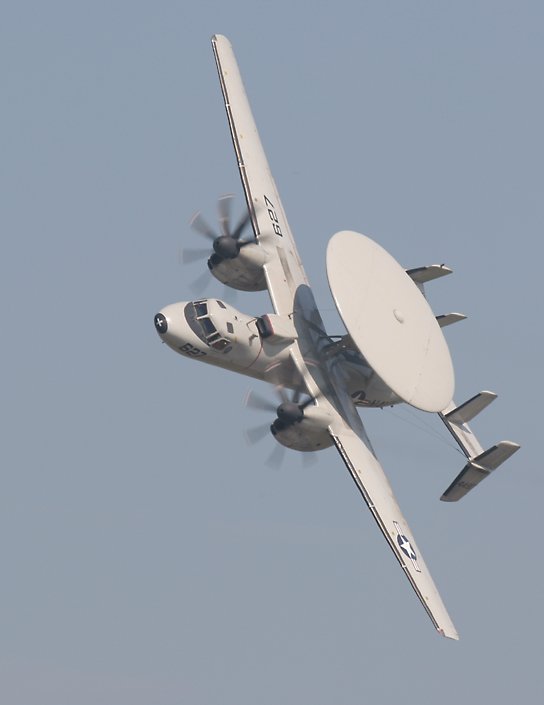
Fortunately, the weather cleared up on Saturday and Sunday, and the pilot of this E-2C+ Hawkeye put on an excellent display, throwing the plane around like a fighter. With an 80 foot (24.56 meter) wingspan, the Hawkeye is the largest aircraft operating from aircraft carriers; the large radar dish on its back provides the fleet with airborne early warning of enemy aircraft. The original E-2C has a four bladed propeller but as you can see, this new model has eight bladed propellers. The sound of the E-2C+ is quite different than most other aircraft, and the crew is said to be able to hear all sorts of sounds that they never heard before, which is something of a mixed blessing! |
|
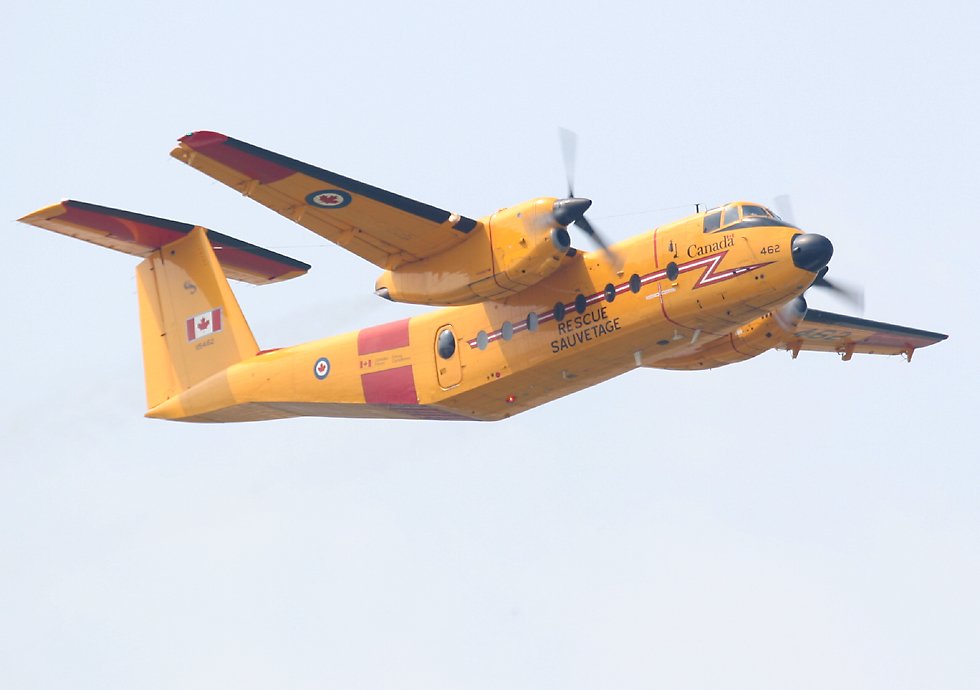
This Canadian armed forces CC-115 Buffalo is a real rarity at an American airshow, as is any other foreign aircraft - the only other foreign planes I've seen in 8 years of attending American airshows were some German Air Force Tornado fighter bombers at the 2005 Holloman airshow. The Buffalo didn't actually display, it was acting as drop plane for some of the parachute teams which performed during the show. It was highly unusual to see the Canadian "SkyHawks", the US army "Black Daggers" and the British "Red Devils" teams all together at the show, and they all put on a good display of their capabilities. |
|
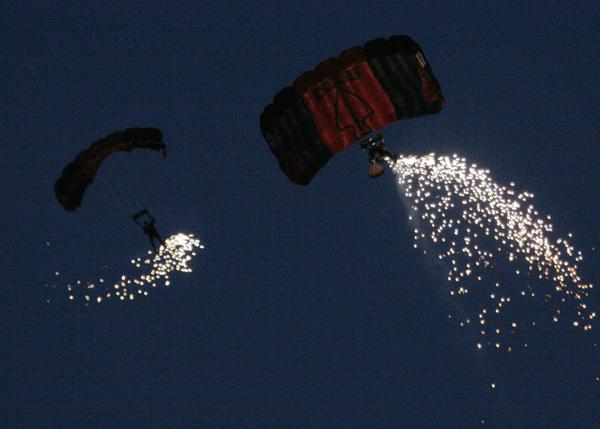
The parachutists performed several times, bringing down their national flags, doing various maneuvers including stacking multiple parachutes together, and then coming down during the "Beach Blast", which is a regular part of the show held along the Atlantic coastline after the Saturday night performance. Here you see the Black Daggers coming down with flares streaming behind; the Red Devils also did their thing, but with dozens of glow sticks outlining the shape of each person. The flying displays at the Beach Blast were not as spectacular as previous years, perhaps because of the increased costs of jet fuel this year. |
|
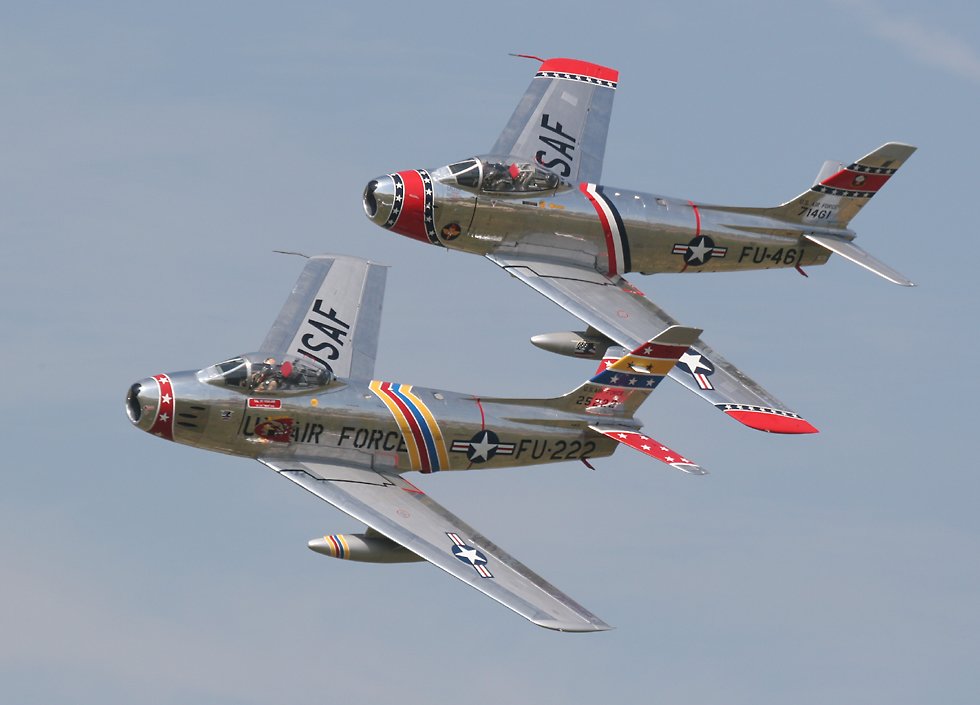
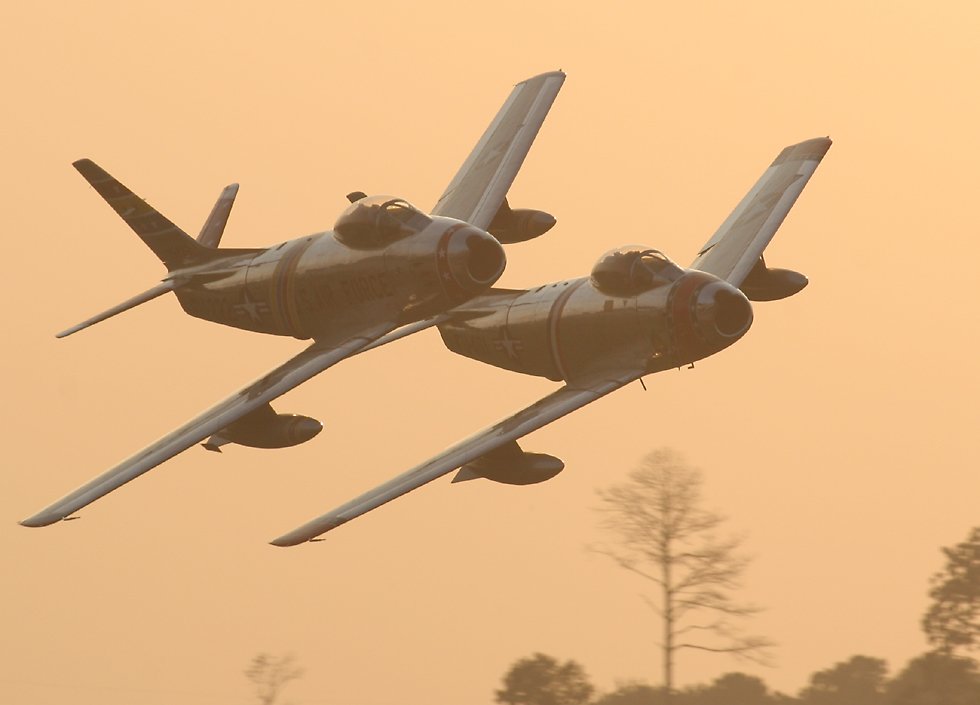
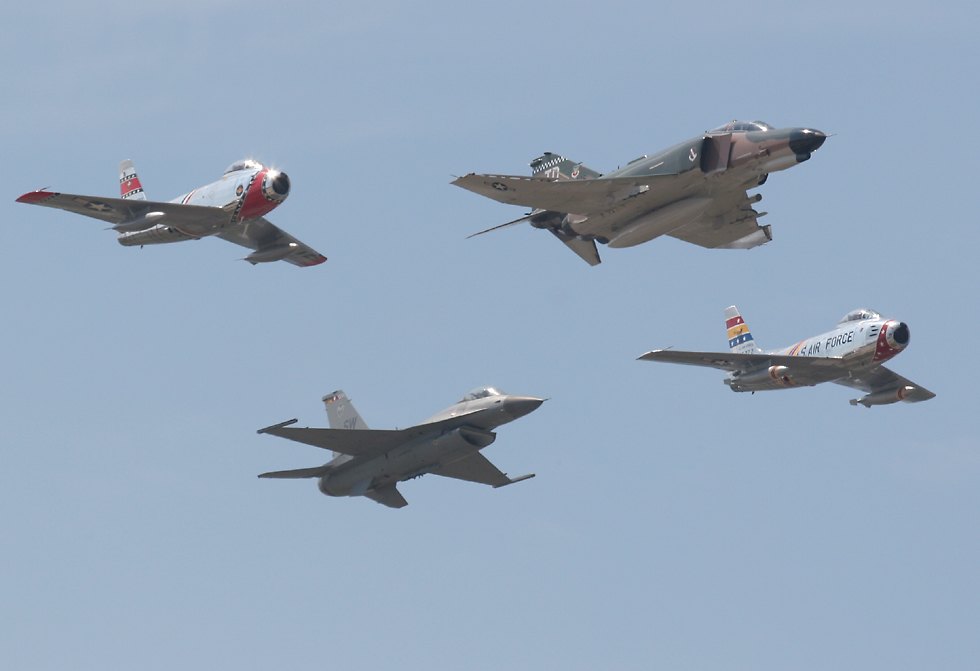
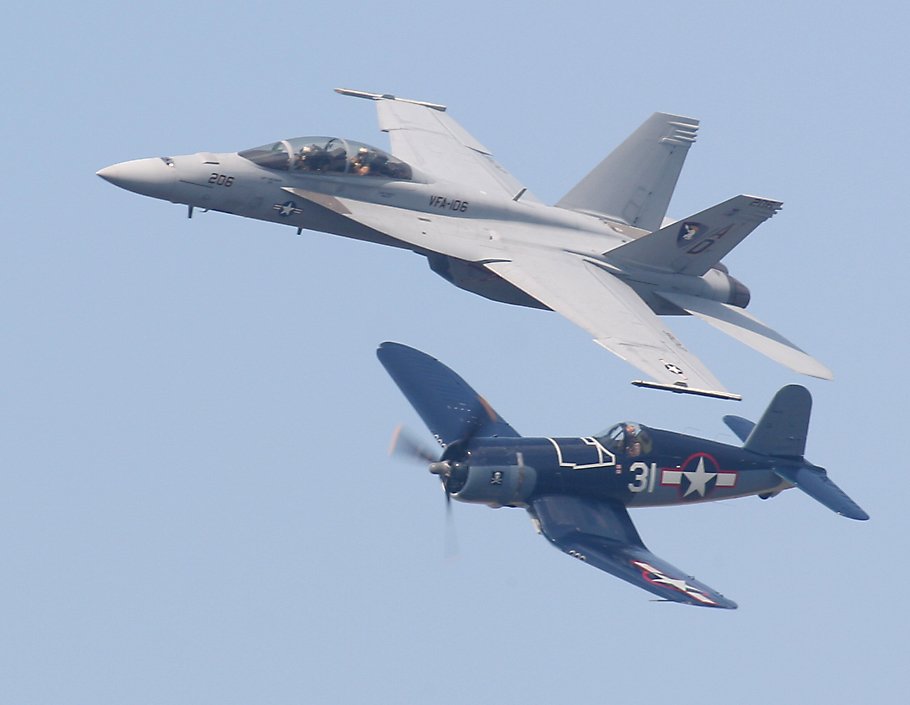
The air force can't have all the fun, so the navy also put on its "Tailhook Legacy" flight with this F/A-18F Super Hornet and F4U Corsair. The Corsair suffered a burst brake line sometime after this display on Saturday, so it wasn't able to fly on Sunday. Instead, they put up one of the F-86 Sabres and mischievously called it an "FJ-1", which is the first Sabre variant which the navy flew. However, the announcer goofed by calling it an "FJ-1 Sea Fury"; the FJ-1 was known as the "Fury" and the "Sea Fury" is actually a British propeller-driven naval fighter. In reality there are no FJ-1 Furies flying any more, however there is an FJ-4 Fury which flew at the 2005 Yankee Air Museum airshow. |
|
|
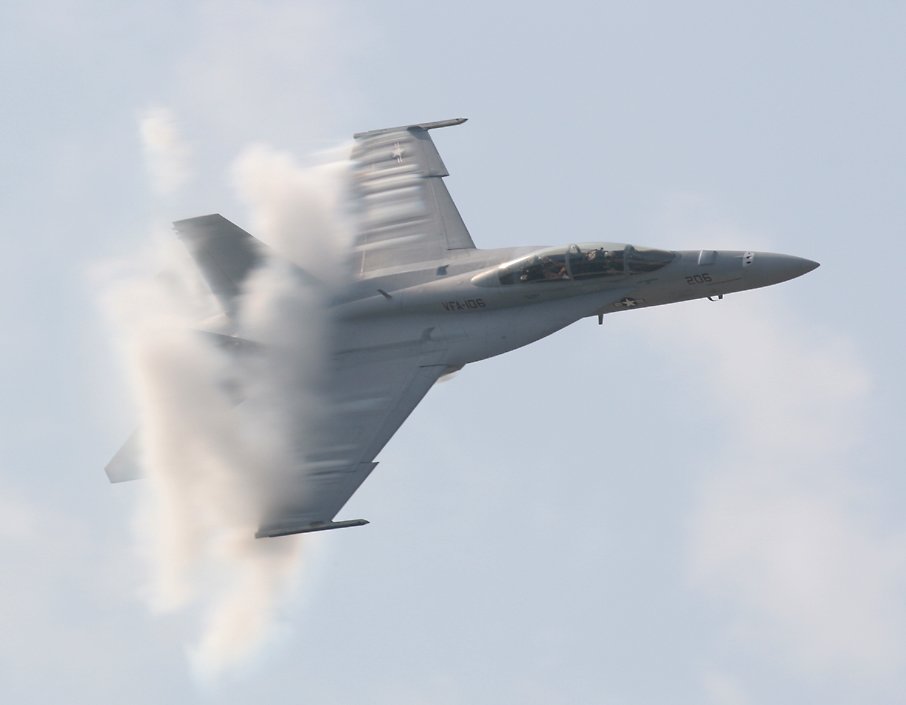
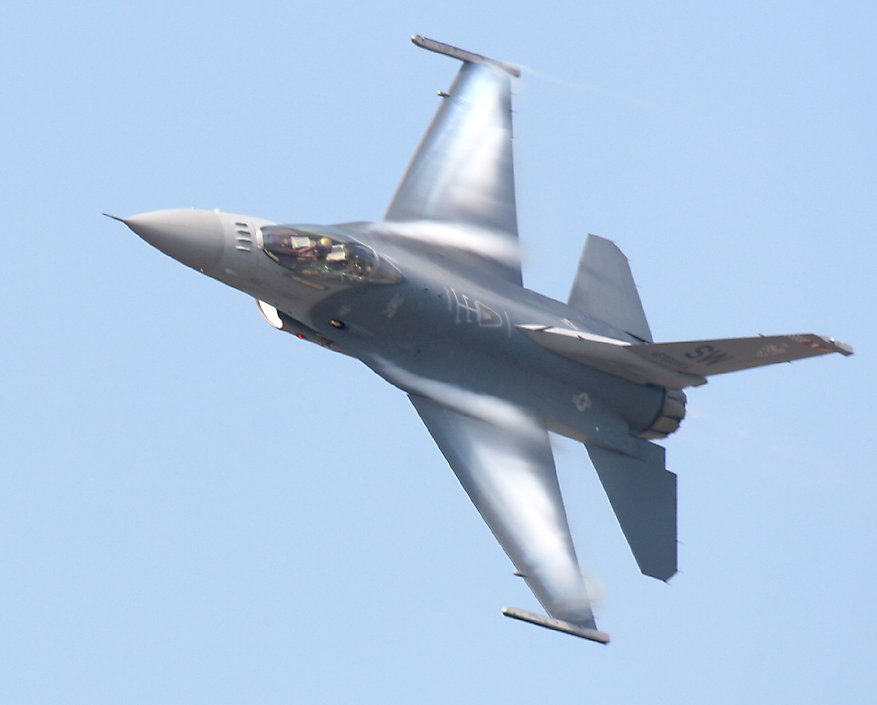
Even the F-16 Fighting Falcon sucked masses of vapor out of the air over its wings, something this type of aircraft doesn't often do. |
 |
|
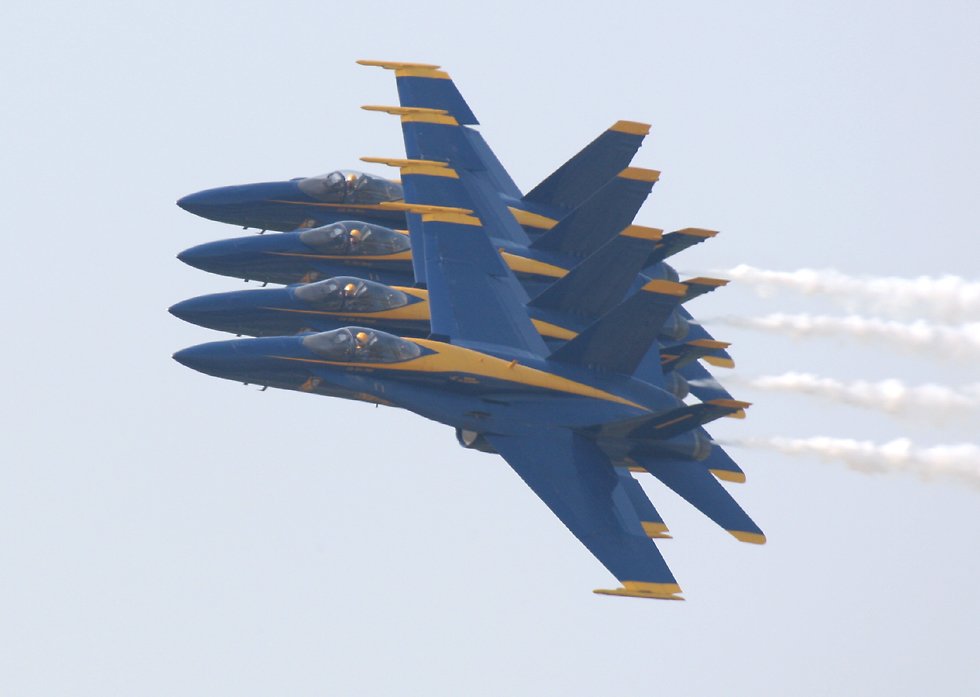
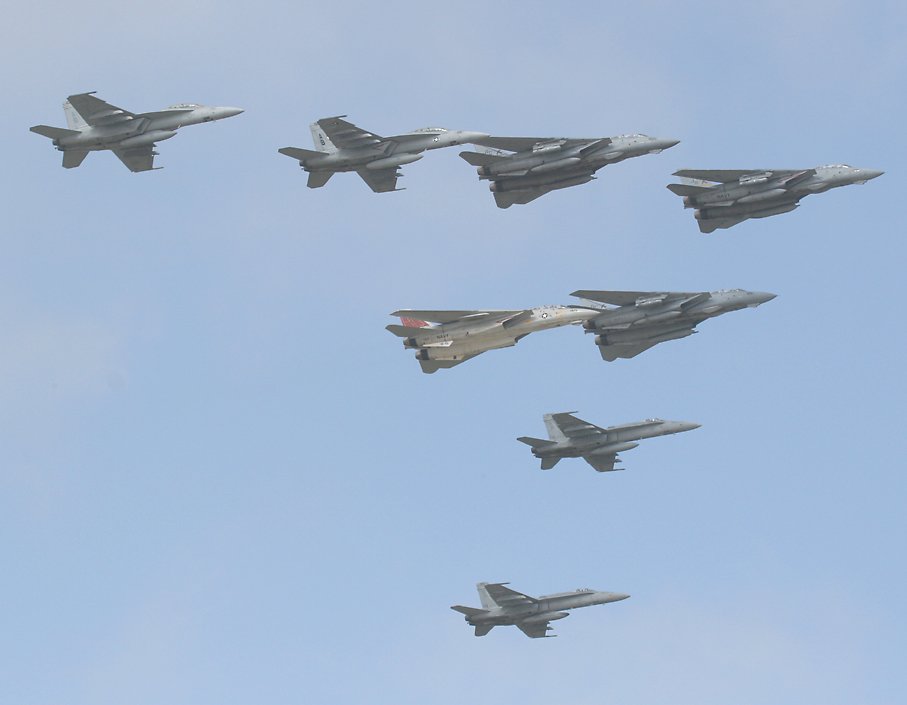
But then what does Joe Public know? Aviation photographers and other enthusiasts came from all over the world, many like myself from America's opposite coast, as well as groups from Canada, the UK, Holland, Japan as well as individuals from Brazil, Italy and even Australia. They didn't come to see the Blue Angels, they came solely to see the final fling of the navy's F-14 Tomcat fighter before they're finally retired over the next year or so. The flying action began with a fleet flyby, four Tomcats flanked by a pair of F-18C Hornets on their left and a pair of F-18F Super Hornets on their right. |
 |
|
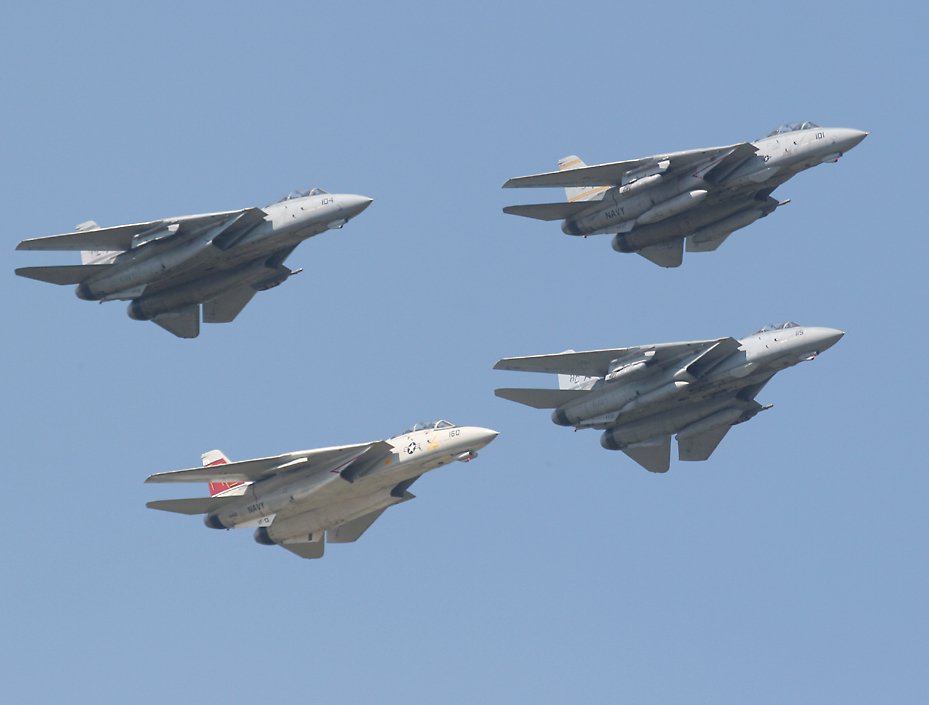
Three of the Tomcats are in the standard low-visibility grey color scheme, but one is in a retro scheme dating back to the 1970s. There was a surprising amount of official indifference to the retirement of the Tomcat, and the last official display had already taken place at the 2004 Nellis AFB airshow. However in the last month or two before the show the organizers were able to confirm that there would indeed be Tomcats flying at Oceana, and although there had been no Tomcat demonstrations during 2004, last year's display team of "Rocco" and "Smokin' Joe" were hurriedly requalified and put into the retro bird. |
 |
|
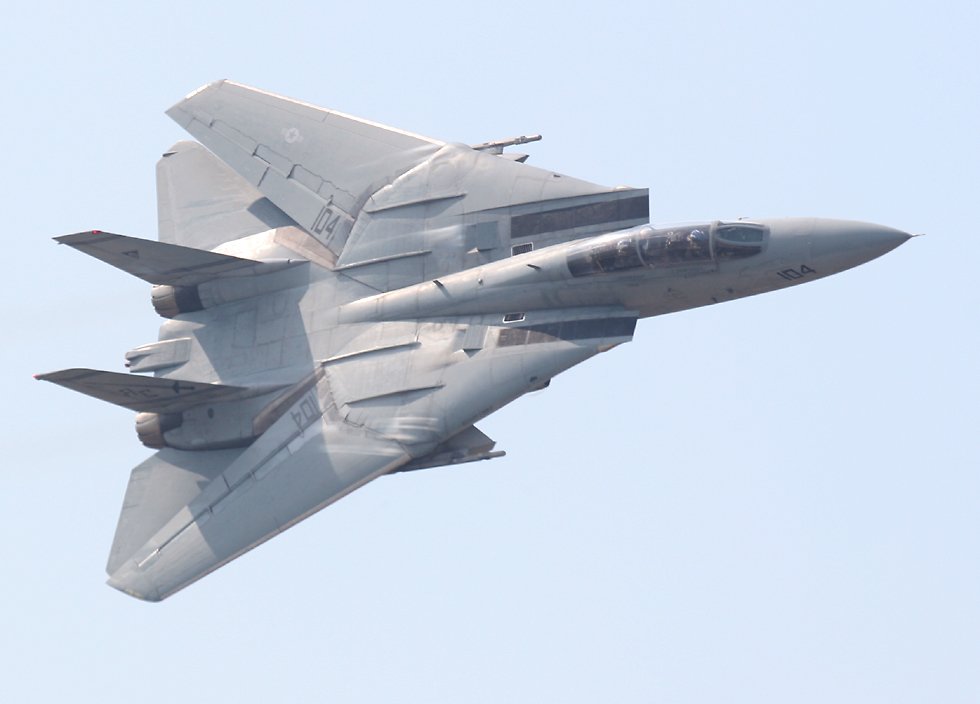
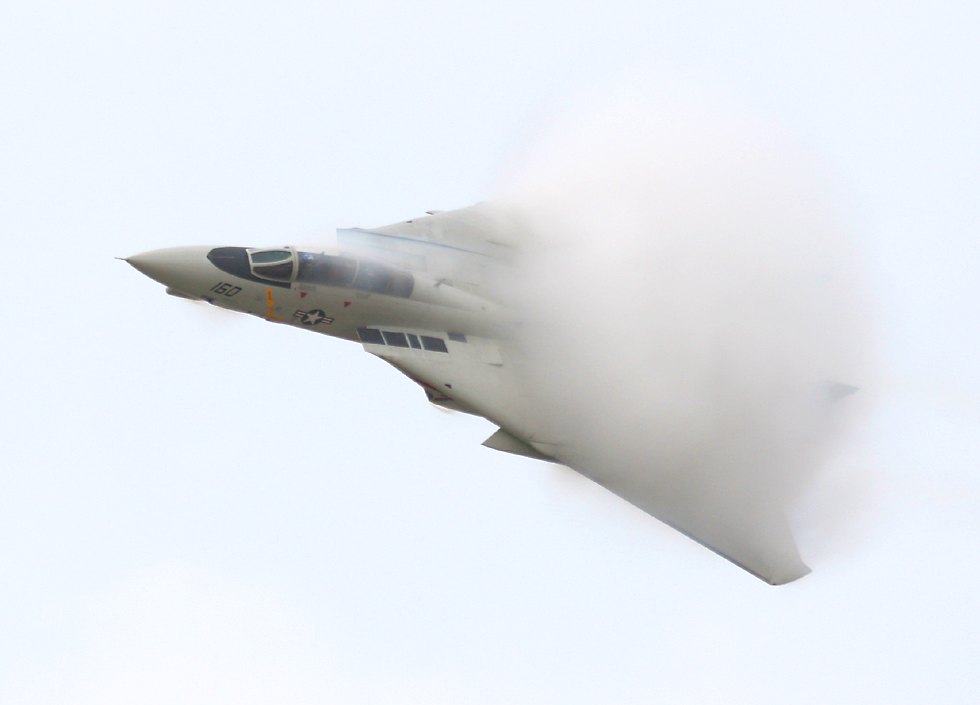
Not that they had all the fun, as you can see from this shot of a high-speed banking pass by one of the low-viz Tomcats. Surprisingly, there wasn't too much vapor from the Tomcats, even though they're usually at least as vapor prone as the Hornets. |
 |
|
But Rocco and Smokin' Joe proved that the Tomcat still had what it takes, putting their afterburners to good use, and doing maneuvers like the dirty double Immelmann to demonstrate the plane's raw power. The True Tomcat Believers still couldn't quite bring themselves to accept that this was the last time they would see their favorite aircraft on display, but indeed this demonstration ship departed from Oceana on the day after the airshow, on its way to the Castle Air Museum in California. |
 |