
F-14 Tomcats at the 2005 NAS Oceana Airshow
|
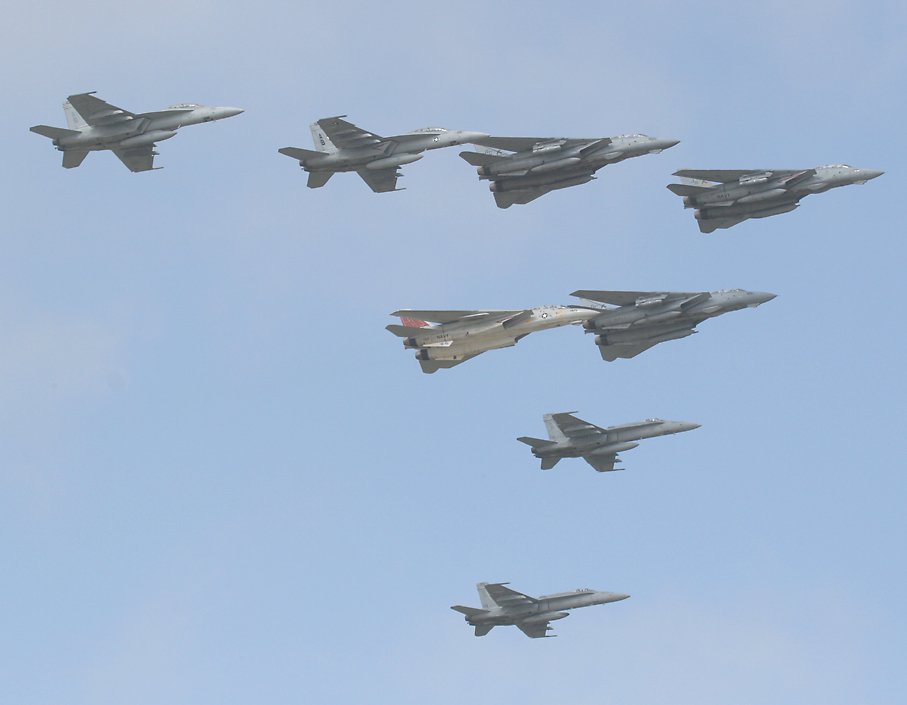
The flying action began with a fleet flyby, four Tomcats flanked by a pair of F-18C Hornets on their left and a pair of F-18F Super Hornets on their right. The F-14 is being replaced by the more cost effective Hornet and Super Hornet, but for many people this is a backwards step, since the Tomcat is significantly faster, is a much better air defense platform, and has range at least as good as the Super Hornet. However, economic reality is rapidly causing the demise of the Tomcat just as it has caused the retirement of other high-tech aircraft like Concorde even though there is no more capable aircraft to replace it. |
 |
|
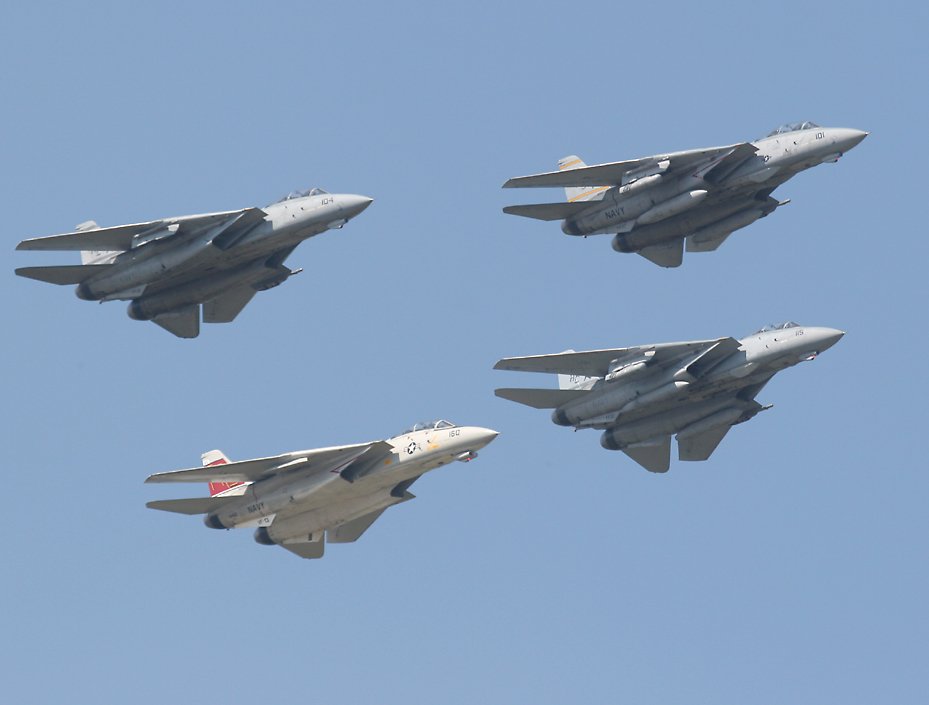
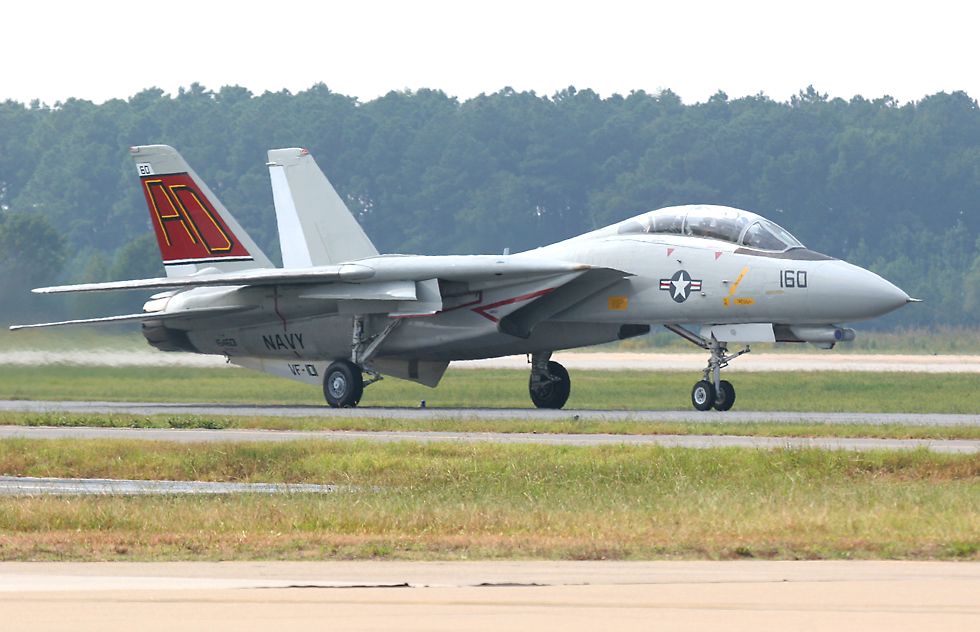
Although three of the Tomcats on display were in the navy's standard low-visibility grey color scheme, it was a welcome acknowledgement of the F-14's history to have one of the birds painted in a retro scheme dating from the 1970s. |
 |
|
The F-14 was the navy's replacement for the F-4 Phantom II, which served effectively with both the navy and air force. In an effort to artificially duplicate this success, Robert McNamara and other politicians bulldozed development of the F-111 as a cost-saving "one size fits all" aircraft which would again serve with both services. However, the air force didn't like it because it had virtually no rear vision, and the pilot had to rely on the co-pilot seated beside him to tell him what was happening on that side of the aircraft. The navy disliked these features and also considered the F-111 too large and heavy for carrier operations. |
 |
|
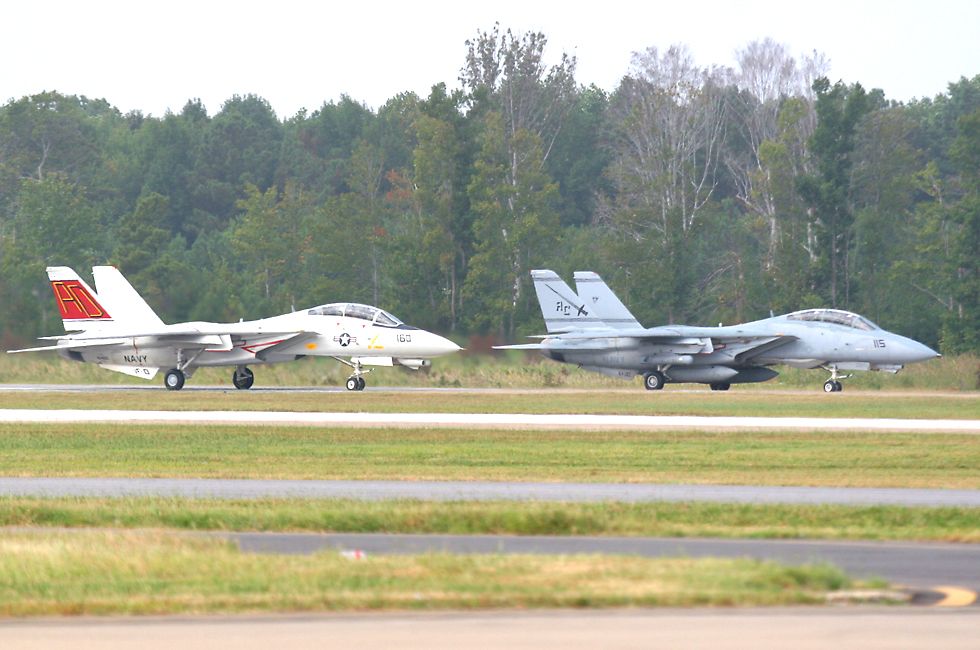
The demonstration team of Rocco and Smokin' Joe performed several times over the weekend, both in a low-visibility Tomcat and in the retro Tomcat. |
 |
The Tomcat was developed by Grumman, a company with a long history of designing naval fighters, including the F4F Wildcat and F6F Hellcat which were the main American naval fighters of world war two, through to the early post-war F8F Bearcat and F7F Tigercat, then through to jets like the F9F Cougar, F9F Panther and F11F Tiger. Like the F-111, the Tomcat has swing wings, two engines and two crewmen, but it abandons the side-by-side seating for a more practical tandem arrangement. The F-14A did borrow a lot of technology from the F-111, including the TF30 engine, AN/AWG-9 radar and Phoenix missiles. The TF30 engine wasn't as powerful or reliable as desired, so in 1987 the F-14B entered service with F110 engines, and in 1990 the F-14D entered service with the new AN/APG-71 radar which has twice the range of the previous system. |
|
Like the MiG-23, only part of the F-14's wing moves. The F-111 had a steel wing box structure that everything was built around, but this suffered failures and so it was replaced by a titanium structure on the F-14. The Tomcat originally had two small canard-like "glove vanes" which extended from the leading edge of the wing section when the wings were swept far back. These glove vanes were intended to counteract the backward shift of the center of gravity, but were eventually removed because they were difficult to maintain. |
 |
|
Operating experience resulted in other changes, too. The Tomcat is capable of speeds above Mach 2.4, however this required use of variable engine intake ramps. Since these were costly to maintain and it was found that the aircraft rarely needed to exceed Mach 2, it was decided to deactivate the variable ramps, which limits the top speed to around Mach 2. |
 |
|
Despite these various difficulties, the Tomcat has always been liked by those who flew and maintained it. Only a true devotee would consider it aesthetically attractive, it's no wonder that it earned the affectionate nickname The Turkey with so many unexpected curves, bumps and angles. |
 |
|
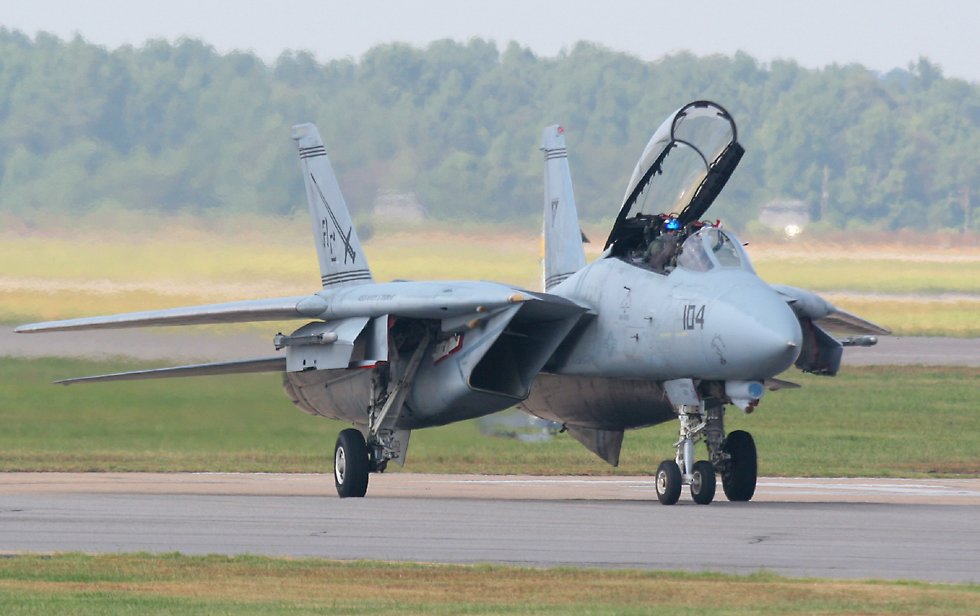
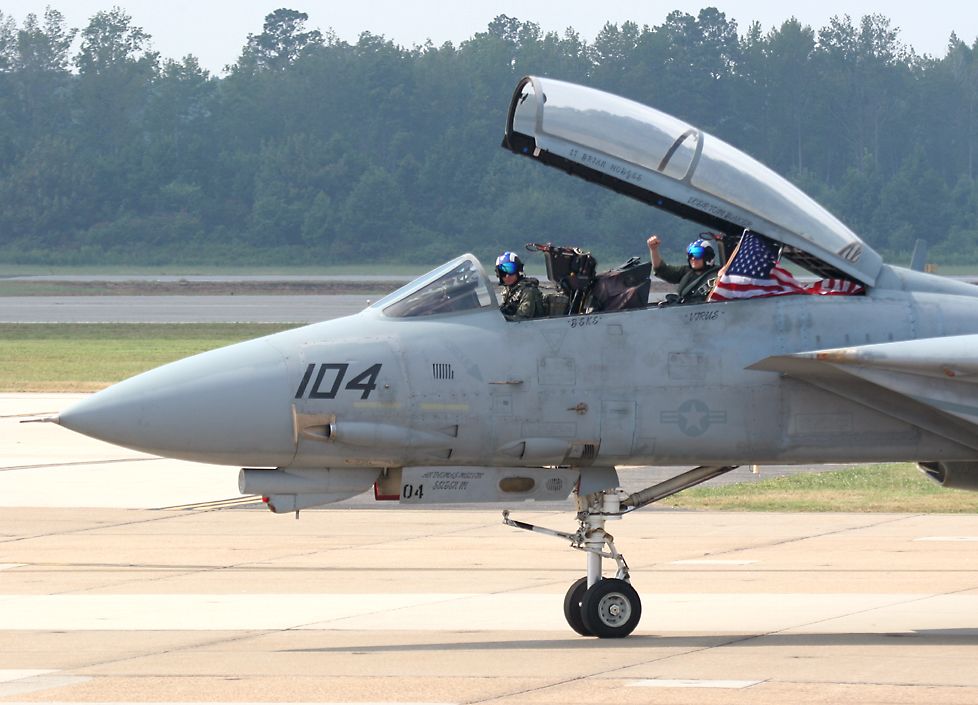
Here's Rocco and Smokin' Joe coming in after one of their demonstrations. Below this aircraft's identification number you can see the muzzle of the Vulcan 20mm cannon, a weapon added because of experience gained in Vietnam with the F-4. Like the Phoenix, the Vulcan has been used very little in combat, the first recorded instance being strafing of Taliban forces during the war in Afghanistan. |
 |
|
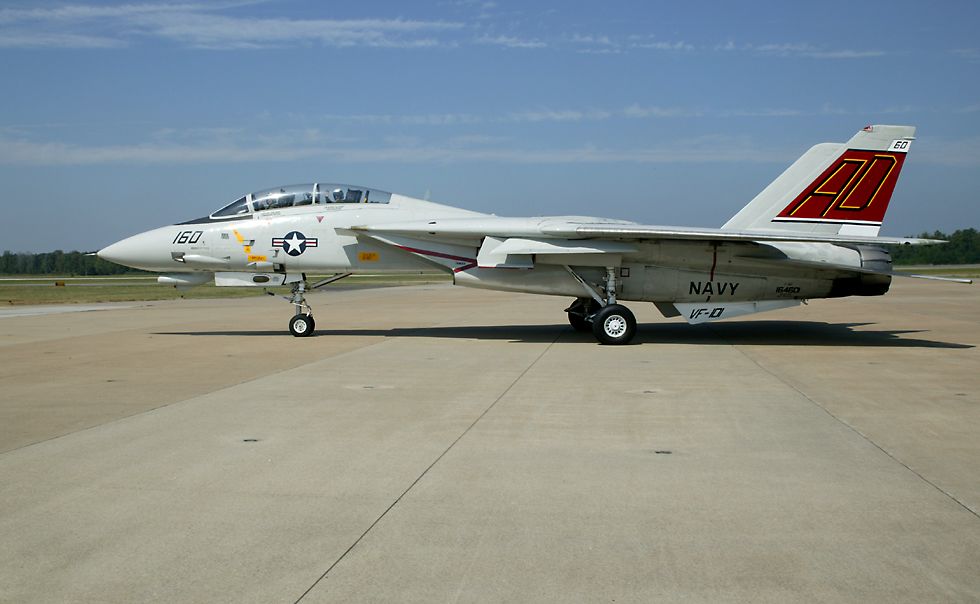
The demonstration in the low-visibility ship was great, but there's no doubt that extra spice was added by having the retro aircraft flown in the same way. This is painted up as an F-14A of squadron VF-101 "The Grim Reapers", which was formed in 1942 to fly F4F Wildcats. |
 |
|
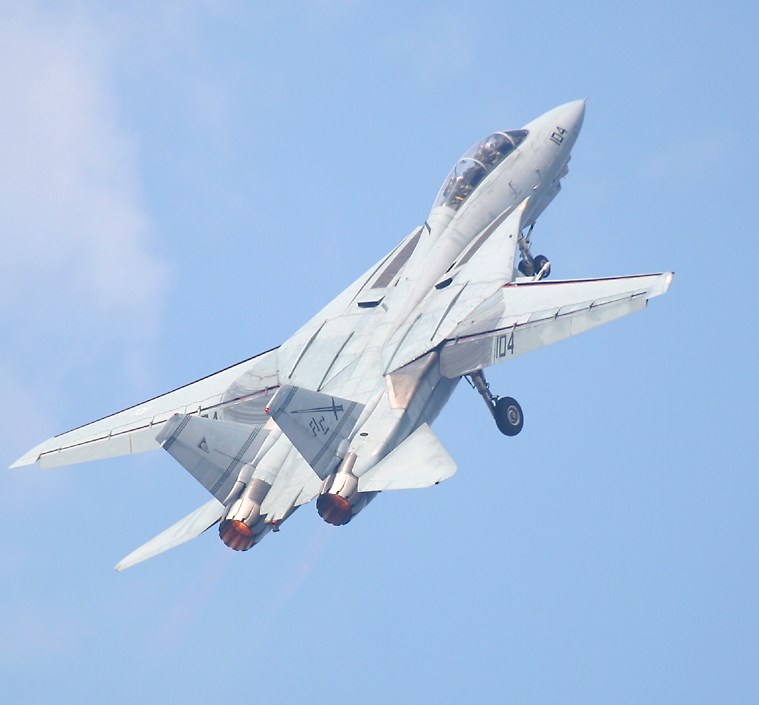
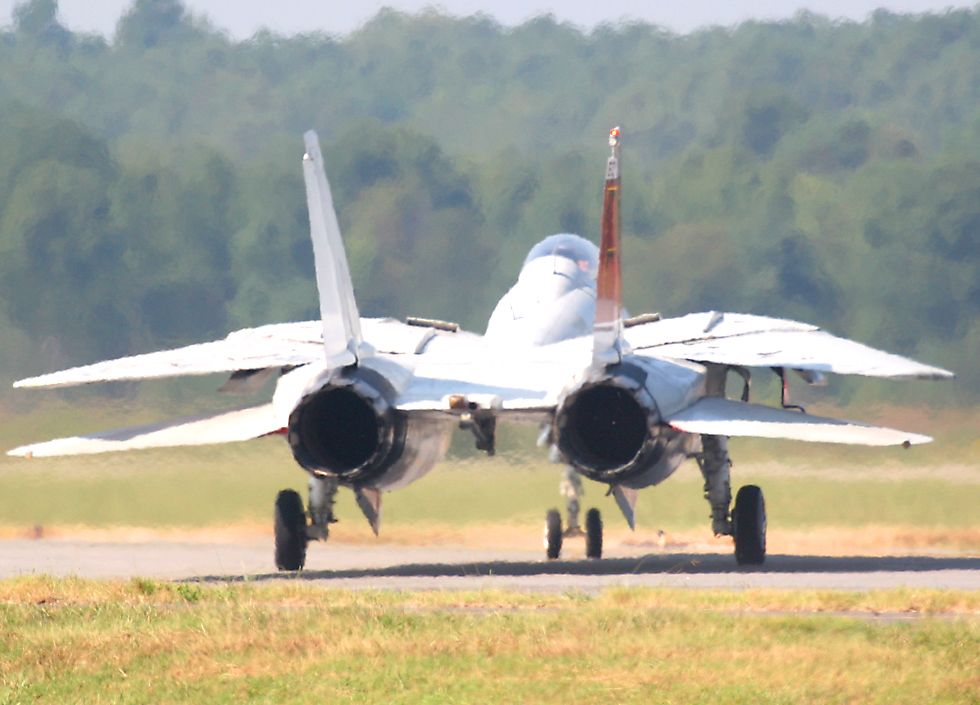
Another view of the Tomcat's unusual angles, all of which contribute in some way to the aircraft's performance. The flat section between the engines provides 40% of the total lift, the fuselage provides a bit more and the wings themselves provide a little under half of the lift. |
 |
|
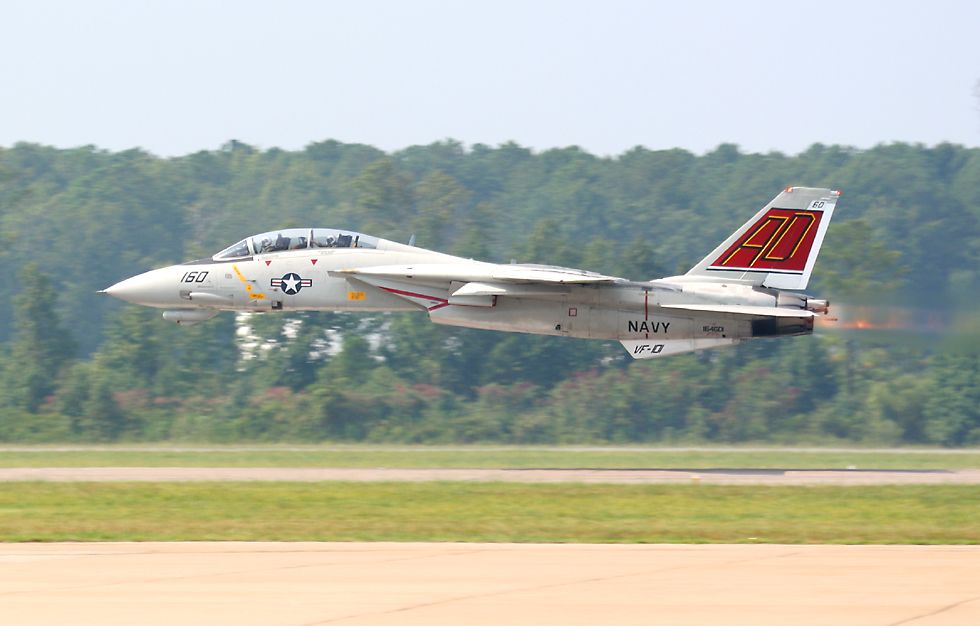
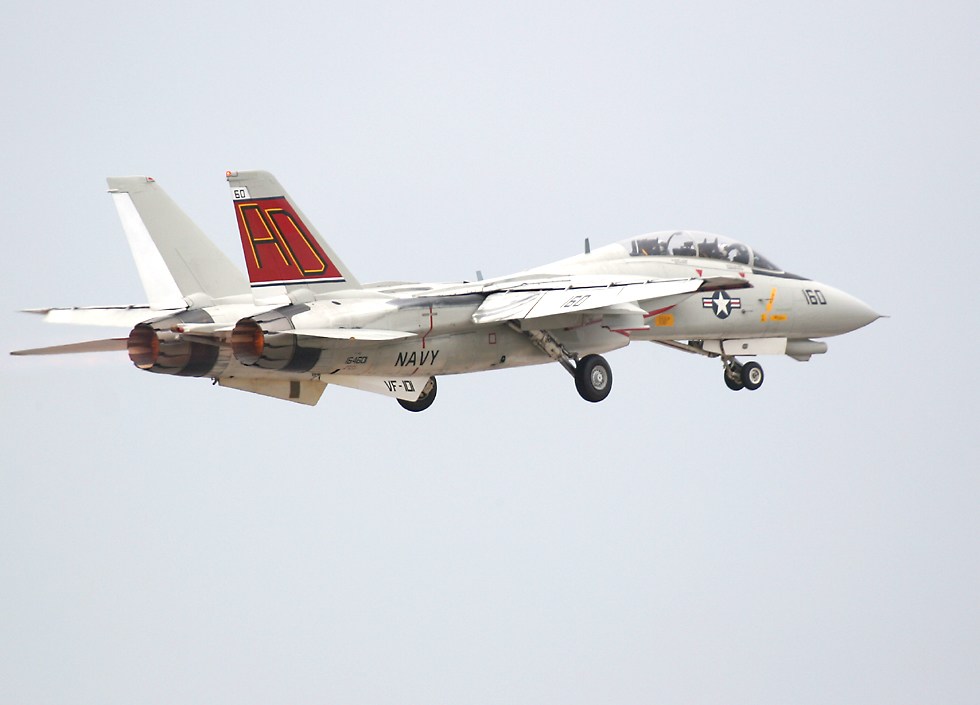
With their powerful and fuel efficient engines, F-14Bs and Ds don't need afterburners to take off from a carrier. Taking off without using the afterburners leaves more fuel available for the mission, but even without this help Tomcats have very good range, which is another reason why advocates prefer it over the Hornet and Super Hornet. |
 |
|
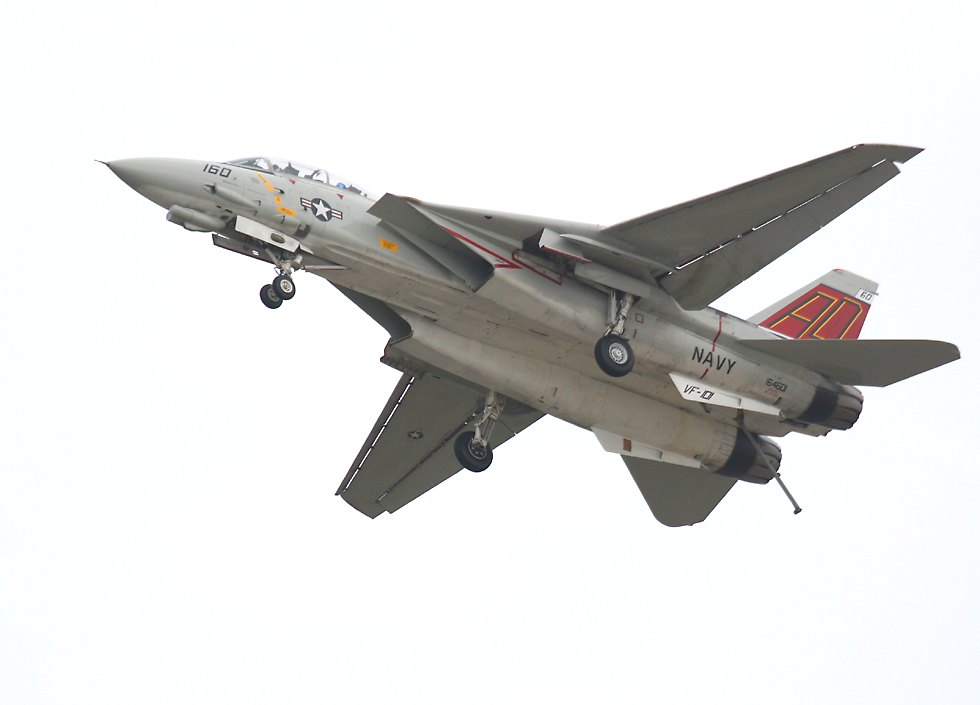
A dirty pass with undercarriage, tail hook and flaps all extended. The Tomcat was armed with AIM-9 Sidewinder short range infra-red guided missiles, AIM-7 Sparrow medium range radar guided missiles, and AIM-54 Phoenix long range missiles. Four of the Sparrows can be carried on the semi-recessed mounts visible under the fuselage, the other missiles being carried on pylons. Mounts are available to put four Phoenixes under the fuselage, and theoretically a total of six Phoenixes can be carried, but in practice this was never done, since the Phoenix is so heavy that a load of six would put the Tomcat over its maximum carrier landing weight. The Phoenix is such an expensive piece of equipment that dumping it before landing isn't an option! |
 |
|
Although it developed into a superlative aircraft, there were teething troubles between the Tomcat's first flight in December of 1970 and its entry into service in 1973. There were several crashes during development, indeed the first prototype Tomcat was destroyed on its second flight because of a hydraulic failure, and three more of the 12 prototypes crashed before the aircraft entered service. In service about 35 aircraft have been lost after they departed from the safe flight envelope, as dramatized by the unrecoverable flat spin which occurred in the Top Gun movie. |
 |
|
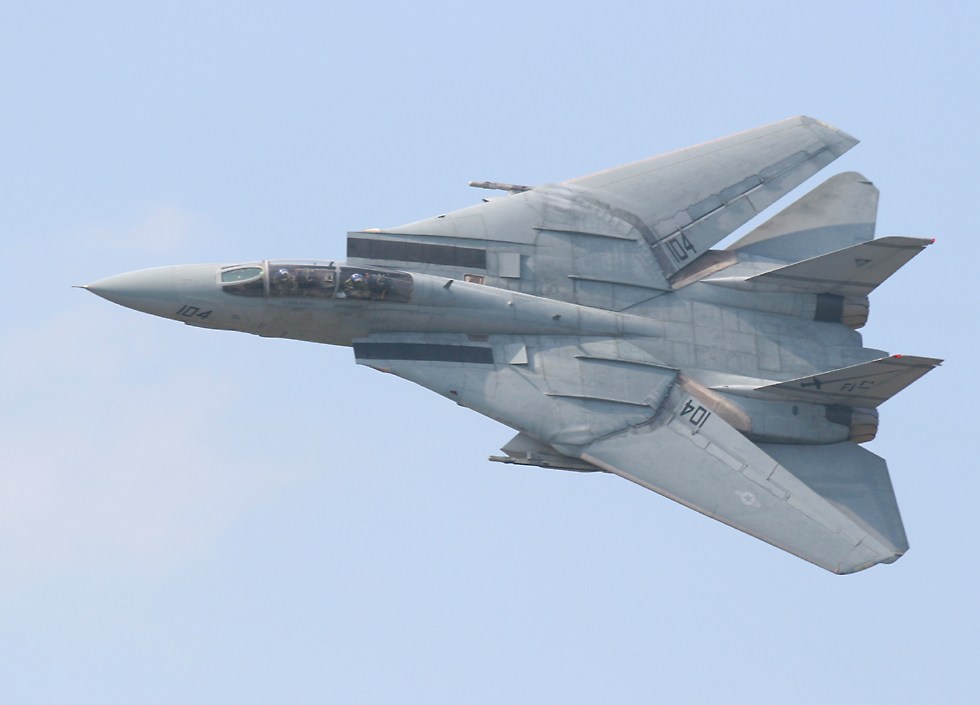
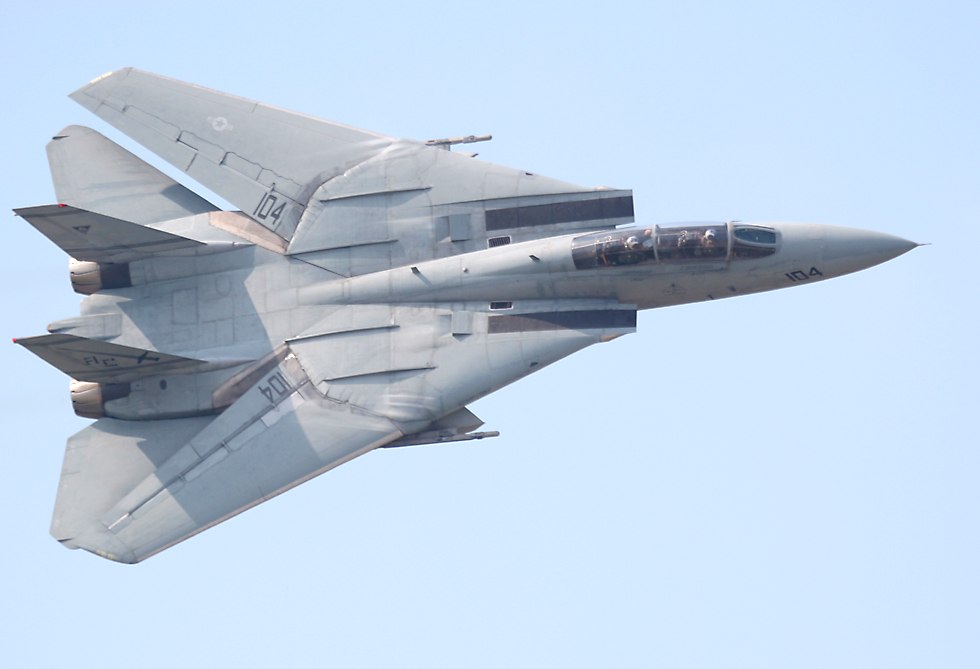
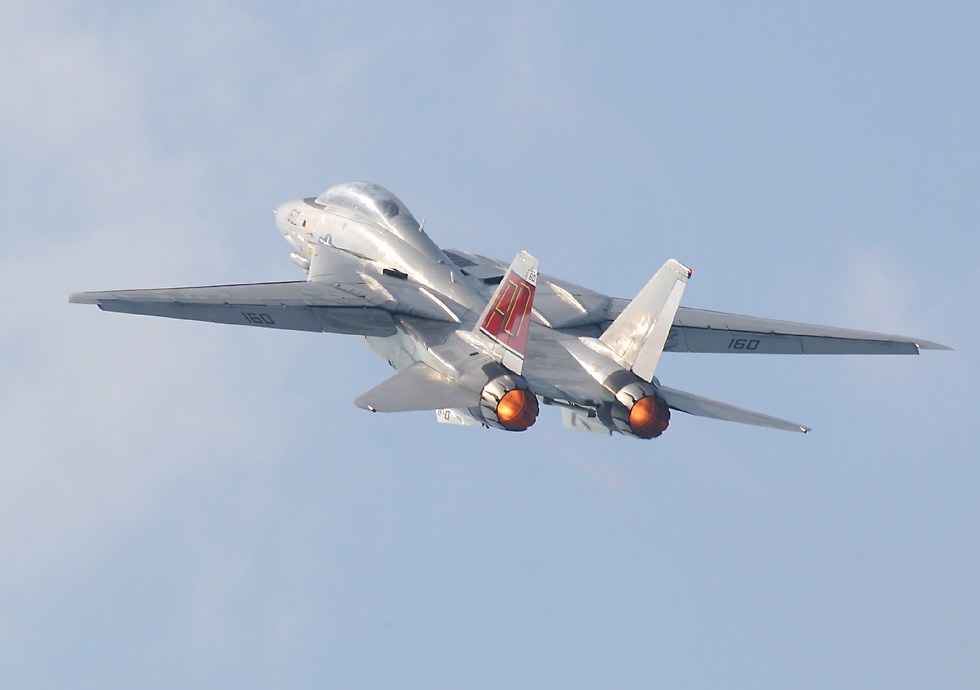
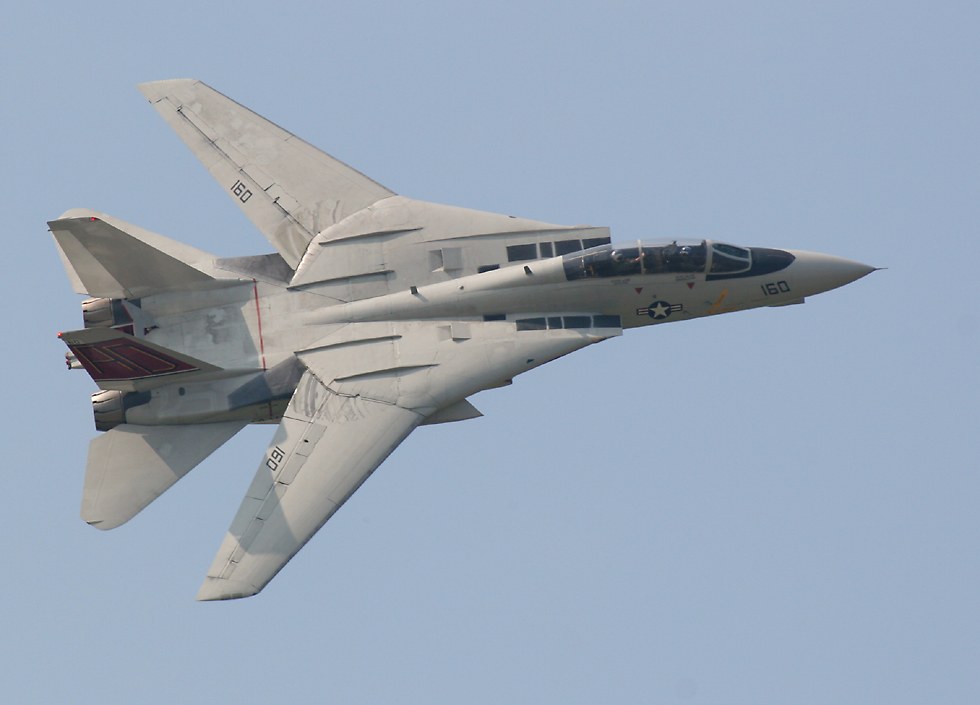
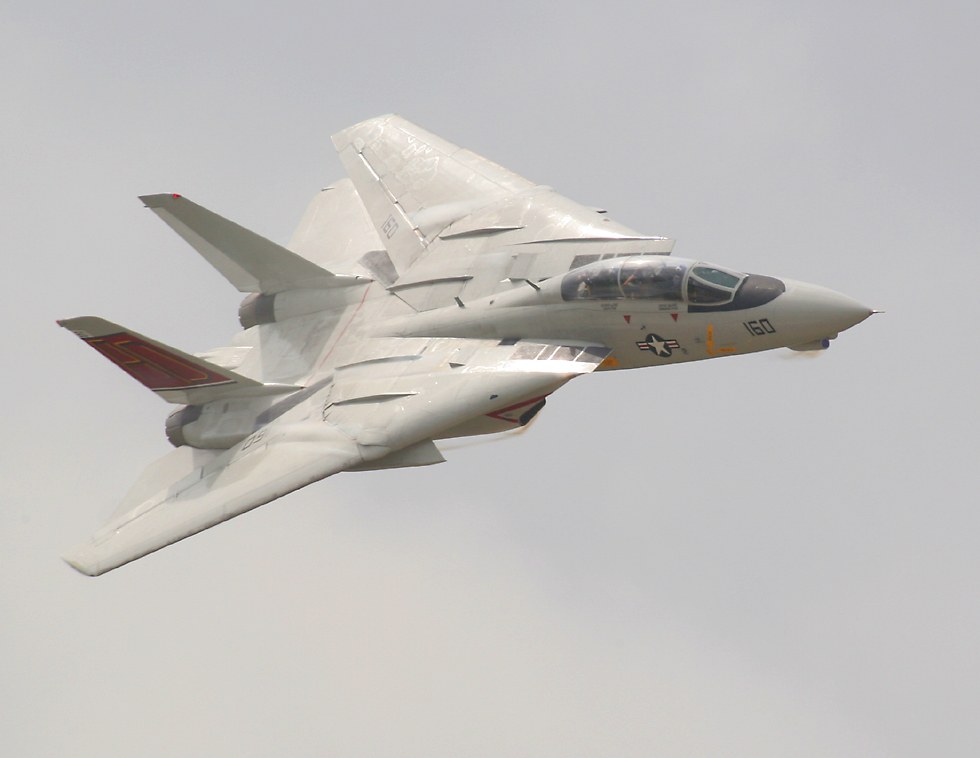
The swing wings adjust automatically based on aircraft speed and the types of maneuvers that are being done. They can be moved from just 20 degrees sweep when taking off and landing through to 68 degrees for high speed flight, and to allow aircraft to be packed together more closely on a carrier, the wings can be moved into a 75 degree "oversweep" position. |
 |
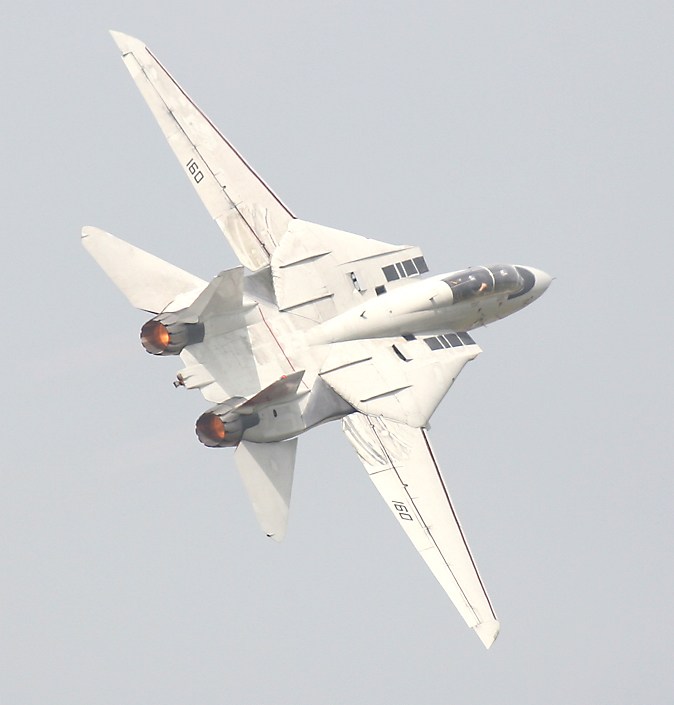
The Imperial Iranian air force ordered 80 F-14A Tomcats, 79 of which were delivered before the Islamic revolution which overthrew the Shah. It's believed that some of these Iranian Tomcats are still flying with Russian help - the Russians certainly would have been interested to strip one down to see what makes it tick. The Iranian F-14s saw more military action than the American ones, shooting down numerous MiGs and other Soviet designed aircraft during the Iran-Iraq wars. Several Tomcat pilots apparently even became aces by shooting down five or more aircraft, but the Iraqis also shot down several F-14s. |
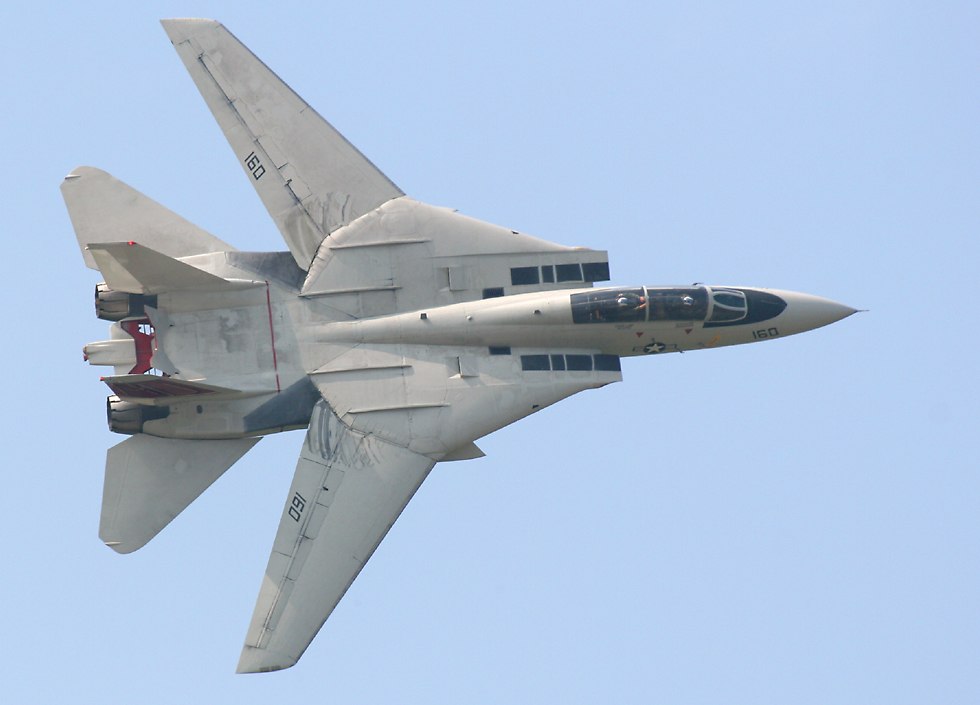
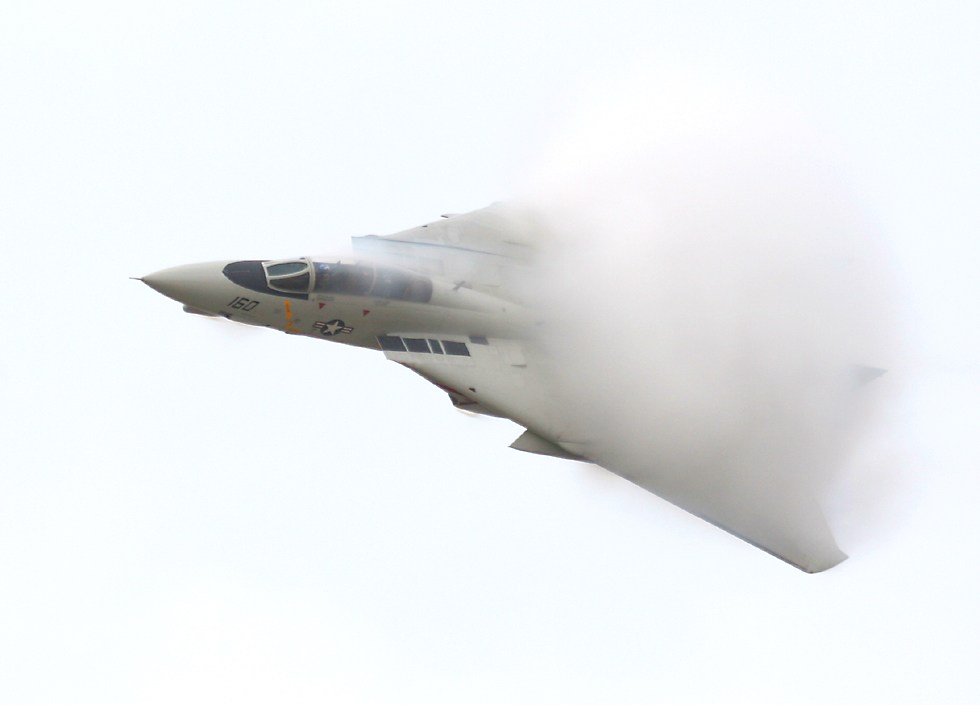
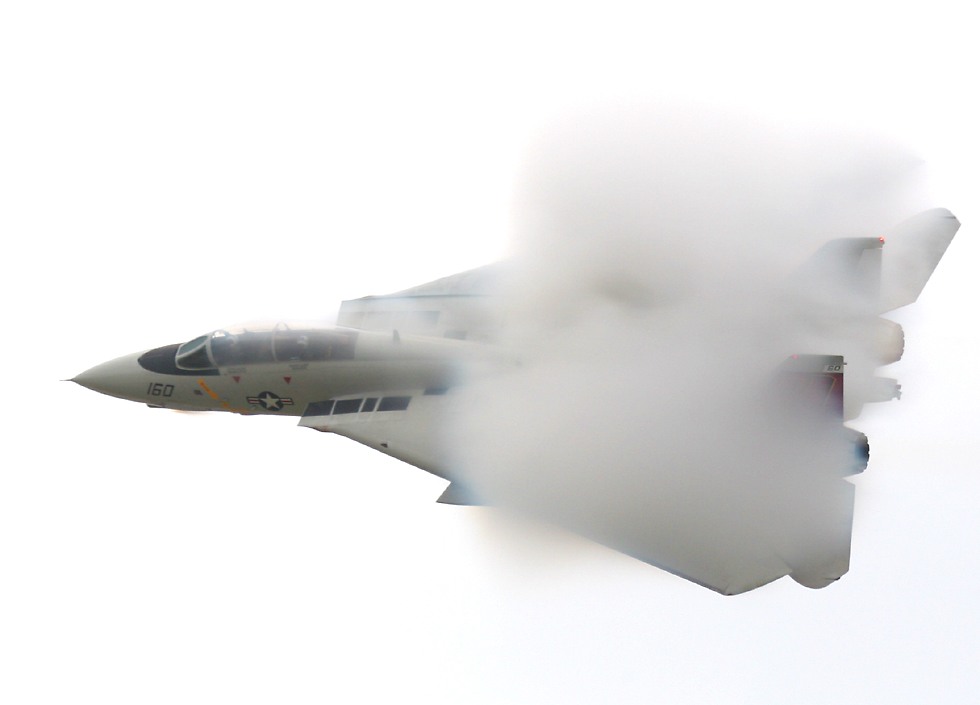
| Wings swept back, the Tomcat comes through for a high speed pass. |
 |
|
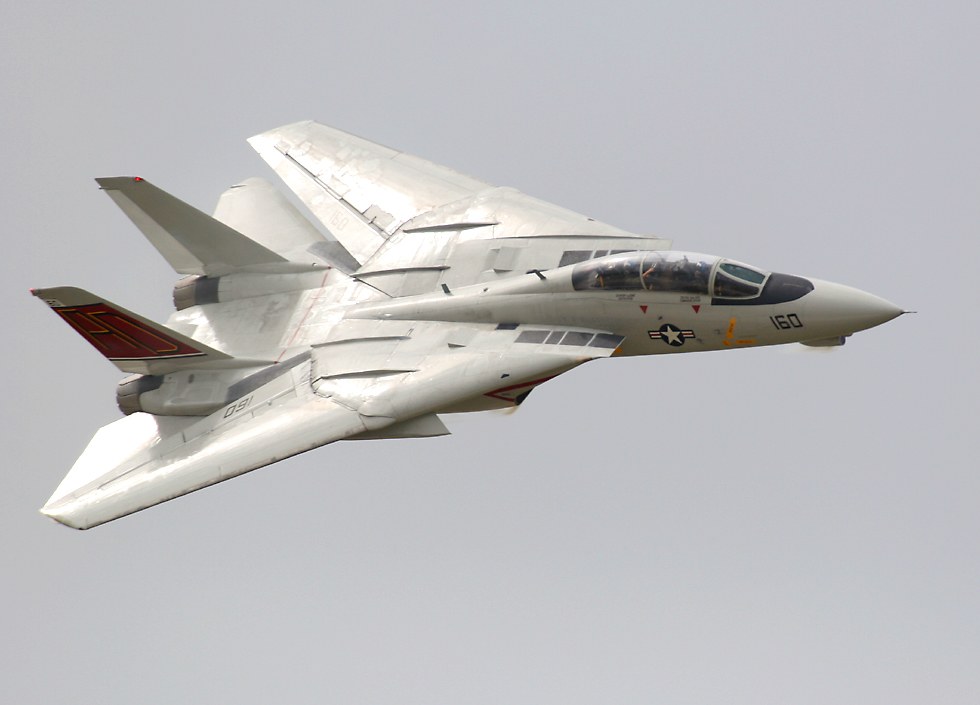
Here you can see small amounts of vapor condensing behind the engine inlets, wing surfaces and the chin pod, which amongst other things contains a television camera set (TCS) which allows the crew to visually identify aircraft at long range. |
 |
|
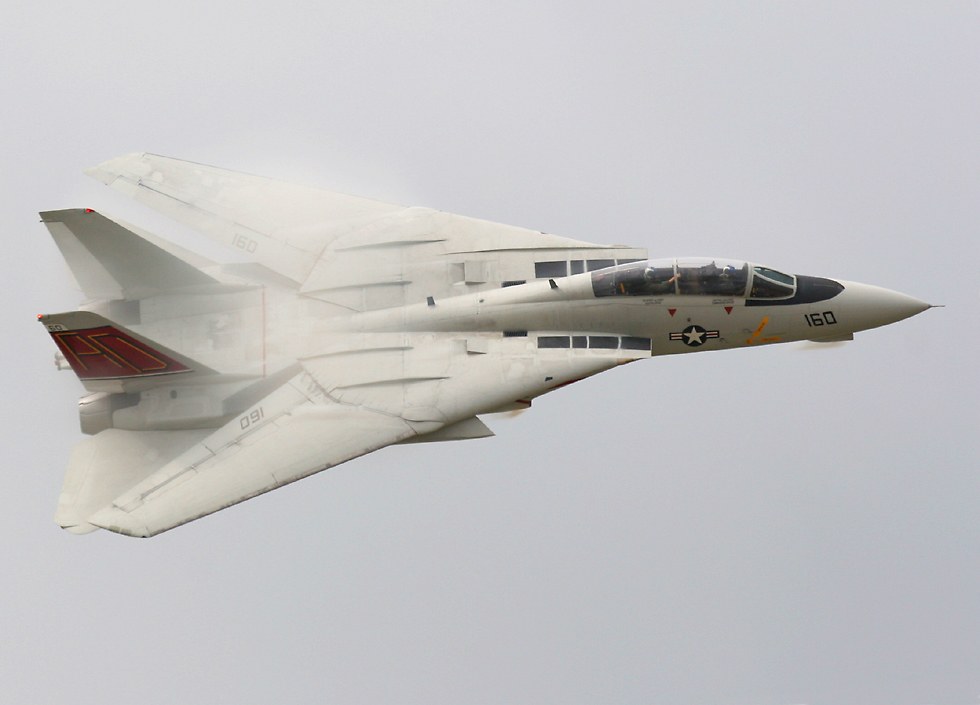
The radar system housed in the nose is a major part of the Tomcat's capability, allowing it to simultaneously track 24 targets and attack six at once using Phoenix missiles. The original radar fitted to the F-14A had a range of 200 kilometers, but the F-14D can track targets at about twice that distance. In both cases the radar has a very powerful transmitter, however this gives enemy aircraft the ability to detect the Tomcat at a great distance, and during operation Desert Storm Iraqi MiGs sometimes chose to get out of the area before they could be fired at. |
 |
|
Although the first official demonstration of the weapons system resulted in the destruction of 5 out of 6 targets simultaneously engaged, in practice the results weren't always as good - one Iraqi MiG escaped after a Tomcat tried to destroy it by first firing a Sidewinder, then a Sparrow and finally a Phoenix. There were successes, in total American F-14s shot down 5 enemy aircraft, two Libyan Su-22 "Fitters" in 1981, two Libyan MiG-23 "Floggers" in 1989, and an Iraqi Mi-8 "Hip" helicopter in 1991. During operation Desert Storm one Tomcat was destroyed by a surface to air missile, but both crewmen survived. |
 |
|
When the F-14 was initially developed the navy already had effective ground attack aircraft like the A-6 Intruder and A-7 Corsair II, so the Tomcat was dedicated to pure air defense operations. However, with the retiring of the A-6 and A-7, the Tomcat's strike role was resurrected, resulting in what became colloquially known as the "Bombcat". A strike equipped F-14 can deliver laser-guided bombs designated by an F-18 Hornet or by the Tomcat's own LANTIRN forward-looking infrared pod with laser designator. The Bombcat can carry 13,000 pounds (six tonnes) of ordnance, making it very useful in this role. |
 |
|
So ended the second "last" official Tomcat display, the first one having been held a year earlier at the 2005 Nellis AFB airshow near Las Vegas. At the time of writing in November of 2005, it's just been announced that the final, final curtain call of the Tomcat will occur at the same time as the 2006 airshow. It's going to be a long and painful goodbye! |
 |