Highlights of the 2005 Selfridge ANGB Airshow
|
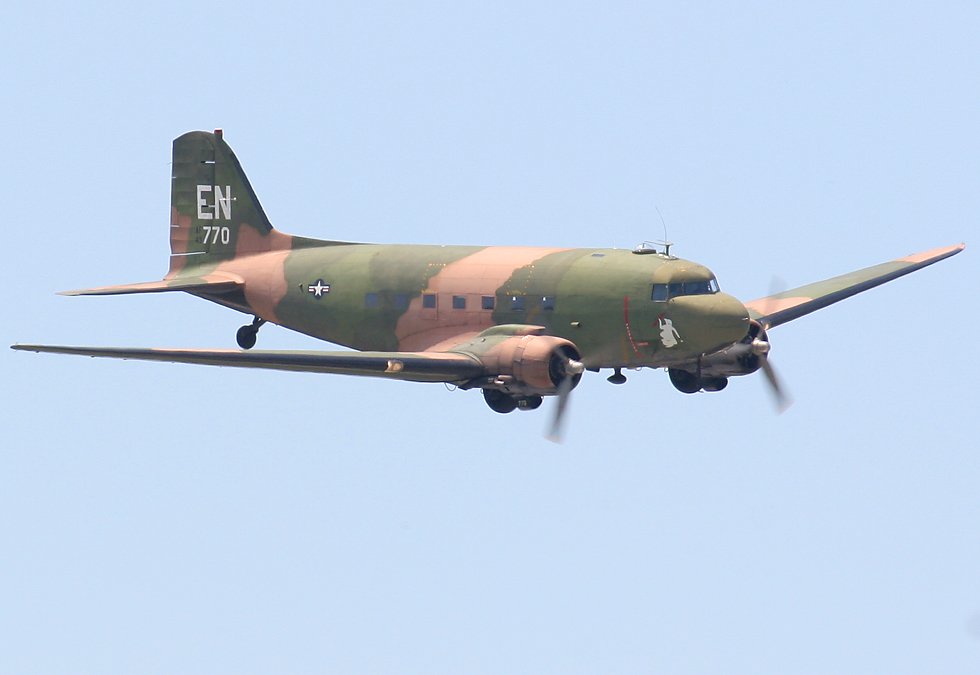
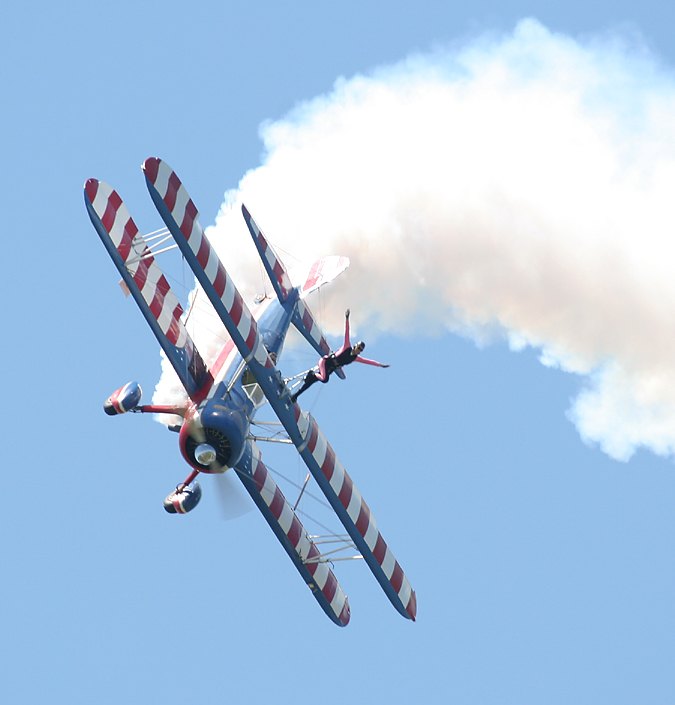
Although I lived in Chicago for four years, I never made the trip across to Detroit for the biannual airshow at the Selfridge Air National Guard Base. However, the 2005 airshow with the theme "salute to the veterans of Vietnam" had such a great collection of aircraft that I not only made the trip from where I was living in California, but I even missed the excellent Chino airshow which happened to be on the same weekend. This AC-47 "Spooky" gunship was one of the Vietnam war era aircraft at the Selfridge show. The Spooky was a derivative of the DC-3 airliner and the C-47 Dakota world war two transport plane, armed with an awesome amount of firepower in the form of multiple gatling guns and even cannons fired out of the left-hand side of the aircraft as it circled above its target. This particular aircraft, which I saw once before at the Oshkosh airshow, doesn't have any armament on display, so you're not missing out on too much from this view of the right-hand side. |
 |

|
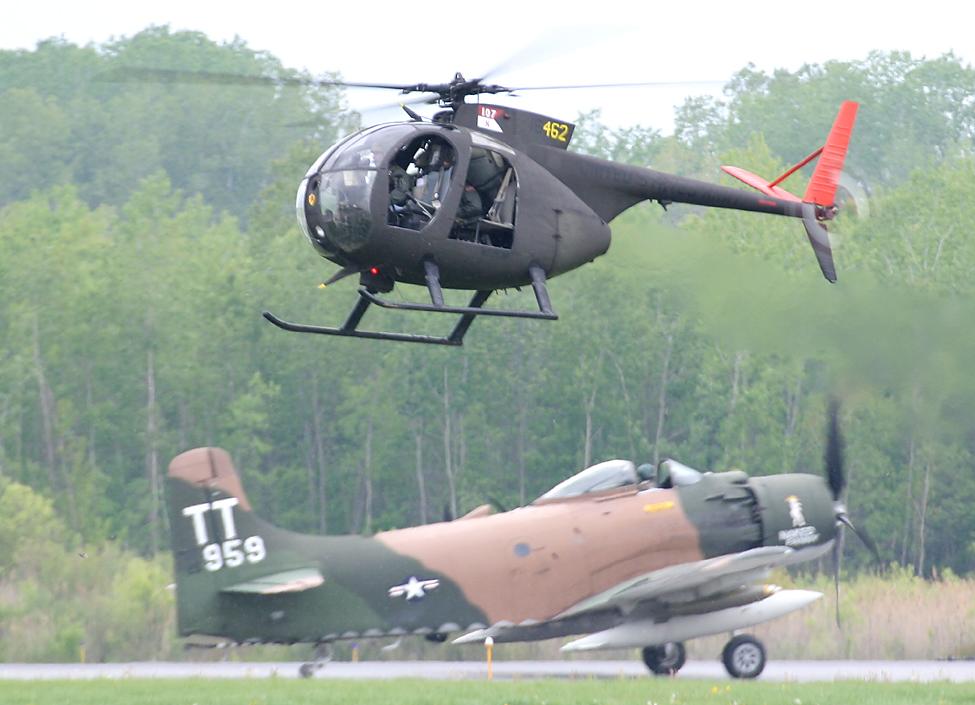
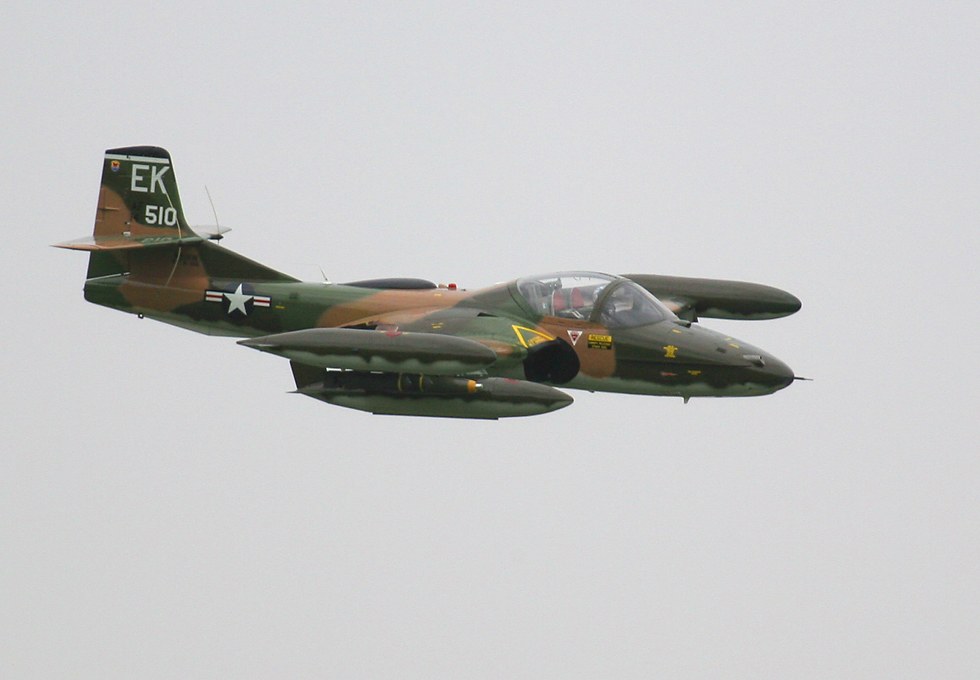
The final member of the rescue team was this Cessna A-37 Dragonfly, complete with a very nice collection of underwing armament. The A-37 was a development of the T-37 "Tweet" jet trainer which explains why the A-37 earned the nickname "Tweet with teeth". As well as the bombload the Dragonfly also had a gatling gun which you can see near the front of the nose. Again this isn't an aircraft which is often seen at airshows, though I do have grainy photos of one at the Warbirds over Wanaka airshow in New Zealand. Unfortunately at Selfridge the Dragonfly flew at quite a distance from the crowd, though it did come in very slightly closer on Sunday, when I took this photo. As you can see the weather on Sunday was a far cry from the bright blue skies and pleasant temperatures of Saturday, in fact at about 2PM it started raining and it steadily got heavier, though by that time I'd already left to catch my flight back to California. A number of Skyraiders and Dragonflies were captured by the communists at the end of the Vietnam war, incorporated into their air force and used against counter-insurgents and even other communist forces such as the Khmer Rouge in Cambodia. You can see some of these captured aircraft in communist colors at the Vietnamese Air Force museum in Hanoi. |
 |

|
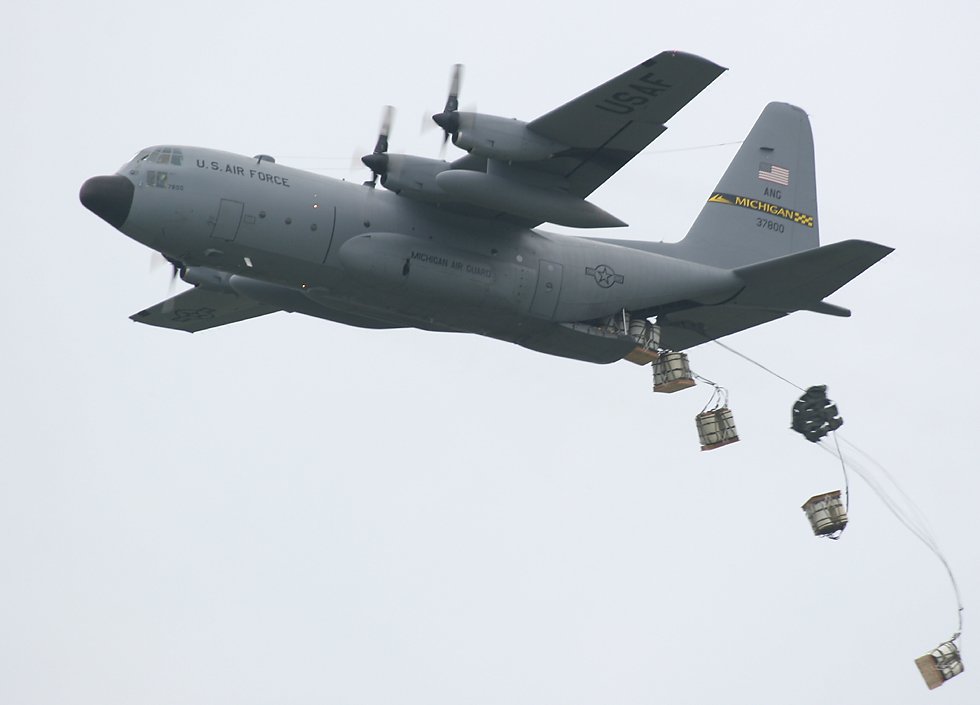
A pair of Selfridge C-130 Hercules transports also did a display, including this cargo drop. They did this both days, but as you can see this photo is from a greyed-out Sunday. |
 |
|
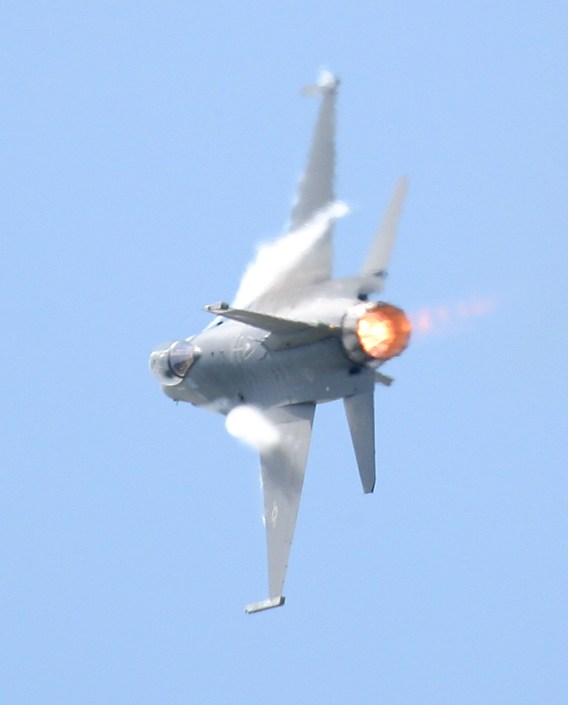
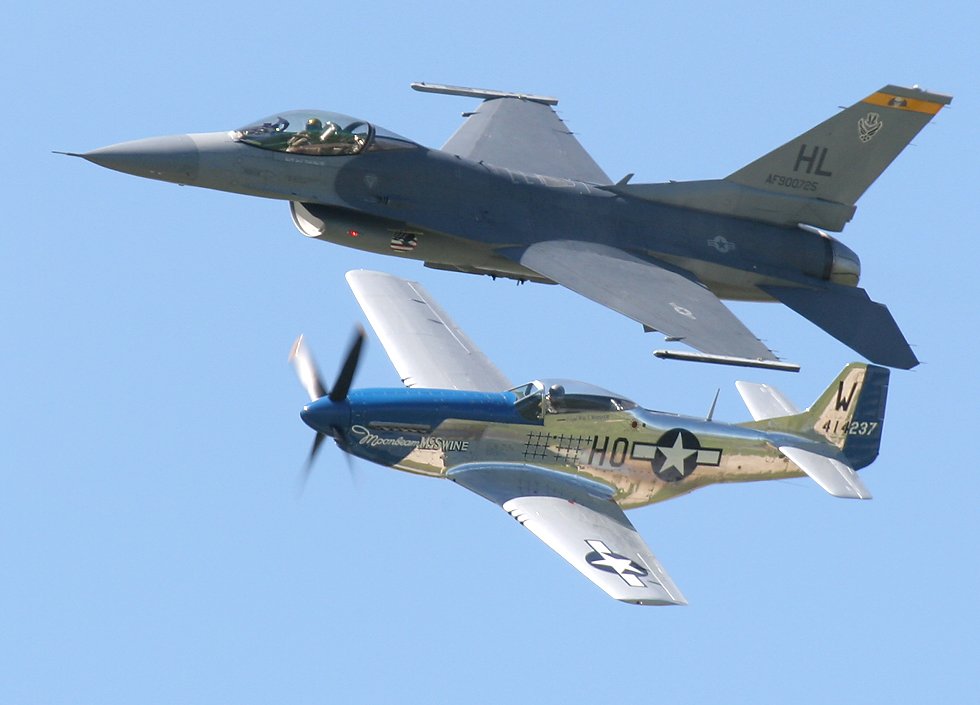
The performances by the local military aviators was complemented with some outside aircraft. The incredibly interesting B-2 Spirit "stealth bomber" made the usual totally uninteresting flat passes on Saturday, but a much more animated display was put on by this West Coast demonstration team F-16 Fighting Falcon. Here you can see it turning' and burnin' during the maximum effort minimum radius afterburner turn, during which the pilot experiences around 9Gs of force pushing him into the seat - meaning that he weighs 9 times as much as usual. The pilot's seat on the F-16 reclines about 30 degrees, which makes it considerably easier to handle these forces. |
 |
|
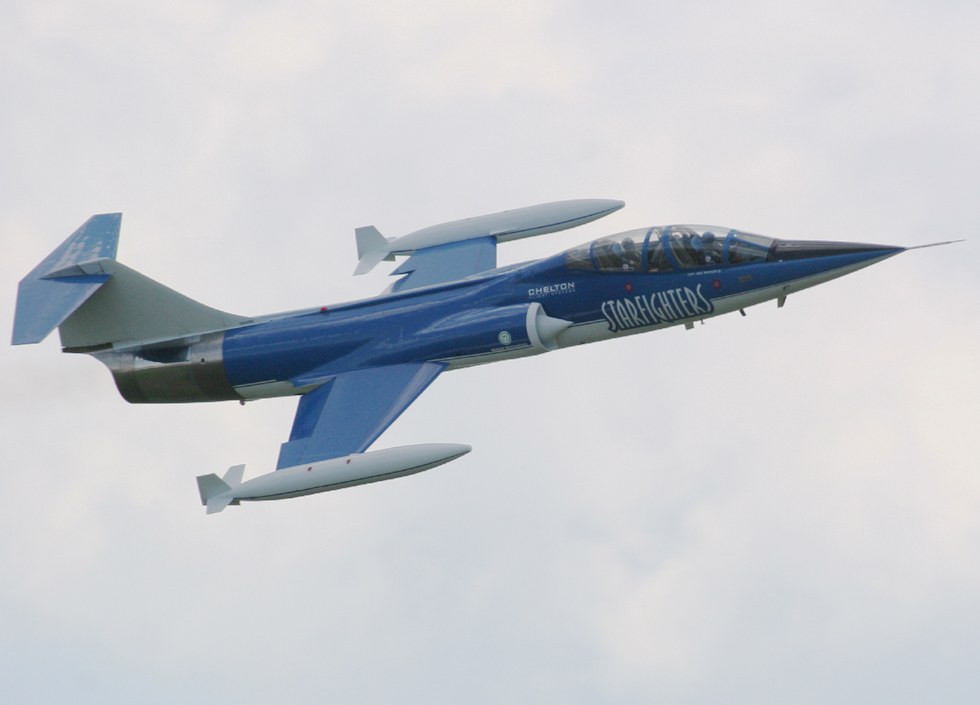
An F-100 Super Sabre was also on the list to fly, and this was one of the aircraft which first attracted me to this show. The Super Sabre was the first operational American military aircraft to exceed the speed of sound in level flight and was used extensively during the Vietnam war. I was amazed to hear that any of them are still flying, but a few weeks before the show it was removed from the list and so it didn't make an appearance. However, this F-104 Starfighter did fly, though by the time it got in the air on Sunday it was already raining - this photograph is from Saturday. I'd already seen this aircraft fly a few years ago at Indianapolis, and I managed to get a poor quality photo of it in a very tight formation with a single seater, but at Selfridge it put on a solo display. The Starfighter was designed as a high-speed point defense interceptor rather than a dogfighter, so the display consisted of fast, wide radius sweeping passes and banking turns rather than slower more aerobatic maneuvers. It was a great thing to see, and it's amazing to think that there are several of these in private hands going around the airshow circuit and preserving such an interesting piece of history. The Starfighter chews up quite a bit of fuel and its high landing speed makes it a bit tricky to handle - the German air force lost about 200 of them in accidents. The Starfighter saw service in Vietnam, but as I mentioned it was really designed for high-speed, high-altitude interception of bombers approaching specific targets, so its range and ability to carry ordnance were rather limited, and meant that it was not the ideal aircraft for that conflict. |
|
|
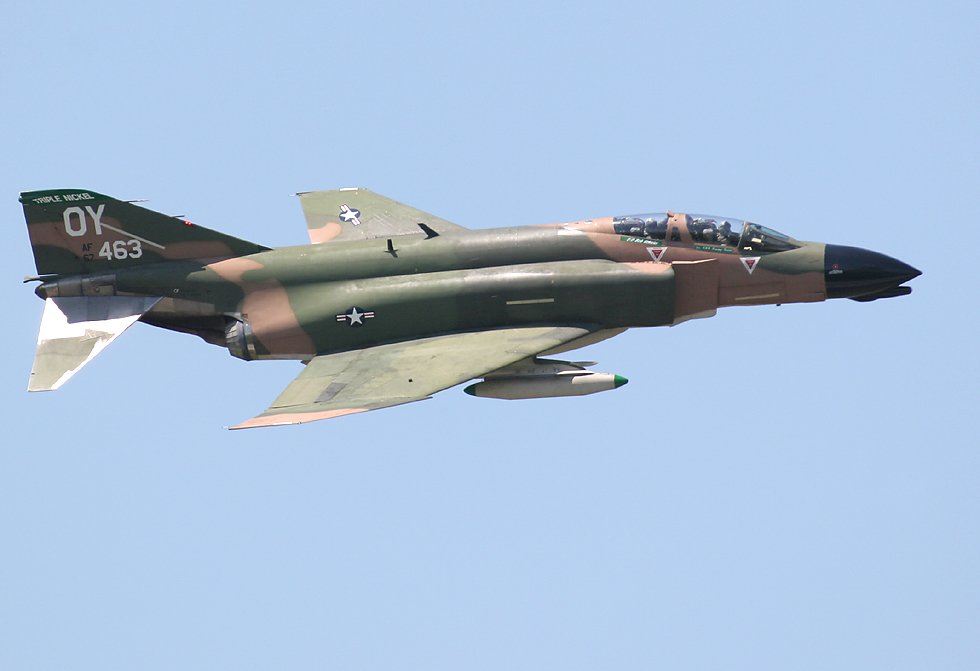
This F-4D Phantom II is another high-performance American military aircraft which is in private hands, in this case the Collings Foundation based in Texas. They were also hoping to bring a two seat TA-4 Skyhawk to the show, but in the end it wasn't able to make it because the FAA hadn't yet approved its maintenance program. The Skyhawk is one of the classic aircraft of the Vietnam war, operating as ground attack aircraft from navy carriers, however it's the Phantom which will forever be remembered as the premier American fixed wing aircraft of the war. The Phantom is virtually alone in performing equally adeptly with the air force and the navy, and was also capable both in the ground attack and pure fighter roles. It was very fast, very maneuverable and could carry a heavy load of missiles and bombs. The Phantom remained in service in the US armed services until the first Gulf War where it operated in the "wild weasel" electronic counter measures role, and it's still in use by the German and Turkish air forces. You can see a whole page of air-to-air photos of the Collings Foundation F-4D Phantom II that I took later in the year. |
 |
|
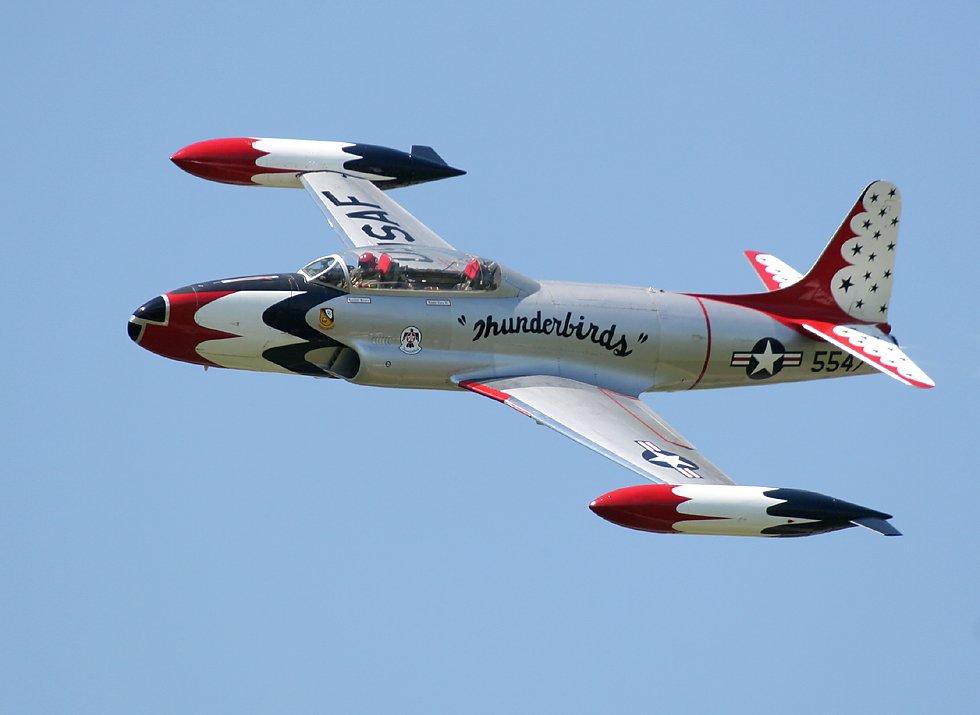
The F-104 and the F-4 were well worth seeing, but this T-33 Shooting Star in a US Air Force "Thunderbirds" jet display team color scheme turned out to be one of the highlights of the show for me, partly because I wasn't aware that it was going to be here, partly because it's such a great looking color scheme and partly because the owner and pilot, Fowler Carey, came in close and banked the jet around in several very nicely executed photo passes and barrel rolls. In spite of the large numbers which were produced, Shooting Stars aren't often seen at airshows - the only other time I've seen one flying was at the 2004 Kern County airshow in California, and that one didn't do a display. However there were actually two T-33s in the air at this year's Selfridge show - Fowler Carey flew both days and what looked like an Illinois air national guard aircraft with a "Flying Illini" patch took off on Sunday after having been on static display on Saturday, probably heading off early to avoid the coming bad weather. |
|