
First Flight of SpaceShipOne into Space
|
These two aircraft are really like no other planes you're ever likely to see, unless of course it's something else that Rutan has cooked up! |
 |
|
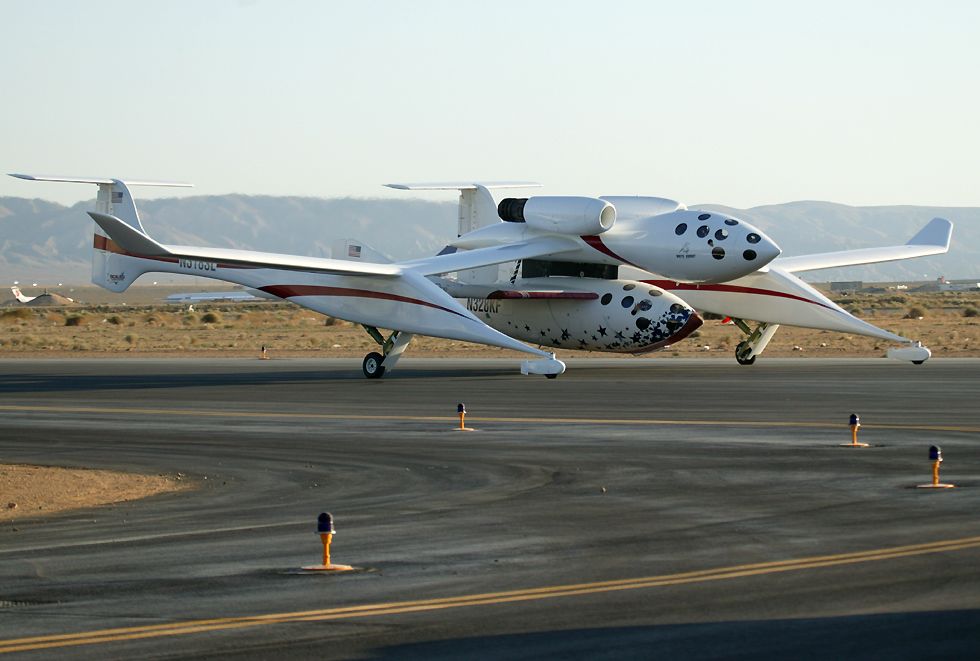
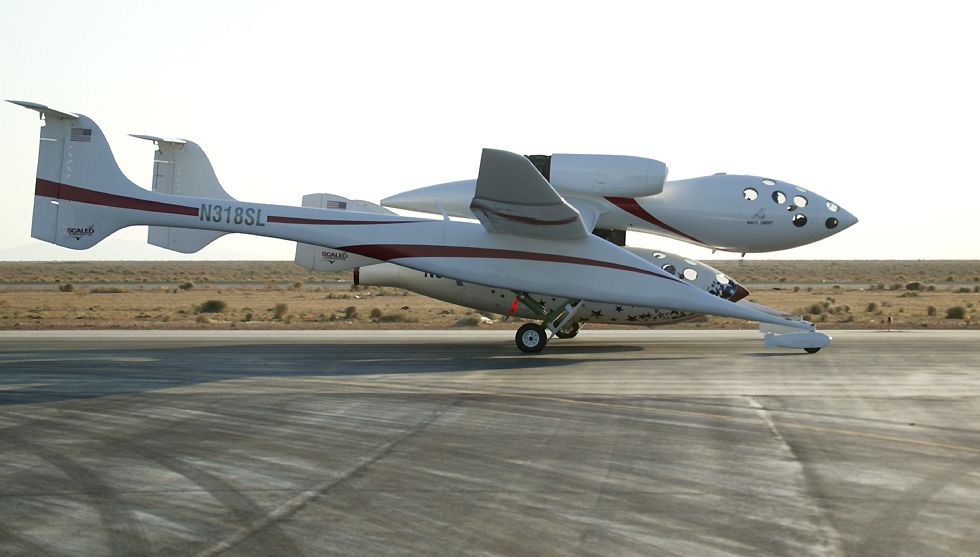
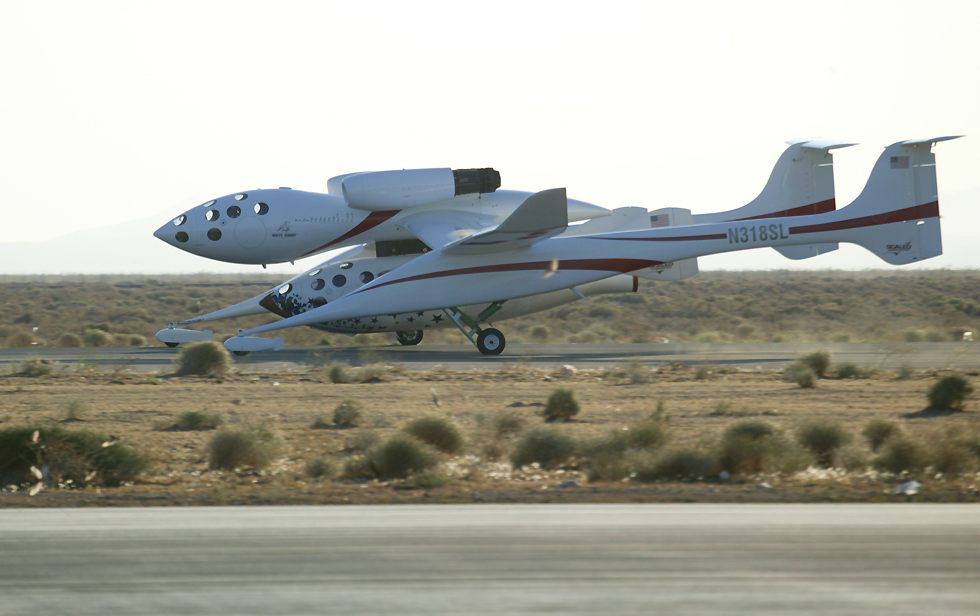
But back to the main event - here's White Knight and StarShipOne on their takeoff run. |
 |
|
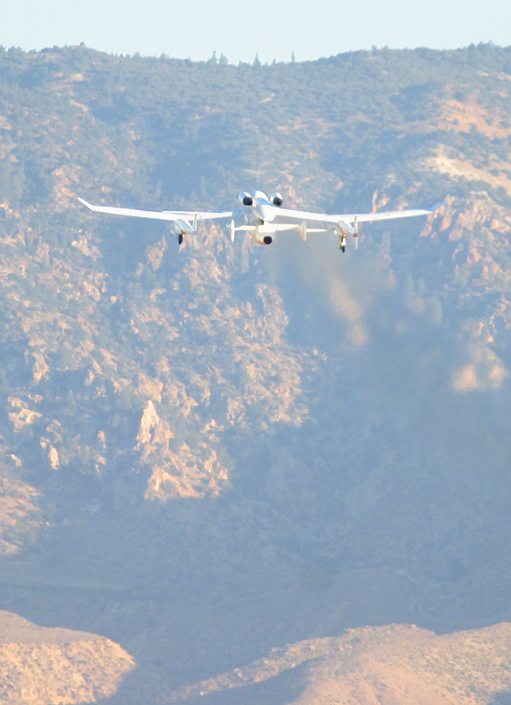
In this photo you can clearly see the twin tail booms of White Knight, and the twin tails of SpaceShipOne. |
|
|
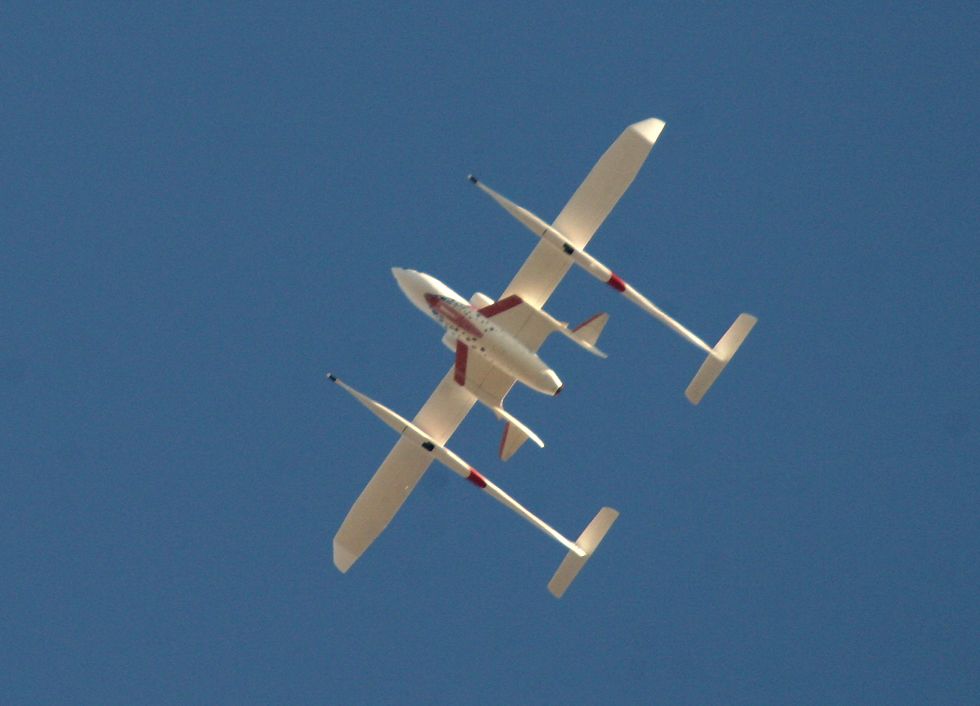
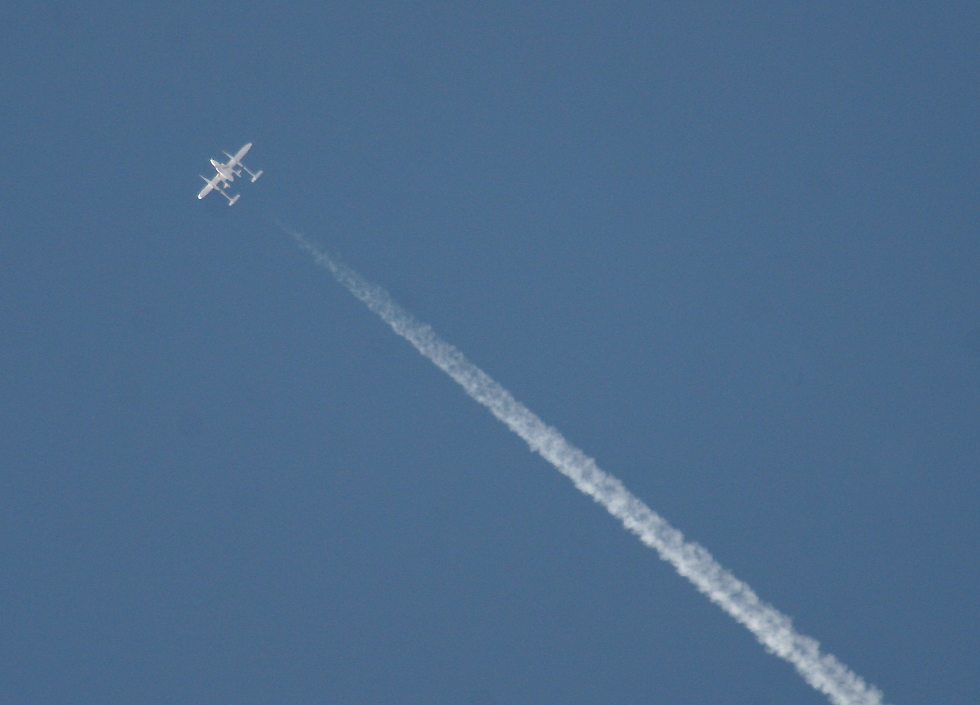
The White Knight drops SpaceShipOne when they reached an altitude of about 50,000 feet (15 kilometers), and it takes 30 or 40 minutes for them to reach this altitude. Along the way they levelled out for some time while they checked all of the onboard systems. |
 |
|
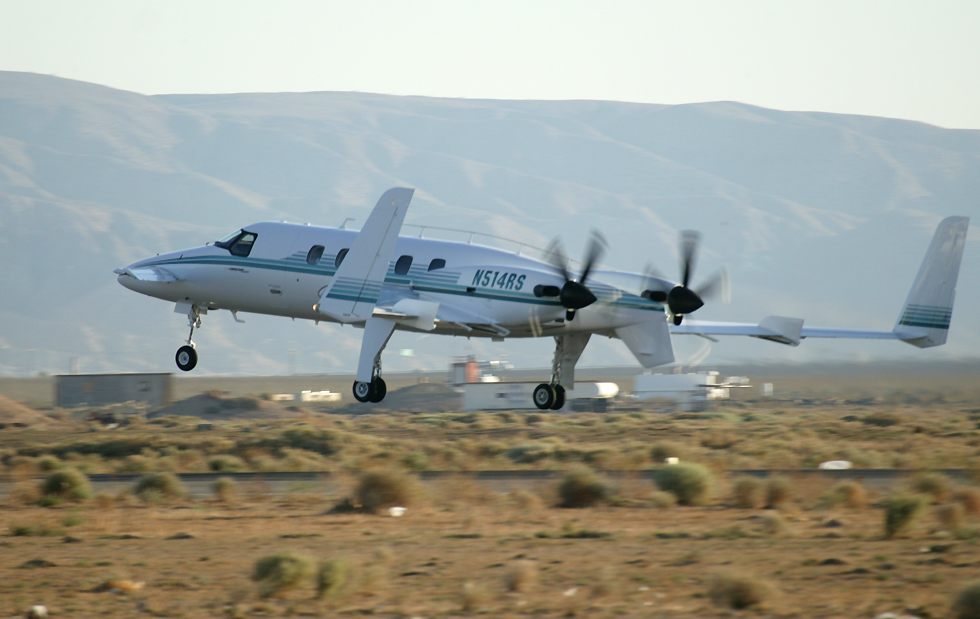
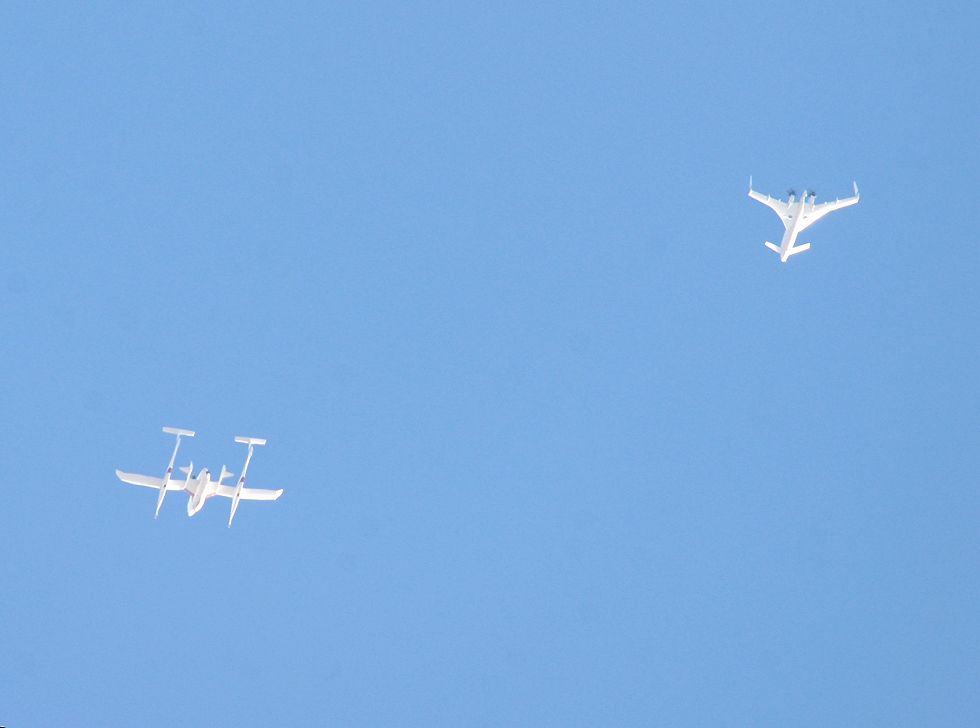
Here's the StarShip chase plane doing its thing as they continue climbing. |
 |
|
As they spiralled higher above the desert, it became harder to even see where they were; eventually, though, they got high enough for contrails to start forming. Finally, around 7:50AM and 47,000 feet (14,250 meters) the White Knight released SpaceShipOne, which glided for about 10 seconds then lit its rocket engine. |
 |
 |
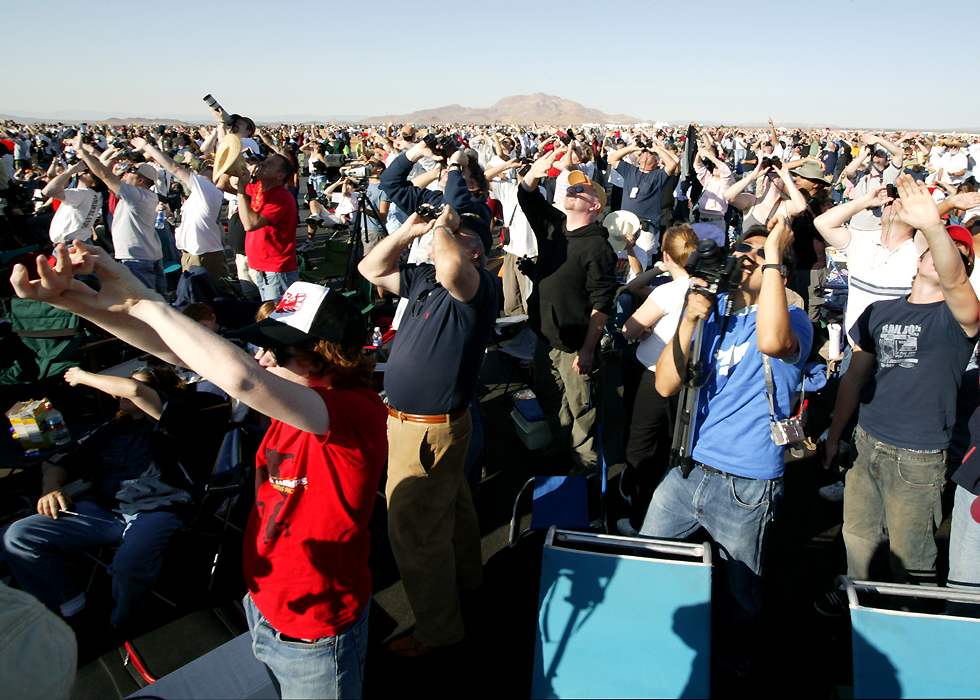
The Air Force were doing the official altitude measurements using their equipment at Edwards Air Force Base, some miles east of Mojave. This made it necessary for the launch to be made in that area, which caused a serious problem for the crowd who came to view the spectacle - at release time, the crowd had to look directly towards the sun, and the two aircraft were directly below the sun, which meant that they would pass in front of the sun and make viewing and photography impossible. |
|
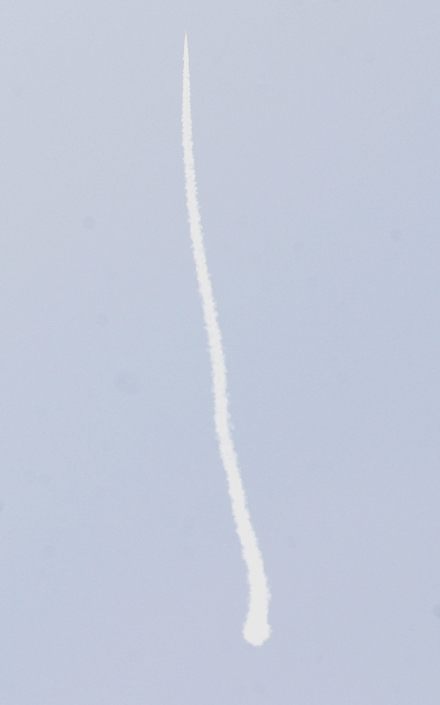
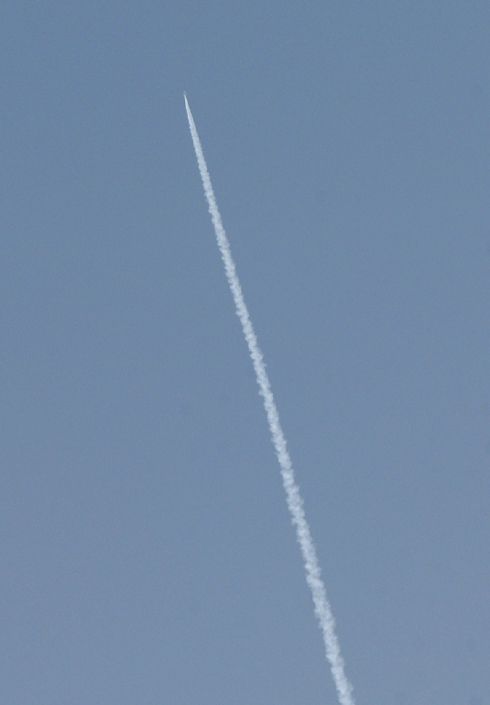
However, 100 kilometers is an awful long way up, so shortly into its 80-second burn, SpaceShipOne climbed above the angle of the sun into clear blue sky. We didn't realize it at the time, but there were a couple of serious malfunctions as the craft accelerated to more than Mach 2.9 (2150 mph or 3460 km/h). About 7 seconds after ignition, a 60 knot (70 mph or 110 km/h) wind shear caused an unintended 90 degree rotation, which the pilot corrected. Just 10 seconds after starting its climb it reached Mach 1, and the rocket continued burning for another 66 seconds before automatically shutting down. Late during this powered phase, one of the motors which control the trim adjustment malfunctioned and although Melvill quickly swapped to a backup system the ship wasn't quite at the right angle as it climbed. The combined anomalies put it 20 miles off course and ultimately cost about 30,000 feet of altitude. This very nearly resulted in the failure of the test to reach its initial goal of 100 kilometers, in fact SpaceShipOne ended up getting to an altitude of 100,124 meters - only one tenth of one percent above its target altitude, and quite a long way short of the intended altitude of 108,000 meters.. SpaceShipOne was at 180,000 feet when the last nitrous oxide oxidizer on board was applied to the 600 pounds of rubber-like fuel, but it continued coasting and eventually reached 328,491 feet. The pilot was weightless for three and a half minutes and used this time to float some M & M candies around the cabin, all in the name of Science, of course. There might have been problems, but the outcome could have been a whole lot worse than this; the pilot even said afterwards that he had contemplated aborting the flight and bailing out, a very risky procedure in itself. |
 |
|
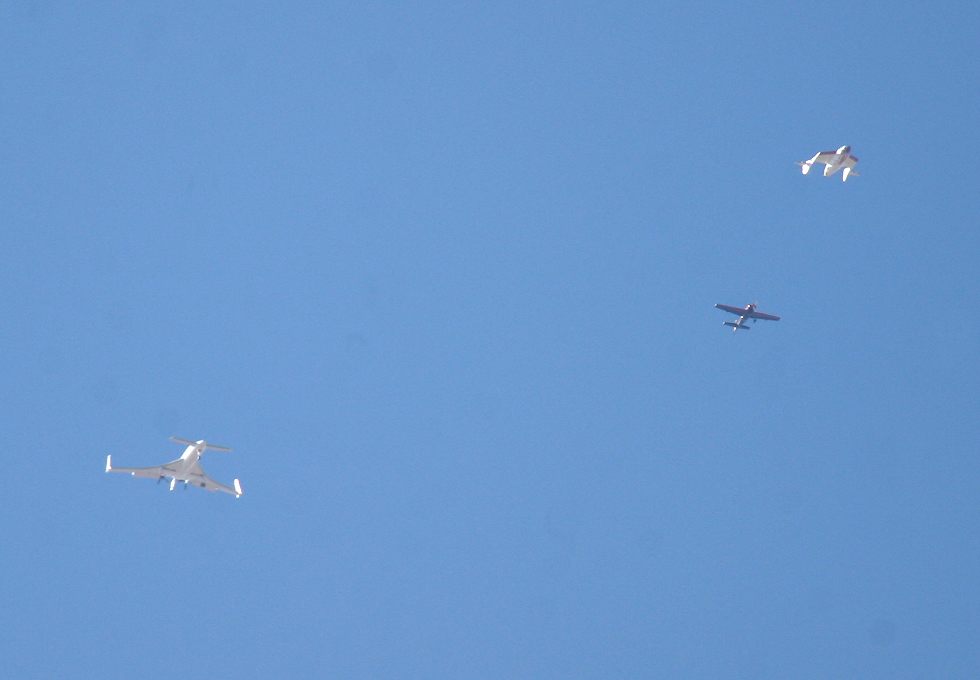
Live transmissions of radio communications between the ground controllers and SpaceShipOne were supposed to be broadcast throughout the flight, but in the end this didn't materialize, perhaps because of the problems on the way up, and everyone on the ground was left wondering what was happening. As the descent began there was another serious problem, a loud bang which the pilot Michael Melvill later said left him "pretty scared". The crowd heard a bang, too - in fact two bangs, which were the sonic booms caused as SpaceShipOne re-entered the atmosphere, eventually experiencing 5Gs of force and accelerating again to Mach 2.9. Then we started to see a tiny dot glinting in the sun high above us, and then coming lower with several chase planes around it to record the event. |
 |
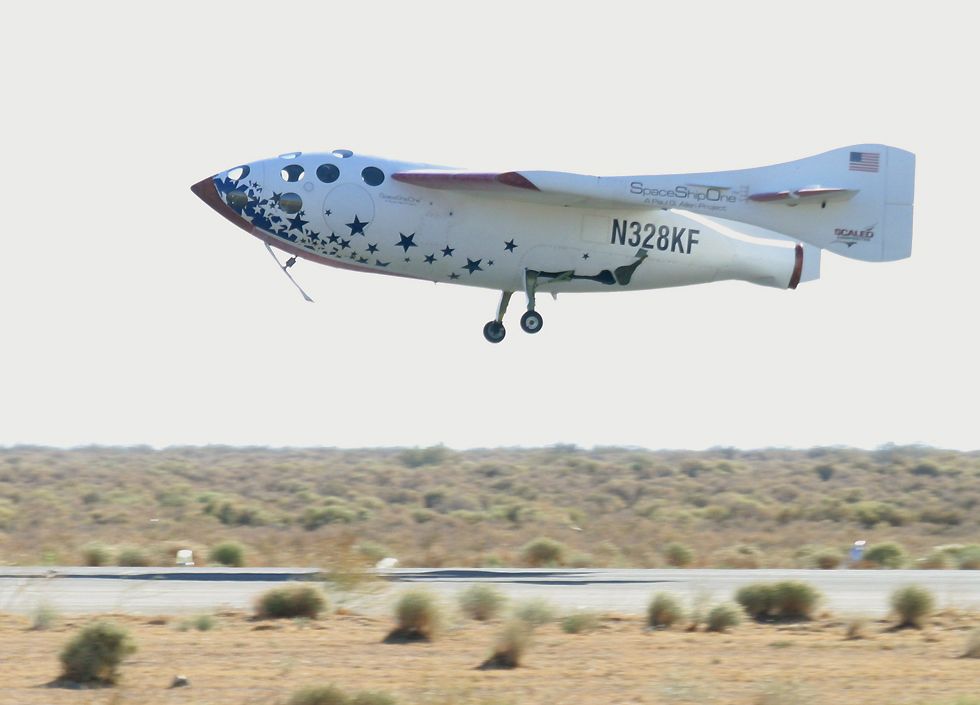
|
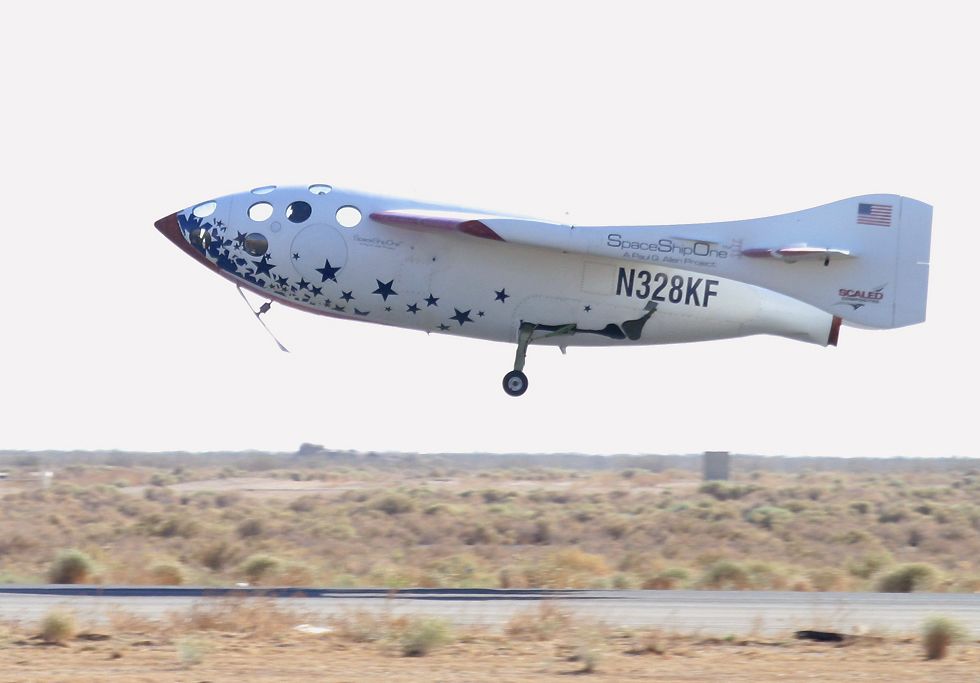
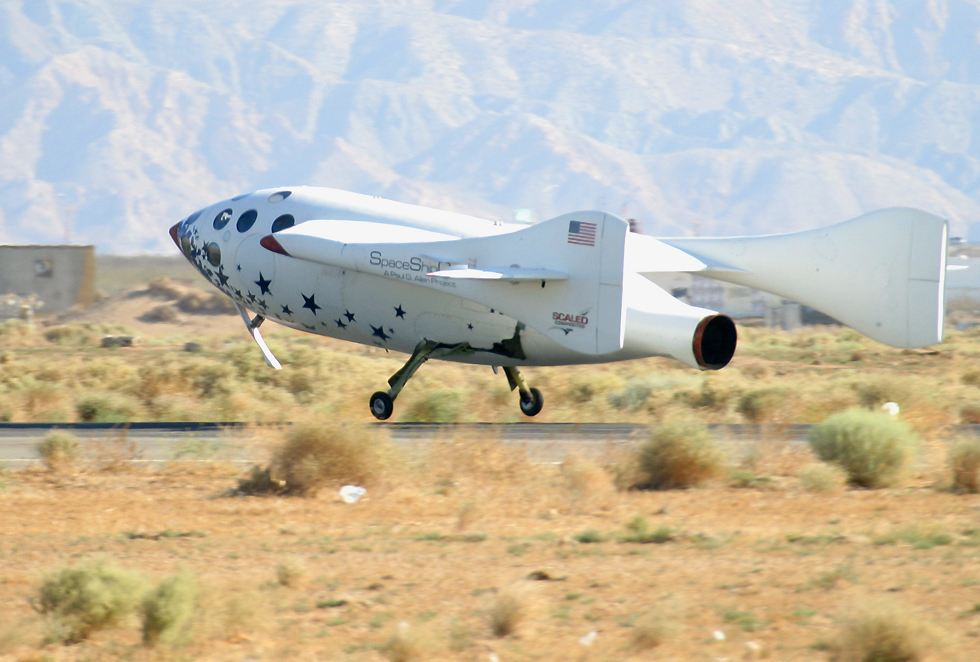
It's interesting to see that it doesn't have a front wheel, only a skid. This is done to conserve weight, which is also the reason why the rear wheels are so tiny. There's a very fine line between engineering this sort of thing so that it's "just good enough" rather than "not quite good enough"; on its first powered flight, the left landing gear collapsed during the landing and SpaceShipOne ended up veering off the runway into the dirt, though fortunately not much damage was done. If you look closely you can see the phrase "A Paul G Allen project" on the tail boom. Paul Allen is the co-founder with Bill Gates of Microsoft, and he's sunk over $20 million into this project. The initial goal is to win the $10 million "Ansari X Prize", which will be awarded to the first privately-funded group which launches a pilot and two passengers (or the equivalent in ballast) into space, and then repeats the feat within two weeks. In the longer term, though, Rutan and Allen hope to start a space tourism industry, which will pay its own way and perhaps lead to further private ventures in space. Having all of that money backing him up has allowed Rutan to do very thorough testing before he finally goes for the X Prize. For instance, today's flight into space is actually the fifteenth flight that SpaceShipOne has made, most of them as a glider, but others under its own power (it broke the speed of sound during its first powered flight, while climbing at a forty-five degree angle). There are many different companies vying for the X Prize and several of them are using Scaled Composites as a sub-contractor. I was lucky enough to see some other early experimentation with rocket propulsion when Burt's brother Dick flew a rocket powered Long-EZ kitset aircraft designed by Burt at the Oshkosh airshow in 2002. |
 |
|
SpaceShipOne's large tails pivot out during the descent from the top of its flight, in order to produce drag and so angle the craft correctly for re-entry. At the top of its trajectory there isn't enough atmosphere to use normal aircraft flight surfaces to control the attitude of the craft, so cold gas jets are used to push it one way or the other. |
 |
|
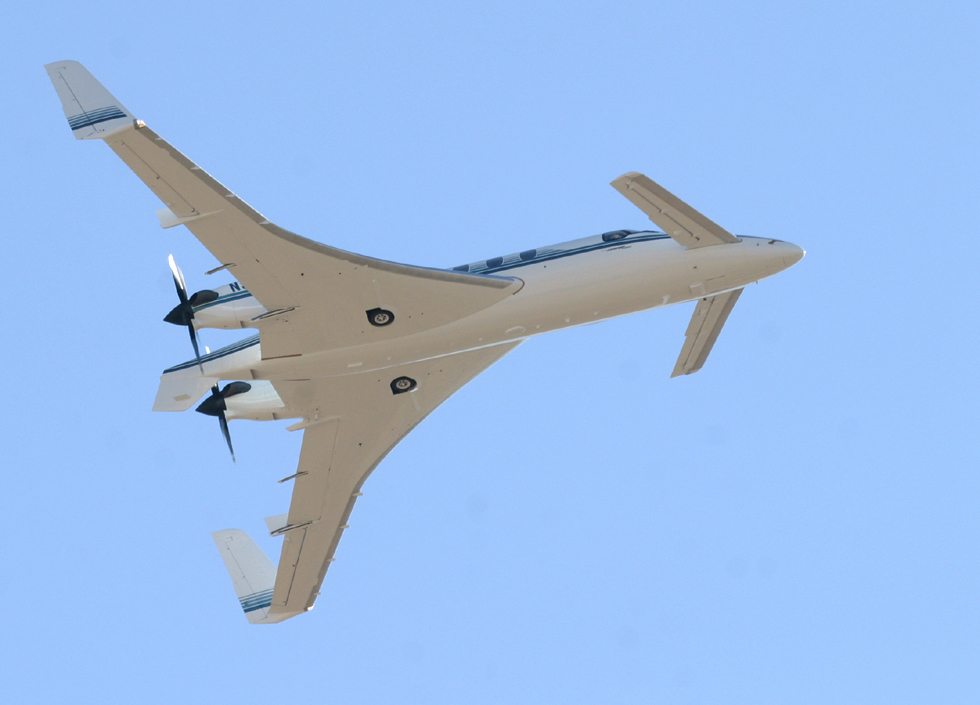
A well-deserved victory pass by the StarShip chase plane; from this angle you can see how truly unusual it is. |
|
|
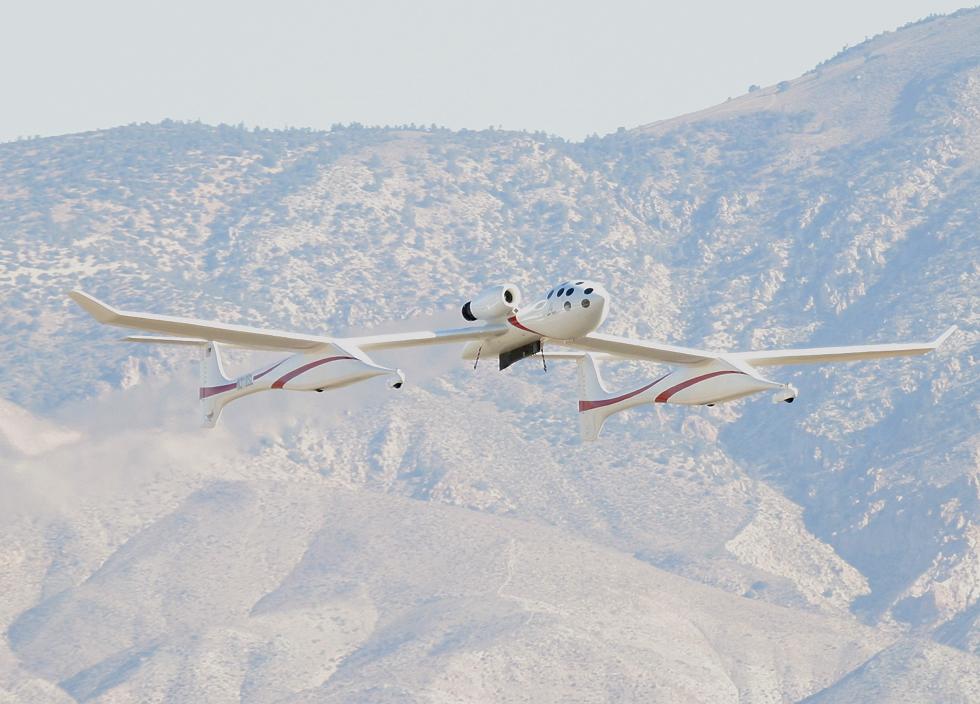
Not to be outdone, the White Knight also does a victory pass. |
|
|
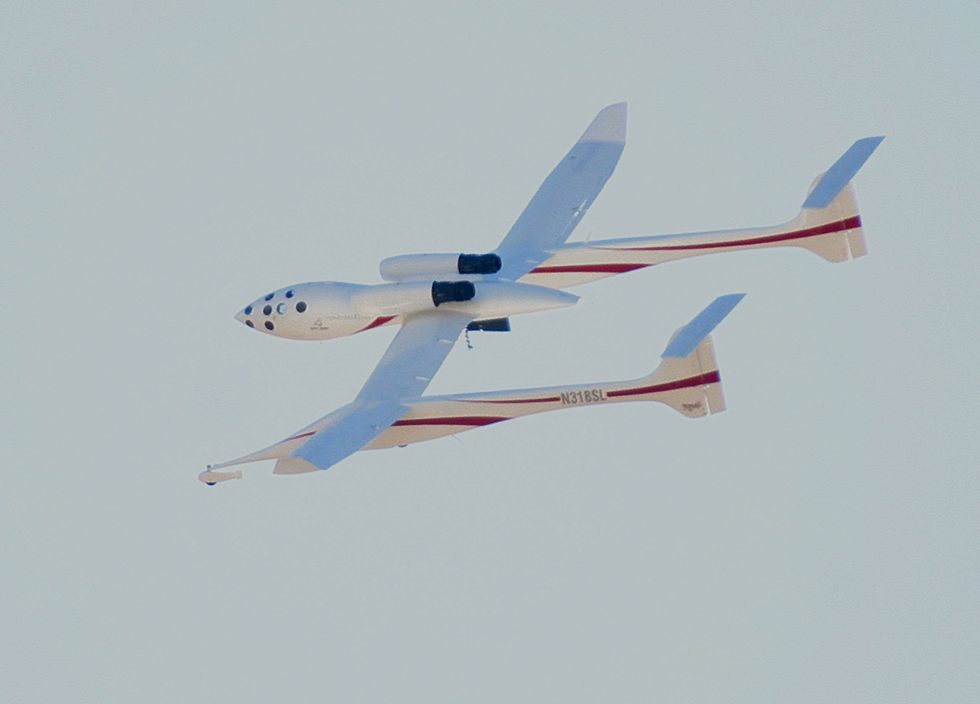
A truly remarkable aircraft! |
 |
|
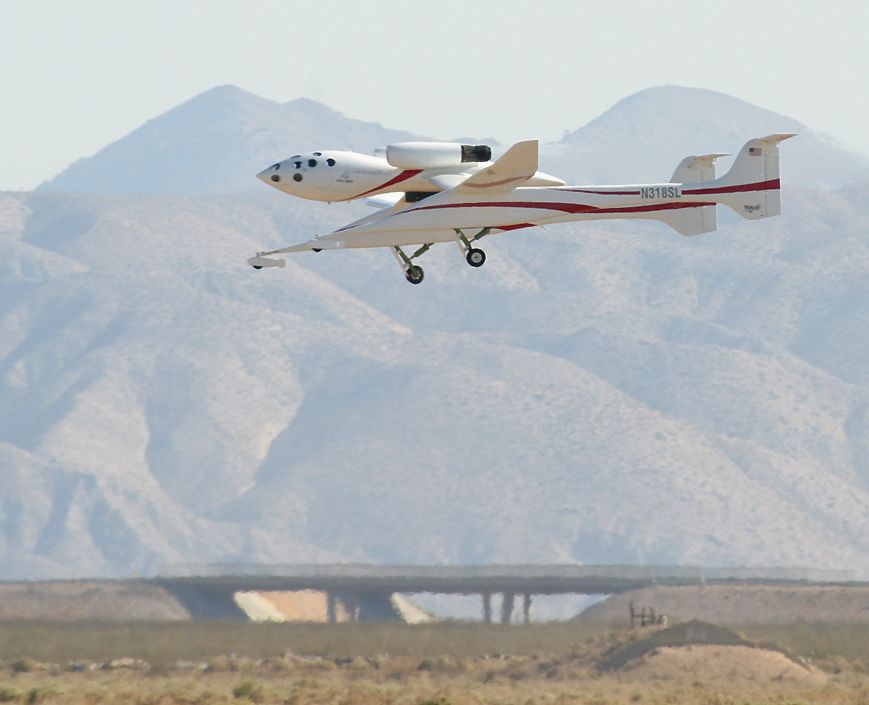
Coming in to land with that bizarre quadricycle landing gear and crazy portholes, which must give much less visibility than regular windshields. |
 |