| STS-117
Departure from Edwards Air Force Base |
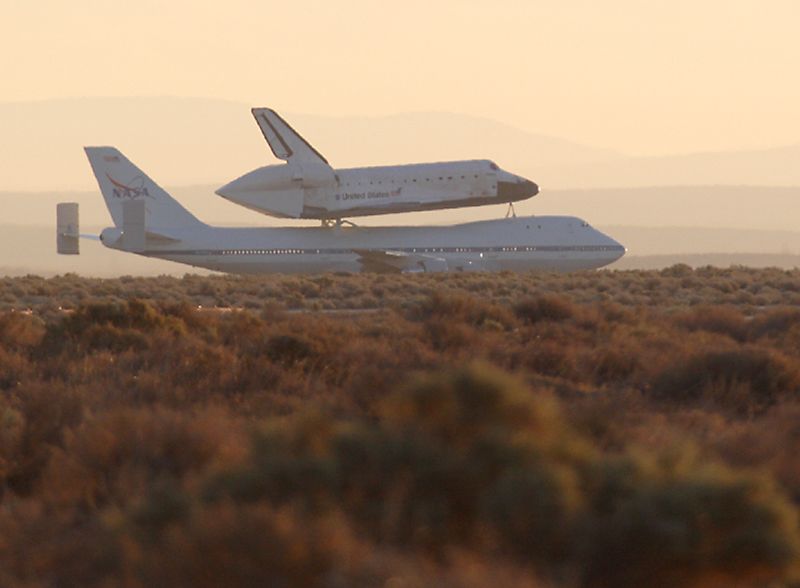
| On
June 22 of 2007 the space shuttle Atlantis returned from its longest flight
yet, a 14 day trip of 5.8 million miles code-named STS-117.
The return to Florida was delayed because of bad weather at the Kennedy
Space Center, and eventually it was decided to land at Edwards AFB in California.
The departure from Edwards was to be on June 29th, but it was postponed
to Saturday and then to Sunday. |
 |
| A
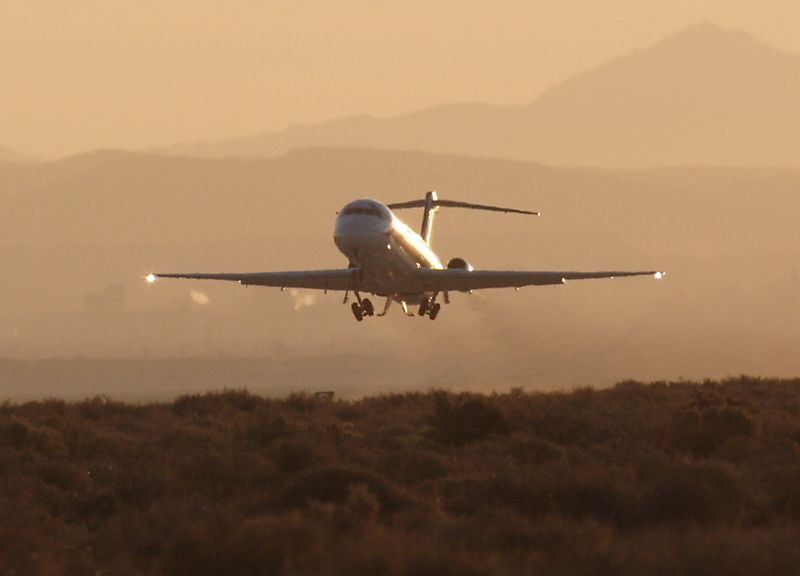
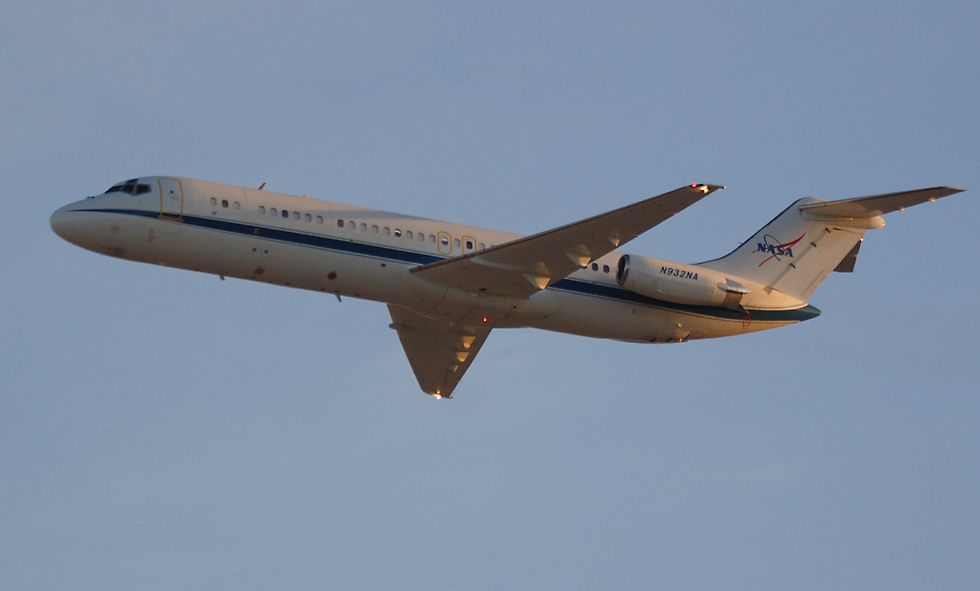
pathfinder aircraft always precedes the shuttle on these transfer flights,
going ahead by a distance of about 100 miles to check for turbulence and
other weather issues. The shuttle departure could have happened
any time after 5:20AM, but thankfully it was pushed back until 6:05AM,
which meant that there was enough light to photograph it. I
made the 5 hour round trip from my home in Los Angeles to Edwards AFB both
on Saturday and Sunday, so I was happy to see the departure go smoothly. |
 |
| Since
NASA is a civilian organization all of its aircraft have civilian registrations
and designations, so the pathfinder is referred to as a DC-9 rather than
as its military equivalent the C-9 transport. |
 |
| And
to the main event! The shuttle lands as a glider with an extremely
steep glide ratio of almost 1:1, coming down at up to a 40 degree angle,
all the time losing about 10,000 feet of altitude per minute.
Shuttle pilots train for this hair-raising ride aboard a modified Gulfstream
corporate jet, which actually runs its engines in reverse during training
to give a feel for what it's like flying this massive brick! Shuttle
touchdown occurs at about 215 mph (345 km/h) instead of the 160 mph normal
for an airliner. |
 |
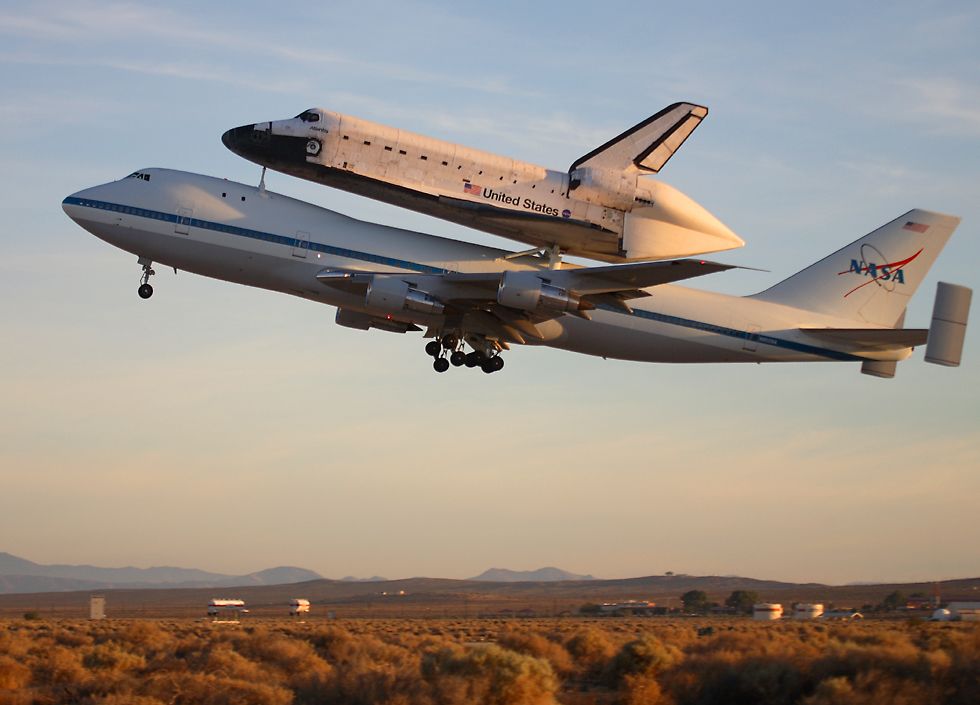
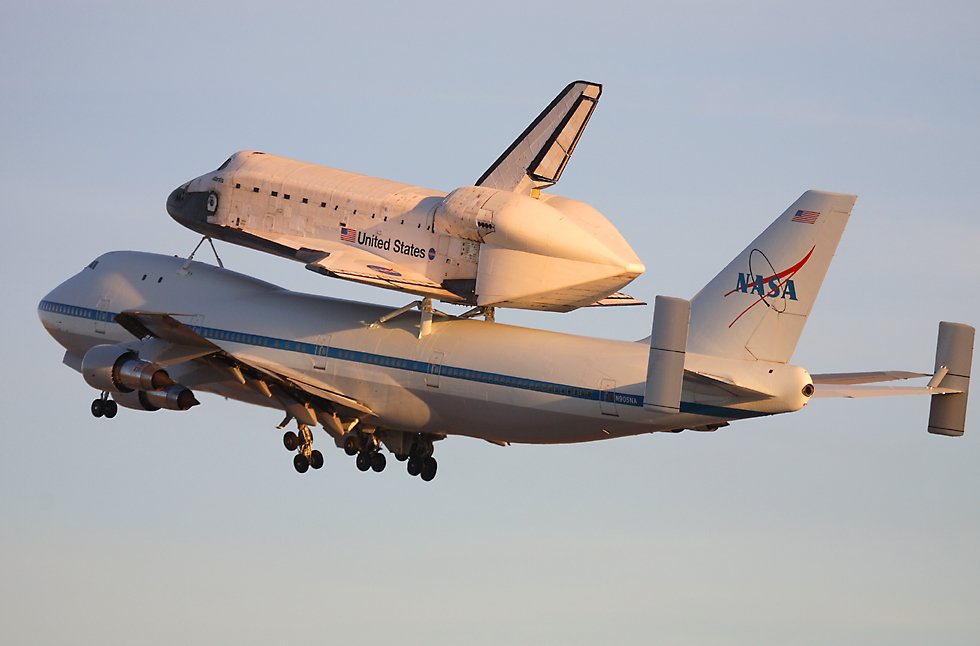
| The
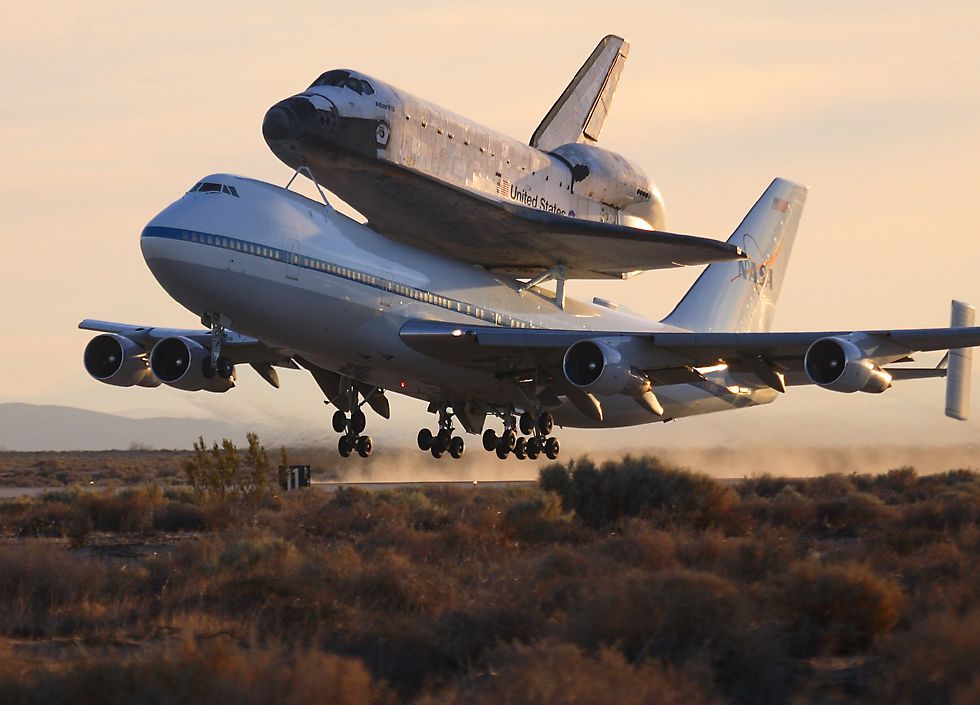
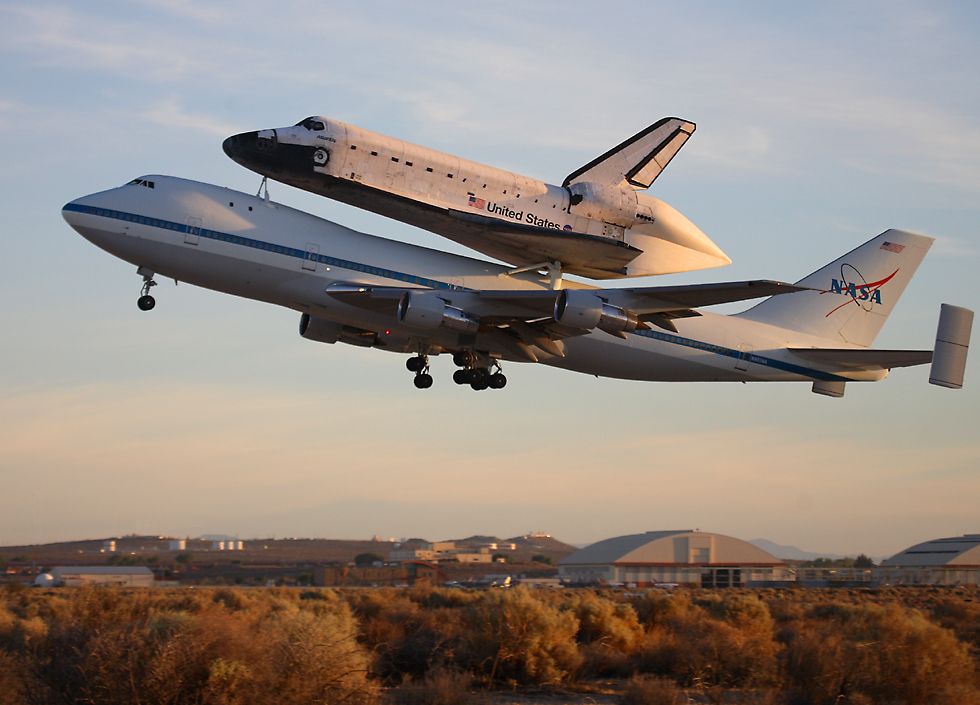
shuttle can't take off under its own power back to Florida, so it's mounted
on one of two modified 747s called Shuttle Carrier Aircraft.
The extra effort to move the shuttle from Edwards costs NASA about 1.7
million dollars, so landing here is not a decision taken lightly.
However it could be worse; to allow for all sorts of emergency contingencies
there are other landing sites in such unlikely places as Gambia, French
Polynesia, Saudi Arabia, the Congo and Easter Island. |
 |
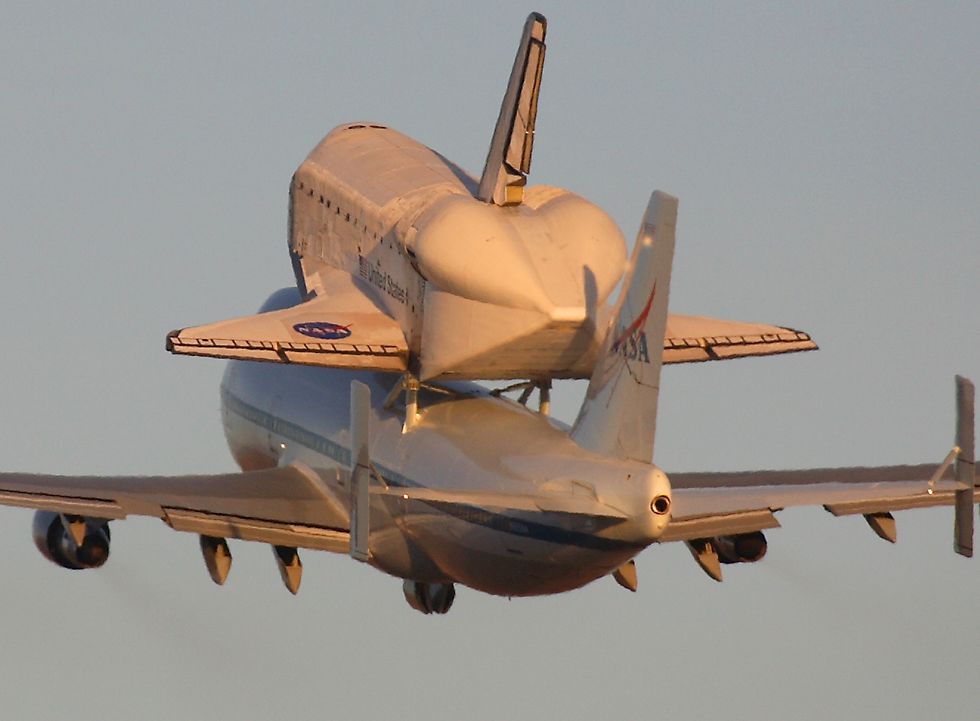
| Apart
from the shuttle attachment points, the Shuttle Carrier Aircraft also has
endplates on its horizontal tailplanes to add stability while flying with
the shuttle. |
 |
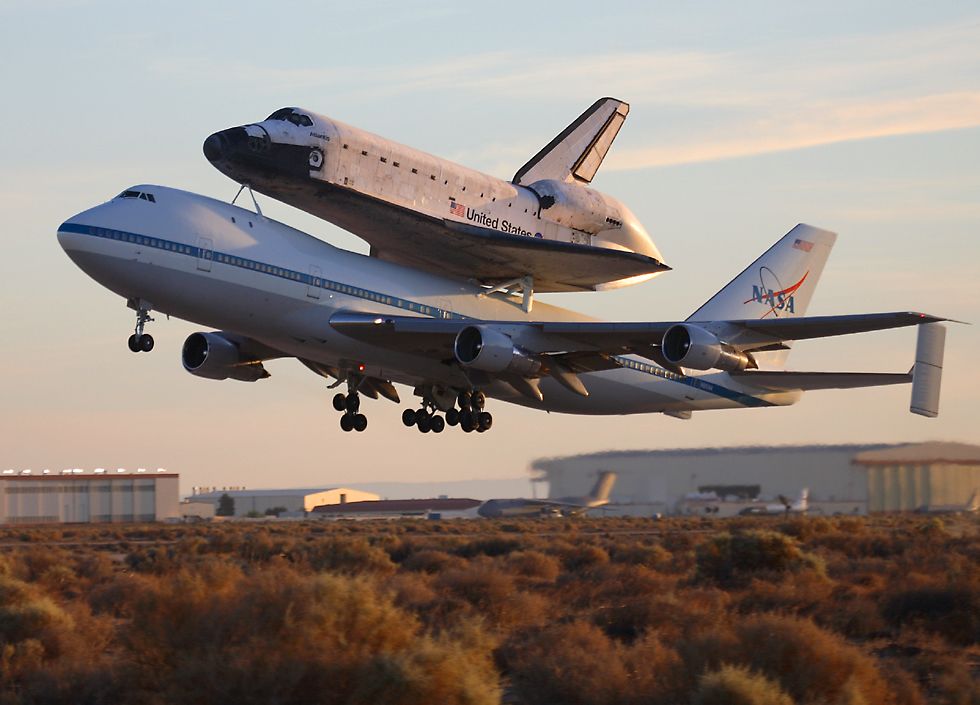
| Technically,
though, the aircraft mounted on the Shuttle Carrier Aircraft is not a space
shuttle, it's correctly referred to as an "orbiter vehicle" or "orbiter"
for short. The "space shuttle" is the combination of the orbiter,
the external fuel tank and the two solid rocket boosters. |
 |
| Atlantis
and the other orbiters are large aircraft, weighing 110 tons (100 metric
tons) and having a length without the aerodynamic tail cone of just over
124 feet (37 meters), height of 59 feet (17 meters) and wingspan of 79
feet (24 meters). The payload bay is 60 feet by 15 feet (18m
by 4.5m), making it uniquely capable of carrying large items into space
and even returning them to earth. |
 |
| The
shuttle certainly is a technological marvel in many ways, not least of
which is its maximum speed of 17,500 mph (27,875 km/h, Mach 25), which
on re-entry makes it heat up to around 2700 degrees Fahrenheit (1500 degrees
celcius). |
 |
| Like
Concorde, another technological marvel, the shuttle was far ahead of its
time. Originally designed during the Nixon administration and
intended for 100 launches over a 10 year lifespan, Atlantis has actually
been flying for 22 years and STS-117 was its 28th mission. |
 |
| There
are currently three operational orbiters, Discovery, Atlantis and Endeavour.
It was originally planned for Atlantis to be retired in 2008 after flying
the final servicing flight for the Hubble space telescope, and spare parts
from Atlantis would then have been used to keep Discovery and Endeavour
flying, however this plan has now changed and the current intention is
for all of them to be retired in 2010. |
 |
See
The
First Flight of SpaceShipOne Into Space.
 |