
Static Displays at the 2005 Yuma Airshow
|
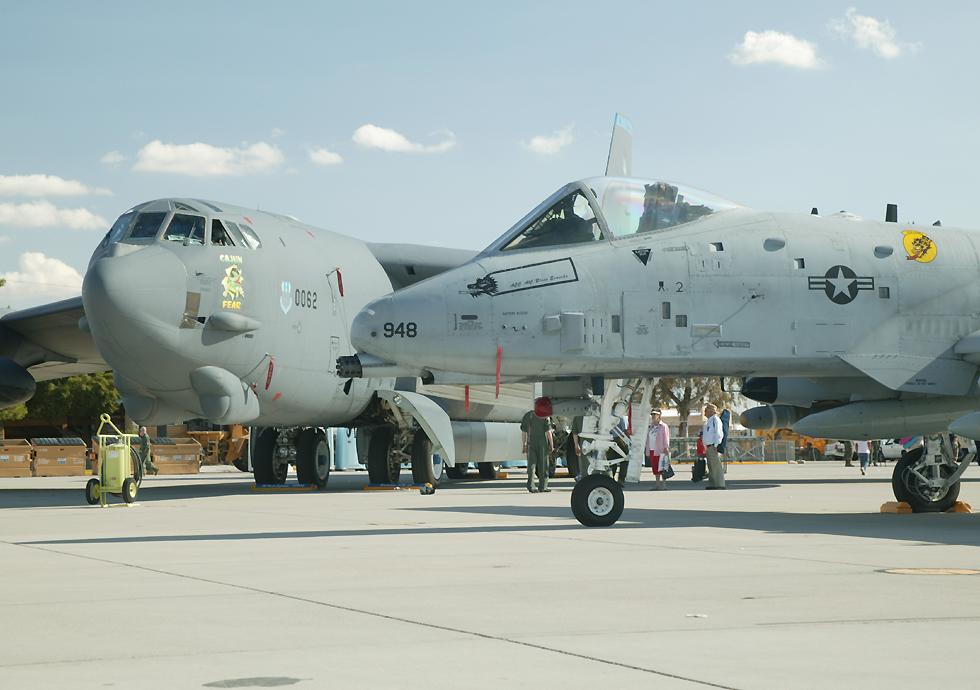
The B-52 Stratofortress and A-10 Thunderbolt II ("warthog") are also fairly common at American airshows. There was an excellent A-10 display at the 2004 Yuma show, but this year it didn't fly. It's quite rare for B-52s to fly at airshows, though they do perform at some, such as the 2003 Chicago Air and Water Show, and the 2004 Kern County Airshow, which is very small but benefits greatly from its proximity to Naval Air Weapons Station China Lake. |
 |
|
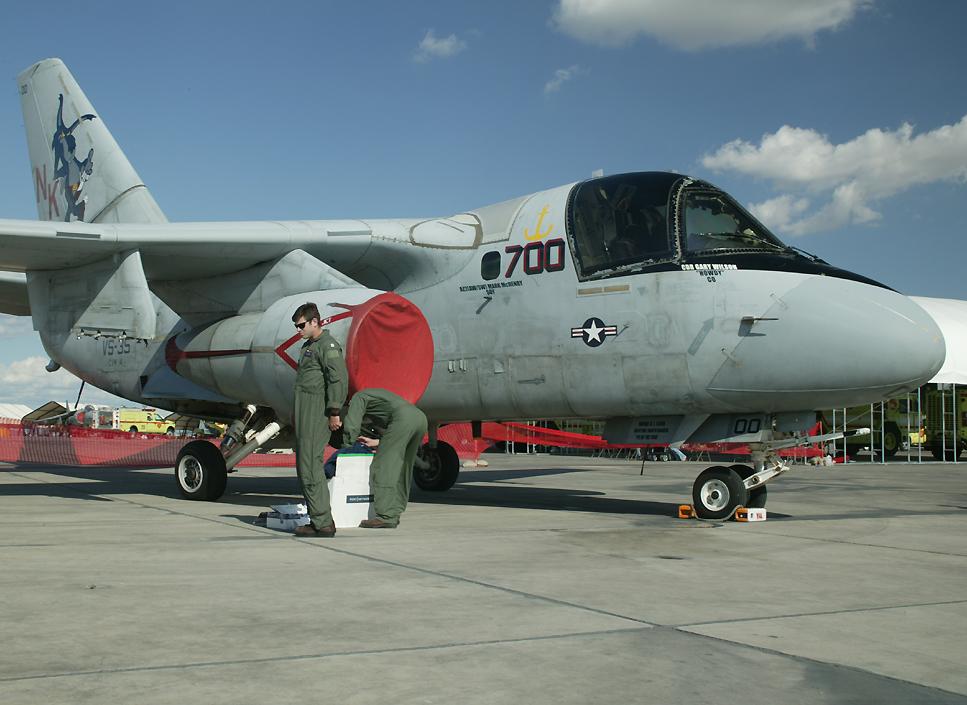
The S-3 Viking is probably an even less commonly seen aircraft than the B-52, the only time I've seen it flying was at the 2003 Dayton Airshow, where they put two up in formation. The Viking is a specialized submarine hunter/killer which is flown off aircraft carriers. It's a little larger than it appears here, in fact the pilot told me that the cockpit is large enough to stand up in, though the seats are very uncomfortable! The cockpit is entered through a little set of stairs, which is accessed through the panel you can see below and to the left of the American insignia. |
 |
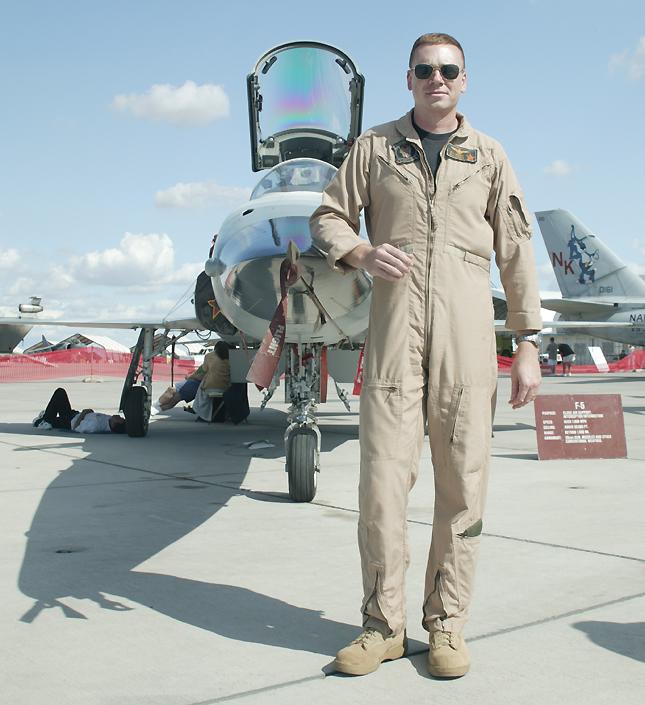 |
This is the pilot of one of the F-5 Freedom Fighters on static display at the show. He's big, but not quite as big as this photo makes him seem! Actually, he's 6' 4" and previously flew A-4 Skyhawks and F-18 Hornets. This particular F-5 is an ex-Swiss aircraft with 2000 hours of flight time, rather than the 8000 hours on most of the American fleet. |
|
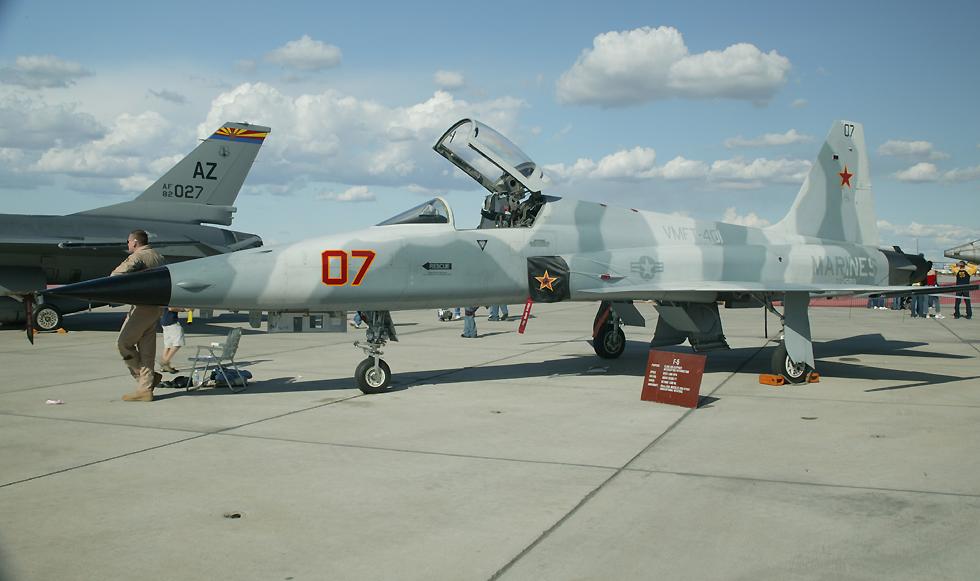
Here's his steed, probably the most exotic of the American designed and operated aircraft at the show. The Northrop designed F-5 was meant to be a cheap high-performance aircraft which could be sold or donated at relatively low cost to third-world allies. It lacked the firepower required by the US military, but was successful with its intended customers, including the Philippines and South Korea, as well as first world customers such as Norway, the Netherlands and Spain. They were used in Vietnam, and were even incorporated into the communist Vietnam Air Force after the end of the war, as you can see from this one in communist colors at the Vietnamese Air Force Museum in Hanoi. Interestingly enough, the F-5 at Yuma also has a red star on it, which indicates that it's an "aggressor" aircraft used to train American pilots how to fight against aircraft which have dissimilar flight characteristics to the ones in US service. That's the only purpose for which F-5s are currently flown in America, although the almost identical T-38 Talon trainer which preceded the F-5 is still used to teach pilots how to fly high-performance jets. |
 |
|
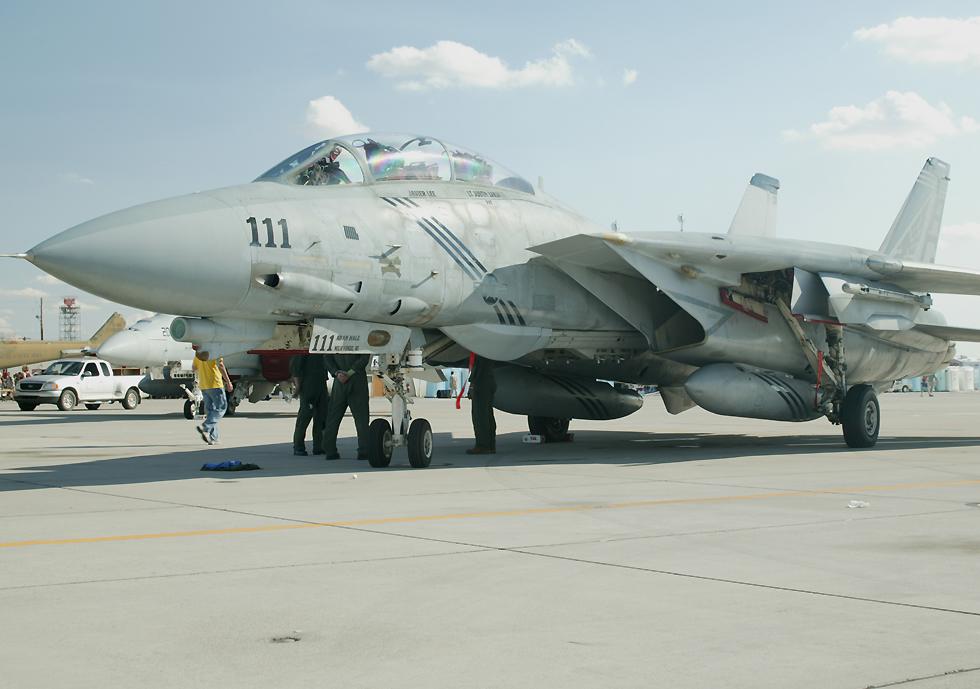
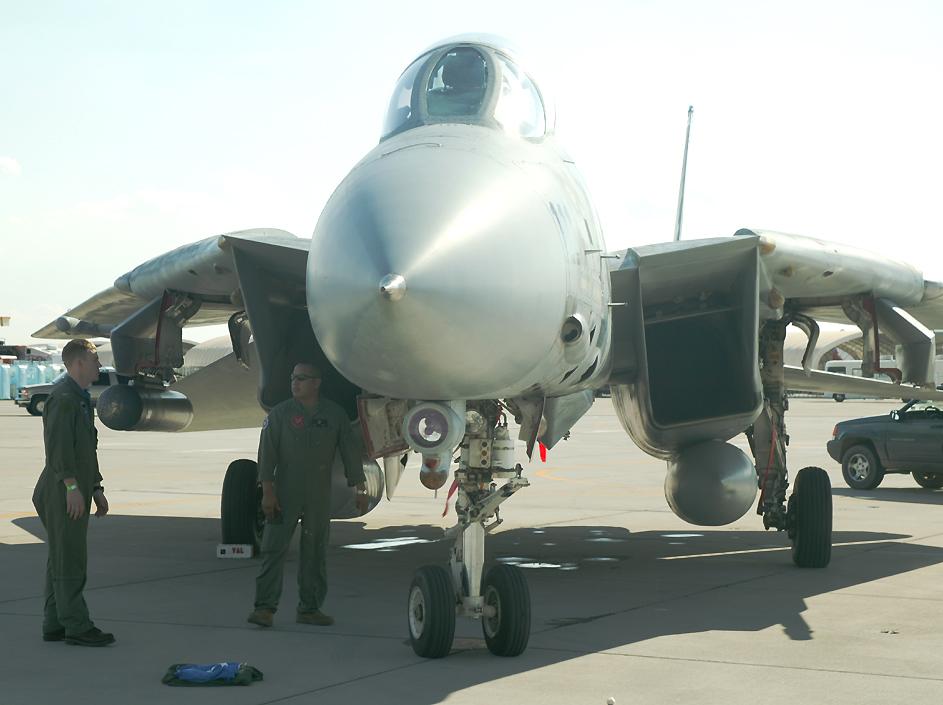
Many people will be very sorry to see this aircraft pass into history - it's last official display was at the 2004 Nellis Airshow. The photo below hints at some surprisingly strange shapes and angles for such a high-performance aircraft - it's more usual for such planes to appear extremely clean and streamlined. |
 |
|
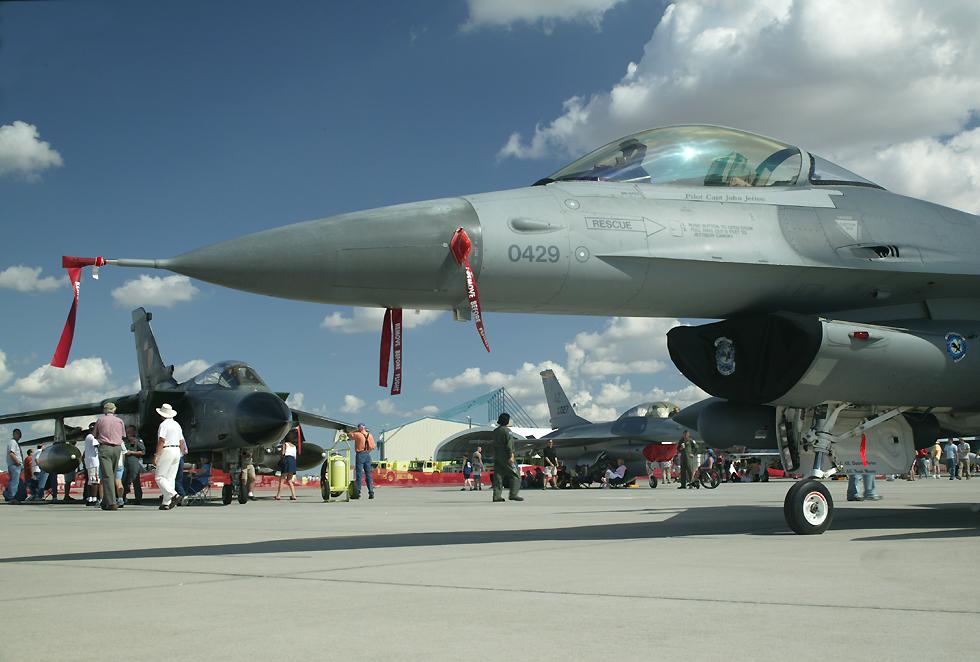
The very observant might have noticed the aircraft under that Fighting Falcon's nose, and here it is again. This is right at the top of the list of exotic aircraft - a German Air Force Tornado fighter/bomber which made the trip over from Holloman Air Force Base in New Mexico. The German Air Force uses Holloman and the surrounding desert bombing ranges for training - apparently farmers in Bavaria don't like having their cow pastures strafed and bombed! Unfortunately, although the Germans are allowed to put their aircraft on static display at airshows like Yuma, they don't get to fly, not even a simple takeoff, pass and landing. The best American enthusiasts can hope for is to see them on static display and if they're lucky, as at the 2004 Vandenburg Airshow, sit in the cockpit of a Tornado. However, one of the very few exceptions to this no-flying rule is the Holloman airshow. |
 |
|
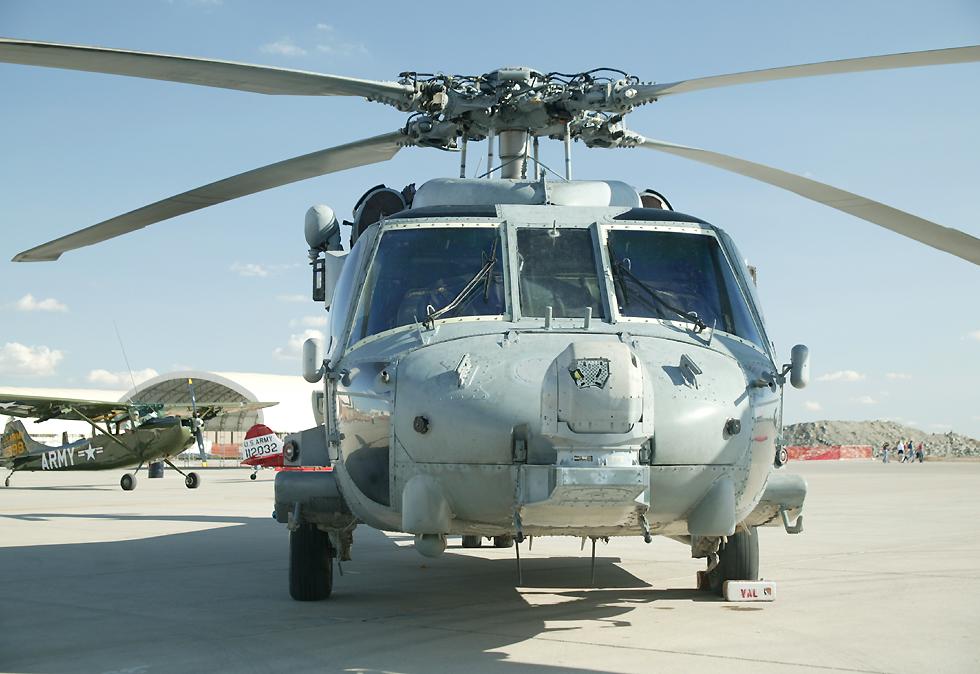
There were a few other helicopter types there too, such as this SH-60 Sea Hawk, a larger and more capable helicopter which replaced the Huey in US military service. |
 |

|
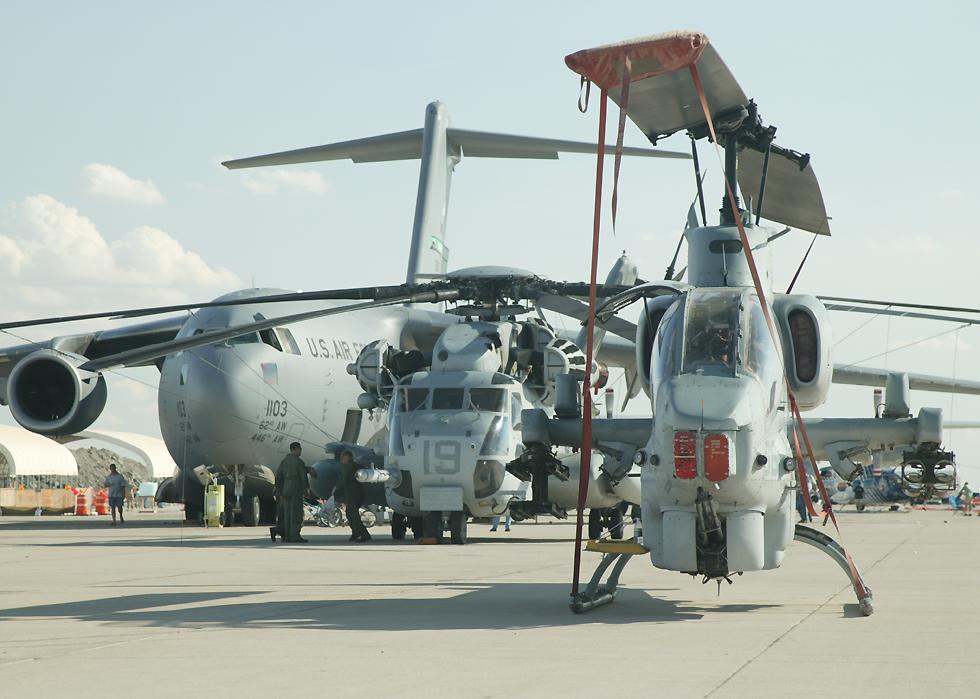
Here's a closer view of that CH-53. As you can see, there's an infrared or similar sensor mounted below the cockpit, together with other equipment like the aerial refuelling probe at the front. These enhancements make the CH-53 suitable for its role as a special operations helicopter, able to operate at night and in bad weather conditions, and with aerial refuelling to fly longer distances than would normally be possible. When it's in use the probe telescopes a long way forward, to keep the tanker's refuelling hose out of the way of the rotors. There's a remarkable piece of footage on the internet showing a refuelling about to occur; when the helicopter hits some turbulence it dives down 20 or 30 feet, and when it starts to come back up the probe and the rotors flex enough for the rotors to cut off the end of the probe! |
 |
|
One of the few airshows where you're likely to see an CH-53 or one of its variants actually flying is the marine corp airshow at Miramar in San Diego. |