
Comet Dive Bomber
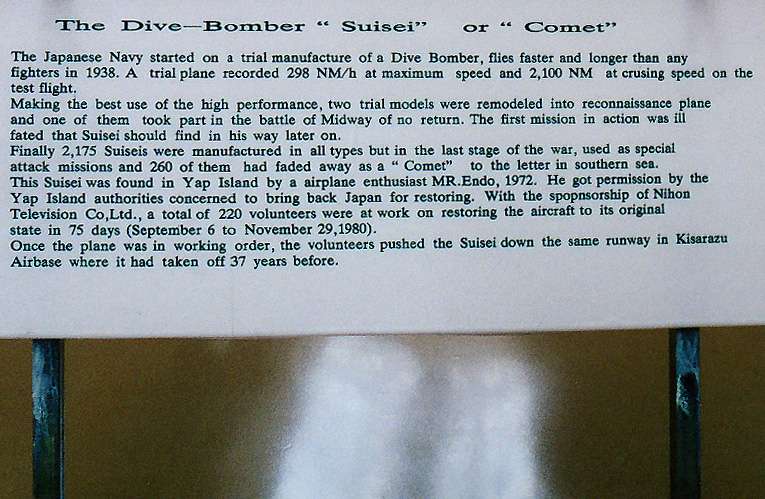 |
Like quite a lot of tourist attractions around Japan, there were enough signs in English to keep Western tourists pretty well informed - which isn't the same thing as saying that everything was signposted! |
|
Not the world's most beautiful aircraft, but obviously a fairly good performer. The claimed maximum speed of 298 nm/h is almost exactly 550 km/h or 343 miles per hour. |
 |
|
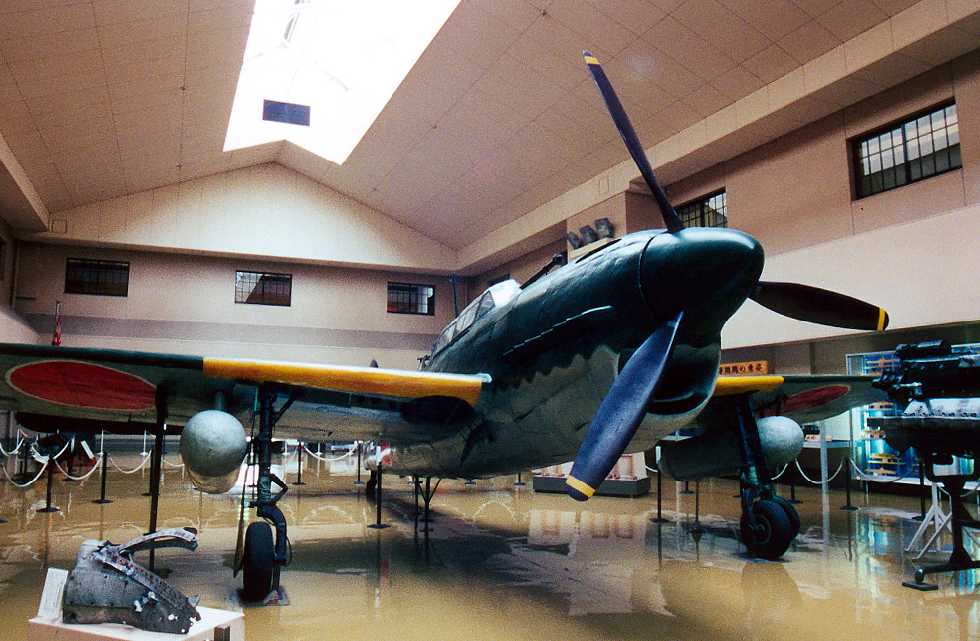
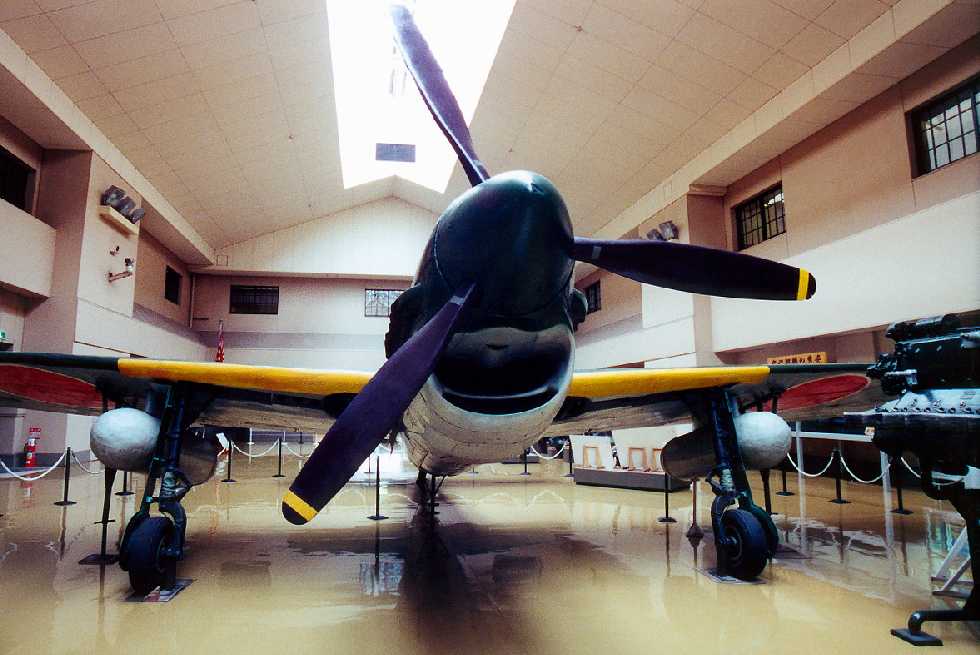
That scoop under the nose does nothing for the plane's appearance, I suppose it provides air for cooling the in-line engine's radiator. You can see the gunsight in front of the pilot's position - pretty crude, like other ones I've seen of World War 2 Japanese aircraft. |
 |
|
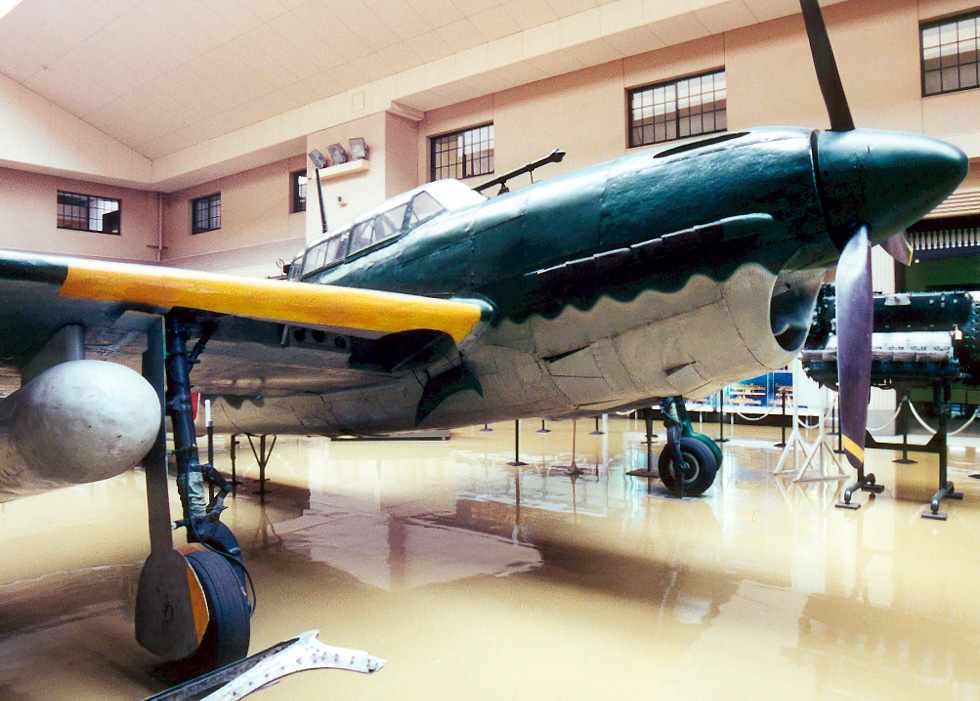
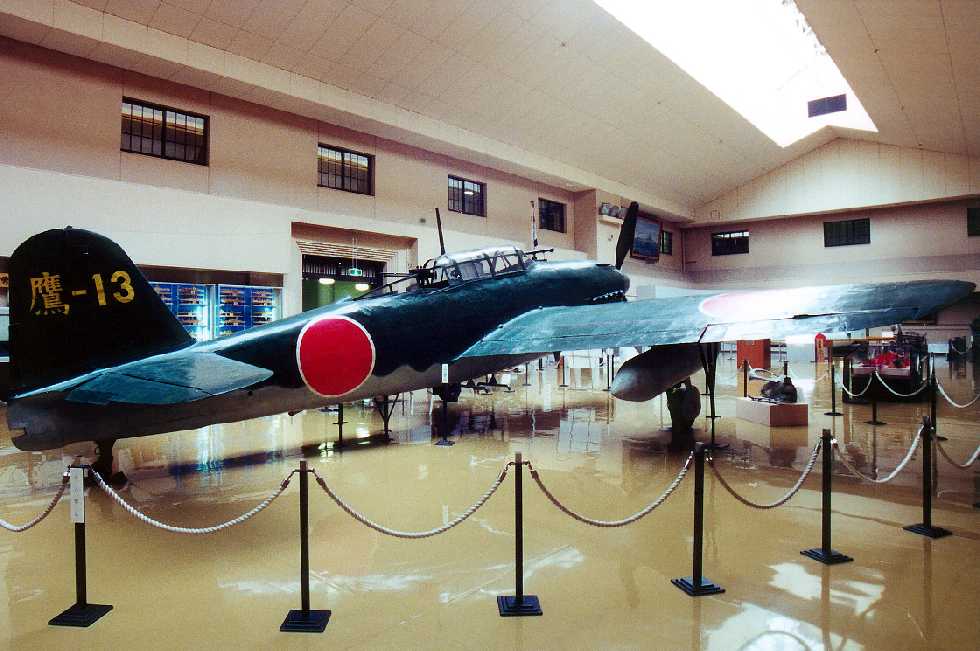
Given the craftsmanship of Japanese workers, I was a little surprised by how dented the "restored" aircraft looked - perhaps they should have spent more than 75 days working on it! The fuel drop tanks and the area below the cockpit are both pretty dinged up. |
 |
|
|
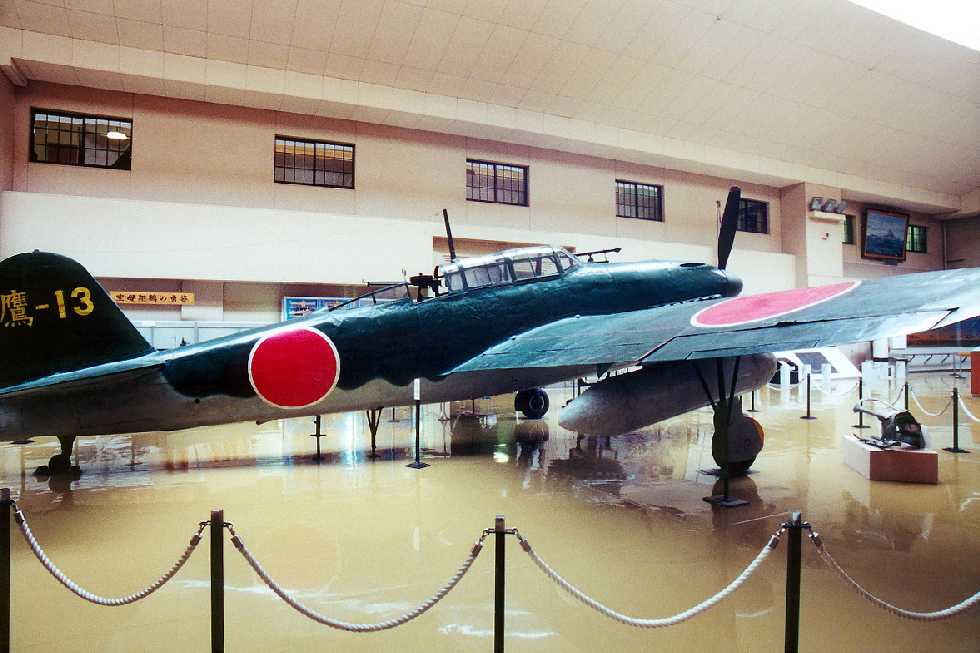
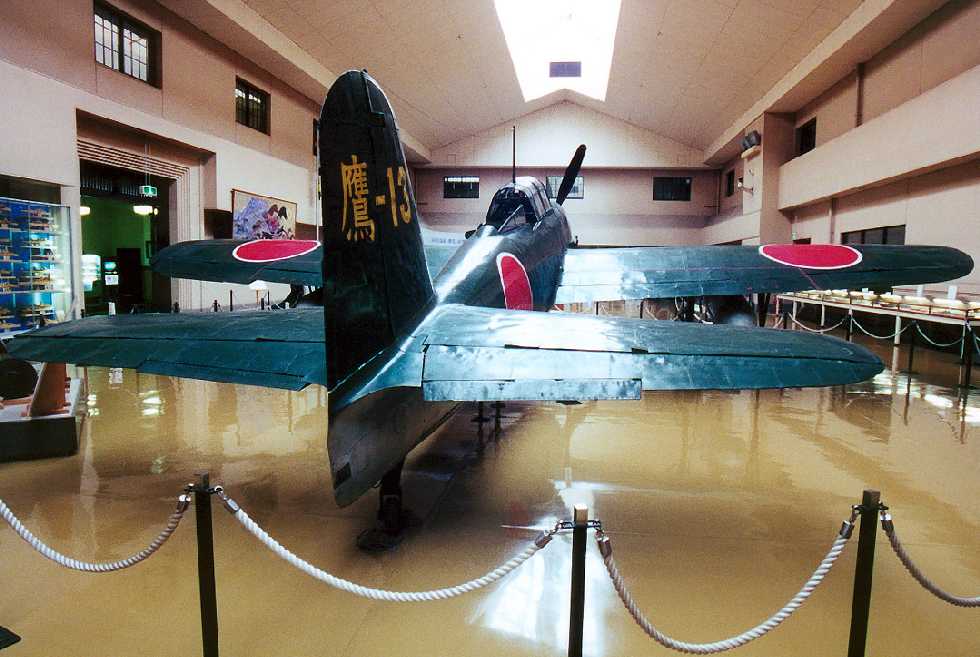
This shot, together with the last photo on the page, gives a fairly good idea of the size of the main hall of the museum. There are other display rooms behind the far wall, behind the wall on the left and behind the wall at the other end of the main hall, so I suppose the whole museum is about four times the size of this hall - not that big, but still well worth visiting. |
 |
|
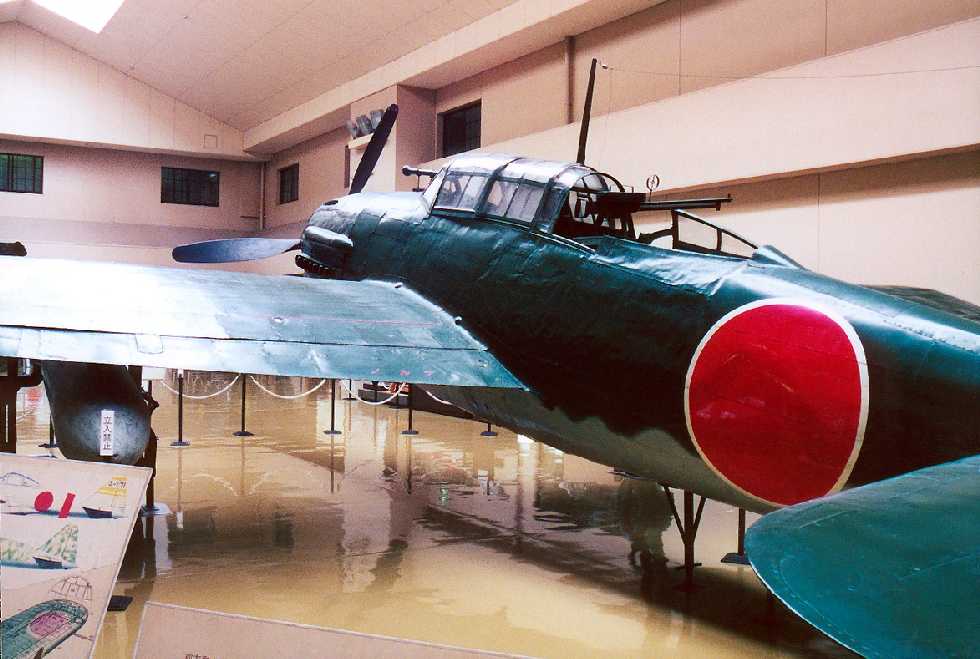
Here's a good view of the rear gunner's position. |
 |
|
Returning to the front of the plane, with the Comet's engine on a stand on the right-hand side. |
 |