
Lizards of the Valley of Fire
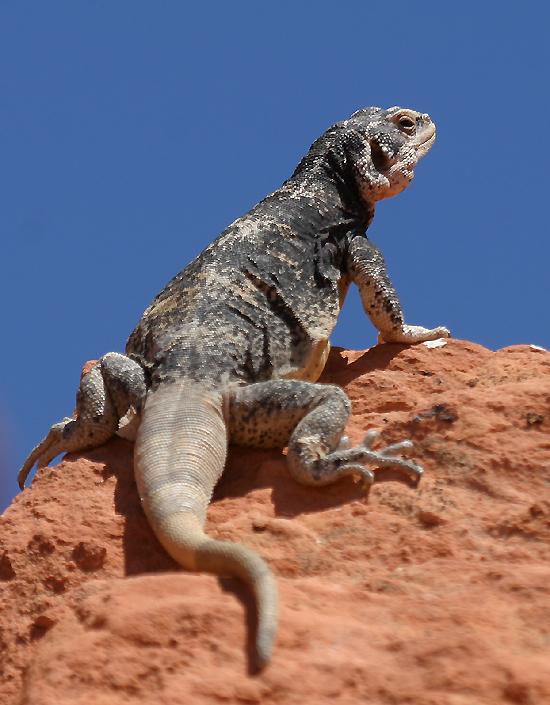 |
The main reason I was making the six hour drive on Memorial weekend from Palm Springs in southern California up to the Valley of Fire in Nevada, about 50 miles north-east of Las Vegas, was that I'd lost some of the photos I'd taken up there during the previous Easter weekend. Along with some photos of the Las Vegas Strip, I lost all of the photos I'd taken of the Hoover dam and other photos from within the Valley of Fire, in particular some shots of a chuckwalla lizard which I'd taken near my campsite. I had other photos from Vegas, and I can live without photos of Hoover dam, but I was very sorry to lose those chuckwalla shots. Although I had hoped to get Vegas and Nevada out of my system on my previous trip, I realized that I wasn't going to be satisfied until I got what I wanted. Thankfully, I didn't have to wait long before replacing the chuckwalla photos. Not only did I track down the solitary individual I'd photographed before, I started to see chuckwallas all over the place. Here, for instance, is one very near the balanced rock beside the visitor's center. |
|
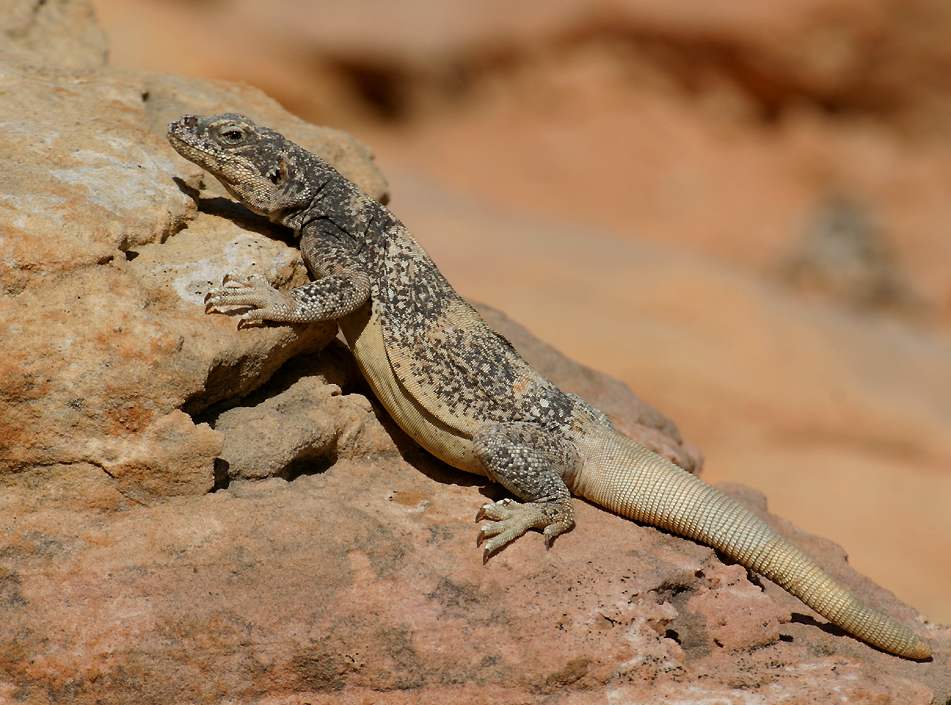
This individual was near the Rainbow Vista, and put on quite a show. Starting with the vigorous shaking up and down of the head which is a feature of many lizard threat displays, this lizard actually moved much closer towards me. I was then able to slowly work my way even further forward and get some shots from about 20 feet away. |
|
|
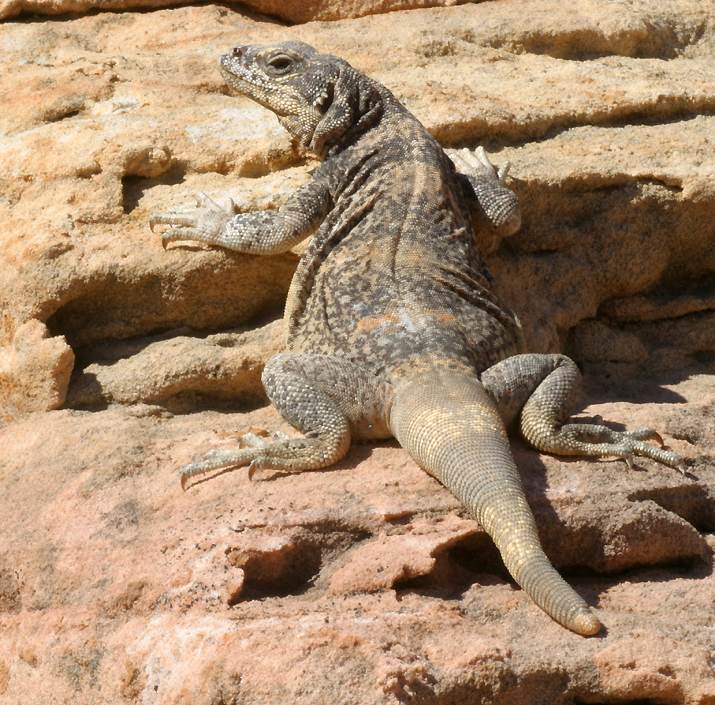
Moving even more slowly, I went behind the chuckwalla to a position about 6 feet away, very slowly unfolded and positioned my tripod, mounted the camera on it and started taking some more shots. Using a tripod in this way makes it possible to preserve natural lighting while using a small enough aperture to get most of the lizard in focus. As you can see, they're a pretty good sized lizard, up to a foot and a half (45 centimeters). Despite the vicious looking claws, they're herbivores. Younger ones have a more prominently barred tail, adults can sometimes have a very reddish back. The chuckwalla's party trick is to run into crevices when feeling threatened, and then gulp enough air to wedge itself into the crevice so it can't be pulled out. As you might imagine, with a trick like this they don't get invited to many parties. |
 |
|
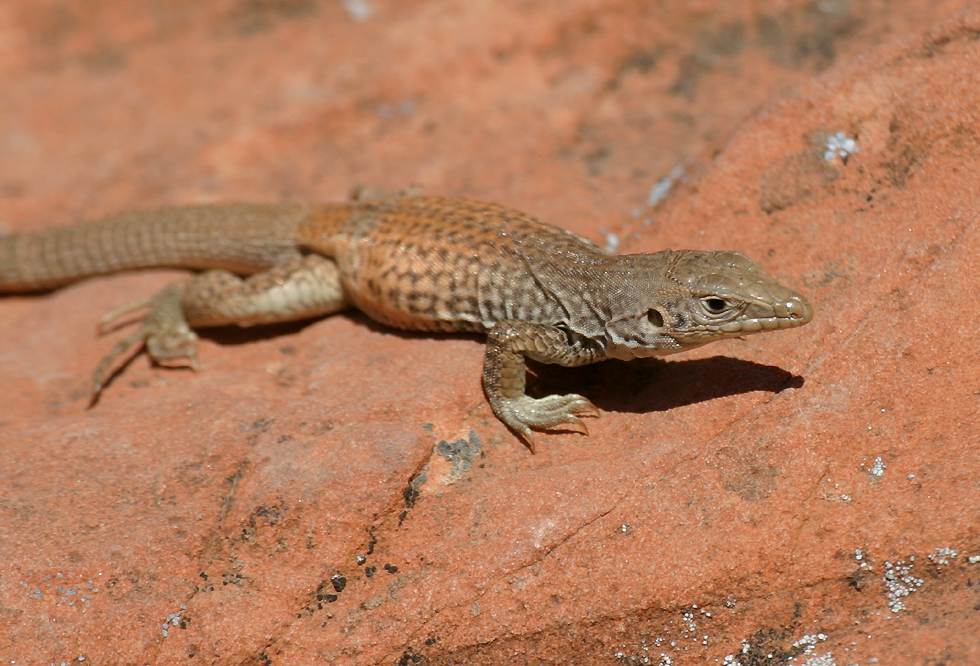
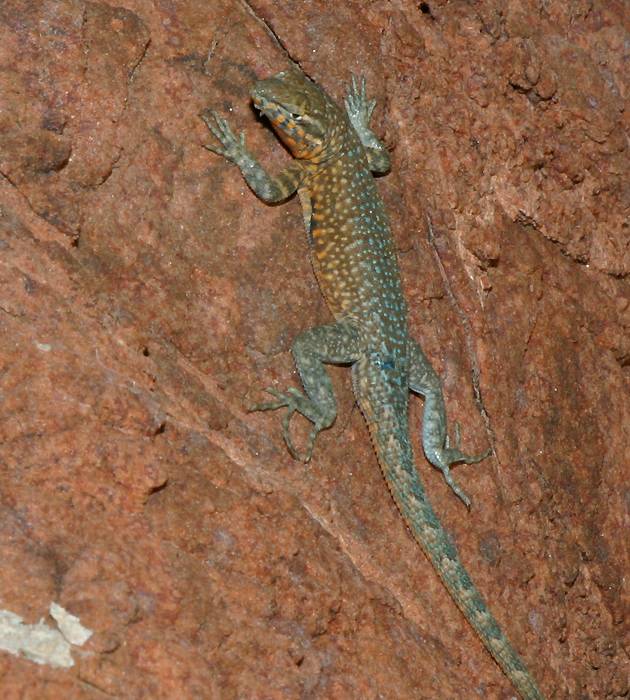
Here's a male side-blotched lizard, though the dark blotch just behind its front leg is either not very prominent or obscured by the lizard's position. |
 |
|
This desert iguana was sharing a large hole at the back of a small cave with some spiders, probably black widows. |
 |
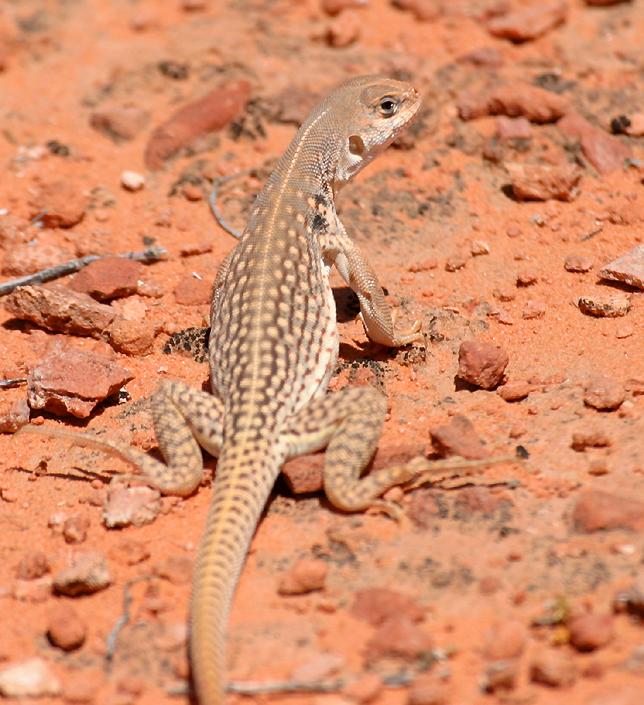 |
The prominent line of scales running straight down its back identifies this one as a desert iguana, in this case a fairly young specimen. |
|
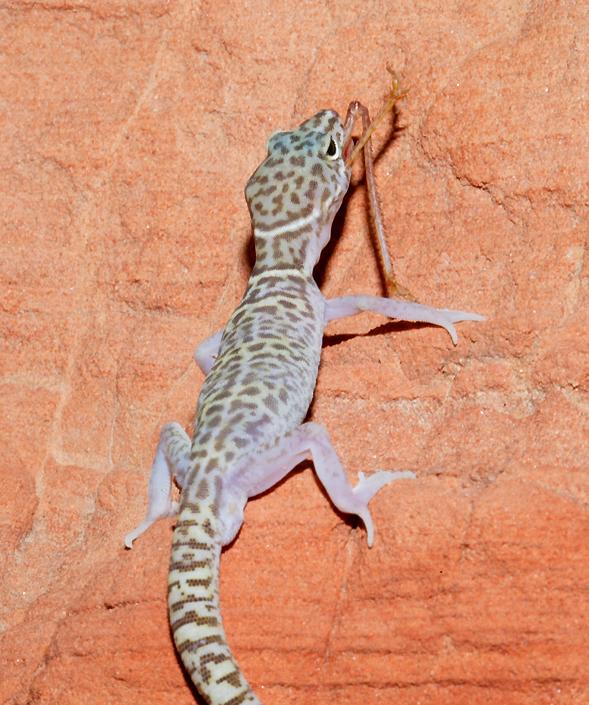
This photo of a desert banded gecko is an interesting one, for several reasons. I took this shot at night, during a three hour walkaround amongst the very large rocks surrounding my campsite. I was hoping to see some snakes, scorpions and tarantulas, but in the end all I came away with was a small praying mantis and this gecko. Or maybe I should say a mantis, this gecko and the grasshopper it's just eaten! They say that this type of gecko waves its tail above its head like a cat when stalking prey. If attacked, the tail breaks off at the point where you can see it changes from wide to less wide, and the stripes change from longitudinal to latitudinal. It seems amazing that such a delicate creature could survive in such a hot and dry place, but it manages by coming out in the cool of the night and spending the days deep within crevices and holes. |
|
|
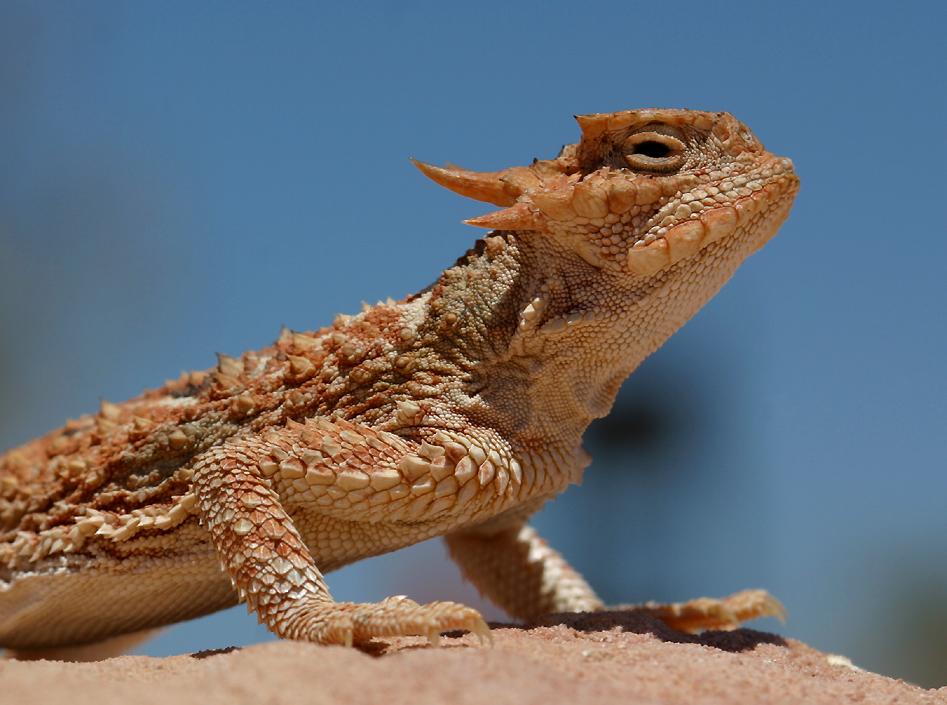
You've probably already noticed from other photos on this page that many of the rocks in the Valley of Fire are red. Lizards like this one adapt themselves to the conditions by becoming rather reddish themselves, as this one shows. These horned lizards have other tricks up their horny sleeves - they can squirt blood up to a distance of about four feet from glands on their lower eyelids! For some reason this is extremely distasteful to canines such as coyotes and foxes. Horned lizards subsist almost entirely on ants, though this individual took time out from his photo session with me to eat some small gnat or something which happened to pass by. After eating the gnat, the lizard adopted the slightly odd looking position you see here, which looks rather like a dog lying down. Although they're often sold in stores, they make lousy pets, largely because it's very difficult to keep them supplied with enough ants to keep them alive. |
|
|
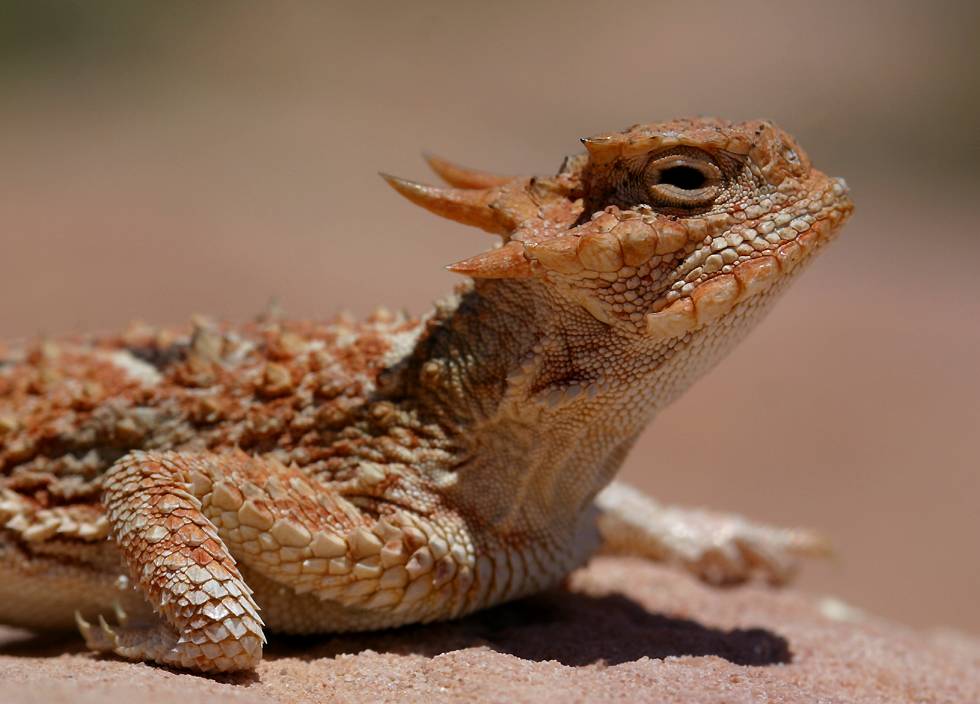
You can see from the shape of its body why many people used to call these guys "horned toads", though of course they're not related to toads at all. Nevertheless, the flat body and those amphibian looking rear feet do give it that appearance. The flattened body also helps to make this type of lizard difficult to eat, because you'd need a pretty wide throat to swallow it. This was the third of these lizards that I saw in the park, and was jumpier than the first two - but the fourth one was even jumpier and I only got one photo of it. After first running away, this one at least let me get my tripod set up so I could take a few photos in natural light. It's rather a peculiar lighting, since this was in a small gully surrounded on three sides by large red rocks reflecting the late afternoon sunlight, which gives an unusual pinkish tone to the shot. |
 |