
The Valley of Fire
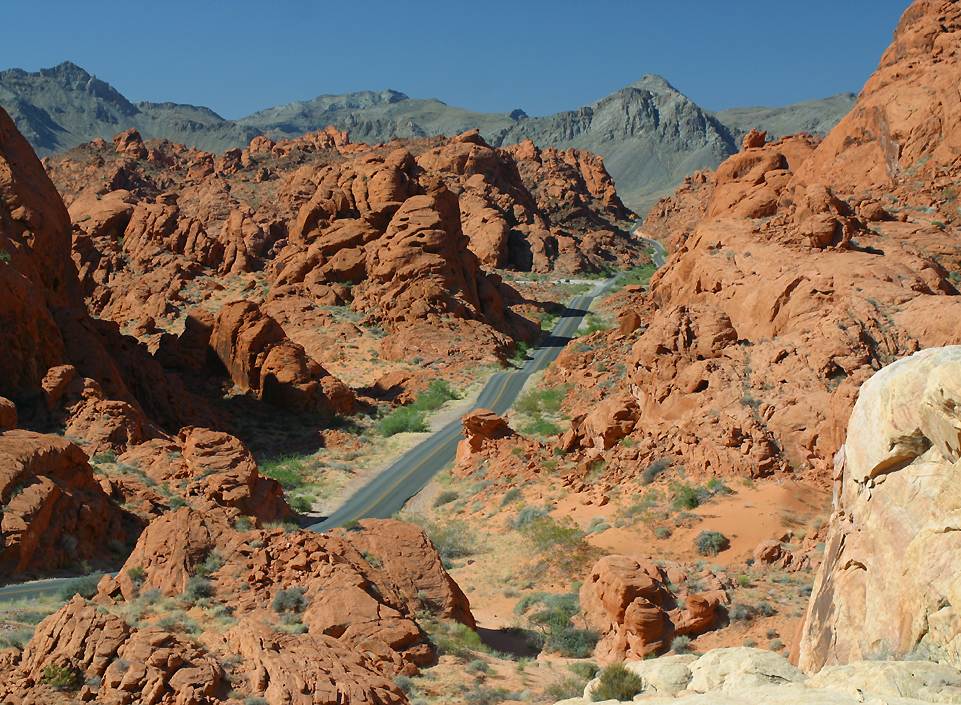
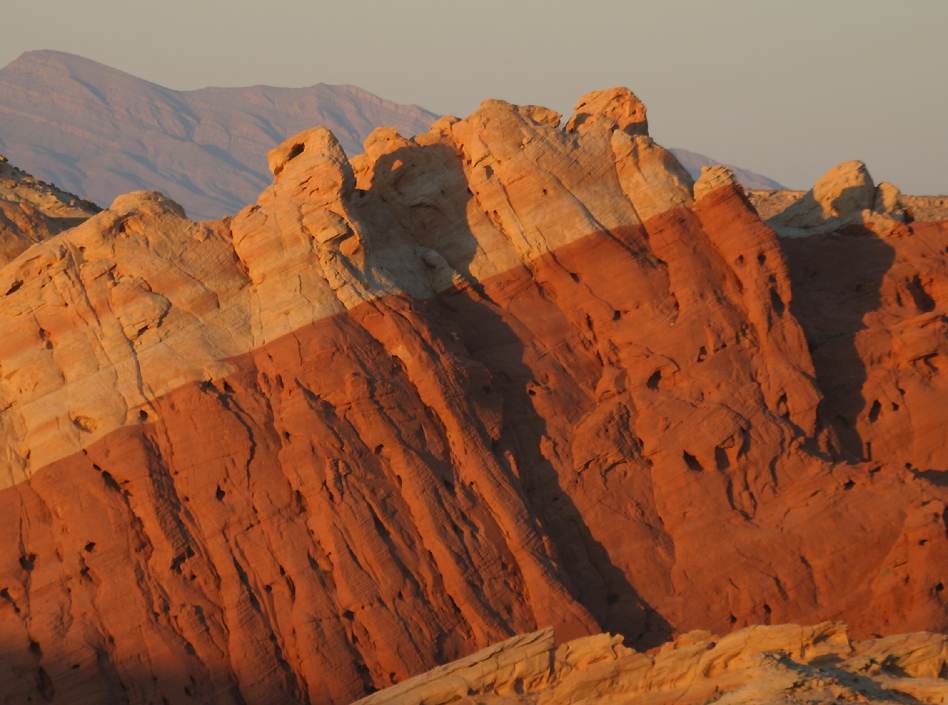
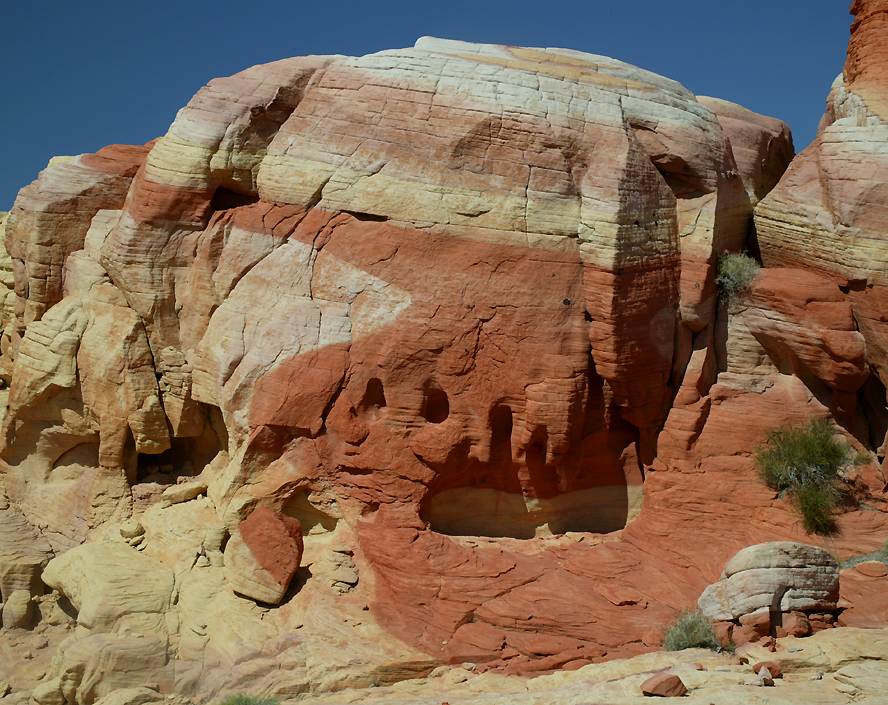
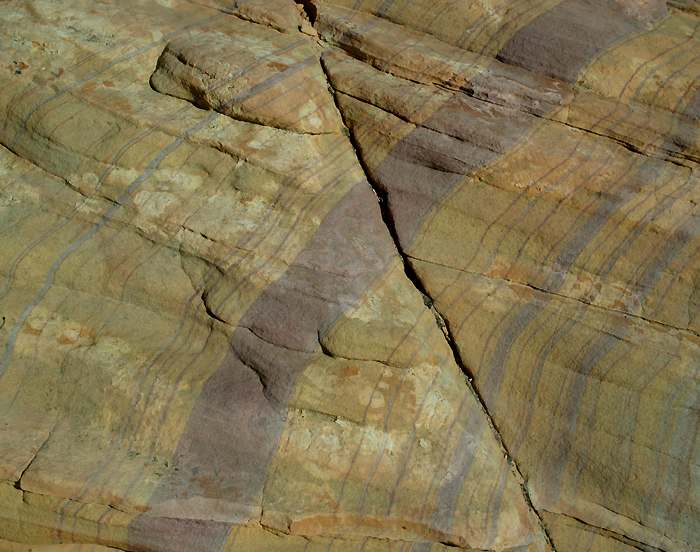
This is the only place in the world I ever remember seeing purple or mauve tinted rock like this, and the alternating bands of color make it all the more fascinating. Although the large formations and the sweeping vistas are what immediately attract everyone's attention, there are also lots of interesting things happening on a smaller scale. |
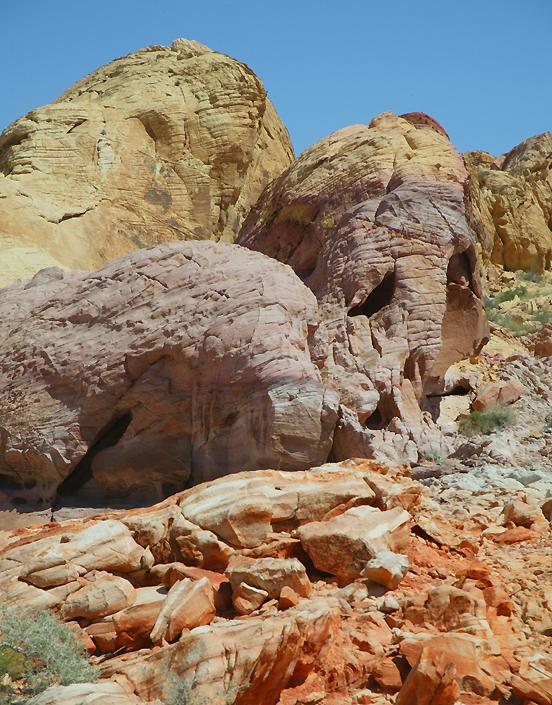 |
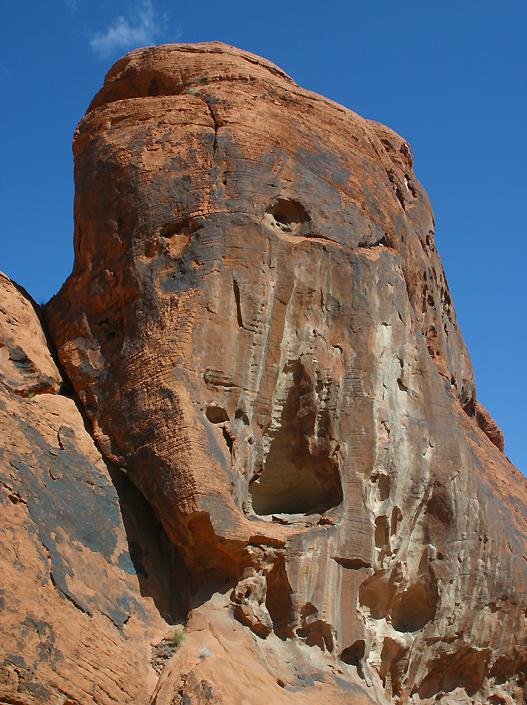
Along with their
extraordinary colors, many of the rocks have been carved by water and wind
into instantly recognizable shapes, some cute and some eerie.
Perhaps the best known formation in the park is Elephant Rock, but there are many others, such as Duck Rock and Piano Rock - there's even a rock which isn't just dog-like, it's collie-like! |
|
Quite a few of the
rocks are guaranteed to give you the creeps, and might make you reconsider
whether it's a wise move to walk around after dark.
It's believed that the Anasazi Indians living a short distance away alongside the Colorado River made short periodic visits to the valley to hunt and perform religious ceremonies. Perhaps it was the weirdness of the scenery which gave the valley added significance to them. |
 |
|
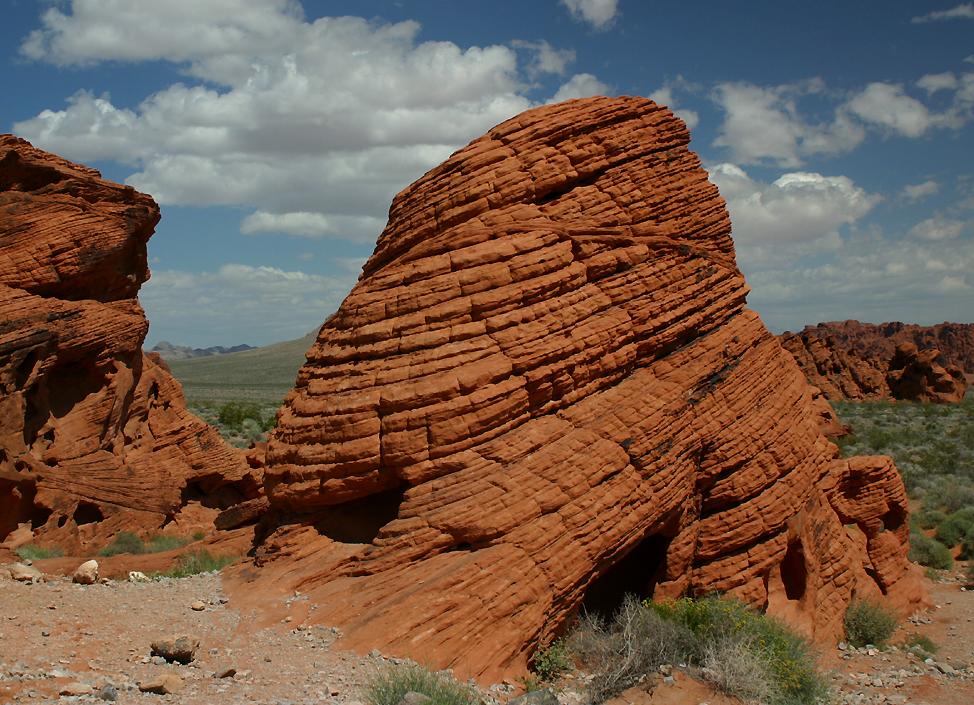
One of the formations which has earned the name "The Beehives", for obvious reasons. |
 |

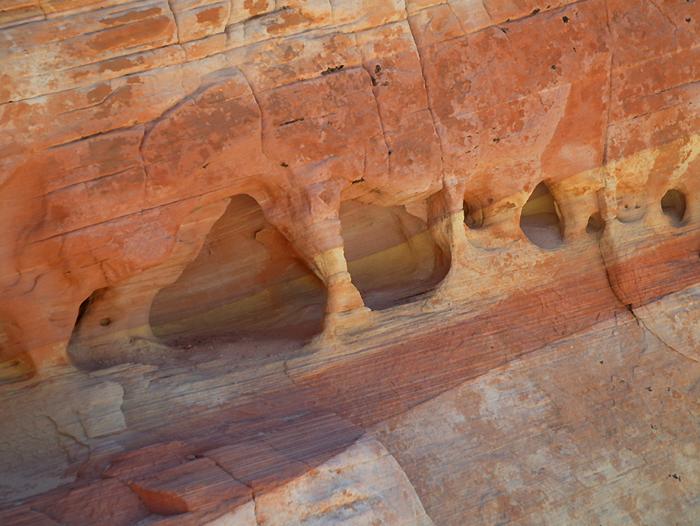
Many of the formations, both large and small scale, were created by water flowing around and over the soft sandstone. These small columns and arches are on the other side of one of the large rocks shown earlier on this page. |
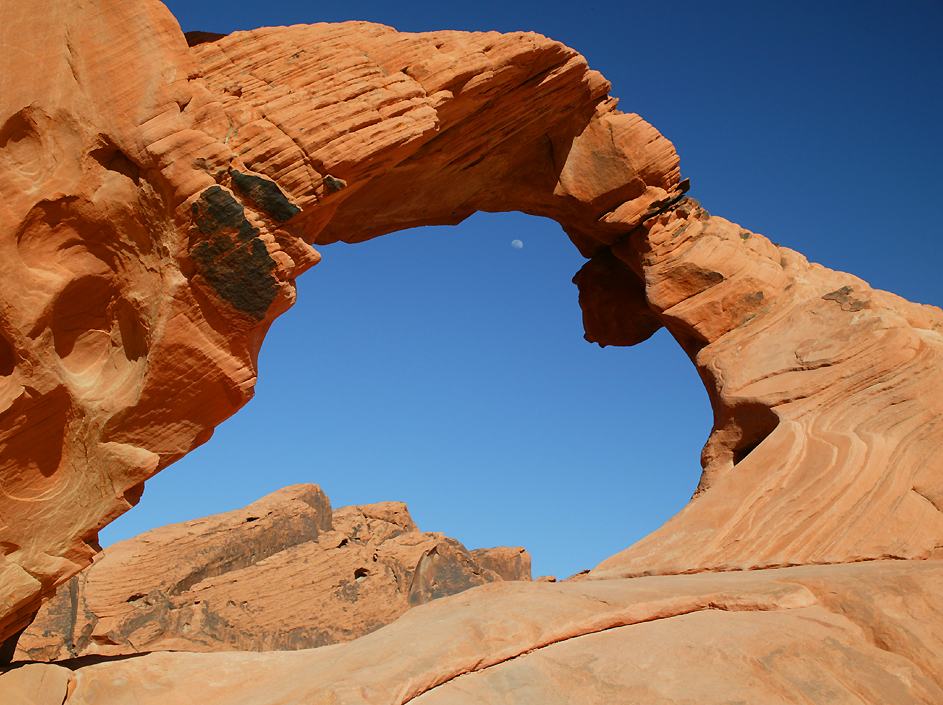
|
Still, these arches definitely add a distinctive scenic element to the park. |
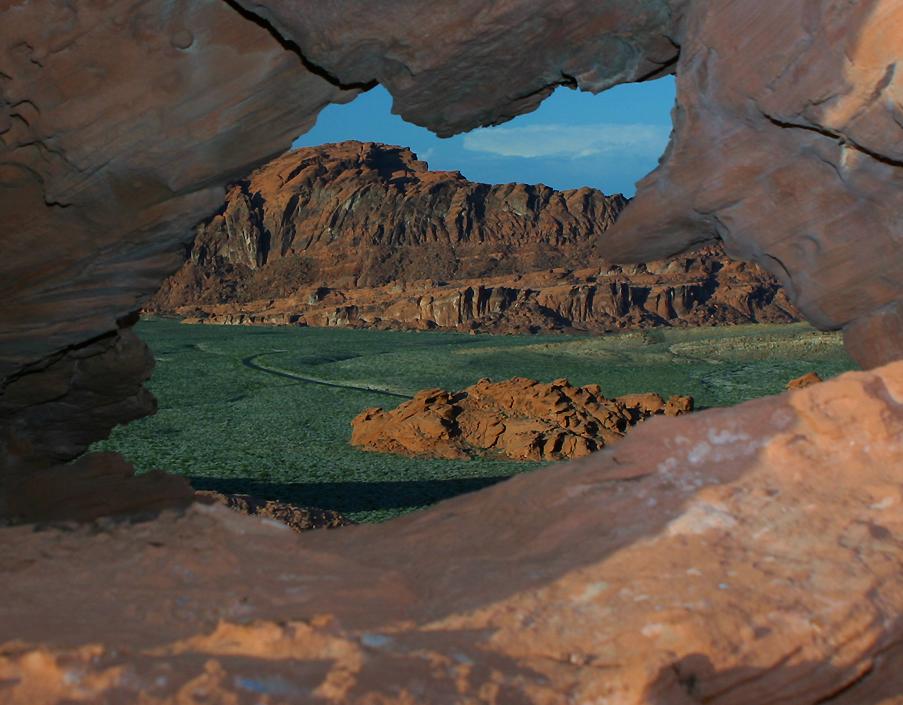 |
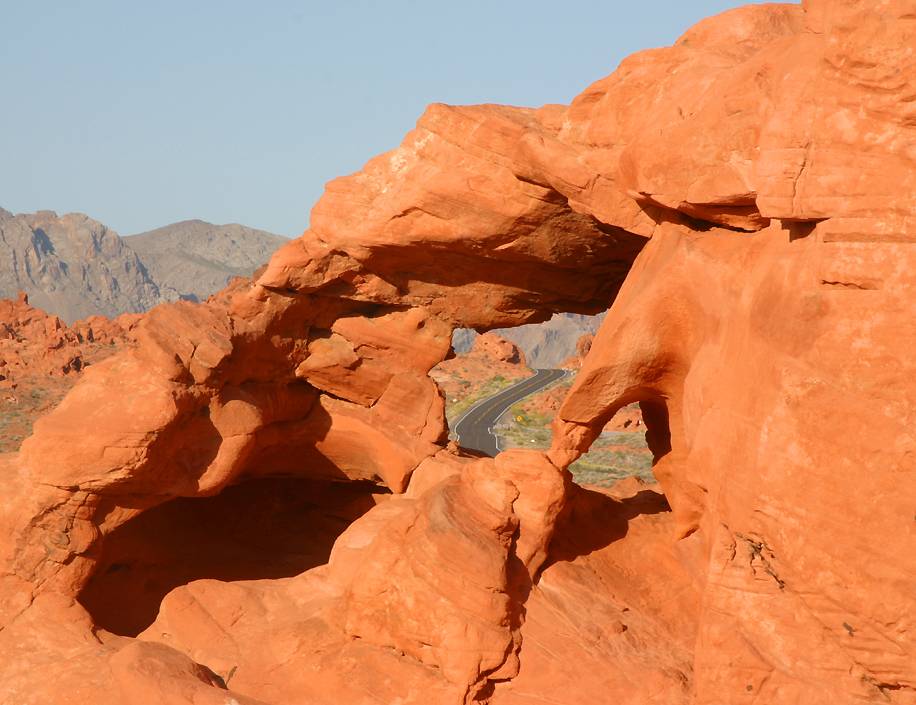
|
|
See what I meant when I said that they're all over the place? |
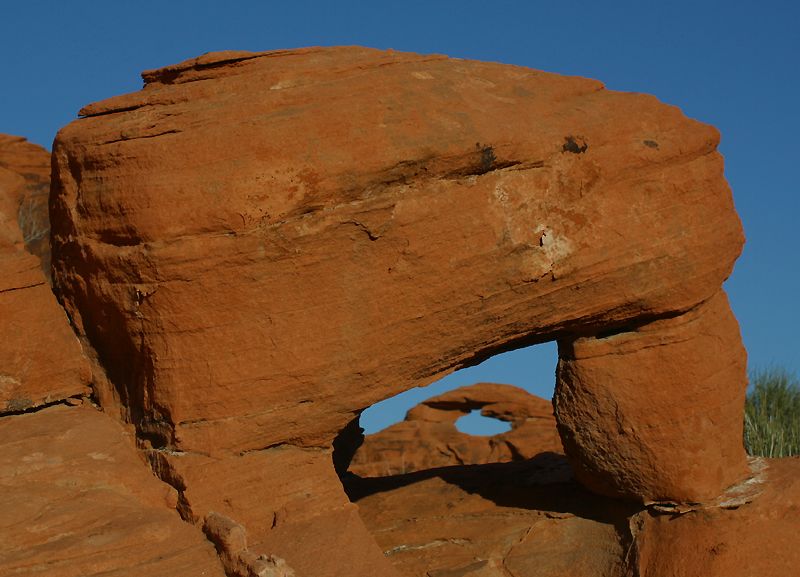 |
|
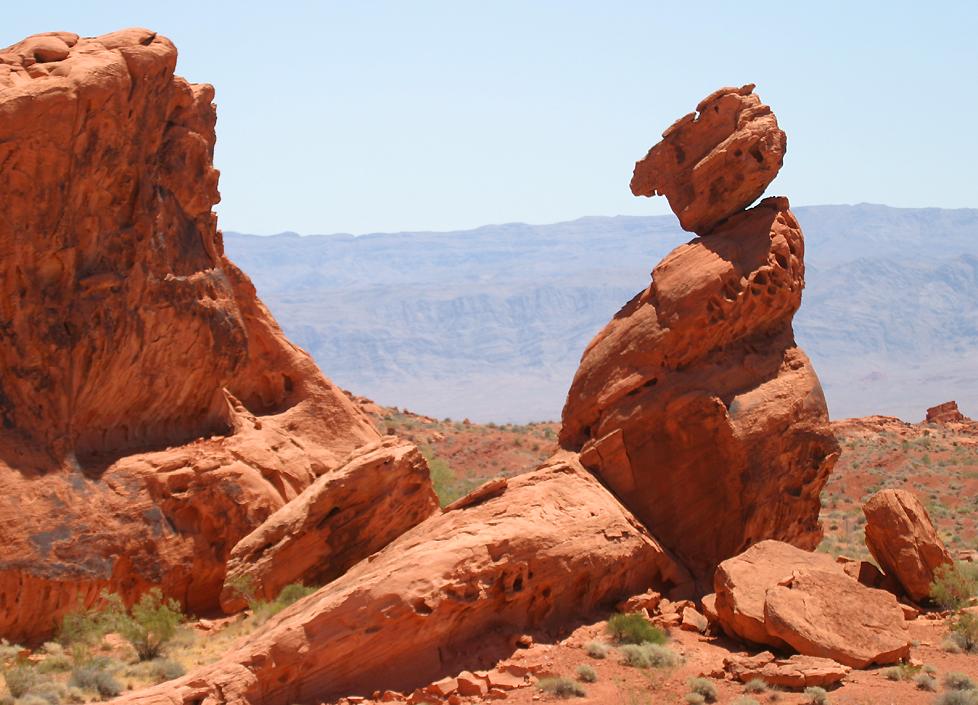
Balanced rocks are almost as common as the arches - this one is right beside the visitor center. |
|
|
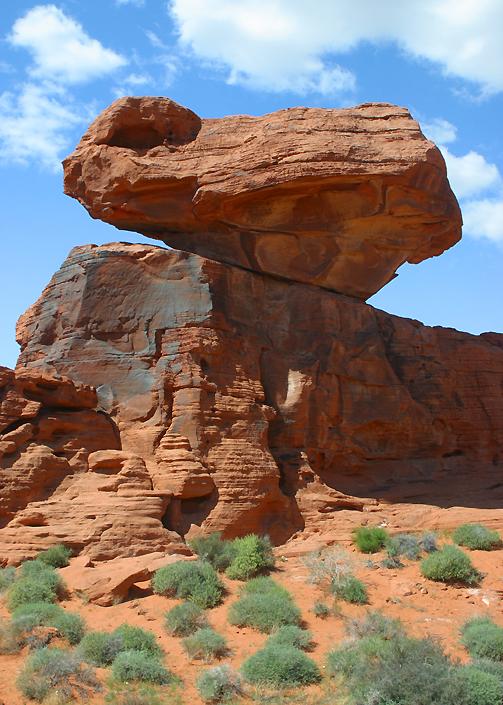
Here's another large balanced rock. The black surface is caused by "desert varnish", a very slow-building chemical layer of manganese oxide on a clay base; it's thought that bacteria might also be involved in the process. |
 |
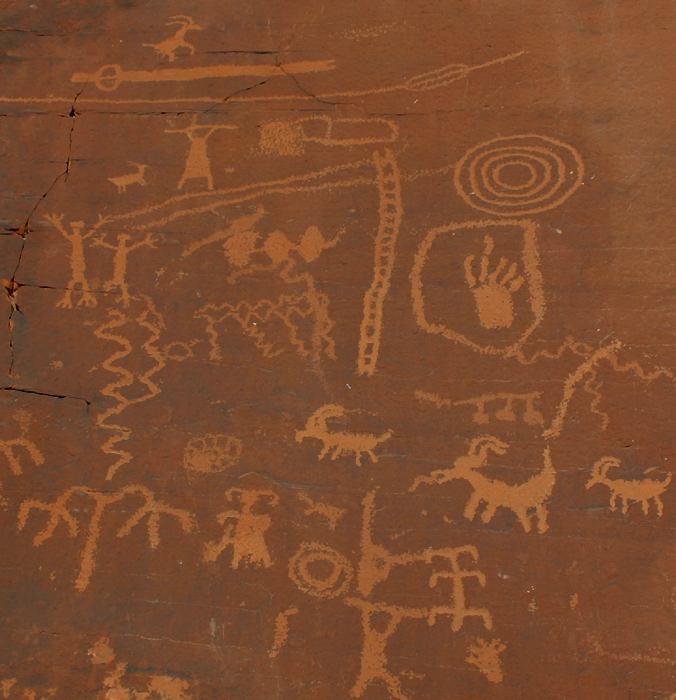
There's more to do in the park than just look at rocks. You can find ancient Indian petroglyphs, or rock drawings, in several places, the most accessible being Atlatl Rock. The word "atlatl" in the Nahuatl language refers to a stick, similar to many used by primitive cultures around the world, used to propel a spear further than it can normally be thrown. In this detail from the drawings from this site, I believe that the second petroglyph from the top is an atlatl; you can see the slot at the right-hand end where the spear is fitted before being thrown. Petroglyphs are often carved onto rock faces coated with desert varnish, since these surfaces provide a nice contrast between the black varnish and the underlying red rock. |
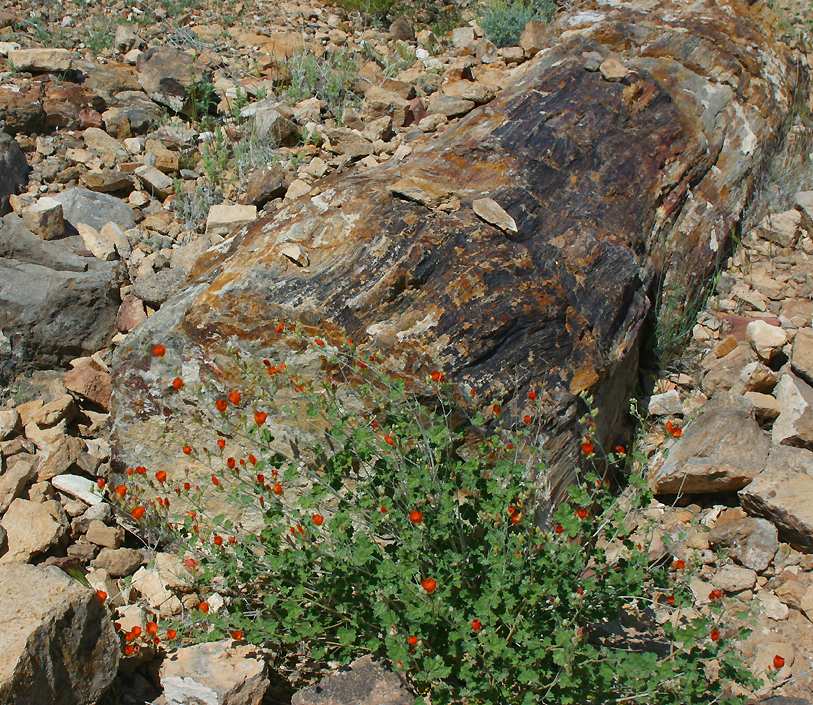
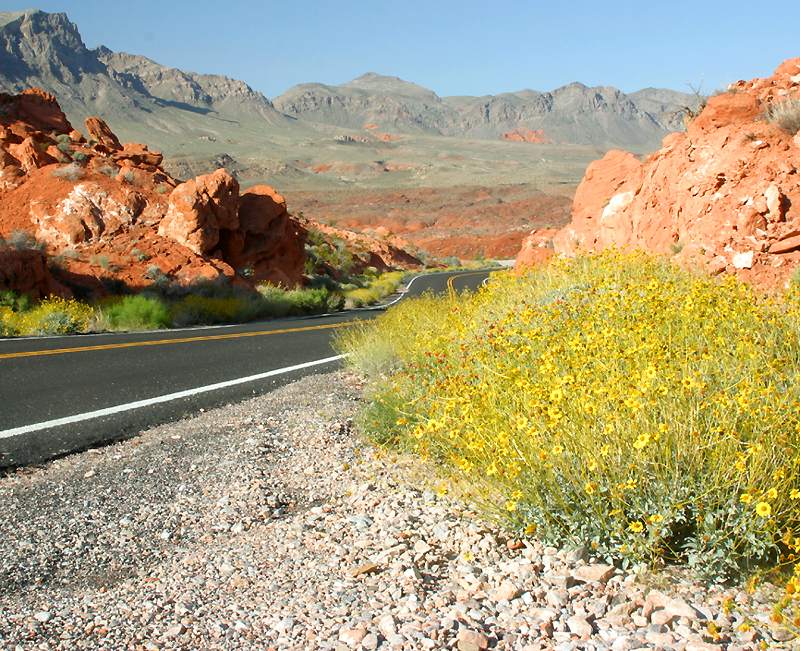
Many of the desert's insects are only active during the brief period in spring when the flowers are out; at this time there were hundreds of interesting looking caterpillars around, as well as bee flies. The number of flowers varies vastly from year to year, depending entirely on how much rain has fallen. This area, along with much of the rest of the south-western United States, has been in the grip of a serious drought for the better part of 10 years, which has lowered nearby Lake Mead to a point where almost all of the boat ramps are unuseable. There's a lot of concern, backed up by archaeological evidence, that this represents normal conditions, and that most of the 20th century was actually unusually wet. |
|
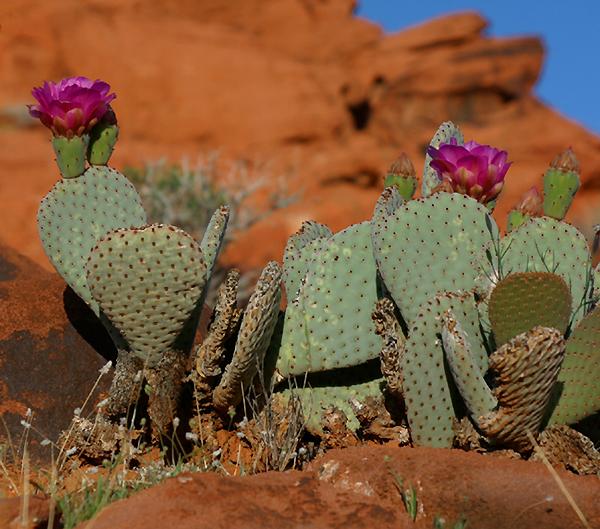
The cacti are one family of plants which can reliably be counted on to blossom even if the
weather has been dry.
This is a beavertail cactus, they're the most common ones in the park, together with the cholla cactus which has green flowers. |
 |
|
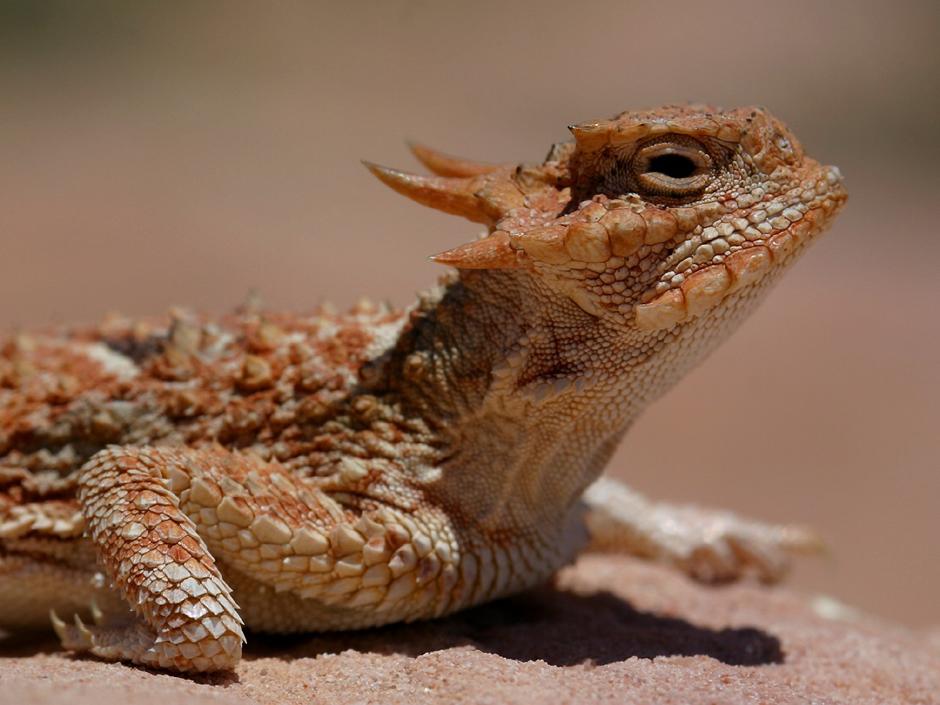
Spring is excellent for finding flowers and insects, but it's still too cool for many of the reptiles, though you might see at least a few chuckwallas. I was back just six weeks later at the end of May, and found many of the Valley of Fire's lizards out and about. As well as the chuckwallas and this fascinating horned lizard, the Valley of Fire also has a fairly good population of gila monsters, one of only two poisonous lizards in the world. Although I searched, I didn't see any of them, nor any snakes or tortoises, but I still consider my encounters with the lizards one of the best highlights of my trip. |
|