| Highlights
of the Czech Republic |
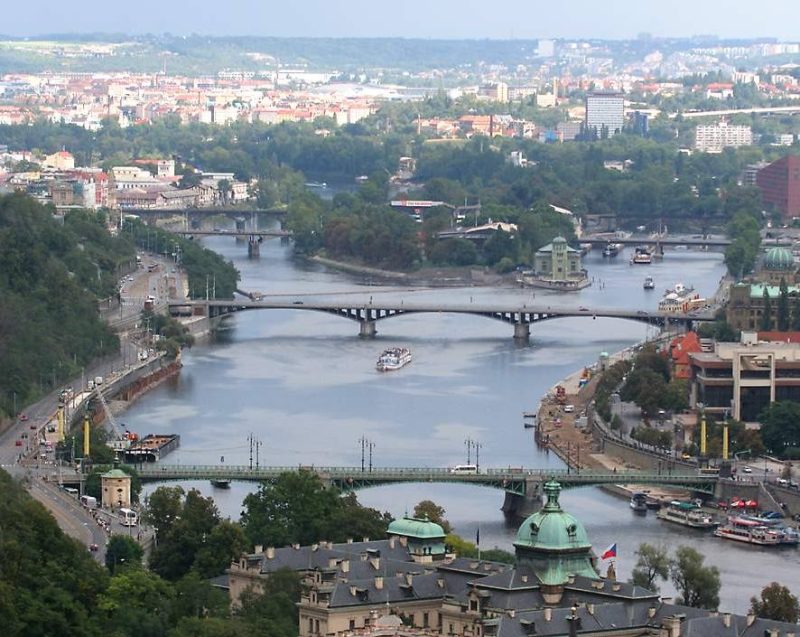
| If
you're visiting the Czech Republic then you'd be crazy not to visit the
capital city of Prague, known locally as Praha. As well as
having unbeatable architectural and other cultural sites, it's also got
a beautiful location on the Vltava river, with wooded hills and parks directly
opposite the pedestrian friendly center. |
 |
| Old
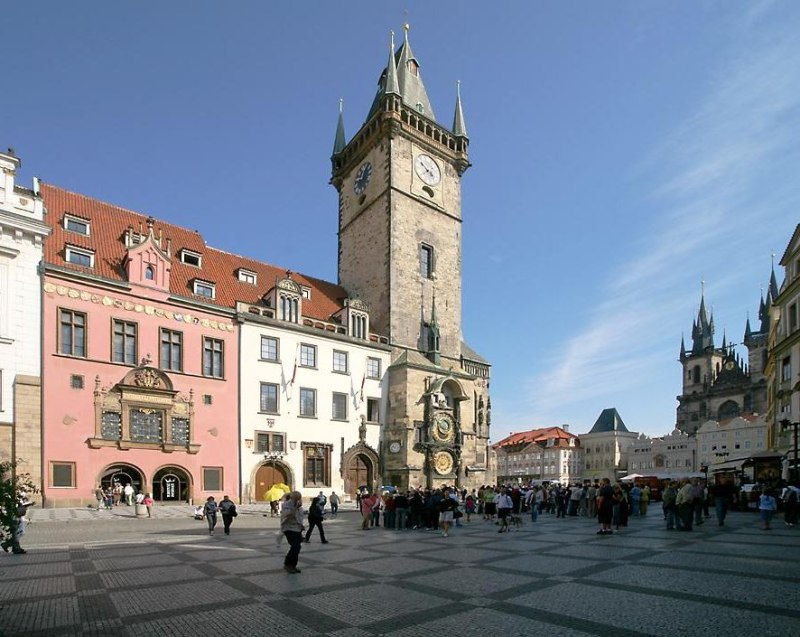
Town Square is the very core of Prague, with lots of attractive architecture
around its sides and many places to eat and drink. The buildings
on the left of this photo are all part of the old town hall, they used
to be privately owned until bought for this purpose. |
 |
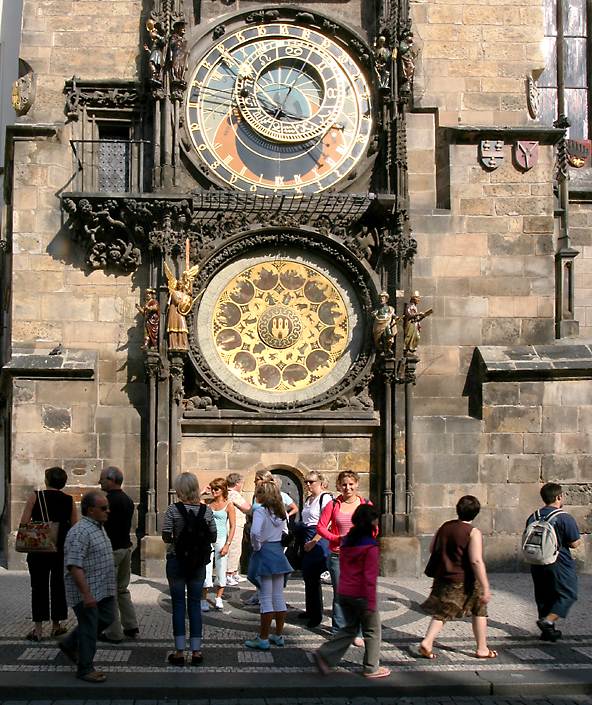
 Here's
a closeup of the astronomical clock at the base of the town hall tower.
It was built in 1490 and at the turn of the hour it puts on a minute long
show with apostles moving out of the window to the left of the clock.
The four figures
to either side of the top clock face represent Vanity, Greed (a Jewish
money-lender), Death, and a Pagan Invader (a Turk); around the bottom clock
face are a Chronicler, Angel, Astronomer and Philosopher. |
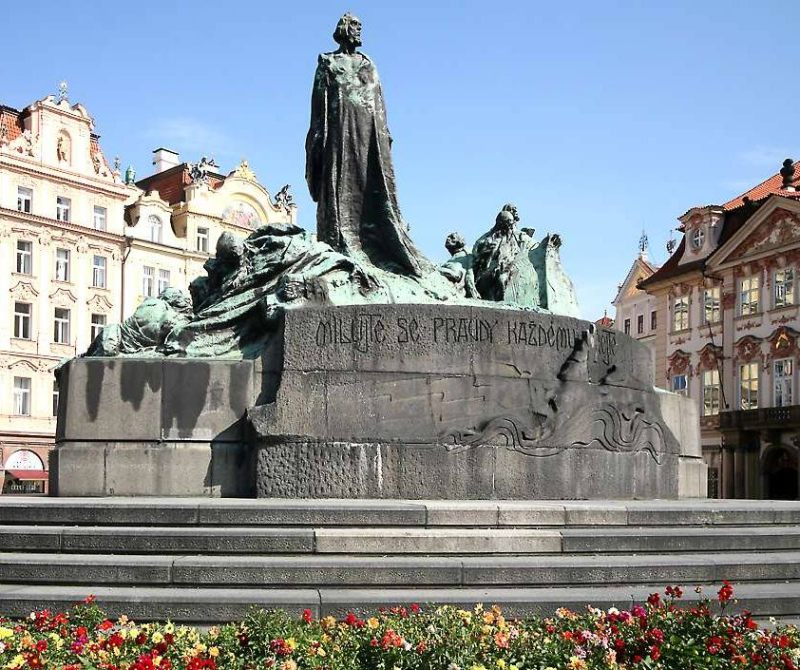
| At
the far end of the square is a statue of Jan Hus, who started a movement
to reform the church about a century before Martin Luther in Germany split
the church into catholic and protestant wings. Hus himself
was burned to death at the stake but his teachings sparked a revolution
and his followers resorted to violence and started a local tradition of
"defenestration", in which Hussites would throw catholics out of a window
to their deaths, and vice-versa. Apparently the word defenestration
has now entered the vocabulary of computer geeks, who use it to refer to
the closing of windows on a computer in order to improve response times,
or the removal of the Windows operating system itself! |
 |
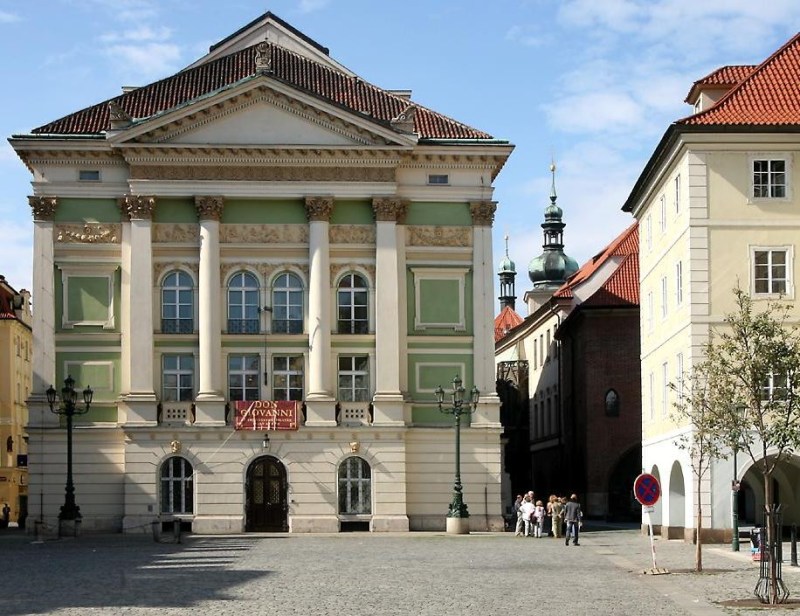
| The
architecture of the Estates Theater doesn't do much for me, but it's definitely
a cultural icon, being most famous as the location where Mozart's opera
"Don Giovanni" was premiered. Appropriately, much of the movie
"Amadeus" was filmed in the Czech Republic, since so much of the period
architecture was spared destruction during world war two. |
 |
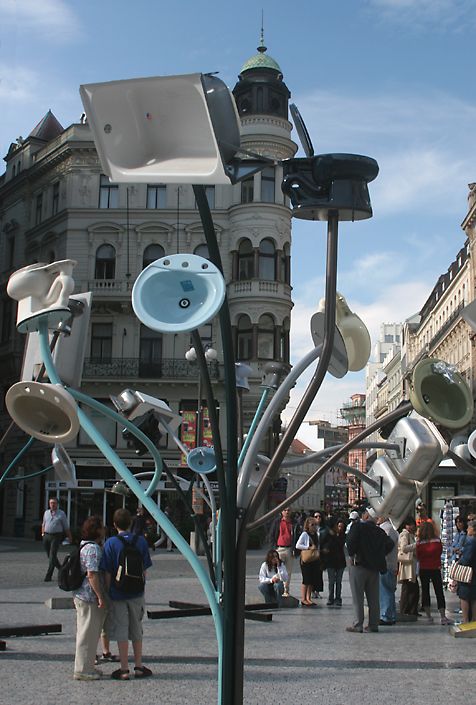
 Prague
has plenty of modern art, too - if that isn't a contradiction in terms!
Here's a very popular
piece, consisting of some, ah, rather utilitarian household items! |
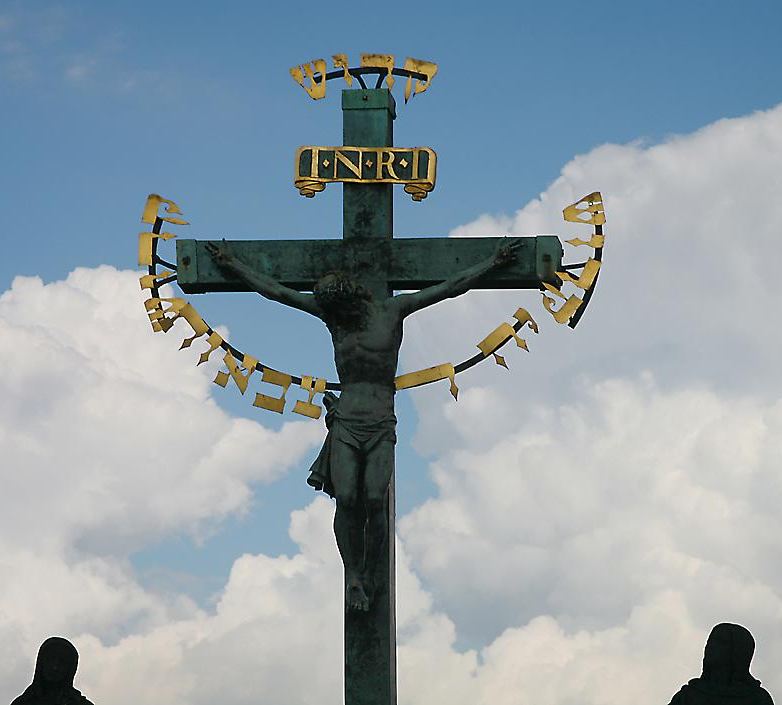
| A
survey of Prague like this one can only cover a small fraction of the highlights
of the city, but one feature almost every tourist will encounter is the
Charles Bridge across the Vltava river, completed around 1400.
Reserved for pedestrians, it is packed with street performers and vendors
and lined with religious statues. This crucifixion scene with
Hebrew lettering ("Holy, Holy, Holy" around the top and sides, though I'm
not sure what the bottom script says) was probably a not too subtle reminder
to the local Jewish community of their supposed sins, a somewhat ugly reminder,
like the Jewish money lender on the astronomical clock, of the pervasive
anti-Semitism that gripped Europe for the last millenium or more, an attitude
which the church has now officially repented for. |
 |
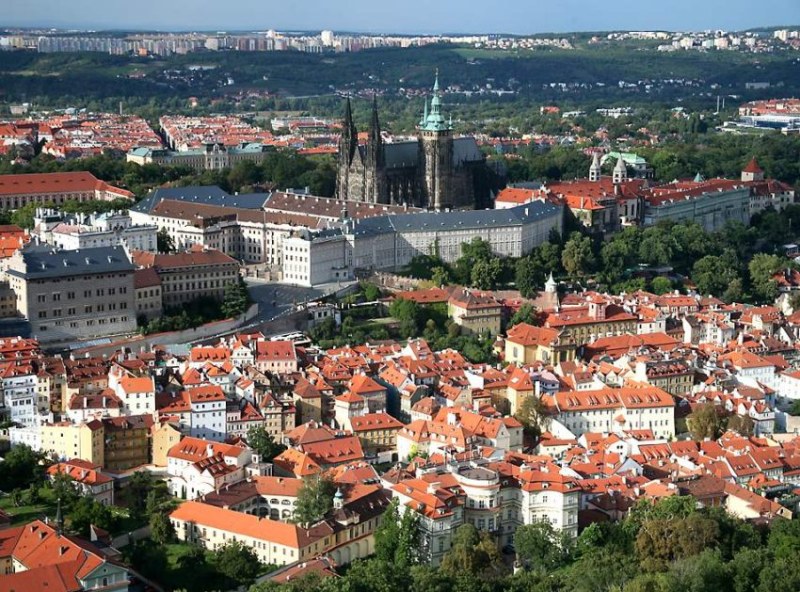
| The
reason everyone crosses the Charles Bridge is to get to Prague castle,
which involves a fairly steep climb up cobbled streets past fairytale perfect
houses and shops. The castle is actually a large complex of
buildings, with the Schwarzenberg Palace on the left-hand side of this
photo, the first courtyard with Buckingham Palace style unsmiling guards,
the tall towers of St Vitus cathedral, and the various other palaces, churches
and halls surrounding the cathedral. |
 |
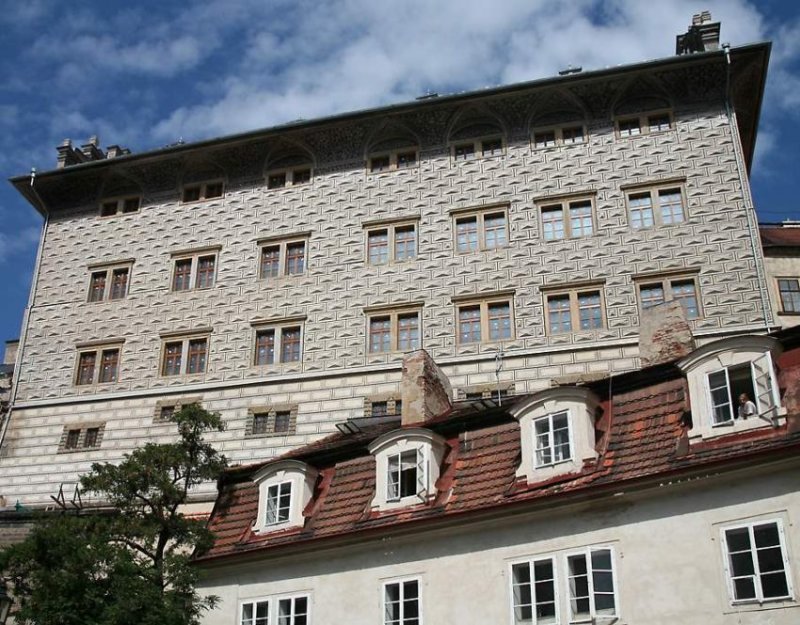
| Here's
a closeup of the Schwarzenberg Palace, not to be confused with the palace
of the same name in Vienna, though it got its name from the same royal
family. Over 400 years old, it was the home of the Museum of
Military History but is apparently now being renovated for the National
Gallery. Although the outside walls of the palace look as if
they're made of raised bricks, they're actually entirely flat, an illusion
achieved by the use of "sgraffito" decoration, which can be seen in various
places around the country. |
 |

St Vitus cathedral was started in 1344, but remained incomplete for almost
600 years until work finished in 1929!
The long construction period means that although largely built in the originally
intended Gothic style, there are also many romanesque and baroque elements.
The cathedral contains the Czech crown jewels, tombs of various royals
including the Holy Roman Emperor Karel IV, after whom the Charles Bridge
is named, as well as a holy relic in the form of the arm of St Vitus himself!
St Vitus was a martyr who died during a period of persecution in the pagan
Roman empire, supposedly from being thrown into a pot of boiling oil.
He's now the patron saint of actors, comedians, dancers and epileptics
(the neurological condition called "St Vitus dance" is named after him),
and he's also the guy you need to get in touch with if you're concerned
about lightning, animal attacks and oversleeping! |
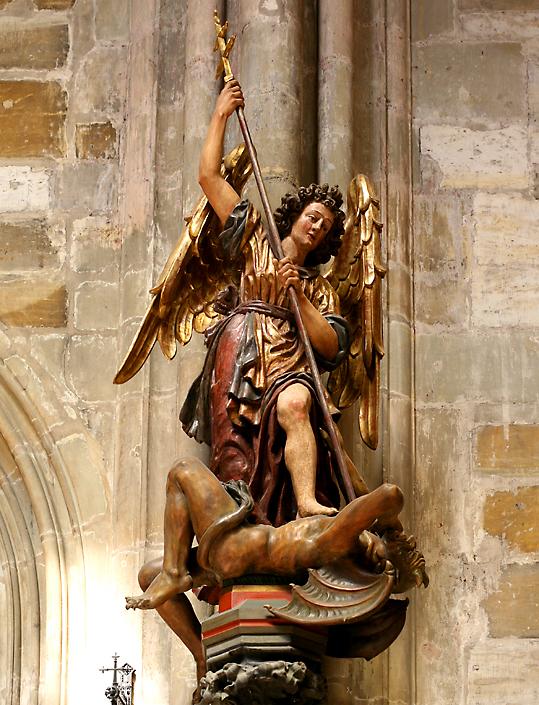
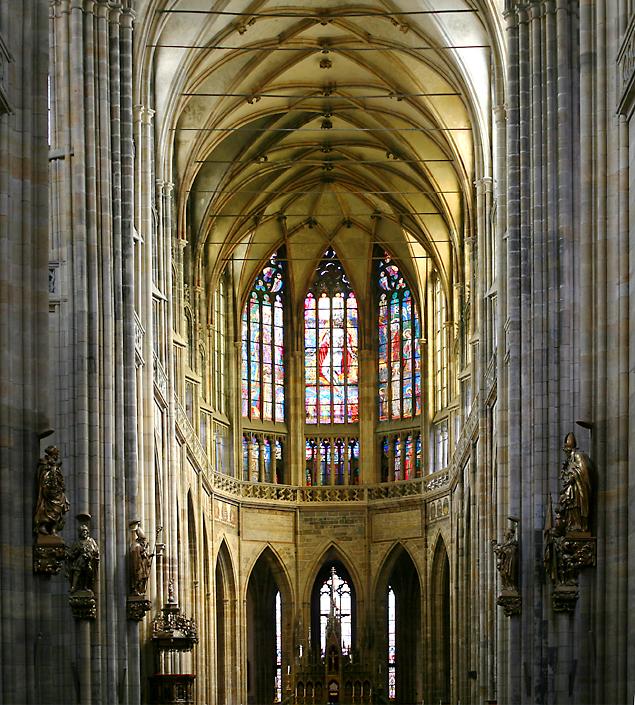
I was mildly disappointed by the cathedral, it's definitely big enough
but much of the old decoration didn't captivate me and nor was I too impressed
by some of the stained glass windows which were created in relatively modern
times. Still, there's so much stuff inside that you're almost
certain to find something that strikes your fancy, and I did rather like
this statue, though probably for all of the wrong reasons!
As you can clearly see, it's a rather insightful depiction of callous butchery
by a repressed, over-clothed angel who was mindlessly victimizing a poor
fun-loving naked demon who was probably whistling and minding his own business
moments before the fateful encounter. The demon is clearly unarmed
and the angel's totally unmasked pompous and self-righteous disdain for
the Bohemian pleasures of the demon is made all the more ironic by the
fact that Prague is in fact the capital of Bohemia! |
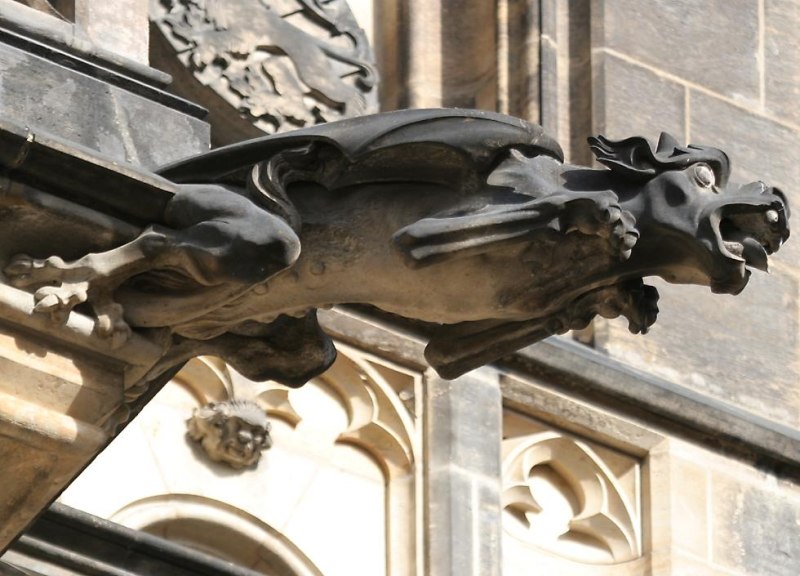
| And
as if all of the angels and demons inside aren't enough, who can resist
the many gargoyles gracing the outside of the building, just what a Gothic
cathedral needs! As well as monstrous dragons, demons and scorpions,
there are more ordinary critters like monkeys and eagles, as well as people
in various stages of torment or about to inflict musical torment on others!
As elsewhere, the gargoyles serve both a spiritual and a purely functional
purpose, since the cathedral's rain piping comes out of their mouths and
carries the water away from the building itself. |
 |
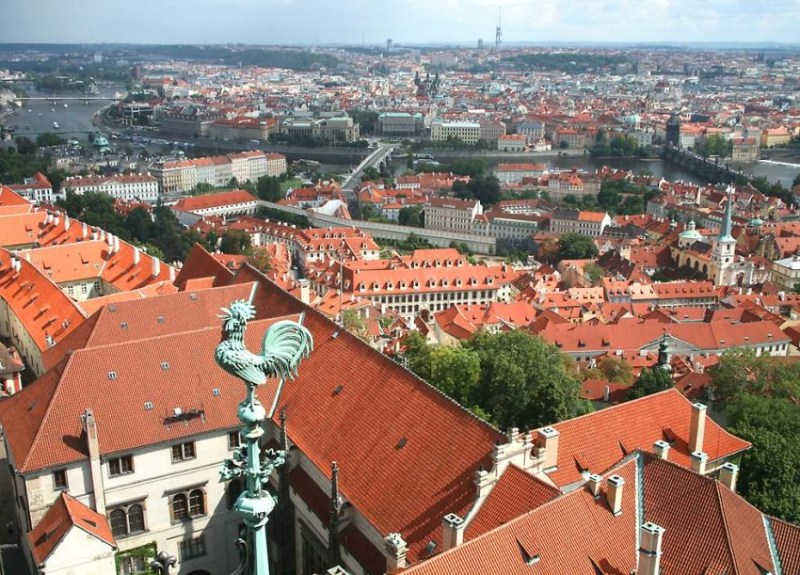
| You
don't have to pay to enter the castle grounds or most of St Vitus cathedral,
but it's well worth buying a ticket to climb the Great Tower, since it
has magnificent views down over the city in every direction, as well as
upwards towards the 97 meter high steeples themselves. |
 |

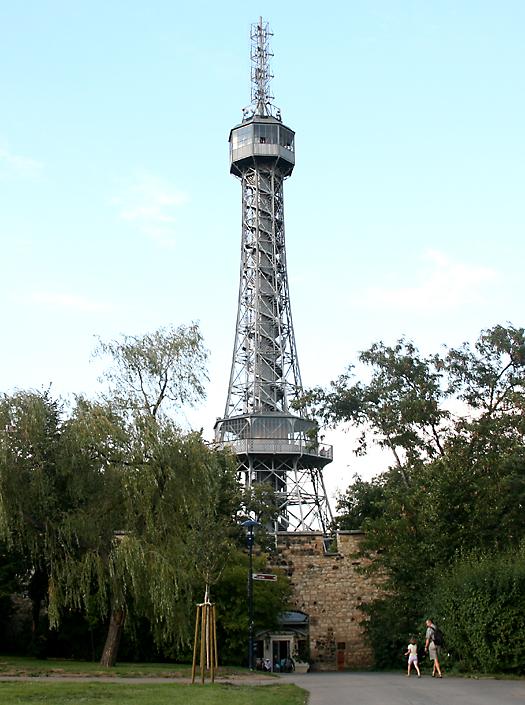
A fairly short walk further up the hills near the cathedral is the 60 meter
tall Petrin Tower, built out of iron in 1891 for the Jubilee Exhibition.
If you don't want to walk then you can take a funicular railway up to the
top, though you have to get to the south-west side of the hill to board
the railway.
A rather
feeble imitation of the Eiffel Tower, it's still worth buying a ticket
and climbing the 299 steps to the top viewing level, because the views
are even better than from the cathedral. |
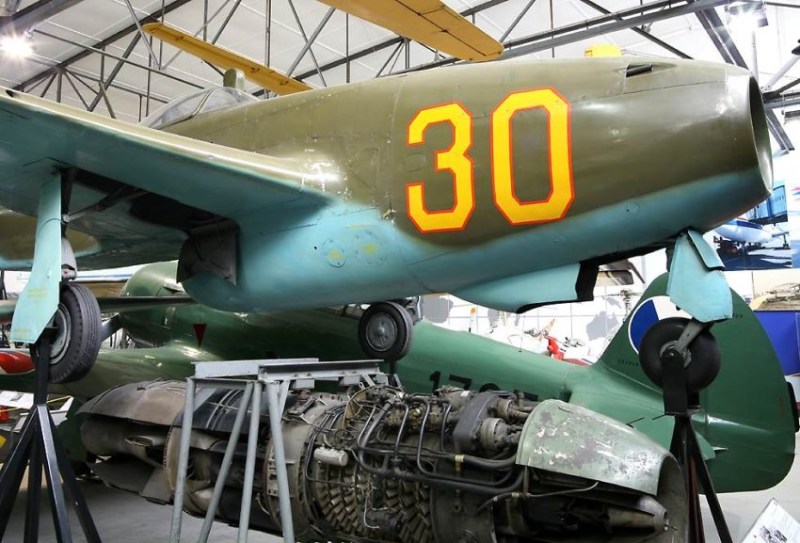
| One
unusual attraction in Prague is the aviation museum in the north-eastern
suburb of Kbely. The Czech Republic has a very long history
of aircraft design and production which continues to this day, and the
museum contains a fascinating collection of aircraft from world war two
right up to the present day, including many oddities such as this Yak-17
"Feather", one of the earliest Russian fighter jets. |
 |
| It
was no coincidence that I went to the aviation museum, since the main reason
I visited the Czech Republic was to attend the
Czech International Air Fair. I chose this airshow out
of the dozens held in Europe each year because of the wide variety of aircraft
from different nations which were on display, and in particular because
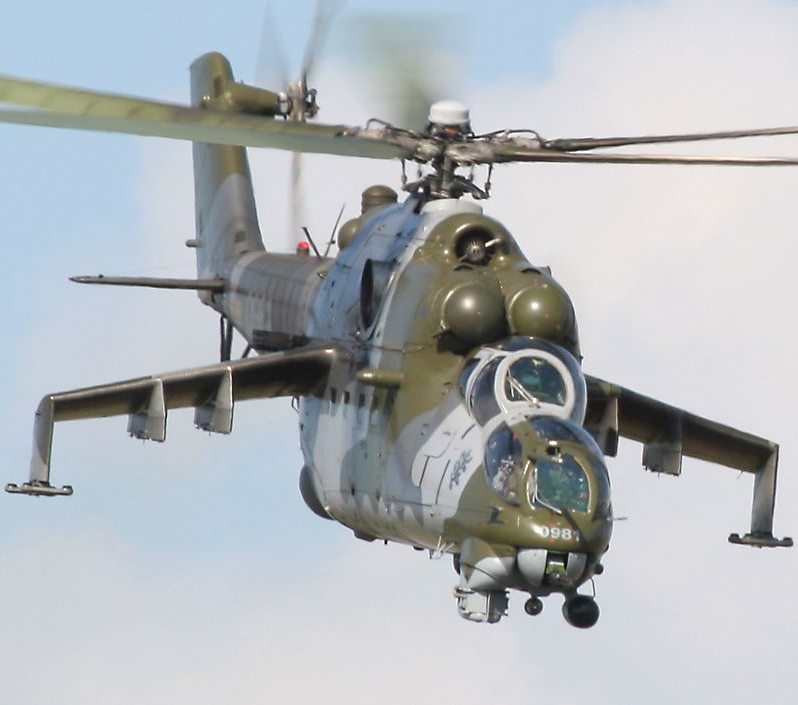
I wanted to see this helicopter, a Russian designed Mi-24 "Hind" gunship,
a type which became famous when it was used extensively in Afghanistan. |
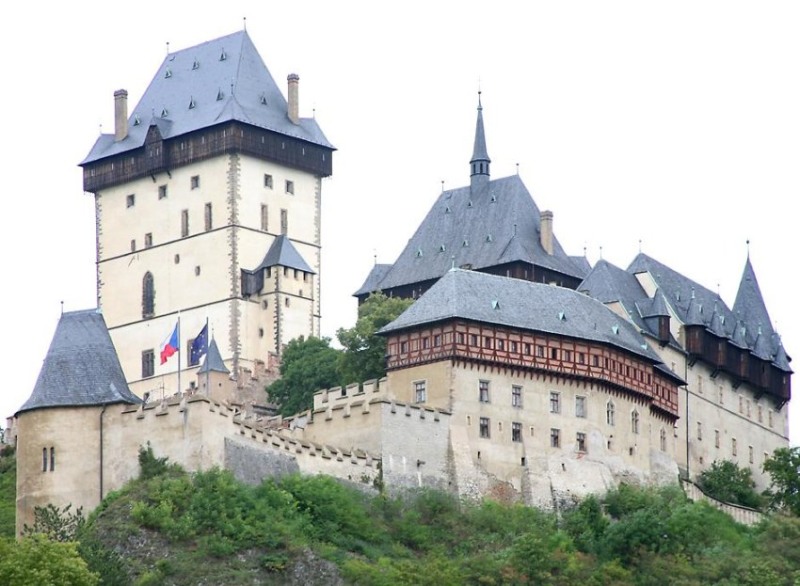
 |
| Just
because I travelled thousands of kilometers to see killing machines, that
doesn't mean that I'm not also able to appreciate the finer points of a
country's culture! As well as visiting Prague and Brno, I also
rented a car and hit as many tourist spots as I could during my ten day
visit. A good starting point for any visitor is Karlstejn castle,
just a short drive south-west of Prague. This huge structure
is surprisingly well hidden up a small wooded valley and, since it's forbidden
to take photos inside, the best views are all from the outside, though
it's still worthwhile to take a tour of the various royal rooms and living
areas. |
 |

It was a rather dreary day when I visited Karlstejn so, once I'd taken
a few photos and done the tour, I did what any tourist would do - I went
out into the surrounding forests to photograph the
local mushrooms and toadstools!
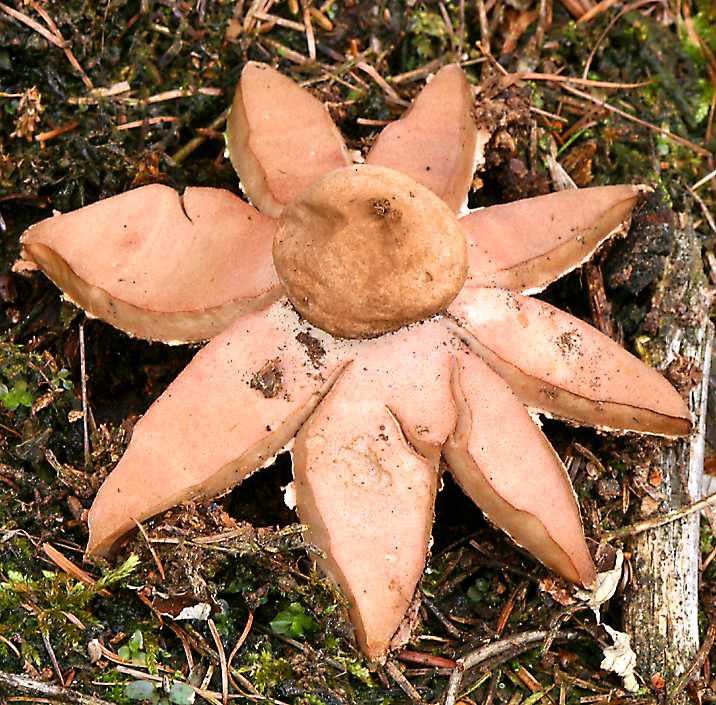
There were certainly plenty of weird and wonderful fungi to see, including
this "earthstar", one of several varieties of puffball in the area, and
even some colorful and exotic slime mold, a lifeform which Spinal Tap singer
David St Hubbins says will one day take over the planet, if ever it can
decide whether it's a plant or an animal. |
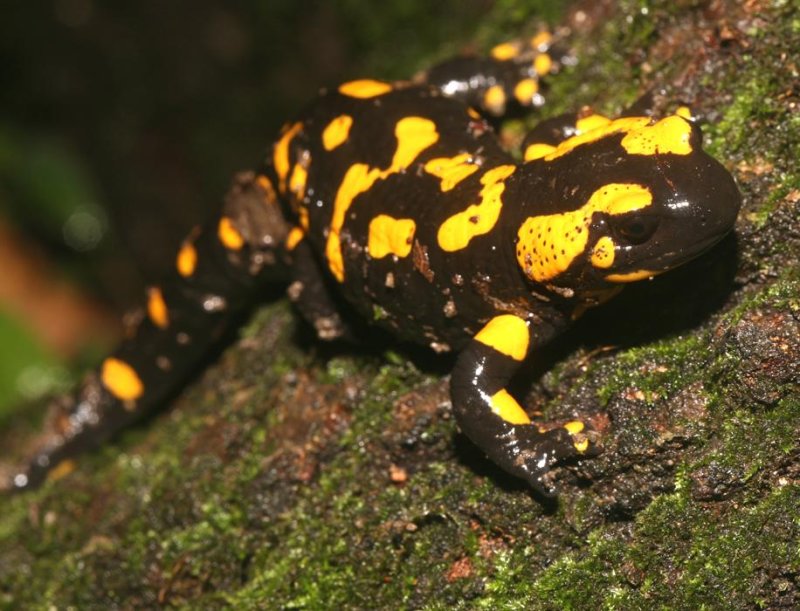
| It's
an ill wind that blows no good, and the rain that fell while I was at Karlstejn
turned out to be very lucky for me when I noticed this little critter just
a few hundred meters from the castle. I could scarcely contain
myself when I saw it, because it's the first salamander I've ever seen.
I've photographed many
other amphibians like frogs and toads, but never come across one of
these critters before. Like toads, most salamanders are poisonous
and in the case of this fire salamander, the yellow spots correspond fairly
closely with its poison glands. |
 |
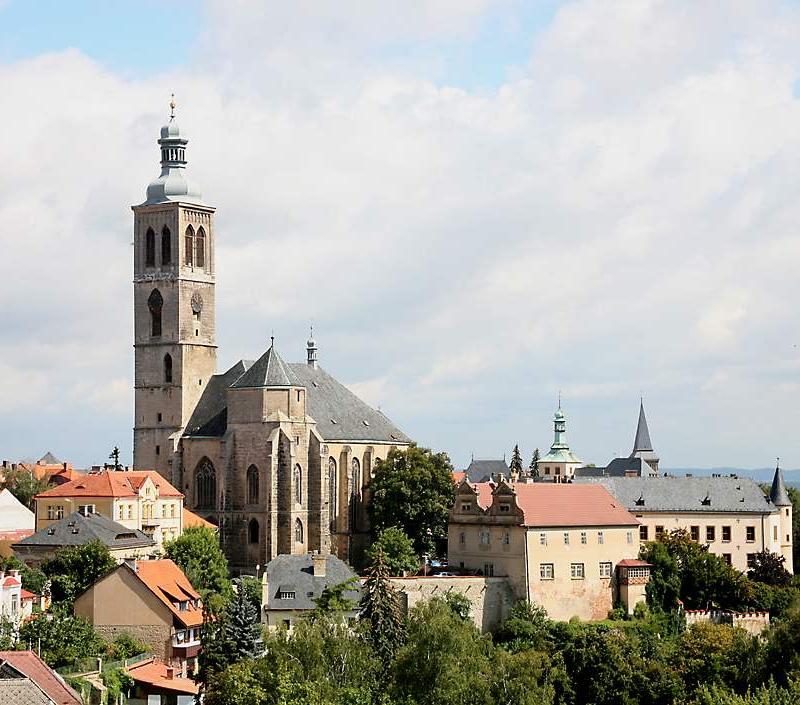
| Venturing
a little further from Prague, I came to the historic city of Kutna Hora,
about 70 kilometers due east of the capital. Located picturesquely
on some hills, it has lots of fine architecture, including the Church of
St James shown here; the building on the far right is the Italian Court,
named after the Italian specialists brought here to operate the royal mint;
the buildings later became the town hall. |
 |
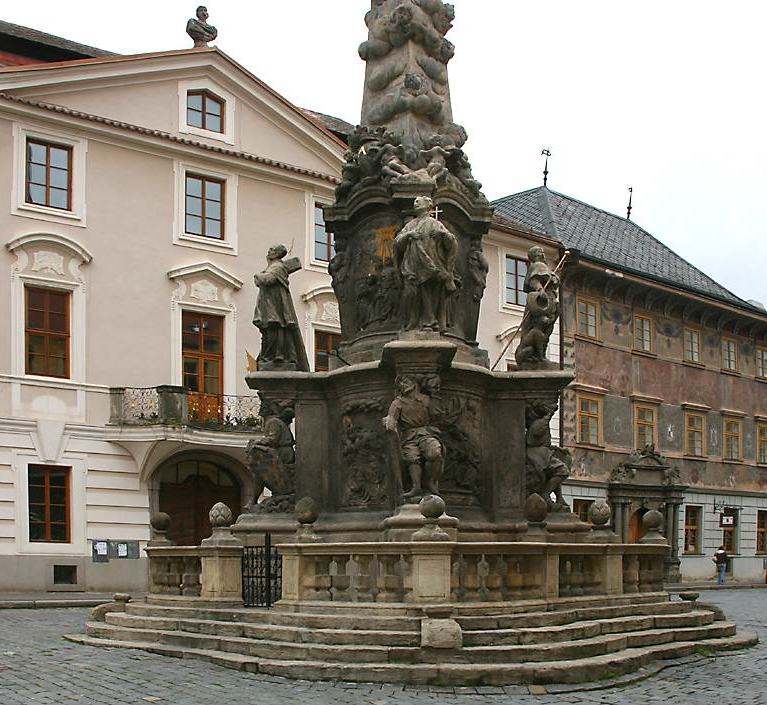
| Like
many Czech towns, Kutna Hora has a "plague column" raised in 1715 and dedicated
to the virgin Mary in gratitude that only half the population had been
wiped out by the dreaded disease, instead of everyone! To the
right you can see the "marble house", the one-time home of a prominent
citizen called Jan Sultys. |
 |
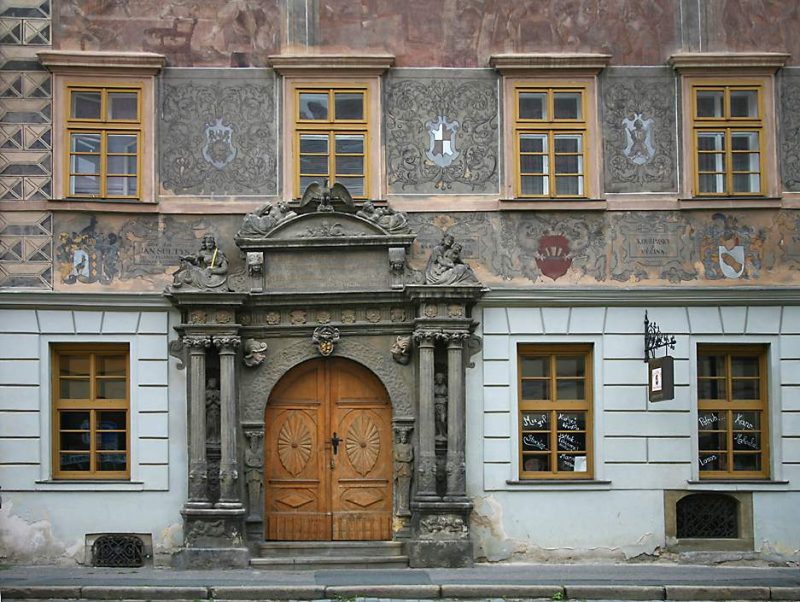
| In
this closeup photo you can see Jan Sultys' name above and to the left of
the door, but the building now houses a restaurant. Still,
you can just feel the age of the place from the twisted stonework!
The rich decorations on the house are another example of the sgraffito
technique previously seen on the Schwarzenberg Palace in Prague.
The technique consists of applying layers of differently coloured paint
and then scraping away areas from the top layers to reveal the colours
below. |
 |
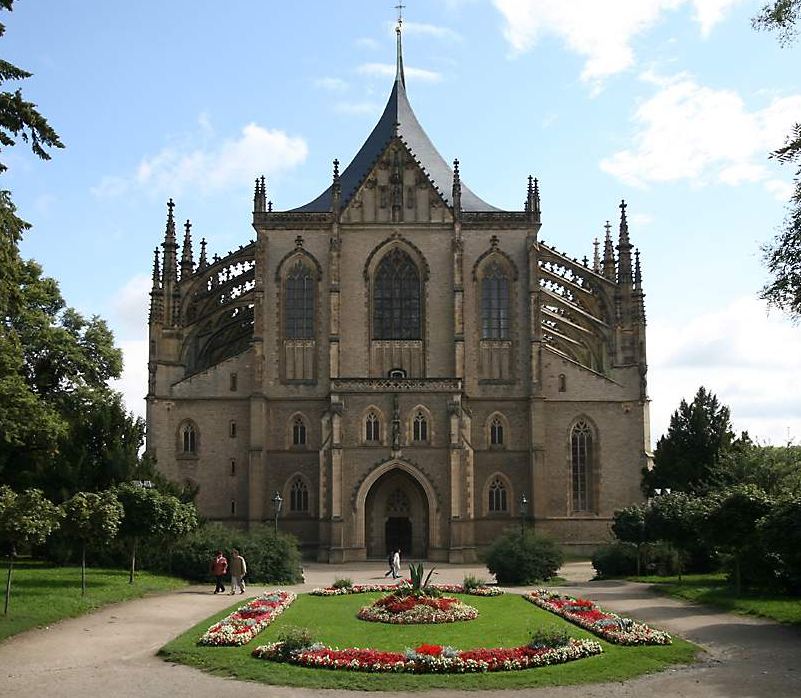
| No
building in Kutna Hora is more magnificent than the Cathedral of St Barbara,
which I thought was in some ways superior to St Vitus Cathedral in Prague.
In fact it's generally considered to be one of the best Gothic churches
in the whole of Europe and was far brighter inside than St Vitus, and with
almost as many cool gargoyles on the outside! Unfortunately
though, it wasn't permitted to take photographs inside. |
 |

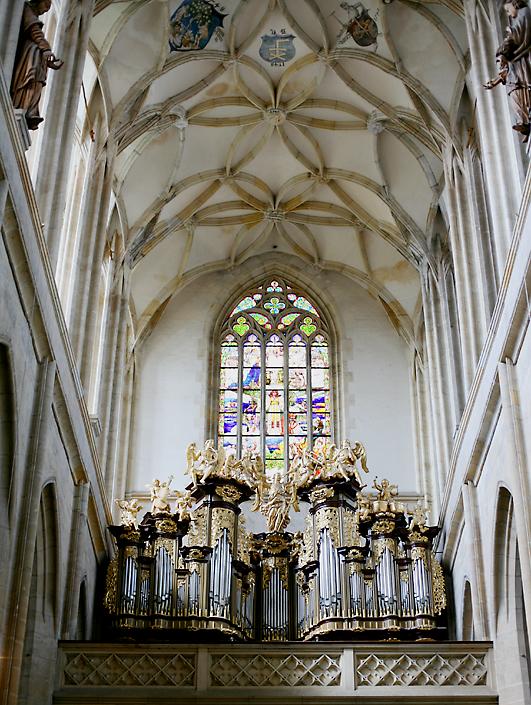
Whoops, sorry officer, the camera shutter must have gone off by accident!
This is the wonderful interior of St Barbara, with stained glass which
seemed a lot more attractive than the stained glass in St Vitus, and an
organ which was better by far, topped off with all sorts of angels and
cherubs playing drums, horns and stringed instruments. For
a much closer view of the organ, left-click this photo to open a new window
with a blown-up version of the same photo in computer wallpaper format. |
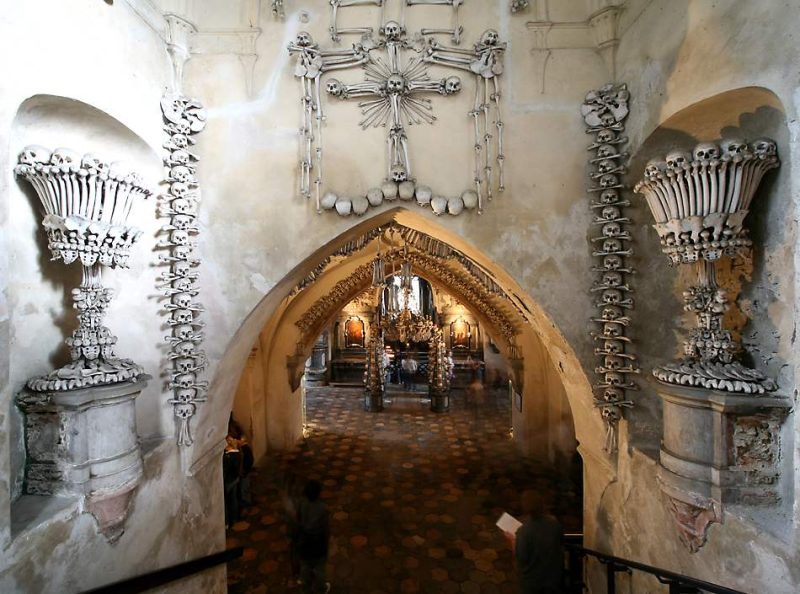
| By
far the strangest tourist attraction in Kutna Hora isn't in the old town,
but rather in a former town called Sedlec which is now a suburb of Kutna
Hora. The local monastery's graveyard began to overflow during
an outbreak of the plague and so the 14th century All Saints' Chapel was
converted into an ossuary, or bone storage building. Then in
1870 a woodcarver called Frantisek Rint came up with the idea of arranging
all of those boring bones into various interesting patterns and structures,
like crosses and the meter and a half tall goblets you can see on either
side of the stairs leading down into the chapel. He even used
the bones to spell out his name on the right-hand wall at the bottom of
the stairs. |
 |
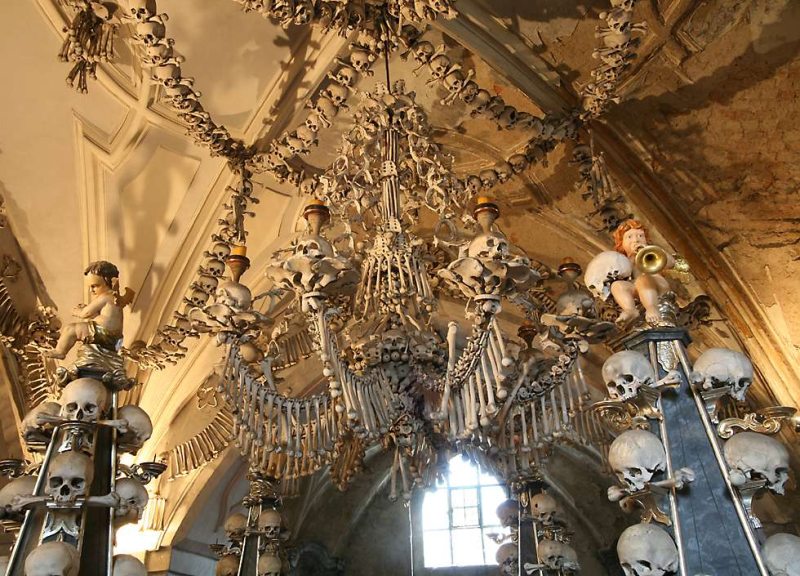
| In
the center of the main chamber is a large candelabra, apparently constructed
from every bone in the human body or, more precisely, several human bodies.
And in case you're still in any doubt, yes, those are all real human bones.
Presumably part of the rationale behind this peculiar form of decoration
is a desire to convey the transitory nature of all human life, a lesson
that's rather disarmingly made by those cute little cherubs tooting their
horns with real human skulls draped across their knees! |
 |

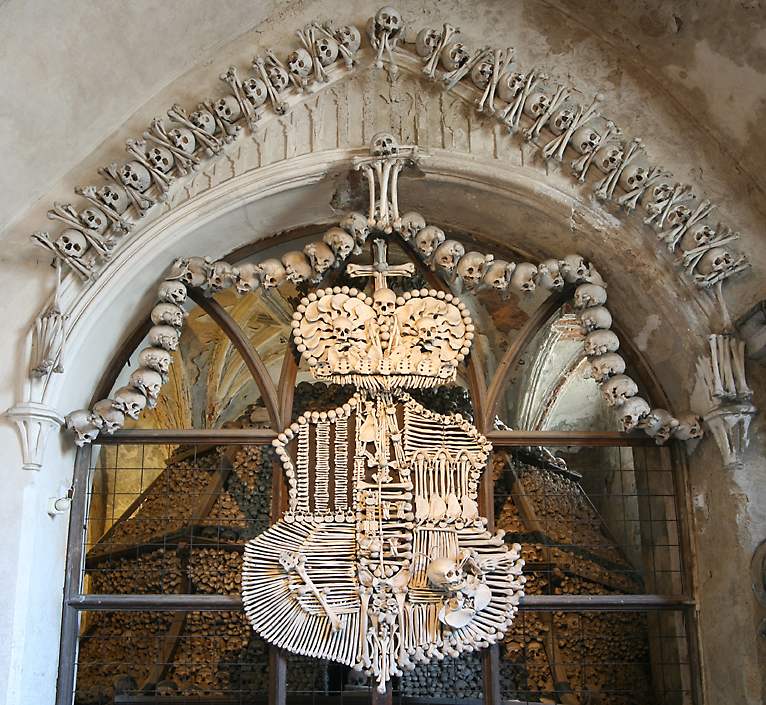
With around 40,000 skeletons stored in the ossuary, Frantisek certainly
had plenty of materials available to flex his artistic skills.
For instance, here's the coat of arms of the same Schwarzenberg clan who
were responsible for the Schwarzenberg Palace, and who footed the bill
for Frantisek to do his work. Part of the coat of arms is a
picture of a Moor having his eye plucked out by a crow, depicted here by
a real human skull and a crow made out of other human bones!
Even so, that's a lot of bones and so he can be forgiven for having a few
left over; in fact he had an awful lot left over, which he arranged into
four large pyramids of bones, one of which you can see behind the coat
of arms. |
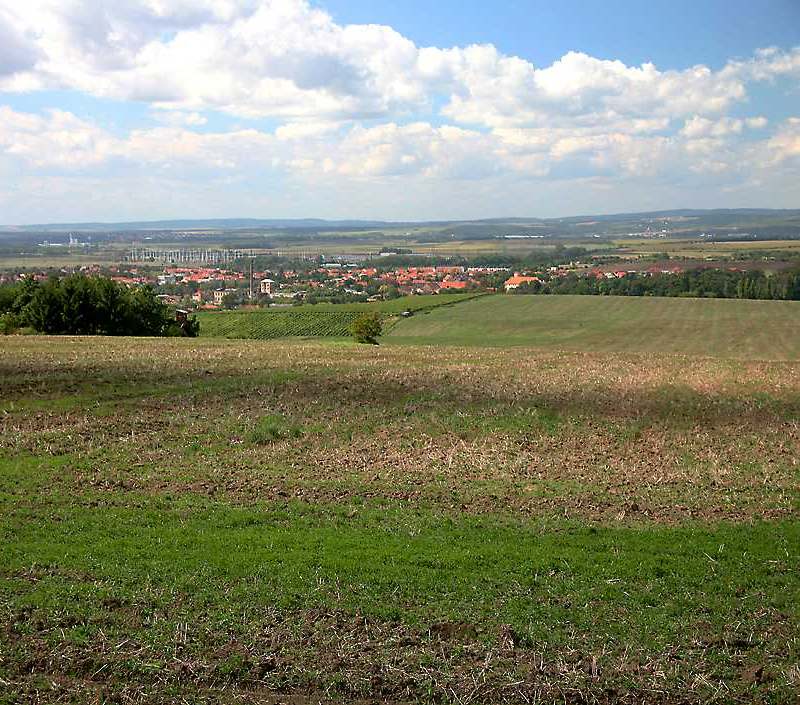
| The
Czech International Air Fair is held at the airport outside Brno, the Czech
Republic's second largest city. Brno is nowhere near as interesting
architecturally as Prague, or even Kutna Hora, but it's pleasant enough
in its own way. The airport actually extends into the right-hand
edge of this photo, which shows the Austerlitz Battlefield, which is where
the Battle of Three Emperors occurred. This was a very major
punch-up between the little emperor Napoleon Bonaparte, Emperor Francis
of Austria and Czar Alexander I of Russia. Napoleon came out
the victor, the Russians headed home with their tails between their legs
and the Holy Roman Empire headed by Francis was dissolved. |
 |
| There
are quite a few renowned chateaus scattered around the Czech Republic,
so I visited Zleby Chateau which is quite near Kutna Hora, as well as this
one here in the town of Valtice, located south of Brno in the province
of South Moravia and only about 5 kilometers from the Austrian border.
Unfortunately, like many of these places it wasn't permitted to take photographs
of the inside, and even forgetting that restriction I was rather disappointed
by Valtice and Lednice, which were declared a Unesco World Cultural Heritage
area in 1997. These heritage sites have become something of
a worldwide racket, with classifications being flung around like candy
to the places which campaign for them most vociferously. As with
Valtice and Lednice, I wasn't too awestruck by the nearby hilltop town
of Mikulov either, all three places were nice but nothing amazing. |
 |
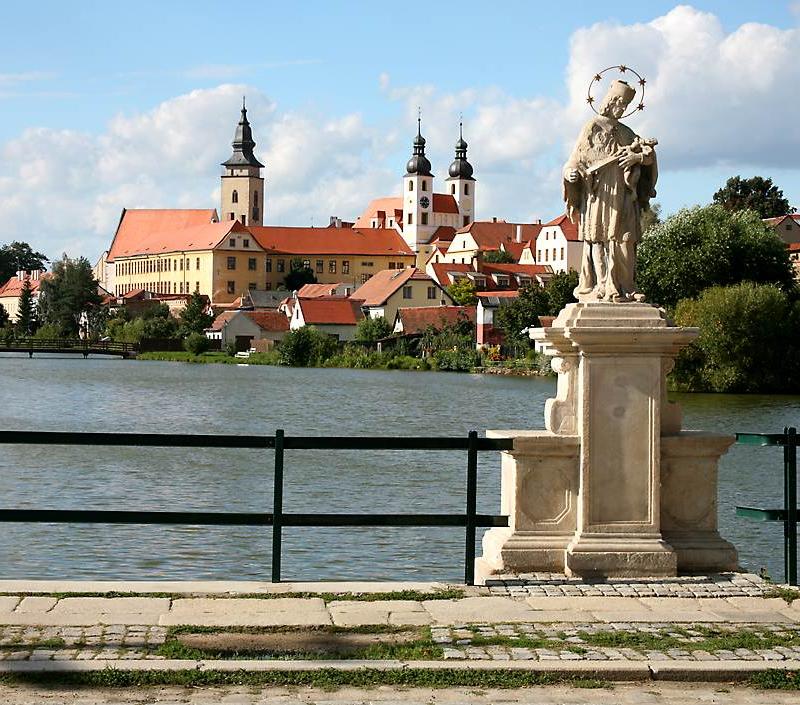
| Thankfully,
on my way back to Prague I decided to drop in on a Unesco World Heritage
List entry which wasn't originally on my itinerary, the town of Telc.
Surrounded by large artificially created fish ponds which doubled as fortifications,
this town was everything I was hoping for in terms of beautiful architecture
and scenery. As you can see, I was also blessed with some picture
perfect weather and I even got to photograph some more
cool mushrooms! |
 |
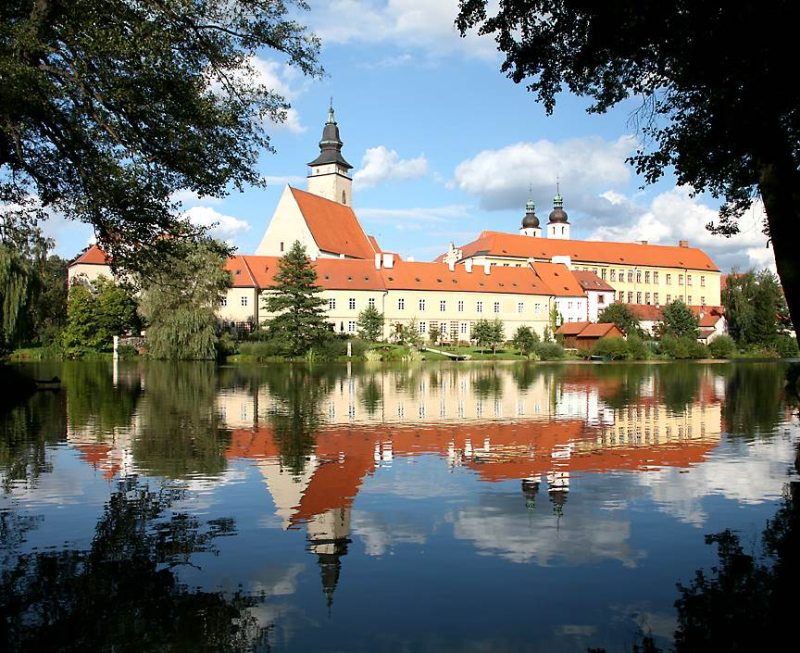
| The
ponds might have provide security against human invasion, but they didn't
prevent a fire from wiping out the town in 1530. The governor
of Moravia had it rebuilt in Renaissance style by Italian architects and
masons, and it's retained this character until today. On the
left hand side of this photo is a former Jesuit college with a lookout
tower, with the Church of St James the Elder next to it. |
 |
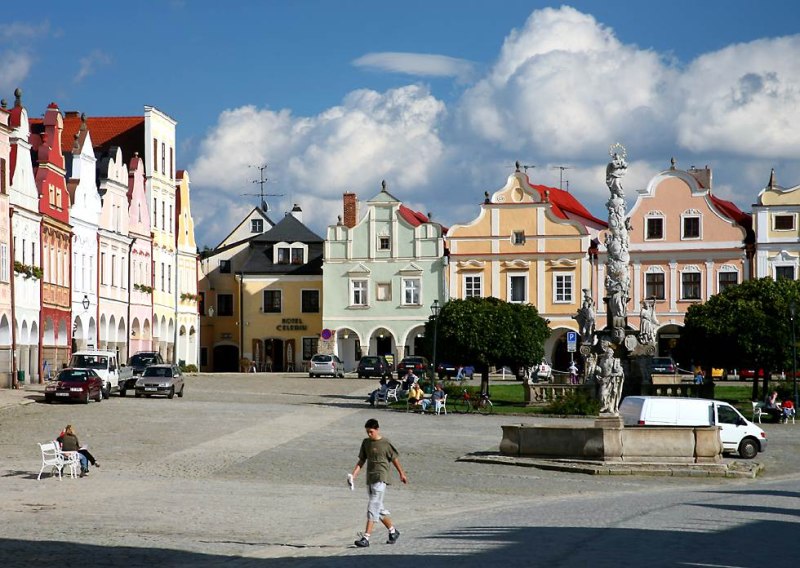
| A
very large square is hidden behind the buildings in the previous two photos,
completely surrounded by dozens of houses with exquisite facades in various
pastel colour schemes. The Marian column at the south-east
end of the square was erected in 1717. |
 |

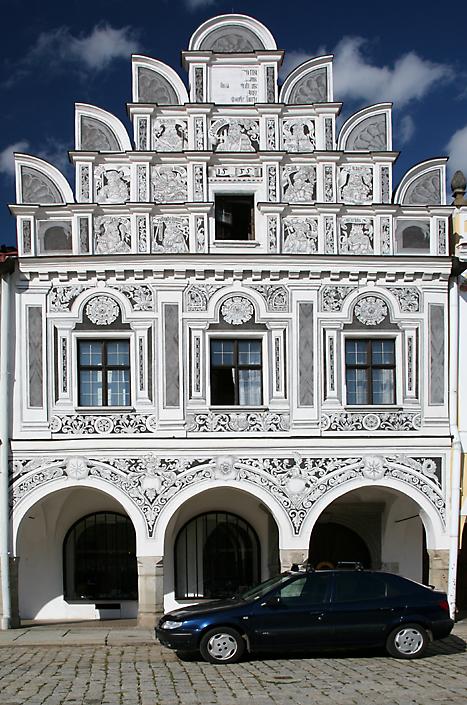
Several of the houses
around the square have sgraffito decoration, and I thought this was the
most beautiful building in this style that I saw in the whole country.
The artistry is extraordinary, and the shape of the roofline and the arches
at the bottom provide a perfect complement to the decorations and create
an excellent overall effect. |
See
the Czech
International Air Fair 2006, the Wildlife
of the Czech Republic and Mushrooms
of the Czech Republic.
 |