
LST 342 (Tank Landing Ship 342)
|
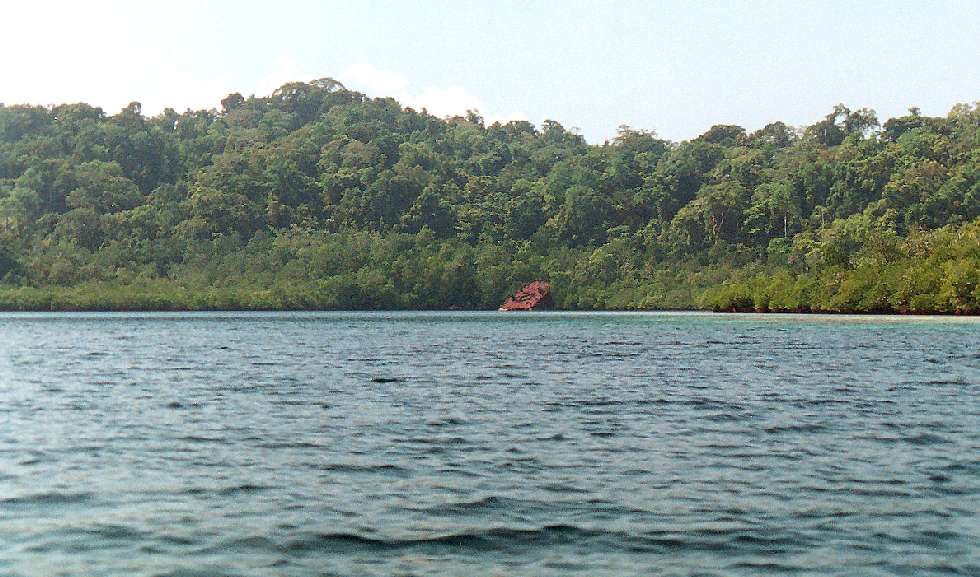
One of the main reasons I went to the Solomon Islands is the large number of accessible wrecks of ships and aircraft from World War 2. Unfortunately, the wrecks are scattered throughout this double chain of islands, which means that you either have to stay a long time or do a small sample of what's on offer. The Ngella Islands (sometimes also called the Florida Islands) are the nearest islands to Guadalcanal, which is where almost all visitors enter the Solomon Islands. The Ngella Islands are the location of several noteworthy pieces of World War 2 history. The pre-war capital Tulagi was here, and on the small islets of Ghavutu and Tanambogo American troops encountered the only Japanese resistance during the initial landings to recapture the islands. The New Zealand Corvette "Moa", which sank the Japanese submarine I-23, went down in this area when it was bombed. I was only doing a day trip, so I bypassed Tulagi in favour of going to Ghavutu and what I thought was Tokyo Bay, a bit over 5 kilometers East of Ghavutu. My guidebook told me that there are two wrecks visible above the waterline here, a Japanese destroyer Karishama and its tender. When I arrived, there was no sign of a destroyer, but on the edge of the jungle I could see the rusting remains of a ship. |
 |
|
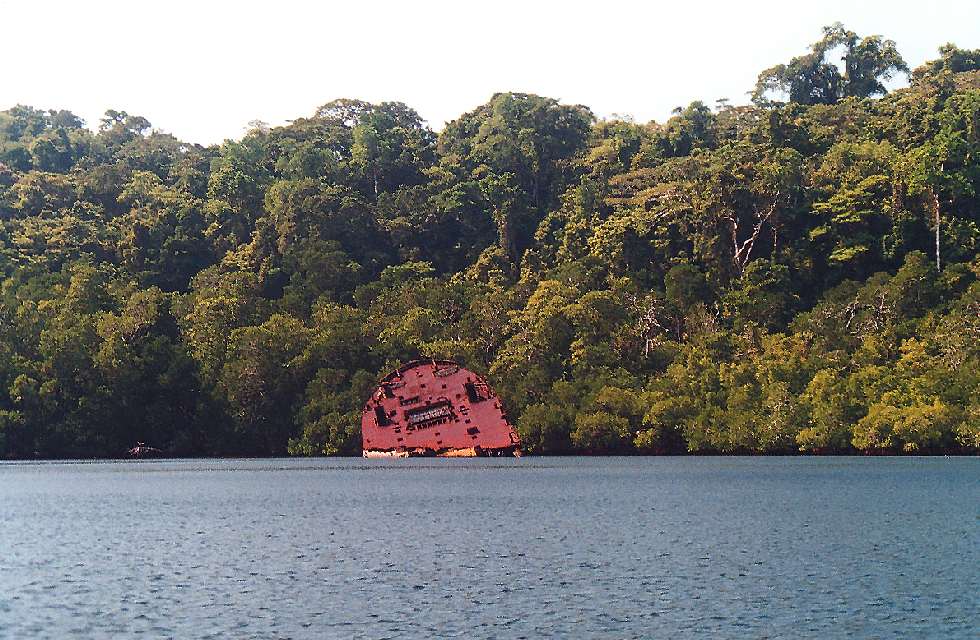
A map in the guidebook stated that this was an American tank landing ship, or LST (for "landing ship, tank"), designated LST 325, beached and with its stern submerged, though the accompanying text contradicted the map and said that LST 325 is outside the bay, and 1.5 kilometers North-East of Taroaniara. |
|
|
I don't know where they get their information from, but it's wrong, wrong and wrong. This wreck is not at Taroaniara, its stern is not submerged, and it is not LST 325. |
|
|
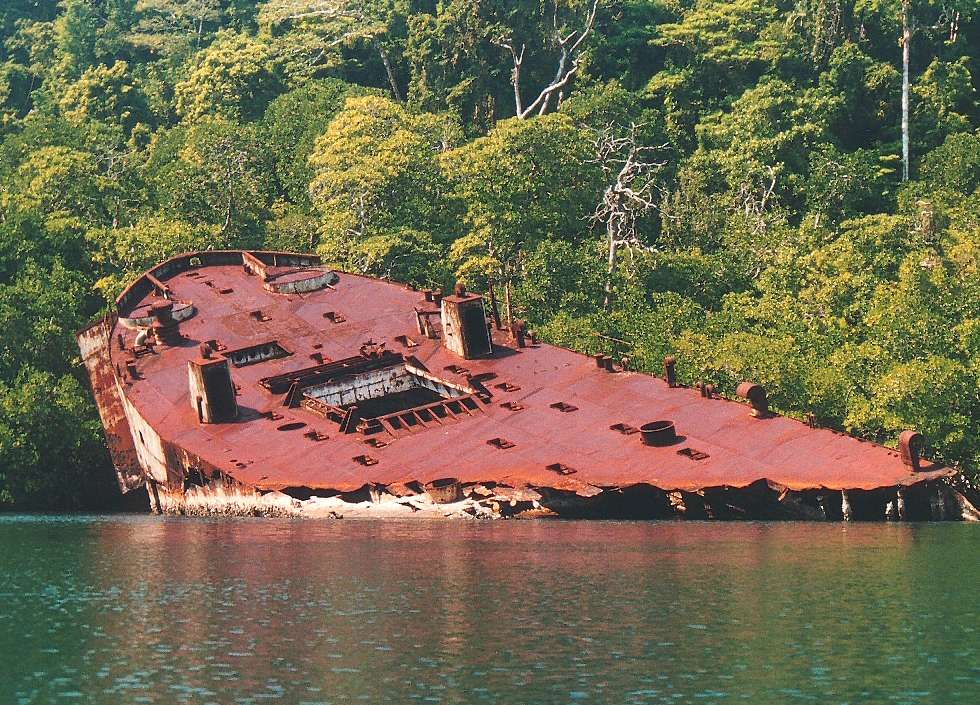
In fact, while the destroyer is indeed in Tokyo bay the harbour with the LST turned out to be Purvis Bay... |
 |
|
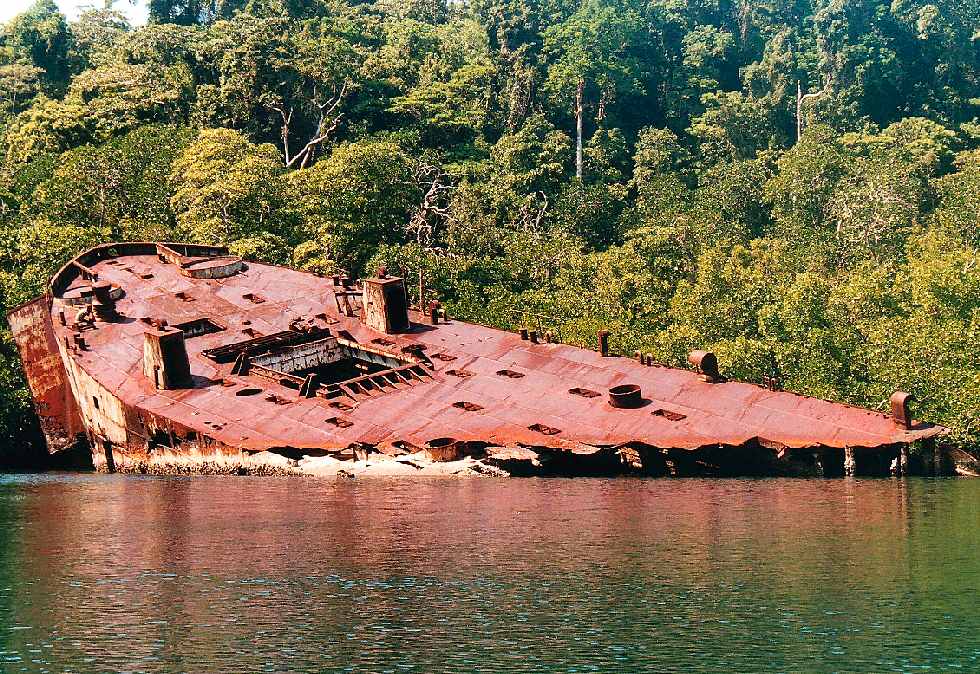
...the stern is not submerged, it's missing... |
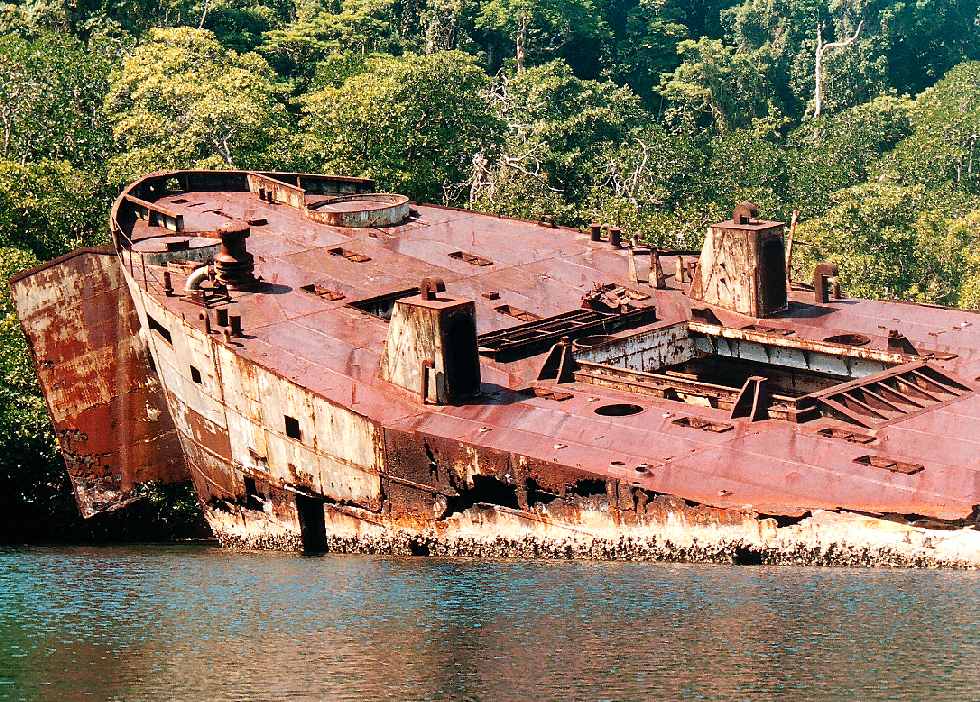
|
|
...and as you can see, this is LST 342. |
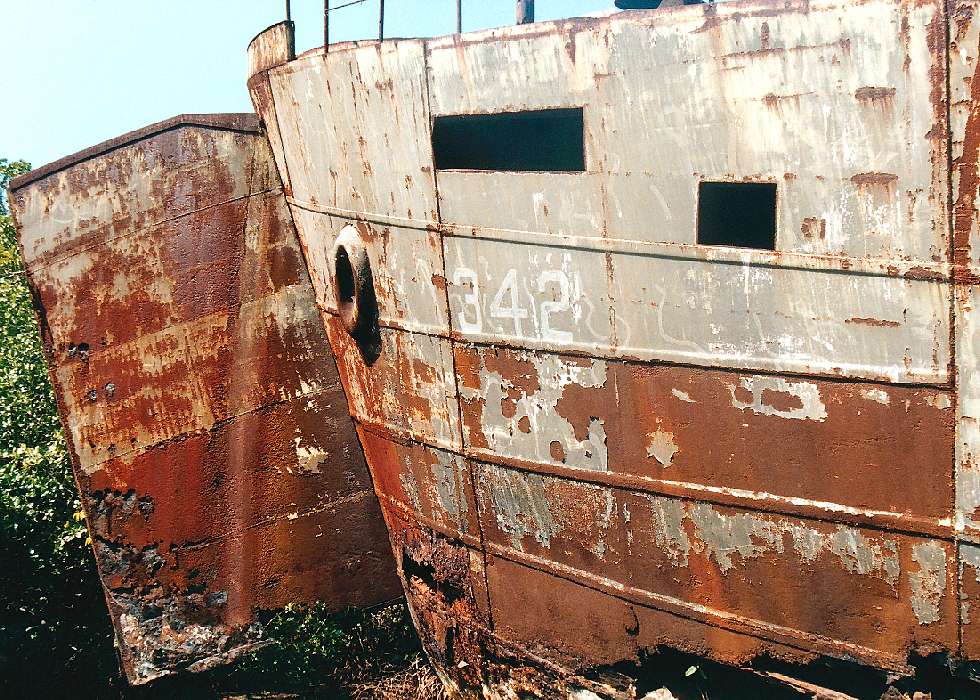 |
|
When you consider the state of the rest of the ship and the salty environment and tropical climate to which it's exposed, it's remarkable that the ship's designation is in such good condition, almost exactly 45 years after it met its fate. |
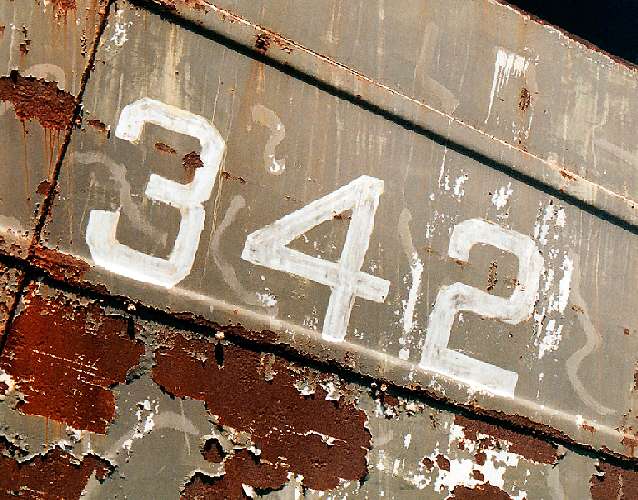 |
|
With a little research I discovered that LST 342 was built in the Norfolk navy shipyard in Virginia, and commissioned on December 15, 1942. As with all tank landing ships, she had a fairly flat bottom to allow her to move through shallow water and beach herself; her bow doors would then be opened and the ramp let down so tanks and other equipment could be offloaded. |
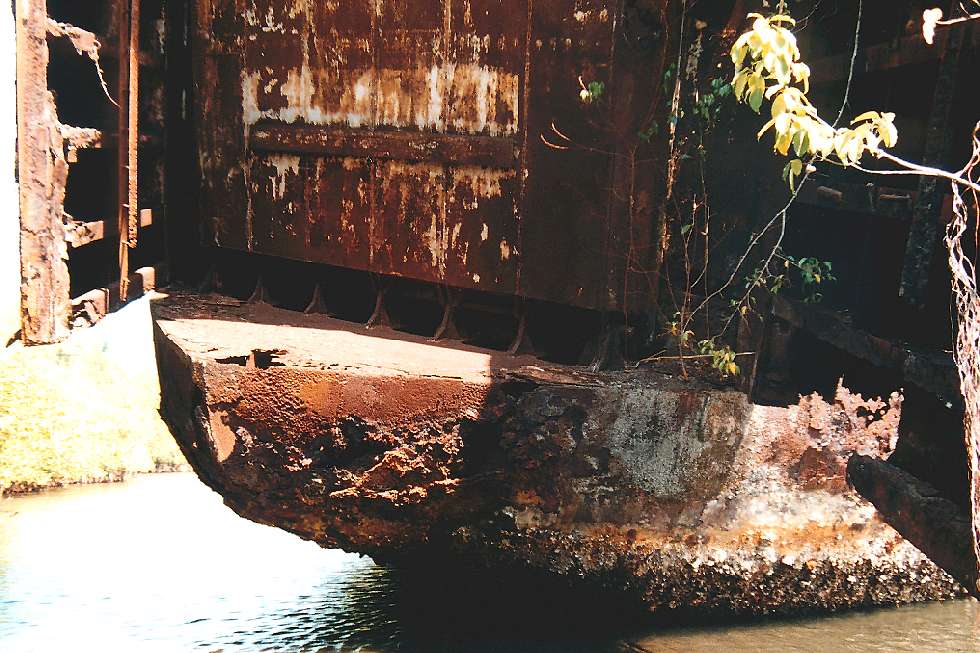 |
|
However, seven months after commissioning, on July 18, 1943, she was hit by a torpedo from the Japanese submarine RO106 off the island of New Georgia and blown in two. |
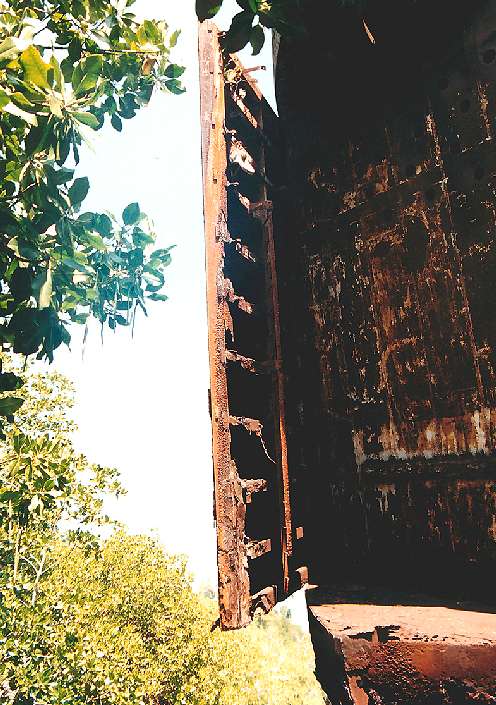 |
|
The stern, which housed most of the crew, sank immediately, but the bow somehow remained afloat and was towed here and beached so that any useable equipment could be salvaged. |
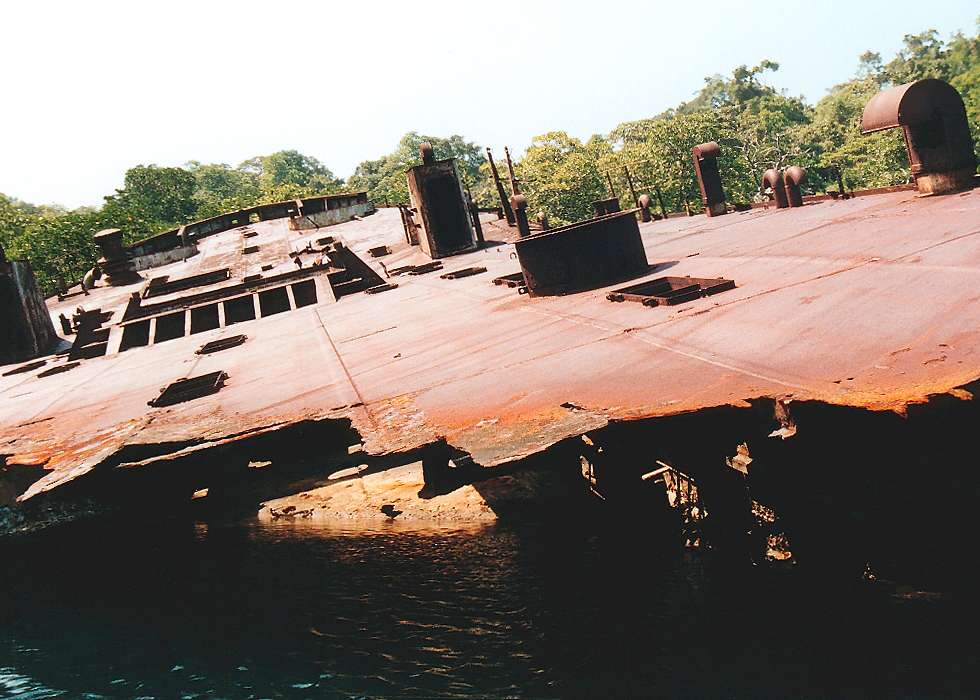 |
|
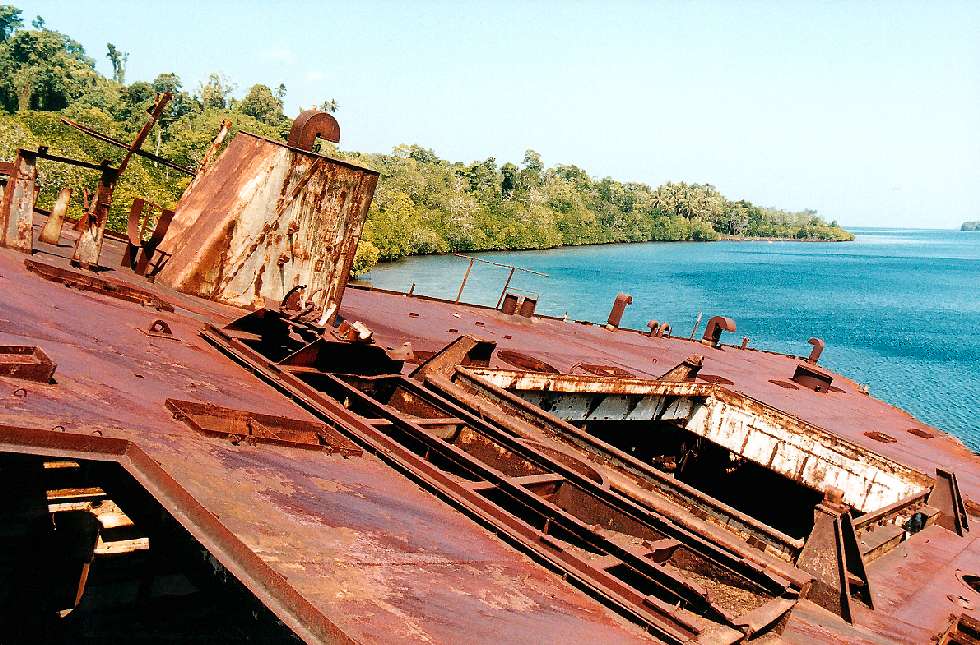
I climbed up the deck of the ship, which was severely rusted, so much so that there were holes in the deck and the rest seemed pretty fragile. So I stuck to what seemed like the most solid sections, hoping I wouldn't fall through into the cargo area. Ships like this could hold up to 20 Sherman tanks, as well as other equipment. They're flat bottomed and they don't have keels, so they can run up onto a beach without getting stuck. However, these features made them very unpleasant to sail on in rough weather, and they were also difficult to steer. |
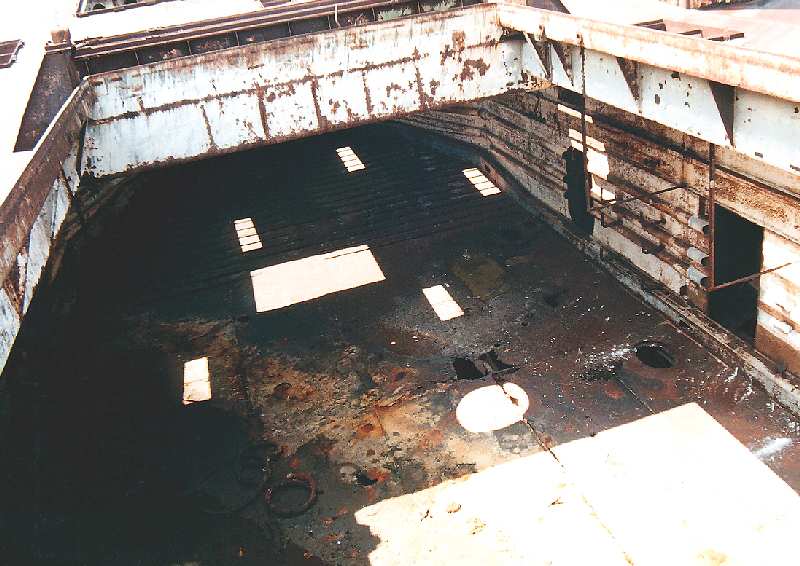 |
|
The capstan seemed about as far as it was safe to go. The six foot wide circular fitting directly in front of the capstan is the base of a gun mount. |
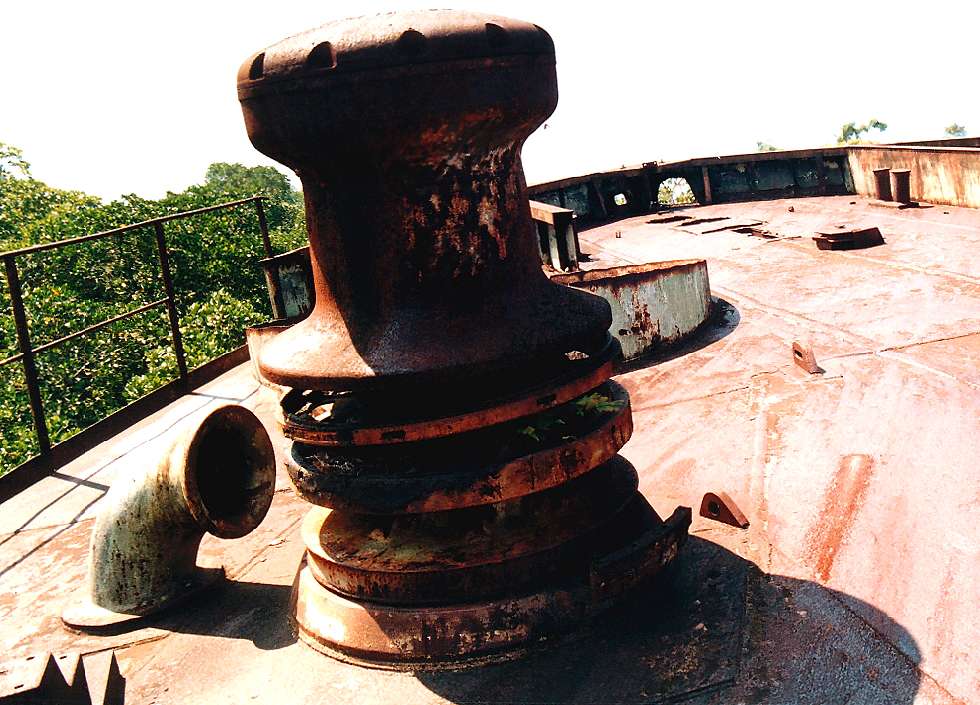 |
|
Crews of these ships used to joke that LST stood for "large slow target", which was accurate in the case of this particular ship. The decks of the LSTs were usually piled high with volatile fuel and ammunition, which made them even more dangerous to be on when attacked. |
 |
|
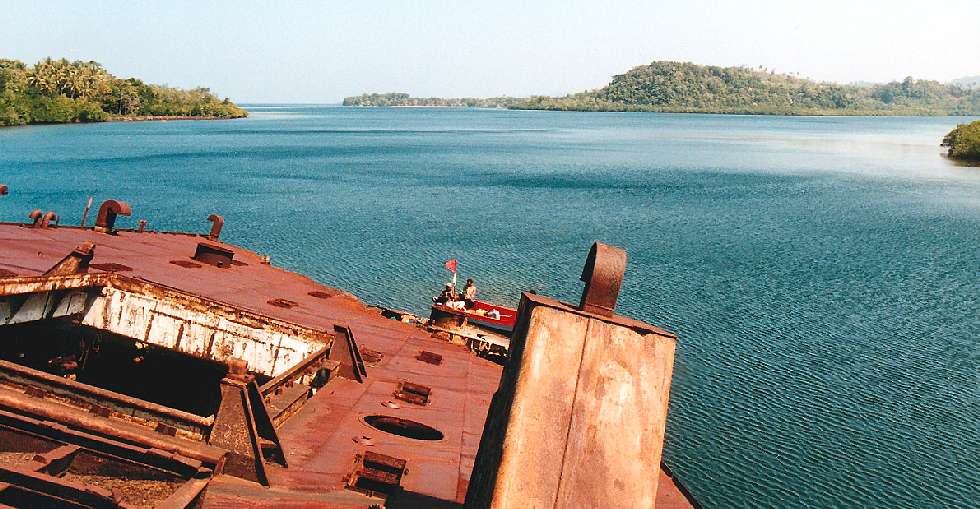
You can see here the entrance to Tokyo Bay and the small boat I was in for the trip over from Guadalcanal, with a couple of local fishermen. I considered snorkelling around the ship, but thought better of it when I was told that a local villager had been killed by a saltwater crocodile a few weeks earlier. I later confirmed this report on a German website with a section on wreck diving in the Solomon Islands. Luckily, I've travelled enough in Asia and the Pacific to know never to ask a question which someone can answer with a "yes" or "no". In this case I asked, "is it safe to swim here or is it dangerous to swim here?". The fisherman hestitated for a few seconds and then told me what had happened to the villager. If I had asked "is it safe to swim here?" he doubtless would have said "yes", because in these cultures people give you the answer they think you want, not the answer that is most correct. Around here, it's called being polite. |
 |