| Volo
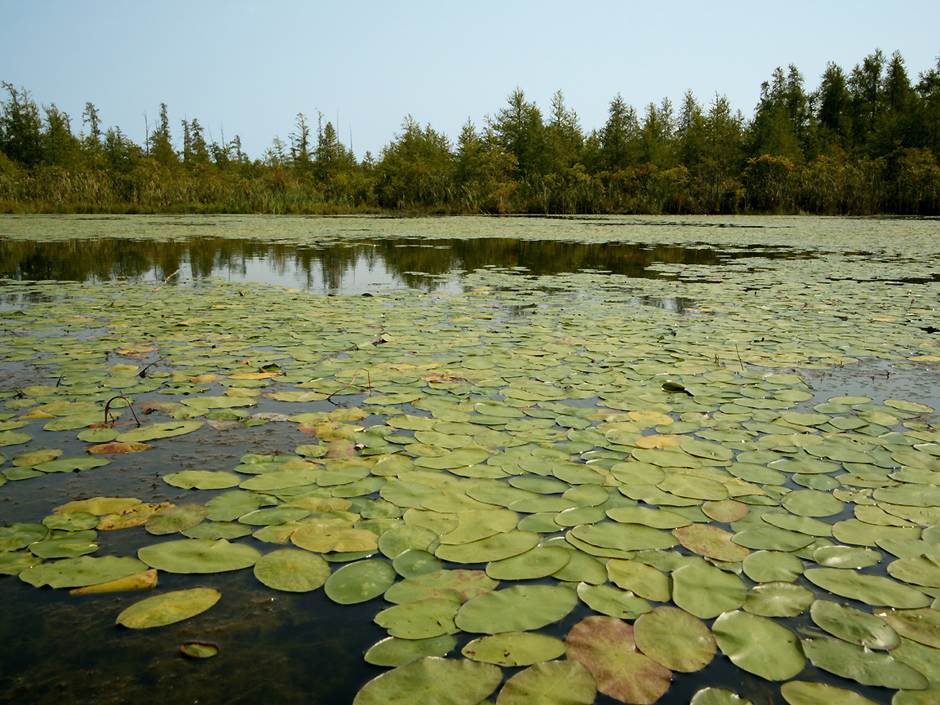
Bog is the only "quaking" bog in Illinois with an open center, which you
can see here. It's only 45 miles from the center of Chicago,
so it makes a pleasant trip, which I made twenty or thirty times.
The entire bog is about 50 acres in size, but since the time it was formed
in the last ice age it's gradually filled up with dead vegetation, and
eventually it will fill up entirely. At present there's a floating
boardwalk which during recent dry periods has sat on the dried bottom of
the bog, and a three-mile path around the entire bog and through some of
its adjoining forest and grassland. Wet or dry, the bog and
another 1100 acres of surrounding prairie and forest is a fantastic habitat
for all sorts of life, and it's a great thing that it's been preserved
and made available for people to see. |
 |
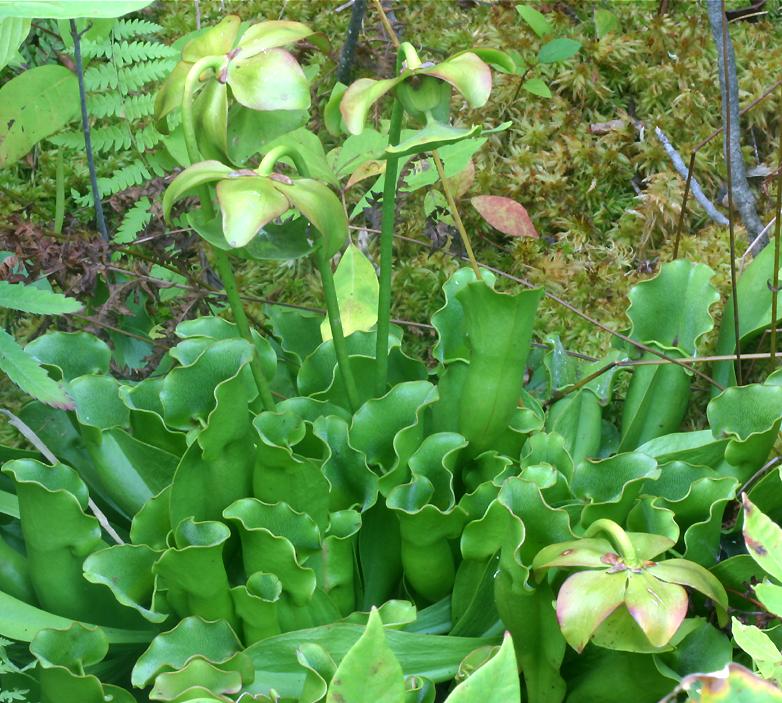
| Bogs
are usually very poor in nitrogen because of all of the water which leeches
away this vital element. That's why most of the world's carnivorous
plants come from bogs, like this pitcher plant which flowers alongside
the boardwalk. Most carnivorous plants live in the tropics,
but this one somehow manages to survive being frozen for several months
of the year. |
 |
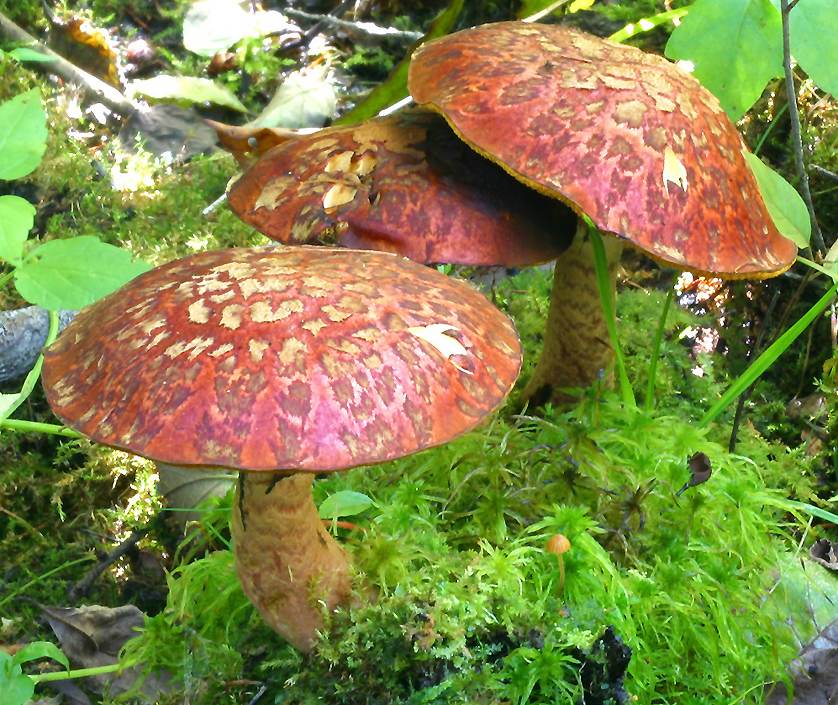
| I'm
not sure what species of mushrooms these are, but the pores under the caps
identify them as belonging to a family called "boletes".
It's great how the red of the caps contrasts with the green of the spaghnum
moss. The little tears on the caps are probably caused by slugs,
which love to eat fungi of various types. |
 |
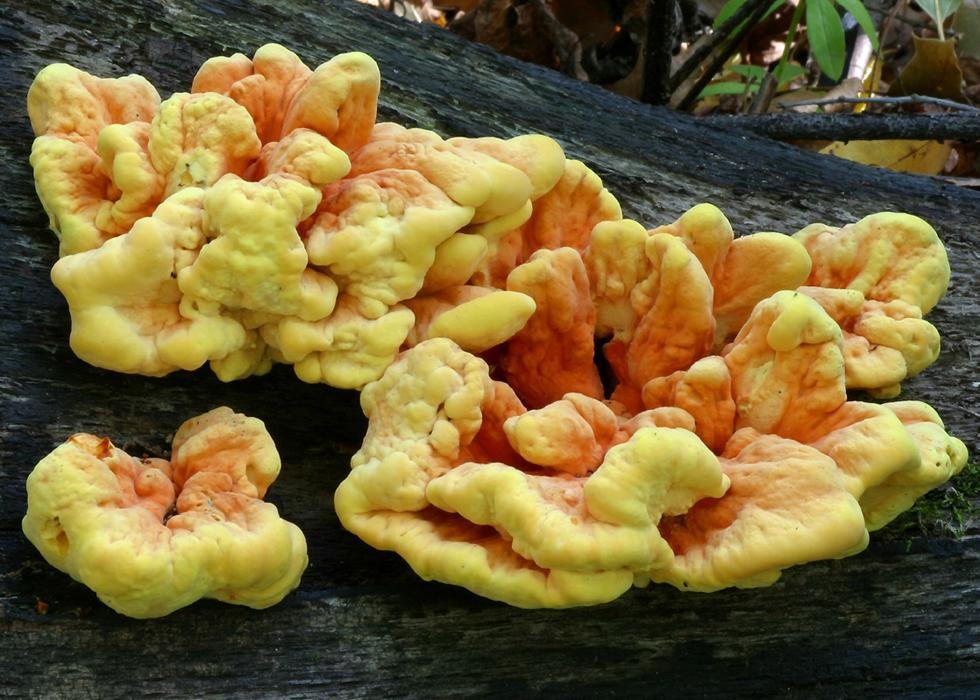
| These
large "chicken of the woods" mushrooms look much weirder to most people's
eyes than the boletes, which at least have a classic "mushroom" or "toadstool"
shape. The spectacular yellow and salmon colors of the "chicken
of the woods" certainly isn't common, but as the name implies this is actually
an edible fungus, which by all accounts tastes like its name.
It comes in two shapes, fleshy as you see here and much flatter; you can
see both forms by clicking on this photo, which will open a new window
with my Fungus Wallpaper page. As well as having different
shapes, there are also two color variations, one yellow like this and the
other whiter, which leads some people to believe that there are actually
two similar species which should be distinguished. |
 |
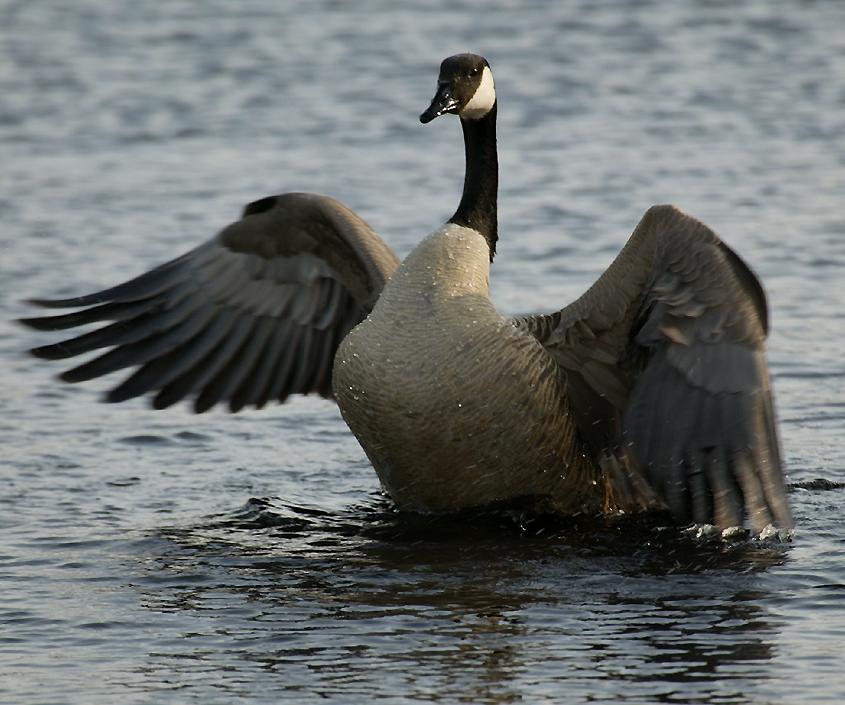
| The
open water areas are ideal both for migrating birds and for residents,
like this Canada goose which is washing its feathers by vigorously beating
the water with its wings. Canada geese are quite attractive,
but their large numbers and messy habits make them something of a nuisance. |
 |

 |
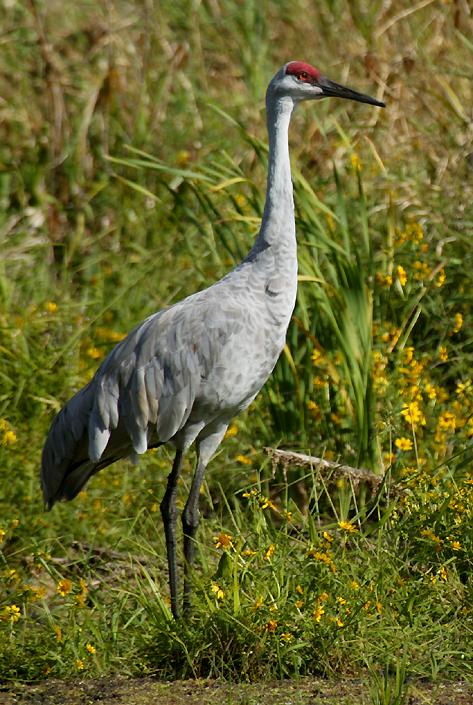
Here's a much more
exciting avian inhabitant of the bog, a sandhill crane. They
can be seen here quite often, and you can hear their prehistoric-sounding
squawk even more often. They are, in fact, the oldest surviving
species of bird on the planet, having been around for about six million
years.
Like other cranes,
mating pairs do elaborate dances where they both leap into the air with
their wings extended, before bowing to each other and repeating the show.
They range far north
during summer before flying south in winter, often flying in groups which
are so high that they can't be seen from the ground.
I was lucky to see
sandhill cranes quite a few times while I lived in Illinois, you can see
some older photos taken before I went digital on this page of adult
sandhill cranes, and you can see a sandhill crane doing bad things
to a Canada goose on this page about a juvenile
sandhill crane. |
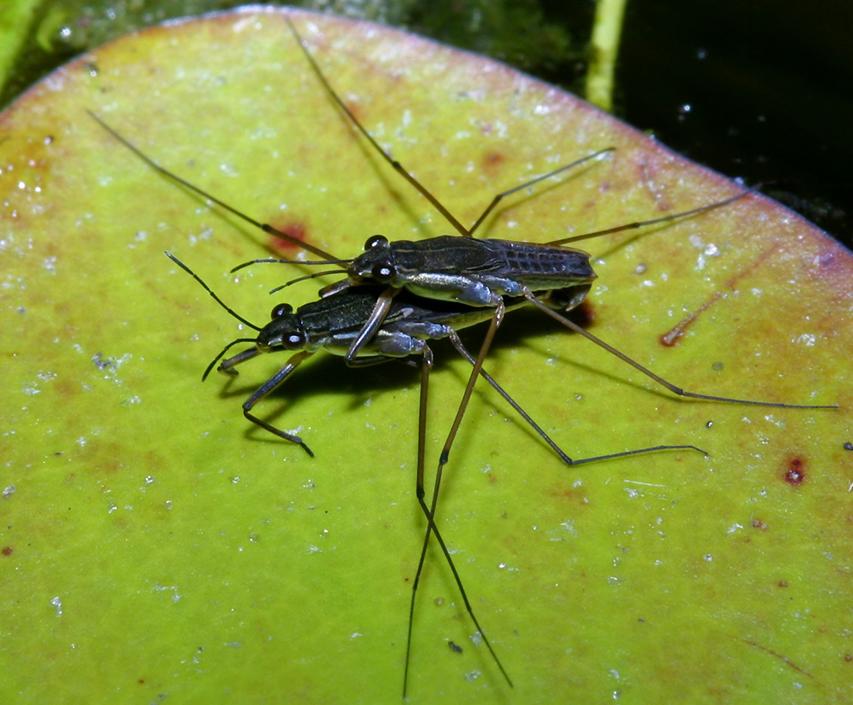
| OK,
you'd better take the children out of the room before they start thinking
that this sort of behavior is natural, normal and healthy.
A pair of common water striders make time out from their busy schedule
of eating mosquito larvae and other insects for some quality time together.
Water striders are "true bugs", which means that the front half of their
front wings are leathery, and they have a sucking tube called a rostrum
under their head with which impale their prey. Many water striders
actually have no wings, and one family even lives on the ocean, which makes
it the only truly marine insect. |
 |
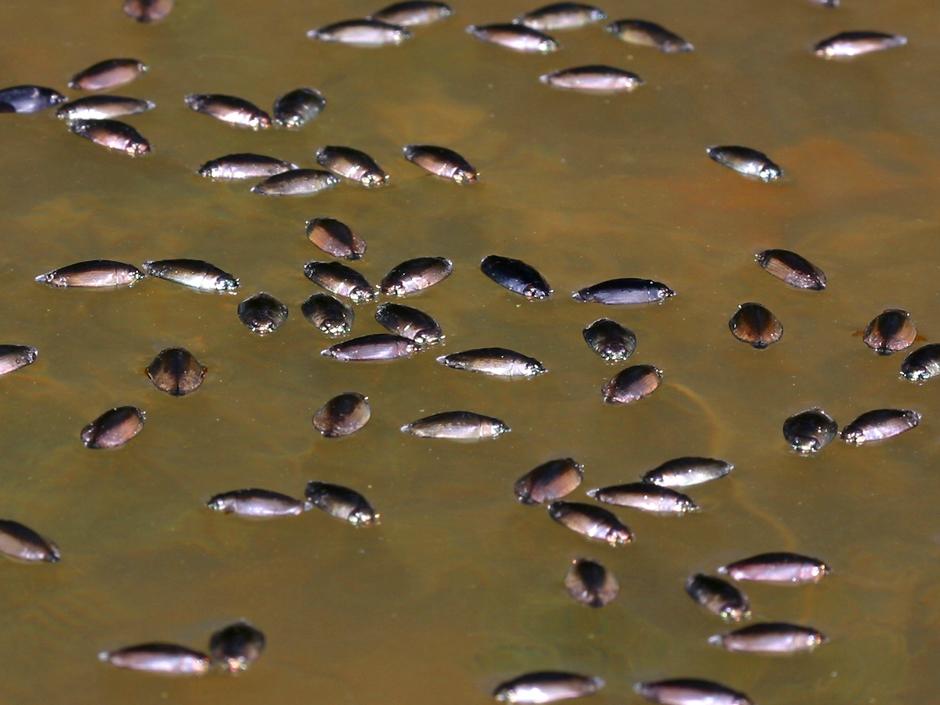
| Here
are some more aquatic predators, but this time they're not bugs, instead
they're beetles with hard "elytra" covering their wings. These
large whirligig beetles get their name from the way they gather together
and spin around in circles when agitated. They can dive and
see underwater, and even when they're on the surface half of each divided
eye is looking underwater and half above water. |
 |
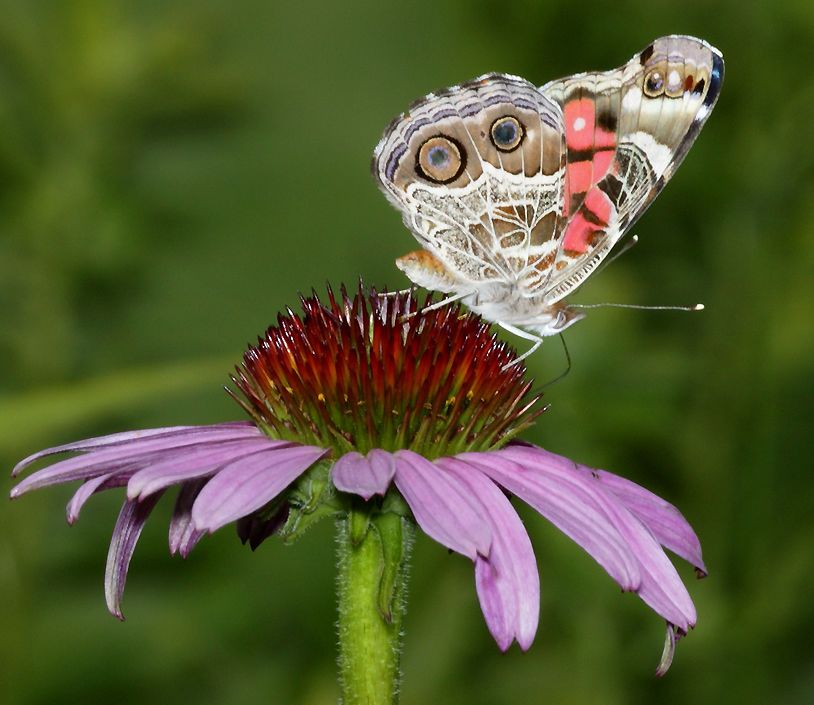
| This
American Lady butterfly was enjoying the pleasures of the butterfly garden
near the visitor's center. American Lady butterflies look similar
to Painted Ladies, but the eyespots on the rear wing are larger; for this
reason naturalists use the expression "American ladies have big eyes" to
remember the difference. Like monarchs, American Ladies migrate
south in Fall and north in Spring. These are just three of
the many species of butterflies
you can see at Volo Bog. |
 |
|
You might be surprised to learn that some butterfly species are territorial
and will attack intruders. I've been buzzed and attacked by
several types of butterfly, including commas and mourning cloaks.
I didn't notice the butterfly below, a red admiral, until I was almost
on top of it and it flew away. However, since I knew that this
species is also strongly territorial, I waited and in a minute or two it
came around again, flying back and forth and checking me out to see if
I was a threat. After deciding I wasn't it landed back in the
path and I started very slowly maneuvering towards it on my stomach to
get some closeup photos. It flew away several times, but each
time came back and I finally managed to get to within a few inches to get
this photo. On one of its forays it even started chasing a
hapless bumble bee which stumbled into its airspace, and I was surprised
by how quickly the red admiral flew, and how it was able to twist and turn
to follow the intruder through the bushes. Quite what it would
have done if it had caught the bee I don't know, but I have been repeatedly
struck by butterflies doing ramming attacks!
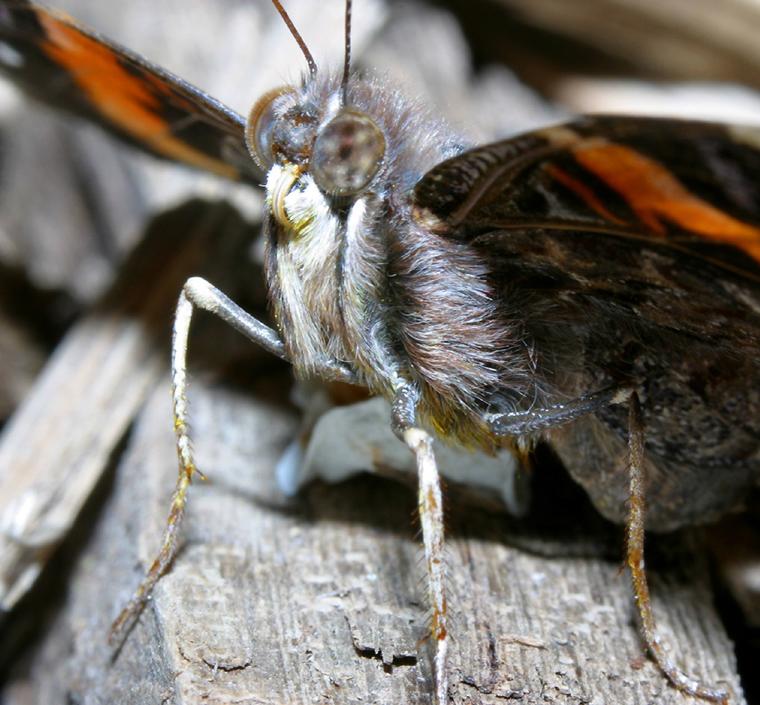
If you look closely you'll see that it's only standing on two pairs of
legs, but if you look even closer you'll see that the third pair is hooked
up behind its eyes. This is a fairly common feature of several
butterfly species, but one which most people don't know about.
You can also see how hairy this butterfly is, which allows it to tolerate
quite cold weather; mourning cloak butterflies are an excellent example
of this adaptation, they actually stay right through the incredibly cold
and snowy winters and are often the first butterflies that people see in
Spring. Red Admirals and American Ladies also overwinter, but
both species will migrate and Red Admirals in particular spread very rapidly
northward during Spring. The Red
Admiral caterpillar mostly eats nettles, but it will also eat hops
and a few other plants. Like most caterpillars, they're quite
specialized in what they will and won't eat. |
 |
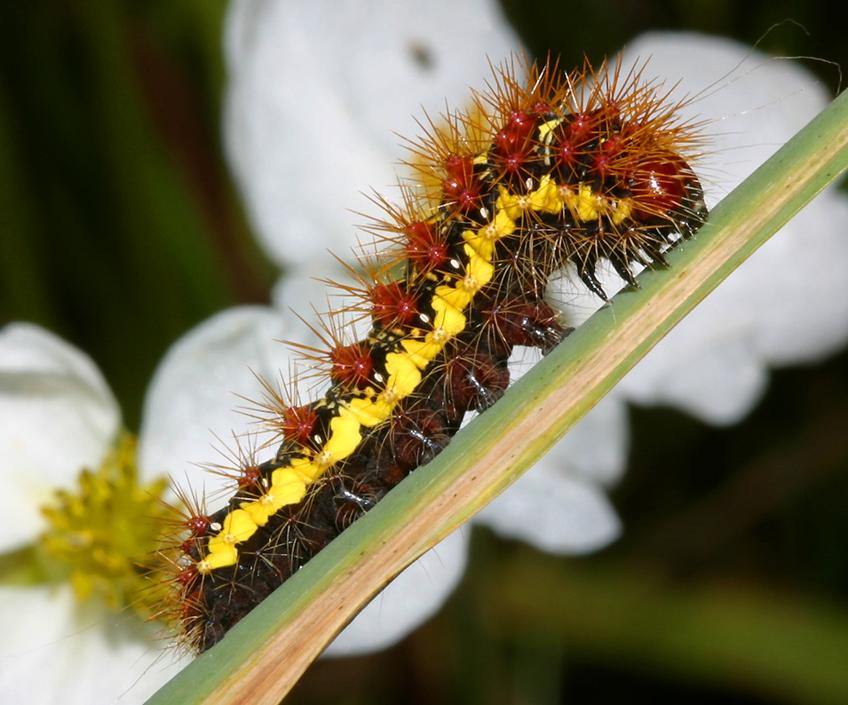
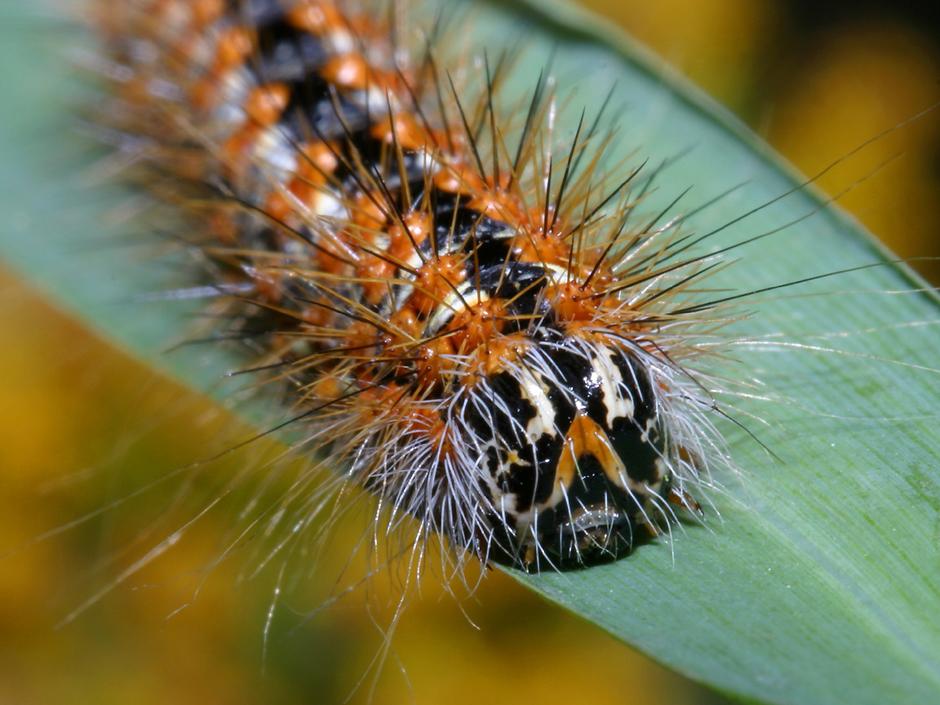
| This
smartweed caterpillar, the juvenile version of the smeared dagger moth,
was right out in the bog, hanging on to some reeds beside the boardwalk.
Notice the little hairs at the front, which are characteristic of this
species, which is just as well, because the coloring can be highly variable
- I've seen others with white or tan spines, and without the red "warts"
carrying the spines. The upside-down yellow "w" marks along
the side are also characteristic, as are the white "spiracles" or breathing
holes, just above each "w". |
 |
| This
is the caterpillar of Henry's marsh moth (Simyra henrici), which
is fairly common near wetlands all the way from Canada down to Texas.
The spines on caterpillars like these two often carry irritating chemicals,
so you'd be smart not to pick them up! You can see many more
different species on the
caterpillars of Northern Illinois page. |
 |
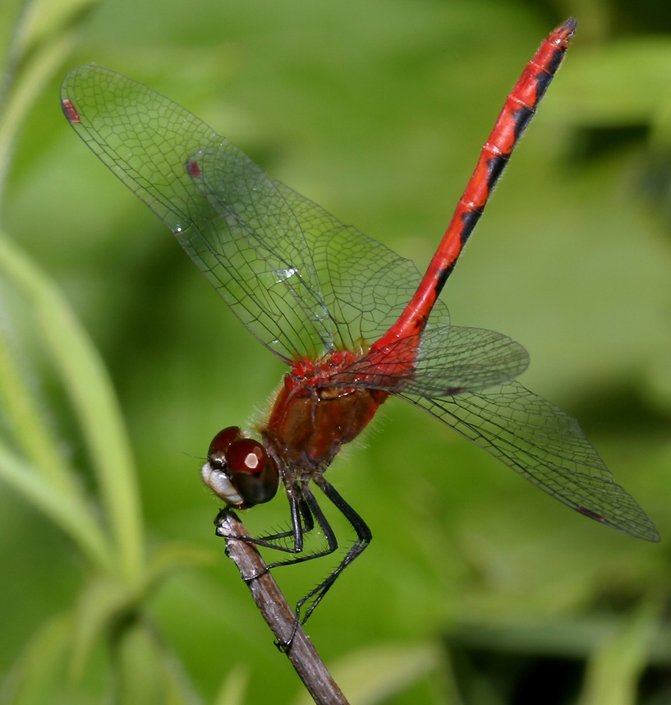
| Here's a male white-faced
meadowhawk; the female looks quite different, most of the time she's yellow
and doesn't have the white face. You can see photos of them
side by side by clicking on this shot, which will open a new window with
my
Dragonfly Wallpaper page. |
 |
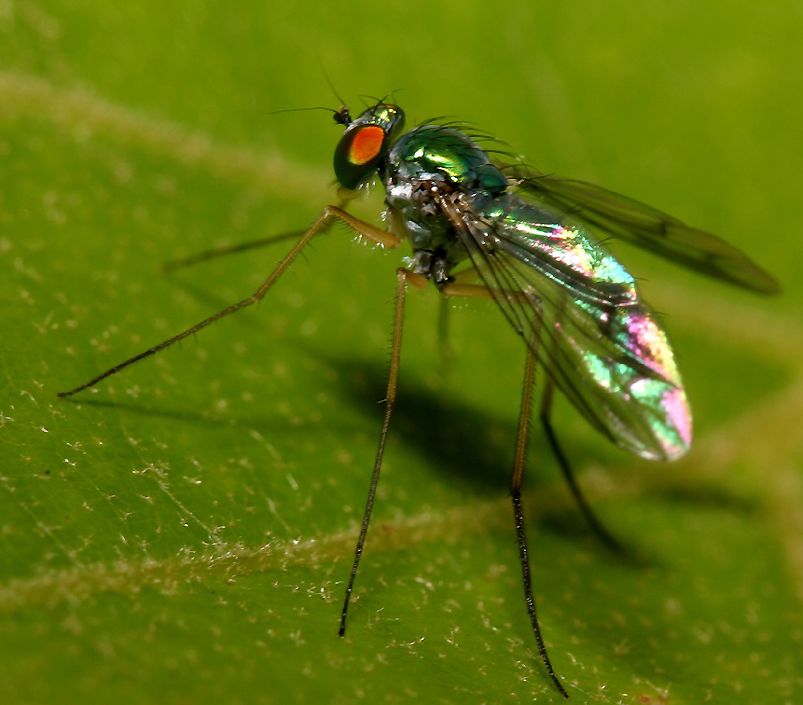
| Eeeuw
yuck, a fly! And not just any fly, but a long-legged fly.
Many flies are actually quite attractive looking creatures, and they often
have wildly colored eyes. As you can see, this one also has
rainbow colored wings and a beautiful metallic green body - even if it
is somewhat hairy! |
 |
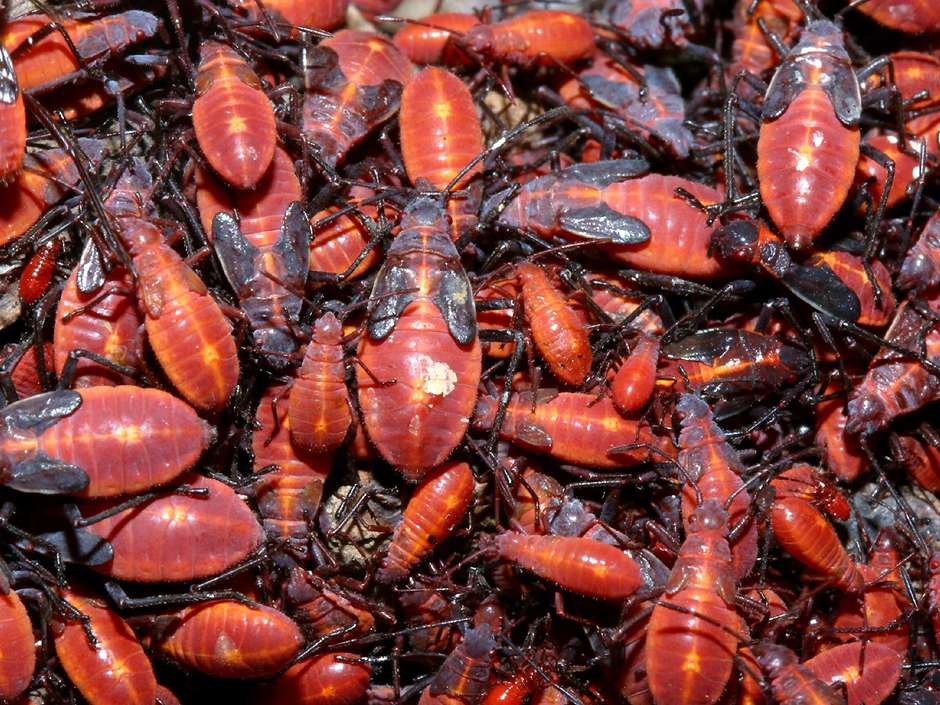
| If
the last photo was bad, then this one must be even worse - unless you're
a ten year old boy! This is a seething mass of large milkweed
bug nymphs. As the name implies, they mostly feed on milkweed,
and it's quite common to see them in groups like this, though I'm not sure
why. Milkweed bugs ingest the same toxic chemicals from milkweed
that monarch butterfly caterpillars use as chemical protection both before
and after becoming a butterfly. This probably explains why
milkweed bugs also have the bright orange warning coloration. |
 |
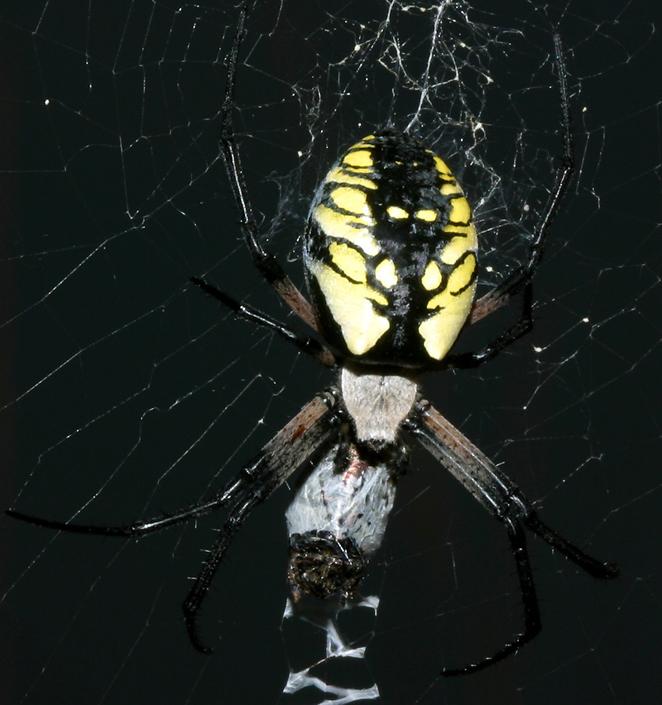
| This black and yellow
argiope is one of many spiders keeping the insect population in check.
You'll see them particularly around the end of summer, with their large
webs strung up amongst the grasses. |
 |
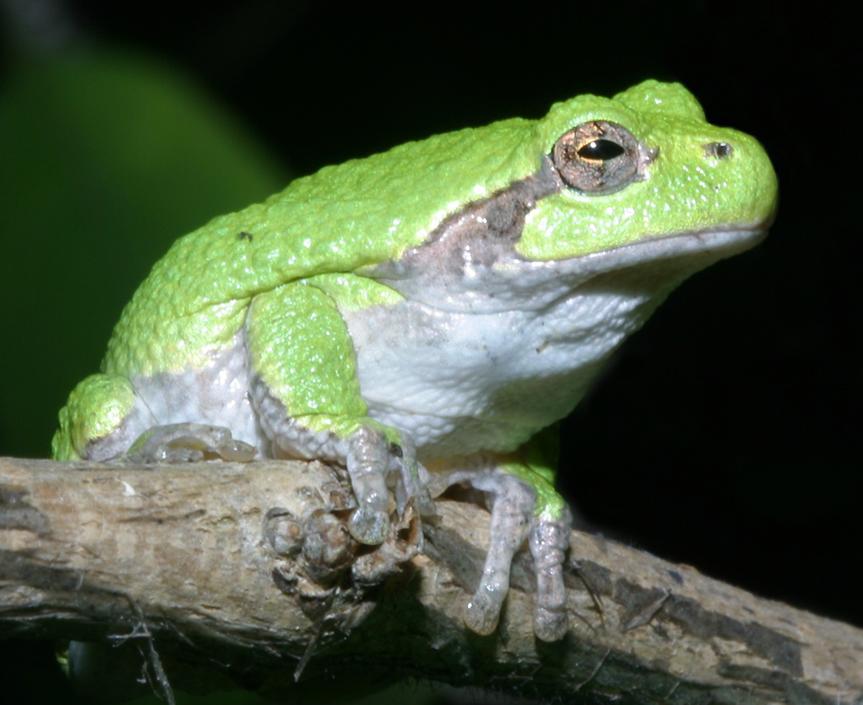
| Finally,
we have another predator, a tiny gray tree frog with its hungry eyes on
all of these tasty insects and spiders. I've only seen three
of these frogs in all the times I visited the bog, but you're certain to
see bullfrogs along the boardwalk and in the water-filled borrow pit near
the visitors center. It's a mystery to me how frogs and reptiles
can survive the long and bitter northern Illinois winters, but in fact
their range extends all the way north through Wisconsin and Minnesota to
Canada. |
 |
Don't
forget to check out the
butterflies of Volo Bog and the
birds of Volo Bog.
 |