
Birds of Volo Bog, Illinois
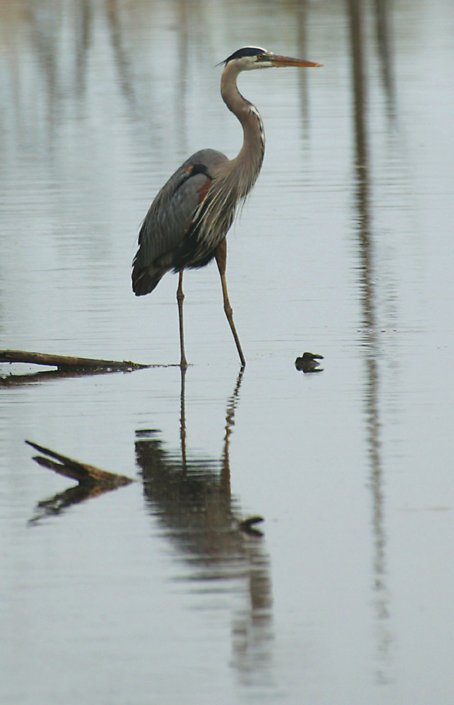
Volo bog is a swamp, so it shouldn't be any surprise to find water birds well represented here. The great blue heron shown here is one of the most attractive wading birds in North America, and also one of the commonest. Breeding adults like this one have a plume or tuft at the back of the head, juveniles look similar but lack this plume. There are several color morphs found in Florida which are actually members of this same species, including the all-white "great white heron" and "Wurdemann's heron", which has a white head. Great blue herons can be found all the way down into Mexico and the Caribbean and north into Canada and the south-east corner of Alaska. Although they're the largest heron in North America, they're fairly shy, so it's usually not possible to get very close, except in cases where they grew up in an urban area and have become habituated to humans. They mostly fly and hunt alone, but they nest in fairly large colonies. There's one fairly close to a major road at Almond Marsh, 20 or 30 miles from Volo Bog. |
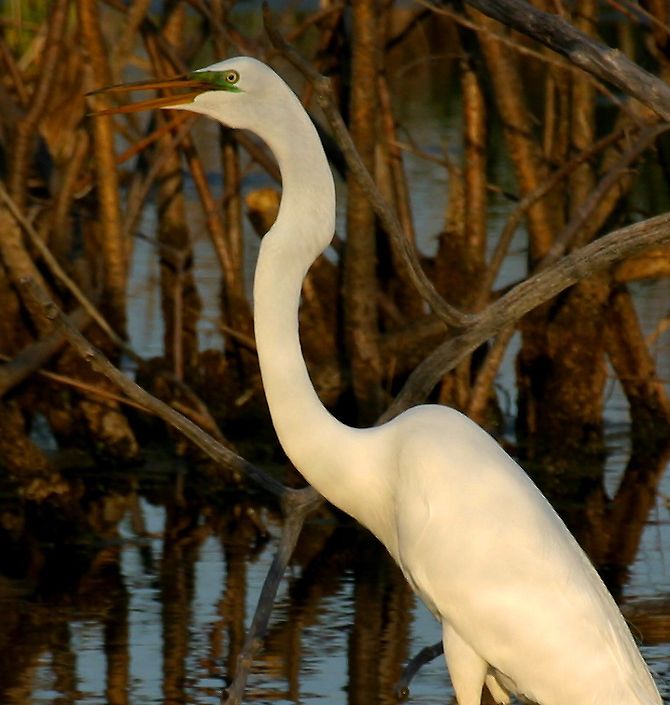
Also known as the American egret, the great egret is another classic American wader and is also very wide spread, though its range is not as large as the great blue heron. Just as the great blue heron is the largest heron in the United States, so the great egret is the largest egret. During the 1800s and early 1900s they were hunted close to extinction for the plumes which develop along their backs and tails; these plumes were used as ornamentation on women's hats. Although the plumes aren't very visible in this photo, the green markings behind the bill are characteristic of a breeding adult. |

The green heron is much smaller than either the great blue heron or the great egret, but it's probably a little more common at Volo Bog than either of them. Although they're said to be secretive, I found them a little more approachable here than either the great blue heron or the great egret. They're solitary birds, hunting and nesting alone, living along the West coast and in the eastern half of the USA. Although it often looks like it has no neck, it can actually crane its head up a remarkable distance, making it look almost like a different bird. When disturbed they can also raise the crest of dark feathers which runs along the top of the head and down the back of the neck. |
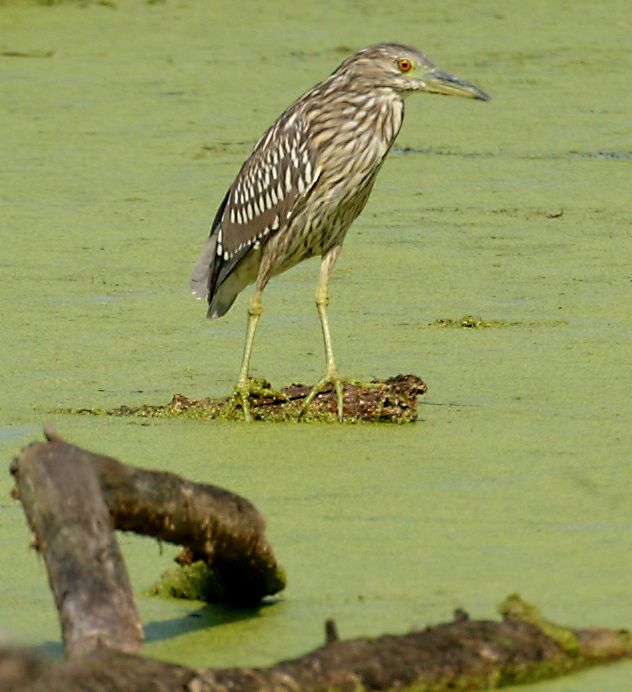
Here's a much less common bird, a black-crowned night heron. This one's a juvenile, they lack the black head feathers of the adults and are nearly indistinguishable from juvenile yellow-crowned night herons, except for the length of their legs, slight variations in the color of their plumage, and the yellow lower mandible of the black-crowned variety. Of course one reason these birds are less commonly seen than other waders is that they are largely nocturnal. Unfortunately Volo Bog is closed at night-time, like most parks in the United States, making observation of its many nocturnal inhabitants pretty much impossible. |
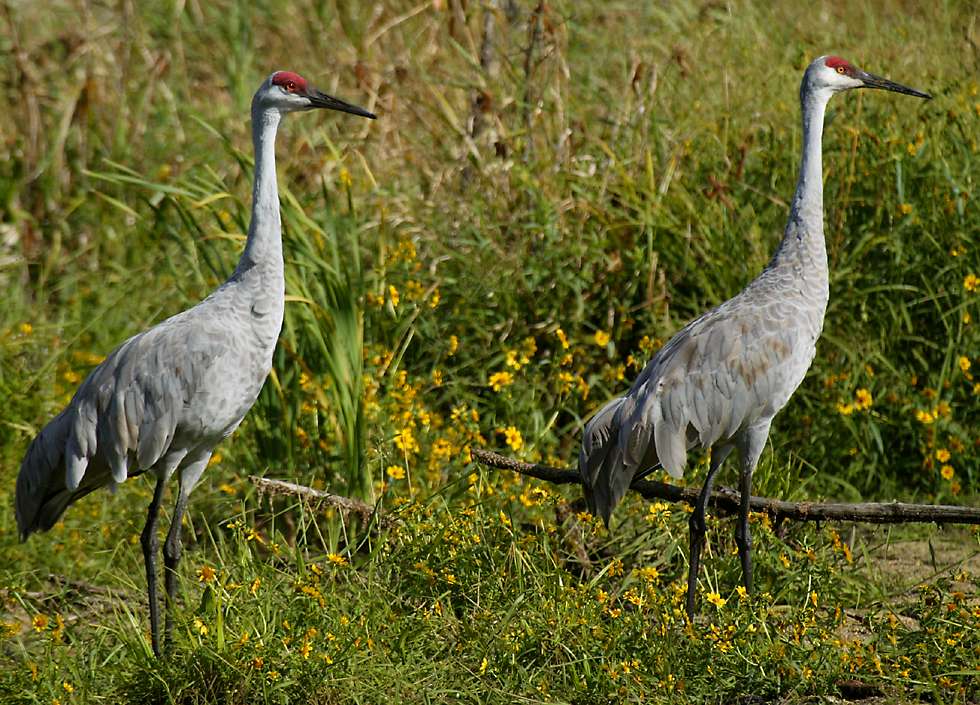
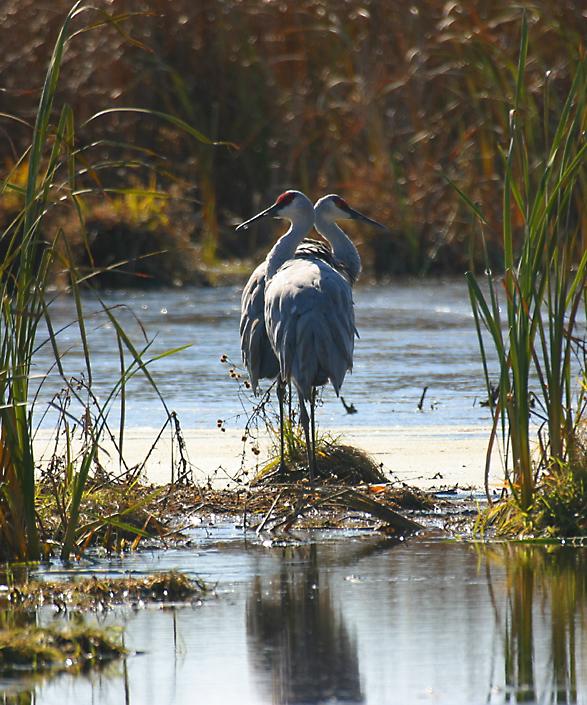
Like most cranes, sandhills have an elaborate mating dance. The male and female face each other and leap into the air with their wings extended and their feet held forwards. They bow to each other, throw grass into the air and squawk as they dance. |
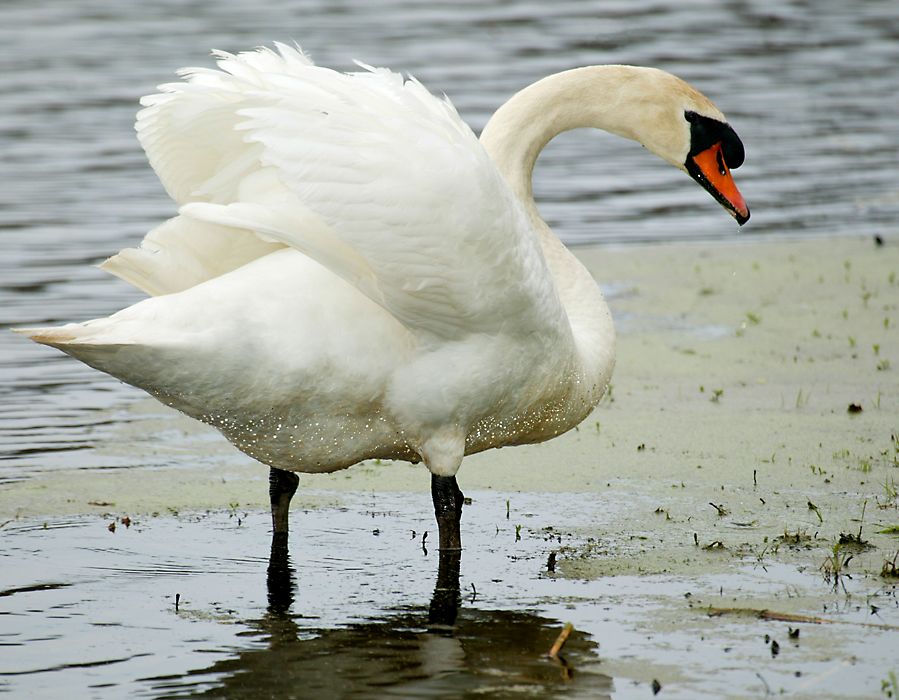
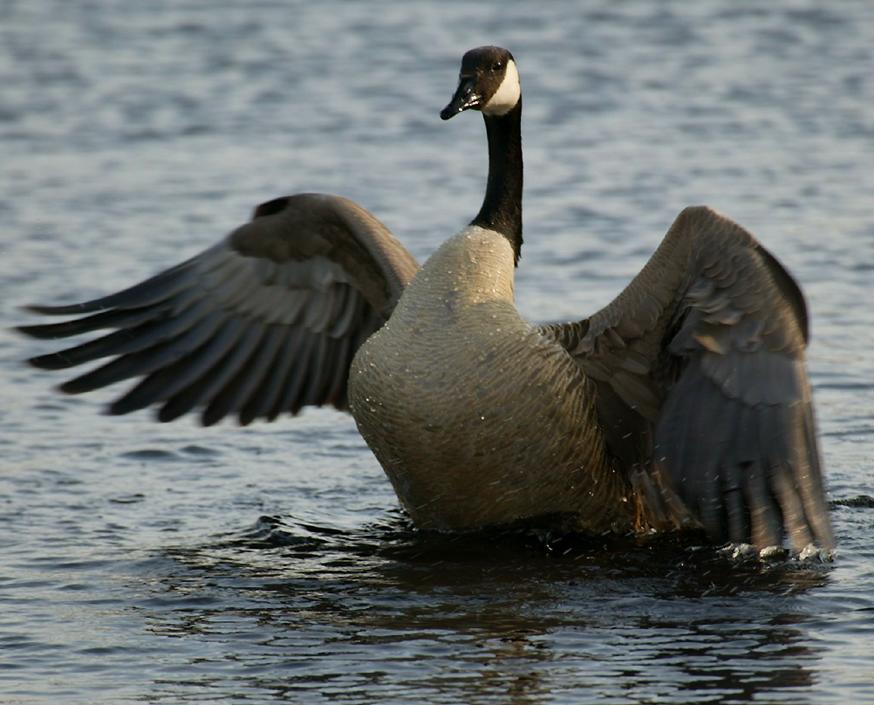
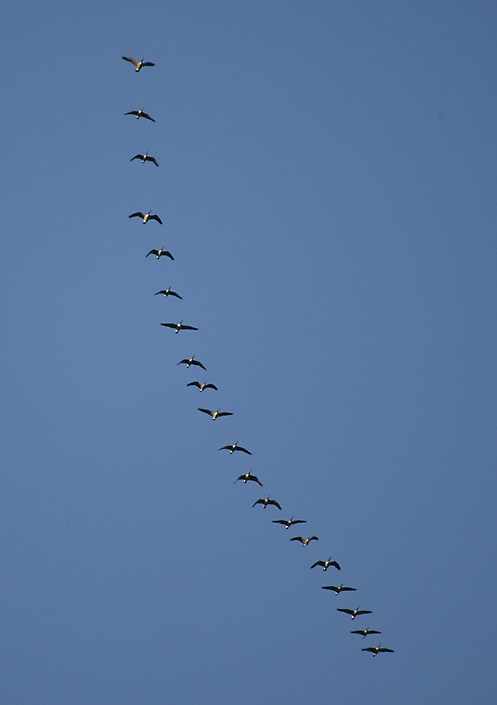
In Fall large numbers of them migrate in large flocks like this one, each bird offset slightly from the one in front in order to benefit from its wake, which makes flying slightly easier. It's quite common to see several of these flocks in the air at one time, all heading south for the Winter. |
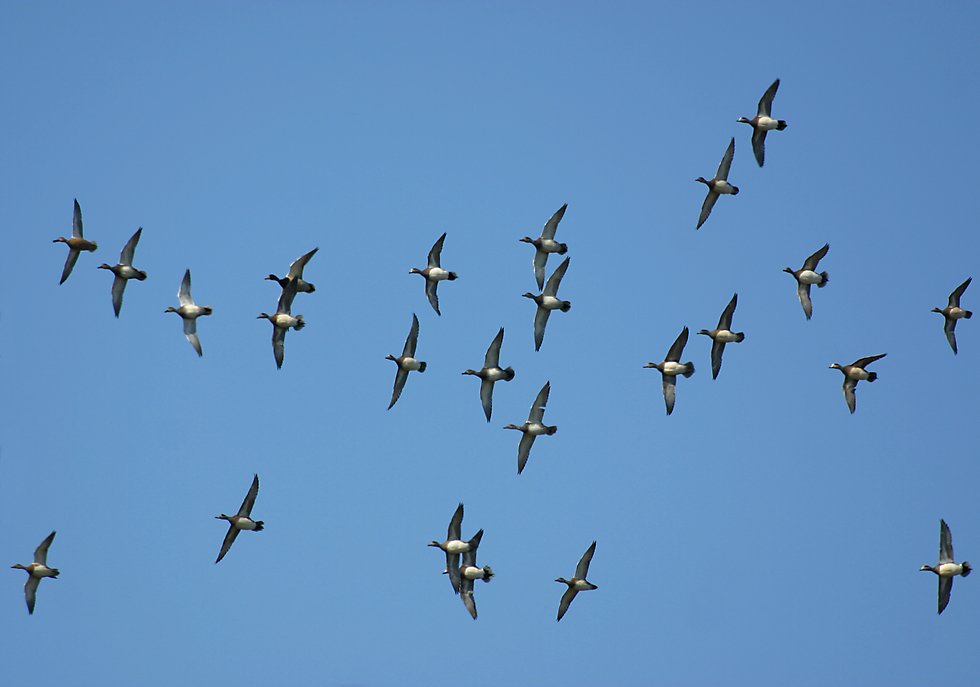
|
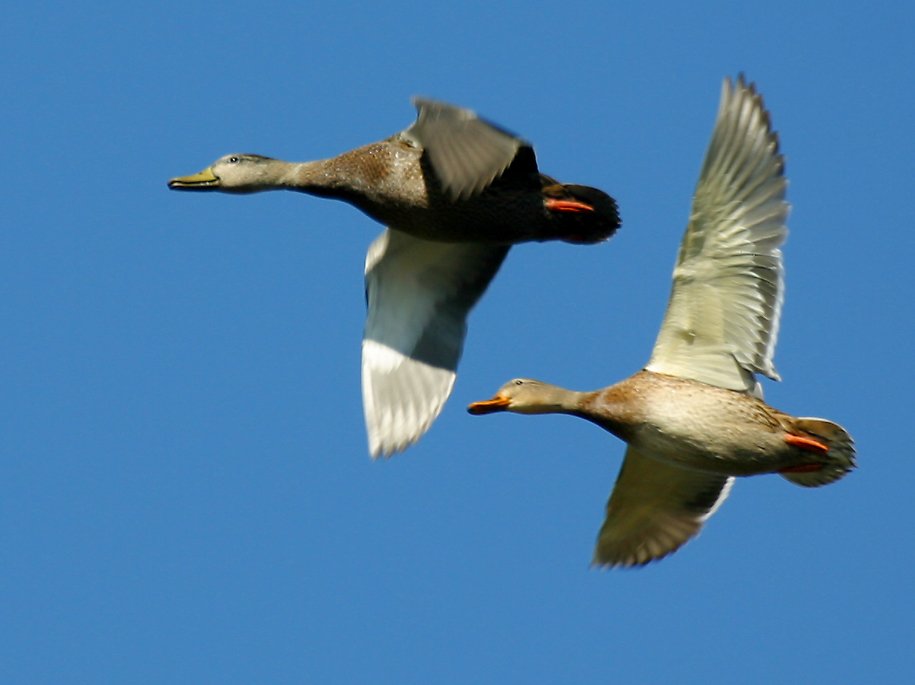
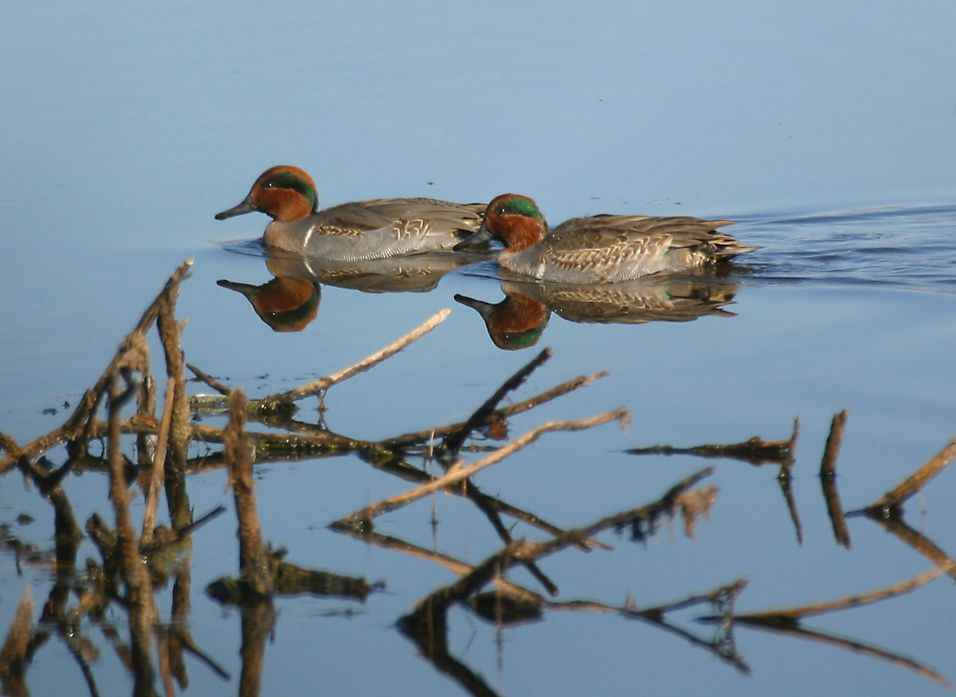
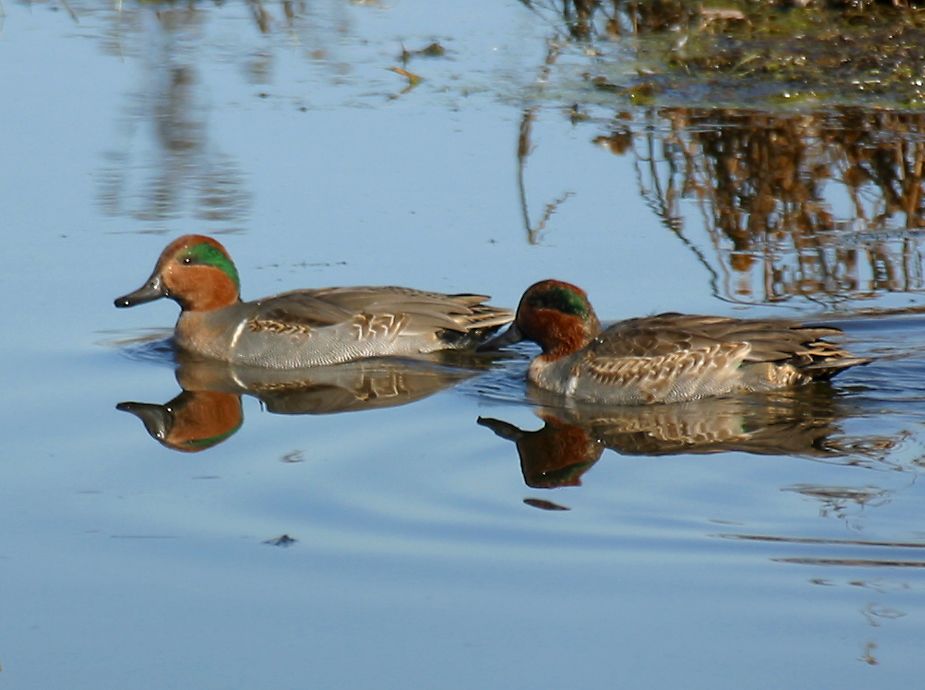
Not quite sure which variety of duck this pair is - anyone? Anyone? |
 |
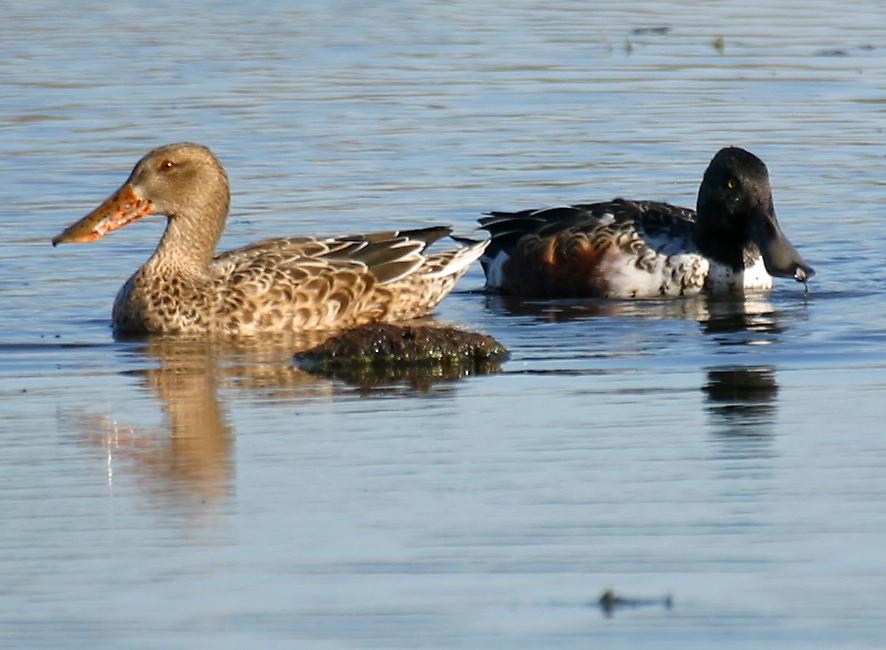
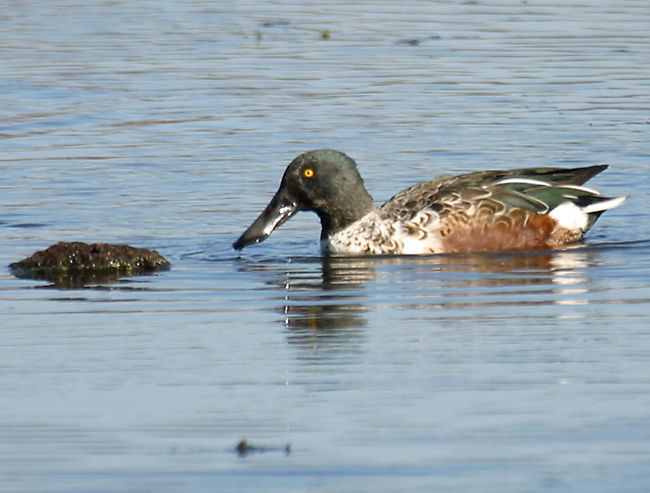
Northern shovelers have a very wide range, all the way from Africa through Asia and down into Mexico in winter. They're sometimes called "neighbor's mallards" because hunters will give them to their neighbors while keeping the better tasting mallard ducks for themselves! |
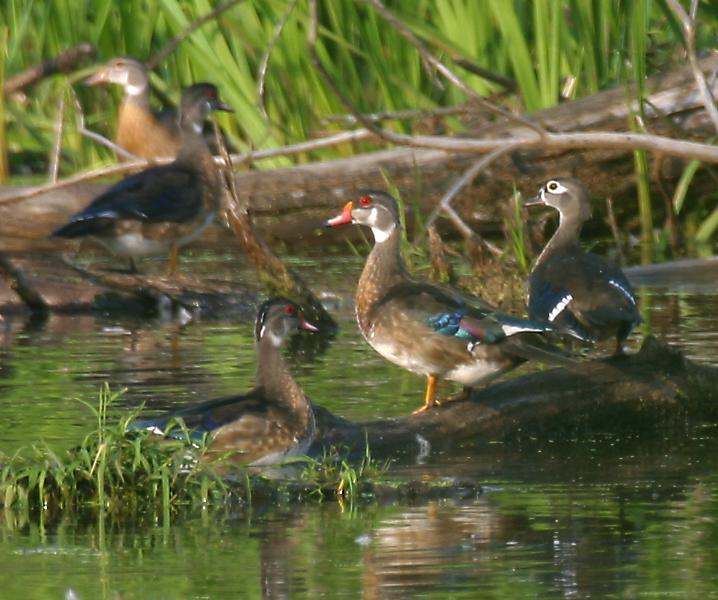
Here's a group of juvenile wood ducks, the males with red eyes and the females with dark eyes. Adult males are one of the handsomest ducks in the world, with head feathers in the shape of a helmet and spectacular plumage in metallic shades of green, blue and purple. True to their name the females lay their eggs in trees, sometimes up to 50 feet off the ground. The young ducklings jump out of the nest hole and float straight down to the ground or water and then follow their mother. Many ducklings are eaten by snapping turtles. |
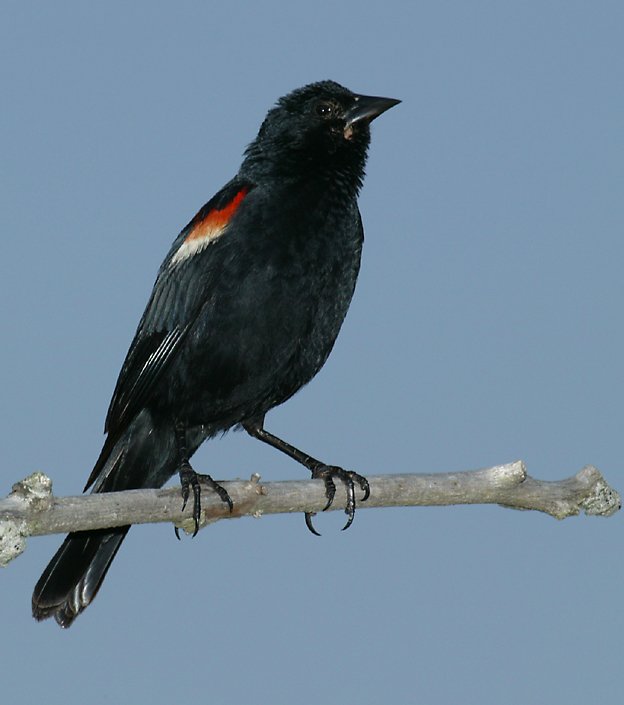
The red-winged blackbird doesn't swim or wade in the bog, but they're a very common sight in marshlands. This is the male, which can be seen constantly flying around his territory and calling frequently, either to attract a mate or to defend his area from other males. They're very common and can be found throughout the United States, sometimes gathering outside breeding season in flocks numbering hundreds of thousands of individuals. |
|
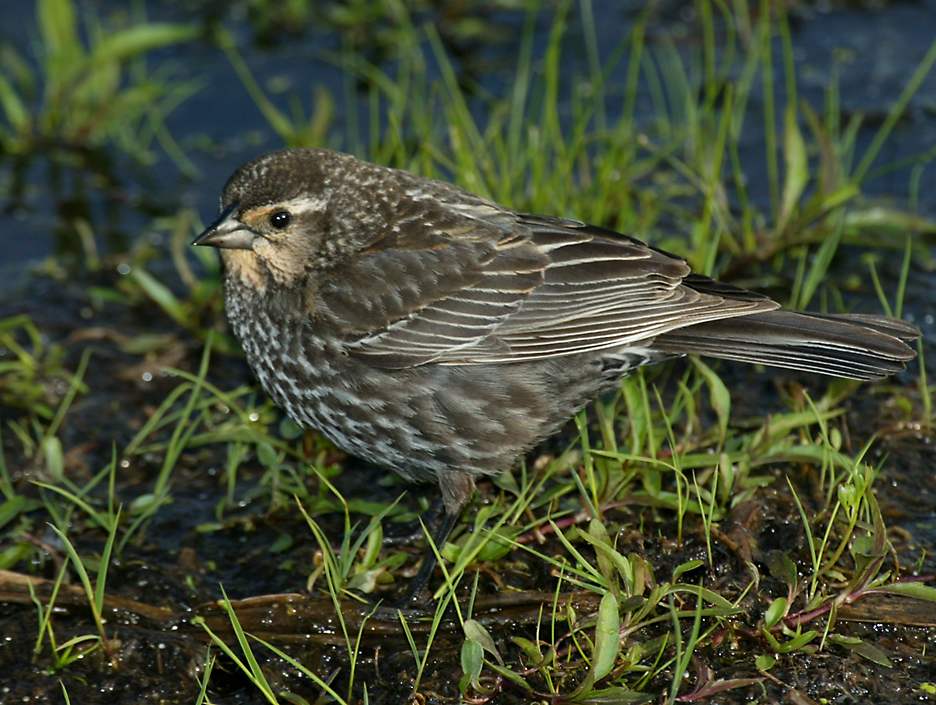
The female is much more dull, but is attractive in her own understated way. Pairs can raise two or three sets of chicks in a single season, with 3 to 5 eggs in each brood. |
 |
|
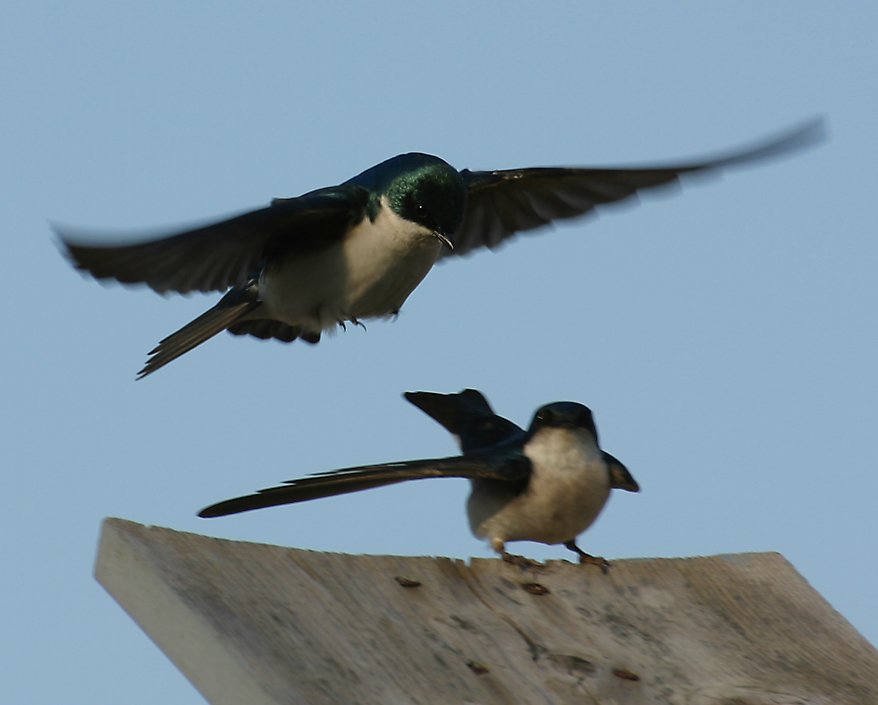
Nesting boxes have been placed around the meadows surrounding Volo Bog, to provide a home for tree swallows, like this pair. |
 |
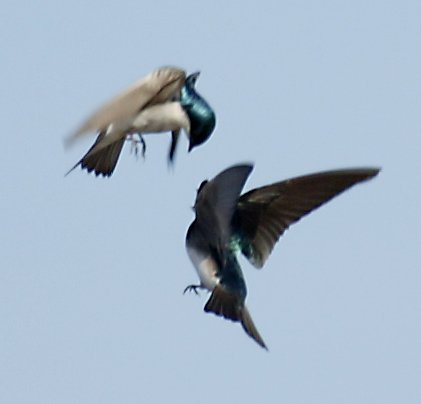
Like other swallows, they're excellent at aerobatics and will even play with feathers, which they repeatedly release and retrieve as they float through the air. |
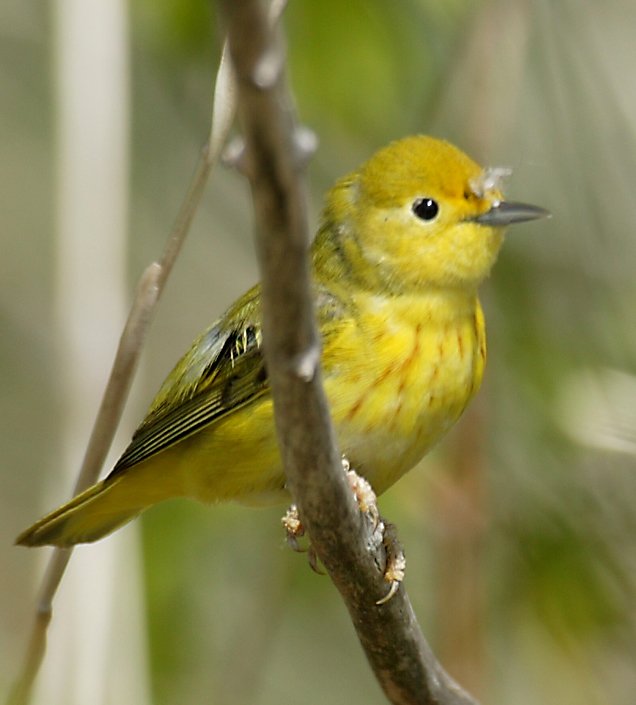
I've never been a great fan of warblers, mostly because there are so many species in the United States, over 50 in total, and many of them are rather dull and difficult to distinguish from other members of the family. The very difficulty of recognizing all of the species is a reason for many hardcore birders to find them an attractive target, and although many are drab there are also very many attractive warblers amongst them. I can certainly appreciate the beauty of this male yellow warbler, even though it is one of the least spectacular of the "good looking" group. |
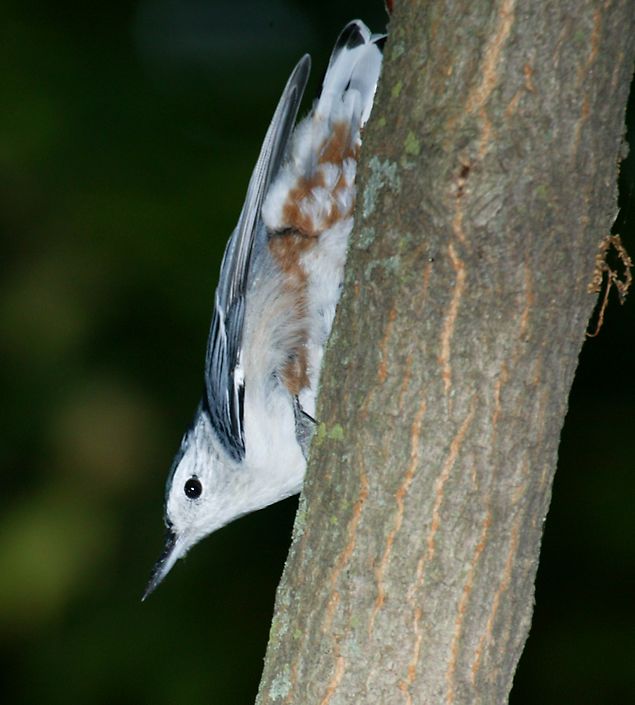
Nuthatches like this white-breasted nuthatch climb rapidly up and down tree trunks looking for insects. Mated pairs are very faithful, staying together even through winter. |
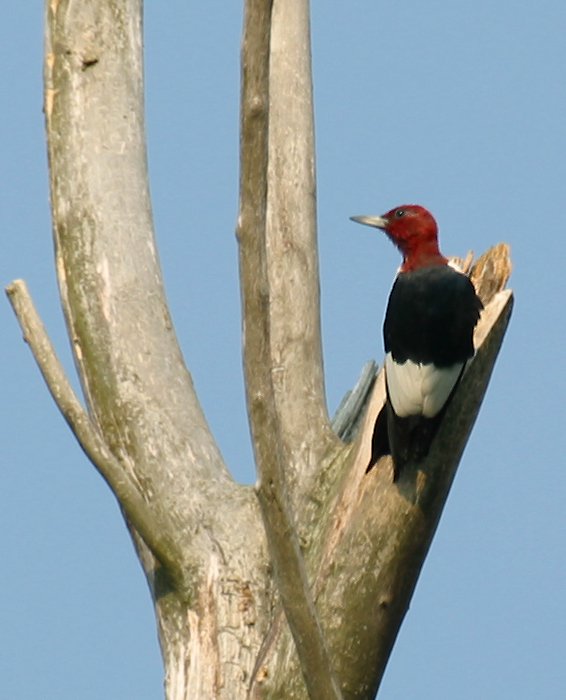
This is a red-headed woodpecker, a species which lives east of the Rocky Mountains, and from Canada all the way down to Florida. Unlike most other woodpeckers they'll "fly catch" by hunting insects in mid-air along roadsides, but like other members of the family they'll also store food in the form of acorns and nuts in crevices and cracks in trees. Unfortunately this is another species being squeezed by European interlopers, in this case European starlings, which aggressively drive red-headed woodpeckers out of their nesting holes so the starlings themselves can use them. |
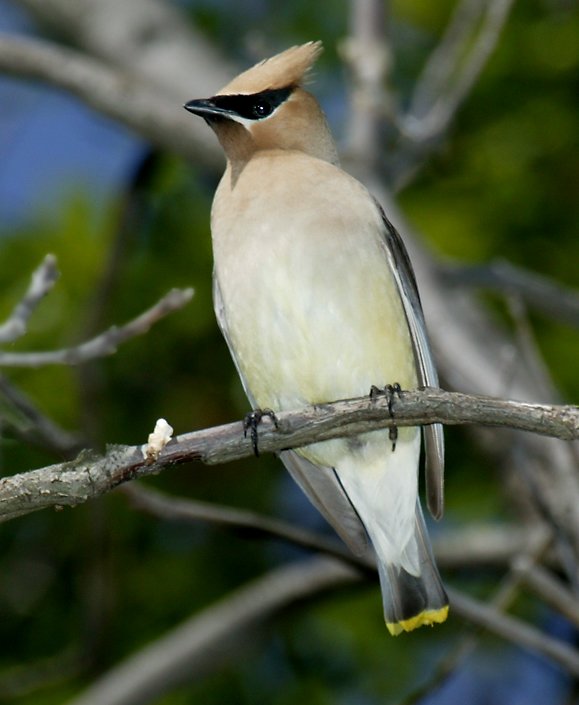
I've got quite a soft spot for cedar wakwings like this one. Part of the appeal, of course, is that outrageous tuft of feathers on its head, together with the snazzy bandit's mask. There's also the bright yellow highlight at the end of its tail feathers and the bright red tips of its wing feathers which gives it the "waxwing" part of its name; unfortunately, they aren't visible from this angle. The very similar Bohemian waxwing is even more colorful, with yellow patches on the wings in addition to all of the cedar waxwing's colored patches. Another delightful aspect of this bird is its playful behavior - a large group of them will sit beside each other on a branch and pass flower petals or berries from one end of the line to another - or until one of the birds eats the plaything. They're relatively approachable, which makes photography a bit easier too. Unlike most birds in this part of the world, cedar waxwings have a diet mostly consisting of fruit. Since it takes quite some time for fruit to ripen this far North, they breed much later in the year than most birds. They carry berries and other fruit to their young in their crop, which can handle up to 30 cherries at a time! |