
Belize Underwater Still Lifes
|
|
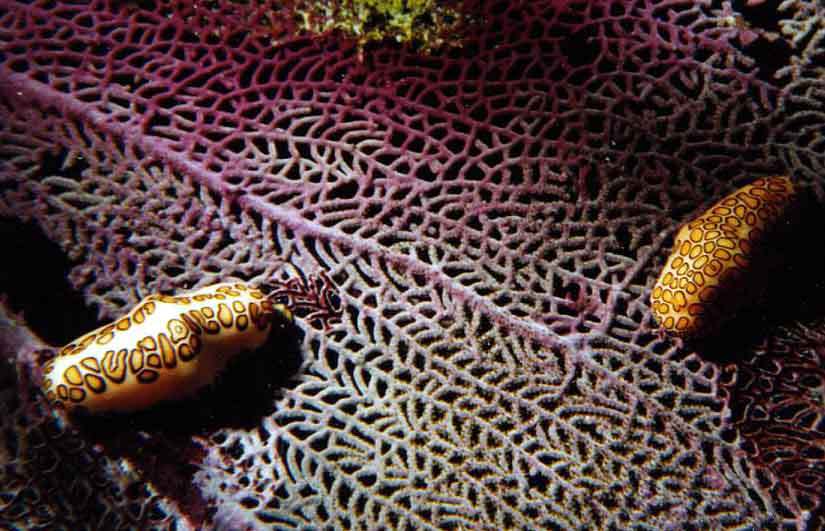
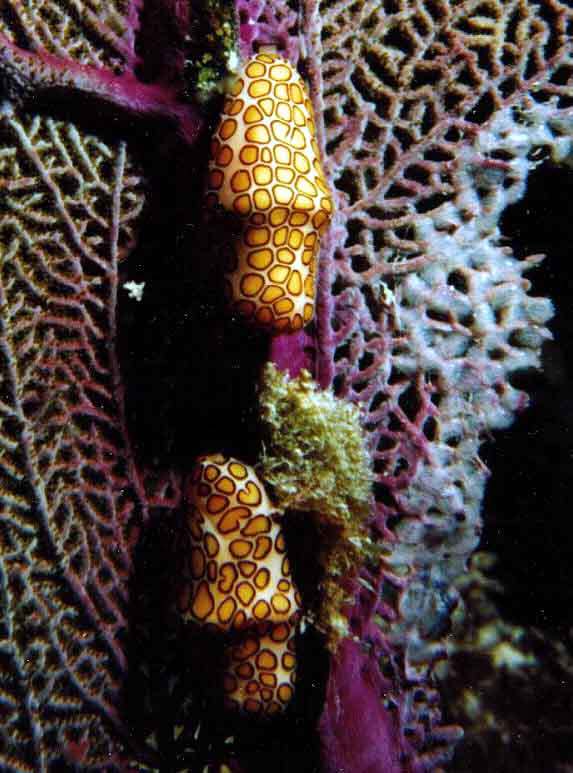
These
are Flamingo Tongue shells on a seafan. The pictures here are shown
at twice life size.
At the very top of the shell directly on
the right you can just make out the tube which the mollusk uses to breathe.
The colorful patterns aren't actually on
the shell itself. Instead, these patterns are on the "mantle", part
of the soft tissue inside the shell, which the mollusk spreads around the
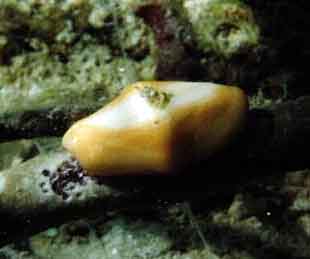
shell. The picture directly below shows what these shells look like
without the mantle on them. Now you can see why they wrap the mantle
around themselves!
|
 |
 |
|
 |
 |
 |
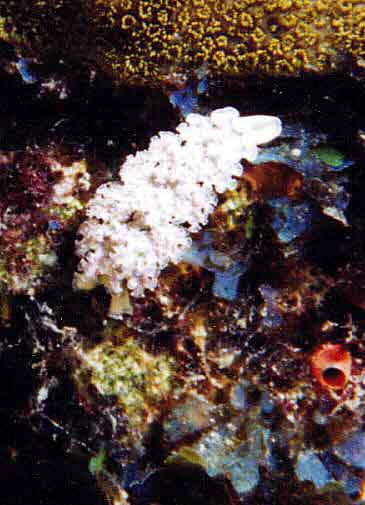 |
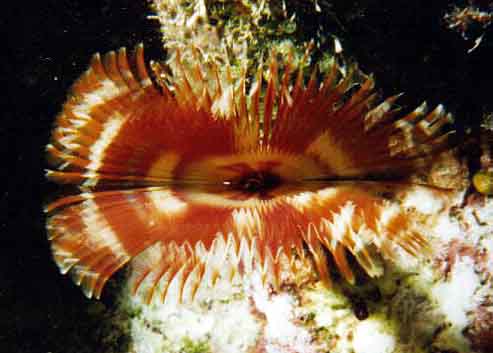 The photo above is of a Feather Duster Worm. When threatened, they retreat into the hard tube which they construct. Apparently there are plenty of nudibranches in the Caribbean, but I've seen far more in the Pacific. On the left is a nudibranch, about twice life size, called Elysia crispata, which is extraordinarily variable in color and appearance. The frills are used to house photosynthesizing cells which it extracts from the algae it eats. |
|
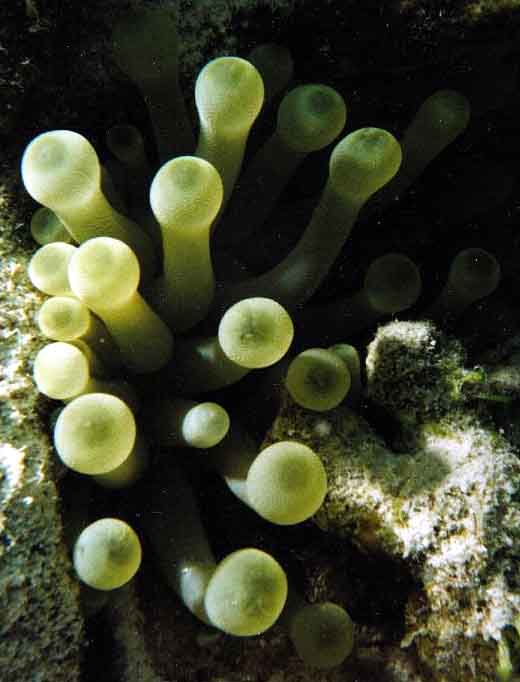
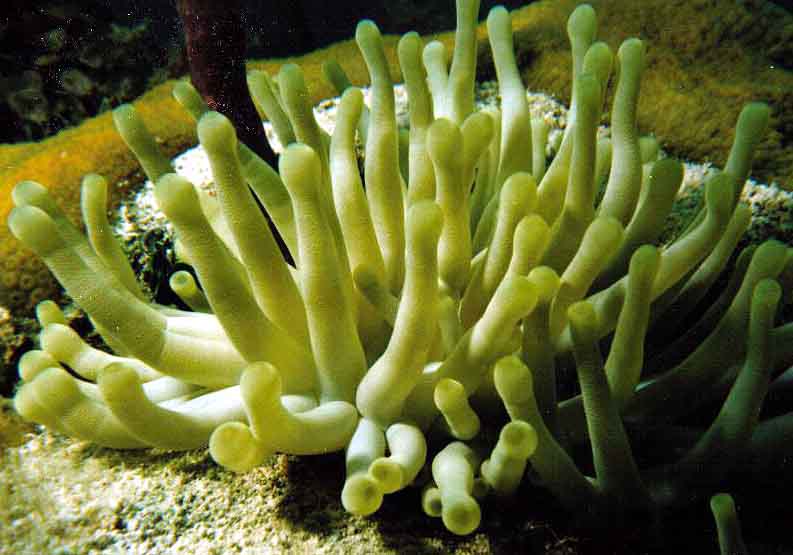
Anemones, looking just like anemones in the Pacific. But if this were the Pacific, there would also be a clown fish or anemonefish - but there aren't any of these fish in the Carribean. |
 |
 |
|
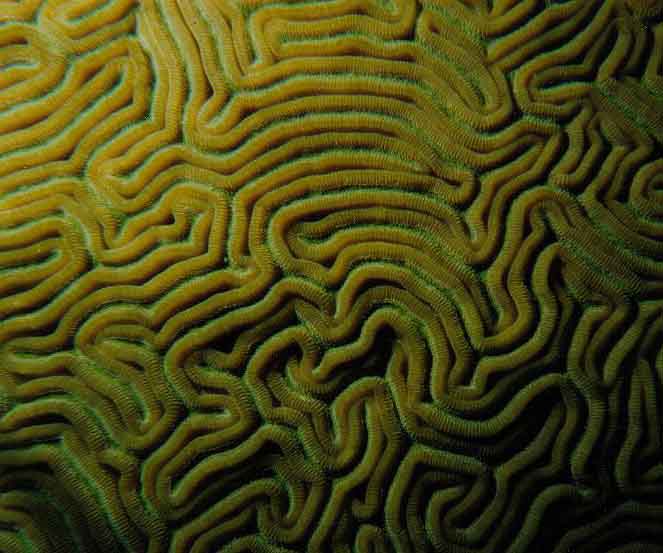
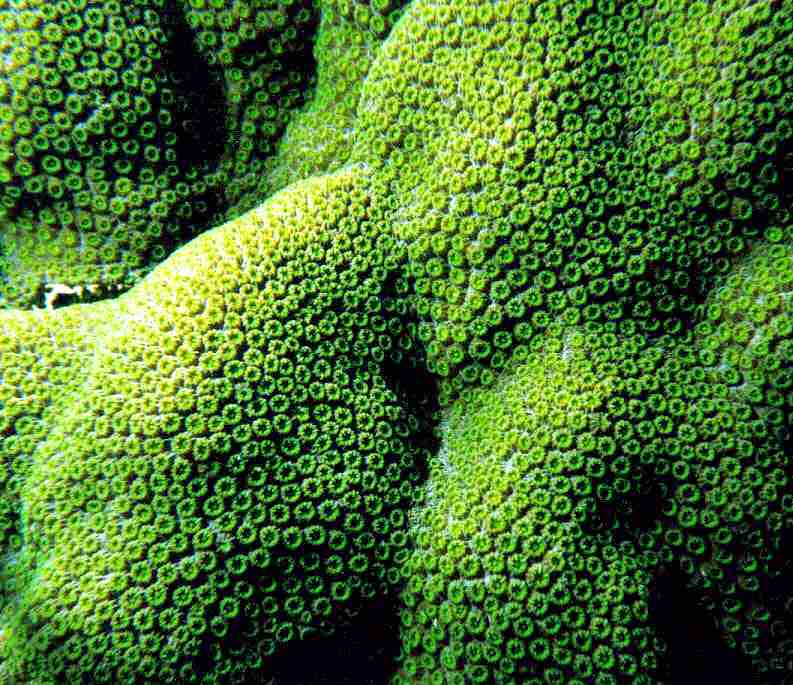
Close-up of some brain coral. The biggest regret from my trip to Belize is that I didn't do a night-time snorkelling trip. Coral polyps only feed at night, so that's the only time to see them. Night trips were being offered, but like all the other trips there was a minimum of two people. It never occurred to me that I could pay double the normal single price, and do the trip. It would have been worth it. |
 |
 |