| Aswan,
sometimes spelled Assuan, must be the most attractive city in Egypt, perched
as it is on the banks and hills lining the Nile as it makes its way through
large granite outcrops found along this stretch of the river.
These are the famous Nile cataracts, which made navigation on the river
difficult and resulted in Aswan becoming a strategic gateway to the trading
routes of the south, and a fortress against invasion. |
 |
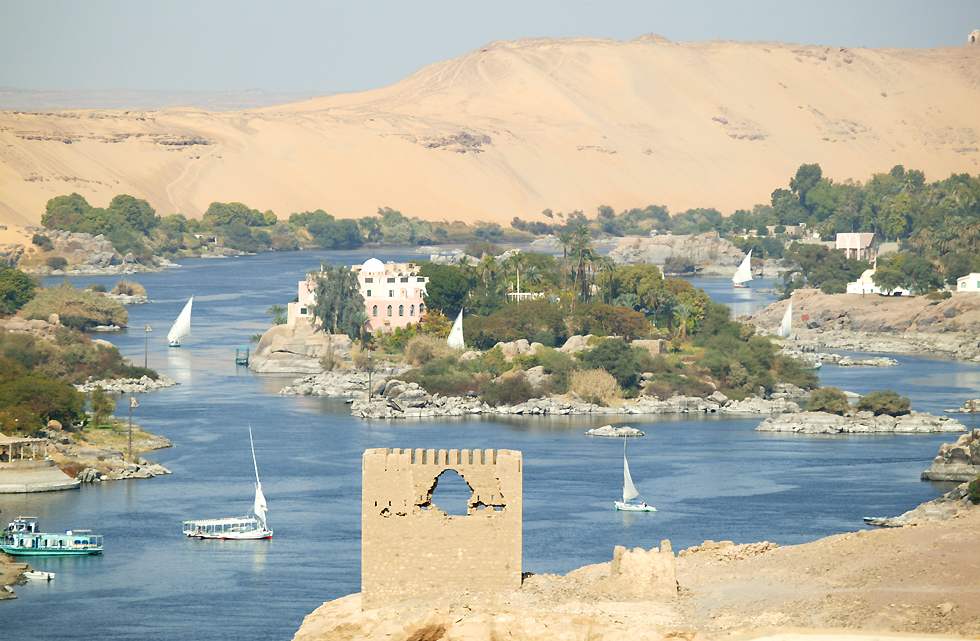
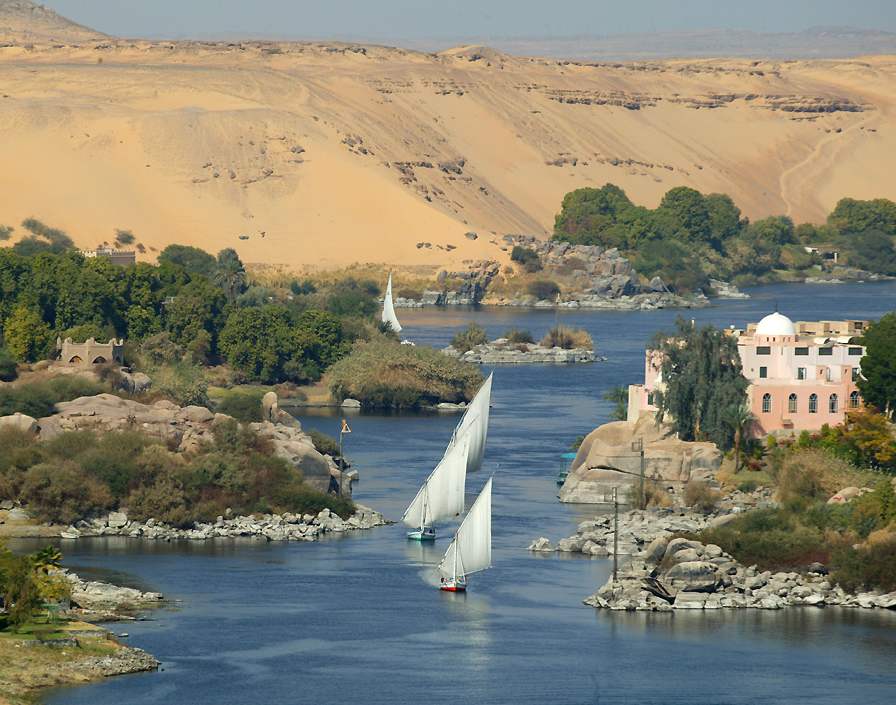
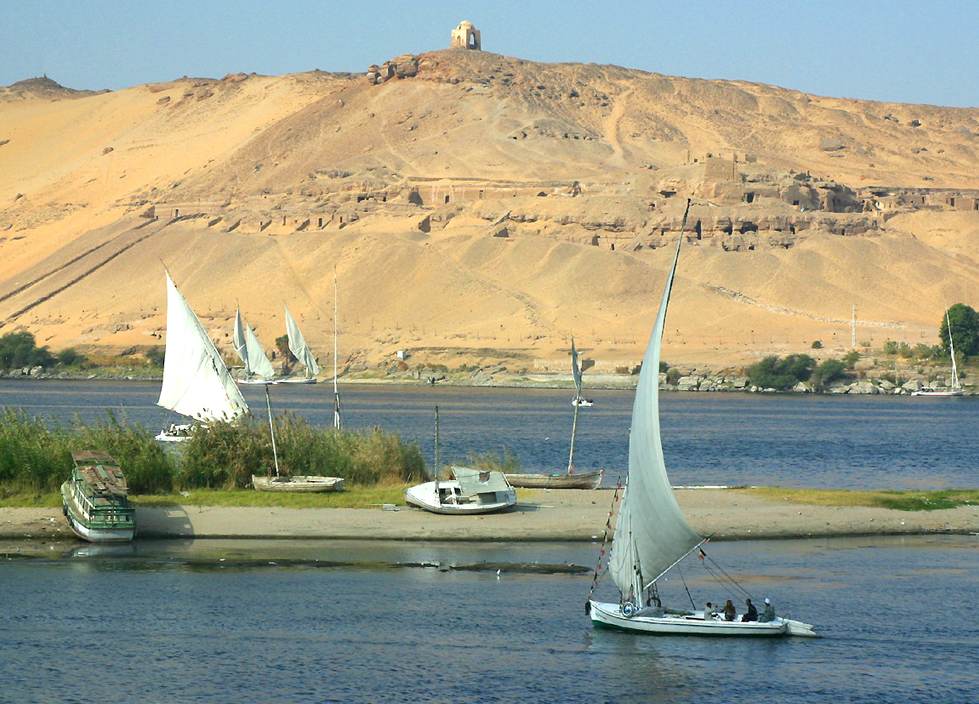
| The
traditional feluccas laden with tourists add their own charm as they make
their way between the islands dotted in the river. Some of
these islands are worth dropping in on if you have the time, with a museum
of antiquities at the southern end of Elephantine Island, the largest of
them, and a botanic garden on Kitchener's Island just to the west of Elephantine
Island. |
 |
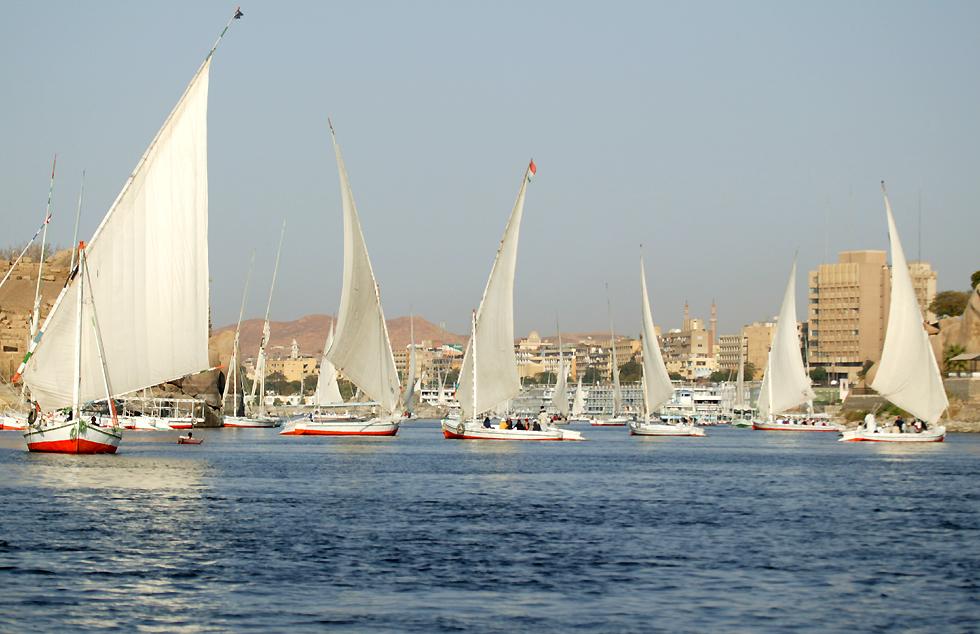
| While
you're here you definitely owe it to yourself to take a felucca ride on
the river. As you can see, there are certainly plenty of them,
so prices are affordable even if you're travelling alone or with just a
small group of people. It's certainly not difficult to arrange
a trip, you'll be approached by touts as you walk along the broad Corniche
which stretches along the riverbank. A trip in a felucca is
very relaxing, with cool breezes coming off the river as you smoothly and
gracefully make your way backwards and forwards up and down the river. |
 |
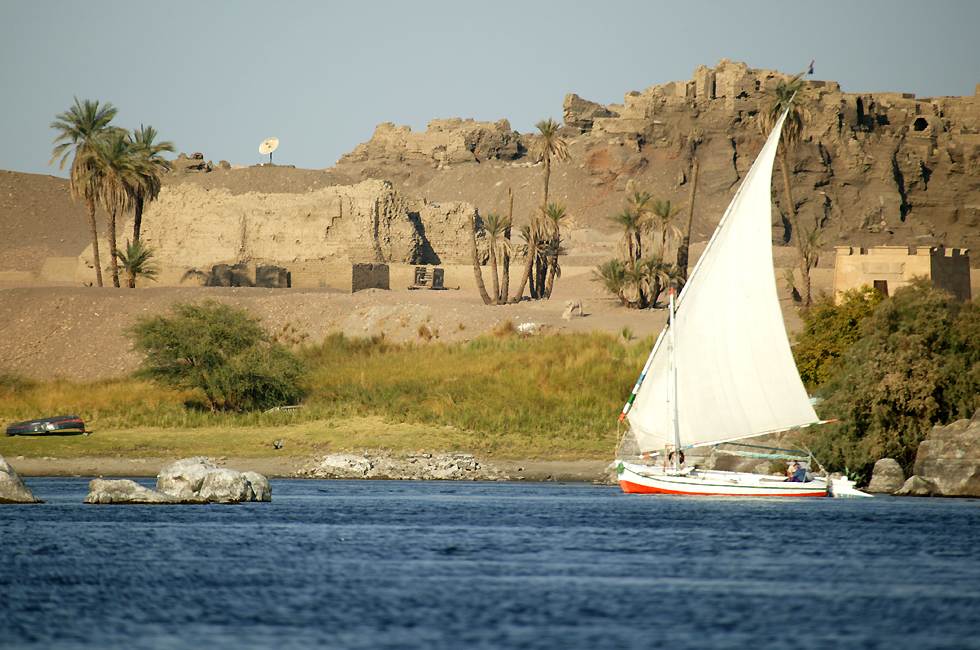
| There
are some minor remains from Pharoanic times which have been excavated on
some of the islands in the river, including a small but ancient step pyramid,
and a temple dedicated to the ram-headed god Khnum, whose worship was centered
on Elephantine Island. |
 |
| Just
a little north of Elephantine Island you can see the Tombs of the Nobles
dug into the cliffs on the west bank of the Nile opposite the present day
city. Many of these are really ancient, dating back to well
over 2000 years before Christ. I didn't have time to visit
them, but from what I've heard they are worthwhile to look at, even if
they're not as magnificent as many of the tombs in the Valley of the Kings
and Valley of the Queens near Luxor. |
 |
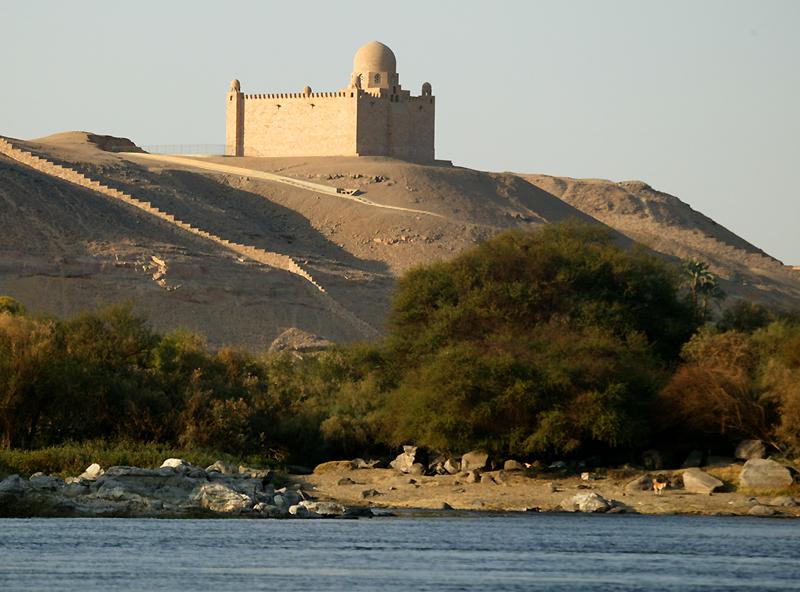
| Here's
a somewhat more modern tomb, the Mausoleum of Mohammed Shah Aga Khan, who
was the leader of the Ismaili sect of Islam when he died in 1957.
His wife arranged for the building of this monument and she looked after
it until she too died in 2000 and was entombed in here alongside her husband.
Apparently the tomb was closed at the time I visited in 2003, but the inside
is said to be worth a look. |
 |
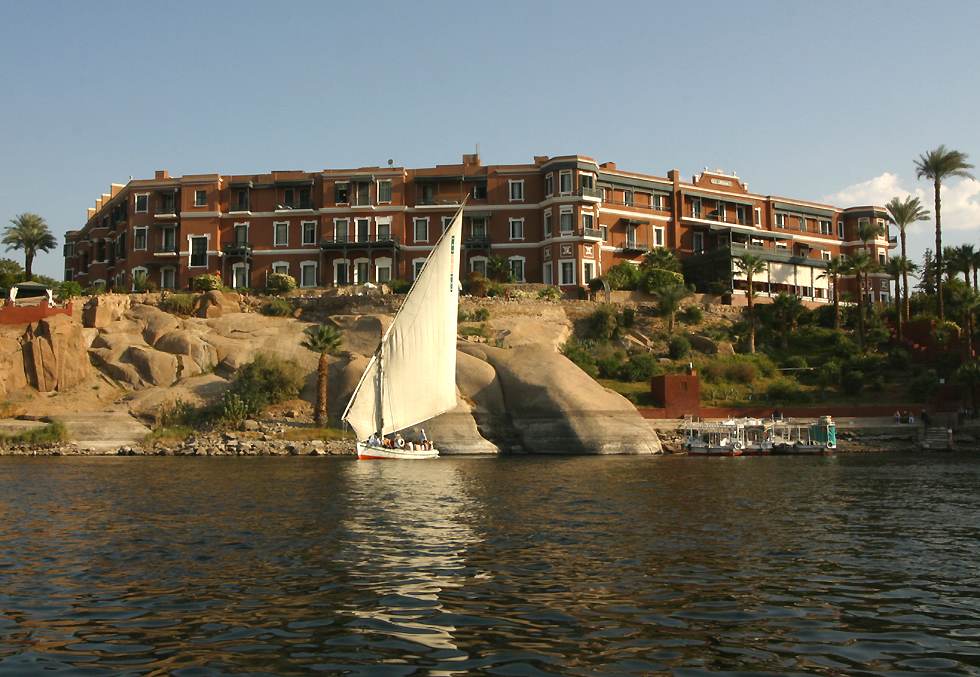
| The
Old Cataract Hotel hearkens back to the days when soldiers fought and died
to keep Egypt forever British. The soldiers are gone but the
British tourists remain, sipping cocktails or warm beer in what was once
an unofficial appendix of the Empire. |
 |
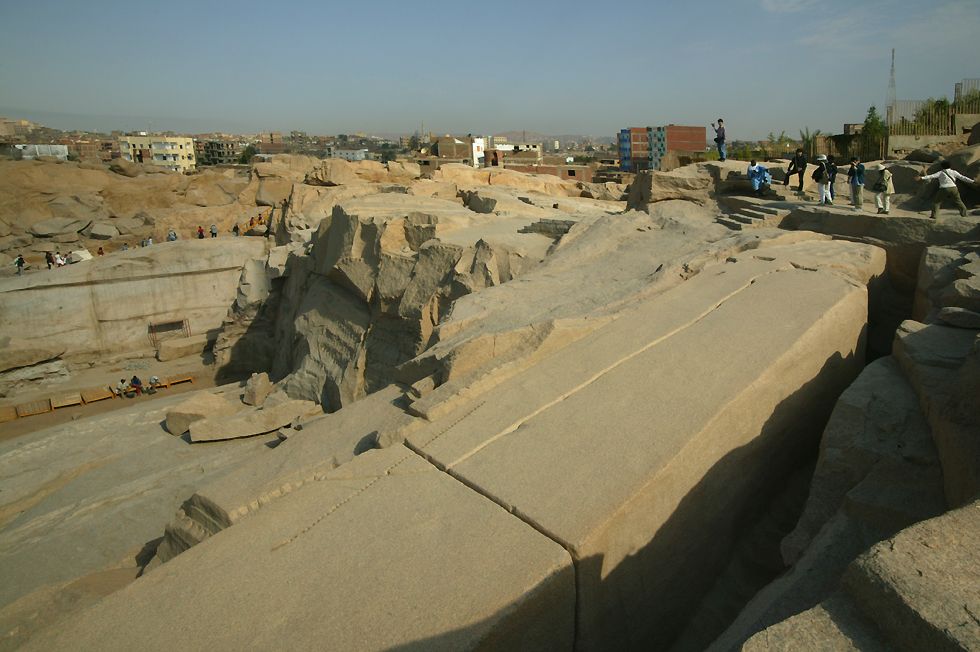
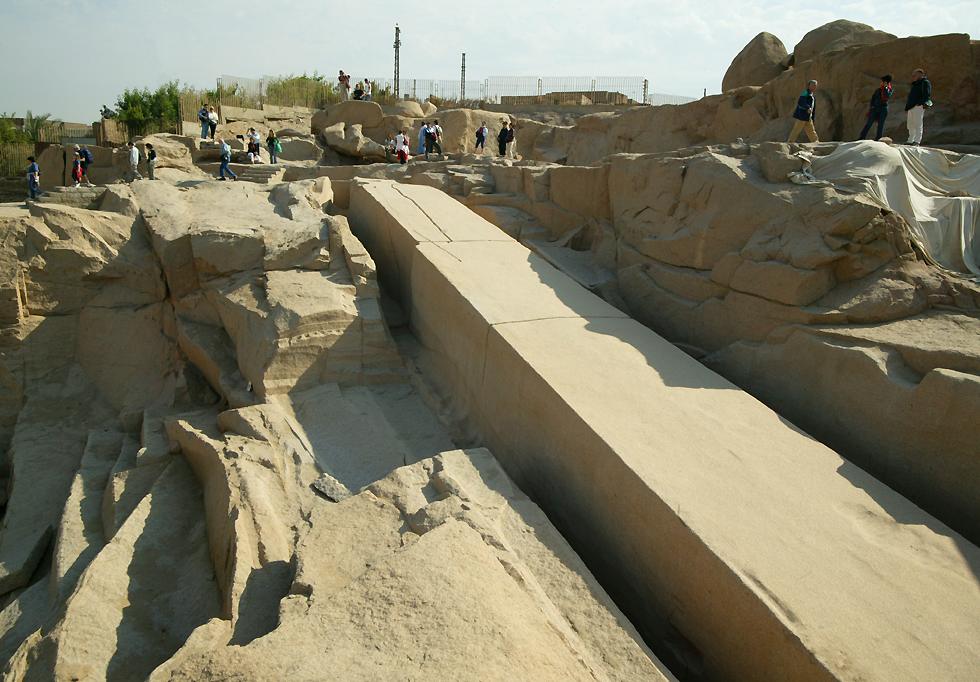
| Abandoning
the felucca for a taxi, I headed out to the Unfinished Obelisk in the northern
quarries which are across from a very large and sprawling Fatimid era cemetery.
Since granite is only found in southern Egypt, these quarries were the
main source of the stone used for the carving of statues, and for the construction
of temples and parts of the pyramids. As you walk around you
can see that a lot of stone was excavated from this quarry, but the highlight
is this massive obelisk still lying in the spot where it was being cut
away from the surrounding rock. At 42 meters (136 feet) long
and with an estimated weight of 1168 tonnes (1287 tons) it would have been
the large single stone monument ever constructed, but it developed a flaw
which rendered it worthless. |
 |
| This
quarry is a fair distance away from the river, so it's amazing to imagine
the ancient Egyptians moving such a huge thing over the hilly ground and
down to the river. Incidentally, just out of sight on the right-hand
side of this photo is one of the crude little booths manned by soldiers
armed with automatic weapons, here to guard tourists from violence by Islamic
extremists. Armed soldiers are a familiar sight at many tourist
locations in Egypt, even though there haven't been any attacks since 1993
and the groups responsible have publicly renounced violence. |
 |
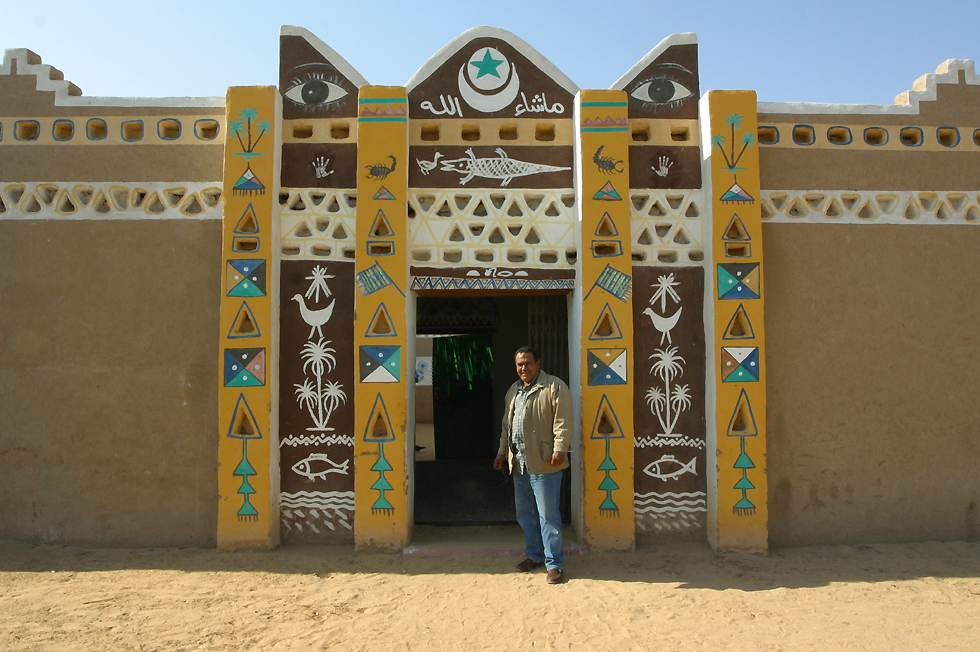
| My
taxi driver took me to this restaurant built in Nubian style on a hill
high above the Nile, with magnificent views up and down the river - the
first two photos on this page were taken from the balcony of this restaurant.
The Nubians are the original dark skinned inhabitants of this area, who
traded with the pharoahs and periodically had their own kingdoms which
created impressive artwork. The creation of Lake Nasser by
the Aswan High Dam caused a lot of disruption for the Nubians, many of
them having to relocate away from the rising waters, or even further north
into Aswan and other areas within Egypt. Aswan has what's said
to be a very good Nubian museum, unfortunately I didn't have time to visit
it, so this was my only pitiful contact with Nubian culture.
The view was great from the restaurant, but the service and food wasn't
too good; I ordered fried chicken, which took well over an hour to arrive,
despite there being only a dozen or so people eating at the time.
When it arrived, it was partially raw, so I ended up not even being able
to eat all of it! |
 |
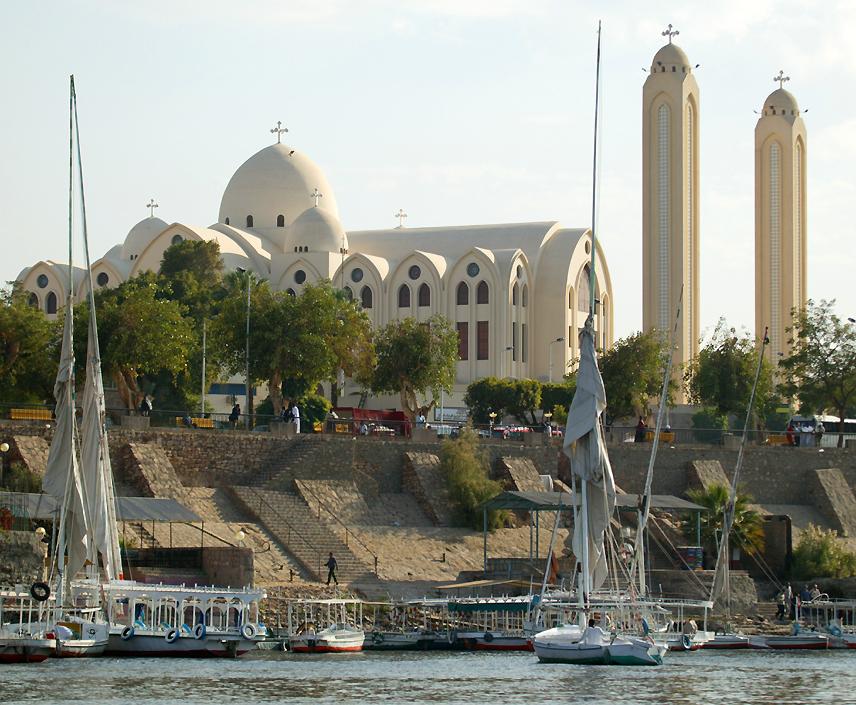
| As
well as the Nubian culture, another distinctive feature of life in Aswan
is the large number of Coptic churches with their distinctive crosses.
There are Coptic christians throughout Egypt, including a well know Coptic
quarter in Cairo, but they're somewhat more numerous and visible here than
elsewhere. |
 |
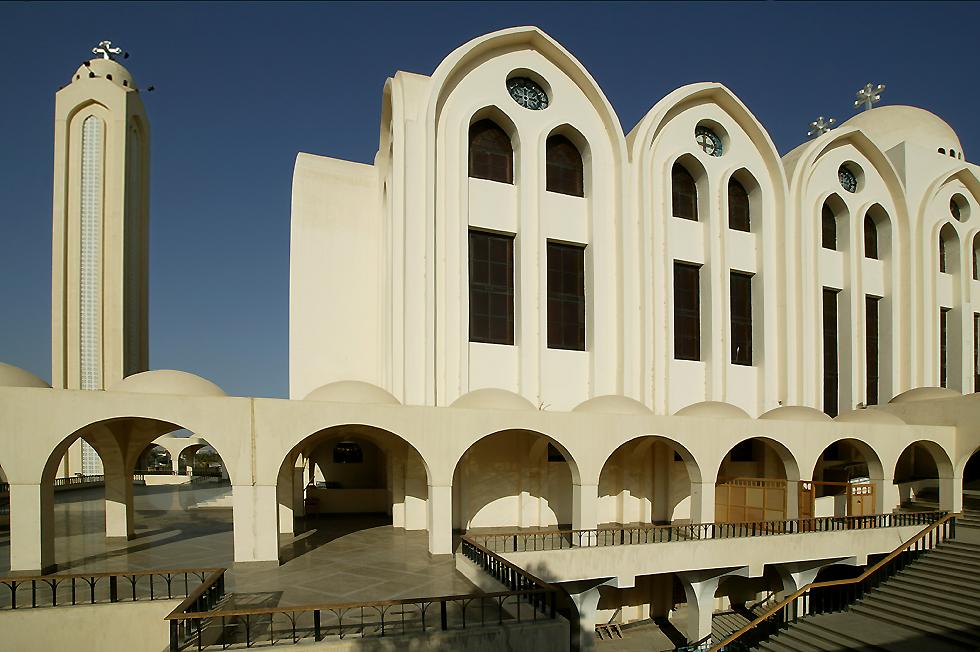
| Here's
the same large church, which you're welcome to visit and enter.
Christianity came to Egypt early, as jewish Christians moved around the
Roman Empire, especially after the Roman expulsion of many jews from Israel
around 70 AD. The church in Rome eventually excommunicated
the Copts after accusing them of believing that Jesus was purely divine,
rather than both human and divine. However, to this day the
Copts consider their version of Christianity to be the oldest and purest. |
 |
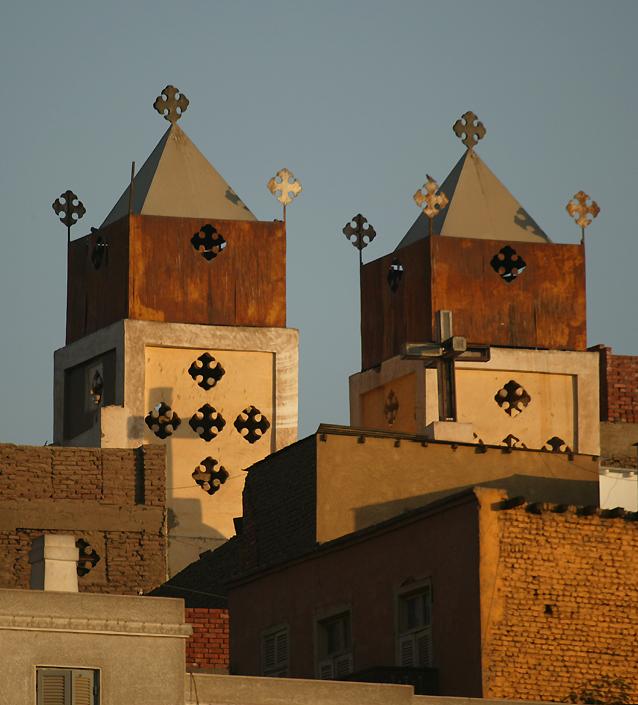
A somewhat less fancy
Coptic church nestled amongst the mud brick buildings of Aswan.
Crude brick buildings,
often with sagging walls or stairways, are a feature of Egyptian architecture
all around the country. Small mid-range tourist hotels are
often built in this way, with the brickwork nicely tucked away behind plasterwork.
With building regulations
somewhat loose and always circumventable by the application of a bit of
baksheesh, it's no wonder that buildings which have been illegally extended
to 6 or 8 stories high periodically collapse. |
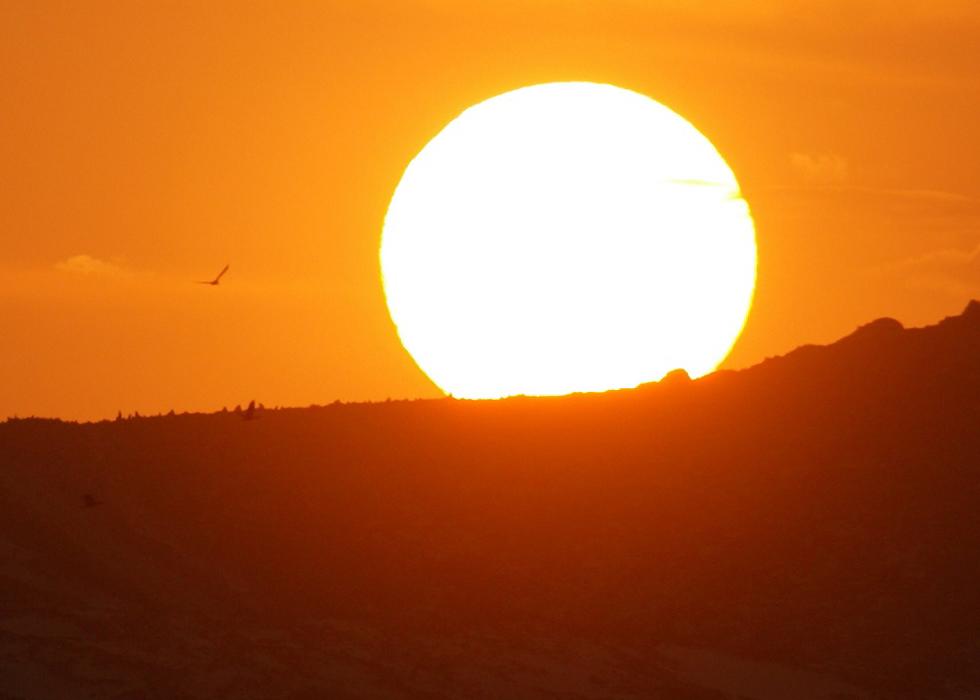
| Sunset
over the Nile at Aswan, a perfect end to a relaxed day on and around the
river. |
 |
 |