Highlights of Egypt
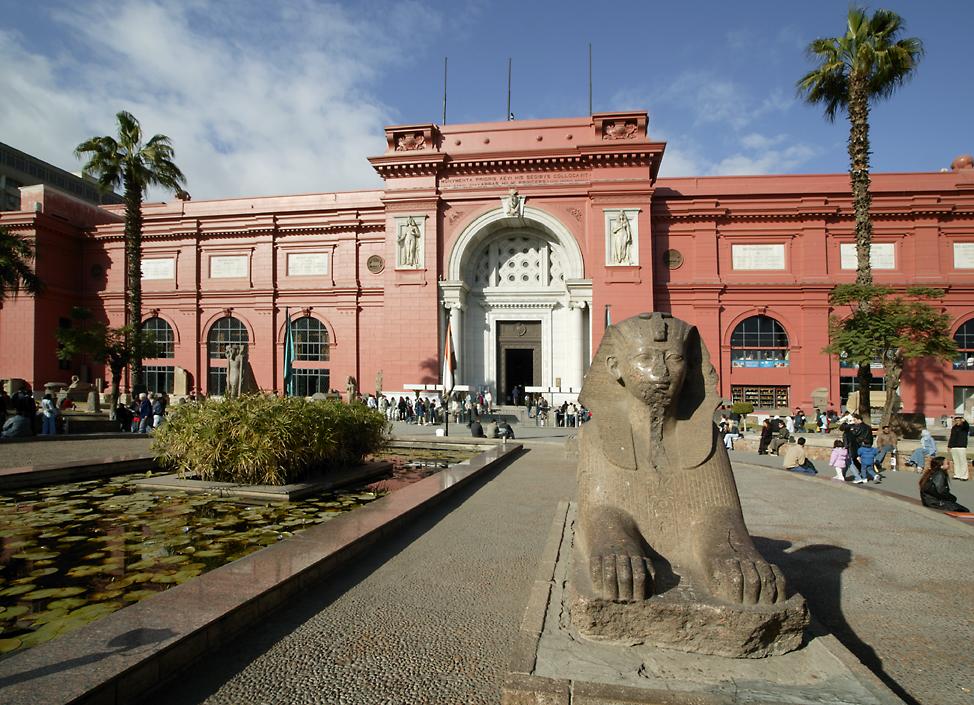

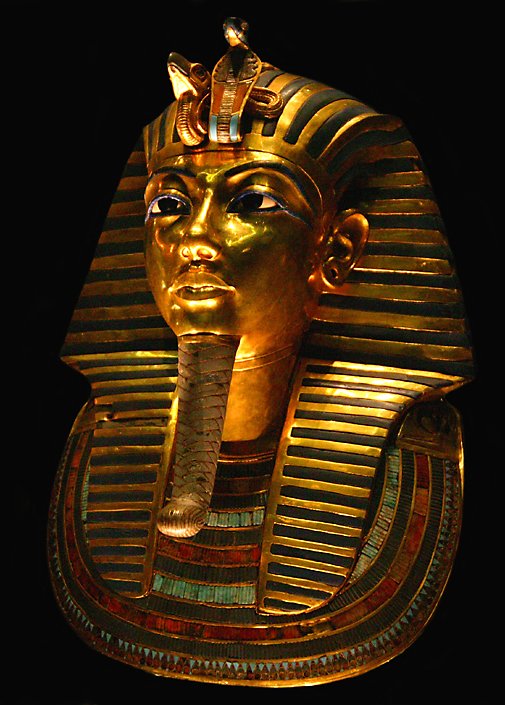
The timeline of Egyptian history is very long and very full, but the museum has items from every period, including prehistoric mummies preserved by being buried in the hot desert sands, through to the Narmer palette, a perfectly preserved stone tablet which records the first uniting of the kingdoms of Upper Egypt and Lower Egypt under one of the first pharoahs whose name is known to use. Of course there are many items from the long line of Egyptian pharoahs, and more from the period after Alexander the Great brought Egypt into his empire, starting a lineage of Ptolemaic kings and queens, including the most famous Egyptian queen of all, Cleopatra VII, who married Mark Antony and thus began Roman dominance over her kingdom. None of the artifacts in the museum is more famous than the death mask of Tutankhamun, unearthed in a remarkably good state of preservation in the Valley of the Kings in 1922. Tutankhamun's treasures are kept in a series of connected rooms and hallways on the second floor of the museum, with some of the most valuable items within a dimly lit room where flash photography isn't permitted. |
|
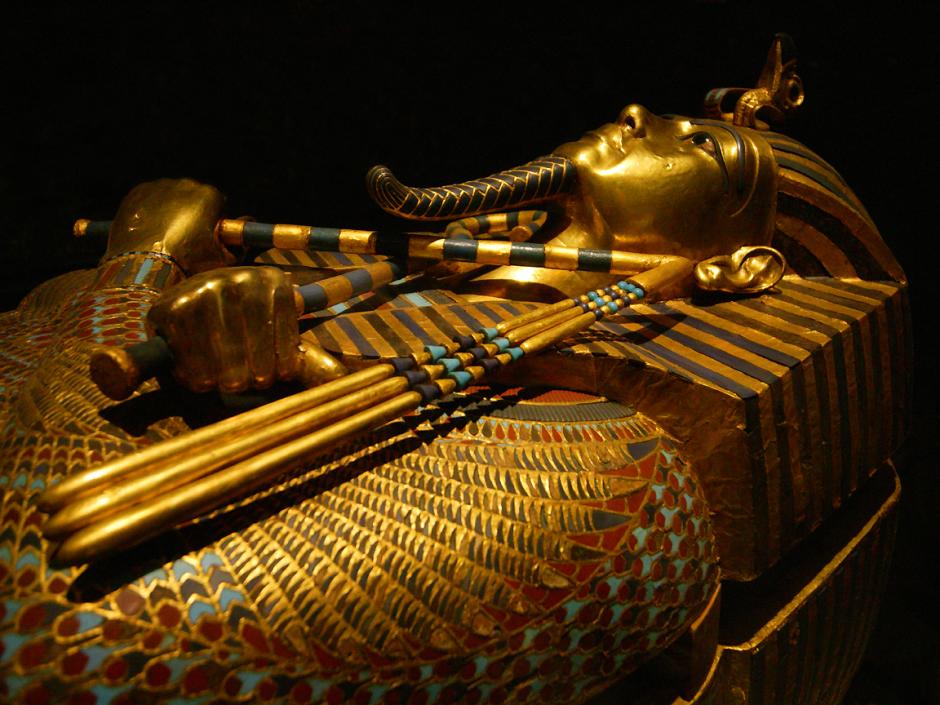
Tutankhamun (sometimes spelled Tutankahmen) was a very minor Egyptian king, but he is now extremely well known because his grave is the only one which has been found intact with virtually all of its hundreds of treasures, many made of gold and other precious materials. As well as the death mask, there are many other artifacts such as statues of Tutankhamun and the three nested gold coffins in which his mummified body was found. |
|
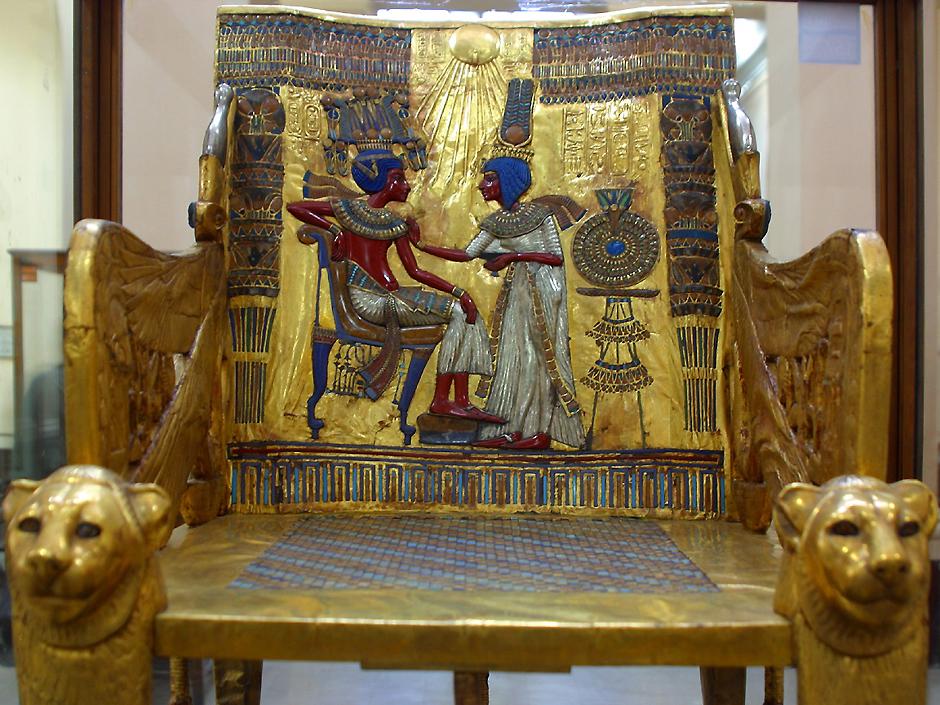
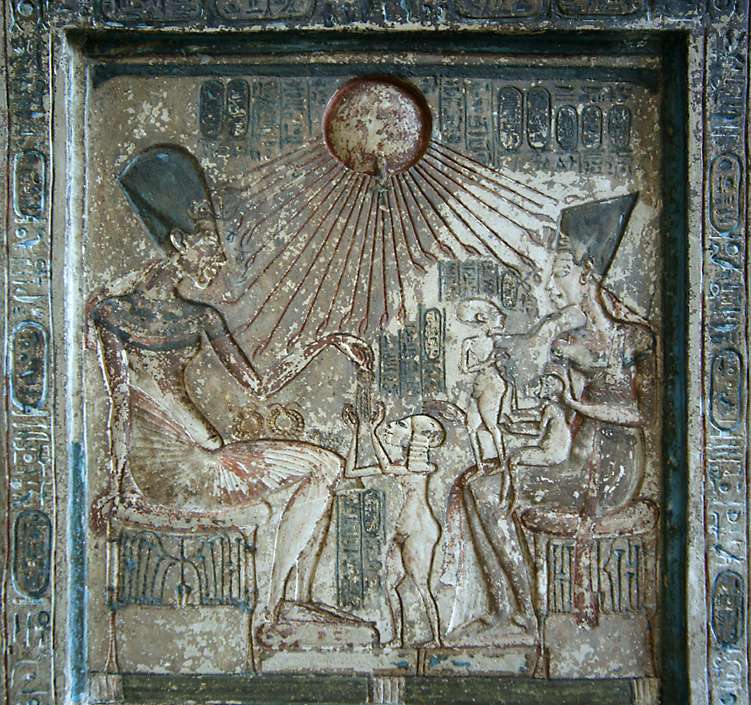
These differences in artistic style can be traced back to pharoah Akhenaten, shown here enjoying a quiet moment with his wife Nefertiti. His original name was Amenhotep IV, but he changed it to Akhenaten ("spirit of Aten") to signify an extraordinary shift he made from traditional Egyptian religion to worship of the Aten, or sun disk, whose rays are shown extended down towards the royal family. This move to a monotheistic religion was very radical and probably alienated the traditional priesthood, so Akhenaten tried to solidify the change by constructing a new capital called Akhetaten ("horizon of Aten"), which is now referred to as Amarna. He also introduced many changes into Egyptian artistic expression, including unusually informal family settings like the one shown here, as well as changes in portraiture such as pot bellies and very strangely shaped hips and facial features. However after his death the old establishment reasserted itself, all of his changes were eliminated and a systematic attempt was made to erase him completely from history by the destruction of monuments and artworks and the removal of his name from records, often by defacing his name on carved works. It's thought that Tutankhamun was either his son or grandson, but even he changed his name Tutankhaten to Tutankhamun to signify the destruction of Akhenaten's heretical beliefs. |
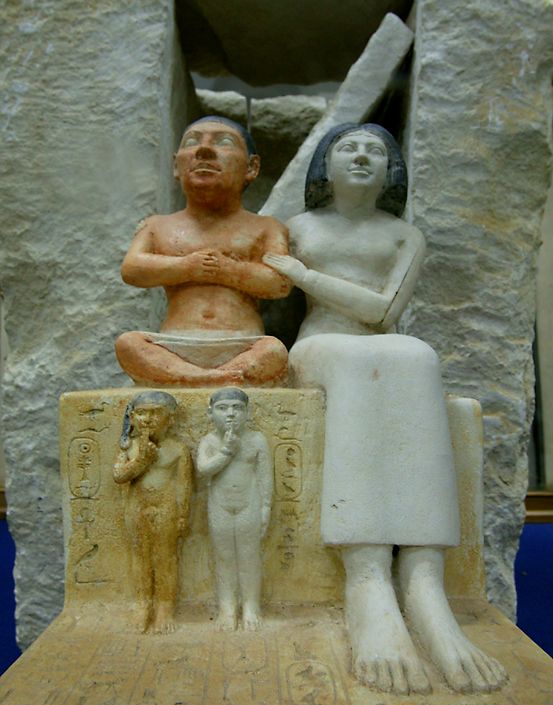
The museum isn't all pharoahs and their wives. There are thousands and thousands of items on exhibit, many depicting daily activities like fishing, farming and agriculture. Many of these items were commissioned by government officials, like the dwarf Seneb shown here with his wife and two children. Following Egyptian fashion, the boy has long hair and the girl short hair and, in another Egyptian convention, males are shown with dark skin and females with light skin. In ancient Egypt dwarves were regarded favourably and could attain positions of power; Seneb was apparently chief of the royal textile works under pharoah Pepi II. The modern day Egyptian government has used this image in televised family planning campaigns. |
|
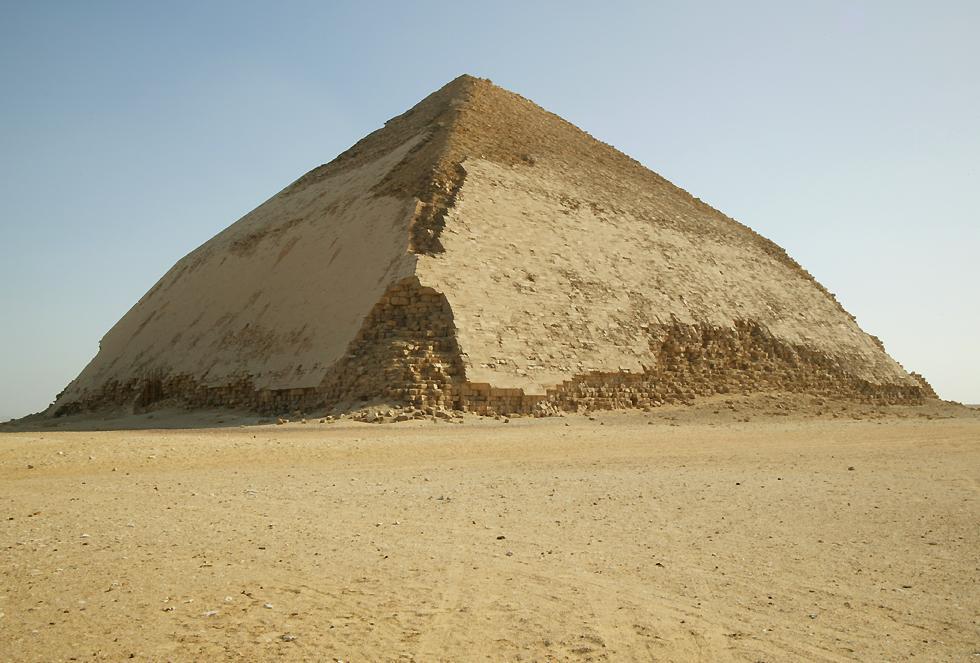
The pyramids at Dahshur are 10 kilometers to the south of Saqqara, and have only been accessible to the public since 1996 because they were previously within a restricted military area. Largely because of their isolation, they're considerably less known than the archaeological remains at Saqqara, but the structures are actually more impressive and at least as historically significant, with the Bent Pyramid, the Red Pyramid and the Black Pyramid all within a fairly small area. The Bent Pyramid was the first attempt to build a true pyramid and it still retains more of its limestone casing than any other pyramid in the country. However it appears that the builders started at too steep an angle and had to change their plans part-way through construction. The Red Pyramid was constructed soon afterwards and was a complete success, its sides have the same 43 degree angle used on the top section of the Bent Pyramid. |
 |
|
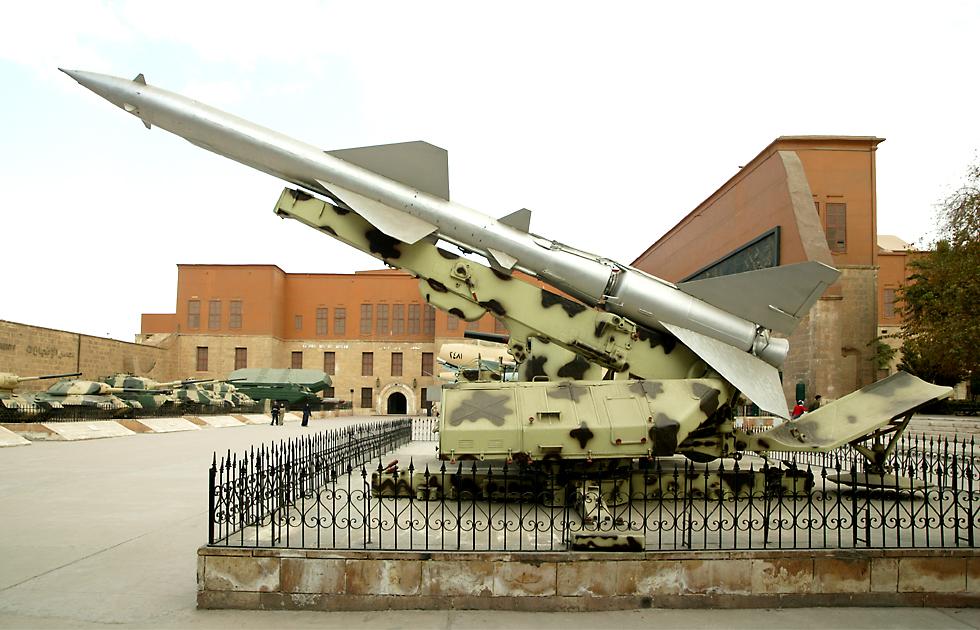
The Egyptian National military museum also occupies a site within the citadel walls, with displays of Egyptian military hardware, captured Israeli equipment and other artifacts intended to glorify Egyptian military achievements. It's fun for the whole family, as you'll see from the many schoolchildren and mothers wearing all-enveloping black burqas who stroll around while enjoying the technological, historical and sociological aspects of the tanks, jet fighters and amphibious troop transports. |
|
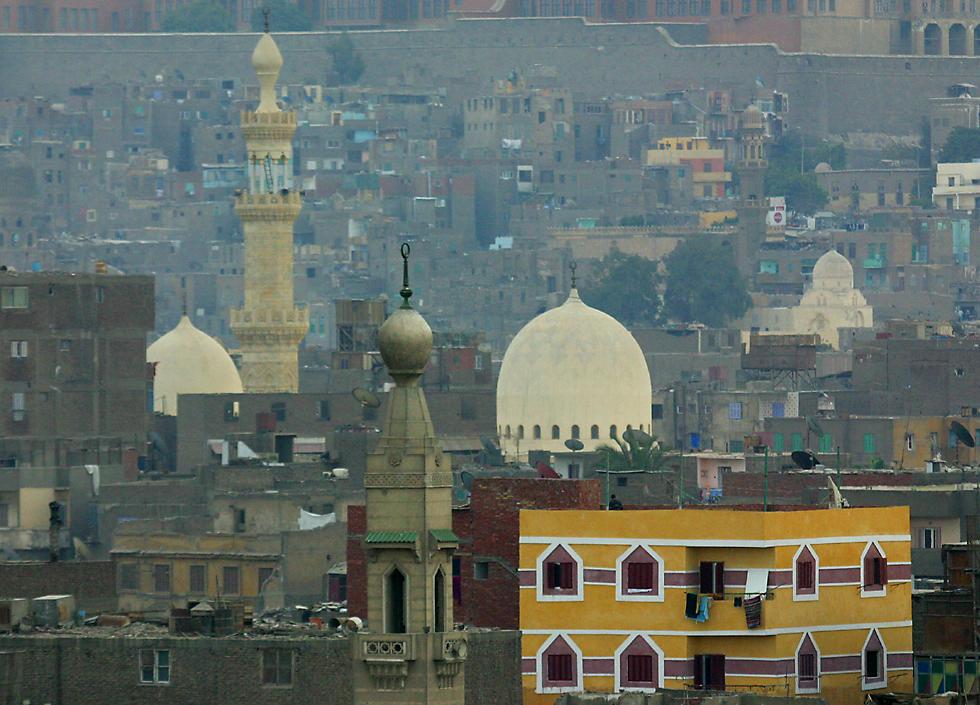
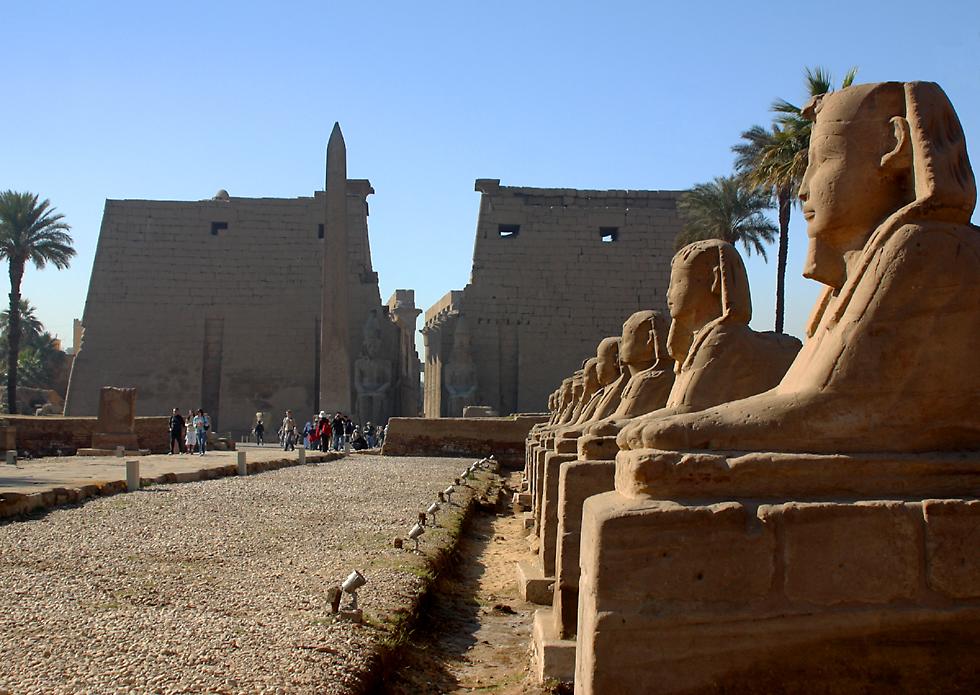
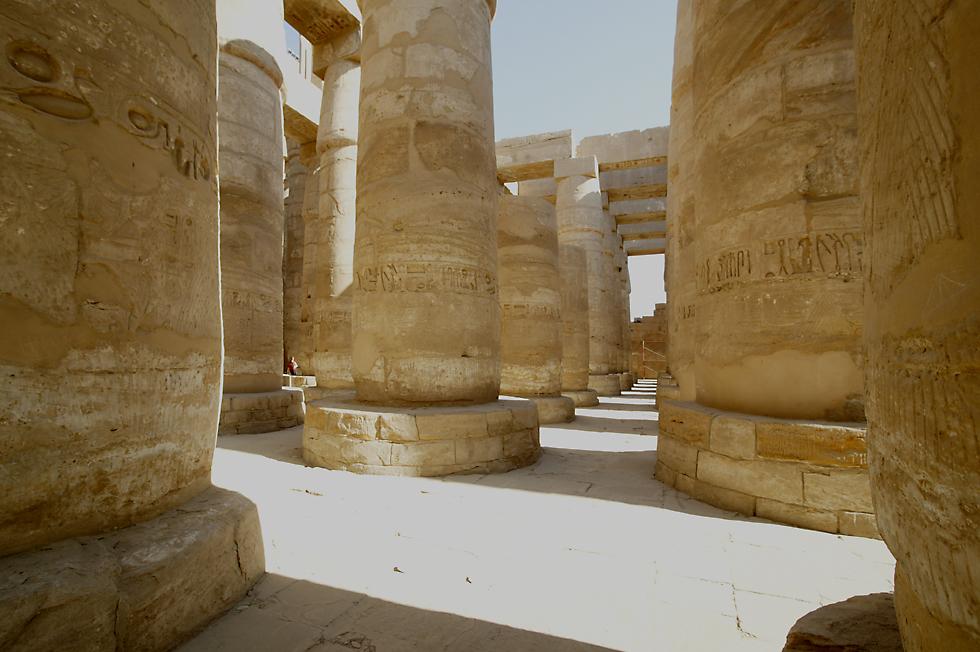
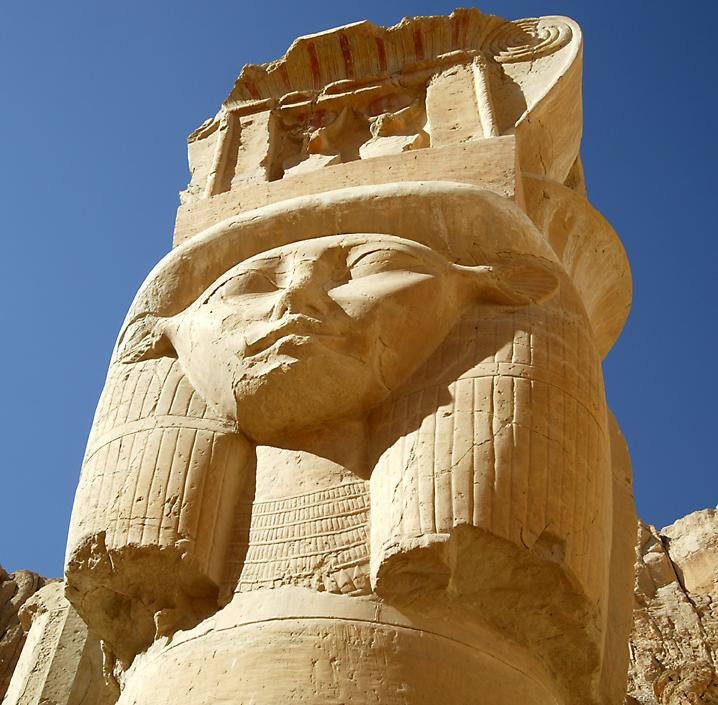
There's more to see on the western bank of the Nile at Luxor, the fabled location of the Valley of the Kings and the Valley of the Queens. Not only are many of the most famous Egyptian kings and queens buried in this region, but so too are many of their high officials. Nowadays it's possible to tour many of the tombs in the region, with walls and even ceilings entirely covered in paintings and hieroglyphics. Unfortunately, to preserve the colors of the paintings it's not permitted to take photographs, so this is something you have to experience first hand. Some of the burial chambers still contain the original stone sarcophagai, though the unimaginable treasures that were entombed along with the occupants were stolen long ago, or were removed more recently to museums. As well as the tombs you can also see the Colossi of Memnon, two somewhat the worse for wear seated statues 18 meters high which are all that remain of the funerary temple of Amenhotep III, which he rather foolishly built on the Nile's flood plain. The temple of Hatshepsut is in much better condition, since it's much further from the river, carved into the mountain which borders the Valley of the Kings. Hatshepsut was one of Egypt's most successful queens, and her temple is still in good condition, with many statues and pillars standing together with still-colorful paintings, all the more remarkable since many of them are outside and exposed to the air and sunlight. |
|
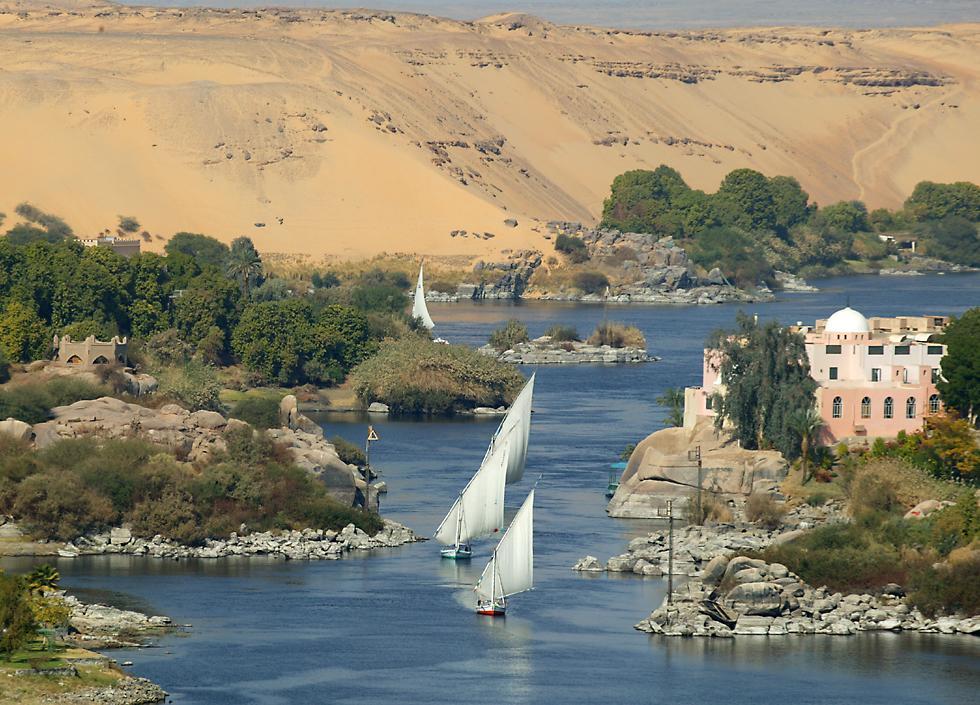
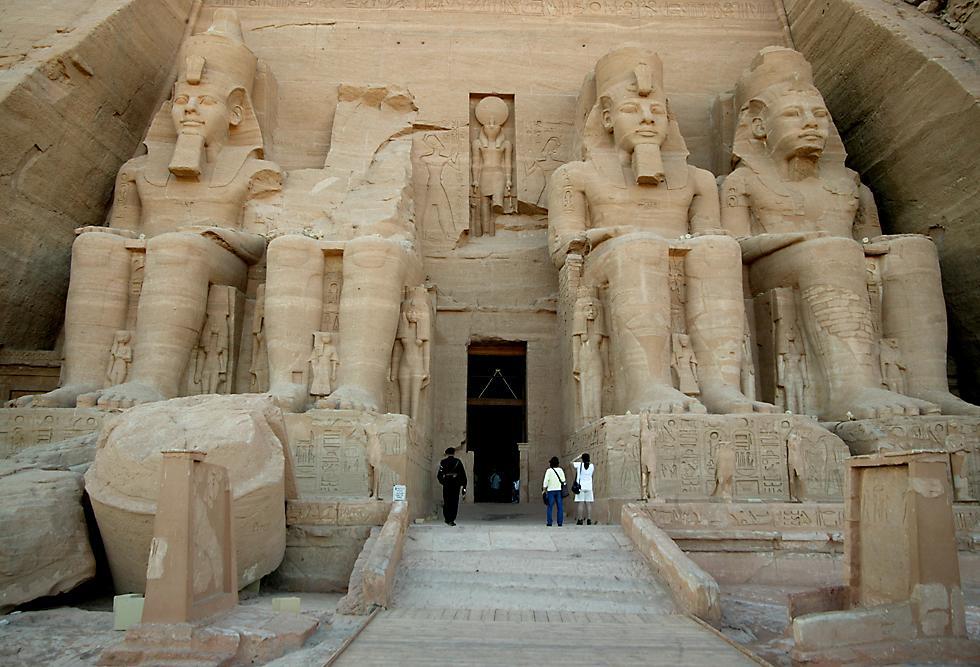
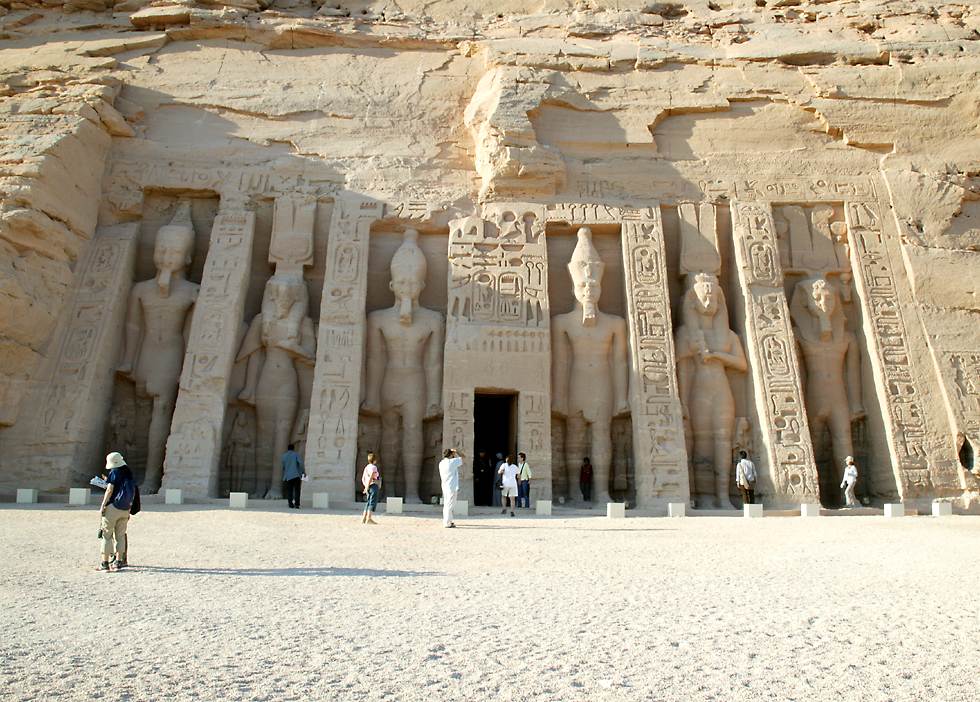
Aswan, sometimes spelled "Assuan", is about 200 kilometers south of Luxor. It must be the most attractive city in Egypt, perched on the banks and hills lining the Nile as it makes its way through large granite outcrops in and around the river. These are the famous Nile cataracts, which made navigation on the river difficult and also made Aswan a strategic gateway to the trading routes of the south, and a fortress against invasion from the south. Since it often represented the southern limit of control for the pharoahs, there are fewer large temples and ruins here than further down the Nile, but there's certainly enough history to keep a tourist's interest. Within the city itself there is an unfinished obelisk, which would have been the world's largest worked block of stone if it hadn't developed a flaw which caused the workers to abandon it as it still lay in the quarry. Just a little further afield is the Temple of Philae, which was rescued from the lake created by the Aswan dam built by the British between 1898 and 1902. |
|
|
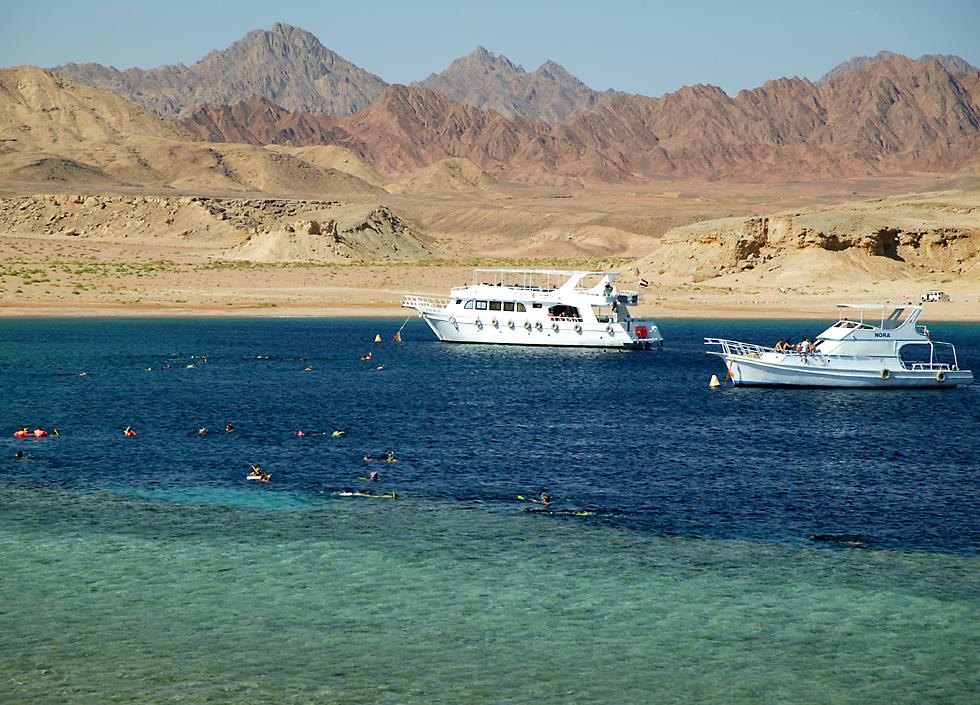
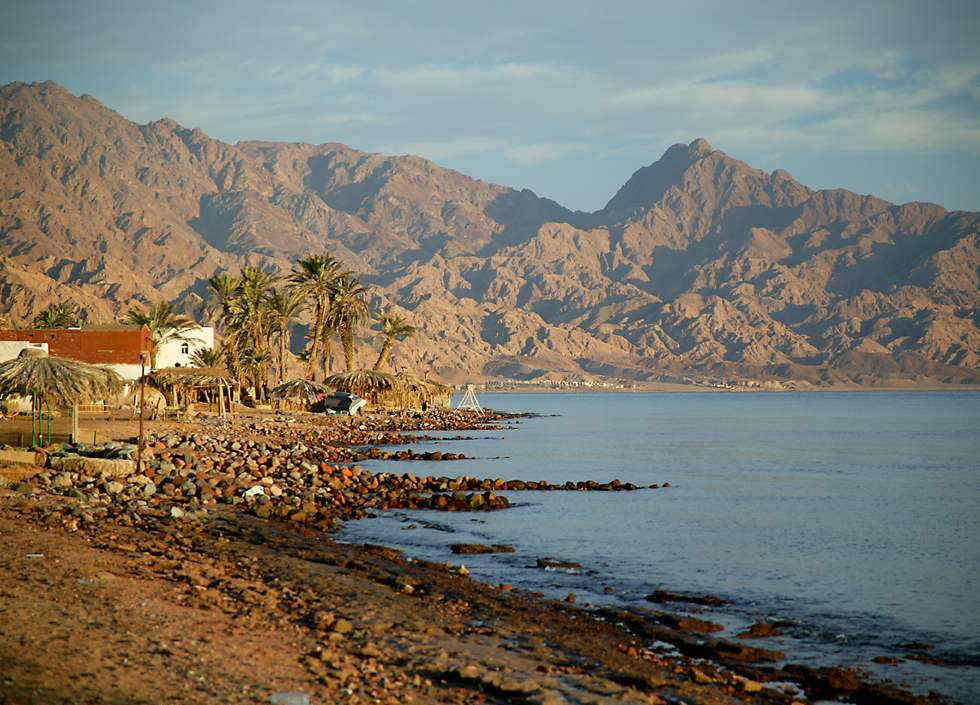
I flew from Aswan to the southern Sinai resort of Sharm el-Sheikh, but since that area was too ritzy for me, I hired a car and drove 85 kilometers north to the more laid-back town of Dahab, whose mountains are every bit as attractive as those elsewhere. From here you can see right across the Gulf of Aqaba to Saudi Arabia, which is probably as close as I'll ever get. I was lucky to experience some unusually calm weather, which made it much easier for me as a free-diver to see some of the highlights of Egypt underwater. |
|
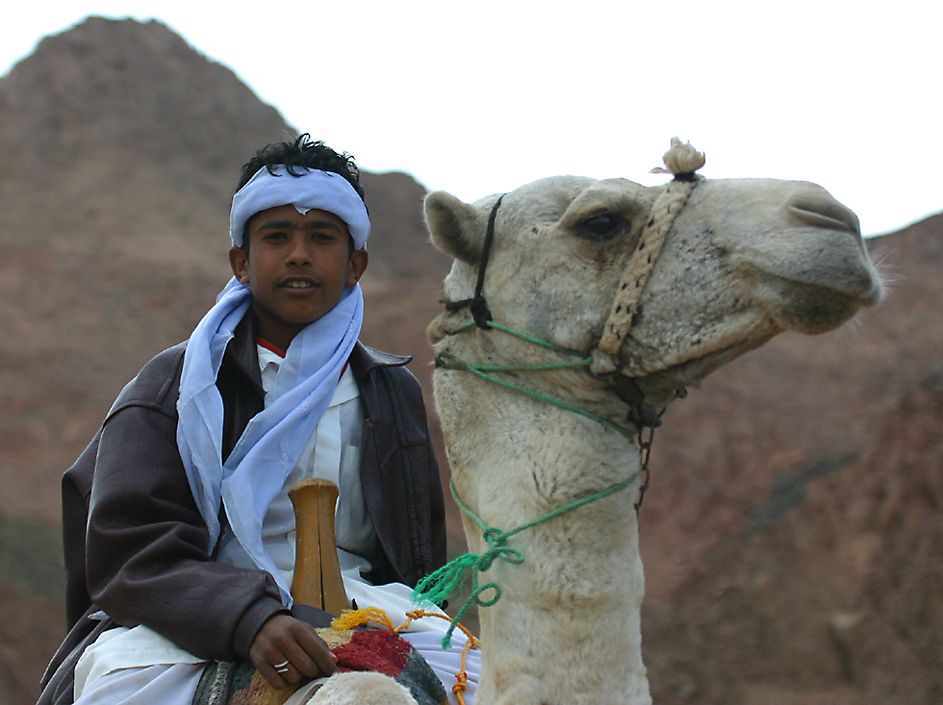
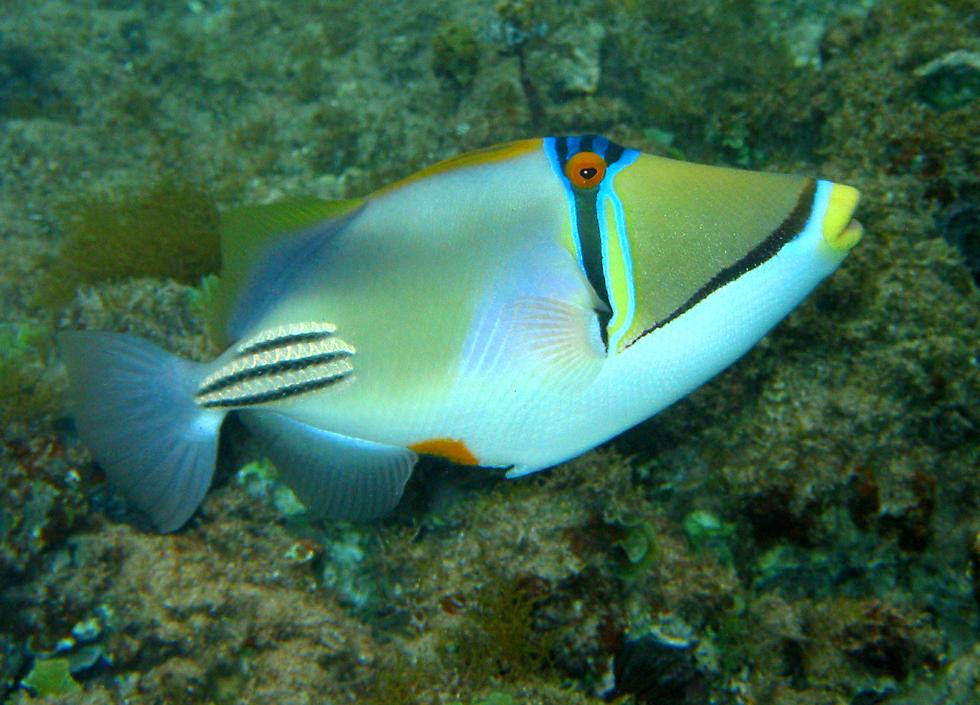
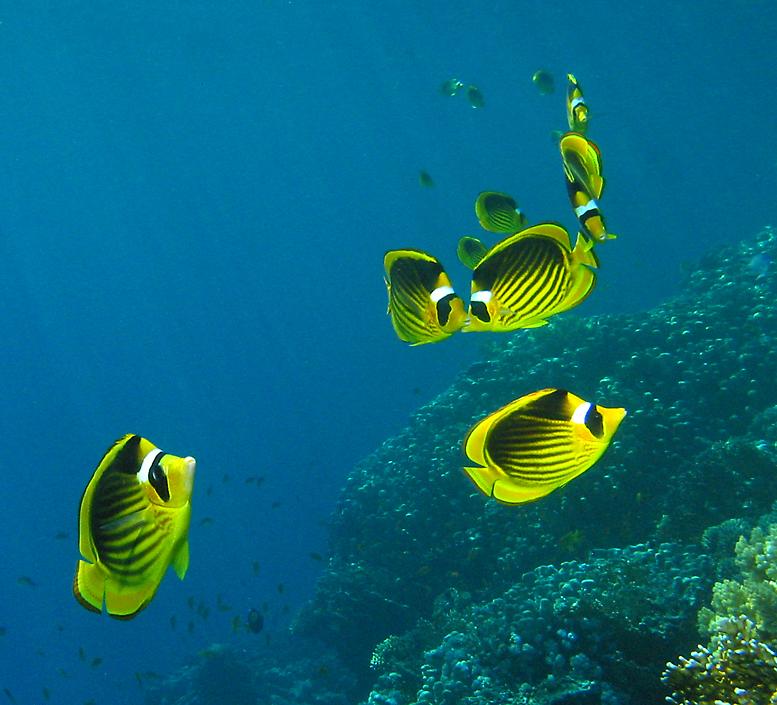
Since the Red Sea is nearly fully enclosed by land, there are many species here which are not seen elsewhere, including several varieties of butterflyfishes, surgeonfishes and triggerfish and many other small but attractively coloured fish. I saw so many butterflyfish, including four species found only in this part of the world, that I put together a whole separate page of Butterflyfishes of Egypt. Spending a week on the Red Sea, whether prostrated on a beach in reverence to the sun god Ra, or underwater swimming with the fishes, is definitely a nice way to recover before returning to your ordinary existence. |