
Hiroshima Atomic Bomb Museum:
Historical Explanations
|
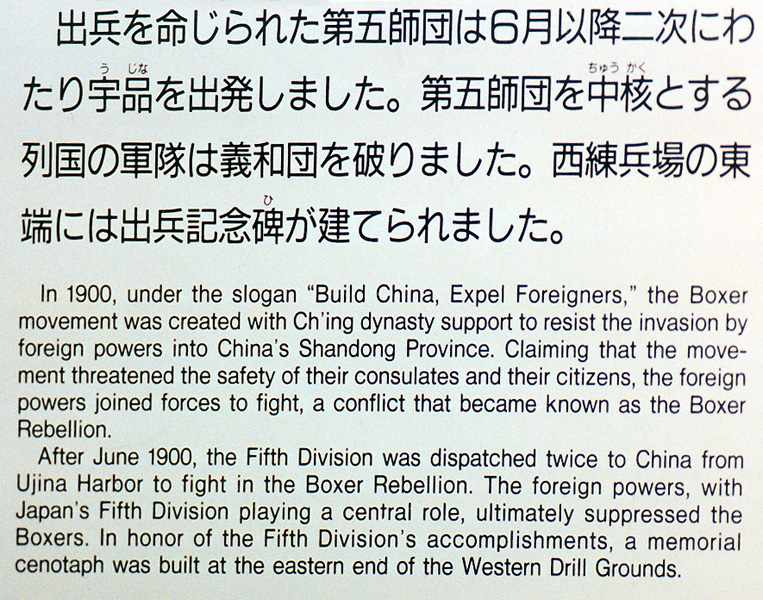
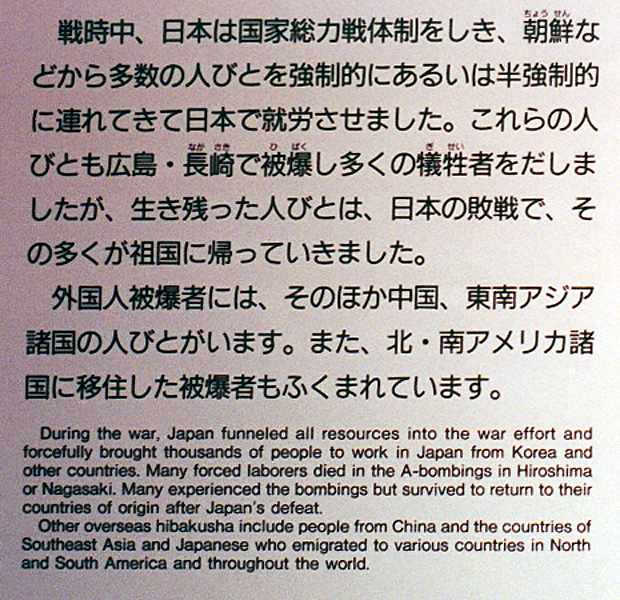
The first gallery of the Hiroshima Atomic Bomb Museum (more properly known as the Hiroshima Peace Memorial Museum) is a series of historical explanations of the events leading up, and following, the bombing. To this very day the Japanese public has been kept largely in the dark about their country's role in the war, which at the time was painted as a war against Western Imperialism with the goal of creating a "Greater East Asia Co-Prosperity Sphere". My own understanding of all these events is this: Western powers like England, America and Germany exhibited a consistent pattern of treating the Japanese as inferiors, and this largely contributed to Japan attacking the West, and continues to affect Japanese society to this day because of the way the West treated the defeated nation. The historical note below illustrates some of these points. A number of Western countries took advantage of Chinese weakness in the 19th and early 20th centuries to carve out little enclaves within China, and dictate terms to the emperors. Perhaps the worst example of these colonial practices was the British "Opium Wars" in which they virtually forced drug addiction onto the Chinese population. Japan, whose own culture was based on that of the Chinese, was horrified to see how that once revered nation was being treated. To avoid the same fate, Japanese governments pushed through extraordinary modernization efforts, in order to bring Japan up to equal status with the Western powers. Feeling stronger, the Japanese pushed for the same economic concessions in China which the Westerners had granted themselves. In additional efforts to join the Western "club" the Japanese joined with them in efforts such as the suppression of the Chinese Boxer Rebellion. The defeat of the Russian fleet by the Japanese in 1905 made Japan feel even more strongly that they should be treated with respect. They continued to act in ways which they hoped would lead to their acceptance - for instance, most New Zealanders would be very surprised to learn that in World War One a Japanese battleship escorted New Zealand troop ships to Europe. And many Americans don't know that Admiral Yamamoto, the head of the Japanese navy who devised the attack on Pearl Harbor, was trained in America. |
 |
|
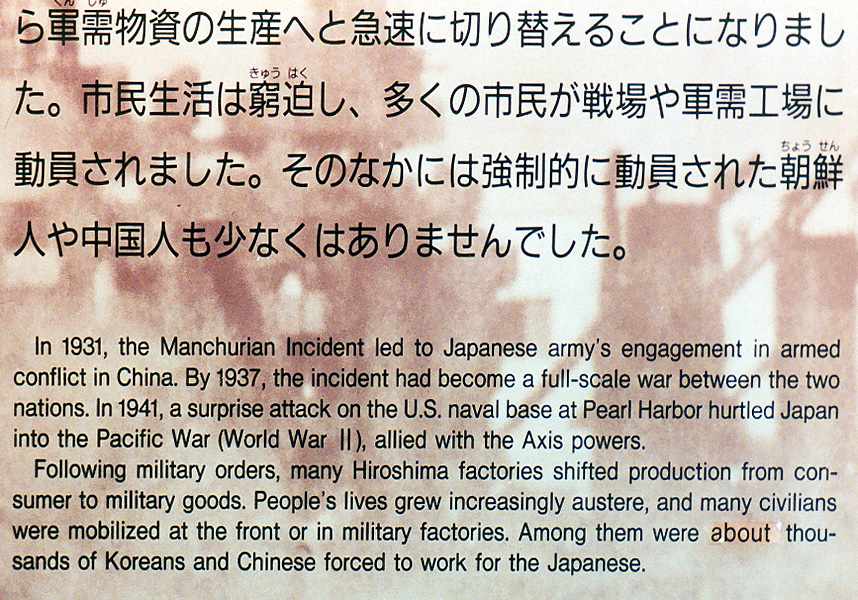
But all of Japan's efforts were wasted, because the West refused to see them as anything other than inferior. Upset by this, the Japanese turned from a pro-Western to an anti-Western stance, and tried to take what the West would not give them. |
 |
|
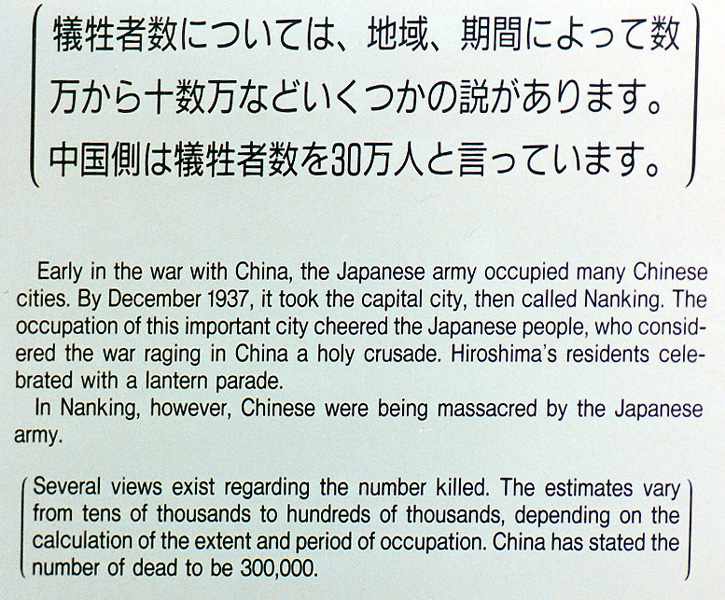
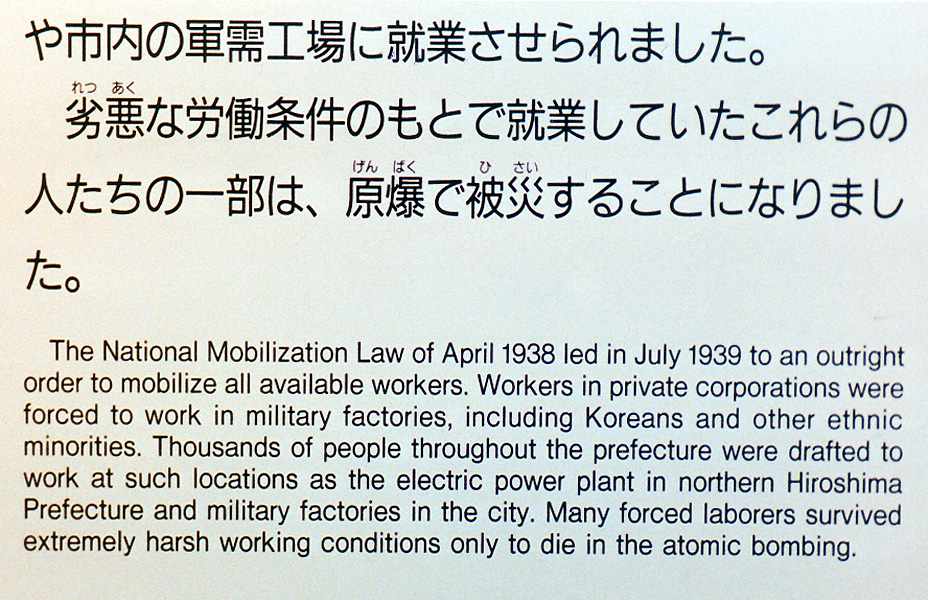
The museum is very honest about Japan's aggression, and even gives special emphasis to the role of Hiroshima in the fighting. If the Japanese today are ignorant of what happened in this period, then this museum certainly can't be blamed. |
 |
 |
|
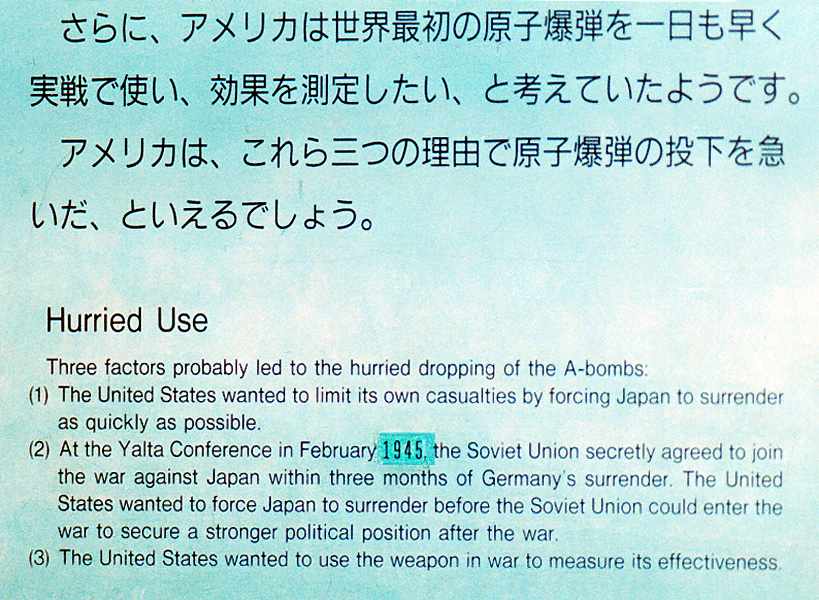
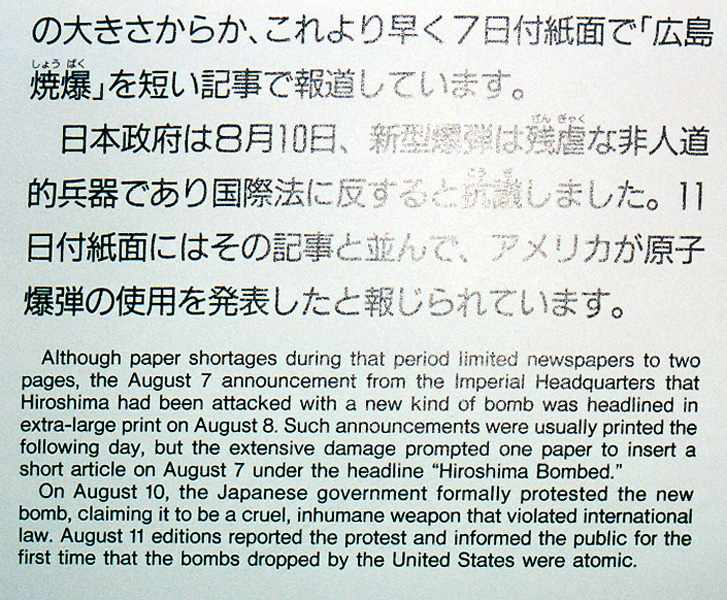
The museum seems to give a more balanced and honest assessment of the war than even Western histories paint, since it spells out the actions and motives not just of the Japanese, but also of the European and American military and political leaders. |
|
|
|
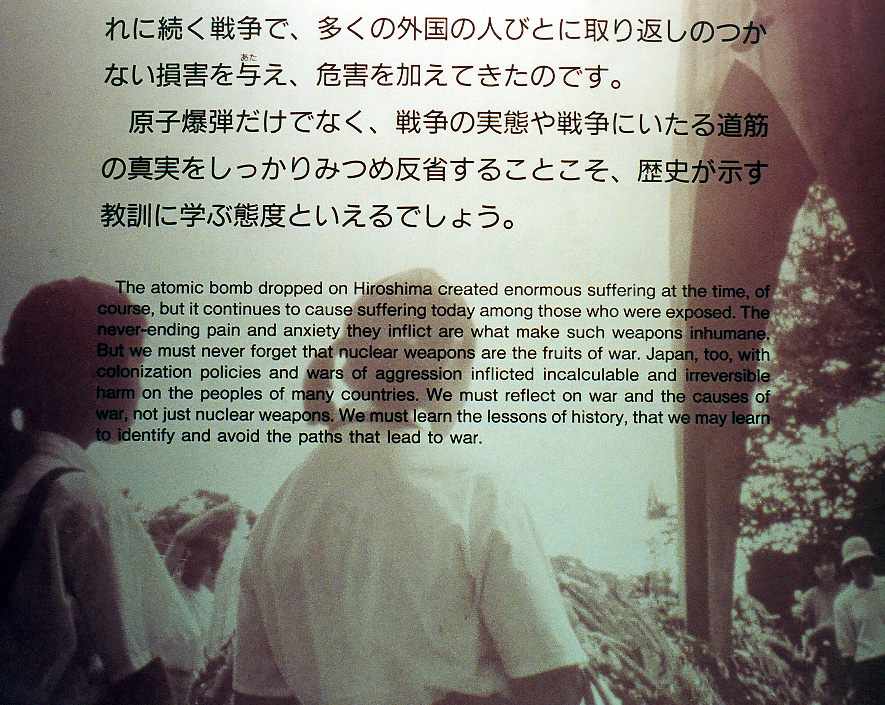
The government of Hiroshima City has been very active ever since the war in the cause of nuclear non-proliferation, writing protest letters to the relevant foreign government each time an atomic test blast has been performed. |
 |
|
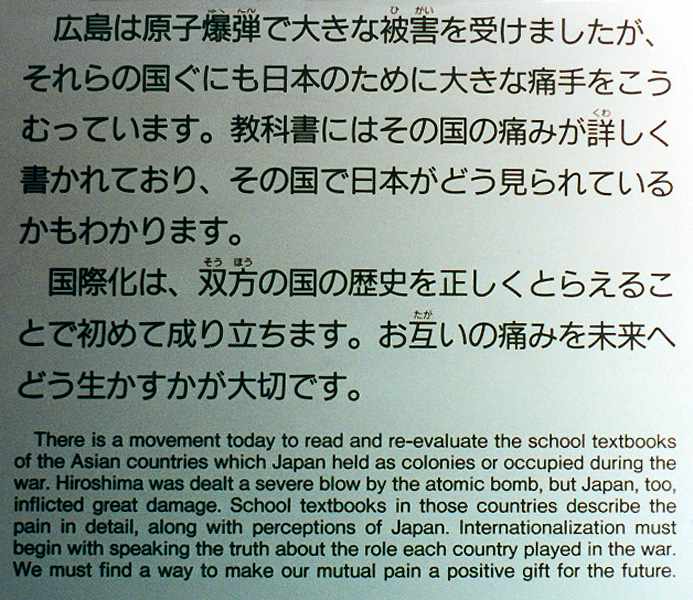
As you've just seen, they have also been active in educating the Japanese about these events. |
 |
|
Japanese society still seems to have some strong xenophobic elements, and to be pre-occupied with the superiority of the Japanese people. Western culture also continues to consider itself superior, and keeps Japan at arm's length. At the end of the war, the American government of occupation shoved a hastily-composed constitution down the throats of the Japanese, by which they were forced to forever renounce their right to wage war. One result of this is the charade that Japan officially has no army, navy or air force, only "self-defence" forces (which happen to be among the most powerful in the world). However, they are effectively unable to leave Japanese territory, and cannot even take part in United Nations operations. It's all very noble to renounce war forever, but if it's such a great thing, then why hasn't the West done it? And why was Japan made to renounce war when the Germans weren't? The brutality of the Nazi holocaust was greater than anything which the Japanese ever did, and yet it seems that the Japanese were treated differently because Germany was felt to belong to the Western "club", and Japan wasn't. |
 |