
The Golden Pavilion at Kinkaku-Ji
|
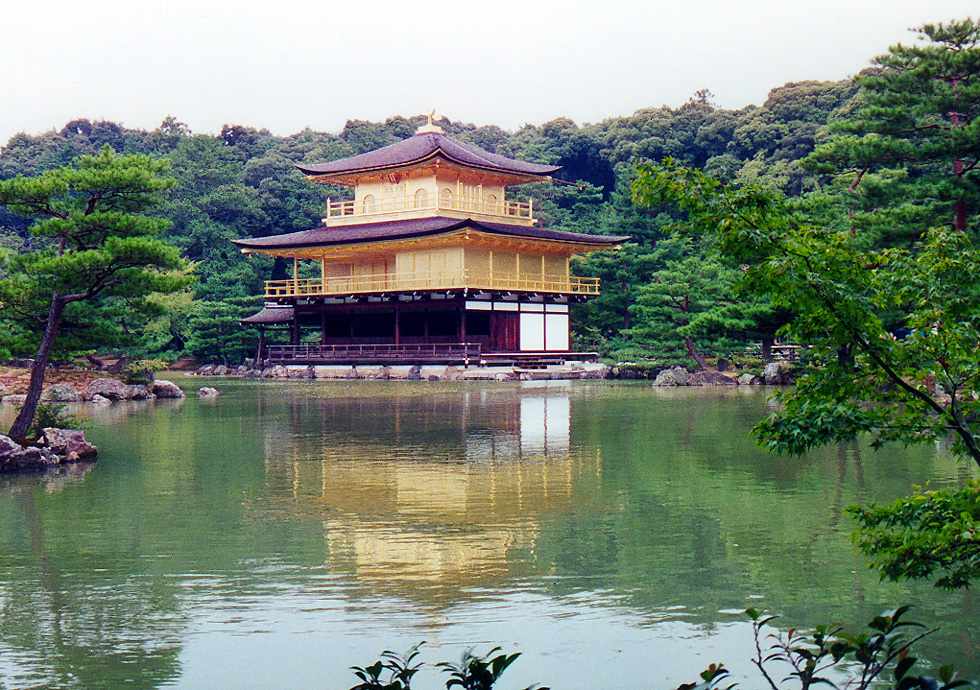
The Golden Pavilion was originally built in 1397 as the retirement villa of a shogun. |
 |
|
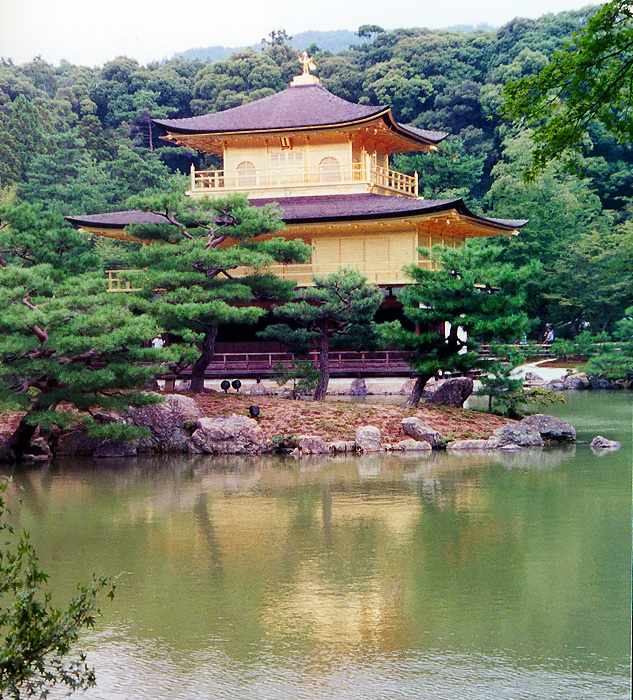
After his death it was converted to a Zen Buddhist temple, as he requested. |
 |
|
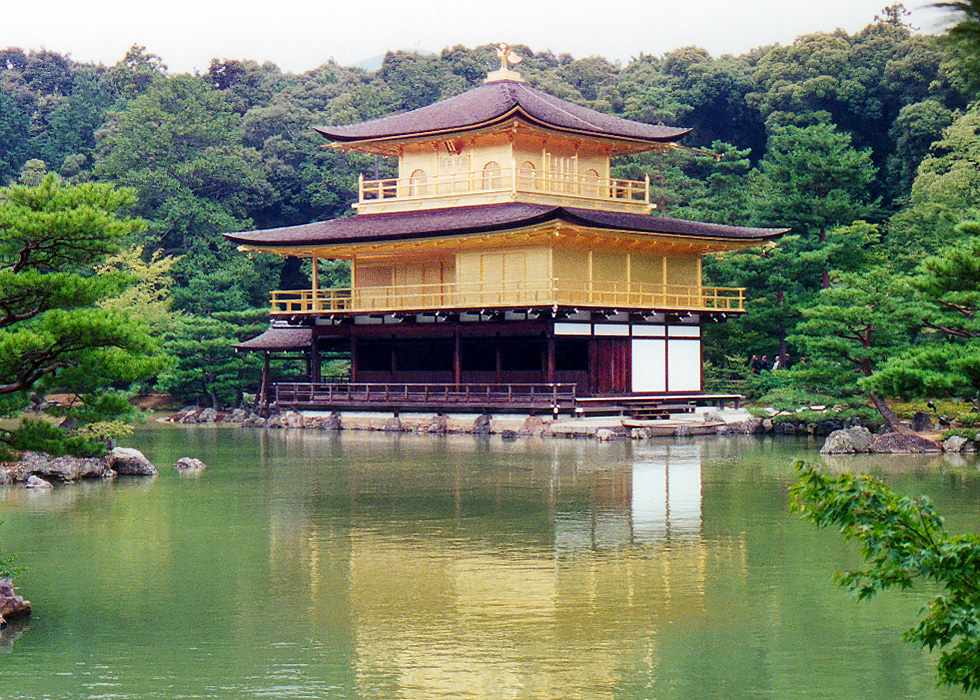
The pavilion is built in three different styles: the first floor is in the style of a palace, the second floor is a samurai house and the top floor is a Zen temple. |
 |
|
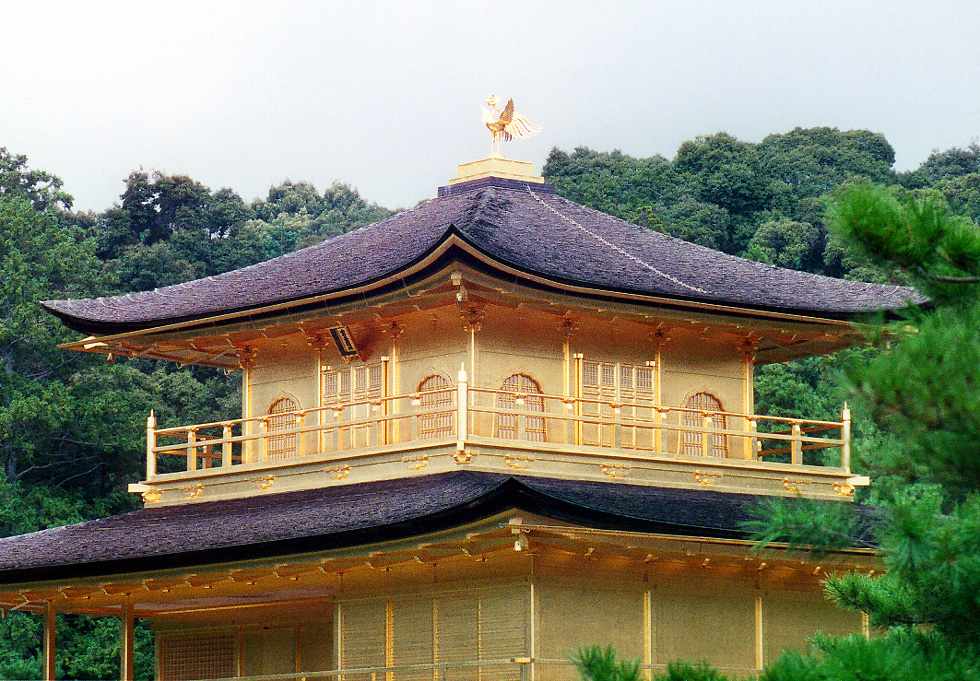
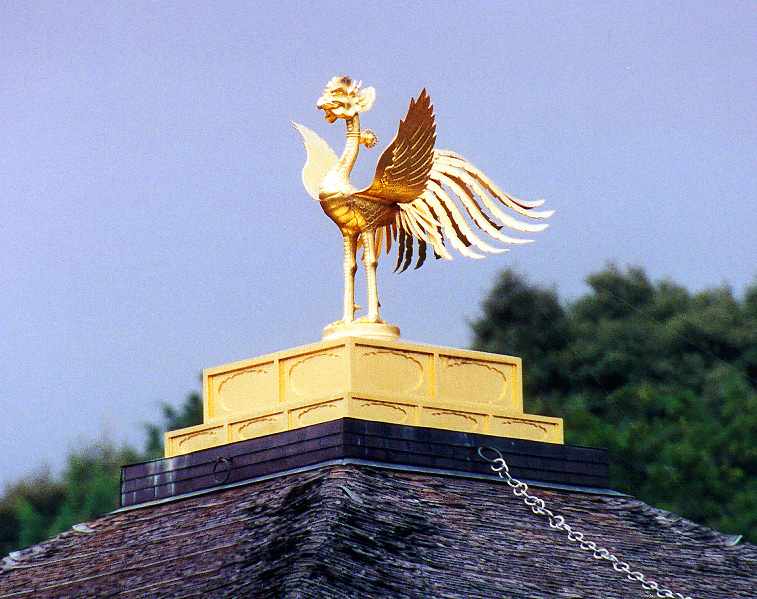
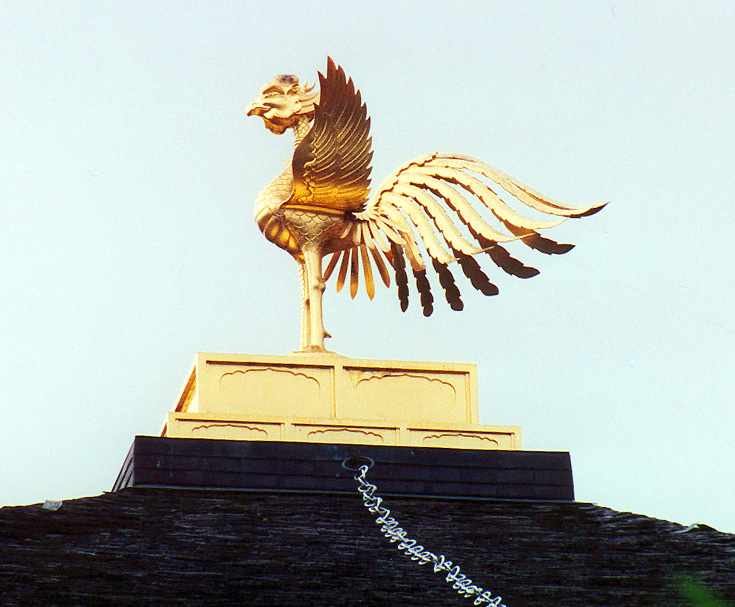
The top two floors are coated with a thick layer of gold-leaf, and the roof is surmounted by a statue of a phoenix. |
 |
|
In an interesting twist to the building's long history, it was burned down in 1950 by a young monk who had developed an unhealthy obsession with it. These events were used as the basis of a famous Japanese novel appropriately titled "The Golden Pavilion" by Yukio Mishima, who later wrote "The Sailor who Fell from Grace with the Sea". The former novel examines the strong desires of some to break away from the slavery of tradition, and of others to preserve the familiar. This is maybe the one situation in Japan where I felt that a piece of reconstructed history was as authentic as the original. |
 |
|
Regardless of whether it was good to rebuild it or not, Kinkaku-ji did rise from the ashes just like the phoenix with which it is decorated. |
 |