
Giant Wood Spiders
|
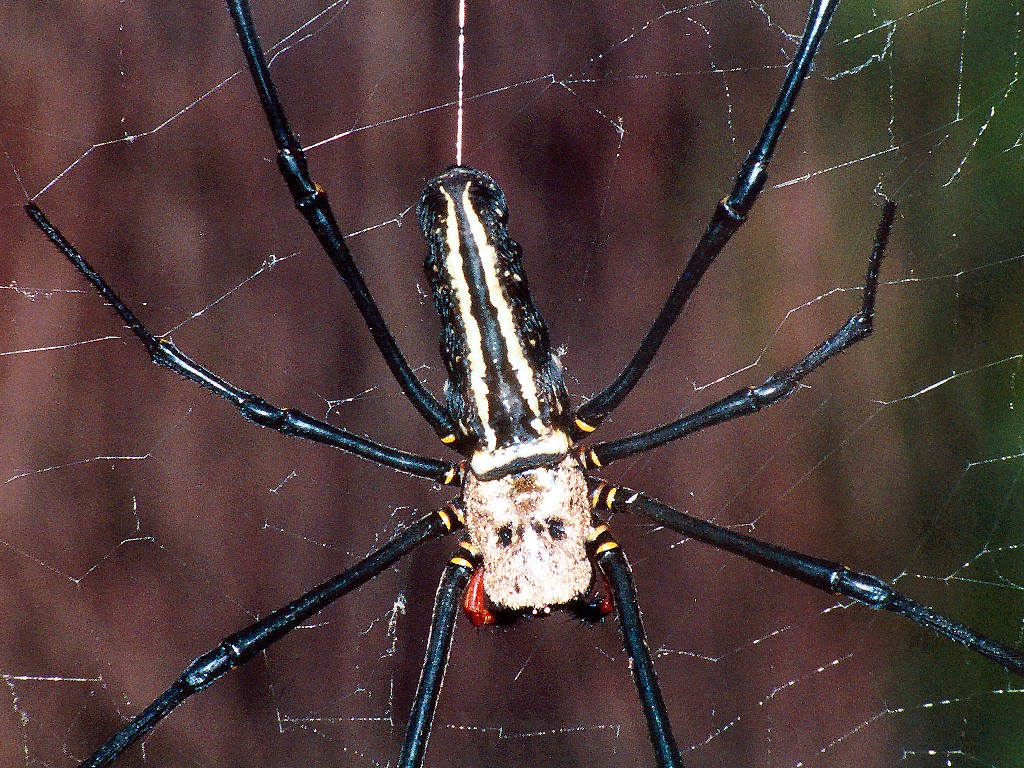
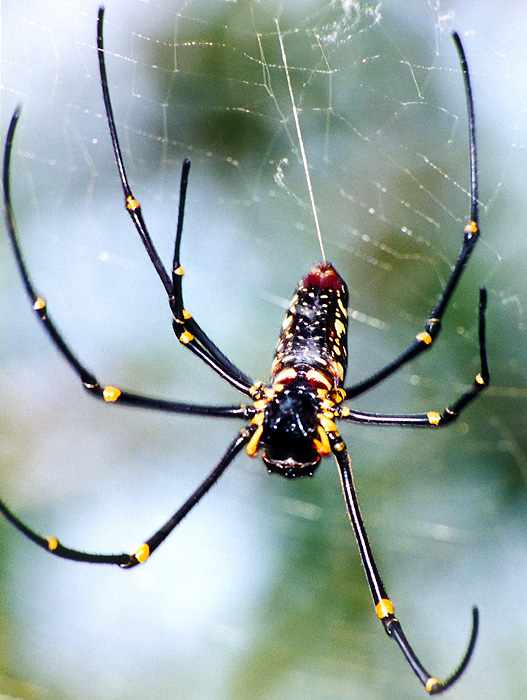
The Himeyuri-no-To memorial on Okinawa commemorates 200 schoolgirls and their teachers who committed suicide in the school grounds, fearing that they'd be mistreated by American troops invading near the end of world war two. In the end, I didn't even go into the museum, because it was expensive and didn't seem to have much on offer, but there was plenty on offer in the museum grounds, about ten spiders anywhere between five and seven inches long! This one's pretty active, you can see the fresh silk it's spinning to fix its web, and two of its eyes glowing at the front of its head. |
 |
|
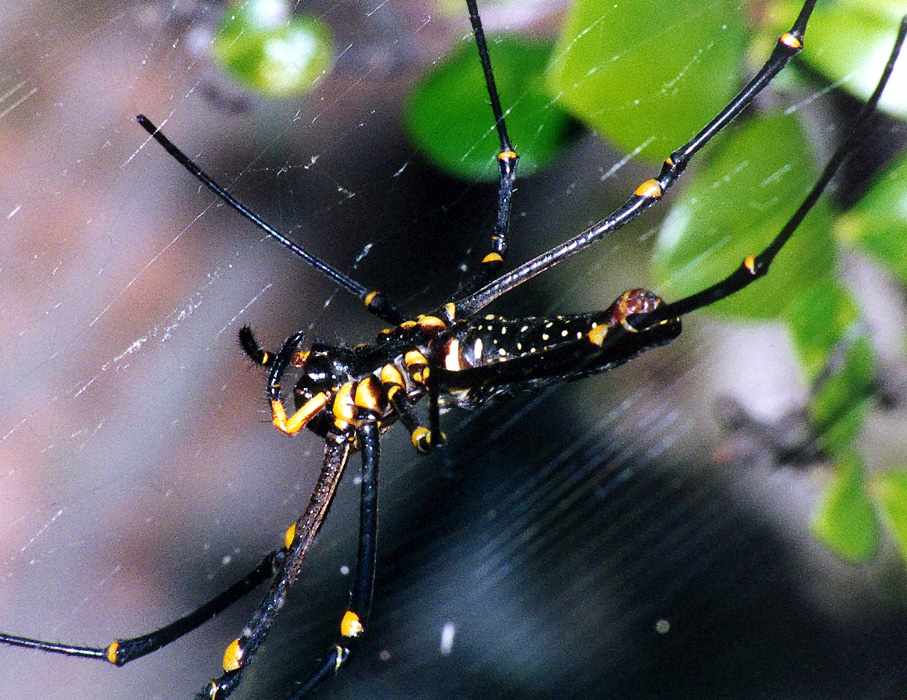
The giant wood spider (Nephila maculata) can be found from Japan all the way down to Australia and West to India. In parts of Papua New Guinea tribespeople consider it a tasty snack. In Japan they're called "O-jyorou gumo", "gumo" meaning spider, "O" meaning big and "jyorou" meaning "femme fatale". The large yellow spots under the legs are a distinguishing characteristic of this species. |
 |
|
Not surprisingly, they're the largest spiders in Japan. They might be big, but with their webs stretched to a diameter of one meter between the trees it would have been easy to accidentally walk straight into one as they sat in the middle of their web. It might be a furry little critter, but very few people would want to get that cuddly with it! |
 |
|
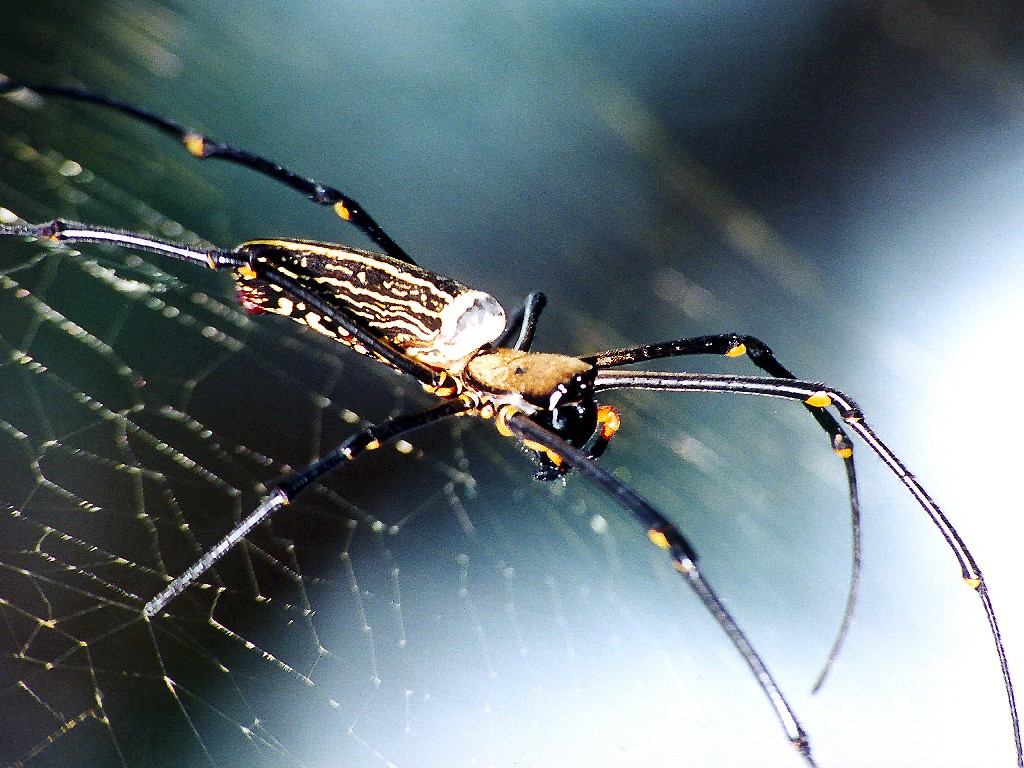
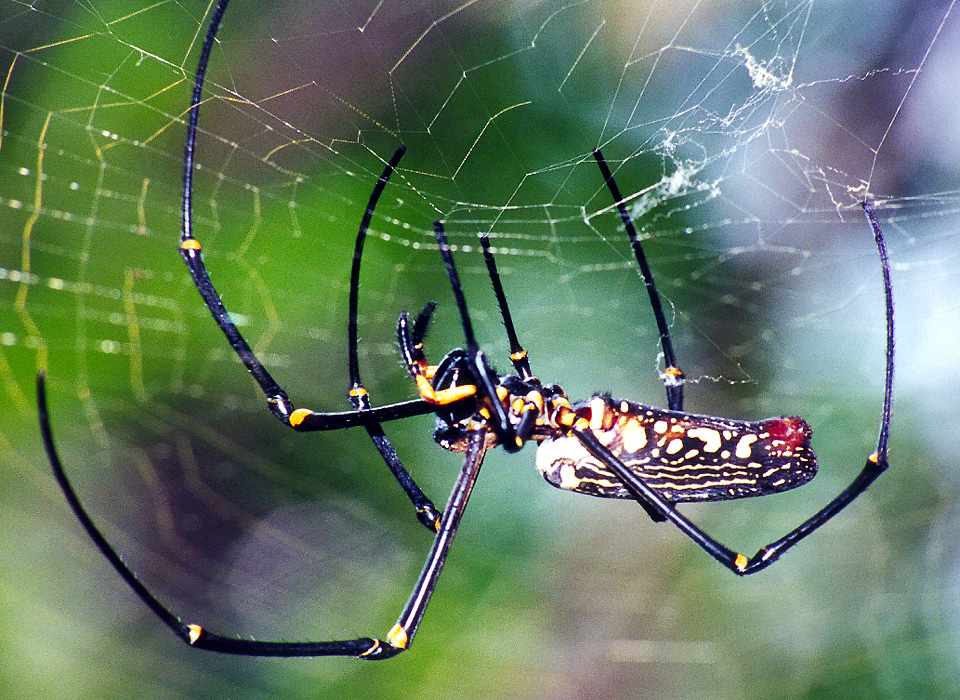
It belongs to the golden orb weaver family, which is why its silk is yellow, and this silk is the strongest of any spider. The web is about a meter across, and sometimes small birds or bats get caught in it. |
 |
 |
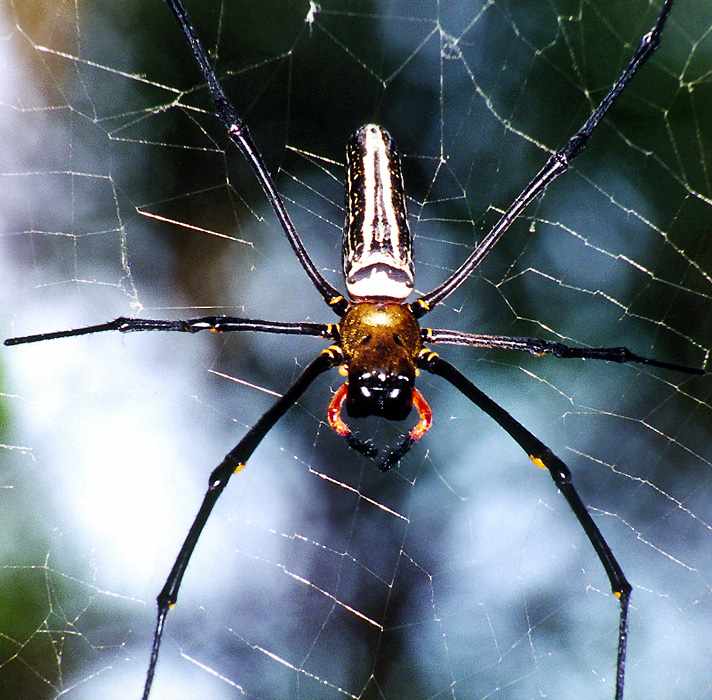
The Japanese consider spiders to be lucky if seen during the daytime, unlucky if seen at night, but some of these spiders were just plain unlucky - this one has only seven legs. |
|
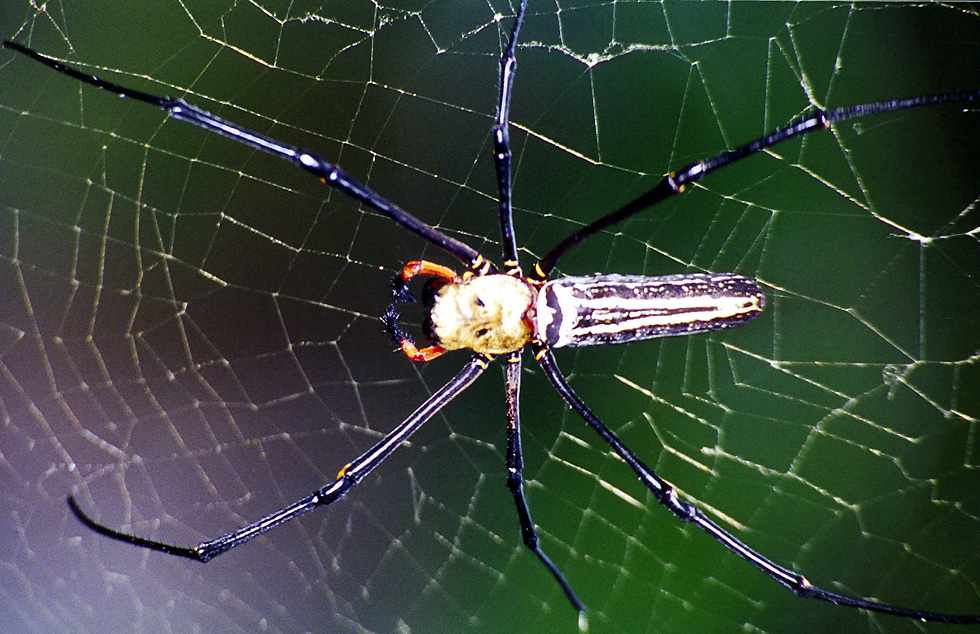
And this one must have broken a mirror - it has only six legs. |
 |
|
They're said to be docile but, yes, the spider is somewhat poisonous, and the bite's said to be painful because of the size of the fangs. There's more information than you could ever want to know about the poison here and here. Nevertheless, some tiny spiders of the genus Argyrodes steal prey, eggs and even eat the silk of the giant wood spider. |
 |