
Japanese Restaurants
|
As you might have picked up, my Japanese language ability is minimal to the point of non-existence. So how did I manage to navigate my way through the unfamiliar world of Japanese restaurant fare? If you think it's because the Japanese speak English, think again - as I've mentioned elsewhere, there was far less English spoken in Japan than I expected. Fortunately, though, there was no problem, because most Japanese restaurants display realistic plastic representations of their food in the outside window! You can check to see if the restaurant has something which looks good, and you can bring the waiter outside and point to what you want (I think they're used to this, because I saw other people doing it, too). If you'd like an unusual gift for the folks back home, there's even a street in Tokyo called Kappabashi-dori jammed full of stores where you can buy plastic food and other essentials of the Japanese culinary experience. |
 |
|
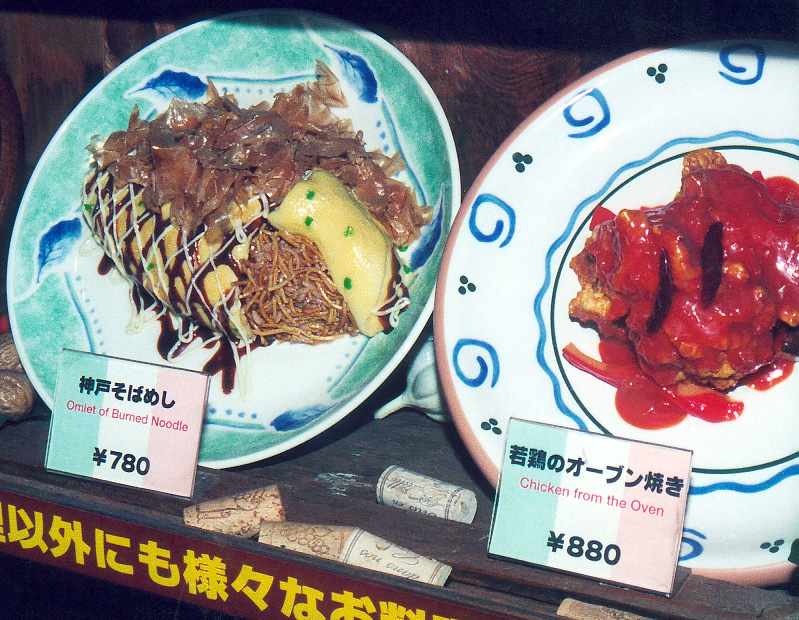
As you can see, the plastic food looks very realistic and can prevent you from ordering something you really didn't want, like this "omlet of burned noodle". It does seem surprising that hundreds of restaurants all over Japan are serving exactly the same omlets of burned noodle, and yet these plates are mass produced, so I guess they must be. At least you know what you're going to get. |
 |
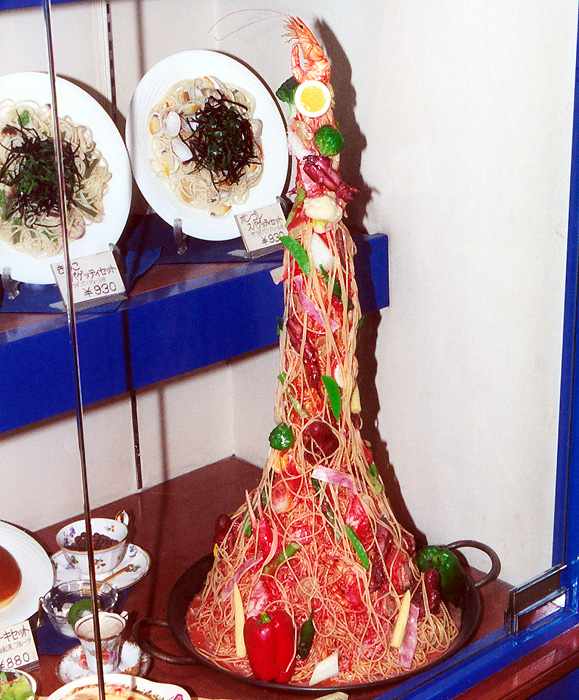 |
Or do you? I can't help feeling that this particular dish might be a slight exaggeration! Nevertheless, it's another endearing example of the Japanese sense of humor. |
|
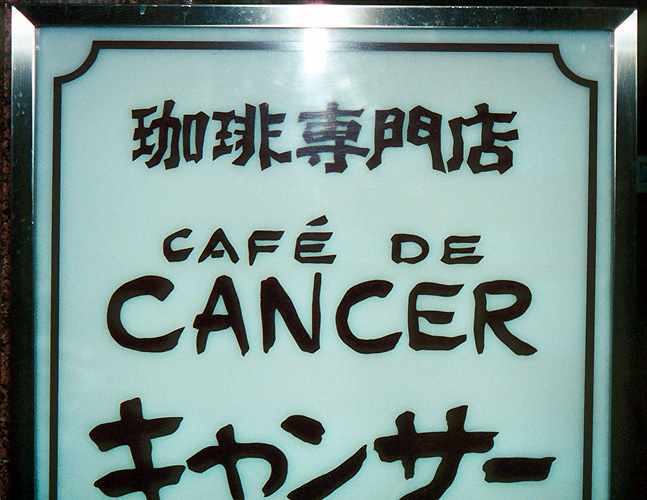
If the last sign wasn't totally up front, then this one is more honest than most people would expect! I'm not sure if they're referring to bowel cancer from eating the food, or lung cancer from the diners' cigarette smoke. The Japanese, like many other Asians, do smoke a lot, and there isn't too much effort by the government to curb it, though thankfully smoking is banned on board trains and in some other public areas, so it was never an issue for me. |
 |
|
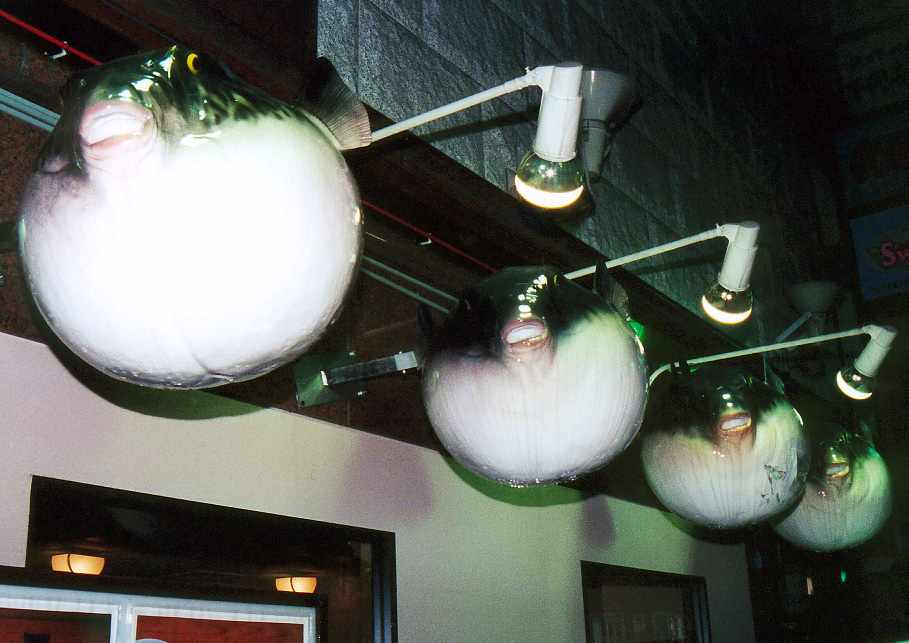
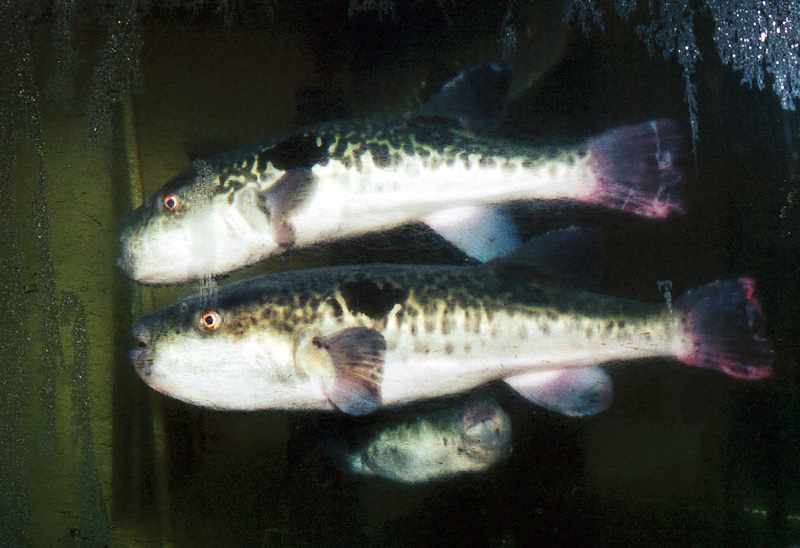
If for some reason you do want to die in a Japanese restaurant, then a fugu restaurant like this one is just the place for you. Fugu is the local name for pufferfish, which is a special delicacy in Japan - which is why whole restaurants are devoted to it. Why is fugu such a delicacy? Because it's poisonous and every year a handful of people die after eating it! Most of the poison is concentrated in a few parts of the fish, but some toxin can be found throughout the flesh, so eating even properly prepared fugu apparently results in a tingling sensation in the lips and mouth. Fugu chefs are specially licensed and trained to remove the most dangerous parts of the fish, but even so this is one meal which can kill you. Now it is true that more fugu are killed by people than vice-versa, but that's little consolation if you're lying fully conscious but paralyzed on the restaurant floor, unable to move or speak and slowly dying of asphyxiation. |
 |
|
Like everything else in Japan, fresh is the name of the game with fugu, and they don't get much fresher than this. Why are these fugu so much skinnier than the plastic ones outside the restaurant? It's because pufferfish puff themselves up with water when they feel threatened, to make it more difficult for predators to swallow them. If these guys knew what was in store for them, they'd probably be puffed up right now, not that it would do them much good! |
 |
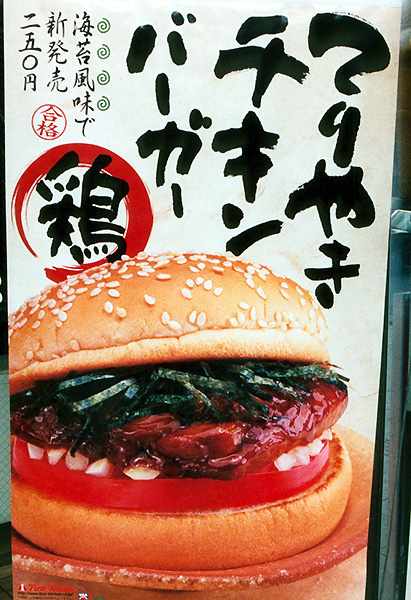 |
Here's the Japanese answer to MacDonalds, a pretty ordinary, tasty looking burger, but with a slight twist - those dark green strips above the beef patty are strips of seaweed! If you're interested, you can check out some photos of different types of seaweed in a Japanese supermarket. I have a vague memory of having some seaweed garnish with something I ate in Japan, but if it did happen then I don't recall that it had a strong flavor. |
|
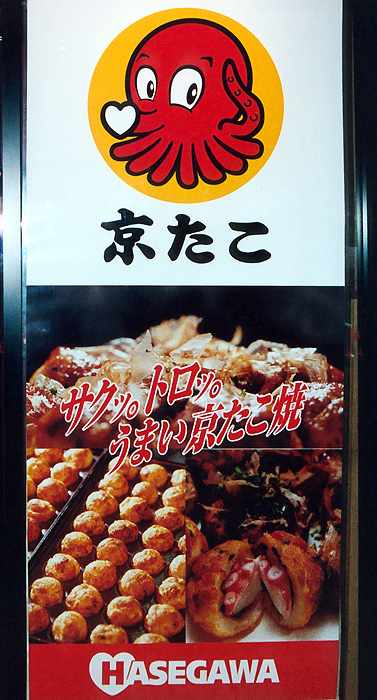
If a burger with seaweed is too tame for you, then you might prefer this indigeneous fast food - octopus balls. I ate something similar from a stall in a Tokyo park, except that the octopus was diced up and mixed in with the dumpling or batter. It was very enjoyable. You'll notice also how happy the octopus is that you are eating it. In fact it loves you for eating it! This theme of animals being gratefully and happily tortured or killed is quite common. I guess it's not so different from a lot of the advertising that is done in the western world. |
 |
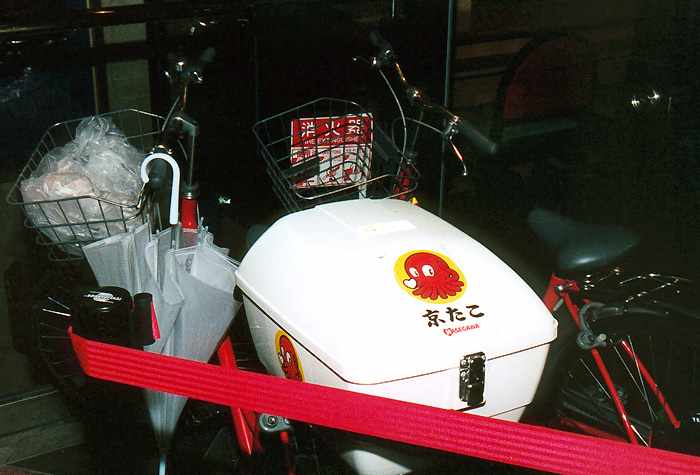 |
For the ultimate
in convenience, you can even get fast food octopus delivered by slow bicycle!
I saw quite a few bicycles while I was in Japan, which isn't surprising, because owning a car is difficult because of the expense and the lack of space for parking. Surprisingly, the whole two weeks I was in Japan, I only saw 3 or 4 bicycles with ten-speed gears. Instead they're all single speed, which the Japanese call "mama chari" or "granny bikes". Japan has an awful lot of steep hills, so I thought they would have more modern bicycles. |