
Wildlife of Thailand
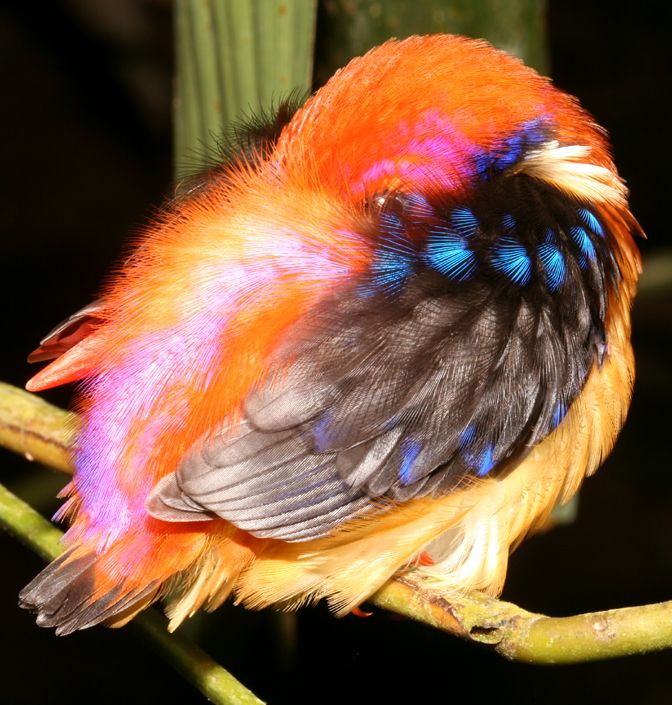
I didn't photograph as many birds as I wanted during my 2007 trip to Thailand but here's one I did get a shot of, a real beauty called the Oriental dwarf kingfisher. As you can see, it has its beak under its wing, which is the usual posture a bird takes when it's sleeping. This one was indeed in the Land of Nod when I encountered it in the very early morning as I wandered down the bed of a small river in Phanom Bencha national park, near the southern city of Krabi. I was able to get several nice shots by bending the branch down to a convenient height, before gently returning the branch to its original position, and the kingfisher to its dreams of little silvery fish. |
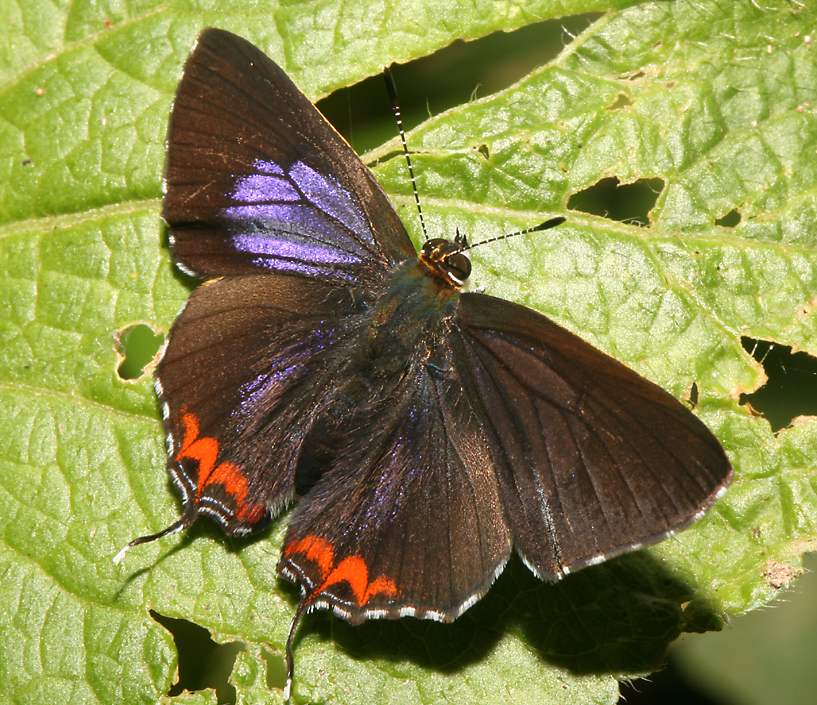
This is a purple sapphire butterfly, which is fairly common in south-east Asia. The undersides of the wings are a beautiful combination of yellow, red, black and white, as you can see from a specimen I photographed in Vietnam. However it's the beautiful iridescent purple shimmer on the upper surfaces of the wings that gives this butterfly its name. Unlike the other colors on this butterfly, the purple isn't the result of pigmentation, but rather the refraction of light on its wing scales, which is why in this photo you can see the reflected light on the left wing but not the right. |
|
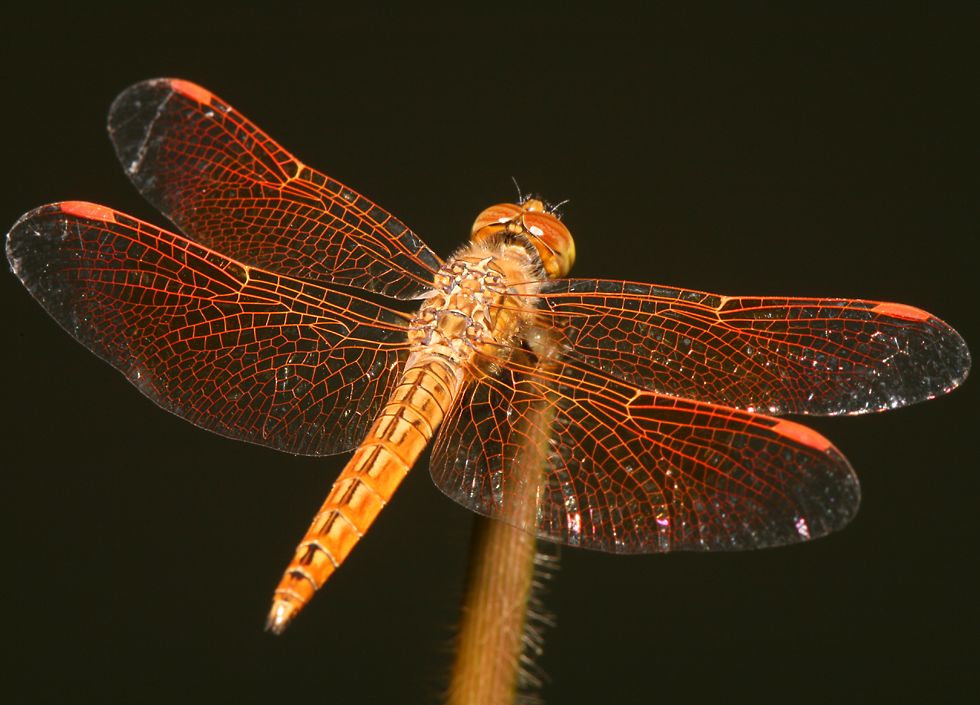
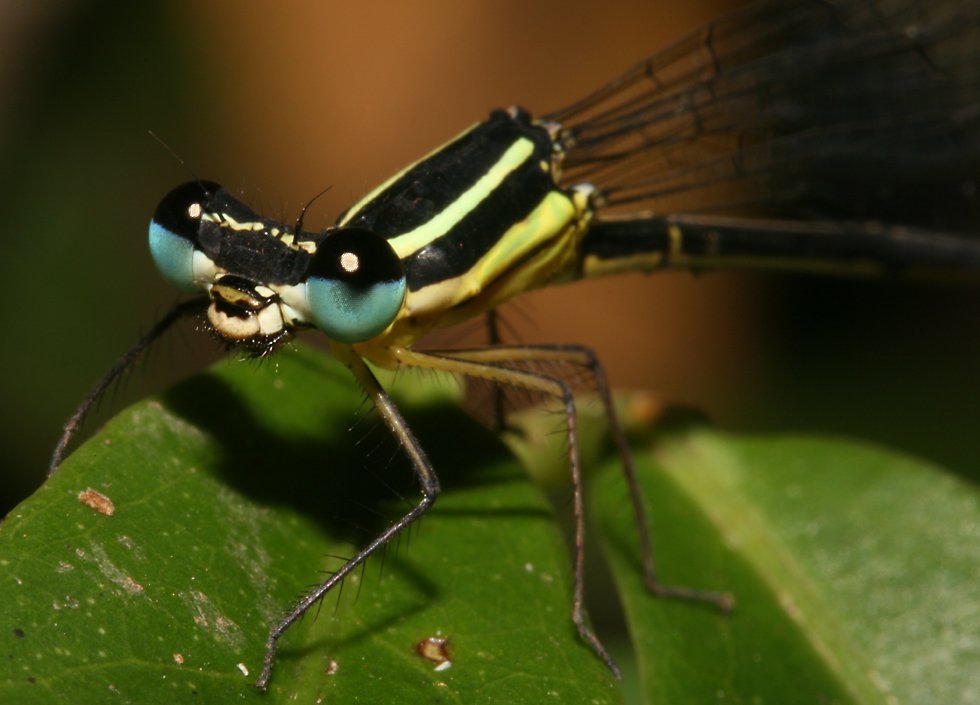
Here's a damselfly, a close relative of the dragonflies. Both families do a great service to humans by eating nasties like mosquitos. |
|
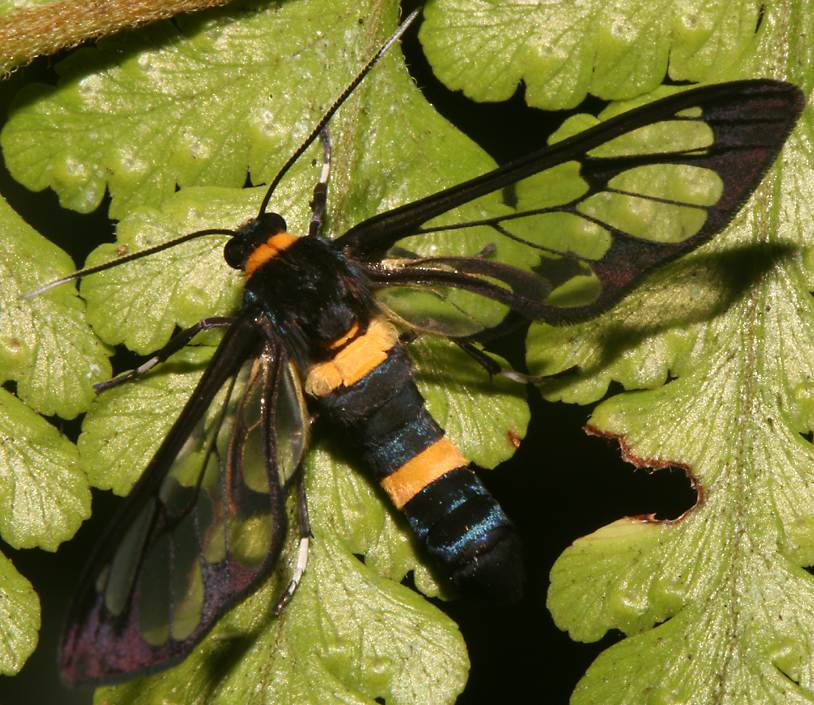
In central and south America there are several families of butterflies with transparent wings, most of which live in dark parts of the forest. Moths with clear wings are much more common than clearwing butterflies, and are found in many different parts of the world. This one was sitting on a fern in bright sunlight in Nam Nao national park, probably protected from predators by its similarity to a wasp or hornet. Like some of the tiger moths with clear wings, the clearwing moths' rear wings are tiny, only a fraction of the size of the front wings. |
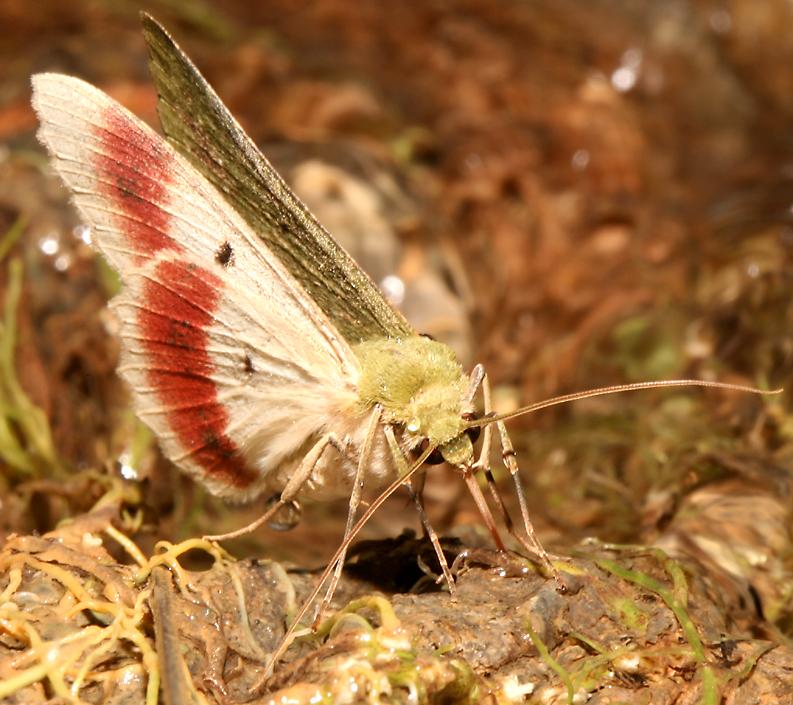
Here's another moth, but participating in an activity which I've previously only seen with butterflies. The activity is puddling, which involves a male sucking up liquids to extract the salts, which are then passed on to a female during mating so she can make her eggs. Unlike the previous moth this species is nocturnal, and I found it and another species puddling on the banks of the same small river at Phanom Bencha where I photographed the kingfisher. |
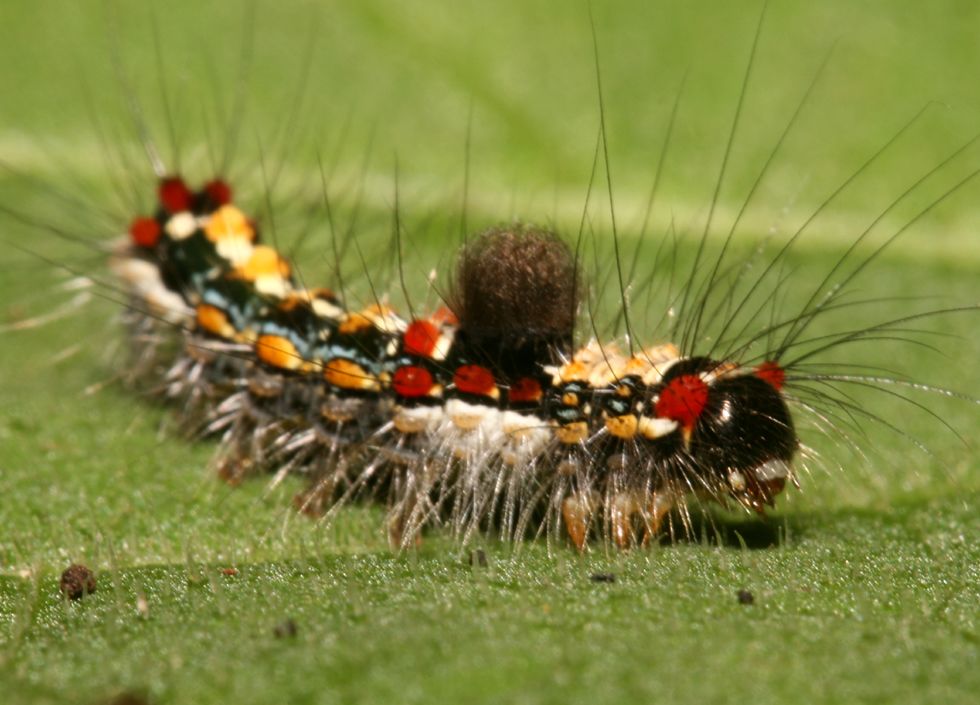
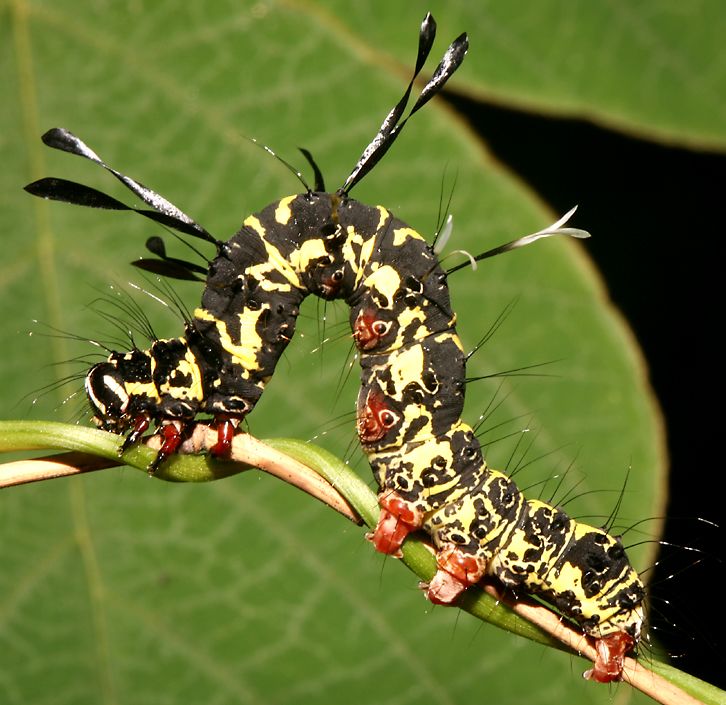
This caterpillar is called Tinolius eburneigutta. I've only seen one other caterpillar with tassles like this one, and that was on a "paddle caterpillar" in Illinois, the juvenile version of the funerary dagger moth. Tinolius eburneigutta is also a moth, but although it's referred to as a "semi-looper" because of the way it walks, it isn't really a member of the Geometridae family of "looper" moths. |
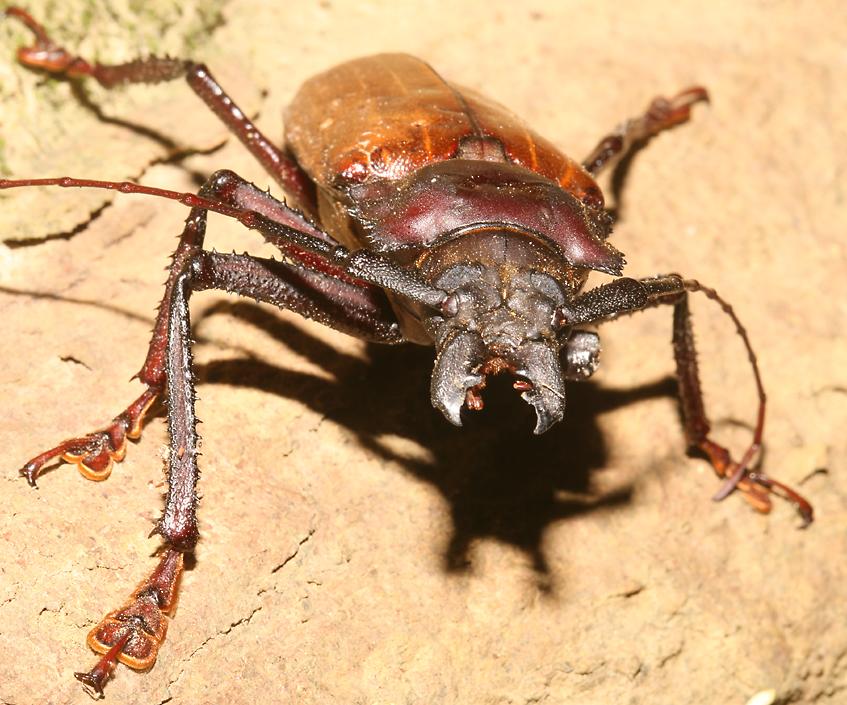
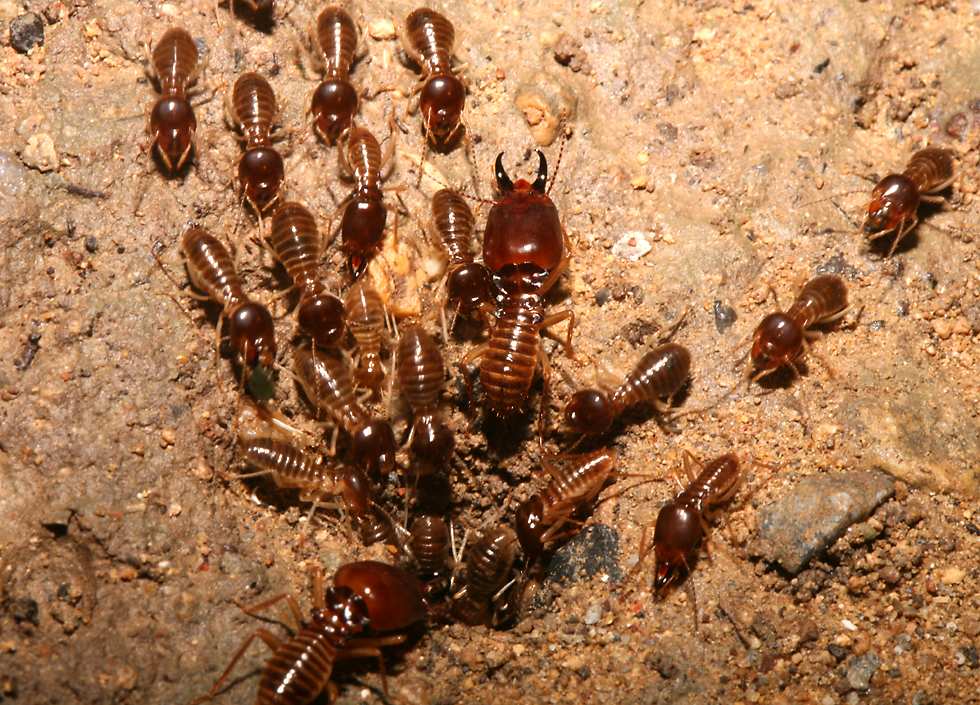
Phanom Bencha again! At first I thought this sugarcane longhorn beetle (Dorysthenes buqueti) was dead, but when I poked it with a leaf it hissed at me and made it very clear that it wasn't ready to shuffle off the mortal coil quite yet. It's a large beetle and I certainly wasn't going to put my finger anywhere near those vicious-looking jaws. If you look closely you'll see that it's lost one of its front legs, which must have taken a lot of doing - perhaps it was the result of a bird attack. This beetle isn't very colorful, but I do like those feet! A lot of insects have interesting hooks, pads and other contrivances on their feet, you could probably make a book out of the different photos! |
|
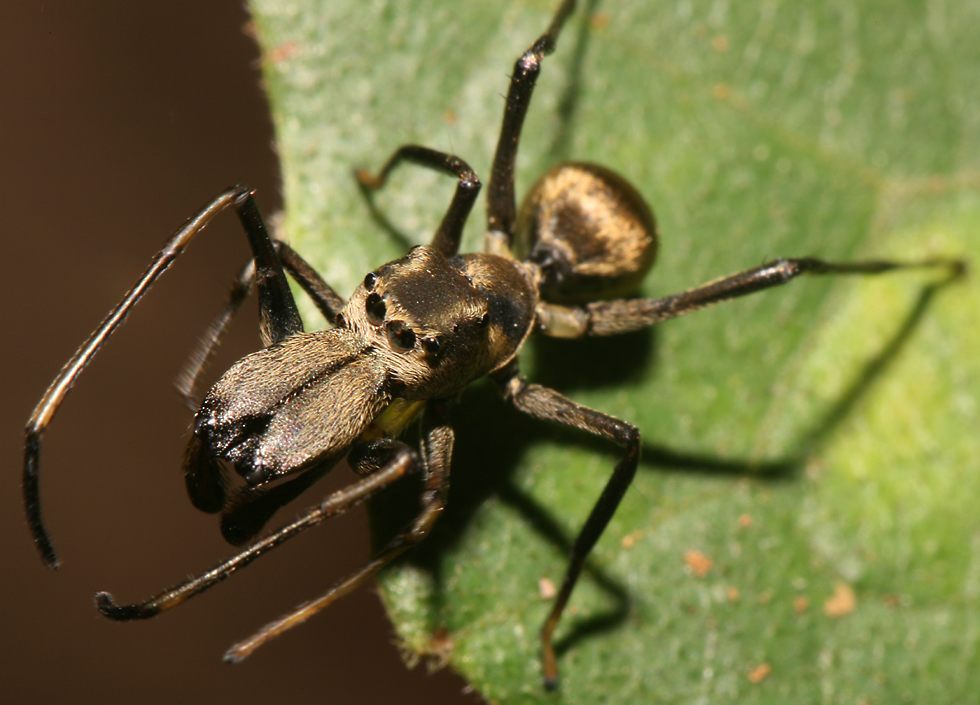
Not many ants, but here's a very interesting ant mimic called Myrmarachne maxillosa! In Asia there are several species of hairy golden ants, such as this one I photographed in the Philippines, and for some reason this jumping spider has adapted to mimic them. It holds out its greatly lengthened front legs as if they were antennae, and it walks around with the same type of jerky motion which is typical for an ant. The extraordinarily extended fangs are part of the same deception, making the spider look like a heavily fortified soldier ant. |
|
|
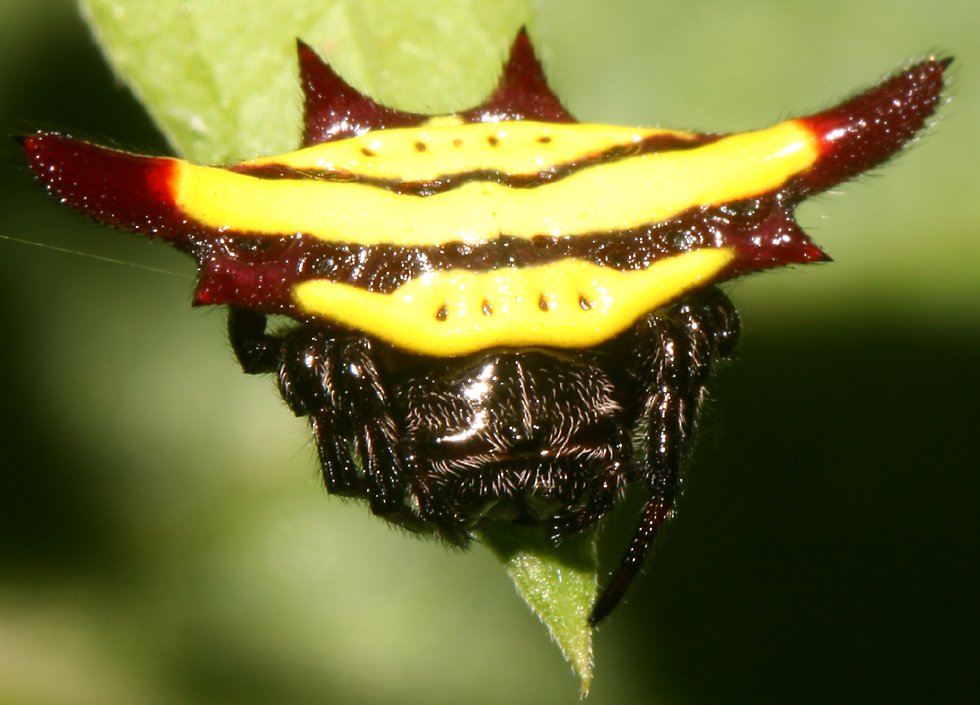
Another extraordinary spider, but this time not pretending to be anything other than itself. It's a spiny spider, which also goes by the scientific name Gasteracantha fornicata. It has the distinction of being the first Australian spider to be scientifically described, when one was collected by Joseph Banks during Captain Cook's visit in 1770. You can see an even crazier looking spiny orb weaver in Malaysia. |
 |
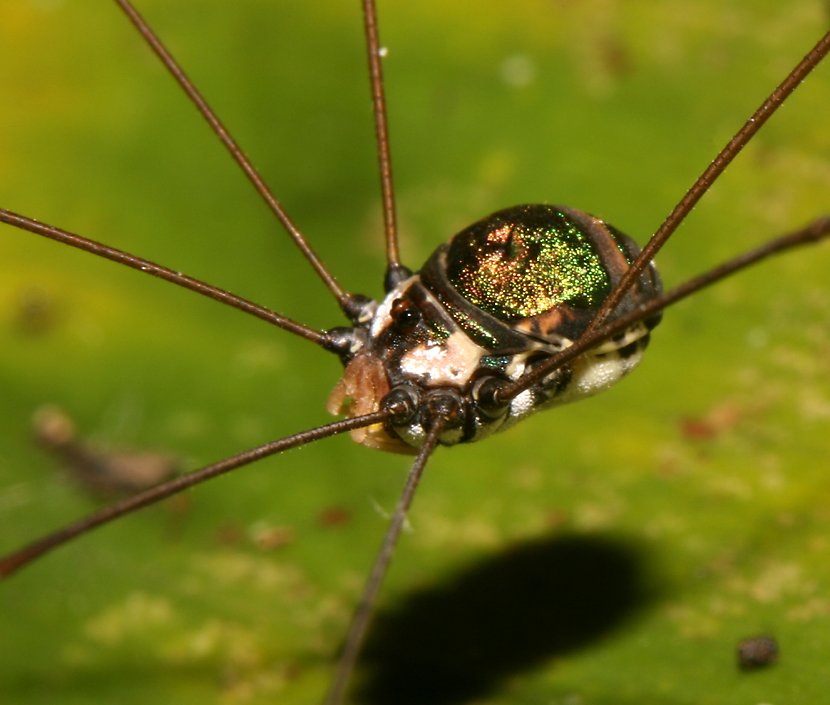
This eight-legged critter isn't a spider, but it is an arachnid. It's a harvestman which I photographed in Taksin Maharat national park, west of Bangkok. Harvestmen have only two eyes, compared to spiders which usually have eight eyes, but can have as few as four or six (like this four-eyed spider I photographed in Vietnam). The shape and size of this one is pretty typical for harvestmen found around the world, but it's the first iridescent one I've ever seen. |
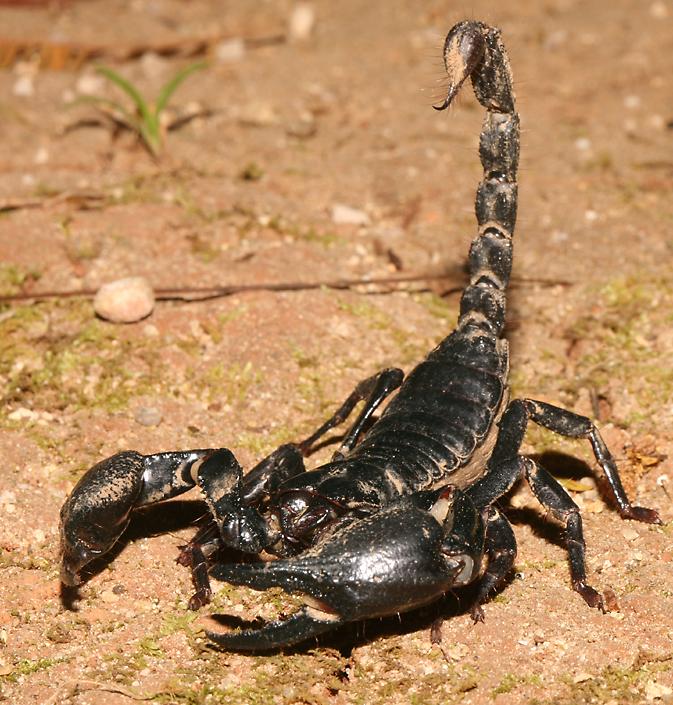
Another arachnid, a giant forest scorpion (also called an Asian forest scorpion) which I was lucky enough to find outside its hole at Phanom Bencha. There were lots of large scorpion holes around Thailand, but this is the only individual I saw right out in the open. If it's any comfort, it's said that scorpions like this one with large pincers usually have venom which is less toxic than the venom of smaller scorpions. The theory is that a small scorpion with small claws needs very powerful venom in order to disable its prey before the prey thrashes around and damages its attacker. |
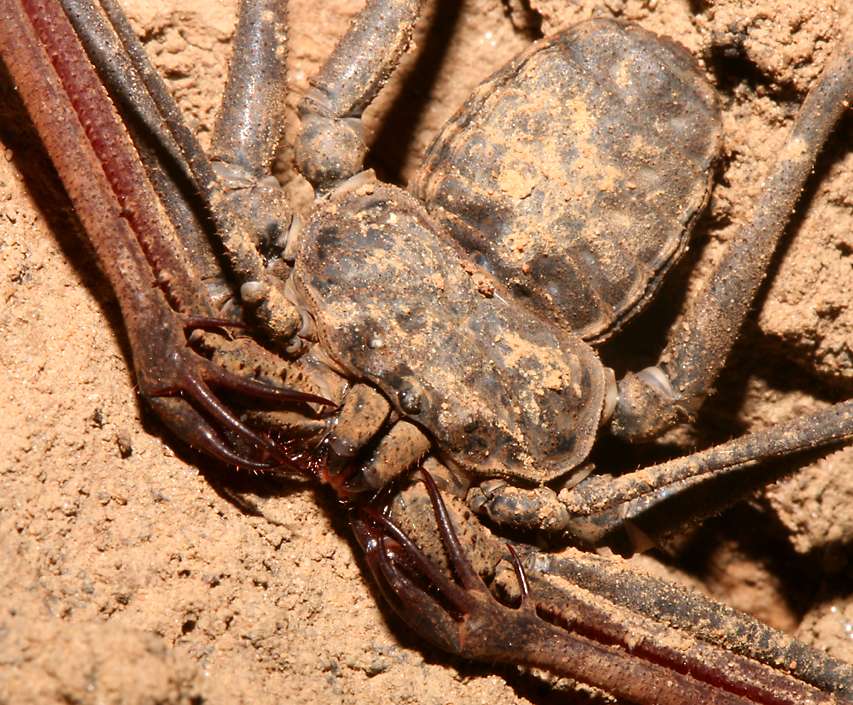 Yet another arachnid, this time a tail-less whip scorpion.
Unlike regular scorpions, whip scorpions don't have stingers. This one has huge front "arms" with broad claws, which I'm guessing allows it to sweep prey towards its fangs. |
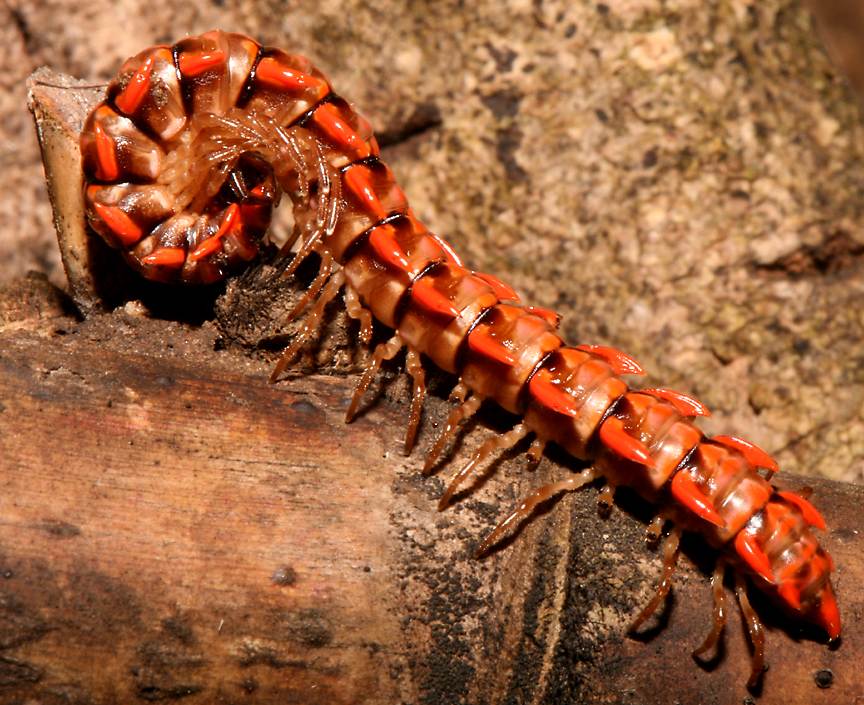
Legs, legs and more legs! This millipede was in a defensive posture in bamboo forest in Sai Yok national park. You might think that it hasn't got enough legs to be a millipede, but in fact the main difference between centipedes and millipedes isn't the total number of legs, but the number of legs on each body segment. This specimen has lost quite a few of its legs but you can still see that it has two pairs of legs on each body segment, whereas centipedes have only one. |

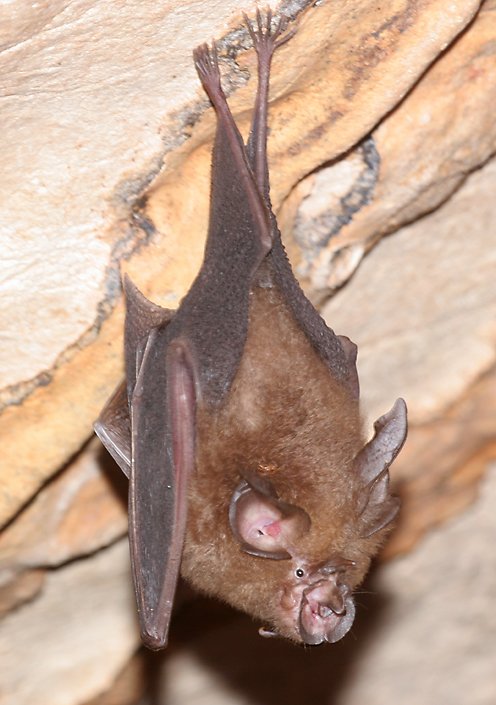
Thailand is something of a bat paradise, with lots of limestone caves and plenty of insects. This one was in Tham Daowadung (Cave of Heaven), close to Sai Yok national park. The conditions in this cave aren't very heavenly, and this must certainly be a very patient bat, because there are lots of human visitors intruding on its sleep all day long, and the hurricane lamps used to light the cave make it very hot and sticky inside. |
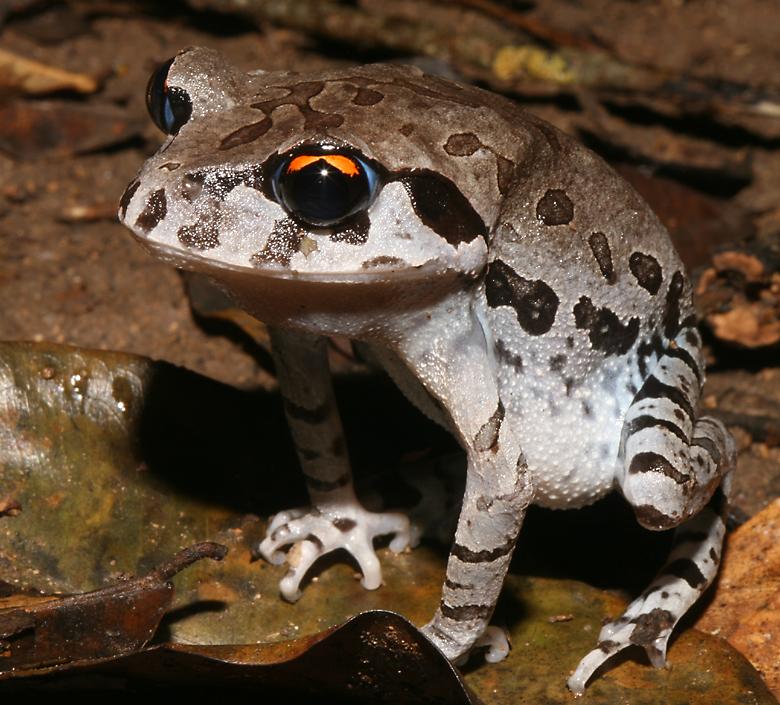
Let's move from creepy to cute for a while. This is one of a group of spotted litter frogs which were serenading each other in Erawan national park. I think this one is a male, it looks like it's standing on tip-toe, which perhaps makes its call resonate better by preventing the vibrations from being dampened by the ground. |
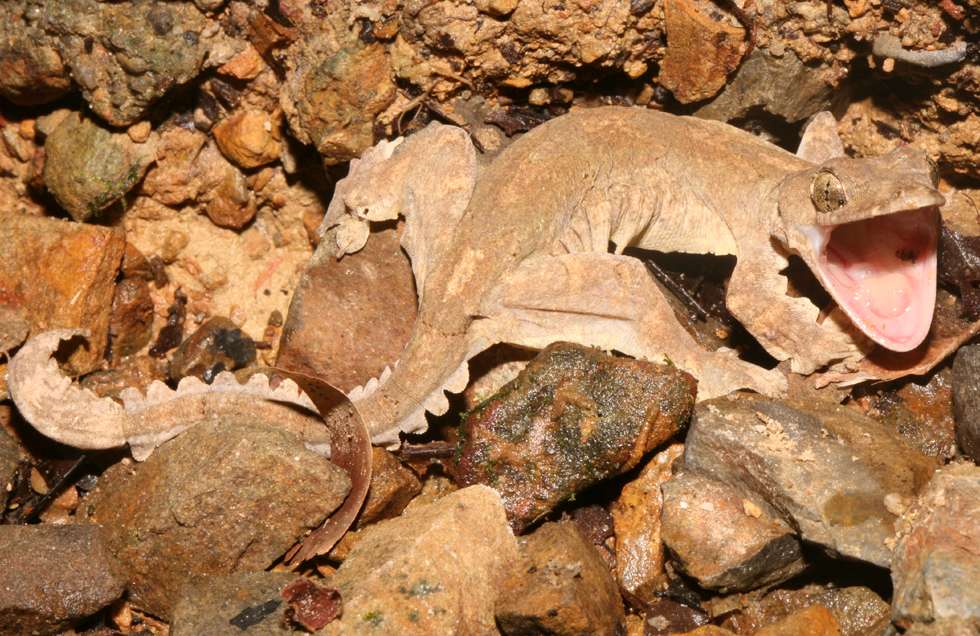
|
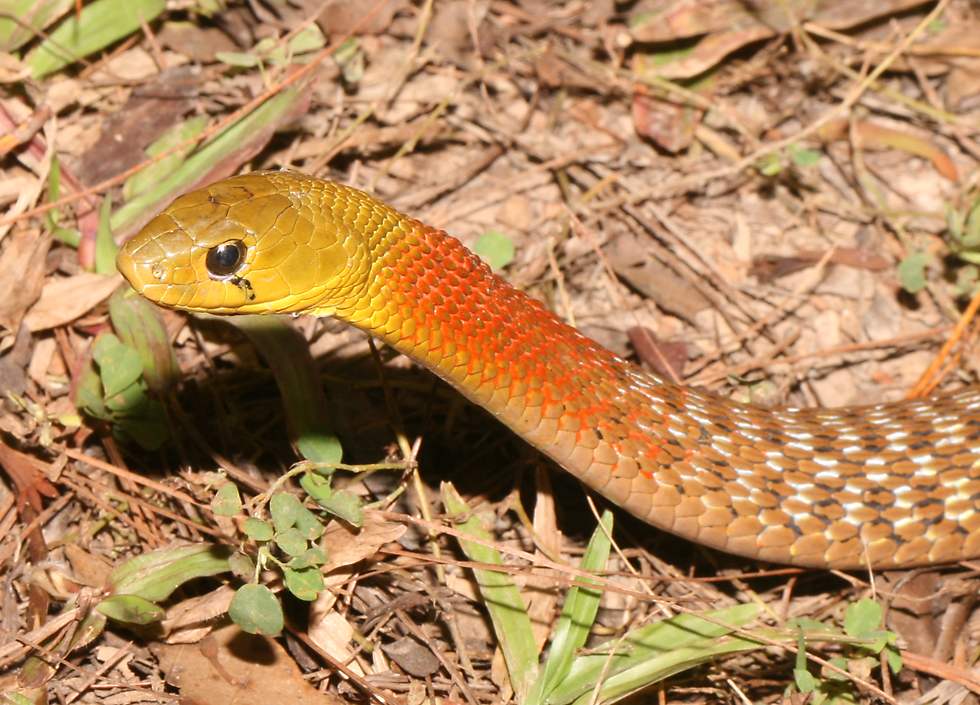
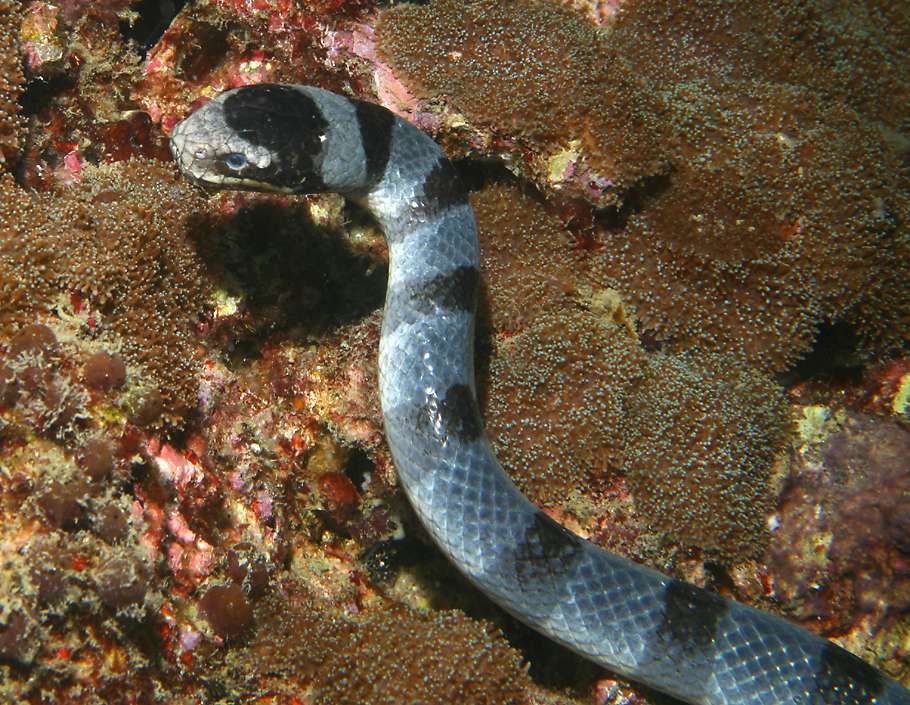
Did I say that I only saw four snakes? Actually, I saw five, this one being a banded sea snake (or banded sea krait) which I photographed while diving off Koh Phi Phi Leh, which is where the Leonardo di Caprio movie "The Beach" was filmed. Unlike the red-necked keelback, the banded sea krait is highly venomous, because it needs to immobilize its prey in a hurry, before it can escape into inaccessible parts of the reef. However like almost all sea snakes, this one is very docile, and it didn't react at all as I followed it closely and repeatedly flashed a bright strobe in its eyes! |
|
|
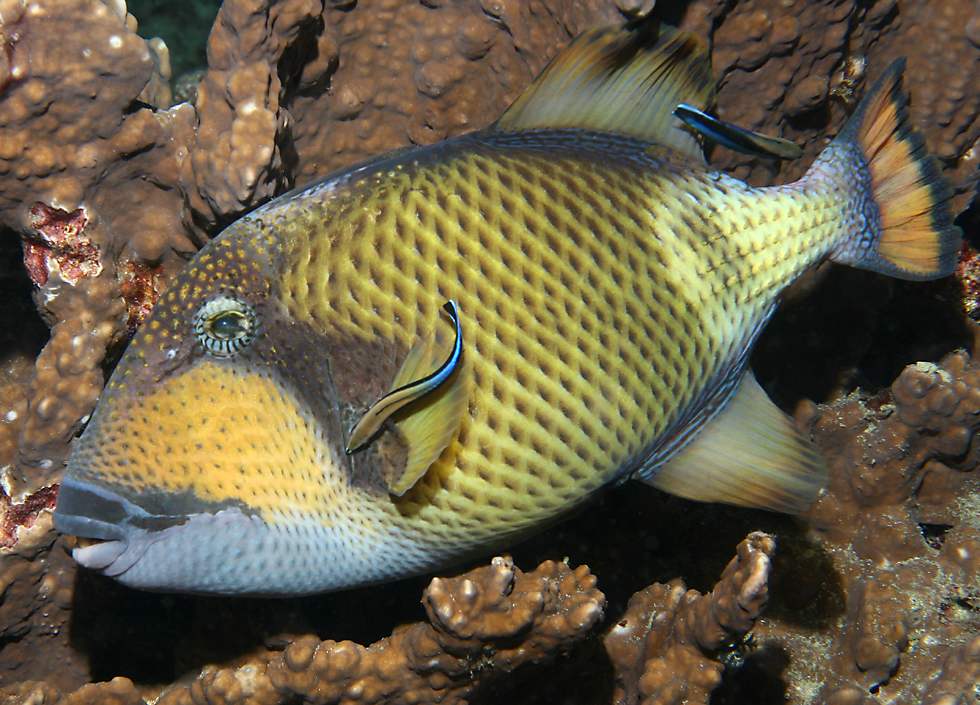
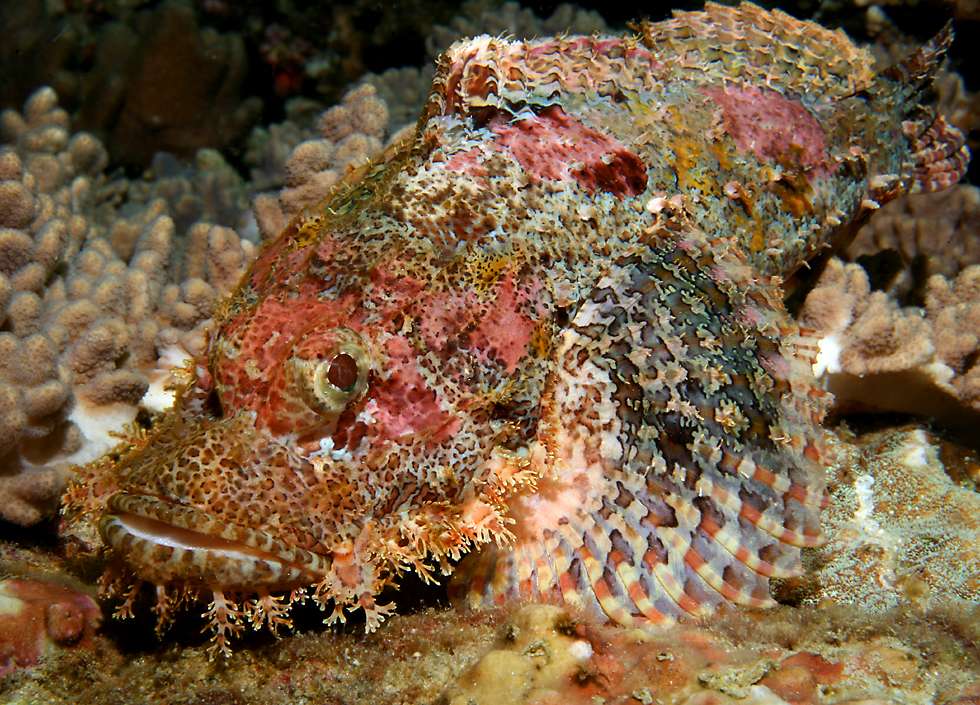
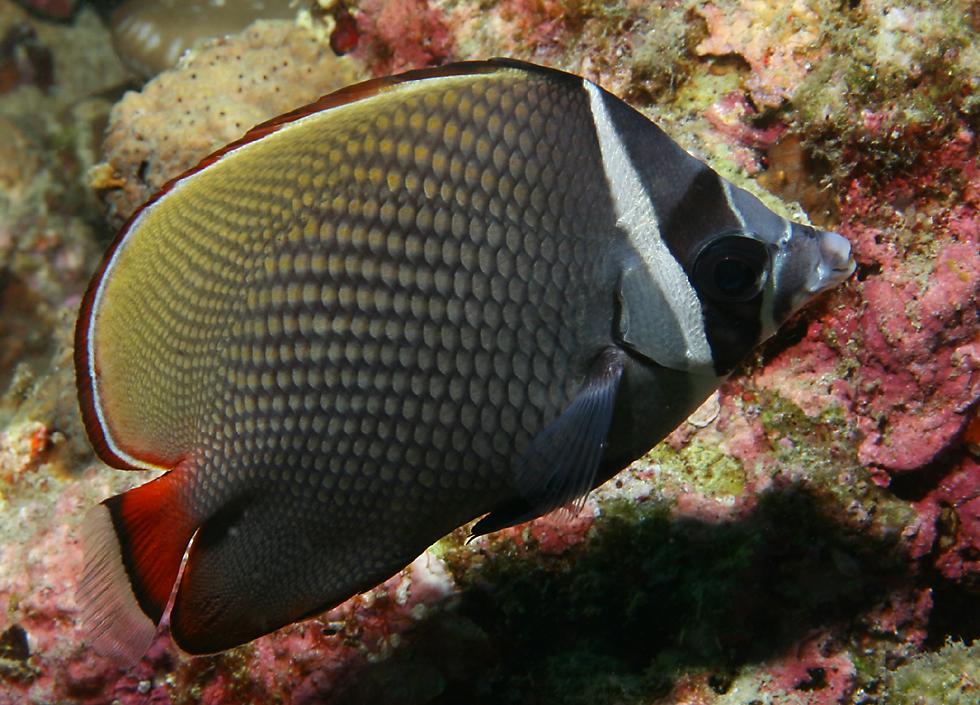
Among divers, this cute looking titan triggerfish has a worse reputation than the snake. It's not that it's deadly, but during breeding season they protect their nests against all passers-by, and are quite willing to use their over-sized front teeth to bite a diver through a wetsuit. You can get a good view of those teeth on the Underwater Highlights of the Philippines page. Fortunately, this individual is just chilling out at a cleaning station, where two cleaner wrasses are removing parasites and dead tissue, benefiting both parties. |
 |
|
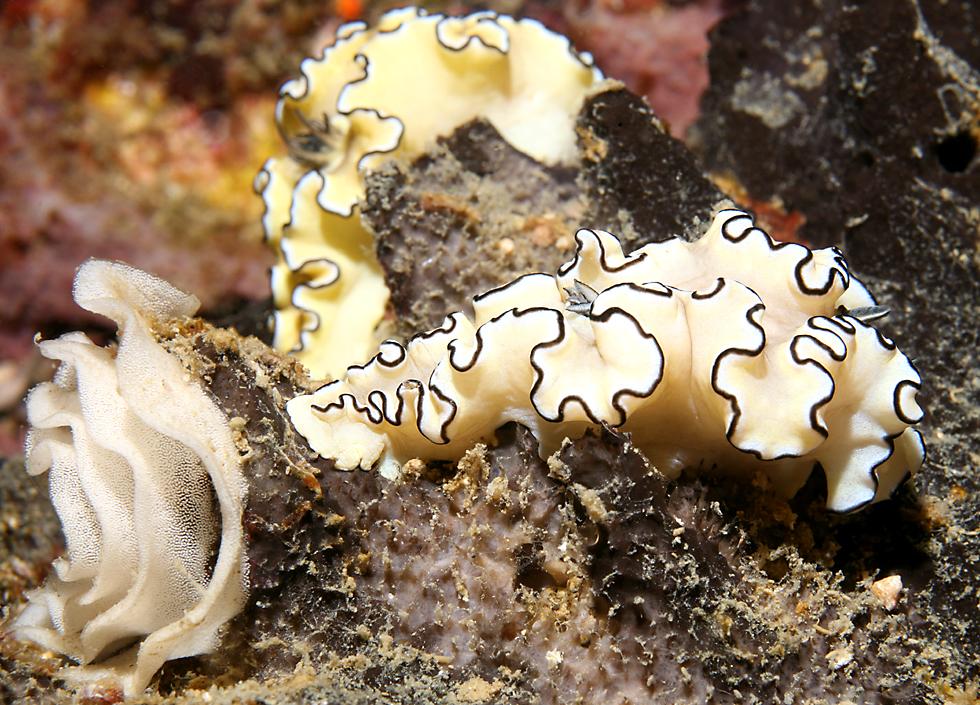
Most people don't think that slugs are cute but sea slugs, or nudibranchs as they're properly called, come in an incredible variety of colors and patterns. These two black-margined glossodorises were part of a menage-a-trois, and it looks like the one in front is just moving off after laying the large white ribbon of eggs on the left of the photo. For an idea of how attractive sea slugs can be, check out this page of Nudibranchs of the Philippines. |
 |
|
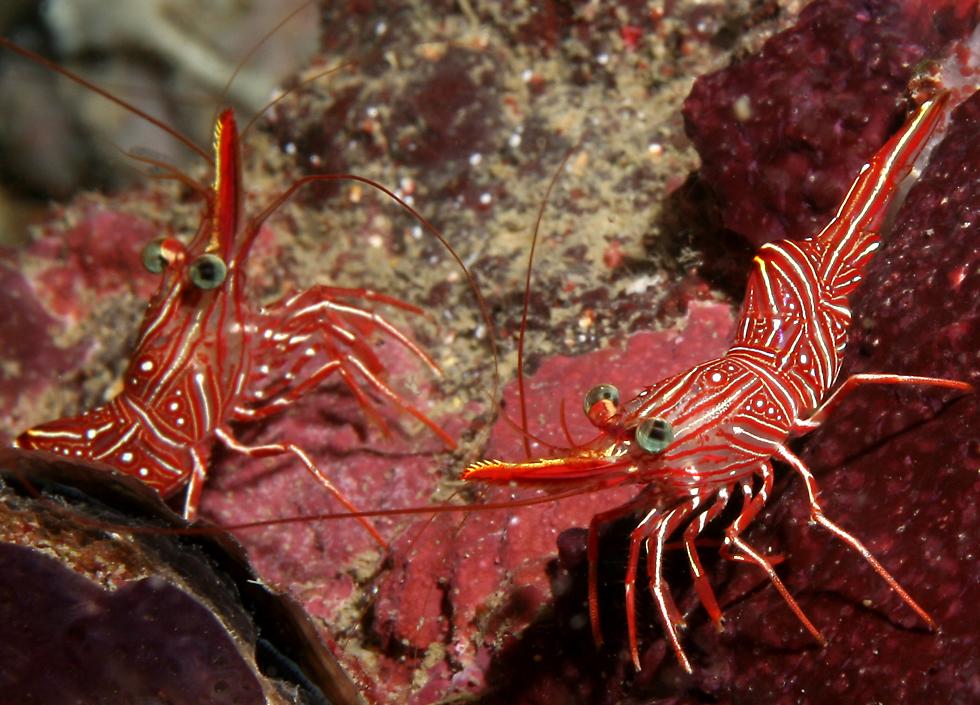
I got several good shots of shrimps while I was diving, including cleaner shrimps wandering around on moray eels' heads, and this pair of attractively patterned Durban hinge-beak shrimps. Once again, they're said to be quite common, but this is the first time I've seen them. You can see a lot more underwater wildlife on the Underwater Highlights of Thailand page. |
|