
Bugs of Guatemala (1999)
|
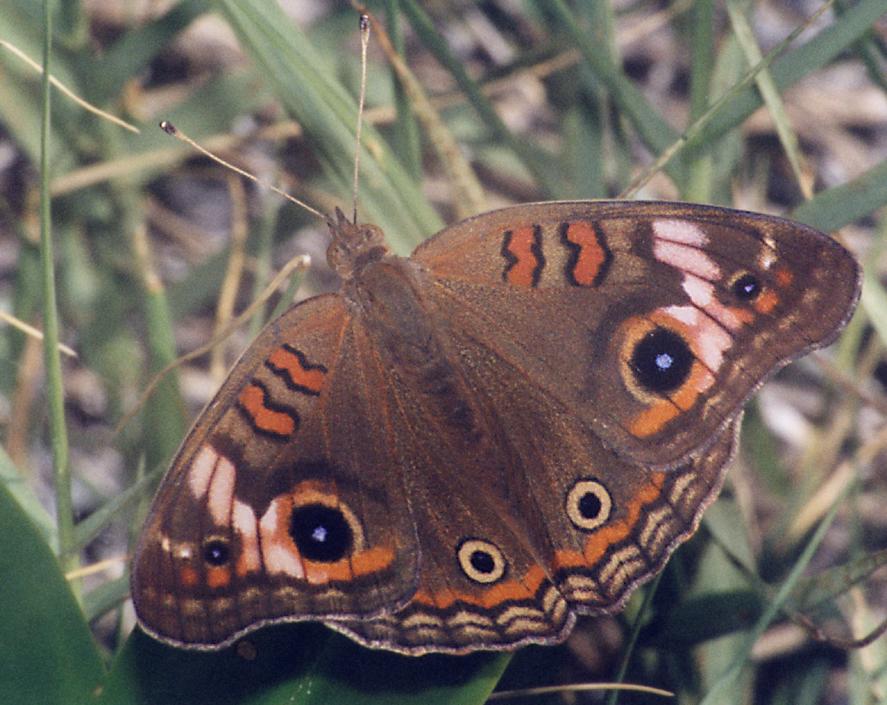
I photographed various insects when I visited the Maya city of Tikal in Guatemala as a two day interlude during a trip to Belize. This was before I was heavily into photographing insects, before I owned a specialized macro lens and even, if that's possible to believe, before I owned a digital SLR camera, which wouldn't happen until the Canon D60 arrived in 2002. So be warned that these photos are nowhere near the quality of what I've photographed since - if you want to see quality photos then try the Butterflies of Central Mexico, the Butterflies of Northern Illinois, the Butterflies of Vietnam, the Bugs of Indonesia, the Bugs of Russia, the Caterpillars of Northern Illinois, or even the Spiders of Vietnam. If you're still here, then here's one of the nicest insects I photographed in Guatemala, a tropical buckeye, which is very similar in appearance to the common buckeye which lives in North America. |
 |
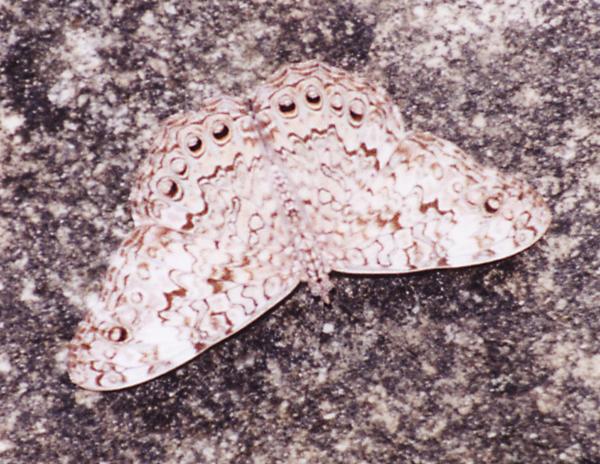
Here's a most unusual butterfly, and one you're not likely to see anywhere in the United States - a cracker butterfly. This butterfly belongs to a family which gets its name not from its enjoyment of cookies, but because it makes a surprisingly loud and sharp noise when it flies. Only the males make this noise, hitting swollen veins on their forewings together as they defend their territories. Crackers are apparently also capable of hearing sounds, which is very unusual for a butterfly. |
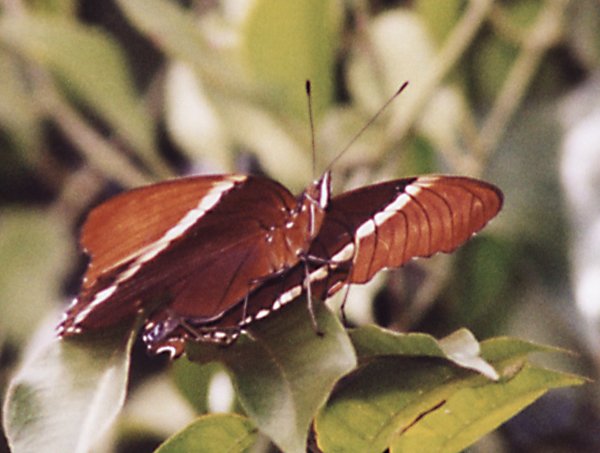
It's not obvious from this photo, but this is one very confused butterfly. Depending on who you speak to, this is a rusty tipped page, black and tan page, brown bamboo page, brown page or brown siproeta. It's no wonder that scientists stick to the Latin name, Siproeta epaphus. |
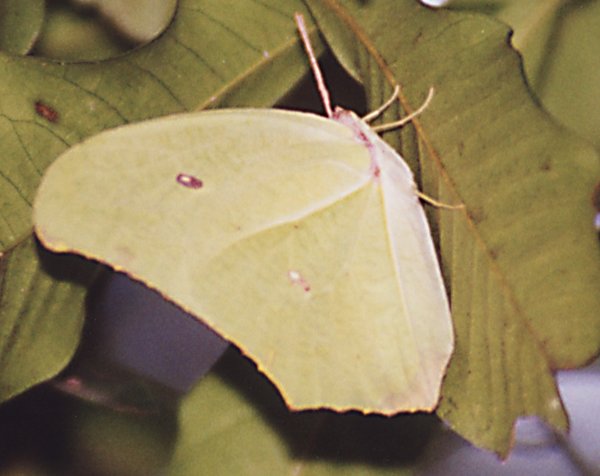
This butterfly belongs to a family called sulphurs, so-called because most of them have a basically yellow color. Like many members of the family, this one has a few spots on its wings, which help to make it look more like a real leaf. To see how good the disguise is, just look at the real-life bit of blight on the leaf immediately to the left of the butterfly! And to see how far my photography skills have improved since taking this photo, check out the pink-edged sulphur I shot in Illinois a few years later. |
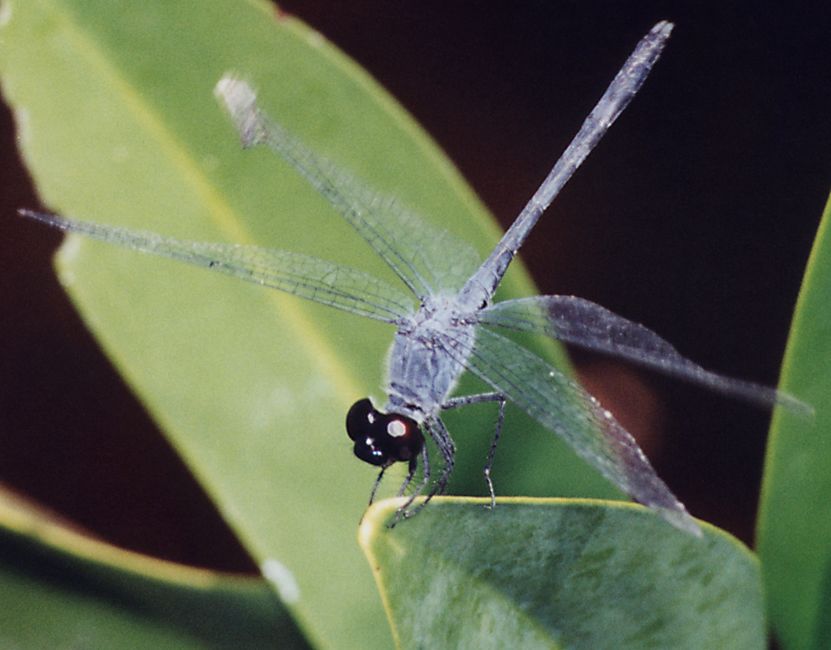
I managed to get a nice angle on this dragonfly, shame it's not very sharp or colorful! This poor critter isn't in very good shape, either. It's rear wings are in bad shape, the left one looks warped and the tip of the right one is badly damaged. This might have happened when the nymph emerged from the water and took on adult form, or it might just be wear and tear from age. You can see a whole page of sharp, colorful photos of these insects on my Dragonflies and Damselflies of Fiji page. |
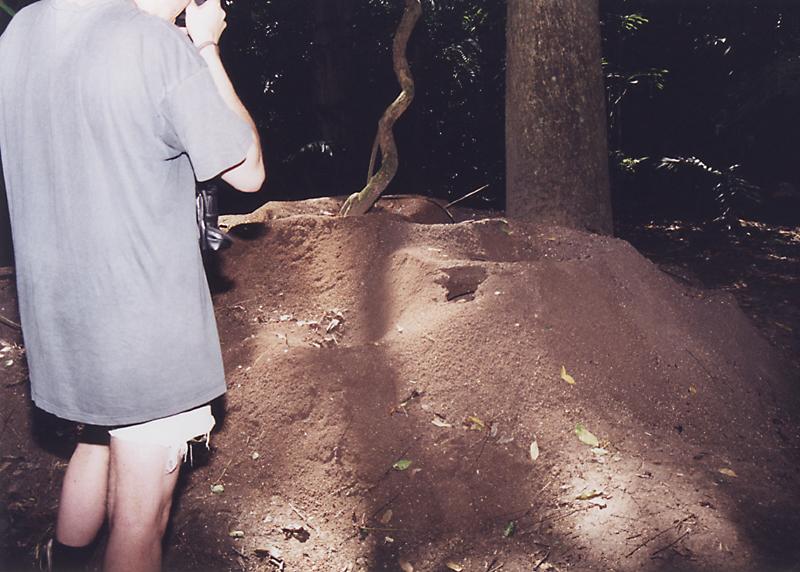
Finally, here's an abandoned nest of leafcutter ants. These ants are remarkable even by ant standards. In each nest there can be up to five million individuals, which radiate out from the nest for hundreds of meters to gather pieces of leaves which they bring back to the nest, chew up and use as compost to grow the fungus which the ants actually eat. As usual, some of the ants are specialized as guards, while another caste of very small leafcutter ants rides on the leaves as they are brought back to the nest, in order to remove eggs laid on the leaves by parasitic wasps, hoping to infest the nest. You can see a whole page of leafcutter ant photos which I took in Costa Rica the year after I was in Guatemala. |